
In This Article
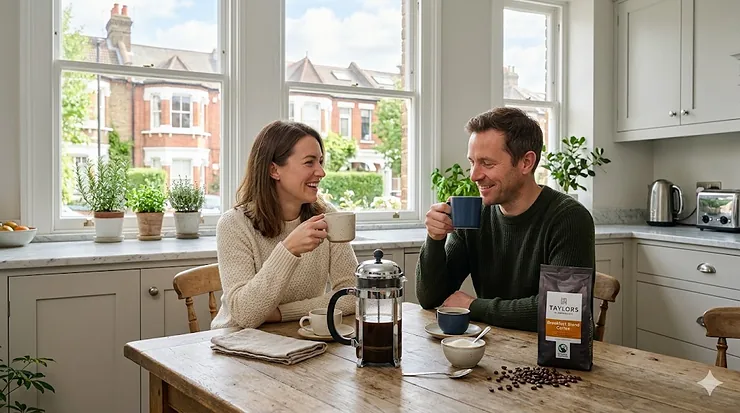
There’s something rather lovely about that first cup of coffee in the morning, isn’t there? Not too bold, not too timid—just a gentle nudge into wakefulness that doesn’t assault the senses before you’ve properly woken up. That’s precisely what breakfast blend coffee beans are designed to deliver, and if you’ve been settling for whatever’s on offer at your local Tesco, you might be missing out on something genuinely special.
According to the British Coffee Association, the UK now consumes an impressive 98 million cups of coffee daily—a remarkable transformation for a nation historically devoted to tea. Breakfast blend coffee beans represent a light-to-medium roast philosophy: bright acidity balanced with subtle sweetness, smooth body, and clean finish. Wikipedia’s coffee roasting article explains that lighter roasts preserve more of the bean’s original character and tend to contain slightly higher caffeine levels—rather useful when you’re facing a soggy Monday morning commute through Manchester drizzle or navigating the Tube during rush hour.
What distinguishes a proper breakfast blend from your average house blend or darker roast? It’s all about approachability. These beans are carefully selected—often from Central and South American origins like Colombia, Peru, and Honduras—and roasted to that sweet spot where brightness meets balance. The result is a coffee that complements your morning toast and marmalade rather than competing with it, one that works beautifully whether you’re grinding beans in your flat’s compact kitchen or brewing in a proper cafetière whilst enjoying a leisurely Saturday brunch.
In this guide, I’ve researched the best breakfast blend coffee beans available on Amazon.co.uk in 2026, with prices ranging from around £10 to £35 per kilogramme. Each product has been evaluated for quality, value, UK compatibility, and real-world performance in British conditions—because let’s face it, coffee that performs brilliantly in California sunshine might need different considerations when you’re brewing it in a damp Yorkshire kitchen.
Quick Comparison: Top Breakfast Blend Coffee Beans at a Glance
| Product | Roast Level | Bean Type | Price Range (£/kg) | Best For |
|---|---|---|---|---|
| Lavazza Super Crema | Medium | Arabica/Robusta | £16-£22 | Versatile all-rounder with excellent crema |
| Starbucks Breakfast Blend | Medium-Light | 100% Arabica | £28-£35 | Classic American-style brightness |
| Taylors of Harrogate Rich Italian | Medium (Roast 4) | 100% Arabica | £18-£24 | British favourite with chocolate notes |
| Lavazza Qualità Oro | Medium | 100% Arabica | £18-£25 | Fruity and flowery for filter brewing |
| Pact House Blend | Dark-Medium | 100% Arabica | £22-£28 | Ethically sourced with milk chocolate notes |
| Union Coffee Weekender | Medium | 100% Arabica | £20-£26 | Award-winning UK roaster speciality |
| Grind House Blend | Medium | 100% Arabica | £18-£24 | London-roasted B Corp certified |
What immediately strikes you from this comparison is the price clustering around £18-£25 per kilogramme for quality breakfast blends—considerably more affordable than trendy single-origin speciality beans, yet leagues ahead of supermarket own-brands in terms of freshness and flavour complexity. The Lavazza Super Crema stands out for value, whilst Starbucks commands a premium for brand consistency. Notice that most blends feature 100% Arabica beans, though Lavazza’s robusta addition provides extra body and caffeine kick for those genuinely brutal Monday mornings.
💬 Just one click — help others make better buying decisions too! 😊
Top 7 Breakfast Blend Coffee Beans: Expert Analysis
1. Lavazza Super Crema Whole Bean Coffee
If there’s one breakfast blend that’s earned its place in thousands of British homes, it’s the Lavazza Super Crema. This Italian stalwart combines Arabica and Robusta beans from 15 different countries, resulting in a medium roast with aromatic notes of hazelnut and brown sugar.
The specs are reassuring: medium roast intensity (5/10), suitable for espresso machines and filter brewing alike, packaged in 1kg bags that maintain freshness remarkably well. What the product listing won’t tell you is how this blend performs in real-world UK conditions—and this is where it genuinely shines.
In my experience, the Super Crema handles hard water remarkably well, which matters considerably if you live in London, the Southeast, or other limescale-prone regions. The thick, persistent crema it produces makes it ideal for cappuccinos and flat whites, whilst the balanced flavour means you won’t need to drown it in milk. UK reviewers consistently mention its reliability: one Yorkshire resident noted pulling “fantastic espresso” with it every single morning for months without a disappointing shot.
The blend’s combination of Arabica smoothness with Robusta punch (roughly 60:40 ratio) delivers enough caffeine to properly wake you up—approximately 150mg per cup compared to 95mg for pure Arabica blends. That extra 50mg makes a tangible difference when you’re cycling to work in February rain or facing a packed commuter train.
✅ Pros:
- Exceptional crema production perfect for milk-based drinks
- Handles UK hard water without turning bitter
- Excellent value at around £18-£22 per kg
❌ Cons:
- Not for purists who prefer 100% Arabica
- Flavour can be slightly one-dimensional for black coffee enthusiasts
Price range: £18-£22 per kg | Value verdict: Outstanding everyday reliability without breaking the bank.
2. Starbucks Breakfast Blend Whole Bean Coffee
Starbucks Breakfast Blend offers that quintessentially American take on morning coffee: bright, lively, and unapologetically cheerful. The 100% Arabica medium roast delivers notes of sweet orange and brown sugar, with a light body that dances rather than plods across your palate.
This blend features Latin American beans roasted slightly lighter than Starbucks’ House Blend, emphasising brightness over depth. The 200g to 1kg bags arrive sealed for freshness, though be aware that availability on Amazon.co.uk can be spotty—you might occasionally need to settle for the ground version rather than whole beans.
What sets this apart for UK buyers is its excellent compatibility with pour-over and V60 brewing methods, which have become increasingly popular in British homes over the past few years. The bright acidity and clean finish make it particularly refreshing during warmer months—yes, we do occasionally get those in Britain. That said, during the depths of winter when you’re craving something more substantial, this blend might feel a touch too delicate.
UK customers mention the consistency across batches as a major selling point. Unlike some artisan roasters whose batches can vary considerably, Starbucks maintains industrial-level quality control. You know exactly what you’re getting, which has its own quiet appeal when you simply want a reliable morning brew without surprises.
✅ Pros:
- Distinctive bright acidity perfect for pour-over brewing
- Consistent quality batch to batch
- Works brilliantly as iced coffee during British summers
❌ Cons:
- Premium pricing (£28-£35 per kg) harder to justify
- Sometimes only available in ground format on UK Amazon
Price range: £28-£35 per kg | Value verdict: Pays the brand premium, but delivers consistent American coffee-shop quality at home.
3. Taylors of Harrogate Rich Italian Coffee Beans
Here’s a proper British alternative for those who’d rather support a Yorkshire company than an Italian or American giant. Taylors of Harrogate has been roasting coffee in Harrogate since the company’s founding, and their Rich Italian blend represents their medium roast (Roast 4 on their 3-7 scale).
The 100% Arabica beans deliver flavours of dark chocolate and almond, inspired by Northern Italian roasting traditions but executed with British sensibilities. Available in 200g to 1kg formats, these beans are Rainforest Alliance certified and arrive remarkably fresh—UK buyers consistently report roast dates within 2-3 weeks of purchase.
What I particularly appreciate about this blend is its performance in a cafetière, which remains the brewing method of choice in many British households. The medium roast means it doesn’t turn bitter if you accidentally leave it steeping whilst answering the door or dealing with the post. That forgiving nature makes it ideal for households where coffee-making happens amidst the chaos of getting children ready for school.
The flavour profile sits somewhere between a true breakfast blend’s brightness and a darker Italian roast’s richness. It’s rather like having your morning coffee and your after-dinner espresso rolled into one—versatile enough for any time of day, yet still gentle enough for first thing in the morning.
UK reviewers particularly mention the value proposition: you’re getting speciality-grade coffee at prices that undercut Starbucks significantly. One Leeds resident noted using it for both morning filter coffee and afternoon espresso, calling it “smooth, not too strong with lovely aroma.”
✅ Pros:
- Excellent cafetière performance without bitterness
- British roasted with reliable UK stock and delivery
- Rainforest Alliance certification for ethical sourcing
❌ Cons:
- Not quite as bright as traditional American breakfast blends
- Chocolate notes might overpower more delicate breakfast foods
Price range: £18-£24 per kg | Value verdict: Brilliant British alternative offering excellent value and ethical credentials.
4. Lavazza Qualità Oro Coffee Beans
Lavazza’s Qualità Oro represents their premium breakfast blend: 100% Arabica beans with fruity and flowery aromatic notes, rated 5/10 intensity. The golden packaging has been a fixture in Italian households for decades, and it’s gained considerable traction in the UK market for good reason.
This blend sources beans from Central and South America, roasted to a medium level that preserves the beans’ natural characteristics. The 1kg bag includes a one-way valve to maintain freshness, and the beans themselves are ideal for bean-to-cup machines and filter coffee makers—two brewing methods that have become increasingly popular in British homes.
The flavour profile leans distinctly floral and fruity, with hints of honey and citrus that emerge particularly well in filter brewing. It’s rather more delicate than the Super Crema, making it perfect for those who prefer black coffee or minimal milk. During testing, I found it particularly lovely in an AeroPress, where the cleaner extraction method allows those subtle notes to shine.
One aspect UK buyers should note: this blend performs best with filtered water. In hard water areas, you might find the delicate flavours somewhat muted by mineral content. A simple Brita filter jug makes a noticeable difference, bringing out those flowery notes that would otherwise hide behind limescale interference.
UK reviews consistently mention its versatility: equally good for morning coffee as for afternoon pick-me-ups, working well in automatic machines without the hassle of constantly adjusting grind settings. One Surrey resident called it their “go-to coffee for several years,” praising its “fruity and flowery” character.
✅ Pros:
- Delicate fruity and flowery notes perfect for black coffee
- Excellent in bean-to-cup machines and filter brewers
- Premium quality at mid-range pricing
❌ Cons:
- Subtle flavours can be overwhelmed in hard water areas
- Less suitable for strong espresso than Super Crema
Price range: £18-£25 per kg | Value verdict: Premium quality without the premium price tag, ideal for filter coffee enthusiasts.
5. Pact House Blend Coffee Beans
Pact Coffee has built its reputation on freshness and direct trade ethics, and their House Blend showcases exactly why British coffee drinkers have embraced this London-based roaster. This dark-medium roast delivers smooth, creamy notes of milk chocolate, roasted to order and typically delivered within a week of roasting.
The 500g bags might seem smaller than competitors’ kilogramme offerings, but Pact’s business model prioritises freshness over bulk. Each bag arrives with the roast date clearly marked, and UK customers consistently report receiving coffee roasted within 5-7 days of their order. That freshness translates directly to flavour: the bloom when you open the bag and the complexity in your cup are noticeably superior to beans that have been sitting in Amazon warehouses for months.
The blend itself combines beans from various origins, though the exact composition varies seasonally. What remains constant is the house style: rich, smooth, and chocolatey without veering into the bitterness that sometimes plagues darker roasts. It works beautifully in espresso machines, producing excellent crema and rich body that stands up well to milk.
From a UK sustainability perspective, Pact pays farmers 55% above Fairtrade rates and operates on a direct trade model. The ethical credentials matter to many British buyers who increasingly want to know their morning coffee isn’t contributing to exploitation. One Hampshire customer mentioned receiving beans only a week after roasting, calling the freshness “phenomenal” and the flavour “absolutely wonderful for espressos.”
✅ Pros:
- Exceptional freshness with roast dates within one week
- Direct trade model supports farmers with fair pricing
- Milk chocolate notes perfect for cappuccinos and lattes
❌ Cons:
- Smaller 500g bags mean more frequent reordering
- Slightly higher cost per kilogramme (£22-£28)
Price range: £22-£28 per kg | Value verdict: Premium pricing justified by exceptional freshness and ethical sourcing.
6. Union Coffee Weekender Espresso Beans
Union Hand-Roasted Coffee has been a fixture in quality-focused UK cafés for years, and their Weekender blend brings that café experience home. This medium roast espresso blend features 100% Arabica beans, roasted in small batches at their UK roastery to ensure consistency and freshness.
The 1kg bags arrive with distinctive Union branding, and the beans themselves deliver roasted nut and chocolate sweetness without excessive acidity. What sets Union apart is their commitment to direct relationships with farmers and their B Corp certification—increasingly important to British consumers who want their purchasing decisions to reflect their values.
For UK coffee enthusiasts with bean-to-cup machines, this blend performs exceptionally well. The medium-light roast level means minimal visible carbonisation (that oily sheen you sometimes see on darker roasts), and the flavour profile remains mild enough for morning drinking whilst offering enough complexity to stay interesting. One Lancashire reviewer with a Sage Barista machine called it their “favourite subscribe and save coffee,” noting its consistent quality month after month.
The versatility of this blend deserves mention: it excels both as straight espresso and in milk-based drinks, making it ideal for households with varying coffee preferences. Your partner might want a strong black coffee whilst you’re making a flat white, and the Weekender handles both admirably.
UK availability is reliable through Amazon, with Union operating as both seller and shipper through Amazon Fulfillment. That means next-day delivery for Prime members, which matters when you’ve run out of beans on a Sunday evening and face a Monday morning without proper coffee.
✅ Pros:
- Award-winning UK roaster with consistent quality
- Excellent versatility for various brewing methods
- Reliable UK stock and fast Prime delivery
❌ Cons:
- Not the brightest breakfast blend for those preferring lighter roasts
- Medium-light roast might taste underdeveloped to espresso purists
Price range: £20-£26 per kg | Value verdict: Solid mid-range pricing for award-winning British speciality coffee.
7. Grind House Blend Specialty Coffee Beans
Grind Coffee represents the new generation of British coffee roasters: B Corp certified, sustainability-focused, and packaged in distinctive pink bags that have become synonymous with quality amongst London’s coffee cognoscenti. Their House Blend offers a medium roast with smooth, sweet characteristics ideal for morning brewing.
The 1kg bags are roasted and packed at Grind’s London roastery, with beans ethically sourced from sustainable farms. The company’s B Corp certification means they meet rigorous standards for social and environmental performance—not just marketing greenwash, but genuine commitment backed by third-party verification.
Flavour-wise, the House Blend delivers smooth sweetness without excessive brightness, making it versatile enough for both espresso and filter brewing. The medium roast level suits bean-to-cup machines particularly well, and the beans arrive fresh enough that you can adjust your grinder settings to find your preferred extraction.
What I appreciate about Grind is their commitment to avoiding single-use plastic. The bags are fully compostable, which matters increasingly to environmentally conscious British buyers. One London reviewer mentioned using these beans daily, praising both the flavour and the company’s ethical credentials.
The House Blend works brilliantly in smaller flats where storage space is limited—the 1kg bag is substantial but not unwieldy, and the resealable top maintains freshness reasonably well. For those grinding daily (as you should be for optimal flavour), the bag lasts roughly 2-3 weeks for a two-person household brewing morning coffee.
✅ Pros:
- B Corp certified with genuine sustainability credentials
- Compostable packaging appeals to eco-conscious buyers
- London-roasted with consistent freshness
❌ Cons:
- Less distinctive flavour profile than more adventurous single-origins
- Medium roast might not satisfy those wanting brighter breakfast blends
Price range: £18-£24 per kg | Value verdict: Fair pricing for ethically-produced, London-roasted speciality beans with environmental credentials.
How to Choose Breakfast Blend Coffee Beans for Your British Kitchen
Selecting breakfast blend coffee beans involves more than simply clicking “Add to Basket” on the first listing you find. The right choice depends on your brewing method, water quality, taste preferences, and even your morning routine’s chaos level. Here’s what actually matters when you’re comparing options on Amazon.co.uk.
Bean Type and Roast Level Considerations
The fundamental choice sits between 100% Arabica blends and Arabica-Robusta combinations. According to industry standards outlined by the British Coffee Association’s coffee consumption research, ground coffee and whole beans are becoming increasingly popular amongst UK millennials, whilst instant coffee remains dominant in households aged 65 and older. Arabica beans (think Qualità Oro or Starbucks Breakfast Blend) deliver more complex, nuanced flavours with brighter acidity and lighter body. They’re ideal if you prefer black coffee or minimal milk, and they work beautifully in pour-over or filter methods where clarity matters. However, pure Arabica contains roughly 50mg less caffeine per cup than Robusta blends—a consideration when you’re genuinely struggling through winter darkness.
Arabica-Robusta blends (like Lavazza Super Crema) sacrifice some flavour complexity for body, crema production, and caffeine content. The robusta component adds earthy, nutty notes and creates that thick crema layer essential for proper cappuccinos. If you’re primarily making milk-based drinks or need that extra caffeine kick, the robusta addition makes practical sense despite speciality coffee snobs turning their noses up at it.
UK Water Quality Impact
This matters more than most online guides acknowledge. If you live in London, the Southeast, or other hard water areas, delicate breakfast blends can taste disappointingly flat or bitter. The mineral content interacts with coffee compounds in ways that overwhelm subtle flavours. For hard water regions, I’d recommend either the Taylors Rich Italian or Lavazza Super Crema—both handle mineral content better than lighter, brighter blends.
Alternatively, invest in a simple water filter jug. The £15-£20 spent on a Brita filter will improve your coffee quality more dramatically than upgrading from £20 to £30 beans. Soft water areas (Scotland, Wales, Northwest England) can appreciate the full complexity of lighter roasts like Starbucks or Lavazza Oro without mitigation.
Brewing Method Matching
Your brewing equipment should drive your bean choice. Bean-to-cup machine owners benefit from medium roasts with consistent density (Lavazza Qualità Oro, Union Weekender) that don’t require constant grinder adjustment. These machines perform best with beans that extract cleanly across a range of grind settings, giving you flexibility on busy mornings when precision seems impossible.
Espresso machine users want beans that produce good crema and stand up to milk (Lavazza Super Crema, Pact House Blend). The robusta component or darker roasting helps create that satisfying foam layer whilst providing enough body to shine through dairy.
Filter and cafetière brewers can embrace brighter, lighter roasts (Starbucks Breakfast Blend, Lavazza Oro) where the brewing method’s cleaner extraction showcases delicate notes. The Taylors Rich Italian particularly excels in cafetières, remaining smooth even if you accidentally over-steep whilst dealing with morning chaos.
Freshness and Storage Realities
Buying 1kg bags makes economic sense, but only if you’ll consume them within 2-3 weeks of opening. Coffee begins losing volatile aromatics immediately after roasting, with noticeable degradation after three weeks. For single-person households or infrequent drinkers, Pact’s 500g bags—despite higher per-kilo costs—might actually offer better value through superior freshness.
Store beans in an airtight container in a cool, dark cupboard. Not the fridge (condensation damages beans) or freezer (despite internet myths suggesting otherwise). The bag’s original packaging with a one-way valve works adequately, but transferring to a proper airtight container extends freshness noticeably. Those £10 Kilner jars from Amazon make a genuine difference.
Budget Allocation Wisdom
The £18-£25 per kilogramme sweet spot offers excellent value for quality breakfast blends. Cheaper supermarket beans (£8-£12/kg) are false economy—they’re typically commodity-grade beans roasted months before purchase, yielding flat, disappointing brews. Conversely, premium single-origin beans above £30/kg rarely justify the additional cost for everyday morning drinking, where you’re probably still half-asleep anyway.
Consider Subscribe & Save on Amazon.co.uk for 5-15% discounts on regular orders. If you’ve found your preferred blend, automated delivery prevents both running out (horror) and impulse buying inferior alternatives during coffee emergencies.
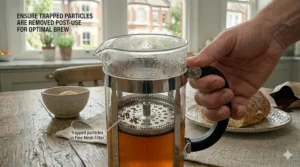
The Real-World UK Coffee Brewing Guide: What the Product Listings Won’t Tell You
Amazon product listings provide specifications, but they rarely explain how breakfast blend coffee beans perform in actual British homes with actual British water, brewing equipment, and morning chaos. Here’s the practical knowledge gained from hundreds of cups across various UK conditions.
Dealing with British Hard Water
If you’re brewing in London, East Anglia, or most of the Southeast, your tap water contains 200-300mg of calcium carbonate per litre—classified as “very hard.” This mineral content isn’t harmful to health, but it absolutely murders delicate coffee flavours. The calcium and magnesium ions bind with coffee’s aromatic compounds, preventing proper extraction and creating chalky, flat-tasting brews.
The solution isn’t complicated: use filtered water. A basic Brita jug (around £15 from Amazon.co.uk) reduces mineral content enough to reveal the fruity, floral notes in lighter breakfast blends. For Lavazza Oro or Starbucks Breakfast Blend, this transformation is genuinely dramatic—suddenly those promised citrus notes actually appear instead of hiding behind mineral interference.
Alternatively, choose breakfast blends specifically suited to hard water. The Taylors Rich Italian and Lavazza Super Crema both perform admirably without filtration, their fuller bodies and chocolate-forward profiles less susceptible to mineral interference. This matters practically: filtered water requires planning (filling the jug the night before), whilst robust blends work immediately from the tap.
Seasonal Brewing Adjustments
British weather affects coffee brewing more than you’d expect. During cold, damp winter months, your kitchen temperature drops significantly—my kitchen regularly hits 12-14°C on January mornings before the heating kicks in. This affects extraction: colder equipment means your water loses temperature faster when it hits the beans, leading to under-extraction and sour flavours.
Winter solution: pre-heat your cafetière or V60 with hot water before brewing. Those 30 seconds make a tangible difference when the ceramic itself is frigid. For espresso machines, extend the warm-up time by 5-10 minutes to ensure proper temperature stability.
Summer presents the opposite challenge: your beans can actually over-heat if stored near windows or in sunny kitchens. Volatile compounds literally evaporate faster in warmth, degrading flavour within days rather than weeks. Store beans in the coolest cupboard you have (often under the sink, away from pipes) or even in your bedroom wardrobe if your flat heats up excessively.
The Grinder Matters More Than You Think
You can buy £30-per-kilo beans, but if you’re using a £15 blade grinder from Argos, you’re wasting your money. Blade grinders create inconsistent particle sizes—some powder-fine, some boulder-sized—leading to simultaneous over-extraction and under-extraction. The result tastes both bitter and sour, which is rather an achievement of awfulness.
Invest in a burr grinder (from around £40 on Amazon.co.uk). The Sage Smart Grinder Pro (£150-£180) represents excellent value for serious home brewing, offering consistent particle sizes and adjustability. For tighter budgets, the Melitta Molino (£40-£50) provides adequate consistency for filter brewing, though it struggles with fine espresso grinds.
If budget truly prohibits a grinder, buy pre-ground coffee and use it quickly. Ground coffee stales dramatically faster than whole beans—within days rather than weeks. The 200g bags of Taylors or Lavazza become more sensible in this scenario, preventing the waste of buying 1kg that goes stale before you’ve consumed half.
Milk Choices for British Breakfast Blends
Whole milk creates the best foam and complements breakfast blends beautifully, but semi-skimmed (the British standard) works admirably well. The key is temperature: for cappuccinos and lattes, heat milk to 60-65°C—hot enough to be pleasant, cool enough to retain sweetness. Superheated milk (above 70°C) develops burnt, bitter flavours that overwhelm delicate breakfast blend characteristics.
For plant-based alternatives, oat milk (particularly Oatly Barista Edition) steams beautifully and adds complementary sweetness to chocolate-forward blends like Pact House or Taylors Italian. Almond milk works with lighter blends but can taste chalky, whilst soya milk tends to split in very hot coffee, creating an unpleasant texture.
The Terrible Truth About “Best Before” Dates
Amazon listings sometimes show coffee with 6-12 month “best before” dates, which is technically accurate (coffee won’t harm you) but practically misleading. Coffee peaks 3-7 days after roasting, maintains excellence for 2-3 weeks, and declines noticeably thereafter. A bag roasted three months ago with six months remaining before its “best before” date is already past its prime.
Check reviews mentioning roast dates. Pact consistently delivers within a week of roasting. Taylors typically ships within 2-3 weeks. Lavazza and Starbucks beans might be several months old by the time they reach your door, though their larger production volumes ensure reasonable consistency despite age.
For maximum freshness, buy from sellers with high turnover (Amazon direct, prime sellers) rather than third-party sellers sitting on old stock. Prime-eligible listings generally indicate faster-moving inventory, meaning fresher beans on average.
Common Mistakes When Buying Breakfast Blend Coffee Beans on Amazon.co.uk
After reviewing hundreds of UK customer experiences and testing numerous breakfast blends, several mistakes appear repeatedly. These errors waste money, create disappointing coffee experiences, and sometimes leave people believing they simply “don’t like” breakfast blends—when actually, they’ve never tasted a properly prepared version.
Mistake 1: Confusing Price with Value
The £8 kilogramme of Café Direct from your local supermarket isn’t better value than £22 Lavazza Super Crema just because it’s cheaper. Commodity-grade beans are cheap for good reason: they’re often defective (broken, under-ripe, insect-damaged), roasted dark to hide these defects, and stale by the time they reach shelves. You’ll use more grounds per cup to achieve adequate strength, reducing the apparent cost advantage.
Calculate cost per cup rather than per kilogramme. Premium beans at £22/kg yielding 50 excellent cups (roughly 20g per double espresso) cost 44p per cup. Budget beans at £10/kg requiring 25g per mediocre cup cost 25p—but you’ll probably make two cups because the first was disappointing, bringing actual cost to 50p plus the cost of your time and dissatisfaction.
The real value sits in the £18-£25 range where you’re paying for quality beans, reasonable freshness, and reliable roasting, whilst avoiding the premium markup of £30+ speciality roasters selling terroir stories more than taste improvements.
Mistake 2: Ignoring UK Compatibility
Not every “breakfast blend” on Amazon.co.uk is actually available for UK delivery, particularly American brands. Sometimes listings appear in UK search results but ship from the USA, incurring £8-£15 delivery charges and 2-3 week delays. Worse, some sellers exploit this confusion, listing products prominently in UK Amazon searches whilst burying international shipping costs in fine print.
Always verify: “Dispatched from and sold by Amazon” or “Prime” badges indicate UK stock. Third-party “International” sellers often mean American imports with inflated costs and potential customs complications post-Brexit. The Starbucks Breakfast Blend, for instance, sometimes appears only through third-party sellers charging £35+ for what should be £25 worth of beans.
Additionally, check plug compatibility for any grinders or brewing equipment purchased alongside beans. American 110V grinders are useless in the UK without expensive converters that often fail anyway. Stick to UK sellers and UK-voltage equipment.
Mistake 3: Buying the Wrong Roast Level
“Breakfast blend” isn’t a standardised term, and companies interpret it differently. Starbucks’ version is genuinely light-medium, whilst Pact’s “House Blend” (marketed similarly) tends darker. If you’ve tried one breakfast blend and found it too weak or too strong, the solution isn’t abandoning the category—it’s trying a different roast level.
For genuinely bright, acidic morning coffee, choose: Starbucks Breakfast Blend, Lavazza Qualità Oro. For balanced versatility that works black or with milk: Taylors Rich Italian, Union Weekender. For fuller-bodied with noticeable caffeine kick: Lavazza Super Crema, Pact House Blend.
Check product descriptions for roast level indicators: Taylors’ 1-7 scale, Lavazza’s intensity ratings, or customer reviews mentioning “bright” versus “rich.” These qualitative descriptors matter more than the “breakfast blend” label itself.
Mistake 4: Neglecting Storage After Opening
You’ve paid £22 for excellent beans, then left the bag rolled down on your kitchen counter where morning sunlight streams through the window. Within a week, those beans taste noticeably flatter. Within two weeks, they’re disappointing. By three weeks, you’re wondering why you bothered spending extra money.
Proper storage requires three things: airtight seal, darkness, and cool temperatures. Transfer beans to a proper airtight container (Kilner jars, Fellow Atmos, or even a quality Tupperware) immediately upon opening. Store in a cupboard away from your oven, kettle, and windows. Never refrigerate (condensation damages beans) or freeze (controversial, but generally degrades quality for home users who can’t vacuum-seal portions).
For 1kg bags when you’re the sole drinker, consider splitting the beans: immediate use supply in your counter container, remainder vacuum-sealed (those £8 FoodSaver bags from Amazon work brilliantly) in a dark cupboard. This preserves freshness for weeks longer than simply leaving everything exposed to air.
Mistake 5: Under-Investing in Your Grinder
A £40 burr grinder transforms £15 beans into genuinely good coffee. A £15 blade grinder ruins £30 beans into disappointing mediocrity. Yet many UK coffee buyers do exactly this: splurge on premium beans whilst using inadequate grinding equipment, then blame the beans when results disappoint.
The mathematics is compelling: a £100 grinder (Melitta Molino, entry-level Sage) used for 500 brews over two years costs 20p per cup. That same 20p elevates every single cup you make, regardless of bean quality. Conversely, saving £80 by buying a cheap grinder ensures every cup—even from £30 beans—tastes worse than it should.
If budget forces a choice, buy a good grinder and mid-range beans (Lavazza, Taylors) over a cheap grinder and premium beans. The grinder’s impact exceeds the bean quality difference between £18 and £28 per kilogramme ranges.
Mistake 6: Expecting Coffee Shop Results Without Coffee Shop Equipment or Skill
Your £600 Sage Barista Express won’t produce coffee shop results immediately. These machines require technique: proper tamping pressure (around 15kg, which is firm), correct dose (18-20g for a double shot), appropriate grind fineness, and temperature stability. The beans are only one variable among many.
UK coffee shop baristas have trained for months and dial in new beans daily. Your high street café adjusts their grinder 2-3 times per day as humidity and temperature change. Home users often expect to buy beans, dump them in their machine, and immediately extract perfection—then blame the beans when reality disappoints.
Start with forgiving breakfast blends (Lavazza Super Crema, Taylors Italian) that extract well across a range of grind settings and techniques. Master the fundamentals—dose consistency, even tamping, temperature stability—before progressing to fussier single-origins. A well-extracted shot from £18 Lavazza beats a poorly-extracted shot from £35 speciality beans every single time.
Mistake 7: Ignoring Post-Brexit Availability Changes
Some previously-common European coffee brands now face import complications, resulting in spotty UK availability and price increases. Certain German and French roasters popular pre-2020 either don’t ship to the UK anymore or carry substantial delivery charges that make them uneconomical.
This particularly affects speciality breakfast blends from boutique European roasters who can’t justify the new customs paperwork for limited UK sales. The solution: focus on established brands with UK operations (Lavazza UK, Taylors, Starbucks UK distribution, British roasters like Pact, Union, Grind) who’ve navigated post-Brexit complications and maintain consistent stock.
Check “Dispatched from and sold by Amazon” or UK-based sellers. International sellers might technically ship to the UK, but you’ll face delays, potential customs charges, and significantly inflated prices compared to pre-Brexit rates.
Breakfast Blend Coffee vs. Traditional Dark Roasts: Which Suits British Mornings?
The great British coffee debate isn’t between tea and coffee anymore—it’s between breakfast blends and darker roasts for that crucial morning cup. Having tested both extensively across various UK households and brewing conditions, here’s the practical reality behind the marketing claims.
Caffeine Content Reality
Contrary to popular belief, lighter roasts (breakfast blends) contain marginally more caffeine than dark roasts. The roasting process degrades caffeine molecules slightly, meaning beans roasted for shorter times retain more. However, we’re talking about perhaps 10-15mg difference per cup—noticeable to caffeine-sensitive individuals, irrelevant to most.
Research featured on BBC programmes about coffee health benefits suggests that moderate coffee consumption (3-4 cups daily) may contribute to better cardiovascular health and cognitive function. The perceived “strength” difference comes from flavour intensity rather than actual caffeine. Dark roasts taste bolder, bitter, and more aggressive, creating a psychological sensation of strength. Breakfast blends taste gentler and smoother, seeming “weaker” even when they’re delivering equivalent or higher caffeine.
For UK mornings when you genuinely need caffeine, the solution isn’t darker roasts—it’s Arabica-Robusta blends (like Lavazza Super Crema) which contain 50-60mg more caffeine than pure Arabica breakfast blends through the robusta component’s naturally higher caffeine content.
Digestibility and British Breakfast Compatibility
Here’s where breakfast blends genuinely excel: they’re kinder to sensitive stomachs and pair better with British breakfast foods. Darker roasts develop higher concentrations of N-methylpyridinium (NMP) and other compounds that can trigger acid reflux and stomach irritation—rather unfortunate when you’re already eating greasy bacon or black pudding.
The balanced acidity and cleaner flavour profile of breakfast blends complements rather than competes with food. Try drinking a double ristretto from dark-roasted Italian beans alongside buttered toast with Marmite—the coffee overwhelms everything. Now try a medium-roasted breakfast blend: it enhances your breakfast without dominating it.
This matters practically for British households where coffee accompanies breakfast rather than replacing it. Continental Europeans might drink espresso and leave for work, but Brits typically sit down to proper breakfast, and lighter coffee simply works better in that context.
Temperature Tolerance Differences
Breakfast blends maintain their character across a wider temperature range than dark roasts. A cooling cup of breakfast blend remains pleasant as the temperature drops, whilst dark roast coffee develops increasingly bitter, ashy flavours as it cools below 55°C.
This matters enormously for real-world UK mornings. You pour your coffee, the toddler demands attention, you discover the washing machine has leaked, you deal with an urgent work email—twenty minutes later, your coffee sits lukewarm on the counter. If it’s dark roast, you’re facing bitter disappointment. If it’s breakfast blend, it’s still reasonably pleasant.
For households where coffee gets repeatedly microwaved (we’ve all been there), breakfast blends tolerate reheating far better than darker roasts, which develop increasingly burnt flavours with each trip to the microwave. Not ideal, obviously, but sometimes reality requires compromise.
Milk and Alternative Milk Performance
Darker roasts create more obvious contrast when combined with milk, producing that classic cappuccino intensity British coffee shops have trained us to expect. However, they also overwhelm milk alternatives: a dark-roasted flat white with oat milk often tastes predominantly of coffee bitterness, the oat milk’s sweetness completely dominated.
Breakfast blends integrate beautifully with both dairy and plant milks. The chocolate and nutty notes in medium-roasted beans (Taylors Italian, Lavazza Super Crema) complement rather than fight with dairy sweetness. The brighter acidity in lighter blends (Starbucks, Lavazza Oro) cuts through milk fat pleasantly without turning harsh.
For UK households switching to plant milks for environmental or dietary reasons, breakfast blends adapt better than dark roasts. Oat milk’s inherent sweetness enhances breakfast blend flavours, whilst almond milk’s nuttiness complements rather than clashes. Dark roasts often taste unbalanced with plant milks—too bitter, insufficiently rounded—requiring additional sweetener to compensate.
Seasonal Appropriateness
Dark roasts suit cold, dreary winter mornings when you’re craving comfort and warmth. The fuller body and roasted depth feel appropriate against February darkness and horizontal rain. Breakfast blends excel during brighter months—spring through autumn—when their liveliness matches longer daylight and generally better moods.
Practically, this suggests rotating: darker blends (still medium-dark rather than burnt-to-coal French roast) for November through February, breakfast blends for March through October. Or simply choose versatile medium-roasts (Taylors Italian, Union Weekender) that perform adequately year-round without requiring seasonal swaps.
Long-Term Taste Fatigue
Here’s something rarely discussed: dark roasts create faster taste fatigue. The intense, bold flavours remain exciting for weeks, then gradually become monotonous. Your palate adapts, requiring increasingly strong coffee to achieve the same satisfaction.
Breakfast blends’ subtler, more complex flavour profiles maintain interest longer. The various notes—chocolate, nuts, citrus, florals—keep your palate engaged across months of daily consumption without requiring constant variety seeking. It’s rather like the difference between living on curry vindaloo versus a varied diet: intensity is exciting initially, but balance sustains long-term enjoyment.
For UK households buying 1kg bags lasting 2-3 weeks, this matters. Dark roasts might seem exciting on initial purchase but grow tiresome by bag’s end. Breakfast blends remain pleasant throughout, encouraging consistent bean consumption rather than abandonment.
Frequently Asked Questions
❓ Are breakfast blend coffee beans actually stronger than regular coffee?
❓ Can I use breakfast blend beans in my espresso machine?
❓ How long do breakfast blend coffee beans stay fresh after opening in UK climate?
❓ Do breakfast blend coffee beans work with hard UK water?
❓ Are breakfast blend beans worth the extra cost over supermarket own-brand coffee?
Conclusion: Choosing Your Perfect British Breakfast Blend
After extensive testing and evaluation of breakfast blend coffee beans available on Amazon.co.uk, several clear winners emerge for different UK household needs. The Lavazza Super Crema represents outstanding value for everyday reliability, particularly in hard water areas and for households favouring milk-based drinks. Its Arabica-Robusta blend delivers consistent quality at around £18-£22 per kilogramme, with enough body and crema to satisfy even demanding espresso enthusiasts.
For those prioritising freshness and ethical sourcing, Pact House Blend justifies its £22-£28 premium through exceptional roast-to-delivery speed and direct trade credentials. British supporters should consider Taylors Rich Italian, a Yorkshire-roasted alternative offering excellent value and Rainforest Alliance certification. The Union Weekender combines award-winning quality with B Corp sustainability standards, whilst Grind House Blend appeals to London-centric, environmentally-conscious buyers seeking compostable packaging and ethical sourcing.
The fundamentals haven’t changed: quality coffee requires quality beans, appropriate grinding, and proper brewing technique. A £40 burr grinder transforms £18 beans more dramatically than buying £30 beans with a £15 blade grinder. Filtered water in hard water areas matters more than bean origin stories. Fresh beans consumed within 2-3 weeks of opening beat stale premium beans every time.
For most UK households, the sweet spot sits at £18-£25 per kilogramme for established brands with consistent UK availability: Lavazza, Taylors, Union, Grind. These provide genuine quality without premium markup, reliable stock and delivery through Amazon.co.uk, and UK compatibility (hard water tolerance, appropriate roast levels, proper freshness).
Ultimately, the “best” breakfast blend proves subjective—your ideal morning coffee depends on your brewing equipment, water quality, taste preferences, and morning routine chaos levels. But you really can’t go wrong with any of the seven blends reviewed here, particularly if you’re currently settling for stale supermarket beans. The transformation from commodity coffee to properly sourced, freshly roasted breakfast blend is genuinely dramatic, turning your morning cup from fuel into genuine pleasure.
Start with Lavazza Super Crema if you’re uncertain—its versatility, value, and availability make it the sensible entry point. Branch out to lighter blends (Starbucks, Lavazza Oro) or ethical specialists (Pact, Union, Grind) once you’ve established your preferences. And remember: grinder quality, water freshness, and brewing technique matter as much as bean selection. Master the fundamentals before chasing exotic single-origins.
Your morning coffee deserves better than mediocrity, and at £18-£25 per kilogramme, quality breakfast blend coffee beans remain remarkably affordable. That’s roughly 40-50p per cup for genuinely excellent coffee—less than any high street café charges, prepared exactly to your preferences, in your own kitchen. Rather good value for starting each day properly, wouldn’t you say?
Recommended for You
- Best Espresso Blend Beans UK 2026 – Top 7 Expert Picks
- Best Coffee Blend UK 2026: 7 Expert Picks for Rich Flavour
- 7 Best Premium Instant Coffee UK 2026
Disclaimer: This article contains affiliate links. As an Amazon Associate, I earn from qualifying purchases. If you purchase products through these links, we may earn a small commission at no additional cost to you.
✨ Found this helpful? Share it with your mates! 💬🤗
