In This Article
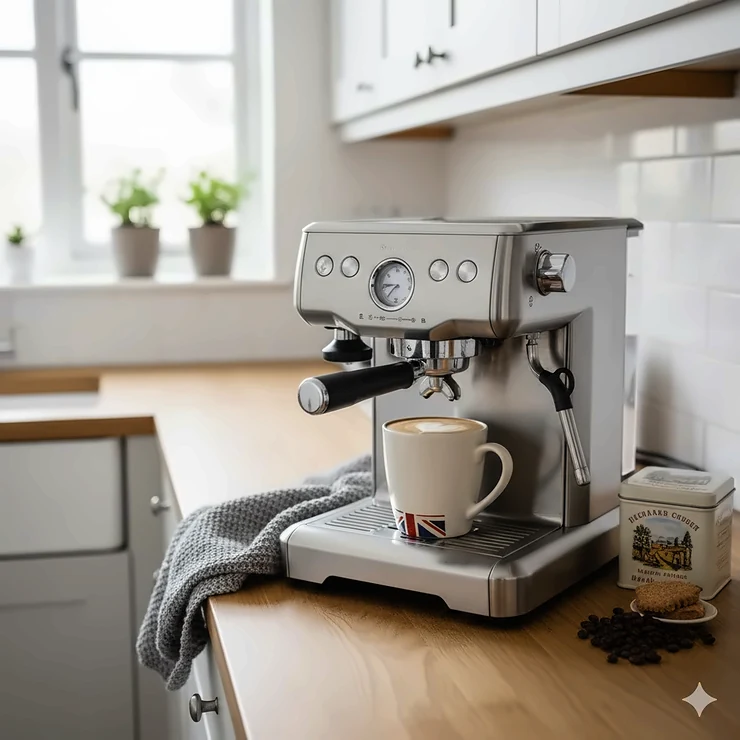
Picture this: It’s 7 am, your kitchen smells of freshly roasted beans, and you’re pulling a perfect shot with velvety crema, just like your favourite barista. That’s the magic of a semi automatic espresso machine – the sweet spot between manual labour and full automation, giving you control without the complexity.
Unlike fully automatic machines that do everything for you, or manual lever machines requiring professional-level skill, semi-automatic espresso machines automate the crucial elements (water temperature and pressure) whilst leaving you in charge of the creative bits. According to research published by Coffee Geek, these machines have become the gold standard for home enthusiasts who want café-quality espresso without needing a barista qualification.
The UK market in 2026 offers an impressive range, from budget-friendly options around £130 to prosumer machines exceeding £600. Whether you’re a curious beginner or an experienced home barista, there’s a semi automatic espresso machine perfectly suited to your needs and kitchen countertop.
In this comprehensive guide, I’ll walk you through the 7 best semi automatic espresso machines available on Amazon.co.uk, complete with real pricing, genuine specifications, and honest pros and cons. You’ll discover which machines deliver exceptional value, which suit small kitchens, and which offer professional-grade features at home-friendly prices.
Quick Comparison Table: Top Semi Automatic Espresso Machines
| Machine | Price Range (£) | Bar Pressure | Water Tank | Best For | Rating |
|---|---|---|---|---|---|
| Sage Barista Express | £449-£475 | 15 Bar | 2L | All-rounders | ⭐⭐⭐⭐⭐ |
| DeLonghi Dedica EC685 | £130-£145 | 15 Bar | 1L | Small kitchens | ⭐⭐⭐⭐ |
| Sage Bambino Plus | £359-£399 | 15 Bar | 1.9L | Quick heating | ⭐⭐⭐⭐½ |
| Gaggia Classic Evo Pro | £425-£505 | 9 Bar | 2.1L | Enthusiasts | ⭐⭐⭐⭐½ |
| CASABREWS CM5418 | £130-£155 | 20 Bar | 1L | Budget buyers | ⭐⭐⭐⭐ |
| Xiaomi Semi-Auto | £145-£175 | 20 Bar | 0.9L | Compact design | ⭐⭐⭐⭐ |
| Sage Barista Express Impress | £620-£729 | 9 Bar | 2L | Assisted tamping | ⭐⭐⭐⭐⭐ |
💬 Just one click – help others make better buying decisions too!😊
Top 7 Semi Automatic Espresso Machines: Expert Analysis
1. Sage Barista Express BES875UK – The All-Round Champion
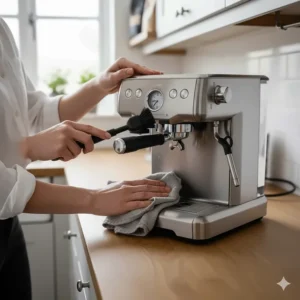
The Sage Barista Express has been a UK bestseller since its launch, and for good reason. This integrated grinder espresso machine seamlessly combines professional functionality with home-friendly design. Priced at £449-£475 on Amazon.co.uk, it represents excellent value for a complete espresso setup.
Key Specifications:
- 15 bar Italian pump with PID temperature control
- Integrated conical burr grinder (16 settings)
- 2L removable water tank
- Precise 93°C water temperature
UK buyers consistently praise its build quality and consistency. One verified Amazon reviewer who works as a professional barista noted, “Functionality is excellent, easy to follow…I’ve had no issue with extraction and getting great-tasting drinks.” The machine achieves optimal extraction through low-pressure pre-infusion, gradually increasing pressure to draw flavours evenly.
Pros:
✅ Complete solution – grinder included saves money and countertop space
✅ Professional-grade components with accessible controls
✅ Excellent build quality that feels substantial and durable
Cons:
❌ Plastic tamper feels cheap for the price point
❌ Single-hole steam wand requires practice for microfoam
Best for: Home enthusiasts wanting a complete, reliable setup without buying separate equipment. UK availability is excellent with next-day delivery through Amazon Prime.
2. DeLonghi Dedica EC685M – Ultra-Slim Space Saver
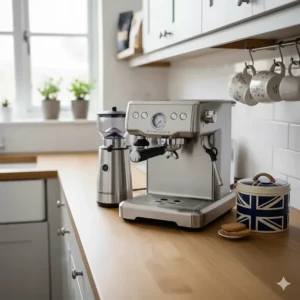
At just 15 cm wide, the DeLonghi Dedica EC685M is officially DeLonghi’s slimmest espresso machine, perfect for compact UK kitchens. Priced between £130-£145, it delivers remarkable performance for the money.
Key Specifications:
- 15 bar thermoblock heating system
- 1L removable water tank
- 40-second heat-up time
- Compatible with ground coffee and ESE pods
The Dedica’s thermoblock system reaches ideal brewing temperature in approximately 40 seconds – brilliant for busy mornings. UK reviewers particularly appreciate the adjustable drip tray that accommodates both espresso cups and tall latte glasses, an essential feature the British coffee market demands.
Pros:
✅ Exceptional value under £150 with professional features
✅ Ultra-compact footprint suits even tiny kitchens
✅ Quick heat-up saves precious morning minutes
Cons:
❌ Requires separate grinder (factor in additional £60-£100)
❌ Small water tank needs frequent refilling for multiple drinks
Best for: Urban dwellers with limited kitchen space who want café-quality espresso without the bulk. Available in multiple colours including trendy matte finishes.
3. Sage Bambino Plus SES500BSS – Speed Demon
The Sage Bambino Plus revolutionises morning coffee with its ThermoJet heating system that reaches extraction temperature in just 3 seconds. Priced at £359-£399, it’s Sage’s compact powerhouse (known as Breville in some markets, but sold as Sage throughout the UK and Europe).
Key Specifications:
- Rapid 3-second ThermoJet heating
- 54mm stainless steel portafilter
- Automatic milk frothing with Auto MilQ
- 1.9L water tank
The automatic steam wand truly sets this machine apart. With three temperature settings and three texture levels, even beginners can create silky microfoam suitable for latte art. One UK buyer enthused, “The auto-milk function was a doddle…I managed a tiny heart! In 18 months of having my old machine, I never got anywhere near that!”
Pros:
✅ Lightning-fast heat-up eliminates waiting around
✅ Auto-milk system produces consistent results every time
✅ 32% more energy-efficient than traditional thermoblock systems
Cons:
❌ Cleaning cycle triggers every 200 uses with specific tablet requirement
❌ Compact 54mm portafilter slightly smaller than commercial 58mm standard
Best for: Busy households wanting speed without sacrificing quality. Excellent for beginners learning milk frothing techniques.
4. Gaggia Classic Evo Pro RI9380 – The Prosumer Legend
The Gaggia Classic Evo Pro carries forward the legendary reputation of Gaggia’s Classic line, beloved by home baristas since 1991. Currently priced around £425-£505 on Amazon.co.uk, it’s engineered like a commercial machine but sized for home use.
Key Specifications:
- Commercial-grade 58mm brass portafilter
- 9 bar extraction (Specialty Coffee Association recommended)
- 2.1L water tank
- Three-way solenoid valve for dry pucks
This Italian-made machine features a lead-free brass boiler providing exceptional thermal stability. The 58mm commercial portafilter means you can use standard accessories and baskets from professional suppliers, opening up significant upgrade possibilities. According to CoffeeBlog.co.uk, “The Classic wasn’t such an amazing success by mistake…they’re capable of such good espresso for a home machine, at such a relatively low price.”
Pros:
✅ Built like a tank with commercial-grade components
✅ Highly moddable – enthusiasts love customising
✅ Standard 58mm accessories work perfectly
Cons:
❌ Basic plastic tamper included – upgrade recommended
❌ No PID temperature control (can be added aftermarket)
Best for: Coffee enthusiasts who enjoy tinkering and want a machine that lasts decades. Strong resale value in the UK market.
5. CASABREWS CM5418 – Budget Champion
The CASABREWS CM5418 punches well above its £130-£155 price tag, offering features typically found on machines costing twice as much. It’s become one of Amazon UK’s bestselling semi-automatic machines for good reason.
Key Specifications:
- 20 bar professional Italian pump
- Built-in pressure gauge for precision
- 1L removable water tank
- Low-pressure pre-infusion
The integrated pressure gauge is brilliant for learning proper extraction – you can literally see when you’ve got the grind size and tamp pressure right. UK customers report excellent customer service, with CASABREWS offering responsive support based in the US but serving global markets efficiently.
Pros:
✅ Unbeatable value with pressure gauge included
✅ Compact design suitable for smaller kitchens
✅ Responsive customer support resolves issues quickly
Cons:
❌ Requires cooling between brewing and steaming cycles
❌ Build quality feels lighter than premium brands
Best for: First-time espresso machine buyers wanting to explore the craft without significant investment. Excellent starter machine that can grow with your skills.
6. Xiaomi Semi-Automatic Espresso Machine – Tech-Forward Compact
Xiaomi brings its signature minimalist design philosophy to espresso with this ultra-compact machine priced around £145-£175. At just 14 cm wide, it’s even slimmer than the Dedica.
Key Specifications:
- 20 bar pump with NTC temperature control
- Compact 0.9L water tank
- Professional steam wand
- Dual capacity settings (40ml/80ml)
The NTC (Negative Temperature Coefficient) temperature control system ensures precise brewing temperature for maximum flavour extraction. Spanish Amazon reviews (the machine is popular across Europe) praise its build quality and consistent results with proper beans and grinding.
Pros:
✅ Ultra-compact footprint saves valuable counter space
✅ Modern aesthetic suits contemporary kitchens
✅ Affordable entry point to quality espresso
Cons:
❌ Smaller water tank requires frequent refilling
❌ Limited availability – check stock before purchasing
Best for: Minimalists and tech enthusiasts wanting compact, efficient design with modern engineering.
7. Sage Barista Express Impress BES876 – Assisted Excellence
The Sage Barista Express Impress takes the beloved Barista Express and adds intelligent assistance. Priced at £620-£729, it represents Sage’s premium home barista offering with innovative Impress Puck technology.
Key Specifications:
- Intelligent dosing system calculates fresh coffee level
- Assisted tamping with consistent 10kg pressure
- 9 bar optimal extraction pressure
- Integrated precision grinder
The game-changer here is the assisted tamping feature that replicates professional barista technique, applying exactly 10kg pressure with a 7° twist for a polished puck. This virtually eliminates channeling (uneven extraction), the bane of home baristas everywhere. One UK reviewer noted, “Still works perfectly after nine months of daily use…very heavy and stable.”
Pros:
✅ Consistent results even for beginners
✅ Intelligent dosing removes guesswork
✅ Professional-grade extraction made accessible
Cons:
❌ Premium pricing puts it beyond casual buyers
❌ Complexity might overwhelm complete novices
Best for: Serious home baristas wanting professional results with assisted technology. Excellent for households where multiple people want to make great coffee without extensive training.
✨ Don’t Miss These Exclusive Deals!
🔍 Take your coffee game to the next level with these carefully selected products. Click on any highlighted item to check current pricing and availability on Amazon.co.uk. These machines will help you create authentic barista-quality espresso your family will love!
What Is a Semi Automatic Espresso Machine?
A semi automatic espresso machine represents the perfect balance between manual control and automated convenience. Unlike super-automatic machines that grind, tamp, and brew at a button press, semi-automatics automate the critical technical elements – water temperature and pressure – whilst leaving you in control of grinding, dosing, tamping, and timing.
According to KitchenAid’s espresso machine guide, semi-automatic machines use an electric pump generating consistent 8-9 bars of pressure (the optimal range for extracting espresso) whilst maintaining precise water temperature through PID controllers or thermoblocks. You control when extraction starts and stops, giving you creative freedom without requiring professional-level muscle memory.
The typical workflow involves grinding fresh beans, distributing grounds evenly in the portafilter basket, tamping with consistent pressure (typically around 13-15kg), locking the portafilter into the group head, and initiating extraction via a button or lever. The machine maintains perfect brewing temperature and pressure throughout – elements that would be extremely difficult to control manually.
This design philosophy emerged in the 1940s when Italian inventor Achille Gaggia revolutionised espresso by replacing manual levers with electric pumps, democratising quality espresso brewing. Today’s semi-automatics build on this foundation with modern temperature controls, pre-infusion systems, and precision engineering that brings café-quality results within reach of home enthusiasts.
Semi Automatic vs Automatic vs Super Automatic: Key Differences
Understanding the distinctions helps you choose the right machine for your lifestyle and preferences.
Semi Automatic Espresso Machines: These require manual grinding, dosing, tamping, and timing. You control extraction start and stop. The machine automates water temperature and pressure. Think of it as the machine handling the technical foundations whilst you conduct the orchestra.
Automatic Espresso Machines: Very similar to semi-automatics, but with volumetric controls. You still grind, dose, and tamp, but the machine automatically stops extraction after a pre-programmed amount of water passes through. This ensures consistent shot volumes without watching the clock.
Super Automatic Espresso Machines: These do everything – grinding, dosing, tamping, brewing, and often milk frothing – at the press of a button. Maximum convenience, minimum control. Brilliant for offices or households prioritising speed over the craft aspect.
| Feature | Semi-Automatic | Automatic | Super-Automatic |
|---|---|---|---|
| Grind beans | Manual | Manual | Automatic |
| Tamp coffee | Manual | Manual | Automatic |
| Control extraction | Manual start/stop | Manual start only | Fully automatic |
| Price range | £130-£730 | £200-£900 | £400-£2,500+ |
| Skill required | Moderate | Moderate | Minimal |
| Customisation | High | Medium | Low |
For most UK home enthusiasts, semi-automatics offer the sweet spot – enough automation to ensure consistent technical performance, enough manual control to feel like a proper barista, and prices that don’t require a second mortgage.
Essential Features to Consider When Buying
Pump Pressure: Why 9 Bars Matters
You’ll see machines advertising 15 bar or even 20 bar pressure, but according to the Specialty Coffee Association, the optimal extraction pressure is actually 9 bars. Higher-pressure pumps typically include an overpressure valve (OPV) set to 9 bars, meaning the advertised pressure is the pump’s maximum capability, not what actually reaches your coffee.
Modern quality machines like the Gaggia Classic Evo Pro and Sage Barista Express Impress correctly set their OPVs to 9 bars for optimal extraction. Beware of cheaper machines that might extract at 12-15 bars, leading to over-extraction and bitter espresso.
Boiler Type: Thermoblock vs Traditional Brass
Thermoblocks heat water on-demand as it passes through heated metal blocks. They’re energy-efficient, heat quickly, and suit machines like the DeLonghi Dedica and Sage Bambino. The trade-off is slightly less temperature stability compared to traditional boilers.
Traditional brass boilers maintain a reservoir of heated water at consistent temperature. They offer superior thermal stability and steam power but require longer heat-up times. The Gaggia Classic uses this approach, prized by purists for temperature consistency.
For most home use, quality thermoblocks perform brilliantly. Only espresso obsessives extracting light roasts need worry about the marginal stability differences.
Portafilter Size: Commercial vs Compact
58mm portafilters are the commercial standard, used in cafés worldwide. They offer maximum flexibility – you can buy aftermarket baskets, screens, and accessories from countless suppliers. The Gaggia Classic’s 58mm portafilter is a major selling point for enthusiasts.
54mm portafilters (Sage Bambino series) are slightly smaller but perfectly functional for home use. The smaller size actually suits home usage patterns – you’re not pulling shots back-to-back all day like a busy café.
51mm and smaller (CASABREWS, some DeLonghi models) work fine but limit accessory options. For beginners, this rarely matters.
Steam Wand Quality
A good steam wand makes the difference between sad, bubbly milk and silky microfoam suitable for latte art. Look for:
- Commercial-style wands with multiple holes create better vortex motion
- Articulating wands adjust to different jug sizes
- Auto-purge functions clean the wand automatically between uses
The Sage Bambino Plus’s Auto MilQ system is brilliant for beginners, whilst traditional manual wands on the Gaggia Classic give experienced users ultimate control.
Benefits of Semi Automatic Espresso Machines for Home Use
Creative Control Without Complexity
Semi-automatics give you control over the variables that actually affect flavour – grind size, dose weight, and extraction time – whilst automating the technically challenging bits like maintaining 93°C water temperature and 9 bars of pressure. According to research from Coffee Dictionary, this balance makes semi-automatics the choice of “espresso traditionalists” who want café-quality control without needing café-level technical knowledge.
Cost-Effectiveness
A quality semi-automatic like the Sage Barista Express (£449) delivers espresso quality matching £6 café drinks. Brew just two coffees daily, and you’ve recovered your investment within six months. Super-automatics costing £1,500+ take considerably longer to justify, especially considering higher maintenance costs.
Skill Development
There’s genuine satisfaction in pulling a perfect shot. Semi-automatics teach you the craft of espresso – how grind size affects extraction, what proper tamping pressure feels like, and when to stop pulling for optimal flavour. These skills are transferable; you’ll appreciate café espresso more and understand what separates excellent from mediocre.
Flexibility and Customisation
Want to experiment with light Ethiopian roasts requiring different parameters than dark Italian blends? Semi-automatics let you adjust everything. Many super-automatics lock you into preset programs that may not suit specialty beans or unconventional recipes.
Reliability and Longevity
Fewer automated components mean fewer potential failure points. Well-maintained semi-automatics routinely last 10-15 years. The Gaggia Classic’s legendary reputation comes partly from 20-year-old machines still pulling excellent shots. Super-automatics, with their complex internal mechanics, typically need major servicing or replacement after 5-7 years.
Common Beginner Mistakes to Avoid
Buying Without a Proper Grinder
This is mistake number one, especially with entry-level semi-automatics. You must invest in a capable burr grinder. Pre-ground supermarket coffee produces disappointing results because espresso requires extremely fine, consistent grinding. UK buyers should budget £60-£150 for a decent burr grinder unless buying an integrated machine like the Sage Barista Express.
Hand grinders like the Timemore C3 ESP (around £90) work brilliantly for home use, offering exceptional grind quality at affordable prices. Electric options start around £130 for the Sage Smart Grinder Pro.
Incorrect Tamping Technique
Too light, and water channels through weak spots. Too heavy, and you risk wrist strain and choking the machine. Aim for consistent 13-15kg pressure – about the force needed to compress a bathroom scale to 13-15kg reading. The Sage Barista Express Impress’s assisted tamping elegantly solves this problem.
Neglecting Regular Cleaning
Espresso machines require consistent maintenance. Backflush weekly (if your machine has a three-way solenoid valve like the Gaggia Classic), descale every 2-3 months using proper descaling solution, and clean the group head gasket regularly. UK water hardness varies dramatically; hard water areas need more frequent descaling.
Overheating Milk
Steaming milk beyond 65-70°C destroys the proteins that create silky texture, leaving you with thin, burnt-tasting milk. Use a milk thermometer initially until you can judge temperature by touch (the jug becomes too hot to hold comfortably at around 65°C).
Expecting Instant Perfection
There’s a learning curve. Your first shots may be sour (under-extracted), bitter (over-extracted), or weak. This is normal. Professional baristas train for months. Give yourself a fortnight of daily practice before judging your machine’s performance.
Maintenance and Care Guide for UK Users
Daily Maintenance (5 minutes)
- Purge the group head before and after brewing to flush residual grounds
- Wipe the steam wand immediately after frothing with a clean, damp cloth
- Empty the drip tray and rinse to prevent mould growth
- Backflush with water if your machine has a three-way solenoid
Weekly Maintenance (15 minutes)
- Backflush with detergent (Puly Caff or similar) to remove coffee oils
- Soak portafilter and baskets in espresso machine cleaner
- Clean the shower screen above the group head – coffee oils accumulate quickly
- Wipe exterior with soft, damp cloth
Monthly Maintenance (30 minutes)
- Deep clean steam wand – some models allow removal for thorough cleaning
- Inspect gaskets for wear or coffee buildup
- Check water tank for limescale or mould (more common in humid UK climate)
- Replace water filter if your machine uses one
Quarterly Maintenance (45 minutes)
- Descale completely using proper descaling solution (not vinegar, which can damage seals)
- Replace group head gasket if showing wear or leaking
- Service steam wand O-rings if steam performance declines
- Calibrate grinder (if integrated) to maintain optimal performance
UK water quality significantly affects maintenance frequency. Hard water areas (Southeast England, Midlands) require more aggressive descaling schedules. Consider installing an inline water filter if your area has particularly hard water – it extends machine life considerably whilst improving espresso flavour.
Frequently Asked Questions
❓ How much should I spend on a semi automatic espresso machine in the UK?
❓ Do I need a separate grinder for a semi automatic machine?
❓ How long does it take to become proficient at using a semi automatic espresso machine?
❓ Are semi automatic machines suitable for beginners or should I start with a super automatic?
❓ How much counter space does a semi automatic espresso machine require in a typical UK kitchen?
Conclusion: Finding Your Perfect Semi Automatic Espresso Machine
Choosing a semi automatic espresso machine ultimately comes down to matching machine capabilities with your lifestyle, budget, and coffee ambitions. The UK market in 2026 offers exceptional options across all price points, each with distinct advantages.
For all-round excellence, the Sage Barista Express remains unbeatable value at £449-£475. Its integrated grinder, solid build quality, and reliable performance make it the default recommendation for most home enthusiasts. You’re getting a complete setup that will serve you brilliantly for years.
Budget-conscious buyers should seriously consider the DeLonghi Dedica EC685 or CASABREWS CM5418, both delivering impressive performance under £150. Yes, you’ll need to buy a separate grinder, but the total investment still comes well under £300 for a capable setup.
For speed demons and busy households, the Sage Bambino Plus with its 3-second heat-up and automatic milk frothing justifies its £359-£399 price tag through sheer convenience and consistent results.
Enthusiasts craving traditional, moddable machines with commercial-grade components should investigate the Gaggia Classic Evo Pro. Its legendary reputation and 58mm portafilter make it the choice of serious home baristas willing to invest £425-£505.
Finally, if budget permits and you want the latest assisted technology, the Sage Barista Express Impress at £620-£729 offers intelligent dosing and consistent tamping that virtually guarantee excellent results from day one.
Whichever machine you choose, remember that great espresso comes from the complete system – quality machine, capable grinder, fresh beans, and consistent technique. Start with a machine that fits your budget and kitchen, invest time learning proper technique, and you’ll be pulling shots rivalling your favourite café within weeks.
The journey from pushing a button on a super-automatic to crafting your own perfect espresso is genuinely rewarding. Semi-automatic machines give you control without overwhelming complexity, making them the ideal choice for anyone serious about home espresso.
Recommended for You
- Best Espresso Machine Under £500 UK 2026
- 7 Best Espresso Machine for Beginners UK 2026 – Expert Picks
- 7 Best Small Bean to Cup Coffee Machine UK 2026
Disclaimer: This article contains affiliate links. If you purchase products through these links, we may earn a small commission at no additional cost to you. Always check Amazon.co.uk for current pricing and availability.
✨ Found this helpful? Share it with your mates! 💬🤗
