
In This Article
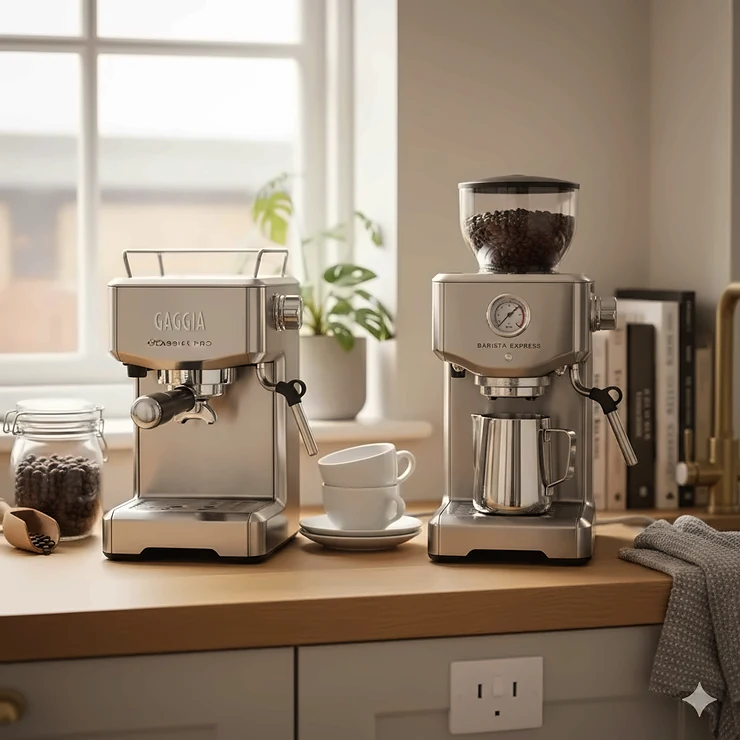
Choosing between the gaggia classic pro vs sage barista express is perhaps the most common debate amongst aspiring home baristas in the UK. Both machines have earned legendary status in the coffee community, but they take fundamentally different approaches to crafting café-quality espresso at home.
The Gaggia Classic Pro represents the traditional, minimalist philosophy: give you commercial-grade components and get out of your way. It’s a machine that rewards skill and patience, offering an authentic barista experience. Meanwhile, the Sage Barista Express embodies the all-in-one convenience approach, packing an integrated grinder and assisted features into a comprehensive package.
After testing dozens of espresso machines and speaking with countless UK coffee enthusiasts, I’ve found that the “better” machine entirely depends on your priorities. Are you a tinkerer who wants full control and upgradeability? Or someone who values consistency and convenience for your morning routine? This comprehensive comparison of the gaggia classic pro vs sage barista express will help you decide which camp you belong to, whilst exploring seven outstanding models currently available on Amazon.co.uk in 2026.
According to research on coffee extraction, proper espresso requires precise control of temperature (90-96°C), pressure (9 bars), and timing to extract the optimal balance of flavours from your beans.
Quick Comparison Table: Gaggia vs Sage at a Glance
| Feature | Gaggia Classic Pro | Sage Barista Express |
|---|---|---|
| Price Range | £400-£549 | £449-£629 |
| Integrated Grinder | ❌ No | ✅ Yes (Conical burr) |
| Portafilter Size | 58mm (Commercial) | 54mm |
| Boiler Type | Single boiler (Brass/Aluminium) | Thermocoil heating |
| PID Temperature Control | ❌ No (Manual control) | ✅ Yes |
| Heat-Up Time | ~10 minutes | ~3 seconds (Thermojet) |
| Steam Power | Excellent (Commercial wand) | Very Good |
| Build Quality | Outstanding (Italian-made) | Excellent |
| Best For | Purists, upgraders, tinkerers | Convenience seekers, beginners |
| Upgradability | ⭐⭐⭐⭐⭐ | ⭐⭐ |
💬 Just one click – help others make better buying decisions too!😊
Top 7 Espresso Machines: Expert Analysis
1. Gaggia Classic E24 Evo Pro – The New Italian Benchmark
The Gaggia Classic E24 Evo Pro represents the latest evolution of this iconic machine, and it’s genuinely brilliant. What sets the E24 apart from older models is the upgraded brass boiler (25% larger capacity) and improved lead-free brass brew group, delivering superior temperature stability throughout extraction.
Key Specifications:
- 58mm commercial-style stainless steel portafilter
- Brass boiler with enhanced thermal mass
- Three-way solenoid valve for dry puck removal
- Professional two-hole steam wand
- 2.1-litre removable water tank
UK Price: £512-£549 on Amazon.co.uk
Real Customer Feedback: UK buyers consistently praise the E24’s build quality and steam power. One reviewer who upgraded from a twenty-year-old Rancilio Silvia mentioned: “The steaming seems much more powerful than my Rancilio was, getting microfoam is a doddle.” Another customer highlighted the exceptional dispatch from European suppliers to UK addresses.
✅ Pros:
- Commercial-grade 58mm portafilter (same as professional machines)
- Outstanding build quality with Italian craftsmanship
- Powerful steam wand perfect for latte art
- Highly modifiable and upgradeable
- 2-year labour + 5-year parts UK warranty
❌ Cons:
- No PID temperature control (requires temperature surfing)
- Longer heat-up time (~10 minutes from cold)
2. Sage Barista Express BES875UK – The All-in-One Champion
The Sage Barista Express has dominated the mid-range espresso machine market for good reason. It delivers integrated precision grinding, PID temperature control, and low-pressure pre-infusion in a package that costs less than buying a separate machine and grinder.
Key Specifications:
- Integrated conical burr grinder (18 external settings + 10 internal adjustments)
- 54mm portafilter with commercial-style build
- Digital PID temperature control (±1°C accuracy)
- 15-bar Italian pump with low-pressure pre-infusion
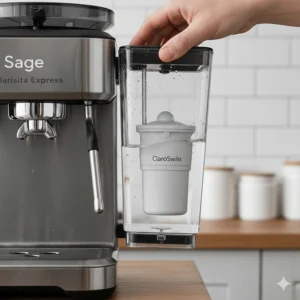
- 2-litre water tank with integrated filtration
UK Price: £449-£499 on Amazon.co.uk
Real Customer Feedback: A working barista reviewed: “I work as a barista professionally, so I am familiar with all sorts of coffee machines. After purchasing this one, I can say it was definitely worth the price paid. Functionality is excellent, easy to follow.” UK buyers particularly appreciate the machine’s ability to dial in shots with the built-in grinder, though some recommend upgrading to a separate grinder for ultimate control.
✅ Pros:
- Exceptional value with integrated quality grinder
- Precise PID temperature control eliminates guesswork
- 3-second heat-up time with Thermojet system
- Excellent for beginners learning espresso craft
- Comprehensive package requires no additional purchases
❌ Cons:
- Integrated grinder less upgradeable than standalone
- 54mm portafilter limits aftermarket basket options
- Some find grinder “retention” frustrating (coffee stuck in chute)
3. Sage Barista Express Impress – Assisted Perfection
The Barista Express Impress takes everything brilliant about the original and adds intelligent dosing and assisted tamping. If you want consistency without sacrificing the craft, this machine delivers.
Key Specifications:
- Intelligent dosing system (remembers last dose)
- Assisted tamping (applies consistent 10kg pressure)
- 25 grind settings for precise dialling
- Barista-twist tamping motion for polished puck
- Same PID and pre-infusion as Barista Express
UK Price: £624-£729 on Amazon.co.uk
Real Customer Feedback: One enthusiastic UK buyer shared: “If you’re serious about coffee, the Barista Express Impress is an incredible choice. The intelligent dose system even remembers your settings, saving time on future uses. Easily rivals your local coffee shop.” Buyers consistently mention the learning curve is gentler whilst still delivering professional results.
✅ Pros:
- Assisted tamping ensures consistent shots every time
- Intelligent dosing reduces waste and improves workflow
- Stunning premium design
- Removes two major sources of error for beginners
❌ Cons:
- Significantly more expensive than standard Express
- Takes up considerable counter space
- Limited if you prefer manual control
4. Sage Bambino Plus SES500BSS – Compact Powerhouse
For those with limited kitchen space, the Sage Bambino Plus proves you don’t need bulk to brew brilliance. This compact machine delivers automatic milk texturing and rapid heat-up in a footprint smaller than most kettles.
Key Specifications:
- ThermoJet heating system (3-second heat-up)
- Automatic milk frother with temperature sensor
- 54mm portafilter with commercial elements
- Low-pressure pre-infusion
- Three-way solenoid valve
UK Price: £329-£379 on Amazon.co.uk
Real Customer Feedback: A UK customer who upgraded from a DeLonghi Dedica wrote: “The Bambino auto-milk function was a doddle, it took me a couple of coffees and a few YouTube videos but I managed a tiny heart! In 18 months of having my old machine, I never got anywhere near that!” The compact size and automatic milk frothing receive consistent praise from UK buyers.
✅ Pros:
- Remarkably compact footprint
- Blazingly fast 3-second heat-up
- Automatic milk texturing for consistent results
- Excellent value considering features
- Perfect for small kitchens
❌ Cons:
- No grinder (requires separate purchase)
- Smaller 1.9-litre water tank
- Limited manual control compared to larger models
5. De’Longhi Dedica EC685M – The Budget Gateway
The De’Longhi Dedica represents the most affordable entry into proper espresso territory. Whilst it ships with pressurised baskets, it’s remarkably upgradeable, making it popular with budget-conscious beginners planning to grow their skills.
Key Specifications:
- Ultra-slim 15cm width (perfect for tight spaces)
- 51mm portafilter
- 15-bar pump pressure
- Three programmable brewing options
- Adjustable steam wand
UK Price: £127-£169 on Amazon.co.uk
Real Customer Feedback: The Dedica enjoys popularity amongst UK coffee forums, with users frequently upgrading the portafilter to 51mm bottomless versions and installing Rancilio Silvia steam wands. One three-year owner noted: “I would say it is a good ‘starter’ espresso machine but there are better second-hand espresso machines out there for the same price.”
✅ Pros:
- Incredibly affordable entry point
- Ultra-compact design fits anywhere
- Highly upgradeable with aftermarket parts
- Decent espresso with modifications
❌ Cons:
- Only includes pressurised baskets (non-pressurised sold separately)
- No milk jug included
- Lower build quality than premium models
- Requires upgrades to reach full potential
6. Breville Barista Max VCF117 – Budget Alternative with Grinder
The Breville Barista Max offers integrated grinding at a price point below the Sage Barista Express, making it appealing for those on tighter budgets.
Key Specifications:
- Integrated burr grinder
- 15-bar Italian pump
- 2.8-litre water tank
- Steam wand for milk frothing
- Stainless steel construction
UK Price: £279-£329 on Amazon.co.uk
Real Customer Feedback: UK reviews are mixed, with some praising the value whilst others note quality concerns compared to Sage products. The general consensus suggests it’s suitable for casual users but lacks the refinement serious enthusiasts demand.
✅ Pros:
- Integrated grinder at budget price
- Large water capacity
- Decent for occasional use
❌ Cons:
- Build quality concerns
- Less precise temperature control
- Customer service feedback varies
7. Sage Duo Temp Pro – Manual Mastery
The Sage Duo Temp Pro strips away the grinder but retains excellent espresso extraction capabilities, making it ideal for those who already own a quality grinder or want to choose their own.
Key Specifications:
- PID digital temperature control
- Low-pressure pre-infusion
- 58mm commercial-style portafilter
- Professional steam wand
- 1.9-litre water tank
UK Price: £300-£389 on Amazon.co.uk
Real Customer Feedback: UK buyers who pair this with quality standalone grinders report excellent results. One reviewer mentioned: “It’s a tad thinner than its bigger brother (the Bambino Plus), but features a hot water button which is a significant advantage for Americano drinkers.”
✅ Pros:
- PID temperature control at accessible price
- Fast heat-up and steam-ready times
- Excellent for those with existing grinders
- Strong steam performance
❌ Cons:
- No grinder included
- Smaller than Gaggia Classic Pro
- Middle-ground option may not suit purists or convenience seekers
✨ Don’t Miss These Exclusive Deals!
🔍 Take your home barista journey to the next level with these carefully selected products. Click on any highlighted item to check current pricing and availability on Amazon.co.uk. These machines will help you create authentic café-quality espresso your family and guests will love!
Understanding the Core Differences
Build Quality and Longevity
The gaggia classic pro vs sage barista express debate often centres on construction philosophy. Gaggia takes the commercial approach: mainly stainless steel, brass components, and a design intended to be serviced and maintained like professional equipment. This Italian manufacturer has been crafting espresso machines since 1947, and that heritage shows in the Classic Pro’s robust, no-nonsense construction.
Sage (known as Breville outside Europe) brings modern engineering and thoughtful design to the home market. Their machines feature excellent build quality with contemporary aesthetics, though they’re engineered more as complete systems rather than modular, serviceable units.
The Verdict: For a 20-year machine you can repair indefinitely, choose Gaggia. For a 5-10 year appliance with better out-of-box convenience, choose Sage.
The Grinder Question: Integrated vs Separate
This represents perhaps the most fundamental difference in the gaggia classic pro vs sage barista express comparison. The Barista Express includes a conical burr grinder with 18 external settings and 10 internal burr adjustments, whilst the Gaggia Classic Pro assumes you’ll provide your own grinder.
Integrated Grinder Advantages:
- Lower total initial cost
- Convenient workflow
- Less counter space required
- Good enough for most users
Separate Grinder Advantages:
- Ability to choose specialist equipment
- Easier to upgrade individual components
- Generally superior grind quality at equivalent total price
- No compromises in machine design
Many enthusiasts argue that if you’re spending £500+ on an espresso machine, investing £200-£400 in a quality standalone grinder (like the Sage Smart Grinder Pro or Eureka Mignon Manuale) pairs better with the Gaggia Classic Pro than relying on the Barista Express’s integrated solution.
Temperature Control and Consistency
Temperature stability dramatically affects espresso quality. Coffee extraction science demonstrates that different compounds extract optimally at specific temperatures within the 90-96°C range.
Gaggia Classic Pro Approach
The Gaggia uses a traditional single boiler with mechanical thermostat. This means you’ll practice “temperature surfing”—timing your shots relative to the heating cycle to hit your desired temperature. It’s old-school, requires skill, but gives you ultimate control once mastered. Many users eventually add aftermarket PID kits (£50-£100) for precise digital control.
Sage Barista Express Approach
Sage’s digital PID system maintains water temperature within ±1°C of your target. For beginners, this eliminates a major variable and ensures consistent results. The low-pressure pre-infusion gradually increases pressure, allowing even extraction—a feature typically found on much pricier machines.
The Verdict: Sage wins for consistency and beginner-friendliness. Gaggia wins for ultimate control and upgradeability.
Steam Power and Milk Frothing
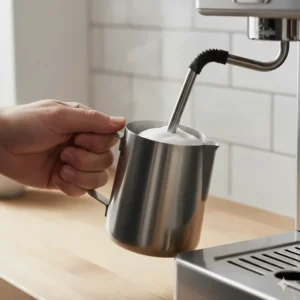
Both machines feature commercial-style steam wands, but they behave quite differently.
Gaggia Classic Pro: The professional two-hole steam wand is genuinely powerful, matching commercial machines. The brass boiler provides excellent steam pressure and volume. However, you’ll wait 30-60 seconds for the boiler to heat between pulling espresso and steaming milk (single boiler limitation).
Sage Barista Express: The Thermocoil system provides quick recovery time, and the steam wand offers good control. It’s capable of producing microfoam for latte art, though some users find it slightly less powerful than the Gaggia’s commercial-grade wand.
Both machines easily handle milk-based drinks, but the Gaggia edges ahead for those prioritising latte art and professional-level milk texturing.
Comparison: Entry-Level vs Mid-Range Options
| Model | Price (£) | Grinder | PID | Portafilter | Best For |
|---|---|---|---|---|---|
| De’Longhi Dedica | 127-169 | ❌ | ❌ | 51mm | Budget beginners |
| Sage Bambino Plus | 329-379 | ❌ | ✅ | 54mm | Space-conscious buyers |
| Sage Duo Temp Pro | 300-389 | ❌ | ✅ | 58mm | Existing grinder owners |
| Gaggia Classic Pro | 400-549 | ❌ | ❌ | 58mm | Serious enthusiasts |
| Sage Barista Express | 449-499 | ✅ | ✅ | 54mm | All-in-one convenience |
| Barista Express Impress | 624-729 | ✅ | ✅ | 54mm | Assisted consistency |
| Breville Barista Max | 279-329 | ✅ | ❌ | – | Budget compromise |
The Modification and Upgrade Path
This area showcases the fundamental philosophy difference in the gaggia classic pro vs sage barista express debate.
Gaggia Classic Pro Modifications
The Classic Pro enjoys massive community support with countless upgrade options:
- PID temperature controller: £50-£100 (Mr Shades, Auber Instruments)
- OPV adjustment: Free (adjust existing valve to 9 bars)
- IMS/VST precision baskets: £20-£35
- Bottomless portafilter: £40-£80
- Silicone group gasket: £8-£15
- Shades pressure gauge kit: £40-£60
- Pre-infusion chamber: £80-£120
Enthusiasts have turned the Gaggia into a £1,500+ equivalent machine with £200-£300 in upgrades.
Sage Barista Express Limitations
The Barista Express is designed as a complete system. Whilst you can add precision baskets and better portafilters, the integrated grinder limits ultimate upgradeability. When you outgrow the grinder, you’re essentially replacing half the machine’s value.
The Verdict: If you love tinkering and want a 20-year upgrade journey, Gaggia wins hands down. If you want appliance simplicity, Sage’s “just works” philosophy makes more sense.
Real-World Workflow Comparison
Morning with Gaggia Classic Pro
- Switch on machine (wait 8-10 minutes for optimal temperature)
- Grind beans in separate grinder
- Dose, distribute, and tamp in portafilter
- Temperature surf or wait for indicator light
- Pull shot (may take multiple attempts to dial in)
- Purge steam, wait for boiler to heat
- Steam milk
- Total time: 15-20 minutes (including heat-up)
Morning with Sage Barista Express
- Switch on machine (3-second heat-up)
- Grind beans directly into portafilter
- Distribute and tamp
- Pull shot (PID ensures consistency)
- Quick transition to steam mode
- Steam milk
- Total time: 5-8 minutes from cold start
For busy mornings, the Sage’s speed and consistency provide genuine advantages. For weekend ritual where you’ve got time to appreciate the craft, the Gaggia’s workflow feels more rewarding.
Price Analysis: Total Cost of Ownership
When comparing the gaggia classic pro vs sage barista express, consider the complete setup cost:
Gaggia Classic Pro Complete Setup
- Machine: £400-£549
- Grinder (Sage Smart Grinder Pro): £170-£199
- Tamper and accessories: £30-£50
- Optional mods: £0-£300
- Total: £600-£1,098
Sage Barista Express Complete Setup
- Machine (includes grinder): £449-£499
- Better tamper: £25-£40
- Optional precision basket: £20-£35
- Total: £494-£574
The Barista Express offers lower total initial investment, making it attractive for those wanting to minimise upfront costs. However, the Gaggia’s separate components mean you can upgrade the grinder without replacing the entire system.
Maintenance and Servicing
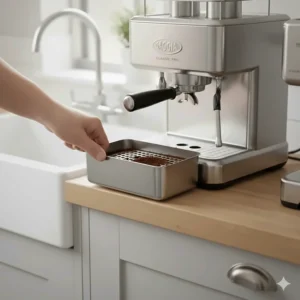
Both machines require regular maintenance, but the approach differs significantly.
Gaggia Classic Pro:
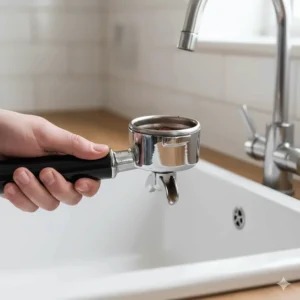
- Backflushing weekly with blind basket
- Descaling every 2-3 months (depending on water hardness)
- Group gasket replacement annually (£8-£15, DIY-friendly)
- Shower screen cleaning monthly
- Extensive repair guides available online
- Parts readily available through UK suppliers
Sage Barista Express:
- Backflushing weekly
- Built-in cleaning cycle with alert system
- Descaling every 2-3 months
- Grinder burr cleaning monthly
- Less DIY repair-friendly
- Some parts available through Sage UK support
The Gaggia’s service-oriented design means UK owners can maintain it indefinitely. Sage machines, whilst well-built, rely more on manufacturer support.
Which Machine for Your Skill Level?
Complete Beginners
Recommendation: Sage Barista Express
The integrated grinder, PID control, and assisted features provide the gentlest learning curve. You’ll achieve acceptable results immediately whilst learning proper technique.
Intermediate Enthusiasts
Recommendation: Either works
If you value convenience and have limited time: Sage Barista Express If you’re developing barista skills and enjoy the process: Gaggia Classic Pro
Advanced Home Baristas
Recommendation: Gaggia Classic Pro
The modification potential, commercial components, and manual control offer unlimited growth potential. Pair with a quality grinder like the Eureka Mignon or Niche Zero for professional-level results.
💡 Take Your Coffee Game Further
Looking to maximise your espresso experience? Consider these essential accessories: precision tamper (£25-£50), distribution tool (£15-£30), shot glasses with measurements (£10-£15), and a quality milk jug (£15-£25). These tools, combined with your chosen machine, will elevate your home barista game significantly!
UK-Specific Buying Considerations
Warranty and Support
- Gaggia UK: 2-year labour + 5-year parts warranty through authorised UK distributors
- Sage UK: 2-year manufacturer warranty, excellent UK customer service reputation
Both brands maintain strong UK presence with readily available parts and support.
Power Requirements
All machines discussed operate on UK 230V power and come with UK plugs when purchased from Amazon.co.uk or authorised retailers. Heat-up times and performance remain consistent with UK electrical standards.
Water Hardness
Most UK areas have moderately hard to very hard water. Both machines benefit from:
- Built-in or aftermarket water filtration
- Regular descaling (every 2-3 months)
- Bottled water for hardest areas
Consider purchasing a TDS metre (£10-£20) to monitor water quality, as water composition significantly affects espresso taste and machine longevity.
Benefits vs Capsule and Bean-to-Cup Machines
| Feature | Gaggia/Sage | Capsule (Nespresso) | Bean-to-Cup |
|---|---|---|---|
| Coffee Quality | ⭐⭐⭐⭐⭐ Excellent | ⭐⭐⭐ Good | ⭐⭐⭐⭐ Very Good |
| Cost Per Cup | £0.15-£0.30 | £0.35-£0.50 | £0.20-£0.35 |
| Skill Required | Medium-High | None | Low |
| Maintenance | Regular | Minimal | Moderate |
| Bean Flexibility | Total | None | Good |
| Upgrade Path | Excellent | None | Limited |
| Environmental Impact | Low | High (capsules) | Low-Medium |
Traditional espresso machines like the gaggia classic pro vs sage barista express offer superior coffee quality and lower running costs, though they demand more involvement than fully automatic alternatives.
FAQ: Your Questions Answered
❓ Can I use pre-ground coffee with these machines?
❓ How long do these machines typically last?
❓ Which machine is better for latte art?
❓ Do I need to modify the Gaggia Classic Pro immediately?
❓ Are these machines suitable for an office environment?
Conclusion: Which Machine Wins?
The gaggia classic pro vs sage barista express comparison reveals no universal winner—both machines excel in different ways.
Choose the Gaggia Classic Pro if you:
- Value traditional craftsmanship and Italian engineering
- Want ultimate control and modification potential
- Already own (or plan to buy) a quality separate grinder
- Enjoy the manual process and learning journey
- Prioritise longevity and serviceability
- Plan to develop serious barista skills
Choose the Sage Barista Express if you:
- Want an all-in-one convenient solution
- Prefer consistent results with minimal fuss
- Value speed (3-second heat-up) for busy mornings
- Appreciate modern features like PID and pre-infusion
- Have limited counter space for separate equipment
- Want excellent coffee without the steep learning curve
Both machines have earned their reputations in the UK market. The Gaggia Classic Pro remains the enthusiast’s choice—a machine you’ll modify, learn from, and potentially keep for decades. The Sage Barista Express delivers the best value in integrated espresso systems, combining quality grinding and brewing in one well-designed package.
Your budget, available space, existing equipment, and personal preferences should guide your decision. Whichever you choose, you’re investing in a machine capable of producing café-quality espresso that will dramatically improve your daily coffee ritual.
For most UK buyers in 2026, I’d recommend the Sage Barista Express as the practical choice delivering outstanding value. However, if you’re truly passionate about espresso and want to maximise your long-term potential, the Gaggia Classic Pro (paired with a quality grinder) offers the superior path to coffee mastery.
Recommended for You
- Best Semi Automatic Espresso Machines UK 2026
- Best Espresso Machine Under £500 UK 2026
- 7 Best Espresso Machine for Beginners UK 2026 – Expert Picks
Disclaimer: This article contains affiliate links. If you purchase products through these links, we may earn a small commission at no additional cost to you. Prices shown are approximate and may vary based on retailer and time of purchase.
✨ Found this helpful? Share it with your mates! 💬🤗
