
In This Article
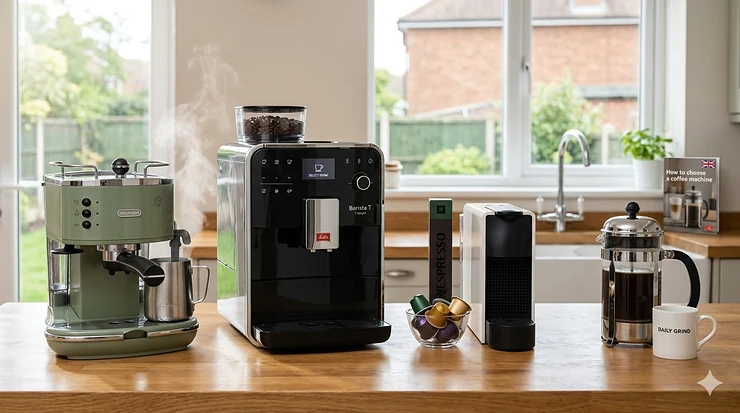
Choosing the right coffee machine can feel overwhelming when you’re faced with dozens of options at different price points. I’ve spent countless mornings testing various machines – from budget-friendly pod brewers to sophisticated bean-to-cup systems – and I can tell you that the “best” machine isn’t always the most expensive one. It’s the one that matches your lifestyle, budget, and coffee preferences.
Research from Which?, the UK’s consumer champion, reveals that the type of coffee machine you select fundamentally depends on your preferred drink style, available budget, and desired level of hands-on involvement. Whether you’re a casual caffeine seeker who simply wants a quick morning pick-me-up or an aspiring home barista eager to master latte art, understanding your specific needs is crucial before making that investment. Interestingly, studies from University Hospital Southampton NHS Foundation Trust found that moderate coffee consumption of three cups daily may offer health benefits, though the NHS advises not exceeding four cups per day to avoid increased blood pressure.
The UK coffee machine market has evolved dramatically in 2026. You’ll find everything from £40 pod machines that deliver consistent results to £700+ bean-to-cup systems that grind fresh beans for each cup. The key is matching the machine to your actual habits – not your aspirational ones. Let’s dive into what you need to know to make an informed choice. Interestingly, research published in the BMJ found that coffee consumption is more often associated with health benefits than harm across multiple outcomes, with three to four cups daily showing optimal results for cardiovascular health.
Quick Comparison Table
| Machine Type | Price Range | Best For | Convenience Level |
|---|---|---|---|
| Pod Machines | £39.99-£149 | Quick single servings | Very High ✓✓✓ |
| Filter Coffee Makers | £44.99-£90 | Large batches | High ✓✓ |
| Manual Espresso | £80-£169 | Aspiring baristas | Medium ✓ |
| Bean-to-Cup | £259-£700+ | Fresh daily espresso | Very High ✓✓✓ |
💬 Just one click – help others make better buying decisions too! 😊
Top 7 Coffee Machines: Expert Analysis
1. Tassimo by Bosch Finesse Friendly – Best Budget Pod Machine
If you’re watching your pennies but refuse to compromise on variety, this little gem deserves serious consideration. Currently available for £39.99 (reduced from £118.99), it’s one of the most affordable ways to enter the world of decent home coffee.
Key Specifications:
- Intellibrew barcode technology
- 0.7L water tank
- Compatible with 50+ beverage types
The Intellibrew system scans each T-disc’s barcode and automatically adjusts brewing time, temperature, and water quantity. According to TechRadar’s coffee machine expert, the Bosch Tassimo Finesse Friendly is extremely easy to use and clean, capable of producing surprisingly authentic latte macchiatos. UK buyers particularly appreciate that it works with Costa, Cadbury, and Twinings pods – brands we actually recognise from the high street.
Customer Feedback: British buyers consistently praise the retro styling and reliability. One London-based reviewer mentioned: “Makes the same great coffee every time and looks amazing.” The main criticism? It’s locked into Tassimo pods, so you can’t experiment with other brands.
✅ Pros:
- Incredibly affordable entry point
- Over 50 drink options including hot chocolate
- Barcode technology eliminates guesswork
❌ Cons:
- Limited to expensive own-brand pods (31p-81p per drink)
- Pods require separate collection for recycling through Podback, the UK’s not-for-profit pod recycling scheme
2. De’Longhi Stilosa EC230.BK – Best Manual Espresso Under £100
Tassimo by Bosch represents convenience, but the De’Longhi Stilosa represents craft. At £80-£89, it’s won Expert Reviews’ Espresso Machine of the Year Award for 2026 – and for good reason.
Key Specifications:
- 15-bar pump pressure
- Professional steam wand
- Unpressurised portafilter baskets
The De’Longhi Stilosa EC230 was awarded five stars and a Best Buy recognition, with expert reviewers noting that when tested side-by-side with machines costing 5-10 times more, the Stilosa held its own remarkably well. That’s high praise for a machine under £100.
What sets the EC230 apart from other budget espresso machines is its unpressurised baskets and professional steam wand. These features are typically found on machines costing £200+. Coffee expert Kev notes that the Stilosa EC230 comes home barista-ready straight from the box, eliminating the need for modifications that budget espresso enthusiasts typically perform.
Customer Feedback: UK reviewers mention a slight learning curve (expect a few dodgy shots initially), but once mastered, it produces café-quality espresso. One Manchester buyer noted: “Takes a couple of days to get it set to your taste but when you do it’s Magnifica.”
✅ Pros:
- Genuine espresso at budget price
- Professional-grade steam wand
- Compact footprint (perfect for UK kitchens)
❌ Cons:
- Requires practice and patience
- Need to buy separate grinder for fresh beans
3. Nespresso Vertuo Pop – Most Compact Pod Machine
Small kitchen? The Nespresso Vertuo Pop might be your soulmate. Currently £50-£79 depending on colour choice (the lilac model is cheapest), it’s Nespresso’s smallest and most affordable machine.
Key Specifications:
- Dimensions: 13.6 x 42.6 x 25cm
- Centrifusion technology
- Four cup sizes (40ml-230ml)
Expert Reviews has never observed the Vertuo Pop priced lower than £50, making current deals particularly compelling for budget-conscious buyers. The one-button operation is delightfully simple: insert capsule, press button, machine reads the barcode and automatically determines the pour size.
The Centrifusion technology spins capsules at high speed, blending coffee and water for optimal flavour extraction. This produces that thick crema layer you’d typically associate with proper espresso machines. Nespresso’s vast capsule range means you’ll never get bored – from intense ristrettos to mellow lungos.
Customer Feedback: British buyers love the compact design and vibrant colour options. One student in Leeds wrote: “Perfect for my tiny flat. Makes brilliant coffee and doesn’t hog my limited counter space.”
✅ Pros:
- Extremely compact design
- Vast capsule selection
- Consistent, foolproof results
❌ Cons:
- Vertuo pods only available from Nespresso
- No third-party compatible options
4. Russell Hobbs Buckingham – Best Filter Coffee Machine
For those who prefer traditional filter coffee over espresso-based drinks, the Russell Hobbs Buckingham at £44.99 is a solid British brand delivering reliable performance.
Key Specifications:
- 1.25L carafe (10 cups)
- 24-hour programmable timer
- 40-minute keep-warm function
Filter machines remain enormously popular in UK households, particularly in homes where multiple people need coffee simultaneously. The 24-hour timer is the hero feature – set it before bed, wake up to fresh coffee aroma wafting through your home.
Customer Feedback: A Sheffield buyer enthused: “I love it, I’ve never drank so much coffee! Setting up is simple, just run a whole pot of water through it on its first go.” Several reviewers mentioned the timer function as genuinely life-changing for busy mornings.
The 1-4 cup brewing option is clever – it adjusts the brew cycle for smaller quantities, ensuring proper extraction even when you’re not making a full pot. The auto-clean function simplifies maintenance, addressing one of the main gripes people have with filter machines.
✅ Pros:
- Excellent value for money
- Wake-up timer functionality
- Makes large batches efficiently
❌ Cons:
- No espresso capability
- Requires paper filters or regular cleaning of reusable filter
5. De’Longhi Magnifica S ECAM22.110.B – Best Mid-Range Bean-to-Cup
When you’re ready to step up from pods or manual machines, the De’Longhi Magnifica S at £259-£299 represents the sweet spot between price and performance in the bean-to-cup category.
Key Specifications:
- Integrated burr grinder (13 settings)
- Dual heating system
- Customisable strength and temperature
Coffee expert Kev describes the Magnifica S as potentially the best value bean-to-cup machine available in the UK market, noting that all machines in De’Longhi’s range share most components, so spending significantly more doesn’t necessarily improve coffee quality.
This machine grinds beans fresh for each cup, which makes a remarkable difference to flavour. The 13-level grinder gives you proper control – finer for intense espresso, coarser for longer drinks. The manual frother creates silky microfoam once you’ve mastered the technique (YouTube is your friend here).
Customer Feedback: A London buyer shared: “My brother bought the De’Longhi Eletta, and after trying his machine, I couldn’t resist… I’m currently using Tesco’s cheapest coffee beans, and despite that, the results are surprisingly impressive.”
The Magnifica S fits comfortably under standard UK kitchen cabinets, and the water tank is front-accessible – essential if your machine lives under cupboards. Cleaning is straightforward with removable components that are dishwasher-safe.
✅ Pros:
- Fresh beans for every cup
- Highly customisable settings
- Compact for bean-to-cup category
❌ Cons:
- Requires regular cleaning
- Learning curve for milk frothing
6. NESCAFÉ Dolce Gusto Mini Me – Best For Small Spaces
The NESCAFÉ Dolce Gusto Mini Me at £54.90 strikes a clever balance between the Tassimo and Nespresso systems, offering decent variety without breaking the bank.
Key Specifications:
- Ultra-compact design
- 15-bar pressure pump
- Hot and cold beverage capability
Which? testing reveals that Dolce Gusto machines deliver decent drinks and offer compact options, though they note machines tend to drip and don’t work with fresh milk. The dripping issue is manageable with proper cup positioning, and the milk pods (while not as good as fresh) are convenient.
Dolce Gusto’s advantage over Nespresso is compatible third-party capsules, available from around 15p. This significantly reduces your per-cup cost compared to own-brand pods. The range includes everything from espresso to chai latte, covering most café menu staples.
Customer Feedback: UK students and office workers particularly appreciate the hot/cold capability. One Birmingham buyer noted: “Perfect for my office desk. Makes iced coffee in summer and hot chocolate in winter.”
✅ Pros:
- Very compact footprint
- Compatible third-party pods available
- Wide drink range including iced options
❌ Cons:
- Uses milk pods rather than fresh milk
- Machines can drip if cup not positioned correctly
7. Nespresso Vertuo Next – Best Premium Pod Experience
At £79-£89 (often with 50 free pods), the Nespresso Vertuo Next represents the premium end of pod machines, offering multiple cup sizes from a single system.
Key Specifications:
- Centrifusion technology
- Five cup sizes (40ml-414ml)
- Bluetooth connectivity for updates
Recent UK deals show the Vertuo Next at £79 with 47% discount, representing significant savings compared to typical retail costs for branded pod makers. The Centrifusion technology spins capsules at high speed, creating that rich crema layer and full-bodied flavour.
The five cup sizes are genuinely useful – from intense 40ml espresso shots right up to 414ml travel mug sizes. The barcode reader automatically adjusts brewing parameters, so you literally cannot mess it up. Bluetooth connectivity allows firmware updates, ensuring your machine stays current.
Customer Feedback: A Londoner shared: “The space-saving hero. Living in a downtown Toronto condo with limited counter space means every inch counts… after two years of daily use, I can confidently say I don’t regret it.”
✅ Pros:
- Multiple cup sizes from one machine
- Bluetooth updates
- Extensive Nespresso capsule range
❌ Cons:
- Vertuo pods pricier than Original line
- No third-party capsules available
Understanding Coffee Machine Types
Bean-to-Cup Machines: The Fresh Approach
Bean-to-cup machines grind whole beans immediately before brewing, preserving aromatic oils that pre-ground coffee loses. Which? research indicates that whilst bean-to-cup machines have higher upfront costs averaging £864, they deliver better long-term value than pod systems.
These machines suit busy households where multiple people drink coffee throughout the day. The integrated grinder eliminates the need for separate equipment, though it does mean more components to clean. Modern models feature programmable user profiles, so everyone gets their perfect strength without constant adjustment.
Who should buy: Daily coffee drinkers who value fresh flavour and are willing to invest upfront for better long-term value.
Pod/Capsule Machines: Ultimate Convenience
Pod machines have revolutionised home coffee for busy Brits. Insert capsule, press button, perfect coffee. The consistency is their superpower – no variables, no failed attempts, just reliable results every single time. According to research on coffee and health, the brewing method doesn’t significantly affect coffee’s health benefits, so pod machines offer the same advantages as traditional methods.
Pod machines cost as little as £40 upfront but work out more expensive long-term, with Which? calculating £1,118 over five years compared to £972 for bean-to-cup and £802 for manual espresso machines. However, for occasional drinkers, the convenience often justifies the premium.
Environmental considerations matter increasingly to UK consumers. The Department of Agriculture, Environment and Rural Affairs reports that around 98 million cups of coffee are consumed daily across the UK, with approximately a third of adults owning pod machines. Thankfully, the Podback scheme – created by Nespresso, NESCAFÉ Dolce Gusto and Tassimo – now offers free pod recycling across the UK, with kerbside collection available in many councils.
Who should buy: Time-pressed individuals, students, office workers, or anyone prioritising convenience over cost-per-cup.
Manual Espresso Machines: The Barista Route
Manual espresso machines put you in control of every variable – grind size, dose, tamp pressure, extraction time. It’s coffee as craft, requiring practice but rewarding effort with exceptional results.
The learning curve shouldn’t be underestimated. Expect wonky shots initially, but within a week or two, you’ll be pulling café-quality espresso. The ritual becomes meditative – grinding beans, tamping the puck, watching rich crema flow into your cup.
Who should buy: Coffee enthusiasts who enjoy the process, value control over automation, and want the satisfaction of mastering a skill.
Filter Coffee Machines: Batch Brewing Made Easy
Filter machines are the unsung heroes of UK households. No espresso, no milk frothing, just clean, smooth coffee perfect for sipping throughout the morning. They’re ideal for homes where several people drink coffee or anyone who prefers gentler, tea-like coffee over intense espresso.
The programmable timer transforms mornings – imagine waking to freshly brewed coffee without lifting a finger. Most models feature keep-warm plates maintaining temperature for 40+ minutes, though coffee tastes best within the first 20 minutes.
Who should buy: Families, anyone who drinks multiple cups, or people who prefer filter-style coffee over espresso-based drinks.
Key Features to Consider
Pressure Systems: Why Bar Matters
Coffee professionals recommend 9 bars of pressure as optimal for espresso extraction. Lower pressure produces weak, watery shots. Higher pressure (15 bars) is marketing fluff – the pump reduces it to 9 bars during brewing anyway.
For bean-to-cup and manual espresso machines, check the pump specification. Anything between 9-15 bars will deliver proper espresso. Pod machines handle this automatically, so it’s less of a consideration.
Grinder Quality: The Unsung Hero
If you’re buying bean-to-cup, the grinder quality dramatically affects your coffee. Burr grinders crush beans between ceramic or steel burrs, producing uniform particle size. Blade grinders (like cheap spice grinders) chop unevenly, creating bitter-tasting fines and under-extracted chunks.
Most bean-to-cup machines use ceramic burr grinders with 7-13 adjustment levels. More levels mean finer control, though 7-9 settings suffice for most people.
Milk Frothing Options
Three main systems exist:
Manual steam wand – Professional results, requires technique. Found on the De’Longhi Stilosa and Magnifica S.
Automatic frother – Consistent foam, less control. Common on premium bean-to-cup machines.
Milk pods – Convenient but expensive, limited to specific pod systems.
For proper latte art, you need a manual steam wand. For convenience, automatic systems work brilliantly. Milk pods are fine for occasional milky drinks but expensive for regular use.
Water Tank Capacity
UK kitchens vary enormously in size. Consider:
- 0.6-0.8L – Perfect for compact spaces, suits 1-2 people
- 1.0-1.5L – Standard size for most households
- 1.8L+ – Ideal for offices or large families
Front-accessible tanks are essential if your machine lives under cupboards. Top-fill designs require clearance above, which many UK kitchens lack.
Maintenance Requirements
All machines need regular cleaning, but requirements vary:
Pod machines: Weekly wipe-down, monthly descaling. Simplest maintenance.
Filter machines: Daily carafe washing, weekly deep clean, regular descaling.
Manual espresso: Daily portafilter cleaning, weekly group head backflush, monthly descaling.
Bean-to-cup: Daily milk system purge, weekly brew unit cleaning, monthly full descale. Most intensive but largely automated.
Calculating Your True Coffee Costs
Let’s examine real costs over five years:
Pod Machine Example (Nespresso)
- Machine: £80
- Daily use: 2 capsules × 60p = £1.20
- Annual pods: £438
- 5-year total: £2,270
Bean-to-Cup Example (De’Longhi Magnifica)
- Machine: £280
- Daily beans: 18g × £25/kg = £0.45
- Annual beans: £164
- 5-year total: £1,100
Manual Espresso Example (Stilosa + Grinder)
- Equipment: £80 + £120 = £200
- Daily beans: 18g × £25/kg = £0.45
- Annual beans: £164
- 5-year total: £1,020
These calculations assume two espressos daily. The numbers shift dramatically with usage – occasional drinkers benefit from pods’ freshness and convenience, whilst daily drinkers save significantly with bean-to-cup or manual systems.
UK-Specific Considerations
Voltage and Safety Standards
All machines sold in the UK meet UKCA safety standards (previously CE marking). Check the plug type – reputable retailers provide UK three-pin plugs, but some grey imports require adapters.
Most coffee machines draw 1000-1500 watts, well within standard UK socket capabilities. However, avoid using extension leads with multiple high-power appliances simultaneously.
Water Hardness
The UK has varied water hardness levels, with London and southeast regions particularly affected by limescale. Hard water requires more frequent descaling – potentially monthly rather than quarterly.
Many modern machines include water hardness test strips. Adjust your descaling schedule accordingly. Using filtered water extends machine life but isn’t essential if you descale regularly.
Space Constraints
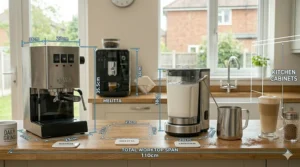
British kitchens average smaller than European or American counterparts. Measure your available space before buying:
- Compact: Under 15cm width (Nespresso Vertuo Pop, Tassimo)
- Standard: 20-30cm width (Most machines)
- Large: 35cm+ width (Premium bean-to-cup)
Don’t forget height clearance for top-fill water tanks and space behind for ventilation.
UK Brand Availability
Certain brands dominate UK retail:
Widely available: De’Longhi, Sage, Nespresso, Tassimo, Russell Hobbs, Morphy Richards
Specialist/online only: Gaggia, Rancilio, Profitec, Rocket
If you need quick replacement parts or in-store support, stick with mainstream brands. Specialist machines often require ordering parts from Europe, adding cost and delay.
Making the Final Decision
Budget Under £100
Your realistic options are pod machines or basic filter makers. The Tassimo Finesse at £39.99 offers incredible value for variety seekers, whilst the Russell Hobbs Buckingham at £44.99 suits batch brewers.
If you’re willing to stretch slightly, the De’Longhi Stilosa at £80-89 plus a budget grinder (£40-60) gives you genuine espresso capability for under £150 total.
Budget £100-£300
This sweet spot offers genuine choice. The De’Longhi Magnifica S at £259 delivers bean-to-cup convenience, whilst premium pod machines like the Nespresso Vertuo Next at £79 plus a milk frother (£40-60) create café-style drinks.
Consider your priorities: convenience (pod), freshness (bean-to-cup), or control (manual espresso with quality grinder).
Budget £300+
Premium territory opens doors to advanced features: dual boilers, PID temperature control, pressure profiling, automatic milk systems. However, diminishing returns kick in – a £300 machine makes 90% as good coffee as a £1,000 machine for most people.
Focus on features you’ll actually use. That fancy touchscreen adds £100+ but doesn’t improve your espresso.
Matching Machine to Habits
You drink 1-2 coffees daily: Pod machines offer convenience without waste from stale beans.
You drink 3+ coffees daily: Bean-to-cup or manual espresso systems pay for themselves within 18 months.
You entertain regularly: Filter machines or automatic bean-to-cup systems handle multiple drinks effortlessly.
You’re learning barista skills: Manual espresso machines provide the control and feedback needed for improvement.
You have limited time: Pod machines win. No debate.
Common Mistakes to Avoid
Buying Too Much Machine
Flashy features tempt us all. That touchscreen, those customisable profiles, the smartphone app connectivity – they look brilliant in the shop. Six months later, you’re using three buttons and ignoring everything else.
Buy the machine that matches your actual habits, not your aspirational ones. Honest self-assessment saves money.
Ignoring Ongoing Costs
That £40 Tassimo seems like a bargain until you’re spending £30/month on pods. Calculate true cost over 1-2 years before buying.
Similarly, bean-to-cup machines need regular descaling solution, cleaning tablets, and water filters. Budget £50-80 annually for maintenance supplies.
Forgetting About Noise
Coffee machines aren’t silent. Bean grinders are particularly loud – potentially problematic in flats with thin walls or homes with sleeping babies.
The Russell Hobbs Grind & Brew features quiet brew technology, grinding coffee up to 60% quieter than previous models. If noise concerns you, check reviews mentioning decibel levels.
Skipping the Grinder
Buying a manual espresso machine without a proper grinder is like buying a sports car without petrol. Pre-ground coffee goes stale within weeks, producing mediocre espresso regardless of your machine’s quality.
Budget at least £40-60 for a basic burr grinder, or £100+ for something genuinely good. The grinder matters more than the machine.
FAQ
❓ Can I use any coffee beans in a bean-to-cup machine?
❓ How often should I descale my coffee machine in the UK?
❓ Are pod coffee machines better value than takeaway coffee?
❓ Do I need a separate milk frother for my coffee machine?
❓ What's the difference between Nespresso Original and Vertuo systems?
Conclusion
Choosing the right coffee machine ultimately comes down to honest self-assessment. What do you actually drink? How much time do you genuinely have? What’s your realistic budget including ongoing costs?
For most UK households, I’d recommend starting with either the Tassimo Finesse (under £40 for ultimate convenience) or the De’Longhi Magnifica S (£259 for fresh beans daily). These represent the best value in their respective categories, backed by reliable brands with good UK support.
If you’re serious about coffee craft and willing to invest time learning, the De’Longhi Stilosa at £80-89 plus a decent grinder provides an excellent foundation for developing barista skills without massive financial commitment.
Remember: the best coffee machine is the one you’ll actually use consistently. A £40 pod machine that gets daily use beats a £700 bean-to-cup system gathering dust because it’s too much faff.
Take your time, measure your space, calculate true costs, and choose wisely. Your perfect morning coffee awaits.
Recommended for You
- 7 Best Water Filter for Coffee Machine UK 2026
- 7 Best Coffee Machine Cleaning Products UK 2026
- Best Descaler for Coffee Machine: 7 UK Picks 2026
Disclaimer: This article contains affiliate links. If you purchase products through these links, we may earn a small commission at no additional cost to you. Prices shown are approximate and may vary.
✨ Found this helpful? Share it with your mates! 💬🤗
