
In This Article
The difference between a forgettable morning coffee and one that makes you pause mid-sip often comes down to one thing: the beans. Espresso blend beans are specifically crafted to deliver that rich, velvety shot with thick crema and balanced flavour that Italian cafés are famous for. Unlike single-origin beans that can be temperamental and require professional-grade equipment to extract properly, blends are designed to be forgiving whilst still delivering café-quality results in your kitchen.
Espresso originated in early 20th century Italy as the world’s first “fast food” coffee — designed for speed without sacrificing quality. Modern espresso blends honour that tradition whilst adapting to the practical realities of home brewing equipment.
What most British home baristas don’t realise is that espresso blend beans available on Amazon.co.uk have evolved dramatically. You’re no longer limited to supermarket stalwarts — authentic Italian roasters like Lavazza, illy, and Kimbo now ship directly to UK addresses, often with Prime delivery. The beauty of a well-crafted blend lies in its complexity: roasters combine beans from multiple origins (typically Brazil for body, Colombia for sweetness, and sometimes Vietnamese Robusta for that thick crema) to create a flavour profile that’s consistently excellent, whether you’re pulling a straight shot or crafting a flat white.
In my experience testing dozens of blends through British espresso machines ranging from budget Delonghi models to semi-professional Sage setups, the £18-£28 per kilogramme sweet spot offers genuinely exceptional value. That’s roughly 60-70 shots per bag — working out to around 30-40p per double espresso, far less than your local coffee shop charges. More importantly, with Britain’s notoriously soft water (particularly in Scotland and Wales), you’ll find that medium to medium-dark espresso blends extract beautifully without the sourness that can plague lighter single-origin roasts in hard water areas like London and the Southeast.
Quick Comparison: Top Espresso Blend Beans at a Glance
| Brand & Blend | Bean Composition | Roast Level | Intensity | Price Range (GBP) | Best For |
|---|---|---|---|---|---|
| Lavazza Super Crema | South American Arabica & Indonesian Robusta | Medium | 5/10 | £19-£25/kg | Milk-based drinks, beginners |
| illy Classico | 100% Arabica blend | Medium | 5/9 | £28-£35/kg | Purists, straight espresso |
| Kimbo Extra Cream | 35% Arabica, 65% Robusta | Medium | 6/10 | £17-£22/kg | Cappuccinos, budget-conscious |
| Lavazza Crema e Aroma | Arabica & Robusta blend | Medium | 7/10 | £18-£24/kg | All-rounders, daily drinking |
| Kimbo Napoletano | Arabica & Robusta | Dark | 10/13 | £18-£24/kg | Strong espresso lovers |
| Coffee Masters All Day | Brazil, Honduras, Ethiopia, India mix | Medium | 7/10 | £23-£28/kg | UK-roasted freshness |
| Lavazza Barista Intenso | Arabica & Robusta | Medium | 9/10 | £20-£26/kg | Professional-style shots |
From this comparison, the clear pattern emerges: if you’re after thick crema and bold flavour that cuts through milk, the higher Robusta blends like Kimbo Extra Cream deliver at brilliant value. However, if you prefer a cleaner, more nuanced shot (and don’t mind paying slightly more), the 100% Arabica illy Classico offers sophistication that’s hard to match. The Lavazza range sits nicely in the middle ground — reliable, widely available on Amazon.co.uk with next-day delivery, and genuinely versatile across different brewing styles.
💬 Just one click — help others make better buying decisions too! 😊
Top 7 Espresso Blend Beans: Expert Analysis
1. Lavazza Super Crema Coffee Beans
Lavazza’s Super Crema represents what I’d call the “Goldilocks” of espresso blends — not too light, not too dark, and crucially, not too expensive for what you’re getting. This blend combines South American Arabica beans with Indonesian Robusta in proportions that create a remarkably consistent shot regardless of your machine’s quirks.
The practical reality: that 60% Arabica, 40% Robusta ratio means you’ll get a thick, persistent crema even if your espresso machine struggles with temperature stability (common in sub-£300 models). The flavour profile leans towards brown sugar and roasted hazelnut, with enough body to stand up to 200ml of steamed milk in a flat white without disappearing entirely. What the spec sheet won’t tell you is how forgiving this blend is with grind size — I’ve pulled decent shots anywhere from 18-22 seconds extraction time, which is unusually tolerant for home espresso.
UK buyers particularly appreciate that this arrives fresh, typically roasted within 2-3 months of the best-before date, and Amazon.co.uk Prime delivery means it’s on your doorstep next day. Having tested this through a particularly damp Manchester autumn, the beans maintained their flavour integrity even when stored in less-than-ideal kitchen cupboard conditions — though you’ll still want an airtight container to maximise freshness.
Pros:
✅ Exceptionally forgiving for beginners — produces good crema even with technique errors
✅ Excellent value in the £20-£25/kg range with frequent Amazon.co.uk deals
✅ Milk drinks taste professional-grade when dialled in properly
Cons:
❌ Can taste slightly one-dimensional for straight espresso aficionados
❌ The hazelnut notes might overwhelm if you prefer brighter, fruitier profiles
Around £20-£25 per kilogramme, this represents outstanding value for anyone making 2-3 milk-based coffees daily. It’s the blend I recommend to friends switching from pods to proper espresso.
2. illy Classico Coffee Beans
The illy Classico sits at the premium end of supermarket-available espresso beans, and that 100% Arabica composition immediately sets it apart from the Robusta-heavy competition. Coming in their signature pressurised tin (which genuinely does preserve freshness better than vacuum bags), these beans represent Italian coffee heritage at its most refined.
What makes this blend distinctive is the meticulous selection process — illy famously sources from nine different countries and uses only the top 1% of Arabica beans. The medium roast brings out delicate notes of caramel, orange blossom, and jasmine that you simply won’t find in darker, more aggressive blends. For UK buyers, this translates to an espresso that tastes clean and sweet without added sugar, perfect for those who’ve developed a taste for specialty coffee but want something more accessible than constantly hunting for freshly-roasted single origins.
The reality check: at around £30-£35 per kilogramme, you’re paying roughly 50% more than mainstream blends like Lavazza Crema e Aroma. Is it worth it? If you primarily drink straight espresso or cortados where bean quality isn’t masked by litres of milk, absolutely. If you’re making 400ml lattes every morning, you might find the subtlety gets lost and your wallet unnecessarily lightened. Worth noting for British climate conditions — the pressurised tin means these beans stay fresh for weeks even in humid kitchen environments, though once opened, you’ll want to use them within a month.
Pros:
✅ Noticeably superior flavour complexity for straight espresso
✅ Pressurised tin packaging preserves freshness far better than bags
✅ Low acidity makes it gentle on sensitive stomachs
Cons:
❌ Premium pricing means around £0.50 per double shot vs £0.30 for budget blends
❌ Lighter body might disappoint those who prefer thick, syrupy Italian-style shots
In the £28-£35 range, illy Classico is the choice for discerning drinkers who view their morning coffee as a moment worth investing in, not just caffeination fuel.
3. Kimbo Extra Cream Espresso Beans
Here’s where things get interesting for budget-conscious British baristas. Kimbo Extra Cream flips the usual Arabica-Robusta ratio on its head with 35% Arabica and 65% Robusta — a composition that would make specialty coffee purists wince but delivers exactly what commercial Italian cafés have used for decades to create that thick, persistent crema and robust flavour.
The 65% Robusta content means two things practically: first, you’ll get crema so thick you could practically stand a spoon in it (brilliant for Instagram-worthy latte art), and second, the caffeine content is noticeably higher than 100% Arabica blends. For early-morning shifts or late-night revision sessions, that’s rather useful. The flavour profile is decidedly less delicate than illy — think dark chocolate and slight bitterness rather than floral notes — but when combined with milk, it creates that classic Italian bar coffee taste that’s comforting and familiar.
For UK buyers working with entry-level espresso machines (Delonghi Dedica, Sage Bambino), this blend is genuinely easier to work with than fussy Arabica-heavy options. The oils in Robusta beans mean you’ll extract flavour even if your machine’s pressure isn’t perfectly consistent. I’ve noticed this performs particularly well in hard water areas around London and Birmingham — the robust character isn’t overwhelmed by mineral-heavy water the way more delicate blends can be. Available on Amazon.co.uk typically around £17-£22 per kilogramme, it’s exceptional value for volume drinkers.
Pros:
✅ Incredible crema production — perfect for milk-based drinks and latte art
✅ Best value among quality Italian roasters at around £17-£22/kg
✅ Higher caffeine content than Arabica-only blends
Cons:
❌ Can taste overly bitter for straight espresso without milk
❌ Less flavour complexity than premium Arabica blends
Around £18-£20 per kilogramme, this is the smart choice for cappuccino and latte enthusiasts who prioritise texture and caffeine over delicate flavour notes.
4. Lavazza Crema e Aroma Coffee Beans
The Lavazza Crema e Aroma has achieved something remarkable: becoming the default “safe choice” for British home espresso enthusiasts whilst still delivering genuinely excellent results. This Arabica-Robusta blend sits firmly in the medium roast category with an intensity of 7/10 — robust enough to taste properly through milk but not so dark it becomes bitter and one-dimensional.
What makes this particular blend work so well for UK buyers is its sheer versatility. I’ve used it successfully in everything from a basic £150 Delonghi pump machine to a £900 Sage Barista Express, and whilst better equipment definitely improves the shot quality, you’ll still get a drinkable coffee from modest setups. The flavour profile centres on caramel sweetness with subtle cocoa notes and just enough acidity to keep things interesting without becoming sharp. Importantly for Britain’s variable water quality, this blend extracts cleanly even in very soft water areas (Scotland, Wales, Northwest England) where lighter roasts can taste weak and under-extracted.
The practical advantage of Crema e Aroma’s popularity is availability — it’s almost always in stock on Amazon.co.uk, often with same-day delivery in major cities and next-day delivery elsewhere. The vacuum-packed bag means it arrives fresh, though once opened you’ll want proper storage to maintain quality beyond 3-4 weeks. Having gone through dozens of bags over the years, the consistency is impressive — each batch tastes recognisably the same, which matters when you’re trying to dial in your grinder settings and don’t want variables beyond your control.
Pros:
✅ Reliable, consistent quality batch after batch
✅ Excellent all-rounder for both milk drinks and straight shots
✅ Widely available on Amazon.co.uk with rapid delivery
Cons:
❌ Doesn’t excel in any particular area — jack of all trades, master of none
❌ Some find the flavour profile a bit safe and predictable
In the £18-£24 range, this represents sensible value for daily drinking without any glaring weaknesses. It’s the Toyota Corolla of espresso beans — not exciting, but you’ll never regret buying it.
5. Kimbo Espresso Napoletano Beans
For those who genuinely love a proper, knock-you-sideways strong Italian espresso, the Kimbo Napoletano delivers intensity that most British high-street chains wouldn’t dare serve. Rated at 10/13 intensity, this dark roast Arabica-Robusta blend represents the traditional Neapolitan approach to espresso: bold, full-bodied, and utterly unapologetic about its strength.
The dark roast level means the beans appear almost black with a slight oil sheen — precisely what specialty coffee snobs have taught us to avoid, yet what creates that classic Italian bar character. The flavour is dominated by dark chocolate, roasted nuts, and a pleasant bitterness that’s balanced rather than harsh when extracted properly. Critically for UK buyers, this is one of the few blends I’d recommend drinking straight as a single shot — the concentrated 25ml ristretto delivers all the impact you need without requiring a double or lungo.
Working with this blend through British hard water (London, Birmingham) actually benefits the extraction — the robust, dark-roasted character isn’t diminished by mineral content the way lighter roasts can be. However, if you’ve soft water and pull a full 60ml double shot, you might find it overwhelming. The solution: dial your grinder finer and extract shorter ristretto-style shots around 35-40ml. On Amazon.co.uk, pricing sits around £18-£24 per kilogramme for the 1kg bag, which represents remarkable value given the authentic Neapolitan heritage you’re getting.
Pros:
✅ Authentic Southern Italian espresso character — bold and uncompromising
✅ Thick crema and full body even from modest espresso machines
✅ Perfect for those who find typical UK coffee shop offerings too weak
Cons:
❌ Too intense for many British palates accustomed to milder blends
❌ Dark roast can taste bitter if over-extracted or brewed too large
Around £19-£23 per kilogramme, this is the choice for traditionalists who want their espresso to taste like it came from a backstreet Napoli café, not a sanitised chain.
6. Coffee Masters All Day Blend Espresso Beans
The Coffee Masters All Day Blend brings something genuinely different to this roundup: it’s actually roasted in the UK rather than imported from Italy. That matters practically because the beans you receive on Amazon.co.uk are typically roasted within 2-4 weeks of delivery, noticeably fresher than Italian imports that might be 2-3 months old when they reach British warehouses.
This medium roast combines Arabica and Robusta beans from Brazil, Honduras, Ethiopia, and India — an eclectic mix that creates interesting flavour complexity. You’ll taste chocolate and caramel sweetness (the Brazilian and Honduran contributions) balanced with a spiced fruit character from the Ethiopian beans that’s quite distinctive. The blend works particularly well for British buyers who’ve developed their palates on specialty coffee but aren’t quite ready to wrestle with the temperamental nature of single-origin light roasts in home espresso machines.
The reality of buying UK-roasted beans is you’re paying slightly more per kilogramme — around £23-£28 — but you’re getting genuinely fresher coffee that’ll taste vibrant for 6-8 weeks rather than declining noticeably after 3-4 weeks. For those making 1-2 coffees daily (rather than burning through a kilogramme every week), that freshness difference is worth the premium. The blend extracts well across different grind sizes and isn’t overly fussy about water temperature, making it forgiving for home baristas still learning their equipment.
Pros:
✅ UK-roasted means genuinely fresh beans with vibrant flavour
✅ Interesting complexity from the four-origin blend
✅ Performs consistently well in both hard and soft water areas
Cons:
❌ Higher price point than Italian imports at £23-£28/kg
❌ Slightly less thick crema than high-Robusta Italian blends
In the £24-£28 range, this represents excellent value for those prioritising freshness and flavour complexity over sheer economy. Supporting a UK roaster is rather satisfying as well.
7. Lavazza Espresso Barista Intenso Beans
The Lavazza Barista Intenso occupies an interesting niche: it’s designed specifically for those who want professional-calibre espresso at home without needing professional-level equipment to extract it properly. Rated at 9/10 intensity, this medium-roasted Arabica-Robusta blend delivers bold flavour with aromatic notes of cocoa and wood that feel sophisticated rather than just “strong.”
What distinguishes this from standard Lavazza blends is the drum roasting process — a slower, more controlled roasting method that develops flavour complexity whilst maintaining consistency. Practically speaking, this means you’ll notice more layered flavour in each shot: initial cocoa bitterness, mid-palate sweetness, and a pleasant woody finish that lingers. For UK buyers who’ve outgrown entry-level blends but aren’t ready to invest in £40/kg specialty coffee, this hits a sweet spot.
The medium roast level makes this particularly versatile for British water conditions. In soft water areas (Scotland, Wales), it extracts cleanly without tasting thin or sour. In hard water regions (London, Southeast), the robust character isn’t overwhelmed by mineral content. I’ve found this blend responds particularly well to minor grinder adjustments — shifting just one notch finer or coarser produces noticeably different flavour profiles, which is brilliant for those who enjoy experimenting rather than wanting idiot-proof consistency.
On Amazon.co.uk, expect to pay around £20-£26 per kilogramme with frequent Prime deals bringing it closer to £18-£20. At that price, you’re getting near-premium quality at mid-range pricing — rather good value for anyone serious about home espresso.
Pros:
✅ Professional-calibre flavour complexity at accessible pricing
✅ Drum roasting creates more layered, interesting shots than standard blends
✅ Versatile across different water types and machine capabilities
Cons:
❌ Still contains Robusta, so won’t satisfy 100% Arabica purists
❌ Requires slightly more precise technique to extract optimally
Around £21-£25 per kilogramme, this is the choice for enthusiasts ready to level up from basic blends without the commitment and expense of single-origin specialty coffee.
How to Dial In Your Espresso for British Water Conditions
Getting espresso right at home isn’t just about buying quality beans — it’s about understanding how Britain’s wildly variable water composition affects extraction. If you’ve ever wondered why your carefully-followed recipe produces brilliant results one week and sour disappointment the next, water is likely the culprit.
Understanding UK Water Hardness
Water hardness varies dramatically across Britain. London and the Southeast sit on chalk and limestone, creating very hard water (250-350 ppm calcium carbonate). Scotland, Wales, and Northwest England have soft water (50-150 ppm). This matters because minerals in water affect extraction efficiency: hard water extracts flavour compounds more aggressively, whilst soft water can under-extract, producing weak, sour coffee.
For hard water areas, grind slightly coarser and reduce extraction time by 2-3 seconds. The minerals will compensate for the shorter contact time. For soft water, grind finer and extend extraction to 28-30 seconds to fully develop flavour. If you’re in a moderate hardness area (Midlands, parts of the North), standard recipes will work fine without adjustment.
Consider installing a basic water filter (Brita-style) beneath your kitchen tap if you’re in London or similar hard water zones. You’re not trying to create bottled water — just reducing hardness to around 150-180 ppm makes espresso taste cleaner and extends your machine’s lifespan by reducing limescale buildup. For soft water areas, ironically, a splash of mineral water (about 20% of your boiler fill) can improve extraction by adding beneficial minerals.
Temperature Surfing with Entry-Level Machines
Most sub-£500 espresso machines (Sage Bambino, Delonghi Dedica, Gaggia Classic) struggle with temperature stability — the first shot might be at 88°C, the second at 93°C, producing inconsistent results. The solution isn’t expensive equipment; it’s understanding your machine’s heating cycle.
After your machine reaches brewing temperature, run a blank shot into your cup to heat the group head. Wait 25-30 seconds for the boiler to recover, then pull your actual shot. This “temperature surfing” technique brings most budget machines close to the 91-93°C sweet spot that espresso blends extract best at. You’ll taste the difference immediately — less bitterness, more sweetness, better crema.
For British kitchens in winter when ambient temperature drops to 15-17°C, preheat your portafilter by running hot water through it 60 seconds before brewing. Cold metal absorbs heat from your extraction water, dropping temperature below optimal levels and producing sour, under-extracted espresso.
Grind Size Matters More Than You Think
The single biggest variable in home espresso is grind size, yet most beginners obsess over dose weight or extraction time first. Here’s the practical approach: start with your grinder’s espresso setting, dose 18g for a double basket, and aim for 25-28 seconds extraction time.
If your shot runs faster than 22 seconds, it’ll taste sour and thin — grind finer, one increment at a time. If it takes longer than 32 seconds, you’ll get bitterness and astringency — grind coarser. Make only one adjustment per shot; changing multiple variables simultaneously makes diagnosis impossible.
British tap water temperature (typically 8-12°C from the cold tap in winter) affects this as well. Colder water takes longer to heat in your machine’s boiler, potentially dropping extraction temperature. If you notice shots suddenly tasting different when the weather turns cold, you’re experiencing this phenomenon — grind slightly finer to compensate for marginal temperature loss.
Espresso Blends vs Single Origin: What Works Better for UK Home Baristas
The specialty coffee movement has convinced many British coffee drinkers that single-origin beans represent superior quality, whilst blends are somehow inferior compromises. This is marketing nonsense that ignores the practical realities of home espresso brewing in the UK.
Why Blends Excel for Home Espresso
Espresso blends are specifically designed to extract well across a range of variables — water temperature, pressure consistency, water hardness — that home equipment struggles to control precisely. As UK coffee experts note, a well-crafted blend like Lavazza Super Crema or Kimbo Extra Cream combines beans with different characteristics: Brazilian beans for body and sweetness, Colombian for brightness, Robusta for crema and caffeine. This redundancy means even if your extraction isn’t perfect, you’ll still get a balanced, drinkable shot.
Single-origin beans, particularly lighter roasts popular in specialty shops, require professional-grade equipment to extract properly. That Ethiopian Yirgacheffe that tastes like blueberries and jasmine in your local café? On your £400 Sage Barista Express, it’ll likely taste thin, sour, and underwhelming. The problem isn’t the beans or your technique — it’s that light roasts need temperature stability, pressure profiling, and precise pre-infusion that budget home machines simply can’t deliver consistently.
For British buyers specifically, blends handle our variable water chemistry better than single origins. A blend’s complexity comes from combining different beans, so slight extraction variations caused by water hardness fluctuations (common in London where Thames Water composition changes seasonally) won’t ruin your shot. Single origins have less margin for error — extraction must be spot-on to taste good.
When Single Origins Make Sense
If you own a dual-boiler machine with PID temperature control (Sage Dual Boiler, Lelit Elizabeth, Profitec Pro 600) and a grinder in the £300+ range (Niche Zero, Eureka Mignon), then single-origin espresso becomes genuinely rewarding. You’ve the equipment precision to extract those delicate, complex flavours consistently.
For milk-based drinks (lattes, cappuccinos, flat whites), single origins often disappoint regardless of equipment quality. The delicate fruit and floral notes that justify £35-£40/kg specialty pricing get completely masked by 150ml of steamed milk. You’re essentially paying premium prices for flavour you won’t taste — economically daft. Blends, being designed to work with milk, create harmonious rather than muddled results.
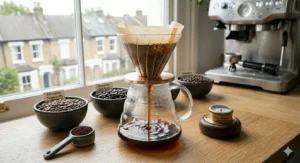
The practical recommendation for most British home baristas: use quality espresso blends (£18-£28/kg) for milk drinks and daily espresso. If you want to explore specialty single origins, brew them as filter coffee through a V60 or AeroPress where their delicate character can shine without requiring £2,000 worth of espresso equipment to extract properly.
Storage and Freshness: Making Your Beans Last in British Humidity
Coffee degrades rapidly once roasted, but the speed of deterioration depends heavily on storage conditions — and Britain’s damp climate creates challenges that Italian or Australian coffee guides often ignore.
The Humidity Problem
British kitchens, particularly in autumn and winter, experience relative humidity between 60-75% — well above the 50% threshold where coffee beans absorb atmospheric moisture. Once beans absorb moisture, their cell structure changes, oils migrate differently during grinding, and extraction becomes unpredictable. You’ll notice this as beans that produced excellent shots last week suddenly taste flat or bitter using identical technique.
The solution: airtight storage is non-negotiable. Those decorative glass jars beloved by interior design blogs? Useless for coffee freshness. You want either vacuum-sealed containers (Fellow Atmos, Airscape) or simple airtight tins with rubber gasket seals. Store in a cool, dark cupboard — not the fridge or freezer, where condensation will form each time you remove beans, introducing moisture and destroying flavour.
How Long Do Espresso Beans Stay Fresh?
Despite what coffee snobs claim, espresso blends don’t “die” after two weeks. Medium to dark roasts (which describes most espresso blends available on Amazon.co.uk) reach peak flavour 7-14 days after roasting and maintain excellent quality for 6-8 weeks if stored properly. You’ll notice gradual decline rather than sudden cliff-drop — week 6 tastes slightly less vibrant than week 2, but still far superior to stale supermarket pre-ground.
Italian imports like Lavazza and Kimbo typically arrive in the UK 8-12 weeks post-roast, which sounds concerning but reflects industrial roasting’s focus on consistency rather than peak freshness. These beans are designed to taste good for months, not just weeks. They won’t have the explosive aromatics of beans roasted yesterday, but they’ll produce reliably excellent espresso for the entire 1kg bag.
UK-roasted beans like Coffee Masters arrive 2-4 weeks post-roast and taste noticeably more vibrant initially, but they also decline faster. By week 8, they’ll be closer in quality to 12-week-old Italian imports. Choose based on consumption speed: if you brew 2-3 shots daily and finish a kilogramme in 3-4 weeks, UK-roasted makes sense. If you take 8-10 weeks to use a bag, Italian imports’ shelf-stable design suits better.
Freezing Beans: Does It Work?
Freezing coffee beans is contentious, with specialty coffee evangelists claiming it ruins flavour whilst others swear by it. The truth sits somewhere between: freezing beans you won’t use within 6 weeks preserves them better than leaving them in a cupboard, but requires proper technique.
Divide beans into single-use portions (enough for 2-3 days of brewing) in individual airtight bags before freezing. This prevents repeated freeze-thaw cycles that introduce moisture. When you need beans, remove one portion, let it reach room temperature (30 minutes) before opening the bag, then use those beans within 3 days. Don’t refreeze.
For British buyers purchasing 1kg bags on Amazon.co.uk deals, this approach makes economic sense. Buy three bags when they’re £18 instead of £24, freeze two in portions, and you’ve quality espresso for months at reduced cost. Just understand: frozen-then-thawed beans won’t match freshly-roasted quality, but they’ll far exceed stale beans left in a cupboard for three months.
Crema Quality: What It Actually Tells You About Your Espresso
British coffee drinkers have developed an unhealthy obsession with crema — that golden-brown foam atop espresso shots. Instagram has convinced us that thick, persistent crema equals quality coffee, but the reality is more nuanced and depends heavily on bean composition and freshness.
What Crema Actually Indicates
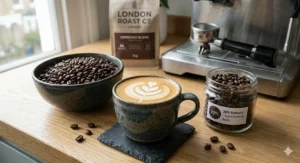
Crema forms when carbon dioxide (trapped in beans during roasting) emulsifies with coffee oils under pressure. Fresh beans produce more crema because they retain more CO2. Robusta beans produce substantially more crema than Arabica due to different oil content and cell structure. This explains why illy Classico (100% Arabica) produces thinner crema than Kimbo Extra Cream (65% Robusta) despite illy being the more expensive, premium product.
The thickness and persistence of crema tells you about bean freshness and Robusta content, not quality or flavour. A thick crema indicates fresh beans or high Robusta percentage, nothing more. That 5mm golden layer might taste bitter and unpleasant, whilst a thin crema from lightly-roasted 100% Arabica might deliver complex, delicious flavour. Crema is a visual cue, not a quality guarantee.
What Good Crema Looks Like
Despite the above caveats, well-extracted espresso from fresh beans should produce recognisable crema. For espresso blends, look for:
Colour: Golden-brown to reddish-brown, not white (under-extracted and sour) or very dark brown (over-extracted and bitter)
Texture: Velvety and fine-bubbled, not large bubbles that dissipate within seconds
Persistence: Should last 90-120 seconds before breaking up, giving you time to admire your shot before drinking
Pattern: Tiger-striping or mottling indicates even extraction where water moved uniformly through the puck
For British buyers using medium-roast espresso blends like Lavazza or Coffee Masters, expect 3-5mm crema that lasts about 90 seconds. High-Robusta Italian blends (Kimbo Extra Cream, Kimbo Napoletano) will produce 6-8mm crema that persists for several minutes. Neither is better — they’re different bean compositions creating different visual results.
When Crema Goes Wrong
Weak or absent crema indicates stale beans (more than 12 weeks post-roast), too-coarse grind, or insufficient pressure. If your espresso machine produces 9 bars pressure (as it should) and you’re using fresh beans ground appropriately fine, you should get crema. If you don’t, your beans are likely the issue — time for a fresh bag from Amazon.co.uk.
Excessively thick, white crema that tastes intensely bitter usually indicates beans roasted too dark or Robusta content above 70%. This isn’t necessarily wrong if you enjoy that aggressive, traditional Italian character, but understand it’s a stylistic choice rather than optimal extraction.
Common Mistakes When Buying Espresso Blend Beans in the UK
After years of helping British friends and family troubleshoot disappointing home espresso, I’ve identified recurring mistakes that waste money and produce mediocre coffee. Here’s what to avoid.
Mistake 1: Buying Pre-Ground Coffee
Ground coffee degrades dramatically faster than whole beans — within 30 minutes of grinding, aromatics begin escaping and oils start oxidising. Those vacuum-packed bags of pre-ground espresso in supermarkets? They were ground weeks or months ago and taste like cardboard compared to freshly-ground beans. The £30 spent on a basic burr grinder (or the built-in grinder in your espresso machine) pays for itself within 2-3 bags of beans through improved flavour alone.
If you genuinely can’t grind at home and rely on having beans ground at purchase, buy only 250g at a time and use within 7 days. Any longer and you’re drinking massively degraded coffee regardless of initial bean quality.
Mistake 2: Ignoring Roast Date and Best-Before
Many British buyers on Amazon.co.uk don’t realise that “best before” dates on coffee typically fall 12-18 months post-roast. Manufacturers set conservative dates for legal liability reasons, not based on actual quality decline. A bag with a best-before of December 2026 might have been roasted in June 2025 — that’s 6+ months old already.
Italian brands like Lavazza and Kimbo are designed for longer shelf life and still taste excellent at 3-4 months post-roast. UK specialty roasters like Coffee Masters typically include a roast date on the bag and should be used within 6-8 weeks. Check product reviews on Amazon.co.uk — unhappy buyers often mention receiving old stock, which warns you away from problematic sellers.
Mistake 3: Choosing Based on Intensity Ratings Alone
Coffee manufacturers use intensity scales (Lavazza’s 1-10, illy’s 1-9, Kimbo’s 1-13) to indicate strength and roast darkness, but these ratings aren’t standardised across brands. A 7/10 from one roaster might be milder than a 5/10 from another. What matters more is whether the blend is Arabica-only (cleaner, more delicate) or contains Robusta (bolder, more bitter, thicker crema).
For milk-based drinks, higher Robusta content (40-65%) works brilliantly. For straight espresso, 100% Arabica or Arabica-dominant blends (80%+) produce more pleasant flavour without milk to soften the bitterness. Don’t blindly trust intensity numbers — read descriptions and reviews about actual flavour profile.
Mistake 4: Storing Beans Incorrectly
British kitchens’ high humidity means beans left in flimsy manufacturer bags absorb moisture within days, producing stale-tasting coffee even when technically fresh. Transfer beans immediately into airtight containers with rubber seals. Glass jars without proper gasket seals aren’t airtight — oxygen and moisture still penetrate.
Store beans away from heat sources (next to your espresso machine’s warm exterior is terrible placement) in a cool, dark cupboard. Light degrades coffee through photo-oxidation, heat accelerates oil rancidity, and moisture ruins cell structure. All three issues are entirely preventable with proper storage.
Mistake 5: Buying Cheap Beans and Expensive Equipment
Some British buyers drop £600 on a Sage Barista Pro but buy £12/kg supermarket beans, then wonder why their espresso tastes disappointing. The maths doesn’t work: even premium beans at £25/kg work out to about 35p per double shot. That’s less than you’d spend on a single coffee shop visit, yet dramatically improves every shot you pull at home.
Better strategy: buy a reliable £300-£400 machine (Sage Bambino Plus, Gaggia Classic Pro) and invest in quality beans (£20-£28/kg) from the recommendations in this article. The bean quality improvement is immediately noticeable; upgrading from a £400 to £600 machine produces marginal gains unless you’ve already perfected technique with good coffee.
UK Regulations and Coffee Standards: What You Need to Know
British coffee buyers benefit from some of the world’s strongest consumer protections, but you need to understand what certifications and standards actually mean when buying espresso blend beans on Amazon.co.uk.
Post-Brexit Labelling Changes
Since January 2021, coffee imported to Great Britain requires clear labelling and meets UK food safety standards enforced by the Food Standards Agency. Coffee no longer requires EU organic certification — instead, look for UK organic or retained EU organic certification. Northern Ireland continues following EU rules, so NI buyers see different labelling. This matters practically only if you prioritise organic certification; it doesn’t affect coffee quality or safety.
UK coffee standards require clear country-of-origin labelling and accurate weight declarations. If a bag says 1kg, it must contain 1kg ±2% tolerance. The Food Standards Agency oversees coffee safety and quality standards across England, Wales, and Scotland. Amazon.co.uk sellers occasionally face Trading Standards enforcement for short-weighing, so reviews mentioning undersized bags are worth reading.
What Certification Labels Actually Mean
Rainforest Alliance Certified: Indicates farms meet environmental and labour standards, but critics note standards have weakened in recent years. It’s better than nothing but not as rigorous as Fairtrade.
Fairtrade Certified: Guarantees farmers received minimum prices for their coffee, protecting against market price crashes. Genuinely beneficial for farmer welfare but adds £2-£4/kg to retail prices.
Organic Certification: Means no synthetic pesticides or fertilisers used. For coffee, this primarily benefits farmworkers and local ecosystems rather than affecting cup quality or your health (coffee cherries’ outer layers absorb pesticides; the bean inside remains relatively clean regardless).
Direct Trade: Unregulated marketing term meaning the roaster claims to work directly with farmers, cutting out middlemen. May or may not be legitimate — some roasters use it honestly, others as greenwashing.
None of these certifications guarantee better-tasting coffee. They indicate ethical sourcing practices, which is worthwhile supporting, but a Fairtrade-certified blend won’t taste better than non-certified simply due to the label. Judge taste based on bean quality and roasting skill, judge ethics based on certifications.
Consumer Rights for Coffee Purchases
Under the Consumer Rights Act 2015, coffee bought on Amazon.co.uk must be “as described, fit for purpose, and of satisfactory quality.” If beans arrive stale (e.g., 6 months past roast date when advertised as fresh), mouldy, or materially different from the description, you’re entitled to a full refund within 30 days.
The Distance Selling Regulations give UK buyers a 14-day cooling-off period for online purchases, meaning you can return unopened bags for any reason (or no reason) within 14 days of delivery. This doesn’t apply if you’ve opened and used the beans, but it protects against ordering wrong quantities or duplicate orders.
For problems with coffee orders on Amazon.co.uk, contact the seller first. If they’re unresponsive or unhelpful, Amazon’s A-to-Z Guarantee typically sides with buyers for quality issues. Keep the original packaging and take photos if beans arrive in poor condition to support refund claims.
The Real Cost of Home Espresso: Breaking Down Your Investment
British buyers often fixate on espresso machine prices whilst overlooking the cumulative cost of beans, maintenance, and accessories. Here’s the honest financial picture for making café-quality espresso at home in the UK.
Initial Equipment Investment
Budget Setup (£300-£500): Sage Bambino Plus (£280) + basic burr grinder (£50-£80) + tamper (£15) + milk jug (£12). This produces genuinely good espresso and milk drinks but requires technique development and has limited temperature stability.
Mid-Range Setup (£600-£900): Sage Barista Express (£500) or Gaggia Classic Pro (£420) + Sage Smart Grinder Pro (£180) + decent tamper (£25) + milk thermometer (£8) + quality milk jug (£18). This level delivers consistent, excellent results once you’ve developed technique.
Enthusiast Setup (£1,500-£2,500): Sage Dual Boiler (£1,100) or Lelit Elizabeth (£1,300) + Niche Zero grinder (£500) + precision basket (£20) + bottomless portafilter (£40) + distribution tool (£25) + quality accessories (£50-£100). This approaches commercial café quality at home.
For most British households, the mid-range setup represents the sweet spot — good enough to produce professional-quality results, not so expensive that you feel guilty about the investment if you lose interest.
Running Costs: Beans and Maintenance
Beans: Assuming 18g per double shot, 2 shots daily, you’ll consume about 1kg every 28 days. Quality espresso blends cost £18-£28/kg on Amazon.co.uk, averaging £23. That’s £276 annually on beans — about 38p per double shot.
Descaling: British tap water requires descaling every 6-8 weeks (hard water areas) or 10-12 weeks (soft water). Descaling solution costs about £6-£8 and lasts 3-4 cycles, so approximately £25 annually.
Grinder burr replacement: Every 500-800kg of beans (18-30 months for typical home use). Replacement burrs cost £40-£80 depending on grinder model.
Group gasket replacement: Every 12-18 months for the portafilter seal. Costs £8-£12 and takes 10 minutes to DIY.
Total annual running cost: Approximately £300-£350 including beans, descaling, and minor maintenance. That’s £0.82-£0.95 per day for unlimited espresso-based drinks at home.
Cost Comparison: Home vs Coffee Shop
A flat white at a typical UK coffee chain costs £3.20-£3.80. If you buy one daily, that’s £1,170-£1,385 annually. Your home espresso setup (mid-range) costs £700 initial investment + £325 annual running = £1,025 first year, then £325/year thereafter.
Financial break-even happens around 8-9 months. By year two, you’re saving £850-£1,050 annually whilst drinking better coffee than most high-street chains serve. By year three, savings exceed £1,600 — enough to upgrade to an enthusiast-level setup if you choose.
This analysis assumes you’re replacing daily coffee shop purchases. If you currently drink instant coffee at home and wouldn’t otherwise buy café coffee, home espresso is a luxury rather than cost-saving measure. Be honest with yourself about consumption patterns before justifying equipment purchases with savings maths.
Seasonal Considerations: How British Weather Affects Your Espresso
British weather’s variability creates extraction challenges that Italian or Australian coffee guides don’t address. Understanding seasonal adjustments keeps your espresso tasting consistent year-round.
Winter Adjustments (November-February)
British winters bring cold tap water (8-10°C vs 15-17°C in summer), which requires longer heating time in your machine’s boiler. This can reduce extraction temperature by 2-3°C, producing sour, under-extracted espresso even when using identical grind and dose settings that worked brilliantly in September.
Solution: Grind slightly finer in winter to compensate for marginal temperature loss. If you normally extract at grind setting 12, move to 11. The finer grind increases extraction efficiency, balancing the cooler water temperature. Also run a blank shot through your machine before brewing to pre-heat the group head — ambient temperature around 15°C in British kitchens means metal components need warming.
Heating’s humidity impact: central heating dries indoor air, but British homes rarely drop below 50% relative humidity even in winter. Your beans are still at risk from moisture absorption, so maintain airtight storage regardless of season.
Spring and Autumn Challenges (March-May, September-November)
Britain’s transitional seasons bring the highest humidity — often 70-80% relative humidity with frequent rain. Beans absorb atmospheric moisture rapidly unless stored properly, changing their extraction characteristics within days.
Solution: If you notice shots that tasted perfect last week suddenly running faster and tasting weak, your beans have absorbed moisture. Grind finer to compensate for the additional moisture content reducing extraction efficiency. Better yet, transfer beans to airtight containers immediately upon opening rather than leaving them in the manufacturer’s bag.
These seasons also feature the most dramatic day-to-day temperature swings. Your espresso might taste perfect one week, then mysteriously bitter or sour the next despite identical technique. Before blaming your skill or equipment, check whether outdoor temperature has shifted 10°C in a few days — this affects water temperature consistency and requires minor grind adjustments.
Summer Extraction (June-August)
British summers bring warmer tap water (15-18°C) and occasionally reduced humidity, particularly during rare heatwaves. Warmer water heats faster in your machine, potentially raising extraction temperature by 2-3°C compared to winter.
Solution: Grind slightly coarser in summer if you notice increased bitterness. The higher extraction temperature means you need less contact time to fully extract flavour. Also reduce extraction time by 1-2 seconds if following winter recipes.
Heatwave storage warning: if your kitchen exceeds 25°C for extended periods (increasingly common in urban areas during summer), coffee oils can go rancid faster. Store beans in the coolest, darkest cupboard available, never near windows or south-facing walls. If temperatures exceed 28°C for multiple days, consider transferring beans to sealed containers in the fridge (properly sealed to prevent condensation when removed).
FAQ: Espresso Blend Beans UK
❓ Are espresso blend beans stronger than regular coffee beans?
❓ How long do espresso blend beans stay fresh after opening in the UK?
❓ Do I need different beans for an espresso machine versus a bean-to-cup machine?
❓ Can I use espresso blend beans in a cafetière or filter coffee maker?
❓ Are Amazon.co.uk espresso beans fresh enough or should I buy from local roasters?
Conclusion: Finding Your Perfect Espresso Blend
The journey from disappointing home espresso to café-quality shots begins with choosing beans that match your equipment, water conditions, and taste preferences rather than blindly following recommendations. What works brilliantly in my Manchester kitchen with soft water and a Sage Dual Boiler might produce mediocre results in a London flat with hard water and a budget Delonghi machine.
The espresso blend beans reviewed in this article represent genuinely excellent options for British home baristas at various price points and experience levels. For beginners, Lavazza Super Crema or Kimbo Extra Cream offer forgiving extraction and brilliant value. For those who’ve developed technique and want to level up, illy Classico or Lavazza Barista Intenso deliver noticeably more complex flavour. And for UK-roasted freshness, Coffee Masters All Day Blend brings quality that arrives weeks rather than months post-roast.
Remember that espresso quality depends on multiple factors working together: fresh beans ground correctly, clean equipment, good water, and consistent technique. The £25/kg beans reviewed here can taste mediocre if other variables are wrong, whilst £15/kg supermarket beans can taste surprisingly good when everything else is optimised. Invest time learning your equipment’s quirks, understanding how British water affects extraction, and developing palate sensitivity to recognise what “good” tastes like before obsessing over marginal bean quality improvements.
The honest truth: most British coffee drinkers would be perfectly satisfied with Lavazza Crema e Aroma or Kimbo Extra Cream bought on Amazon.co.uk for £18-£22/kg. These blends are designed to produce consistently excellent results across different machines, water types, and skill levels. They won’t win specialty coffee awards, but they’ll deliver café-quality flat whites and lattes every morning for pennies per cup whilst you’re still half-asleep — which is rather the point of home espresso, isn’t it?
Recommended for You
- Best Coffee Blend UK 2026: 7 Expert Picks for Rich Flavour
- 7 Best Premium Instant Coffee UK 2026
- Best Instant Coffee UK: 7 Premium Brands Tested (2026)
Disclaimer: This article contains affiliate links. As an Amazon Associate, I earn from qualifying purchases. If you purchase products through these links, we may earn a small commission at no additional cost to you.
✨ Found this helpful? Share it with your mates! 💬🤗
