
In This Article
The instant coffee on your kitchen shelf isn’t what it used to be. Gone are the days when freeze-dried granules meant sacrificing flavour for convenience—unless you’re still drinking that dusty jar from three years ago, in which case, we need to talk.
What most UK buyers overlook about today’s premium instant coffee market is the sheer gulf between budget commodity blends and the new wave of specialty freeze-dried options flooding Amazon.co.uk. According to the British Coffee Association, 80% of UK households buy instant coffee for in-home consumption, making it a £9.1 billion contribution to the British economy. When I first tested Clipper Organic Latin American against my usual supermarket staple, the difference was rather stark—like comparing a proper Sunday roast to a microwave meal. The former delivers nuanced chocolate notes and a clean finish; the latter tastes vaguely of coffee-scented regret.
This comprehensive analysis examines seven exceptional instant coffees currently available to UK buyers, from everyday workhorses under £10 to premium freeze-dried options pushing £30. Whether you’re cycling through November drizzle to your Manchester flat desperate for a quick caffeine hit, or you’re a Cotswolds-based remote worker who refuses to compromise on quality between Zoom calls, this guide will help you navigate the crowded instant coffee market with confidence. We’ve analysed production methods, compared UK pricing in pounds, assessed real customer feedback from British buyers, and evaluated how each option performs in the damp British climate where freshness and proper storage genuinely matter.
Quick Comparison: Top UK Instant Coffee Picks
| Brand | Type | Price Range (£) | Best For | Strength |
|---|---|---|---|---|
| Nescafé Alta Rica | Freeze-dried Arabica | £6-£9 | Bold, dark roast lovers | Strong |
| Clipper Organic Latin American | Freeze-dried organic | £5-£8 | Eco-conscious buyers | Medium |
| Mount Hagen Organic | Freeze-dried Fairtrade | £5-£7 | Smooth, mild preference | Mild-Medium |
| Illy Classico | Premium freeze-dried | £6-£8 | Italian café experience | Medium |
| Kenco Smooth | Freeze-dried blend | £4-£7 | Budget-friendly daily drinking | Medium |
| Illy Intenso | Premium dark roast | £6-£8 | Dark roast enthusiasts | Strong |
| Clipper House Blend | Organic Arabica | £5-£7 | Balanced everyday option | Medium |
Looking at the comparison above, the value proposition becomes clear: if you’re willing to spend between £6 and £8, you’re entering premium territory where freeze-drying techniques actually preserve volatile aromatic compounds rather than obliterating them. Budget buyers hovering around £4-£5 should note that Kenco Smooth offers remarkable consistency for the price—though you’re trading some complexity for reliability. The organic options from Clipper and Mount Hagen justify their modest premium through Fairtrade certification and chemical-free processing, which matters more during Britain’s six-month drizzle season when you’re drinking three cups daily and actually tasting what you’re consuming.
💬 Just one click — help others make better buying decisions too!😊
Top 7 Best Instant Coffee: Expert Analysis
1. Nescafé Gold Blend Alta Rica
The Nescafé Gold Blend Alta Rica represents the premium end of Nescafé’s instant coffee range, and it’s rather good if you appreciate a dark, intense cup. This 100% Arabica blend delivers bold chocolate notes with a pronounced bitterness—exactly what you’d expect from a Latin American dark roast that’s been freeze-dried to preserve its character.
Key specifications with real-world meaning: The 190g tin yields approximately 95 cups when using the recommended two teaspoons per serving. That works out to roughly 8-9p per cup—decent value for a premium instant. The freeze-drying process preserves more aromatic oils than cheaper spray-dried alternatives, which explains why this actually smells like proper coffee when you crack open the seal. Worth noting: in the damp British autumn and winter, store this in an airtight container once opened or you’ll lose that aroma within a fortnight.
Who this is for and why: This suits UK buyers who prefer their coffee dark, strong, and unapologetically robust. If you’re the type who adds two sugars to balance bitterness, Alta Rica will meet you halfway—it’s bold but not harsh. Office workers who need a proper caffeine wallop between Teams meetings will appreciate its intensity. Less suitable for those who prefer delicate, fruity coffee profiles or anyone sensitive to bitterness.
Customer feedback: British reviewers consistently praise the chocolate undertones and describe it as “the closest instant gets to freshly brewed.” Some note the price volatility—it fluctuates between £6 and £9 depending on supermarket offers, so stock up during Tesco or Waitrose promotions.
Pros:
✅ Deep, complex flavour profile rarely found in instant coffee
✅ Freeze-dried preservation maintains aromatic oils
✅ Widely available across UK supermarkets and Amazon.co.uk
Cons:
❌ Bitterness may be too pronounced for those preferring milder coffee
❌ Price premium isn’t justified if you drown it in milk
Price range: Around £6-£9 for 190g. Excellent value when on offer—which it frequently is. According to Which?’s independent taste tests, Alta Rica consistently ranks among the top-performing instant coffees available in the UK.

2. Clipper Organic Latin American Instant Coffee
Clipper Organic Latin American is what happens when a company known for premium teas decides to take instant coffee seriously. This medium-roast freeze-dried Arabica delivers a toasty, balanced cup with a remarkably clean finish—the sort of coffee you can drink black without wincing.
Key specifications with real-world meaning: Each 100g jar is certified organic by the Soil Association and carries Fairtrade credentials, meaning the farmers who grew these Latin American beans were paid fairly. The freeze-drying process involves no chemicals whatsoever—just brewed coffee, frozen solid, then sublimated in a vacuum. The result is granules that dissolve instantly in hot water and maintain their flavour for weeks after opening, even in Britain’s humid climate. One jar yields approximately 50 cups at standard strength.
Who this is for and why: This is the thinking person’s instant coffee—ideal for environmentally conscious UK buyers who want their morning routine to align with their values without tasting like cardboard. If you’re a London commuter who cycles to work and cares about supply chain transparency, or a rural Scottish buyer who appreciates proper quality control, Clipper delivers. The medium roast strikes a balance between boldness and smoothness, making it versatile enough for black coffee, lattes, or even iced coffee during Britain’s two weeks of actual summer.
Customer feedback: UK Amazon reviewers frequently describe this as “the only instant that actually tastes like real coffee” and praise its lack of bitter aftertaste. Several note it’s particularly good value when purchased in the six-jar bulk pack, which reduces per-unit cost significantly.
Pros:
✅ Soil Association organic and Fairtrade certified—genuine ethical credentials
✅ Clean, smooth finish with zero chemical processing
✅ Dissolves perfectly in hot or cold water for versatility
Cons:
❌ Mild flavour profile won’t satisfy those craving intense, dark-roast punch
❌ Glass jar packaging adds weight for delivery (though it’s recyclable and reusable)
Price range: Around £5-£8 per 100g jar on Amazon.co.uk. The bulk six-pack offers better value at approximately £6 per jar. Watch for Subscribe & Save discounts.
3. Mount Hagen Organic Fairtrade Instant Coffee
Mount Hagen Organic Fairtrade has built a cult following among instant coffee enthusiasts, and for good reason. This Papua New Guinean single-origin Arabica undergoes freeze-drying that genuinely preserves the delicate flavour nuances you’d normally associate with freshly ground beans.
Key specifications with real-world meaning: The 100g glass jar contains coffee sourced exclusively from organic highland farms around Mount Hagen, Papua New Guinea. Every stage—from cultivation to freeze-drying—avoids artificial chemicals, herbicides, or pesticides. The medium roast delivers naturally sweet undertones with low acidity and absolutely zero bitterness. Because it’s freeze-dried at lower temperatures than spray-dried alternatives, volatile aromatic compounds survive intact. One jar provides roughly 50 servings, and it dissolves equally well in hot or cold water—handy for iced coffee on those rare British heatwave afternoons.
Who this is for and why: Mount Hagen suits UK buyers seeking smooth, approachable coffee without harsh edges. If you’re new to drinking coffee black, this is your gateway—it’s genuinely pleasant without milk or sugar. Remote workers in compact British flats will appreciate the small footprint and the fact that it doesn’t require any equipment beyond a kettle. Eco-conscious buyers get peace of mind from USDA Organic and Fairtrade certification, meaning workers were paid fairly and environmental standards were maintained.
Customer feedback: British Amazon reviewers consistently rank this among the top organic instants, with many noting it “doesn’t taste like instant at all.” Some mention it’s slightly milder than they expected—if you want a punch-in-the-face morning coffee, this isn’t it. But for afternoon sipping or evening decaf alternatives, it’s spot-on.
Pros:
✅ Single-origin Papua New Guinea beans offer distinctive flavour
✅ Low acidity and zero bitterness—ideal for sensitive stomachs
✅ Dissolves perfectly in cold water for iced coffee
Cons:
❌ Mild profile may disappoint those wanting bold, intense coffee
❌ Slightly pricier than mainstream brands per gram
Price range: Around £5-£7 per 100g on Amazon.co.uk. Watch for multi-pack deals which reduce the per-jar cost to around £5.
4. Illy Classico Instant Coffee
Illy Classico brings Italian café credentials to your UK kitchen without requiring a £400 espresso machine or barista training. This medium-roast 100% Arabica instant delivers Illy’s signature smoothness in a format that takes seconds to prepare.
Key specifications with real-world meaning: The 95g pressurised tin uses Illy’s patented preservation system—air inside is replaced with inert gas under pressure, which both maintains freshness and actually enhances the aroma over time. The blend combines nine different Arabica varieties from premium growing regions worldwide. What the spec sheet won’t tell you is that this genuinely tastes closer to proper espresso than most instants—notes of caramel, orange blossom, and jasmine come through clearly if you drink it black. Each tin yields approximately 47 cups at two teaspoons per serving.
Who this is for and why: This suits UK buyers who’ve travelled to Italy, tasted proper coffee there, and refuse to settle for mediocrity back home. If you’re a Manchester professional working from home who wants café-quality coffee between client calls without grinding beans or cleaning equipment, Illy Classico delivers. It’s sophisticated enough to serve guests without embarrassment but convenient enough for bleary-eyed Monday mornings. The pressurised can means it stays fresh for months even in humid British conditions—a genuine advantage over jars that lose aroma once opened.
Customer feedback: UK reviewers on Amazon.co.uk frequently describe this as “the best instant coffee available” and note it’s particularly good value when purchased in multi-packs. Some mention it’s occasionally hard to find in supermarkets, making Amazon the more reliable source.
Pros:
✅ Pressurised can preservation actually enhances aroma over time
✅ Complex flavour profile with discernible tasting notes
✅ Smooth enough to drink black without grimacing
Cons:
❌ Premium pricing may seem steep if you typically buy budget instant
❌ 95g tin is smaller than standard 100g or 190g competitors
Price range: Around £6-£8 per 95g tin on Amazon.co.uk. The six-tin pack offers better value at approximately £34-£36. Check Ocado and Waitrose for occasional offers.
5. Kenco Smooth Instant Coffee
Kenco Smooth is the reliable workhorse of British instant coffee—not the most exciting option, but consistently good and widely available at prices that won’t trigger budget anxiety. This medium-roast blend delivers exactly what the name promises: smooth, approachable coffee without surprises.
Key specifications with real-world meaning: Marketed as medium roast but tastes closer to medium-dark in practice. The 100% Arabica blend is Rainforest Alliance certified and freeze-dried for reasonable quality preservation. Available in 100g jars or eco-friendly refill pouches that reduce packaging waste by 97%—though you’ll need an existing jar or container to store it. One 100g refill yields approximately 50 cups. What Kenco doesn’t shout about is the Robusta content in some variants (the Smooth line is pure Arabica, but double-check labels on other Kenco products).
Who this is for and why: This is the pragmatist’s choice—ideal for UK households that consume multiple cups daily and need something decent without breaking the bank. If you’re equipping a shared office kitchen in Birmingham or stocking a holiday cottage in the Lake District where guests expect functional coffee rather than artisanal experiences, Kenco Smooth fits perfectly. The refill pouches make sense environmentally and economically for regular buyers. Less suitable for coffee enthusiasts seeking complexity or those who drink black coffee and notice every flavour nuance.
Customer feedback: British buyers appreciate the consistency and value, though some note the flavour can veer slightly bitter if you use boiling water rather than letting the kettle cool for 30 seconds. Many mention it’s the default office coffee across UK workplaces for good reason—it rarely offends and performs reliably.
Pros:
✅ Excellent value for daily drinking at around £4-£7
✅ Refill pouches reduce packaging waste significantly
✅ Widely available in every major UK supermarket and online
Cons:
❌ Flavour profile is safe rather than exciting
❌ Can taste slightly bitter if water temperature isn’t managed
Price range: Around £4-£7 for 100g depending on format (jar vs refill) and retailer. Tesco and Sainsbury’s frequently run promotions.
6. Illy Intenso Instant Coffee
Illy Intenso takes everything good about Illy Classico and turns up the intensity dial for those who prefer their coffee dark, bold, and uncompromising. This dark-roast 100% Arabica instant delivers warm notes of cocoa and dried fruit wrapped in a full-bodied punch.
Key specifications with real-world meaning: The same pressurised tin technology as Classico but with beans roasted significantly darker to develop deeper, more caramelised flavours. The 95g tin yields roughly 47 servings, and like all Illy instants, it blends 15% ground coffee with freeze-dried instant for added body and crema when properly prepared. What separates this from standard dark roasts is the absence of burnt harshness—it’s intense without being aggressive. The pressurised packaging means it maintains peak freshness for months, even in Britain’s damp climate where open jars can go stale within weeks.
Who this is for and why: Intenso suits UK buyers who take their coffee seriously and prefer bold, assertive flavours over mild, fruity profiles. If you’re a dark-roast devotee who normally grinds beans but needs a quick alternative for rushed mornings, this won’t disappoint. It’s robust enough to cut through milk in a latte but sophisticated enough to drink as an Americano. Shift workers and early-morning commuters who need maximum caffeine delivery with minimum fuss will appreciate the intensity. Less suitable for those new to coffee or anyone who prefers lighter, brighter roasts.
Customer feedback: UK Amazon reviewers note it’s “hard to find in supermarkets” compared to Classico, making Amazon.co.uk the primary source. Several mention the six-pack offers best value. Some report it’s “somewhat flavourless” compared to expectations, suggesting Intenso works better for those who understand dark-roast nuances rather than just wanting “strong” coffee.
Pros:
✅ Full-bodied dark roast without burnt or harsh notes
✅ Pressurised packaging maintains freshness exceptionally well
✅ Cocoa and dried fruit notes add complexity
Cons:
❌ Limited availability in physical UK shops
❌ Dark roast profile may be too intense for casual drinkers
Price range: Around £6-£8 per 95g tin on Amazon.co.uk. Six-tin bulk packs reduce per-unit cost to approximately £5.70 per tin.
7. Clipper House Blend Organic Arabica
Clipper House Blend rounds out our selection as the versatile all-rounder—a medium-roast organic Arabica that works equally well morning, noon, or evening without ever feeling like the wrong choice.
Key specifications with real-world meaning: This Soil Association organic certified blend combines Arabica beans from multiple origins to create a toasty, intense cup with a wonderfully smooth, clean finish. The freeze-dried process adds 0.1% coffee oil to preserve mouthfeel and aroma. Each 100g jar yields approximately 50 servings. What Clipper excels at is consistency—batch-to-batch variation is minimal, which matters when you’re buying multiple jars over months. The organic certification and Fairtrade credentials mean chemical-free cultivation and fair wages throughout the supply chain.
Who this is for and why: This is the diplomat of instant coffees—ideal for households where different family members have varying coffee preferences. If you’re a couple living in a Bristol flat where one partner drinks coffee black and the other prefers milky cappuccinos, House Blend accommodates both without complaint. It’s rich enough to satisfy serious coffee drinkers but smooth enough not to intimidate casual consumers. The bulk six-jar pack makes sense for remote workers consuming multiple cups daily or for shared office kitchens across the UK.
Customer feedback: British buyers on Amazon.co.uk consistently praise the “rich aroma” and “full-bodied flavour” while noting it’s slightly crisper and more intense than Clipper’s Latin American variant. Several mention it’s excellent value in the six-pack format, reducing per-jar cost significantly.
Pros:
✅ Organic and Fairtrade certified with transparent sourcing
✅ Versatile medium roast suits diverse preferences
✅ Bulk packs offer excellent value for regular consumption
Cons:
❌ Medium roast won’t satisfy dark-roast enthusiasts craving maximum boldness
❌ Glass jar packaging (while recyclable) adds delivery weight
Price range: Around £5-£7 per 100g jar individually, dropping to approximately £5-£6 per jar in six-packs on Amazon.co.uk. Subscribe & Save offers additional discounts.
How Instant Coffee Actually Gets Made (And Why It Matters for UK Buyers)
Understanding production methods helps you spot quality before you buy. Instant coffee begins with selecting beans—typically Arabica for smoothness or Arabica-Robusta blends for boldness and crema. Manufacturers roast these beans to develop flavour, then grind and brew them at industrial scale, controlling temperature and extraction time to capture essential oils and aromatic compounds. According to the British Dietetic Association, instant coffee retains the same health benefits as freshly brewed coffee, with or without caffeine—the production method doesn’t diminish the antioxidants and beneficial compounds.
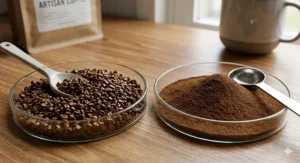
The critical divergence happens during drying. Spray-drying fires a fine mist of brewed coffee through hot air (150–200°C), evaporating water instantly and leaving behind powder. It’s cheap and efficient but obliterates delicate volatile compounds—the reason budget instant often tastes flat or harsh. Freeze-drying takes a gentler approach: brewed coffee is frozen solid, then placed in a vacuum chamber where ice sublimates directly to vapour, bypassing the liquid phase entirely. This preserves aromatic oils and flavour complexity, resulting in granular instant coffee that actually resembles the original brew.
For UK buyers, this distinction matters practically. Britain’s damp climate means opened jars absorb moisture faster than in drier regions. Freeze-dried granules resist clumping better than spray-dried powder, maintaining texture and flavour longer once opened. Premium freeze-dried options like Illy and Mount Hagen justify their £6-£8 price tags through superior preservation—you’re not just paying for marketing, you’re paying for chemistry that keeps your coffee tasting fresh through months of British drizzle.
Additionally, some manufacturers agglomerate their instant coffee—rehydrating fine particles and re-drying them into larger granules that dissolve more smoothly in water. This extra step improves solubility, preventing those frustrating lumps when you’re rushing to make coffee before a morning Zoom call.
What to Expect: Real-World Performance in British Conditions
Theory is one thing; performance in an actual UK kitchen is another. Instant coffee confronts specific challenges in Britain that product descriptions rarely acknowledge. The most immediate is moisture. Open a jar in Manchester during November and you’re introducing humid air to hygroscopic granules that desperately want to absorb it. Within a fortnight, cheaper spray-dried instant begins clumping and losing aroma. Freeze-dried premium options resist this better but aren’t immune—transfer to an airtight container or finish the jar within three weeks of opening.
Temperature sensitivity creates the second practical consideration. Most British kettles boil at 100°C, which is too hot for delicate instant coffee. Pour boiling water directly onto Clipper or Mount Hagen and you’ll scald the granules, releasing bitter compounds that overwhelm subtler flavours. Let the kettle rest for 30-60 seconds post-boil—aiming for around 90-95°C—and you’ll extract sweetness and complexity instead of harshness. Dark roasts like Nescafé Alta Rica and Illy Intenso tolerate higher temperatures better, making them more forgiving during rushed mornings.
Dissolving behaviour varies significantly. Premium freeze-dried granules from Illy and Mount Hagen disintegrate completely in seconds, even in cold water—genuinely useful for iced coffee during Britain’s occasional heatwaves. Budget options can leave sediment at the bottom of your mug or require aggressive stirring, which affects mouthfeel and creates a gritty final sip.
Finally, consider storage location. That glass jar looks attractive on the kitchen counter next to the kettle, but direct light degrades coffee faster than darkness. Store in a cupboard if possible. And if you’re buying bulk packs, resist the temptation to decant everything into one large container—oxygen exposure accelerates staleness. Keep unopened jars sealed until needed.
Freeze-Dried vs Spray-Dried: Why UK Coffee Drinkers Should Care
The production method fundamentally determines what lands in your cup, yet most buyers never check which process their instant coffee underwent. Spray-drying dominates the budget segment because it’s fast and inexpensive. Manufacturers spray concentrated coffee through heated air, evaporating moisture and leaving behind powder in seconds. The problem? Those 150–200°C temperatures destroy volatile aromatic compounds—the very molecules that make coffee smell and taste like coffee rather than vaguely coffee-adjacent brown liquid. Budget spray-dried instant often tastes flat, one-dimensional, and slightly burnt because, chemically speaking, it is.
Freeze-drying costs more but preserves what matters. Brewed coffee is frozen solid, then subjected to sublimation in a vacuum chamber where ice converts directly to vapour without passing through liquid form. This low-temperature process leaves aromatic oils and flavour compounds intact, producing granular instant that genuinely resembles the original brew. When you open a freeze-dried jar from Mount Hagen or Illy and actually smell coffee—not dusty warehouse—you’re experiencing the difference.
For UK buyers specifically, freeze-dried instant offers practical advantages beyond flavour. The granular structure resists moisture absorption better than spray-dried powder, maintaining texture and solubility longer in Britain’s humid climate. Freeze-dried granules dissolve cleanly in cold water, enabling proper iced coffee during summer. And the superior flavour preservation means you can actually drink it black without grimacing, reducing milk consumption and calories if that matters to you.
The price gap reflects real manufacturing costs, not marketing fluff. Expect to pay £5-£8 for freeze-dried premium instant versus £3-£5 for spray-dried budget options. Whether that premium is worth paying depends on consumption habits. If you’re drinking one rushed cup daily with milk and sugar, spray-dried suffices. If you’re consuming three cups daily and tasting every sip, freeze-dried premium instant becomes the economical choice through enjoyment per pound spent.
Common Mistakes When Buying Instant Coffee (That UK Buyers Keep Making)
The first and most expensive mistake is assuming all instant coffee is functionally identical, so you might as well buy the cheapest option. This logic works for commodity products like table salt but fails spectacularly for instant coffee, where production method, bean quality, and roasting expertise create genuinely different results. Buying Nescafé Original at £3 and Mount Hagen Organic at £6 are not equivalent choices with different price tags—they’re fundamentally different products. One is spray-dried Robusta-heavy blend optimised for cost; the other is freeze-dried 100% Arabica optimised for flavour. Choose based on what you value, not price alone.
The second error is ignoring UK-specific compatibility. American instant coffee enthusiasts rave about brands like Café Bustelo or Medaglia d’Oro, but these often aren’t available on Amazon.co.uk or ship with prohibitive import duties post-Brexit. Before falling for a glowing US-based review, verify the product actually ships to the UK at reasonable cost. Additionally, some specialty brands like Cometeer use frozen capsules that require dry ice shipping—impractical and expensive for most UK addresses.
Third, buyers overlook UKCA certification and voltage compatibility for coffee-related equipment, though this matters less for instant coffee itself than for electric grinders or espresso machines. Still, verify that any accompanying brewing equipment meets UK electrical standards (230V, Type G plug).
Fourth, neglecting to check best-before dates when buying bulk packs leads to disappointment. A six-pack purchased on Amazon.co.uk might offer excellent value, but if three jars expire within four months and you’re a solo drinker, you’ve wasted money. Calculate actual consumption before committing to bulk.
Fifth, underestimating wet British weather’s impact on storage. Glass jars look handsome on open shelving, but moisture infiltration degrades coffee rapidly in coastal regions or during autumn/winter damp. Transfer to airtight containers or at minimum ensure lids seal properly.
Finally, pouring boiling water directly from the kettle ruins delicate freeze-dried instant. Dark roasts forgive this; light and medium roasts don’t. Pause 30-60 seconds post-boil and you’ll extract complexity instead of bitterness—a free upgrade that costs only patience.
Premium Instant Coffee vs Traditional Fresh-Brewed: The Honest UK Comparison
Let’s address the obvious question: if you’re willing to spend £6-£8 on premium instant, why not just buy fresh beans and grind them properly? It’s a fair challenge that deserves an honest answer beyond convenience platitudes.
Time and equipment requirements create the first practical distinction. Brewing proper coffee demands an initial investment—grinder (£30-£200), brewing device (French press £15, AeroPress £30, pour-over setup £25-£50), and counter space increasingly precious in compact British flats. Daily grinding, brewing, and cleaning adds 10-15 minutes to your morning routine. Premium instant requires a kettle you already own and 90 seconds total. For London commuters catching a 7:15 train or remote workers starting back-to-back Zoom calls at 8:00, those 13 minutes matter.
Consistency favours instant coffee in ways fresh-brew advocates won’t admit. Grinding too fine or coarse, water temperature variations, extraction time errors, or incorrect coffee-to-water ratios produce wildly different results from the same beans. Premium instant delivers identical results every single time—valuable when you’re half-asleep at 6:30 or stressed before a client presentation. There’s dignity in reliability.
Flavour complexity obviously favours freshly ground and brewed coffee when executed properly. Single-origin Ethiopian Yirgacheffe prepared in an AeroPress by someone who knows what they’re doing produces flavour nuances no instant can match—bright citrus notes, floral undertones, complex acidity. But here’s the uncomfortable truth: most UK households brewing Lavazza or Illy ground coffee in a £30 drip machine with tap water aren’t achieving transcendent results either. A well-made cup from Mount Hagen or Illy Classico instant can genuinely rival mediocre fresh-brew coffee—and certainly beats awful fresh-brew coffee.
Cost per cup initially seems to favour fresh beans. Premium whole beans run £6-£10 per 250g, yielding approximately 30 cups at 8g per serving (18p-33p per cup). Premium instant costs around £5-£8 per 100g for 50 cups (10p-16p per cup). Instant wins on paper—but factor in electricity for grinding, equipment depreciation, and inevitable bean wastage from stale oxidation, and the gap narrows. Budget instant (8p per cup) genuinely saves money; premium instant offers comparable economy to fresh brewing while eliminating equipment costs.
Environmental considerations tilt slightly toward fresh beans in terms of packaging and processing, though the reality is nuanced. Fresh beans require shipping, roasting energy, packaging, and eventually landfill or recycling. Instant coffee undergoes additional processing but reduces water waste and eliminates filter paper waste. Both options available in recyclable glass jars or compostable packaging depending on brand. Neither choice is dramatically superior environmentally—buy Fairtrade and organic either way if environmental ethics matter.
The honest verdict? Premium instant suits busy UK households valuing consistency and convenience without completely sacrificing quality. Fresh brewing suits coffee enthusiasts willing to invest time developing technique and equipment for marginally superior results. Most British buyers fall somewhere between—fresh-brew weekend mornings when you’ve got time, premium instant rushed weekday mornings when you don’t.
Instant Coffee for Different UK Lifestyles
London commuters and urban professionals: Flat living in zones 1-4 means limited kitchen space and zero spare counter footage for grinding equipment. Pre-6:00 AM departures demand coffee that happens while brushing teeth. Premium freeze-dried instant stored in a compact jar suits this lifestyle perfectly. Mount Hagen or Clipper dissolve in 90 seconds, produce zero cleanup, and deliver consistent results when you’re operating on autopilot. Keep a jar at the office for afternoon slumps—hot water from the communal kitchen is all you need.
Remote workers in suburban homes: Working from a semi-detached in Reading or a terraced house in Newcastle means consuming 3-5 cups daily while bouncing between video calls. Here, bulk buying makes economic sense—six-jar packs of Kenco Smooth or Clipper House Blend reduce per-cup cost while ensuring you never run out mid-deadline. The refill pouch option minimises packaging waste if you’re environmentally conscious. Premium instant prevents palate fatigue better than budget spray-dried options when you’re drinking this much coffee.
Retirees and lower-consumption households: If you’re enjoying one cup after breakfast and another mid-afternoon, smaller jars prevent waste from staleness. Illy Classico in 95g tins or Mount Hagen in 100g jars finish within the optimal three-week window. The premium investment (£6-£8) stretches across weeks of daily enjoyment, making cost-per-use negligible. Pressurised tins and freeze-dried granules maintain quality longer—important when consumption is leisurely rather than industrial.
Families with diverse coffee preferences: Households where one partner drinks strong black coffee and another prefers milky cappuccinos need versatile options. Medium-roast freeze-dried instants like Clipper House Blend or Mount Hagen accommodate both ends of the spectrum—bold enough to satisfy serious drinkers, smooth enough not to overwhelm casual consumers. Avoid overly dark roasts (Nescafé Alta Rica, Illy Intenso) which polarise opinion, and skip ultra-mild options (some Kenco variants) which disappoint those wanting substance.
Students and budget-conscious buyers: Shared accommodation in university cities like Manchester, Edinburgh, or Bristol demands low-cost options that don’t taste punitive. Kenco Smooth hits the sweet spot—decent quality at £4-£7 per 100g means you can afford daily coffee without eating beans on toast for dinner. The refill pouches reduce costs further. Premium instant (£6-£8) stretches budgets too thin unless you’re genuinely passionate about coffee quality.
Outdoor enthusiasts and travellers: Camping in the Lake District or hiking the Scottish Highlands benefits from lightweight, compact instant coffee that doesn’t require equipment. Mount Hagen single-serve sticks (if available on Amazon.co.uk) or small jars of freeze-dried instant pack efficiently and dissolve in lukewarm water when gas canisters run low. Avoid glass jars for backpacking—transfer to waterproof containers. The instant format means no grounds to dispose of, which matters when practicing Leave No Trace ethics.
Long-Term Cost & Maintenance in the UK
Instant coffee’s economic profile looks attractive initially—low upfront cost, no equipment required—but long-term value depends on consumption patterns and quality tier chosen.
Budget instant (£3-£5 per 100g) costs approximately 6p-10p per cup. Annual expenditure for one cup daily: £22-£37. For three cups daily: £66-£110. This seems economical until you factor in dissatisfaction. If the lacklustre flavour drives you to buy takeaway coffee twice weekly at £3 per cup, you’ve added £312 annually—obliterating the savings. Budget instant makes financial sense only if you genuinely enjoy it or prioritise cost above all else.
Premium instant (£6-£8 per 100g) costs approximately 12p-16p per cup. Annual expenditure for one cup daily: £44-£58. For three cups daily: £132-£175. The premium seems steep until compared to alternatives. Takeaway coffee at £3 per cup costs £1,095 annually for one daily purchase. Pod machines deliver 25p-40p per cup (£91-£146 annually for daily consumption) plus equipment costs (£50-£200). Premium instant offers café-quality convenience at pod-machine pricing without the environmental impact of single-use capsules.
Bulk buying economics improve with scale. Purchasing six-jar packs rather than individual units typically reduces per-jar cost by 10-20%. Amazon Subscribe & Save offers additional 5-15% discounts. For heavy consumers (3+ cups daily), bulk buying premium instant at discounted rates can approach budget instant pricing while maintaining superior quality.
Hidden costs remain minimal for instant coffee compared to fresh brewing. No grinder to replace (£30-£200 every 5-10 years), no filter papers (£4-£8 annually), no descaling solutions for machines (£5-£15 annually), no energy costs for grinding or prolonged heating. The kettle you already own for tea covers instant coffee’s only equipment requirement.
Storage and waste costs are negligible but worth noting. Glass jars are infinitely recyclable or reusable for storage—many British households repurpose Clipper and Illy jars for bulk food storage, eliminating disposal costs. Pouches reduce packaging waste but require existing containers.
Post-Brexit import considerations affect pricing for some EU-manufactured products. Illy (Italian), Mount Hagen (German distribution), and Clipper (UK-based) face different import duty scenarios. Generally, UK-distributed products avoid import fees, while EU imports may carry modest tariffs reflected in retail pricing. This rarely exceeds 5-10% but favours UK-manufactured or UK-distributed brands like Clipper and Kenco over direct EU imports.
The honest economic assessment? Premium instant coffee (£6-£8) delivers exceptional value for UK buyers consuming 1-3 cups daily who value quality and convenience. It sits comfortably between budget instant (lower quality) and café purchases (dramatically higher cost) while matching or exceeding pod machines for convenience and environmental responsibility.
FAQ: Your Instant Coffee Questions Answered
❓ What is the best instant coffee available in the UK right now?
❓ Is freeze-dried instant coffee actually better than spray-dried, or is that just marketing?
❓ How long does instant coffee stay fresh in the damp British climate?
❓ Can I use instant coffee for iced coffee, or does it only work hot?
❓ Are organic and Fairtrade instant coffees worth the premium price in the UK?
Conclusion: Finding Your Perfect Instant Coffee Match
The instant coffee landscape in the UK has evolved far beyond the dusty jars your grandparents endured. Today’s premium freeze-dried options deliver genuinely impressive quality—smooth, aromatic, and complex enough to satisfy discerning palates without requiring equipment or expertise. Whether you’re a London commuter racing to catch the 7:15, a remote worker in Manchester consuming three cups between Zoom calls, or a retiree in the Cotswolds enjoying leisurely morning coffee, there’s an instant option that suits your needs and budget.
For everyday reliability and bold flavour, Nescafé Alta Rica remains hard to beat at £6-£9. Ethical buyers prioritising organic credentials and smooth, clean taste should explore Clipper Organic Latin American and Mount Hagen, both delivering exceptional quality at £5-£8. Those seeking Italian café sophistication without leaving the kitchen will appreciate Illy Classico and Illy Intenso, though availability leans heavily toward Amazon.co.uk. Budget-conscious households consuming multiple cups daily benefit from Kenco Smooth‘s consistency and value at £4-£7.
The key insight? Production method matters more than brand recognition. Freeze-dried premium instant at £6-£8 delivers vastly superior results to spray-dried budget instant at £3-£5, making the premium worth paying for anyone consuming coffee regularly. And in Britain’s damp climate, proper storage in airtight containers prevents moisture absorption and preserves flavour far longer than leaving jars exposed.
Ultimately, the best instant coffee is the one you’ll actually drink and enjoy daily without regret. Life’s too short for mediocre coffee, even when it comes in a jar.
Recommended for You
- 7 Best Sustainable Coffee Beans UK: Eco-Friendly Choices 2026
- 7 Best Specialty Coffee Beans UK | Expert Guide 2026
- Best Fairtrade Coffee UK 2026: 7 Ethical Brands Worth Buying
Disclaimer: This article contains affiliate links. As an Amazon Associate, I earn from qualifying purchases. If you purchase products through these links, we may earn a small commission at no additional cost to you.
✨ Found this helpful? Share it with your mates! 💬🤗
