
In This Article
There’s a particular kind of kitchen-cupboard panic that strikes at 6:45am when you reach for the filter box and find it empty. If you’ve ever stood there weighing up whether an unbleached filter from the cupboard’s back corner will “probably be fine,” this one’s for you. Melitta coffee filters are the default choice for millions of UK kitchens for a reason that goes beyond habit — the brand invented the paper coffee filter in 1908, and the modern range still shapes what “standard” filter paper even means.

This guide works through seven real Melitta coffee filters and cone-compatible products sold in the UK, based on genuine research into specs, sizing and aggregated review sentiment — not a rewritten product page. We’ll get into the fiddly bit that trips up most first-time buyers: filter cone sizes, and why “1×4” on a box isn’t just a random product code. Whether you’re running a basic drip machine, a manual pour-over cone, or trying to work out which Melitta filter papers 1×4 actually fit your machine, there’s a straight answer ahead, along with honest guidance on everyday coffee brewing that goes beyond what’s printed on the box.
Quick Comparison Table
| Product | Filter Size | Best For | Price Range |
|---|---|---|---|
| Melitta Original Filter Papers 1×4 | 1×4 | Everyday coffee brewing, most drip machines | Under £5 |
| Melitta Gourmet Intense Coffee Filters 1×4 | 1×4 | Stronger-tasting everyday brews | £5-£8 range |
| Melitta Filter Papers Pour Over 1×4 (White) | 1×4 | Manual pour-over and hand filtering | £5-£8 range |
| Melitta Size 102 Aroma Zones Filterbags | 102 | Wider, narrow drip coffee machines | £5-£8 range |
| Melitta Original Coffee Filters Size 100 | 100 | Small drip machines, 2-cup brewing | Under £5 range |
| Melitta Pour Over Filter Holder 1×4 (6761018) | 1×4 cone | Manual brewing without a machine | £8-£15 range |
| FILTERCONE 1×4 Standard Black Plastic | 1×4 cone | Budget manual cone alternative | Under £10 range |
The pattern worth noticing here is that most everyday coffee brewing in the UK runs on just two or three filter cone sizes — 1×4 covers the vast majority of drip coffee machines and manual cones, while size 100 and 102 serve smaller or specific machine designs. Melitta Original Filter Papers 1×4 remain the sensible default because they’re the size your machine is most likely to already be built around, but getting the size wrong is the single most common mistake buyers make, and it’s worth confirming before adding anything to your basket.
💬 Just one click — help others make better buying decisions too!😊
Top 7 Melitta Coffee Filters: Expert Analysis
1. Melitta Original Filter Papers 1×4 — the everyday coffee brewing default
The Melitta Original Filter Papers 1×4 are the filter most UK drip machines are actually designed around, and they’re the sensible first purchase if you’re not sure which size your machine takes. Packs of 80 in natural brown paper are the standard configuration most retailers stock.
Melitta’s Aroma Zones design splits the filter into three functional zones — the brewing zone at the base unfolds initial flavour, a middle zone refines aroma during even brewing, and an upper zone rounds off the taste to prevent bitterness. Based on the spec comparison with generic own-brand filters, this three-zone structure is where the reliability comes from: cheaper filters often skip the graduated pore structure entirely, brewing evenly at the base but unevenly toward the rim. The FSC certification and chlorine-free processing also matter more than they might seem to at first glance, since untreated or poorly certified paper filters can occasionally impart a faint papery taste, particularly on the first cup from a fresh box.
Reviewers consistently report these filters holding their shape well when wet, a detail that matters more than it sounds — a filter that sags or tears mid-brew sends grounds straight into the jug. A recurring theme in feedback is that these filters “just work” without any adjustment needed, which is precisely the point of an everyday coffee brewing filter.
Pros:
- ✅ Fits the vast majority of drip machines using 1×4 filters
- ✅ FSC-certified, chlorine-free, fully biodegradable paper
- ✅ Tear-resistant even when fully saturated
Cons:
- ❌ Brown paper look isn’t to every buyer’s taste
- ❌ Only suits machines and cones already sized to 1×4
For everyday coffee brewing without overthinking it, the Melitta Original Filter Papers 1×4 are the filter most people should start with.

2. Melitta Gourmet Intense Coffee Filters 1×4 — best for stronger-tasting brews
The Melitta Gourmet Intense Coffee Filters use the same 1×4 sizing as the original range but with a different internal pore structure — AromaPor Plus micro-perforations, designed for what Melitta describes as more intense flavour development.
In practice, what this means is a slightly denser weave that slows water flow marginally compared with the original filter, giving grounds a touch more contact time during extraction. Here’s what to weigh: this isn’t a dramatically different filter, and the taste difference is subtle rather than transformative, but for anyone already using a fuller-bodied, darker roast, the AromaPor Plus structure complements that style of coffee more naturally than the standard filter does. What most buyers overlook is that filter paper structure genuinely does affect extraction speed, even if the effect is smaller than grind size or brew ratio.
One review specifically noted the paper feeling notably sturdy when wet, while flagging that these filters didn’t fit correctly in a smart electric dripper — a useful reminder that “1×4” compatibility still depends on your specific machine’s holder shape, not just the size label.
Pros:
- ✅ Denser weave suits darker, fuller-bodied roasts
- ✅ Same reliable tear resistance as the Original range
- ✅ FSC-certified and fully biodegradable
Cons:
- ❌ Taste difference versus the Original range is subtle
- ❌ Confirmed fit issues reported with some smart drippers
If your everyday coffee brewing leans toward stronger, darker roasts, the Melitta Gourmet Intense Coffee Filters are a reasonable small upgrade over the standard filter.
3. Melitta Filter Papers Pour Over 1×4 (White) — best for manual pour-over
Designed specifically for hand-filtering rather than electric drip machines, the Melitta Filter Papers Pour Over 1×4 use a paper structure Melitta describes as lightly interwoven but tear-resistant, purpose-built for the slower, more variable flow rate of manual pouring.
The distinction from a standard drip filter matters more than it looks on paper: electric machines control water flow mechanically, while a manual pour-over depends entirely on how the person pours. A filter optimised for pour-over needs to handle both a fast pour (which produces a milder cup) and a slow, controlled pour (which produces a stronger one) without collapsing or channelling unevenly. On the spec sheet, that’s the “adapted to the Pour Over process” claim — in practical terms, it means more forgiving behaviour across a wider range of pouring styles than a standard filter.
Genuine user feedback on Melitta’s own product pages notes the paper doesn’t impart any noticeable taste of its own during pour-over brewing, which aligns with what reviewers consistently say about Melitta’s white, oxygen-whitened filter papers more broadly — a cleaner base flavour than some unbleached alternatives, though both are food-safe.
Pros:
- ✅ Purpose-built structure for manual pouring technique
- ✅ Fits standard Melitta 1×4 pour-over holders and cones
- ✅ No noticeable papery taste reported by users
Cons:
- ❌ Not optimised for electric drip machine flow rates
- ❌ White paper costs slightly more than natural brown
For anyone getting into manual pour-over as part of their everyday coffee brewing routine, this is the filter built specifically for that method rather than adapted from a machine filter.
4. Melitta Size 102 Aroma Zones Filterbags — best for narrow drip machines
Filter cone sizes aren’t one-size-fits-all, and the Melitta Size 102 Aroma Zones Filterbags exist precisely because some machines — particularly older or narrower drip coffee machines — use a taller, narrower cone shape than the standard 1×4.
The same three-zone Aroma Zones structure carries over from the original range, patented to bring out full aroma through graduated filtration across the brewing, refining and rounding zones. What’s genuinely useful about this size is that it fits “numerous standard coffee machines and pour-over filter sets,” according to Melitta’s own product description, which is a fair summary — the 102 size predates the newer 1×4 numbering system and remains the correct fit for a specific tier of machines still in regular use across the UK.
Aggregated review sentiment for size 102 filters skews toward long-term repeat buyers — people who already know their machine takes this size and are simply restocking, rather than first-time buyers experimenting. One reviewer specifically mentioned struggling to find size 102 filters in supermarkets and turning to online ordering as a reliable backup source, which speaks to the size being less common on physical shelves than 1×4.
Pros:
- ✅ Correct fit for narrower, taller drip machine cones
- ✅ Same proven three-zone Aroma structure as 1×4 filters
- ✅ Reliable online availability despite limited supermarket stock
Cons:
- ❌ Won’t fit machines or holders sized for 1×4
- ❌ Less commonly stocked in physical UK supermarkets
Before buying any filter, it’s worth double-checking your machine’s marked size — the Melitta Size 102 Aroma Zones Filterbags are the right call specifically for machines that need this shape, not a general alternative to 1×4.
5. Melitta Original Coffee Filters Size 100 — best for small or 2-cup brewing
At the smaller end of the range, the Melitta Original Coffee Filters Size 100 are built for compact drip machines and smaller manual cones, roughly designed around 2-cup brewing rather than a full carafe.
Melitta’s own sizing guidance places size 100 for genuinely small drip machines — think compact single-person coffee makers rather than family-sized 10-cup jugs — and the height of a size 100 filter is notably shorter than a 1×4, running roughly half the height by some hand-filter comparisons. On paper this means the filter simply won’t sit correctly, let alone fold properly, inside a cone built for a taller size, so getting this one wrong produces an obviously bad fit rather than a subtle inconvenience.
Community discussion among filter coffee enthusiasts notes that size 100 filters can be genuinely hard to find in physical shops, with several long-term users mentioning they resort to trimming down larger size 4 filters to fit rather than sourcing size 100 directly — a workaround that works reasonably well in a pinch but isn’t a substitute for the correctly sized filter when it’s available.
Pros:
- ✅ Correct proportions for compact 2-cup drip machines
- ✅ Same chlorine-free, biodegradable paper as larger sizes
- ✅ Ideal for genuinely small households or single-serve brewing
Cons:
- ❌ Harder to find in UK supermarkets than 1×4 or 102
- ❌ Too small for anything beyond compact machines or cones
If you own one of the smaller compact drip machines that Melitta specifically sizes for, the Melitta Original Coffee Filters Size 100 solve a fit problem that larger filters genuinely can’t.

6. Melitta Pour Over Filter Holder 1×4 (6761018) — best for brewing without a machine
Not every household needs a full electric machine, and the Melitta Pour Over Filter Holder is the manual alternative — a plastic cone designed to sit directly on a jug, thermos, or one to two cups, using standard 1×4 filter papers.
The design includes two side outlets for pouring two cups simultaneously, a wide, stable base suited to different vessel types, and openings positioned to control pour speed and reduce bitterness from over-extraction. Reviewers consistently describe the process as genuinely simple — pop a Melitta filter paper into the cone, add ground coffee, place over a cup or jug, and pour hot water through — with one reviewer specifically noting a two-cup batch through a size 4 filter takes around two minutes. What most buyers overlook about manual cones like this is that they remove an entire category of potential faults: no heating element to fail, no pump to clog, nothing electronic to go wrong.
For anyone weighing up whether to buy an electric drip machine at all, this holder is a genuinely low-risk way to test whether manual filtering suits your routine before committing to a bigger appliance purchase.
Pros:
- ✅ No electricity or moving parts to break down
- ✅ Genuinely quick — around two minutes for a two-cup batch
- ✅ Dishwasher-safe plastic construction
Cons:
- ❌ Requires standing by rather than a set-and-forget brew
- ❌ Limited to whatever vessel size you place it over
For anyone exploring cone filters for coffee makers without wanting a full electric appliance, the Melitta Pour Over Filter Holder is the straightforward starting point.
7. FILTERCONE 1×4 Standard Black Plastic — best budget cone alternative
The FILTERCONE 1×4 Standard Black Plastic offers a lower-cost route into the same manual pour-over method, built around identical 1×4 filter compatibility as the more premium Melitta holder above.
Functionally, the mechanism is the same principle — internal grooves guide water flow and two outlets allow pouring straight into two cups at once, with a discreet, compact footprint on a countertop or over a mug. Based on the spec comparison, the core difference between this and the pricier holder isn’t filtration performance, since both use the identical size 4 paper filter and rely on gravity to do the actual work; it’s build finish and brand backing. On paper, this means a budget cone filter for coffee makers can perform essentially identically to a premium one, provided the filter paper itself — not the plastic housing — is doing the real filtering work.
Genuine buyer feedback describes the process as “so simple to use and such a bargain,” with reviewers specifically noting that a size 4 filter brews two cups in around two minutes, matching the performance reported for the pricier holder almost exactly.
Pros:
- ✅ Nearly identical brewing performance to premium cone holders
- ✅ Compact, discreet design that fits neatly over a mug or jug
- ✅ Genuinely low-cost entry point into manual filtering
Cons:
- ❌ Plastic build feels less premium than branded holders
- ❌ No insulated or thermal retention features
If you’re testing whether cone filters for coffee makers suit your routine before spending more, the FILTERCONE 1×4 Standard Black Plastic gets you brewing for a fraction of the outlay.
What Are Melitta Coffee Filters?
Melitta coffee filters are paper filter papers, invented by Melitta Bentz in 1908, designed to sit inside a cone-shaped holder or drip machine basket and separate brewed coffee from used grounds while allowing coffee oils and aromas through.
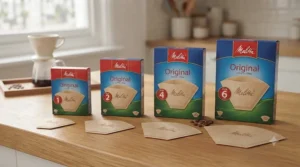
The modern range spans several filter cone sizes — including 100, 101, 102, and the more common 1×2, 1×4 and 1×6 — each matched to different drip coffee machines and manual cone holders, with 1×4 covering the largest share of everyday coffee brewing setups in UK kitchens.
Practical Usage Guide: Getting the Most From Your Filters
Buying the right filter is only half the job — how you fold, place and use it changes the result more than most people expect.
Start by folding both seams of the filter paper before placing it in the cone or basket — the side seam and the base seam — so the filter opens fully and sits flush against the holder rather than collapsing under the weight of wet grounds. For manual pour-over, rinse the filter with a small amount of hot water before adding coffee; this removes any faint papery taste and pre-warms the vessel, a step several brewing guides highlight as easy to skip but worth the extra thirty seconds. A common first-month mistake is using the wrong grind size for the filter method — too fine a grind through a 1×4 paper filter can slow drainage dramatically and lead to over-extraction, while too coarse a grind produces a thin, weak cup.
Store unused filters somewhere dry; damp filter paper doesn’t just weaken structurally, it can pick up odours from a kitchen cupboard, which then transfers into your next brew. One optimisation trick that doesn’t come printed on the box: keep two filter sizes on hand if your household uses both an electric machine and a manual pour-over cone, since running the wrong size through either device is the single most common everyday coffee brewing frustration reported by first-time filter buyers.

Real-World Scenarios: Which Filter Suits Your Setup
Not every kitchen has the same coffee routine, so it’s worth matching the filter to the actual situation.
Take a household with a standard 10-cup electric drip machine and a habit of brewing a full pot every morning. For that setup, Melitta Original Filter Papers 1×4 are the obvious everyday coffee brewing choice — widely available, correctly sized for the vast majority of machines, and inexpensive enough to buy in bulk without a second thought.
Compare that with a single-person household using a compact 2-cup machine inherited from a previous flat. Here, confirming the machine’s actual filter cone size matters more than brand preference — if it’s genuinely built for a smaller cone, the Melitta Original Coffee Filters Size 100 solve a fit problem the more common 1×4 simply can’t.
Then there’s the coffee enthusiast who’s recently discovered manual pour-over and doesn’t yet own an electric machine at all. For that scenario, the Melitta Pour Over Filter Holder or the budget FILTERCONE 1×4 Standard Black Plastic offer a low-cost way to start brewing manually using the same widely available 1×4 filter papers already sitting in most UK cupboards.
Problem → Solution: Common Filter Complaints Solved
A handful of complaints come up repeatedly with paper filters, and most have straightforward fixes.
Problem: the filter collapses or tears mid-brew. Solution: check you’re using genuine size-matched filters — off-brand filters sometimes run slightly thinner, and a torn filter is often a sign the paper wasn’t rated for the water volume or grind coarseness being used.
Problem: my coffee tastes papery. Solution: rinse the filter with hot water before adding grounds, particularly with unbleached or brown paper filters, which can carry a very faint taste straight out of the box.
Problem: the filter doesn’t fit my holder properly. Solution: this is almost always a size mismatch — check whether your machine or cone is marked 100, 101, 102, 1×2, 1×4 or 1×6, since these filter cone sizes aren’t interchangeable despite looking broadly similar.
Problem: I can’t find my filter size in local shops. Solution: sizes 100 and 102 are genuinely less common on UK supermarket shelves than 1×4; buying online in bulk is the more reliable long-term solution rather than repeated last-minute searching.
Problem: brewing takes far longer than it used to. Solution: this is often a grind-size issue rather than a filter fault — too fine a grind for drip machine filter papers slows water flow dramatically, so try a slightly coarser setting first.
How to Choose Melitta Coffee Filters
Picking the right filter comes down to a handful of genuinely decision-relevant factors.
- Check your machine’s marked filter cone size first. Look inside the basket or holder for a printed number — 100, 101, 102, 1×2, 1×4 or 1×6 — before buying anything.
- Match brewing method to filter type. Standard drip machine filter papers and dedicated pour-over filters aren’t always interchangeable in performance, even at the same size.
- Decide between brown and white paper. Both are food-safe and chlorine-free from Melitta; the difference is largely aesthetic, though white paper typically costs slightly more.
- Consider batch size versus household needs. A 1×4 filter suits most family-sized brewing; size 100 suits genuinely small, compact machines.
- Factor in local availability. 1×4 is the easiest size to restock quickly in UK supermarkets; 100 and 102 are better bought in bulk online.
- Check FSC and biodegradability claims. Genuine Melitta filters carry FSC certification as standard, which is worth confirming with unfamiliar third-party alternatives.
- Buy a manual cone as backup. A simple pour-over holder is inexpensive insurance against an electric machine breaking down mid-week.
Filter Cone Sizes Explained
Filter cone sizes are the part of buying Melitta coffee filters that trips up the most people, largely because two different numbering systems exist side by side.
The original system uses numbers — 100, 101 and 102 — where size 100 suits small 2-cup machines, 101 suits medium 3-4 cup setups, and 102 suits wider, narrower 8-cup style drip coffee machines. Melitta later introduced the 1×2, 1×4 and 1×6 system specifically to make everyday coffee brewing more convenient, since these newer sizes allow the full volume of water to be poured in at once rather than requiring multiple smaller additions. Despite the different naming conventions, 1×4 has effectively become the modern standard, fitting the description Melitta itself uses across the majority of both drip machines and manual pour-over cones sold today.
According to Melitta Compatible Coffee Filter Papers guidance, always checking the size marked on your existing filter holder or coffee machine before ordering is the single most reliable way to avoid a mismatched purchase — a folded-over filter that doesn’t sit flush is one of the most common causes of grounds ending up in the finished cup. If your holder has no visible marking, measuring the cone’s height and comparing it against listed dimensions for 100, 102 and 1×4 filters is the next best approach.
Melitta Filters vs Generic Cone Filters
It’s a fair question: does the Melitta name genuinely matter, or would any cone-shaped filter paper do the job?
| Factor | Melitta Filters | Generic Own-Brand Cone Filters |
|---|---|---|
| Sizing consistency | Reliable across the full range | Varies noticeably by manufacturer |
| Tear resistance when wet | Consistently strong, per reviews | Mixed, some noticeably weaker |
| FSC certification | Standard across the range | Not always confirmed or labelled |
| Availability in UK shops | Widely stocked, especially 1×4 | Inconsistent, brand-dependent |
| Price per filter | Slightly higher | Generally cheaper |
The table points to a fairly balanced trade-off rather than a clear winner in every case. Generic cone filters can absolutely work, and the underlying material — chlorine-free paper — is broadly similar across reputable brands, but the consistency of sizing and tear resistance is where Melitta filters earn their modest price premium, since a torn filter mid-brew costs more time and mess than the pennies saved buying a cheaper alternative. For everyday coffee brewing where consistency matters more than experimenting, sticking with genuine Melitta filter papers 1×4 removes one more variable from a routine most people would rather not think about each morning.
Non-Melitta Alternatives: When Generic Cone Filters Make Sense
There’s a reasonable case for generic drip machine filter papers in specific situations, even for buyers who generally prefer Melitta.
If you’re travelling or staying somewhere temporarily and need filters immediately, whatever cone filters for coffee makers your local shop stocks in the right size is a perfectly sensible short-term solution — brand loyalty matters less than having the correct fit on hand. Similarly, for high-volume commercial or office settings brewing large quantities daily, some generic filters are sold in significantly larger bulk packs at a lower cost per filter, which can make financial sense where the taste difference matters less than keeping a communal coffee machine consistently stocked.
Where generic alternatives are worth avoiding is anywhere consistency genuinely affects the finished cup — delicate pour-over brewing, for instance, where filter paper thickness and pore structure noticeably influence extraction speed. According to Which?’s tested reviews of filter coffee machines, testing across major brands including Melitta assesses not just the machine itself but how cleanly the filter performs during brewing — a reminder that filter quality is treated as a genuine performance variable by independent reviewers, not just a minor accessory choice.
Common Mistakes When Buying Melitta Coffee Filters
A few buying mistakes come up repeatedly, and they’re easy to avoid once flagged.
The most frequent is buying based on brand alone without checking filter cone sizes first — a genuine Melitta filter in the wrong size fits no better than a mismatched generic one. The second is assuming brown and white filters brew differently in taste; per Melitta’s own guidance, there’s no flavour difference between the two, only a difference in bleaching process and appearance.
A third common mistake is buying a single large box without confirming the machine still uses the same size after a replacement — kitchen appliances get swapped more often than filter stock gets checked, and a mismatched box of 80 filters is a frustrating waste. Finally, some buyers assume filter papers are interchangeable between drip machines and manual pour-over holders purely because the size label matches; while 1×4 does technically fit both, dedicated pour-over filters are specifically structured for manual pouring technique, and drip machine filter papers are optimised for a machine’s mechanical, consistent flow rate.
Long-Term Cost & Maintenance
Thinking in terms of cost per cup rather than box price changes which filter looks like the better everyday value.
An 80-pack of Melitta Original Filter Papers 1×4 typically works out to a low, single-digit price per filter, and at one filter per brew, a household making one pot daily gets roughly ten to eleven weeks from a single box. Compared with reusable metal mesh cone filters, paper filters lose on a pure per-use cost basis over a full year, but they win on convenience and on producing a noticeably cleaner cup, since paper traps fine sediment and coffee oils that metal mesh filters let straight through.
Maintenance is effectively zero for paper filters beyond correct storage — no cleaning, no descaling, no replacement parts. A reusable plastic cone holder like the Melitta Pour Over Filter Holder needs nothing more than a regular wash, either by hand or in a dishwasher, making the ongoing cost of manual filtering essentially just the price of the paper filters themselves, without any appliance maintenance to budget for.
Drip Coffee Machines and Filter Compatibility
Most drip coffee machines sold in the UK are built around one of the standard Melitta filter cone sizes, which is precisely why Melitta’s own filters fit such a wide range of third-party machines, not just Melitta-branded ones.
✨ Not sure your filters match your machine?
🔍 Check the size printed inside your machine’s basket or filter holder before your next order. Getting this right the first time avoids the classic 6:45am scramble — click through to any of the picks above to check current availability and pricing.
Electric drip coffee machines generally use either the newer 1×4 cone shape or, in older or narrower designs, the 102 size, while some compact single-serve machines use the smaller 100 size. According to the Wikipedia entry on drip coffee, commercial paper coffee filters trace directly back to Melitta Bentz’s 1908 invention, and the basic mechanical principle — hot water passing through grounds held in a paper filter, with brewed coffee collecting below — remains essentially unchanged across even the most modern automatic drip coffee machines available today. What’s changed is convenience: automatic timers, keep-warm plates and programmable brew strength, but the filter paper itself is still doing the same fundamental job it did over a century ago.

Frequently Asked Questions
❓ What size are standard Melitta coffee filters?
❓ Can I use Melitta filter papers 1x4 in any drip machine?
❓ Is there a taste difference between brown and white Melitta filters?
❓ How long do Melitta coffee filters keep for once opened?
❓ Are Melitta coffee filters biodegradable?
Conclusion
Melitta coffee filters remain the default for a straightforward reason: the sizing system, while occasionally confusing at first glance, is consistent, widely stocked, and backed by over a century of refinement since Melitta Bentz’s original 1908 invention. Whether your everyday coffee brewing runs through a standard drip machine on Melitta Original Filter Papers 1×4, or you’re just getting started with manual pour-over using a simple FILTERCONE 1×4 Standard Black Plastic, matching the filter cone size to your actual equipment matters more than any brand loyalty.
Get the size right, store the filters somewhere dry, and the rest of the process genuinely is as simple as it looks — fold, fill, pour, drink. That’s been true since 1908, and it hasn’t needed reinventing since.
✨ Ready to stock up for the week ahead? 💬
☕ — check out the picks above and find the filter size that actually fits your machine.
Recommended for You
- Chemex Filter Papers: 7 Best Picks for a Cleaner Cup (2026)
- V60 Filter Papers UK: 7 Best Picks; Buying Guide 2026
- Coffee Filter Papers Under £10: 7 Best Value Picks for 2026
Disclaimer: This article contains affiliate links. As an Amazon Associate, I earn from qualifying purchases. If you purchase products through these links, we may earn a small commission at no additional cost to you.
✨ Found this helpful? Share it with your friends! 💬🤗
