
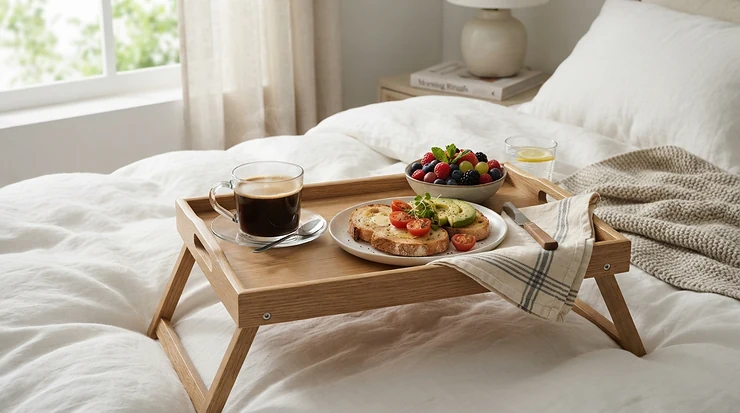
In This Article
Double-wall glass coffee cups are drinking vessels made from two thin layers of glass, usually borosilicate, joined at the rim with a sealed air gap between them. That gap slows heat transfer. Your fingers stay comfortable, your coffee stays warm for longer, and the drink appears to hover in mid-air.

If you’ve scrolled through a café’s Instagram lately, you’ve seen them. A flat white with a clean crema line, a layered cortado, an iced latte with no sweaty puddle underneath. None of that is an accident. The look is the point, and the physics is the bonus. These cups are made from borosilicate glass, the low-expansion family best known from laboratory beakers, which tolerates temperature swings far better than ordinary window-and-jam-jar glass.
But the market is noisy. Search for a double wall glass cup and you’ll meet hundreds of near-identical listings with near-identical photos. Some are lovely. Some are thin, wobbly and suspiciously chatty about their “premium craftsmanship”. The difference isn’t always visible on a product page, which is why this guide leans on real specifications, aggregated buyer feedback where it genuinely exists, and plain-spoken reasoning.
Below you’ll find seven double-wall glass coffee cups across budget, mid-range and premium tiers. You’ll also find an honest look at heat insulation, a guide to the café aesthetic, and practical care advice that no listing bothers to give you. Prices are indicative ranges only, so always check the current price on the listing.
Quick Comparison Table: Our 7 Double-Wall Glass Coffee Cups at a Glance
| Product | Capacity | Standout Trait | Price Range (pair or set) | Best For |
|---|---|---|---|---|
| CMXING Double Walled Glass Mugs | 350ml | Handled, generous size | Under £15 | Budget buyers, first-timers |
| SHANDERBAR Double Walled Glass Mugs | about 250ml (8.5oz) | Set of four | Roughly £15-£25 | Households and hosting |
| Lakeland Double-Walled Glass Coffee Mugs | 180ml | Glass handle, 150°C-rated | Roughly £15-£25 | Espresso and small coffees |
| Judge Double Walled Glassware | 200ml | Stackable | Around £22-£29 | Small kitchens, gifting |
| Bodum Pavina | 350ml | Silicone pressure vent | Roughly £25-£40 | Design-led, hot and iced drinks |
| Fellow Stagg Double Walled Glasses | 10oz | Flared tasting lip | Around £40 | Filter coffee fans |
| Kruve EQ Excite & Inspire | 150ml each | Double-to-single wall | Roughly £40-£55 | Flavour-chasing enthusiasts |
Looking at the table, the CMXING pair is the sensible entry point if you simply want to try double-wall glass coffee cups without a financial commitment. The SHANDERBAR set wins on cost per cup once you’re serving more than two people. At the other end, the Fellow Stagg and Kruve EQ glasses are priced as coffee tools, not just crockery, which is why they only make sense if you care about tasting notes. Availability and sellers vary on amazon.co.uk, so check each listing before you commit.
💬 Just one click — help others make better buying decisions too!😊
Top 7 Double-Wall Glass Coffee Cups: Expert Analysis
Every pick below is judged on what its specifications mean in everyday use. Where I couldn’t verify a meaningful body of independent reviews, I say so rather than pretend otherwise. Think of each entry as a spec-sheet translation, not a hands-on test.
1. CMXING Double Walled Glass Mugs — cheapest route to the café look
The headline here is price: this pair is the lowest-risk way to discover whether you actually enjoy drinking from glass.
Each mug holds 350ml (12oz), enough for a generous flat white or a mid-sized latte without slopping at the rim. The maker describes hand-blown borosilicate glass, a handle, and microwave, dishwasher and freezer compatibility, plus a 12-month warranty. The handle matters more than you’d expect. On any double wall glass cup it keeps your fingers off the warm outer wall during that first scalding minute.
On the spec sheet, this is a pick for students, first flats and anyone gifting on a tight budget. The trade-off is predictable at this tier: thinner walls and less consistent finishing than the premium names. Treat the dishwasher claim as “possible” rather than “wise” if you want the pair to last.
I couldn’t find a deep, verifiable pool of independent reviews, so it would be dishonest to quote a sentiment. Read the most recent buyer comments on the listing for any mention of chipped rims or uneven glass thickness before ordering.
Pros:
- ✅ Generous 350ml capacity suits big lattes
- ✅ Handle keeps fingers away from warmth
- ✅ Very low cost of entry
Cons:
- ❌ Finishing consistency likely varies at this price
- ❌ Little independent review evidence to verify
Expect to pay under £15 for the pair at the time of research (check current price). That is a strong value verdict for the entry tier.

2. SHANDERBAR Double Walled Glass Mugs — four cups for the price of two
This is the household-sized option, sold as a set of four rather than a pair.
The cups hold about 8.5oz (roughly 250ml), the sweet spot for a cappuccino or a double espresso topped up with hot water. They are borosilicate and listed as microwave safe. Round-up reviewers also note they feel light despite the thick double-wall construction, which tells you the glass is thinner than it looks. That lightness is pleasant in the hand but a gentle warning for the dishwasher.
Based on the spec comparison, this is the practical choice for couples who regularly host or families who drink coffee together. A set of four also quietly solves the “one broke, now we’re odd numbers” problem. Smaller 250ml cups pair neatly with milk-based drinks where you want a proper foam-to-coffee ratio instead of a bucket of liquid.
Verified review evidence is thin, with the main source being an editorial round-up rather than a pool of verified-purchase reviews. So treat the glowing summaries with a pinch of salt, and scan the latest listing feedback for breakage reports in transit.
Pros:
- ✅ Four cups cuts cost per cup sharply
- ✅ 250ml suits cappuccinos and small lattes
- ✅ Microwave-safe borosilicate construction
Cons:
- ❌ Verified reviews are limited
- ❌ Lightweight glass invites careful handling
Indicative range is roughly £15-£25 for four (check current price). For hosting, the value verdict is excellent.
3. Lakeland Double-Walled Glass Coffee Mugs — sturdy glass handle, tidy espresso size
A glass handle is the party trick here, and it’s a good one.
These 180ml mugs use toughened borosilicate rated by the retailer to 150°C, and the walls and the handle stay cool in use. At 180ml they are strictly small-coffee cups: espresso, macchiato, a short flat white or a cortado. A small volume also means less time for the drink to cool, so the heat insulation does its best work here.
Reviewers on the retailer’s page offer a nicely balanced picture. One said the glass looked alarmingly thin at first but proved durable; another praised how light the cups are and how well they hold warmth even outside on the patio. A recurring gripe is that the double-wall rim is thick enough to feel slightly awkward to sip from. If you love a razor-thin lip, bear that in mind.
Based on the specs and that feedback, this is a smart pick for anyone who wants a classic, no-nonsense insulated glass coffee cup in a compact size. The brand also offers matching cafetières, so a coordinated shelf is easy to build.
Pros:
- ✅ Glass handle stays comfortably cool
- ✅ Light yet reportedly durable borosilicate
- ✅ Matching cafetières for a coordinated set
Cons:
- ❌ 180ml is too small for big milky drinks
- ❌ Thick rim feels chunky for some drinkers
Expect roughly £15-£25 for the pair (check current price). It offers solid value for small-coffee drinkers.
4. Judge Double Walled Glassware — stackable, gift-ready British brand
This one earns its place through cupboard-friendly stacking and a brand with deep UK roots.
The 200ml cups (product code JDG32) are made from borosilicate glass and designed to nest inside one another, which matters if your kitchen storage is a game of Tetris. The maker also says the thermal “air pocket” design removes the need for a coaster, and cites a working range of 0-100°C. One retailer page lists an oven rating while another doesn’t, so ignore oven use unless the maker’s own care guidance confirms it.
Judge has been supplying UK kitchens since 1898, which doesn’t make a cup better, but it does suggest easier access to customer support than an anonymous marketplace brand. On the analysis side, 200ml suits americanos, cortados and small lattes. It is a neat gifting option because the set arrives as a considered pair.
Retailer pages show only a handful of ratings, all positive, but the sample is too small to draw any firm conclusion. Treat this as “promising and unproven” rather than “crowd-tested”.
Pros:
- ✅ Nests neatly for compact storage
- ✅ Established British brand behind it
- ✅ Gift-friendly pair presentation
Cons:
- ❌ 200ml limits milk-heavy drinks
- ❌ Few verifiable ratings to lean on
Retailers listed it at around £22-£29 at the time of research (check current price). Value is fair, with a premium for the brand and the stackability.
5. Bodum Pavina — the design classic with a clever vent
Few glasses have shaped the café aesthetic as thoroughly as this one.
The 0.35 litre size is handleless and mouth-blown from borosilicate glass. Underneath sits a small silicone membrane that equalises pressure between the walls, which the maker says is why condensation doesn’t form on cold drinks. The glass is described as suitable for the freezer, oven and microwave, and one reviewer’s testing note cites an oven limit around 180°C and a freezer range down to about -20 to -30°C, both for empty glasses only. The design won a Red Dot Award in 2016, and the original Pavina launched back in the early 2000s, which means decades of refinement.
Reviewers note that the glasses look delicate but handle everyday use better than expected. One flagged that wear and scratches show more clearly on transparent glass than on frosted alternatives. Without a handle, you rely entirely on the heat insulation of the double wall, which works well for lukewarm and iced drinks but gets toasty with a freshly poured espresso.
This is the best all-rounder if you drink iced lattes, matcha and hot coffee interchangeably.
Pros:
- ✅ Silicone vent reduces condensation on iced drinks
- ✅ Handles hot, cold and microwave use
- ✅ Proven design with decades of history
Cons:
- ❌ Handleless, so very hot drinks need care
- ❌ Scratches show over time
Indicative range is roughly £25-£40 for a pair (check current price). Value is strong for versatility.
6. Fellow Stagg Double Walled Glasses — flared lip built for tasting
This glass was designed by people who obsess over how coffee hits your tongue, and it shows.
At 10oz, the glass is hand blown from borosilicate with a flared lip that, according to the maker, spreads the coffee across your palate. The cleverest detail is the construction. The rim is single wall for a thin, comfortable sip, while the body is double wall for insulation. That is a rare combination in double-wall glass coffee cups, because most builds sacrifice lip thickness for insulation.
I couldn’t find a verifiable pool of independent buyer reviews for this specific set, so I’ll stay with the design logic. A flared lip suits filter coffee, where aroma and acidity are the whole show, and it works for a latte too. The set is sold as a pair with a 12-month warranty at the UK retailer I found.
If you only drink milky coffee, this is overkill. If you care about whether your Ethiopian tastes of blueberries, this is built for you.
Pros:
- ✅ Single-wall rim for comfortable sipping
- ✅ Flared lip suits aromatic filter coffee
- ✅ 10oz size handles most brew styles
Cons:
- ❌ Premium price for a pair
- ❌ No handle for very hot drinks
Expect around £40 for the pair (check current price). It’s good value only if you will use the tasting features.
7. Kruve EQ Excite & Inspire — two shapes, two flavour profiles
Kruve treats the glass as a flavour instrument, and that is a genuinely different idea.
Each glass holds 150ml and is hand-blown from borosilicate with a double-to-single-wall build, the same smart rim trick as the Stagg. The Excite has a bulbous bowl and a large liquid surface, which the maker pairs with fuller-bodied, chocolatey roasts. The Inspire is narrower with a smaller surface area, aimed at fruity, bright coffees. The brand picked up two awards at the Specialty Coffee Expo in 2019.
Buyer comments I found describe the glasses as larger than expected, mention that flavours seem to linger, and describe noticeably different drinking experiences between the two shapes. One reviewer said they would choose the Excite every time. Editorial testers also note an important catch: the gold leaf logo means these are not microwave safe.
Whether the “equaliser” claim is science or marketing is open to debate, but the shapes are genuinely different, and variety is rarely a bad thing. This is the right pick for the person who owns a grinder worth more than their sofa.
Pros:
- ✅ Two distinct shapes for different roasts
- ✅ Thin single-wall rim for pleasant sipping
- ✅ Recognised by industry award judges
Cons:
- ❌ Not microwave safe
- ❌ Highest price in this round-up
Indicative range is roughly £40-£55 for a pair (check current price). Value is good for enthusiasts and poor for casual drinkers.
How the Seven Compare Side by Side
| Product | Microwave Use | Aggregated Review Picture | Price Range |
|---|---|---|---|
| CMXING | Yes (per maker) | Limited verifiable feedback | Under £15 |
| SHANDERBAR | Yes (listed) | Limited, editorial only | £15-£25 |
| Lakeland | Check maker guidance | Light, durable, thick rim | £15-£25 |
| Judge | Per maker listing | Few ratings, positive | £22-£29 |
| Bodum Pavina | Yes (per maker) | Sturdier than it looks | £25-£40 |
| Fellow Stagg | Not stated, check | No verified reviews found | About £40 |
| Kruve EQ | No | Larger than expected, flavour praised | £40-£55 |
Reading across the rows, only two products have reasonably clear, consistent review themes: Lakeland (light, durable, chunky rim) and Bodum Pavina (sturdier than it appears). The budget pair and the SHANDERBAR set offer value, but the evidence base is thin, so buy them as low-risk experiments. The Kruve EQ glasses are the only ones that explicitly rule out the microwave, which is worth knowing if you reheat coffee daily.
How to Choose Double-Wall Glass Coffee Cups
Choosing the right double-wall glass coffee cups comes down to seven decisions. Work through them in order and the shortlist builds itself.
- Confirm the glass type. Look for borosilicate glass in the listing. It tolerates hot-to-cold swings far better than soda-lime, which is why it dominates this category.
- Match capacity to your usual drink. 150-200ml suits espresso and cortados, 250ml suits cappuccinos, and 350ml suits big lattes and iced drinks.
- Decide on a handle. Handles protect your fingers from very hot drinks, while handleless glasses look sleeker and stack better.
- Check the rim. A thick double-wall rim feels clunky to sip from. Single-wall rims, as on the Fellow Stagg and Kruve EQ glasses, feel more refined.
- Read the care instructions. Microwave, dishwasher and freezer claims vary widely and are sometimes contradictory between retailers.
- Think about storage. Stackable options like Judge save shelf space, while rounded shapes like some Lakeland and SHANDERBAR designs do not nest.
- Set a breakage budget. Thin hand-blown glass is lovely and fragile. If you break a cup a year, cheaper sets of four may beat a pricey pair.
✨ Ready to Upgrade Your Cup Shelf?
🔍 Take your morning coffee from “fine” to “frame-worthy” with these carefully compared picks. Click any highlighted product name to check current pricing and availability. The right pair will help you create a café aesthetic your kitchen has been missing!

Borosilicate Glass vs Soda-Lime: What the Label Really Means
“Borosilicate coffee glass” appears on nearly every listing, so it’s worth understanding what it buys you. The short version: it’s glass with boron trioxide added, which dramatically lowers how much the material expands when heated. Lower expansion means less internal stress when boiling water hits a cooler cup, and that translates to fewer cracks.
Standard laboratory borosilicate has a thermal expansion coefficient about one-third that of ordinary soda-lime glass, according to the reference summary on borosilicate. That’s why it’s trusted for beakers and ovenware. Handy, but not magic: the same reference notes that borosilicate can still crack under rapid or uneven temperature changes.
For double-wall glass coffee cups, this has a practical meaning. The inner wall meets hot liquid while the outer wall stays comparatively cool, so the cup is already managing a temperature difference by design. Borosilicate copes with that gradient far better than cheaper glass would.
What the label doesn’t tell you is quality. “Borosilicate glass” is a material claim, not a craftsmanship claim. Two cups can both be borosilicate and differ wildly in wall thickness, rim finish and seal quality. Use the glass type as a minimum entry requirement, then judge the rest on construction, brand support and buyer feedback.
Heat Insulation: What a Double Wall Glass Cup Actually Does
Here’s the honest bit. Most double-wall glass coffee cups trap a layer of air between the walls, and air conducts heat far less readily than glass. That slows heat moving from your drink to your hand and, to a lesser extent, to the room. The result is a cup that is comfortable to hold and keeps drinks warmer than a single-wall glass of the same size.
It is not a vacuum flask, though. Some marketing language blurs this, so don’t expect hours of warmth. Realistically, the benefit is a few extra minutes of comfortable drinking temperature, which is exactly the window most people need for a morning coffee.
Does that window matter? A large UC Davis Coffee Center consumer study served black coffee to more than 3,000 participants across a temperature range of roughly 56-71°C. Coverage of the findings suggests the broadest acceptance sat around 68-70°C at the lips. The same coverage notes that the effect of different vessels on how quickly drinks cool remains an open question, so there is no tidy lab figure for any cup in this guide.
Two practical takeaways follow. First, pre-warming the glass with warm water gives the heat insulation a head start. Second, smaller volumes cool faster, so a 180ml cup of espresso and a 350ml latte behave very differently. If your coffee routinely goes cold while you answer emails, a larger insulated glass coffee cup helps, but a habit change helps more.
Café Aesthetic: Styling Double-Wall Glass Coffee Cups at Home
Let’s be honest: part of the appeal is how these cups photograph. The floating-liquid effect is real, and a few small decisions turn a nice cup into a proper café aesthetic.
Mind the light. Side or back light makes the double wall glow and the crema line pop. A north-facing windowsill in the morning is hard to beat. Under harsh overhead bulbs, the glass can look flat.
Choose drinks that show off the layers. Cortados, lattes with distinct milk lines, iced coffee over cold foam and matcha lattes all look better in clear glass than a flat black filter coffee does. The Bodum Pavina and Fellow Stagg shapes suit this particularly well.
Pair with natural textures. A wooden tray, a linen napkin or a small ceramic saucer gives the transparent glass something to contrast against. Because the double wall stays comfortable on the outside, you can skip the coaster, though a saucer still helps with the café aesthetic.
Keep the glass spotless. Clear glass shows every fingerprint and limescale ring, especially in hard-water parts of the UK. A quick polish with a dry microfibre cloth does more for your shelf than any new accessory.
Mix, don’t match too tightly. A pair of Judge cups beside a Lakeland cafetière looks intentional. A shelf of unrelated sizes looks accidental.
Double-Wall Glass vs Ceramic, Single-Wall Glass and Steel
| Feature | Double-Wall Glass | Ceramic Mug | Single-Wall Glass | Insulated Steel |
|---|---|---|---|---|
| Heat insulation | Good, modest duration | Good, thick walls | Poor | Excellent |
| Outer wall comfort | Cool to warm | Warm | Hot | Cool |
| Visual appeal | Showcases the drink | Opaque, varied | Showcases, but hot to hold | Opaque |
| Fragility | Moderate to high | Moderate | Moderate | Very low |
| Microwave use | Often yes, check | Usually yes | Usually yes | No |
| Best For | Bodum Pavina for drink display | Everyday robustness | Cold drinks | Commuting |
The table makes the trade-off plain. Double-wall glass coffee cups win on looks and comfort, while steel wins on pure heat retention and durability. Ceramic is the sensible all-rounder, and it’s tougher than hand-blown glass. If your priority is showing off a layered latte, clear glass is hard to beat. If you want coffee still hot at the end of a long commute, buy steel. You can also own both, and plenty of sensible households do.
Features That Actually Matter (And Those That Don’t)
What matters:
- Rim thickness. It changes how pleasant every sip feels, far more than most spec lines.
- Base stability. A wide, solid base reduces knocks and spills, which is especially relevant with light glass.
- Handle design. A glass handle like the Lakeland one adds comfort but can be a weak point if dropped.
- Care clarity. Clear microwave and dishwasher guidance saves you from learning the hard way.
- Brand support. A warranty, such as the 12 months offered on the CMXING set, is worth more than the box says.
What matters less than the listing suggests:
- “Hand-blown” romance. It signals a process, not guaranteed quality. Some hand-blown cups are lovely, others are uneven.
- Gift packaging. Charming, but irrelevant to daily use.
- Ounces versus millilitres. Pick the unit you think in and compare like for like.
- Decorative logos. Remember the Kruve EQ gold leaf logo, which rules out the microwave.
The pattern is simple: structural features earn your money, cosmetic ones don’t. A thin, well-made rim beats a gift box every time.

Long-Term Cost and Maintenance
| Tier | Example Products | Typical Cost Per Cup | Breakage Tolerance |
|---|---|---|---|
| Budget | CMXING, SHANDERBAR | Roughly £4-£8 | High, replace freely |
| Mid-range | Lakeland, Judge | Roughly £8-£15 | Moderate |
| Premium | Bodum Pavina, Fellow Stagg, Kruve EQ | Roughly £12-£28 | Low, handle carefully |
The cheapest cup is not always the cheapest outcome. If a budget pair is replaced twice a year, you may pay more over three years than you would for a single premium pair that lasts. Conversely, if your household is clumsy, a four-cup budget set is the more economical choice. Total cost of ownership depends on your breakage habits more than on the sticker.
Maintenance is minimal but real. Rinse soon after use to prevent coffee staining, polish away limescale, and retire any cup with a chip or crack. A damaged double-wall cup can fail suddenly under heat, so don’t be sentimental about it.
Practical Usage Guide: Setup, First Use and Your First 30 Days
New glass deserves a gentle start. These steps take about five minutes and protect your investment.
Day one:
- Wash by hand in warm, soapy water and dry with a microfibre cloth.
- Pre-warm the cup with warm (not boiling) water for 20-30 seconds.
- Pour your coffee slowly onto the inside wall rather than blasting boiling water into a cold cup.
Week one:
- Avoid sudden extremes. Even though borosilicate glass resists thermal shock better than most glass, rapid or uneven changes can still cause trouble. Never move a cup straight from the freezer to boiling water.
- Never microwave a cup empty, and skip it entirely for the Kruve EQ glasses.
- Stack only if the design allows it. The Judge cups nest by design, while rounded shapes can chip each other.
Weeks two to four:
- If a white film appears, soak the cup in a mild citric acid or white vinegar solution, then rinse thoroughly.
- Use a soft bottle brush for narrow shapes. Metal spoons clinking against thin glass are a quiet source of chips.
- Check the rim regularly for tiny chips. If you find one, retire the cup.
Common first-month mistakes include pouring boiling water into a cold glass, trusting the dishwasher with delicate cups, and leaving coffee to stain overnight. Avoid those three and your cups should last far longer.
Real-World Scenarios: Which Double Wall Glass Cup Suits You?
The student in a shared flat. Budget is tight, breakage is likely, and storage is a single shelf. The CMXING pair keeps costs low, and a replacement won’t hurt. Daily use is realistic, so assume a short lifespan and enjoy the look while it lasts.
The couple who host weekend brunch. Four people, a mix of lattes and teas, and a dishwasher they can’t resist. The SHANDERBAR set of four covers the guest list, and the lower cost per cup makes occasional breakage forgivable. Hand wash the first few times to see how they cope.
The home-brewer chasing tasting notes. They own a grinder, a scale and strong opinions about water. The Fellow Stagg glasses suit everyday filter coffee, while the Kruve EQ glasses suit experiments with different roasts. Use is daily, the budget is generous, and the cups will be hand washed with care.
The design-minded host. The kitchen shelf is as important as the coffee. The Bodum Pavina handles hot lattes, iced coffee and even desserts, and the Judge pair stacks neatly for compact display. Use is occasional to daily, and aesthetics decide the purchase.
The pattern is consistent: match the cup to your breakage tolerance and your habits, not to the best photograph.
Safety, Regulations and Food Contact
Any cup you drink from is a food contact material, and UK law treats it that way. In England, the Materials and Articles in Contact with Food (England) Regulations 2012 sets out the framework, with the Food Standards Agency among the enforcement bodies. Wales, Scotland and Northern Ireland have their own parallel rules, so the principle is the same across the UK.
For you as a buyer, this has practical implications. Glass is generally a stable, non-reactive material, which is part of borosilicate’s appeal. But a legal framework doesn’t guarantee quality, and marketplace listings vary in how much compliance information they show. Favour sellers and brands that are transparent about materials and offer clear contact details.
Beyond the paperwork, the real safety issues are physical. Chipped rims can cut lips, and cracked double walls can fail without warning under heat. Retire damaged cups promptly, never pour boiling water into a visibly cracked glass, and keep delicate glassware out of reach of small children. A few seconds of inspection each week is cheap insurance.

FAQ
❓ Are double-wall glass coffee cups microwave safe?
❓ Do double wall glass cup designs keep coffee hot for longer?
❓ What is the best insulated glass coffee cup for lattes?
❓ Can borosilicate coffee glass go in the dishwasher?
❓ How much should I spend on double-wall glass coffee cups in the UK?
Conclusion
Double-wall glass coffee cups deliver something rare in kitchen shopping: a purchase that improves both the look and the feel of a daily ritual. The comfort of a cool outer wall, the modest but real heat insulation and that floating-coffee visual add up to a quietly joyful upgrade.
The right pick depends on how you drink. Choose the CMXING pair for a low-risk first experiment, the SHANDERBAR set for hosting, and the Lakeland mugs for small, strong coffees. Pick the Judge pair for tidy storage and gifting, the Bodum Pavina for the most versatile design-led glass, and the Fellow Stagg or Kruve EQ glasses if flavour is your obsession.
Remember the essentials: confirm borosilicate glass, match capacity to your drinks, check care instructions, and plan for breakage. Treat the glass kindly, and your café aesthetic should stay Instagram-ready for years.
Recommended for You
- Espresso Cup and Saucer Set: 7 Best Picks For UK Homes (2026)
- Coffee Machine Cleaning Kits: 7 Best Budget Picks For 2026
- Grinder Cleaning Tablets: 7 Best Picks To Stop Bitter Coffee (2026)
Disclaimer: This article contains affiliate links. As an Amazon Associate, I earn from qualifying purchases. If you purchase products through these links, we may earn a small commission at no additional cost to you.
✨ Found this helpful? Share it with your friends! 💬🤗
