
In This Article
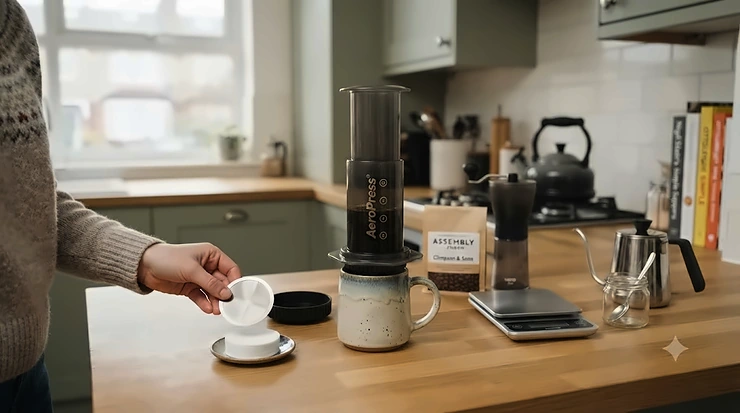
Here’s a confession every AeroPress owner eventually makes: you ran out of the little white discs at 6:45am and stared into the packet like it might magically refill itself. That moment — standing in the kitchen wondering whether a bit of kitchen roll would do the job (it won’t, please don’t) — is usually what sends people searching for AeroPress filters vs standard paper filters in the first place, and it’s a genuinely useful question to ask. The AeroPress, invented by Stanford engineer Alan Adler back in 2005, uses a small round paper or metal disc to hold back the grounds while letting the good stuff through, and the device itself has become something of a cult object among home brewers precisely because that tiny filter does so much heavy lifting.
The short version: AeroPress-branded filters and most reputable generic equivalents both do the core job — clean, grit-free coffee — but they diverge on porosity, thickness, taste transparency and how many you get for your money. Reusable metal filters flip the whole equation, trading paper’s clarity for body and a lot less landfill. This guide walks through genuine, currently available products on Amazon UK across paper and metal, budget and premium, so you can stop guessing and start brewing. We’ll cover AeroPress replacement filters, generic AeroPress papers, what a filter pack actually costs you over a year, filter compatibility across the AeroPress range, and how all of this holds up for travel coffee brewing when your kit lives in a rucksack rather than a kitchen drawer.
Quick Comparison Table
| Filter Type | Material | Approx. Price Range | Best For |
|---|---|---|---|
| AeroPress Natural Paper Microfilters | Unbleached paper | around £5-£7 | Purists wanting the “official” clean cup |
| Generic bulk paper packs (e.g. Laicky, Prima Rosa) | Unbleached/bleached paper | around £6-£10 for 500-800 | Budget buyers, high-frequency brewers |
| AeroPress Stainless Steel Reusable Filter | 316 stainless steel | around £10-£15 | Eco-conscious, fuller-bodied brews |
| Boutique metal discs (e.g. CAFE CONCETTO) | Coated stainless steel | around £8-£15 | Gift buyers, style-conscious kit collectors |
A quick glance at that table tells most of the story: paper is cheap per cup but recurring, while metal is a one-off cost that pays for itself within a couple of months of daily use. Where it gets interesting is texture and taste — paper filters trap the coffee’s natural oils and fine sediment, giving you a cleaner, almost tea-like clarity, whereas metal lets those oils straight through for a heavier mouthfeel closer to a French press. Neither is objectively “better”; it depends whether you’re chasing clarity or body, and how much you mind washing a small disc every morning instead of binning it.
💬 Just one click — help others make better buying decisions too!😊
Top 7 AeroPress Filters: Expert Analysis
1. AeroPress Natural Paper Microfilters (200 Count) — the genuine benchmark everyone else is copied from
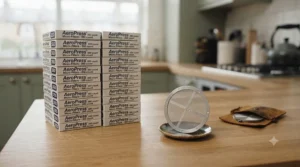
Straight out of the box, this is the filter the AeroPress was designed around, and it shows in how consistently it seats and seals inside the cap. These are unbleached, chlorine-free paper discs at the standard 2.5-inch diameter, sold in a dispenser-style box of 200, and they’re compatible with the AeroPress Original, Go and Clear (not the XL, which needs its own larger size). In practice, that unbleached paper means a genuinely neutral cup — no papery off-notes bleeding into your brew, which cheaper bleached alternatives can occasionally introduce if the paper’s been processed with heavier chemicals. This is the safe, default choice for anyone who wants zero variables to troubleshoot: if your coffee tastes off, at least you’ll know it’s not the filter. Aggregated customer sentiment on Amazon UK is consistently strong for this line, with reviewers most often praising the tight, consistent perforation and the fact the discs don’t tear or fold awkwardly when wet, a common gripe with own-brand alternatives. The main criticism that recurs is value for money against bulk generic packs — you’re paying a premium for the AeroPress name on what is, materially, a simple paper disc.
Pros:
- ✅ Perfectly sized fit with zero adjustment needed
- ✅ Unbleached paper avoids papery aftertaste issues
- ✅ Consistently high real-world review sentiment
Cons:
- ❌ Pricier per filter than generic bulk packs
- ❌ Not compatible with the larger AeroPress XL
Priced around £5-£7 for 200 filters, this works out to a few pence per cup — reasonable for daily use, though not the cheapest option on this list. If you want one less thing to think about each morning, it’s worth the small premium.
2. Laicky 800 Count Replacement Paper Filters — best bulk value for households that brew constantly
If your AeroPress sees action more than once a day, an 800-count pack changes the maths considerably. These unbleached, round 2.5-inch filters are pitched as compatible with both Aerobie and AeroPress machines, and the sheer volume means you’re not reordering every few weeks. Based on the spec comparison with the genuine article, the perforation pattern and paper weight are broadly similar to AeroPress’s own filters, though thickness can vary slightly batch to batch — a common trait of generic AeroPress papers manufactured to a price point rather than a fixed in-house standard. What most buyers overlook about bulk packs like this is storage: 800 filters is a genuinely large stack, and keeping them dry and dust-free in a kitchen drawer matters more than people expect, since damp paper filters can tear during brewing. Reviewers frequently report that the fit is snug and reliable, with occasional notes about a handful of filters per batch feeling thinner than the rest — worth a quick visual check before you brew rather than an afterthought.
Pros:
- ✅ Exceptional cost-per-cup for daily drinkers
- ✅ Large stock means fewer reorders
- ✅ Reported fit matches genuine AeroPress discs closely
Cons:
- ❌ Slight batch-to-batch thickness variation reported
- ❌ Requires proper dry storage for such a large pack
At around £8-£10 for 800 filters, this is one of the strongest value picks on the market — ideal for offices, shared houses, or anyone who treats the AeroPress as a daily workhorse rather than a weekend treat.
3. Bake Choice 500-Count Replacement Paper Filters — the mid-size generic pack for two-person households
Sitting neatly between the small official box and the mega bulk packs, this 500-count option from Bake Choice is aimed at households that brew once or twice daily without wanting to commit to 800 filters at once. The round, disposable design mirrors the standard AeroPress geometry, and the paper is described as unbleached and food-safe, which lines up with what serious AeroPress brewing requires — anything treated with heavier bleaching agents can subtly alter flavour clarity. Here’s what the spec sheet won’t tell you, but user reports suggest: mid-size generic packs like this tend to sit in that useful middle ground where you get bulk-buy savings without the storage headache of a huge box, making them a sensible default for anyone upgrading from the small official pack for the first time. Aggregated review sentiment tends to be positive on fit and brewing performance, with the most common minor complaint being that the packaging itself (a simple sealed bag rather than a rigid dispenser box) isn’t as tidy to store as AeroPress’s own box.
Pros:
- ✅ Sensible middle-ground pack size for regular use
- ✅ Unbleached paper suited to flavour-conscious brewers
- ✅ Solid value against genuine AeroPress pricing
Cons:
- ❌ Simple bag packaging is less tidy than a dispenser box
- ❌ Less brand recognition than AeroPress-branded filters
Expect to pay somewhere in the £6-£9 range for 500 filters, putting the cost-per-cup comfortably below the official filters while still landing well above rock-bottom bulk packs on perceived quality.
4. Prima Rosa 700 Pcs Micro Filter Paper — the specialist “fine pore” pick for sediment-sensitive drinkers
This pack leans into a specific selling point: finer micro-pores designed to catch more fine particulate than a standard-grade paper filter, aimed at drinkers who are sensitive to grit or sediment in their cup. At 64mm/2.5 inches, it fits the standard AeroPress sizing, and it’s sold in two bags of 350 for 700 total. The real-world meaning of “finer pores” is a slightly slower drip-through and, in theory, a marginally cleaner cup — useful if you’ve noticed a bit of silt at the bottom of your mug with cheaper filters, which usually points to inconsistent perforation rather than your grind size. On paper this means less troubleshooting for anyone using a blade grinder that produces uneven, dusty grounds (a burr grinder solves this more reliably, but not everyone has one). Reviewers generally describe the coffee produced as smooth and free of grittiness, with the sealed, resealable packaging getting a specific mention as more practical for long-term storage than a loose bag.
Pros:
- ✅ Finer pore structure suits sediment-sensitive drinkers
- ✅ Resealable packaging keeps filters fresher for longer
- ✅ Generous 700-count total across two bags
Cons:
- ❌ Slightly slower brew time due to finer porosity
- ❌ Marginal price premium over standard-pore generic packs
Pricing typically sits in the £6-£8 bracket, making it a smart pick specifically for anyone whose main complaint about generic AeroPress papers has been grittiness rather than cost.
5. AeroPress Stainless Steel Reusable Filter (Standard, Grey) — the reusable pick that pays for itself
This is where paper and metal properly part ways. Crafted from 316-grade stainless steel — a notably more corrosion-resistant grade than the 304 steel used in many cheaper metal filters on the market — this disc is designed to be rinsed and reused indefinitely rather than binned after one brew. Because it’s more porous than paper, coffee oils pass straight through, producing a noticeably fuller-bodied, French-press-like cup, at the cost of the crystal-clear clarity paper gives you. Based on the spec comparison, the trade-off is straightforward: you gain sustainability and a bolder flavour profile, and you lose some clarity along with a bit of fine sediment that paper would have caught. AeroPress itself recommends a slightly finer grind and a slower, circular pour with this filter to compensate for the faster drip-through, which is worth knowing before your first brew rather than discovering it through a weak, over-diluted cup. Reviewers consistently highlight the reduction in single-use waste as the main draw, alongside genuine praise for how easy it is to clean — a quick rinse and occasional descale is typically all it needs.
Pros:
- ✅ Genuinely reusable — zero recurring filter cost
- ✅ Fuller-bodied brew thanks to oil pass-through
- ✅ Premium 316 stainless steel resists corrosion
Cons:
- ❌ Faster drip-through needs a finer grind to compensate
- ❌ Not compatible with the larger AeroPress XL model
At around £10-£15 for a single filter that effectively never needs replacing, the long-term value case is hard to argue with — see our Long-Term Cost & Maintenance breakdown further down for the actual numbers.
6. AeroPress XL Stainless Steel Reusable Filter — the essential upgrade for AeroPress XL owners
Owners of the larger AeroPress XL machine hit a specific compatibility wall fast: standard 2.5-inch filters, paper or metal, simply don’t fit the wider chamber. This XL-specific reusable filter solves that, using the same premium stainless steel construction as the standard reusable filter but sized to match the XL’s larger brewing chamber, which is built for batch brewing multiple cups at once rather than a single serving. What most buyers overlook about the XL model generally is that its filter ecosystem is smaller than the Original’s — fewer generic paper options exist in the correct XL size, which makes a durable reusable filter like this one an even more sensible investment than it is for standard-size machines, since you’re not constantly hunting for correctly sized paper stock. The washable, earth-friendly design follows the same maintenance logic as the standard steel filter: rinse after use, descale occasionally, and grind slightly finer than you would for paper to manage the increased drip speed across a larger surface area.
Pros:
- ✅ Solves a genuine XL filter compatibility gap
- ✅ Durable steel construction built for repeated batch brewing
- ✅ No ongoing hunt for correctly sized XL paper stock
Cons:
- ❌ Only fits the XL model — not interchangeable with Original/Go
- ❌ Premium pricing versus standard-size reusable filters
Typically priced around £12-£18, this is less an optional upgrade and more a near-essential accessory if you own the XL and want to avoid being tied to a narrow, patchy market of correctly sized paper filters.
7. CAFE CONCETTO Superfine Disc Reusable Filter (Rose Gold) — the boutique pick for style-conscious kit collectors
Not every reusable filter needs to look purely utilitarian, and this one leans into that. Constructed from premium coated stainless steel in a rose gold finish, it’s designed for the standard AeroPress and AeroPress Go, with a “superfine” disc pattern aimed at narrowing the gap between metal’s fuller body and paper’s cleaner clarity. Honestly, the coating is largely cosmetic rather than functional — the brewing performance sits in the same broad category as other quality stainless discs — but for anyone who cares about their countertop kit looking considered rather than purely functional, that’s a legitimate purchase driver, not a frivolous one. It comes packaged with basic brew tips included, useful for first-time metal filter users who aren’t sure how much to adjust their grind or pour technique. Aggregated review sentiment tends to focus on the finish quality holding up well to regular washing without dulling, alongside general satisfaction with brew consistency once users have dialled in a slightly finer grind than they’d use with paper.
Pros:
- ✅ Distinctive finish for style-focused coffee setups
- ✅ Included brew tips ease the switch from paper
- ✅ Coating reported to hold up well to regular washing
Cons:
- ❌ Coating is cosmetic rather than a performance upgrade
- ❌ Sits at a premium versus plain stainless alternatives
Expect to pay somewhere in the £8-£15 range depending on pack size and finish — a reasonable ask if the look genuinely matters to you, though a plain stainless AeroPress-branded filter will brew an almost identical cup for less.
Top 7 Products Comparison
| Product | Material | Reusable? | Approx. Price Range | Best For |
|---|---|---|---|---|
| AeroPress Natural Paper Microfilters | Unbleached paper | No | £5-£7 | Purists wanting the default experience |
| Laicky 800 Count Filters | Paper | No | £8-£10 | High-frequency, budget households |
| Bake Choice 500-Count Filters | Paper | No | £6-£9 | Two-person households, mid-size stock |
| Prima Rosa 700 Pcs Micro Filter Paper | Fine-pore paper | No | £6-£8 | Sediment-sensitive drinkers |
| AeroPress Stainless Steel Reusable Filter | 316 stainless steel | Yes | £10-£15 | Eco-conscious daily brewers |
| AeroPress XL Stainless Steel Reusable Filter | 316 stainless steel | Yes | £12-£18 | AeroPress XL owners |
| CAFE CONCETTO Rose Gold Disc | Coated stainless steel | Yes | £8-£15 | Style-conscious kit collectors |
Lay it all out like this and a clear pattern emerges: paper wins on upfront cost and predictability, while the three metal options cluster at a higher initial price but effectively zero out over time. The AeroPress Natural Paper Microfilters remain the safest all-round choice precisely because they carry no compatibility risk, but the AeroPress Stainless Steel Reusable Filter is the one to seriously consider if you brew daily and want to stop buying filters altogether. Anyone on an AeroPress XL should treat the dedicated XL steel filter as close to compulsory, given how few correctly sized generic papers exist for that machine.
Practical Usage Guide: Getting the Most From Any AeroPress Filter
Whichever filter you land on, a handful of habits separate a good cup from a mediocre one. First, always rinse a paper filter with hot water before brewing — it’s a small step that removes any faint papery taste and pre-warms the chamber, and skipping it is the single most common mistake new AeroPress brewing enthusiasts make in their first month of ownership. Second, match your grind to your filter: paper handles a medium-fine grind comfortably, while metal filters drip faster and generally want a finer grind to avoid a weak, watery result. Third, build a simple maintenance rhythm — paper filters are single-use and go straight in the food or compost bin, while metal filters need a quick rinse after every brew and an occasional soak in a mild descaling solution if you’re in a hard-water area, since mineral scale can gradually clog the fine mesh. Fourth, store spare paper filters somewhere genuinely dry; damp filters tear mid-brew and ruin an otherwise good cup. Finally, if you’re rotating between a paper filter for weekday clarity and a metal one for weekend body, keep both within easy reach — the official AeroPress brewing guidance specifically notes that metal filters benefit from a slower, circular pour and a partially inserted plunger to build a brief vacuum before you commit to the full press, a small technique that makes a noticeable difference to consistency.
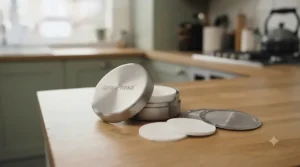
Real-World Scenarios: Which Filter Actually Suits You
Picture three fairly typical AeroPress owners. First, there’s the office desk brewer — someone who wants a single reliable cup at 10am without any faff, values consistency over experimentation, and would rather not think about grind adjustments. For them, the AeroPress Natural Paper Microfilters or a solid mid-size generic pack like the Bake Choice 500-Count Filters make the most sense, since paper forgives a slightly inconsistent grind and needs no cleaning beyond a bin. Second, there’s the daily home brewer trying to cut down on packaging waste, someone who’s already switched to a reusable water bottle and refillable cleaning products and wants their coffee habit to match. The AeroPress Stainless Steel Reusable Filter fits that mindset precisely — no ongoing filter purchases, no paper waste, and a fuller-bodied cup as a genuine bonus rather than a compromise. Third, there’s the weekend camper or van-lifer who brews wherever the day takes them, values durability above all else, and can’t be doing with a filter that tears in a rucksack side pocket. For this profile, a metal filter again wins on resilience, though a small stash of paper filters in a sealed sandwich bag as backup is sensible insurance for travel coffee brewing when a reusable filter goes missing or needs a proper wash you can’t manage on the road.
AeroPress Filters vs Standard Paper Filters: What’s Actually Different
This is the core question, so let’s answer it properly rather than dancing around it. “Standard paper filters” as a phrase covers two slightly different things people mean: AeroPress-specific round paper discs (genuine or generic), and the flat, cone-shaped paper filters used in pour-over brewers like a V60 or a standard drip machine. AeroPress-specific paper is thin, tightly woven, and cut to a small 2.5-inch (or larger XL) round shape designed to sit flush against the perforated cap — it cannot be swapped for standard drip-machine paper, which is the wrong shape and generally too coarse for the AeroPress’s pressure-driven brew method. Within AeroPress-compatible papers, genuine and generic versions do largely the same job: filtering fine grounds and coffee oils to produce a clean, sediment-free cup. Where they diverge is consistency — based on the spec comparison and aggregated review data, genuine AeroPress papers show less batch-to-batch variation in thickness and perforation than budget generic packs, though the difference in the finished cup is often subtle rather than dramatic.
The bigger contrast is paper versus metal. Independent research on coffee’s cholesterol-raising diterpenes, cafestol and kahweol, backs up what coffee scientists have suspected for years: paper filtration removes the vast majority of these oily compounds, which is one reason paper-filtered coffee is generally treated more favourably in cardiovascular health research than unfiltered methods like French press or Turkish coffee. Metal filters, by allowing those oils through, sit closer to French press territory on that front — not a health risk for the vast majority of moderate coffee drinkers, but a meaningful distinction if you’re specifically managing cholesterol and have been advised to watch your intake. Flavour-wise, it’s genuinely a preference call: paper gives brighter, more tea-like clarity that lets subtle tasting notes shine through, while metal gives a heavier, silkier mouthfeel that some drinkers find more satisfying, particularly with darker roasts.
What to Expect: Real-World Performance
Specs only tell you so much, so here’s the practical translation. With a genuine or good-quality generic paper filter, expect a brew time of roughly 60-90 seconds from plunge start to finish, a cup that’s essentially free of visible sediment, and a flavour profile that leans clean and bright. With a metal filter, expect a slightly faster drip-through unless you compensate with a finer grind, a small amount of fine sediment settling at the bottom of the cup (normal, not a fault), and a noticeably heavier body with more perceived richness. Temperature control matters more than people expect too — UK tap water straight off the boil tends to run a touch too hot for delicate light roasts, so waiting roughly 30 seconds after the kettle clicks off before pouring helps avoid scorching the grounds regardless of which filter you’re using. If you switch between filter types regularly, give yourself a week of slightly-off cups while you recalibrate grind size; it’s the single most common reason people wrongly blame a “faulty” filter for what’s actually a grind mismatch.
AeroPress Filters for Travel Coffee Brewing
Travel is where filter choice stops being a preference and starts being a practical decision. Paper filters are lightweight and take up almost no space, which sounds like an obvious win for a rucksack or carry-on — but they’re also vulnerable to damp, and a soggy stack of filters at the bottom of a bag is a genuinely common travel coffee brewing complaint. The fix is simple: a small resealable sandwich bag or a dedicated hard filter case keeps a travel stash dry for weeks. Reusable metal filters solve the damp problem outright and add real durability for camping, hiking or long train journeys where you can’t guarantee a bin for used filters — you just rinse and go, which also means no packaging waste to carry back out with you. The trade-off is washing access: a campsite tap or hostel sink is usually fine, but if you’re somewhere with genuinely limited water, a small stash of paper filters as backup avoids being caught without a way to clean a metal disc properly. Most seasoned AeroPress travellers we’ve seen discussed in aggregated reviews and forums settle on a hybrid approach — a reusable metal filter as the default, with a handful of paper filters tucked in a dry bag as insurance.
✨ Don’t Miss These Exclusive Deals!
🔍 Take your morning brew to the next level with these carefully selected filters. Click on any highlighted product to check current pricing and availability. These small accessories make a genuinely noticeable difference to your daily cup!
How to Choose the Right AeroPress Filter
- Decide paper or metal first. If you want zero cleanup and maximum flavour clarity, paper wins; if you want to eliminate recurring purchases and prefer a fuller-bodied cup, go metal.
- Check your AeroPress model. Standard-size paper and metal filters do not fit the AeroPress XL — always confirm filter compatibility before ordering, since this is the single most common return reason.
- Match pack size to brewing frequency. Daily drinkers benefit from 500-800 count bulk paper packs; occasional brewers are better off with a smaller box that won’t sit stale for months.
- Weigh unbleached versus bleached paper. Unbleached, chlorine-free paper generally gives a more neutral cup and is the safer default if you’re sensitive to subtle off-flavours.
- Consider your grind setup. If you’re using a basic blade grinder with uneven particle sizes, a finer-pore paper filter like the Prima Rosa 700 Pcs Micro Filter Paper helps compensate by catching more sediment.
- Factor in long-term cost. A reusable steel filter costs more upfront but eliminates ongoing spend within a few months of regular use — see the cost breakdown below.
- Think about where you’ll actually use it. Kitchen-only users can prioritise taste preference alone; anyone doing travel coffee brewing should weight durability and moisture resistance more heavily.

Common Mistakes When Buying AeroPress Filters
The most frequent error is ordering standard-size filters for an AeroPress XL, or vice versa — the two aren’t interchangeable, and it’s an easy detail to miss when scrolling quickly through search results. A close second is assuming all generic AeroPress papers are identical; based on aggregated review patterns, quality does vary between sellers, and a pack that’s noticeably thinner than genuine filters can tear mid-brew or let more sediment through than expected. Another common misstep is buying a reusable metal filter without adjusting grind size afterwards, then wrongly concluding the filter itself is faulty when the real issue is a brew that’s simply too weak and fast. Some buyers also underestimate storage needs for bulk paper packs, leaving several hundred filters in a damp cupboard or a bag without a proper seal, which shortens their usable life considerably. Finally, plenty of people buy filters expecting Amazon’s exact listed price to hold — worth remembering that prices on any of these products fluctuate, so always check the current price on the listing rather than relying on older reviews or price screenshots.
Features That Actually Matter (And Those That Don’t)
Marketing copy around coffee filters loves to emphasise things that barely affect your cup. “Micro-perforated” sounds impressive on every listing, but in practice, most AeroPress-compatible papers — genuine and generic — use broadly similar perforation densities; the real differentiator is paper thickness and consistency, not perforation count alone. Similarly, coating colour on metal filters (gold-tone, rose gold, standard steel) is almost entirely cosmetic; research into paper filtration’s effect on coffee’s oily diterpenes focuses on porosity and material, not finish, and physical characteristics like porosity and particle interaction with the paper are what actually determine cafestol retention, not the branding on the box. What genuinely matters: correct sizing for your specific AeroPress model, consistent thickness that won’t tear mid-brew, and unbleached paper if you’re sensitive to subtle flavour interference. What doesn’t matter nearly as much as the packaging suggests: fancy dispenser boxes, metallic finishes, or claims of “premium” paper without any specific porosity or weight figures behind them.
Long-Term Cost & Maintenance of AeroPress Filters
Here’s where the numbers actually settle the paper-versus-metal debate for cost-conscious buyers. A daily AeroPress drinker gets through roughly 365 paper filters a year. At the budget end, using a bulk pack like the Laicky 800 Count Filters, that’s well under one full pack annually — call it somewhere around £8-£12 a year in filter spend. Using the genuine AeroPress Natural Paper Microfilters at the pricier end, expect closer to £10-£15 a year for the same volume. A reusable steel filter, by contrast, is a single purchase of roughly £10-£15 that, with basic care, should comfortably outlast several years of daily use — meaning it typically pays for itself against paper within one to two years, and everything after that is essentially free brewing. Maintenance costs are asymmetric too: paper needs no maintenance beyond dry storage, while metal filters occasionally benefit from a light descale in areas with hard water, a step that costs pennies but is easy to forget. The genuinely honest verdict: if you brew fewer than a couple of cups a week, paper’s low upfront cost wins outright and a reusable filter will take years to pay back; if you’re a daily drinker, metal is the financially smarter long-term choice, cost aside from flavour preference entirely.
Safety, Materials & Compliance
Anyone buying replacement filters in the UK will want reassurance that what’s landing in their coffee is food-safe, and thankfully this is a well-documented area. Genuine and reputable generic AeroPress paper filters are made from food-grade, chlorine-free paper, meaning no bleaching residue transfers into your brew. AeroPress’s own steel filters use 316-grade stainless steel, a food-safe alloy also commonly used in medical and marine equipment for its corrosion resistance — a meaningfully more durable specification than the cheaper 304-grade steel found in some budget metal filters on the wider market. On the health side, the research is fairly settled: paper filtration is the most effective home brewing method for reducing cafestol and kahweol, the diterpenes linked to raised LDL cholesterol in some studies, while metal filters let more of these oils through, placing them closer to French press in that specific respect. That’s not a reason to avoid metal filters if you enjoy the fuller body — moderate daily coffee consumption isn’t a major cardiovascular concern for most healthy adults — but it’s a genuinely useful data point if you’ve been specifically advised to manage your cholesterol intake. As with any food-contact product, always check the individual listing for CE or UKCA-relevant material declarations where the seller provides them, particularly with lesser-known generic brands.

FAQ
❓ Do generic AeroPress filters fit as well as the official ones?
❓ Can I use standard drip coffee filters in an AeroPress?
❓ Are metal AeroPress filters better than paper for taste?
❓ How many times can you reuse an AeroPress metal filter?
❓ Do AeroPress filters work for travel coffee brewing?
Conclusion
There’s no single “best” answer buried in the AeroPress filters vs standard paper filters debate — there’s just a best answer for how you actually drink coffee. If you want a clean, predictable cup with zero cleanup and don’t mind reordering every so often, the AeroPress Natural Paper Microfilters or a well-reviewed bulk pack like the Laicky 800 Count Filters will serve you brilliantly, especially if you’re brewing occasionally rather than daily. If you’re a daily drinker who wants to stop buying filters altogether, cut down on waste, and doesn’t mind a fuller, heavier cup, the AeroPress Stainless Steel Reusable Filter earns back its cost within a year or two and then essentially brews for free. XL owners should treat the dedicated AeroPress XL Stainless Steel Reusable Filter as close to essential given how thin the generic XL paper market currently is, and anyone who wants their kit to look as good as it brews might enjoy the CAFE CONCETTO Rose Gold Disc as a stylish middle ground. Whichever you land on, match your grind to your filter, store paper somewhere properly dry, and give a new filter type a week to bed in before judging it — most “bad cup” complaints trace back to grind size, not the filter itself.
Recommended for You
- Melitta Coffee Filters: 7 Best Picks for Every Machine (2026)
- Chemex Filter Papers: 7 Best Picks for a Cleaner Cup (2026)
- V60 Filter Papers UK: 7 Best Picks; Buying Guide 2026
Disclaimer: This article contains affiliate links. As an Amazon Associate, I earn from qualifying purchases. If you purchase products through these links, we may earn a small commission at no additional cost to you.
✨ Found this helpful? Share it with your friends! 💬🤗
