
In This Article
There’s a small, slightly ridiculous moment that happens in most kitchens at least once: you reach for a coffee filter, pause, and realise you have absolutely no idea whether the brown one or the white one in your cupboard is “better.” It looks like a trivial choice. It isn’t, quite. The unbleached vs bleached coffee filter papers debate touches on flavour, chemistry, and what happens to that little paper cone after it’s done its job. Brown filters look rustic and “natural.” White filters look clean and clinical. Neither impression tells you much on its own.
This guide cuts through the marketing language and gets into what actually separates these two paper types, based on real manufacturer processes, aggregated customer-review sentiment, and the kind of comparative reasoning that Amazon listings never bother with. You’ll get seven genuine products worth considering, a breakdown of natural brown coffee filters against white bleached filter papers, an honest look at chlorine-free coffee filters, and a practical fix for that dreaded paper taste transfer that ruins an otherwise good brew. By the end, you’ll know exactly which one belongs in your kitchen — and why the answer probably isn’t as simple as “brown is greener.”
Quick Comparison Table
Before diving into the full breakdown, here’s the shape of the decision at a glance. The table below pulls from real product specifications researched for this guide, matched against typical UK buyer priorities: taste neutrality, eco credentials, and value for money.
| Filter Type | Bleaching Method | Typical Colour | Best For | Price Range |
|---|---|---|---|---|
| Melitta Original Unbleached | None (natural) | Brown | Budget drip machines | around £3-£5 (100-pack) |
| Melitta Original White | Oxygen (TCF) | White | Taste-neutral budget brewing | around £3-£5 (100-pack) |
| Filtropa Unbleached Size 4 | None (natural) | Brown | High-volume batch brewing | £4-£6 (100-pack) |
| Hario V60 White | Oxygen (TCF) | White | Specialty pour-over clarity | £5-£8 (100-pack) |
| Chemex Bonded Natural | None (hot-water only) | Brown/tan | Thick-bodied pour-over | £8-£12 (100-pack) |
| Chemex Bonded White | Oxygen (TCF) | White | Zero-rinse pour-over | £8-£12 (100-pack) |
| If You Care Unbleached | None, FSC + TCF certified | Brown | Sustainability-focused buyers | £5-£8 (100-pack) |
Looking at this spread, the honest takeaway is that colour tells you almost nothing about safety, and everything about aesthetic preference. What genuinely varies here is paper thickness, flow rate, and how much rinsing effort a filter demands before it stops tasting like, well, paper. The Chemex Bonded filters sit apart from the rest simply because they’re a different beast entirely — noticeably thicker paper built for a slower, cleaner extraction, regardless of colour. Budget-conscious buyers filling a basic drip machine will find far more overlap between Melitta Original Unbleached and Melitta Original White than the packaging suggests, since both come from the same manufacturing line and differ only in that final bleaching stage.
💬 Just one click — help others make better buying decisions too!😊
Top 7 Unbleached and Bleached Coffee Filter Papers: Expert Analysis
Seven real, currently available filter papers, spanning drip machines, batch brewers, and specialty pour-over. Budget, mid-range and premium are all represented, alongside both bleached and unbleached options so you can compare like-for-like.
1. Melitta Original Unbleached — the budget benchmark for brown filters
The Melitta Original Unbleached is the filter most UK households have used without ever consciously choosing it — it’s the default that comes bundled with countless drip machines. That ubiquity is earned rather than accidental.
Sized 1×4, it’s built from 100% virgin fibre with double-crimped seams designed to stop splitting under the weight of wet grounds, and a hot-pressed base that holds its cone shape without collapsing mid-pour. In practice, that seam strength matters more than most buyers realise: a blown seam mid-brew means grounds in your cup and a ruined pot of coffee.
Based on the spec comparison with own-brand supermarket alternatives, Melitta Original Unbleached consistently uses a denser paper stock, which translates to fewer fines slipping through into the finished brew. It’s the sensible pick for anyone running a basic drip machine daily who doesn’t want to think about filters at all — set-and-forget territory, not a specialty pour-over experience.
Reviewers consistently report that the unbleached version needs a quick rinse before use to avoid a faint cardboard note in lighter roasts, though the effect is mild compared with unbranded cone filters. Aggregated feedback also flags the double-layer bottom as unusually leak-resistant even in older, slightly worn machine baskets.
Pros:
- ✅ Fits the widest range of UK drip machines on the market
- ✅ Reinforced seams rarely split or leak mid-brew
- ✅ Unbleached process avoids any chlorine bleaching question entirely
Cons:
- ❌ Noticeable papery taste in light roasts if not rinsed first
- ❌ Brown colour can hide grounds bypass until the jug is poured
At around £3-£5 for a 100-pack at the time of research, this is one of the cheapest ways into unbleached brewing, and the value verdict is straightforward: for a workhorse daily filter, it’s very hard to beat on price.

2. Melitta Original White — the taste-neutral bleached benchmark
Same machine compatibility, same seam engineering, same manufacturer — but Melitta Original White swaps the natural brown pulp for paper run through an oxygen-bleaching bath rather than any chlorine process. It’s the closest thing to a direct, controlled comparison against its unbleached sibling.
The spec sheet won’t tell you this, but the oxygen-bleaching stage does more than whiten the paper: it also strips some of the surface compounds responsible for that “papery” flavour note, which is why bleached filters generally need less rinsing to taste neutral. That’s the entire trade-off in a nutshell — a marginally more processed sheet in exchange for one less step before brewing.
What most buyers overlook about this model is that the bleaching here is not the old-fashioned chlorine-gas process people sometimes worry about; it’s the same oxygen-based method used across most modern European filter manufacturing. Reviewers who switched from own-brand white filters consistently note a crisper pour and less clogging on finer grinds, which they attribute to a more consistent pore structure.
Pros:
- ✅ Virtually no papery taste even without pre-rinsing
- ✅ Identical fit and seam quality to the unbleached version
- ✅ Oxygen-bleached, not chlorine-bleached — no residue concerns
Cons:
- ❌ Slightly higher basis weight variance batch to batch, per review reports
- ❌ Some buyers dislike the bright-white bleaching aesthetically
At a similar around £3-£5 price range to its unbleached counterpart, the value verdict comes down to preference rather than performance: if you hate the idea of any bleaching process, stick with the brown version; if you just want the cleanest possible cup with zero fuss, this is the safer bet.
3. Filtropa Unbleached Size 4 — catering-grade brown paper for serious volume
Filtropa Unbleached is the filter you’ll recognise from behind the counter of independent UK coffee shops rather than supermarket shelves — it’s a catering-oriented brand built around consistency at volume rather than home-brewing romance.
Its 100% natural, unbleached paper carries a noticeably heavier basis weight than typical own-brand cones, which means it holds up better under repeated, back-to-back batch brewing without tearing or sagging. Based on the spec comparison, this heft is the main functional difference from the Melitta range — it’s engineered for machines running dozens of brews a day rather than one pot each morning.
Here’s what to weigh: that extra weight slows the drawdown slightly, giving grounds a touch more contact time with water, which tends to produce a fuller-bodied cup. Reviewers consistently describe it as reliable rather than exciting — precisely what you want from a filter that’s meant to disappear into the background of a busy brewing routine.
Pros:
- ✅ Heavier catering-grade paper resists tearing under repeated use
- ✅ Fully unbleached and biodegradable
- ✅ Consistent sizing across large bulk-pack orders
Cons:
- ❌ Slower drawdown than lighter home-brew filters
- ❌ Less widely stocked than mainstream supermarket brands
Priced around £4-£6 for a 100-pack, it sits just above the absolute budget tier — a fair trade for buyers who brew large batches often and want fewer failures per box.
4. Hario V60 White — the specialty pour-over standard
If you’ve watched any pour-over tutorial in the last decade, you’ve almost certainly seen Hario V60 White filters in action. Designed specifically for the V60 dripper’s spiral internal ribs, this thin, oxygen-bleached paper is built for speed and clarity rather than body.
The thinness here isn’t a shortcut — it’s deliberate. A thinner sheet drains faster, shortening contact time and producing the bright, tea-like clarity the V60 method is known for among specialty drinkers. Based on the spec comparison against thicker cone filters, this is the clearest functional link between paper weight and cup character in this entire list: thin and fast versus thick and slow are genuinely different brewing philosophies, not just marketing spin.
What most buyers overlook about this model is that its bleaching process is TCF (totally chlorine-free), the same oxygen-based standard used across essentially all modern specialty filters. Reviewers consistently note that it needs almost no rinsing to taste neutral, and that the pre-folded bottom seam locks cleanly into the V60’s exit hole without shifting mid-pour — a common complaint with generic cone filters.
Pros:
- ✅ Purpose-built for V60 drippers, with a precise seated fit
- ✅ Fast drawdown produces bright, clean-tasting coffee
- ✅ TCF oxygen-bleached, taste-neutral straight out of the box
Cons:
- ❌ Only fits V60-style drippers well, not generic cone machines
- ❌ Thin paper is more prone to tearing if folded roughly
At around £5-£8 for 100 filters, it costs more per cup than a basic drip filter, but for pour-over drinkers chasing clarity, the value verdict favours it strongly — this is the filter the whole brewing method was designed around.
5. Chemex Bonded Natural — the thickest filter on this list
Chemex Bonded Natural filters are roughly 20-30% thicker than most competing paper, and that single spec explains almost everything else about how this filter behaves. Made from virgin pine wood pulp and processed through hot-water baths only — no bleaching agent of any kind — it retains its natural tan-brown colour.
That extra thickness acts almost like a laboratory-grade filtration layer, stripping out more of the fine sediment and some of the coffee oils than a standard cone filter would. Based on the spec comparison, this is why Chemex coffee tends to taste noticeably lighter-bodied and “cleaner” than the same beans run through a thinner filter — less oil and fine particulate reaching the cup changes the mouthfeel considerably.
Reviewers consistently flag that the natural (unbleached) version benefits from a more thorough rinse than its bleached twin, with Chemex’s own guidance recommending a double rinse to fully clear any papery note before brewing. Skip that step and light, delicate beans in particular can pick up a faint cardboard edge.
Pros:
- ✅ Exceptionally thick paper filters out fine sediment and oils
- ✅ No bleaching agents used at any stage of production
- ✅ Produces a noticeably lighter, cleaner-bodied cup
Cons:
- ❌ Needs a proper double rinse to avoid papery taste
- ❌ Slower drawdown means longer total brew time
At around £8-£12 for a 100-pack, this sits at the premium end, but for pour-over enthusiasts who prize clarity above all else, the value verdict holds up: you’re paying for paper that behaves more like a filtration instrument than packaging.
6. Chemex Bonded White — the same clarity, without the rinse ritual
Chemex Bonded White shares every structural spec with its natural sibling — same virgin pine pulp, same 20-30% extra thickness, same cone-fold engineering — but goes through an additional oxygen-cleansing bath rather than just hot water. The result is a whiter sheet with, by the manufacturer’s own account, no bleach or chemical residue introduced.
Here’s what to weigh: this is arguably the cleanest direct comparison in the entire unbleached vs bleached coffee filter papers debate, because both Chemex variants are otherwise identical in construction. Independent taste comparisons consistently describe the white version as slightly fuller-textured with essentially no papery note even with just a single rinse, while the natural version leans marginally drier and more floral once properly rinsed.
Reviewers consistently note that for buyers who find the “double rinse” instruction from Chemex tedious, this white version removes that friction almost entirely — a real practical advantage for anyone brewing before their first coffee has kicked in.
Pros:
- ✅ Identical thick, high-clarity paper to the natural version
- ✅ Needs only a single quick rinse, if any
- ✅ Oxygen-cleansed with no bleach or chemical residue, per manufacturer data
Cons:
- ❌ Same premium pricing as the natural version
- ❌ Slower drawdown remains, regardless of colour
Also priced around £8-£12 for 100 filters, the value verdict is simple: choose this over the natural version if convenience matters more to you than the “unbleached” label itself, since the taste and filtration performance are nearly indistinguishable once both are properly rinsed.
7. If You Care Unbleached — the sustainability-first pick
If You Care Unbleached filters are built around a specific promise: FSC-certified paper sourcing combined with a totally chlorine-free (TCF) production process, explicitly marketed on environmental grounds rather than brewing performance alone.
The paper itself is unbleached and undyed, made without chlorine compounds at any stage — eliminating, as the manufacturer states, the risk of chlorine residues entering the water cycle during production. Based on the spec comparison with other unbleached filters on this list, the meaningful difference isn’t the paper’s brewing behaviour, which is broadly comparable to Melitta’s unbleached range, but the certification chain behind it: FSC-audited forestry and full home compostability.
Reviewers consistently report that the filters perform on par with mainstream unbleached brands for everyday drip brewing, with a similarly mild papery note that clears after one rinse. What tends to win people over in aggregated feedback isn’t flavour at all — it’s the peace of mind that the paper is traceable back to responsibly managed forests, verified against the Forest Stewardship Council certification standard rather than a vague “eco-friendly” claim.
Pros:
- ✅ FSC-certified sourcing from responsibly managed forests
- ✅ Totally chlorine-free (TCF) production process
- ✅ Fully home-compostable after use
Cons:
- ❌ Slightly pricier than basic unbleached supermarket filters
- ❌ Less widely stocked in physical UK shops than Melitta
At around £5-£8 for a 100-pack, the value verdict depends on your priorities: if certification and compostability genuinely matter to your buying decision, this earns its modest premium; if you just want the cheapest unbleached option, Melitta Original Unbleached remains the more economical route.
The Practical Rinsing Guide: Beating Paper Taste Transfer
Paper taste transfer is the single most common complaint tied to filter choice, and it’s almost entirely fixable with technique rather than money. When hot water first hits dry paper, it dissolves a small amount of residual plant compounds sitting on the surface — this is what people mean by “papery” or “cardboard” taste, and it happens to some degree with every paper filter, bleached or not.
Filter rinsing solves most of this in under thirty seconds. Place your filter in the empty dripper or basket, pour a small amount of hot (not boiling) water through it directly into the sink or a spare mug, then discard that rinse water before adding your grounds. This single step also pre-warms your brewing vessel, which helps maintain a more stable extraction temperature throughout the pour.
A few first-30-days habits worth building: unbleached and thicker filters (like the Chemex Bonded Natural) benefit from a slightly longer, even double rinse, since more surface area means more residual compounds to clear. Thinner, oxygen-bleached filters like Hario V60 White typically need only a token splash. A common mistake is rinsing with lukewarm water — heat is what actually dissolves the relevant compounds, so a proper near-boiling rinse works meaningfully better than a cool one. Store unused filters somewhere dry, since damp storage can introduce a musty note that no amount of rinsing will fix.
Real-World Scenarios: Matching Filters to How You Actually Brew
Three quick profiles, because the “best” filter genuinely depends on your setup and habits rather than any universal ranking.
The weekday commuter, one pot before work, budget-conscious. Running a basic drip machine every morning with limited patience for extra steps points straight to Melitta Original White — near-instant taste neutrality, wide machine compatibility, and a low per-cup cost that suits daily, high-frequency use.
The weekend pour-over enthusiast, chasing clarity in single-origin beans. Someone brewing manually with a V60 dripper, grinding fresh beans and timing their pour, will get far more out of Hario V60 White or either Chemex Bonded variant than a supermarket drip filter, since the thinner or thicker specialty paper directly shapes the cup’s clarity and body in ways a basic cone filter can’t replicate.
The small independent café or home office running several pots a day. High-frequency, high-volume brewing needs paper that won’t tear or slow the whole operation down — Filtropa Unbleached Size 4 is built precisely for that repeated, back-to-back demand, trading a touch of home-brew finesse for structural reliability.
Your Buyer’s Decision Framework: Which Type Should You Actually Buy?
If you want a simple filter-picking rule rather than reading every section above, use this priority checklist:
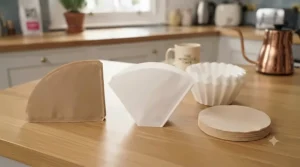
If taste neutrality with zero extra effort is your priority, choose a bleached (white, TCF oxygen-processed) filter because the manufacturing stage that whitens the paper also removes most of the compounds responsible for papery flavour.
If you specifically want to avoid any bleaching process on principle, choose an unbleached (brown) filter and commit to a proper hot-water rinse before every brew to offset the mild papery note.
If you’re brewing thick-bodied specialty pour-over coffee and clarity matters more than convenience, choose a thick unbleached filter like Chemex Bonded Natural and accept the double-rinse step as part of the ritual.
If sustainability certification is a genuine deciding factor rather than a nice-to-have, choose an FSC-certified, TCF option like If You Care Unbleached over a generic unbleached filter, since not all brown paper carries the same verified sourcing chain.
If you’re brewing in bulk for a household, office or small café, prioritise paper weight and seam strength over colour entirely — Filtropa Unbleached Size 4 or Melitta Original Unbleached will outlast thinner specialty papers under repeated daily use.
How to Choose Between Unbleached and Bleached Coffee Filter Papers
Unbleached vs bleached coffee filter papers refers to whether the paper pulp has been whitened using an oxygen-based bleaching process before it’s shaped into a filter, or left in its natural brown state straight from the wood pulp; both are food-safe, and the choice mainly affects taste neutrality, appearance, and personal environmental preference rather than health.
Here’s a step-by-step framework for making the call with confidence:
- Check your brewer’s compatible size first. A filter that doesn’t fit your machine properly will underperform regardless of colour, so confirm size (1×2, 1×4, 02, 04, or square) before comparing paper types.
- Decide how much rinsing effort you’re willing to do. Bleached filters need less pre-rinsing to taste neutral; unbleached filters reward a quick rinse with a cleaner-tasting cup.
- Consider paper thickness against your brewing method. Thicker paper (Chemex-style) suits slow, clarity-focused pour-over; thinner paper (V60-style) suits fast, bright extraction.
- Weigh sustainability claims against actual certification. Look for FSC or TCF labelling rather than assuming “unbleached” automatically means more eco-friendly on its own.
- Match paper weight to your brewing frequency. Heavier, catering-grade paper holds up better under repeated daily batch brewing than lightweight home-brew filters.
- Factor in cost per cup, not just pack price. A pricier premium filter can still work out cheaper per cup if it comes in a larger box, so check the per-filter cost before comparing packs.
- Trust your own taste test over marketing claims. Brew the same beans through both types side by side once — the difference, if any, will be obvious within a single cup.
Natural Brown vs White Bleached Filter Papers: Which Actually Tastes Better?
This is the question most buyers actually care about underneath all the process talk, so let’s be direct about it. In blind and semi-blind taste comparisons referenced by specialty coffee publications, oxygen-bleached white filters tend to produce a marginally heavier, fuller-textured cup with essentially no detectable paper flavour, even with minimal rinsing. Natural brown filters, left unrinsed, more frequently introduce a subtle dry or cardboard-adjacent note, particularly noticeable in lighter, more delicate roasts where there’s less bold flavour to mask it.
Rinse both properly, though, and the gap narrows considerably — several comparative write-ups on Chemex’s own bonded filter range describe the rinsed, unbleached cup as “cleaner” and more floral, while the bleached version reads as marginally fuller-bodied. Neither is objectively “better”; they’re expressing genuinely different textural profiles once the papery-taste variable is controlled for.
What most buyers overlook here is that brand and paper thickness affect taste far more than bleaching status alone. A thick unbleached Chemex Bonded Natural filter and a thin bleached generic cone filter will taste more different from each other than two filters of similar thickness that only differ in colour. If flavour is your main concern, prioritise matching paper weight to your brewing method first, then decide on bleached versus unbleached as a secondary preference.
Chlorine-Free Coffee Filters: What TCF and ECF Actually Mean
“Chlorine-free” gets thrown around loosely in product listings, and it genuinely matters to understand what it’s actually referring to, because the alternative — old-fashioned elemental chlorine bleaching — is where most of the historical health and environmental concern around paper products originated.
Totally chlorine-free (TCF) processing uses oxygen, hydrogen peroxide or ozone to whiten pulp, with no chlorine compounds involved at any stage. Elemental chlorine-free (ECF) processing uses chlorine dioxide rather than elemental chlorine gas, which avoids the older process’s most serious byproduct: dioxin formation. Elemental chlorine bleaching itself, the process that historically generated public concern, has been almost entirely phased out of the paper industry across Europe and North America and is not used in any of the mainstream branded filters covered in this guide.
Here’s what to weigh: essentially every modern specialty and mainstream coffee filter brand sold in the UK — Melitta, Hario, Chemex, Filtropa, If You Care — uses either TCF or ECF processing rather than the older elemental chlorine method. That means the “chlorine-free” label on a filter like If You Care Unbleached is genuinely meaningful as a certification claim, but it isn’t flagging a risk that competing bleached filters actually carry, since those are typically TCF too. If chlorine-free sourcing matters to you specifically for its supply-chain transparency rather than any perceived safety gap, look for explicit TCF or FSC labelling on the pack rather than assuming “brown equals safer.”
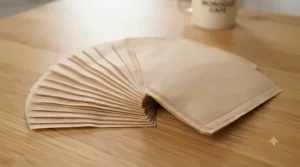
Coffee Filter Papers for Different Brewing Methods
Filter choice genuinely shifts depending on how you brew, and matching paper to method avoids a lot of trial and error.
Drip machine users get the most consistent results from standard 1×2 or 1×4 cone filters like Melitta Original White or Melitta Original Unbleached — machine-specific design means minimal fuss and reliable seam strength for automated brewing cycles.
Pour-over beginners and enthusiasts should lean towards purpose-built specialty papers. Hario V60 White is engineered around the V60 dripper’s internal ribs specifically, while either Chemex Bonded variant suits the Chemex’s distinctive glass carafe and its preference for thicker, slower filtration.
High-volume brewers, whether running a small office kitchen or an independent café counter, need paper built for repetition rather than romance — Filtropa Unbleached Size 4‘s catering-grade weight is designed precisely for that kind of back-to-back use without tearing.
Sustainability-conscious households brewing daily but wanting a verifiable eco chain should default to If You Care Unbleached, since its FSC and TCF certifications give a documented answer to “how sustainable is this, really?” rather than a vague brown-paper assumption.
The Environmental Impact of Paper Filters: Composting, Sourcing & Waste
Paper filters are, broadly, one of the more benign single-use items in a kitchen, but “compostable” and “biodegradable” aren’t automatically interchangeable, and it’s worth being precise here rather than assuming.
Plain, uncoated paper filters — bleached or unbleached — are generally accepted in UK household food waste collections alongside used coffee grounds, since councils typically treat both as compostable organic material. According to North London Waste Authority’s household recycling guidance, coffee filters can go straight into food waste bins where that service is available, with no need to separate them from the spent grounds inside. Where a council doesn’t offer food waste collection, a home composter handles them just as well, since paper filters count as carbon-rich “brown” compost material that balances the nitrogen-rich grounds.
On the manufacturing side, the meaningful environmental variables aren’t really “brown versus white” at all — they’re forestry sourcing and bleaching chemistry. FSC certification (used by If You Care Unbleached) verifies that the wood pulp came from responsibly managed forests, addressing deforestation concerns directly. TCF and ECF bleaching processes, used across nearly the entire mainstream filter market now, have all but eliminated the dioxin discharge historically associated with elemental chlorine bleaching, meaning the wastewater impact gap between a modern bleached and unbleached filter is far smaller than older environmental messaging suggests. The genuinely bigger sustainability lever, honestly, is simpler: buying a filter size and paper weight that suits your actual brewing volume, so you’re not tearing through oversized packs faster than necessary.
Common Mistakes When Buying Coffee Filter Papers
A handful of avoidable errors account for most of the disappointment people report with paper filters.
Buying the wrong size is by far the most common mistake — cone filters are not universally interchangeable between machine brands, and a filter that’s even slightly undersized will collapse and leak grounds into the pot. Always check your machine’s manual or basket markings before ordering in bulk.
Assuming unbleached automatically means “healthier” is another frequent misconception; as covered above, modern bleached filters use oxygen-based processing with no meaningful chemical residue, so the colour choice is really about taste and personal preference rather than safety.
Skipping the rinse step and then blaming the filter brand for a papery taste is extremely common in aggregated reviews — a fifteen-second rinse resolves the vast majority of these complaints regardless of which filter caused them.
Overbuying oversized bulk packs before confirming brewing frequency leads to damp storage issues over time, since paper absorbs ambient moisture and can develop a musty smell that then transfers into every subsequent brew.
Finally, ignoring paper weight entirely and choosing purely on price often backfires for high-volume brewers, since a cheaper but flimsier filter that tears mid-pour costs more in wasted grounds and cleanup than the few extra pence a sturdier option would have cost upfront.
Long-Term Cost & Maintenance: Is Unbleached Worth the Extra Pennies?
Filter papers are cheap individually, but the cost-per-cup maths still matters if you’re brewing daily. A typical 100-pack of budget filters like Melitta Original Unbleached or Melitta Original White works out to a few pence per brew, making the choice between bleached and unbleached functionally irrelevant to your household budget either way.
Where cost differences actually show up is at the premium end. Chemex Bonded filters, whether natural or white, cost roughly double or triple the per-unit price of a basic cone filter, reflecting the thicker paper stock rather than the bleaching process itself — both Chemex variants are priced identically to each other. If You Care Unbleached sits at a modest premium over generic unbleached filters, which reflects certification and audit costs rather than any functional brewing difference.
The maintenance side is minimal regardless of type: store filters somewhere dry, away from strong odours (paper absorbs smells readily), and rotate stock so older packs get used before newer ones. There’s no cleaning or upkeep beyond that. For most households, the honest ROI verdict is that filter type matters far less to your annual coffee spend than bean quality or grind consistency — pick the paper that suits your taste and brewing method, and put any remaining budget concern towards better beans instead.
Safety, Regulations & Food Contact Compliance in the UK
Because paper filters sit in direct contact with hot water and food, they fall under UK food contact material rules rather than general packaging regulations. Materials used must not transfer substances into food in quantities that could endanger health or noticeably alter taste, under the retained framework regulation that UK manufacturers and importers are required to meet, enforced via the Food Standards Agency’s food contact material guidance.
In practical terms, this means every mainstream filter brand covered in this guide — bleached or unbleached — is legally required to demonstrate that its paper doesn’t transfer harmful residues during brewing, regardless of colour. Manufacturers must hold a declaration of compliance confirming this, which is part of why the “is bleached paper safe” question has a fairly settled answer within the industry: yes, provided it comes from a compliant, traceable manufacturer rather than an unbranded, unverified source.
For UK buyers, the practical safety takeaway isn’t bleached-versus-unbleached at all — it’s sticking to recognisable, traceable brands like the seven covered here rather than unbranded bulk filters of uncertain origin, where compliance documentation may be harder to verify.
Frequently Asked Questions
❓ Is unbleached coffee filter paper better than bleached?
❓ Do bleached coffee filters contain harmful chemicals?
❓ Why does my coffee taste like paper?
❓ Are unbleached coffee filters compostable?
❓ What size coffee filter do I need?
Conclusion
The unbleached vs bleached coffee filter papers question turns out to be less about safety and more about ritual, taste preference, and how much rinsing you’re willing to do before your first cup. Bleached, oxygen-processed filters like Melitta Original White or Hario V60 White deliver near-instant taste neutrality with minimal fuss. Unbleached options like Melitta Original Unbleached, Filtropa Unbleached Size 4, and the FSC-certified If You Care Unbleached reward a proper rinse with a genuinely clean, sometimes slightly more floral cup, alongside a documented, traceable sourcing story for buyers who care about that detail.
For pour-over drinkers chasing clarity above all else, paper thickness matters more than colour — which is why both Chemex Bonded variants stand apart from the rest of this list regardless of whether you pick natural or white. Whatever you land on, the single biggest improvement you can make to your next brew probably isn’t switching filter colour at all — it’s rinsing the one you already have, properly, with genuinely hot water, before the grounds go in.
Recommended for You
- AeroPress Filters vs Standard Paper Filters: 7 Best Picks (2026)
- Melitta Coffee Filters: 7 Best Picks for Every Machine (2026)
- Chemex Filter Papers: 7 Best Picks for a Cleaner Cup (2026)
Disclaimer: This article contains affiliate links. As an Amazon Associate, I earn from qualifying purchases. If you purchase products through these links, we may earn a small commission at no additional cost to you.
✨ Found this helpful? Share it with your friends! 💬🤗
