
In This Article
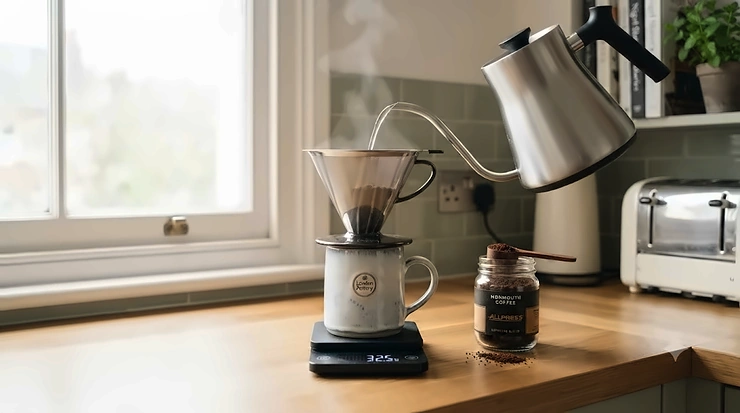
There’s a particular kind of guilt that comes from binning yet another soggy paper filter before you’ve even finished your first sip. Multiply that by 365 mornings a year and you start to see why so many British coffee drinkers are switching to a reusable metal coffee filter instead. It’s not a dramatic lifestyle overhaul — it’s a five-minute swap that quietly removes hundreds of disposable filters from your kitchen bin annually, while arguably making your coffee taste better in the process.
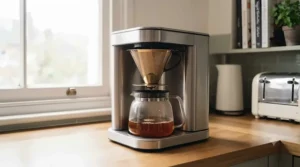
Here’s the thing nobody tells you at the till: a reusable metal coffee filter isn’t just an eco-friendly gesture. Because fine stainless steel mesh doesn’t strip out coffee’s natural oils the way paper does, you end up with a fuller-bodied, richer cup — closer to French press than filter coffee, but without the gritty sediment. That’s a genuine flavour trade-off worth understanding before you buy, not just a sustainability sound bite.
This guide walks through seven real, currently available stainless steel filters spanning budget cones under a tenner right through to precision-engineered premium options, with honest analysis of who each one suits. You’ll also find setup and maintenance guidance, a breakdown of how metal filters actually compare with paper on cost and flavour, and answers to the buying questions that come up most often. Whether you’re chasing a fuller-bodied cup, trying to cut single-use plastic and paper waste, or just tired of running out of filter papers on a Sunday morning, there’s a sensible pick here for your setup.
Quick Comparison Table
| Product | Type | Best For | Price Range |
|---|---|---|---|
| VANANA Reusable Pour Over Filter | Cone, 2–6 cup | Budget multi-cup brewing | Under £15 |
| LHS Pour Over Coffee Dripper | Cone, 1–2 cup, travel | Solo cups & travel | Under £10 |
| Coffee Gator Pour Over Set | Glass carafe + filter | Beginners wanting one full kit | £20–£30 range |
| Bodum Pour Over Coffee Maker | Glass carafe + filter | Daily household brewing | £25–£40 range |
| AeroPress Stainless Steel Filter | Flat disc | AeroPress owners upgrading | Under £20 |
| Altura MESH AeroPress Filter | Flat disc | Budget AeroPress alternative | Under £15 |
| Able KONE Filter | Cone, Chemex-fit | Precision Chemex brewing | £35–£50 range |
Looking across the table, the spread runs from disposable-cheap accessory filters to a considered investment piece, and that range matters because the right choice depends entirely on what you’re already brewing with. Anyone using a Chemex or a compatible dripper needs the Able KONE, full stop — cone-shaped filters from other brands simply won’t seat properly. Meanwhile AeroPress owners should ignore the pour-over cones altogether and look at the AeroPress Stainless Steel Filter or the Altura MESH instead, since the AeroPress uses flat discs, not cones.
💬 Just one click — help others make better buying decisions too!😊
Top 7 Reusable Metal Coffee Filters: Expert Analysis
1. VANANA Reusable Pour Over Filter — best budget option for multi-cup brewing
The standout here is versatility: this cone adjusts to brew anywhere from a single mug up to six cups, which is unusual at this price point. It’s constructed from stainless steel mesh with a paperless design that sits directly over cups, mugs, carafes, or a filter holder, so you’re not locked into one specific brewing vessel. On paper this means it doubles as an entry point for anyone testing whether pour-over suits their routine before committing to dedicated brewing kit.
Based on the spec comparison with pricier options, the mesh here is coarser than premium filters, which typically means slightly more fine sediment passes through — something to expect at this price tier rather than a fault. Reviewers consistently report that it’s genuinely dishwasher safe and holds up to daily use, with the main criticism being that the handle and stand feel less substantial than the filter itself. It suits budget-conscious buyers and students who want to trial reusable brewing without a big outlay, though anyone chasing café-clarity coffee may find the sediment level a step too far.
Pros:
- ✅ Adjustable for 2–6 cups, unusually flexible for the price
- ✅ Fits multiple cup and carafe styles, not just one system
- ✅ Dishwasher safe for effortless daily cleaning
Cons:
- ❌ Coarser mesh lets through more fine sediment than premium filters
- ❌ Plastic stand components feel less durable than the steel filter itself
Sitting comfortably under £15, this is genuinely one of the cheapest ways into reusable metal filtering, and the value proposition holds up provided you’re not expecting boutique-level clarity in the cup.
2. LHS Pour Over Coffee Dripper — lightest and most travel-friendly pick
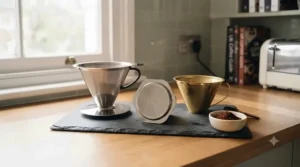
What stands out immediately is the compact, single-serve footprint: this dripper is built specifically for one to two cups and folds down small enough to travel with, complete with a non-slip stand and cleaning brush included. The 0.2mm super-fine mesh is notably tighter than several budget rivals, which in practice means less grit reaching the bottom of your mug.
The food-grade 18/8 stainless steel construction is worth knowing about in real terms — that grading indicates 18% chromium and 8% nickel, a standard associated with strong corrosion resistance, so it should resist pitting and rust far longer than cheaper 430-grade alternatives even with daily hot-water exposure. Aggregated buyer feedback on similar compact drippers tends to flag two recurring themes: praise for how easily it packs into a rucksack or desk drawer, and occasional complaints that the removable stand isn’t quite stable on narrower mugs. It’s a strong pick for commuters, campers, and anyone who wants pour-over at their desk without committing counter space to a full carafe.
Pros:
- ✅ Compact single-cup design, ideal for travel or desks
- ✅ Fine 0.2mm mesh reduces sediment in the cup
- ✅ Comes with brush and stand for immediate use
Cons:
- ❌ Stand can wobble on narrower or unusually shaped mugs
- ❌ Only suited to 1–2 cups, not a household brewing solution
At under £10, this is arguably the easiest low-risk entry point if you only ever brew for yourself.
3. Coffee Gator Pour Over Coffee Maker — best complete starter kit
Rather than buying a filter and hunting for a compatible vessel separately, this set pairs a high-heat borosilicate glass carafe with a built-in reusable stainless steel filter, which removes the guesswork for anyone starting from scratch. The glass carafe means you can see extraction happening in real time — genuinely useful for beginners learning to judge bloom and pour speed.
What most buyers overlook about all-in-one sets like this is that the filter and carafe are specifically matched, so flow rate is tuned by the manufacturer rather than left to trial and error the way a generic cone-in-any-mug filter can be. Reviewers of comparable Coffee Gator products frequently mention the double-walled or heat-resistant handle staying cool during pours, and the mesh being fine enough to avoid the “muddy” texture some cheaper filters produce. The main trade-off is size and breakability: glass carafes aren’t ideal for travel, camping, or households with young children underfoot.
Pros:
- ✅ Matched carafe and filter means dialled-in flow rate out of the box
- ✅ Borosilicate glass lets you watch extraction and judge timing
- ✅ Complete kit removes compatibility guesswork for beginners
Cons:
- ❌ Glass carafe adds breakage risk versus filter-only options
- ❌ Bulkier than a standalone filter, less suited to travel
Typically found in the £20–£30 range, it represents solid value once you factor in that you’re buying a full brewing system rather than just an accessory.
4. Bodum Pour Over Coffee Maker — best established brand for everyday household use
Bodum’s pour-over range has been refined over successive product generations, and the standout feature is the mouth-blown borosilicate glass carafe paired with a permanent stainless steel mesh filter that’s dishwasher safe. It’s designed as a genuine daily driver rather than a novelty brewing gadget, available in multiple sizes from a single-cup 17oz version up to a 51oz model that comfortably serves a household.
Here’s what the spec sheet won’t tell you outright: because Bodum sells the filter as a separate spare part, a cracked carafe doesn’t mean binning the whole unit — you can simply replace the glass and keep the filter, which meaningfully extends the product’s real lifespan versus cheaper sets sold as a single sealed unit. Aggregated review sentiment across Bodum’s pour-over range is generally strong on build quality and consistency, with recurring praise for how evenly the mesh distributes water flow, though some buyers note the cork band variant marks more easily than the plain glass version. This is a sensible pick for households that drink filter coffee daily and want a brand with a long track record and available spare parts.
Pros:
- ✅ Replaceable glass carafe extends the product’s usable lifespan
- ✅ Available in multiple sizes from single-serve to full household batches
- ✅ Established brand with consistent build quality across the range
Cons:
- ❌ Cork-banded versions can mark and stain over time
- ❌ Premium glass construction costs more than plastic-carafe rivals
Expect to pay in the £25–£40 range depending on size, which is fair given the longevity of the mesh filter itself.
5. AeroPress Stainless Steel Reusable Filter — best upgrade for existing AeroPress owners
AeroPress owners are a slightly different audience from pour-over drinkers, and this filter is built specifically for that immersion-and-pressure brewing method rather than gravity drip. The standout detail is the grade of steel used: 316 stainless, which is a marine-grade alloy more resistant to corrosion than the 304 grade used in many rival filters, meaning it should hold up better to years of hot water and dishwasher cycles.
Based on the spec comparison with paper AeroPress filters, the practical difference is body and clarity — paper produces a cleaner, lighter cup, while this metal disc lets more oils through for a heavier, French-press-adjacent mouthfeel, with a small amount of fine sediment as the honest trade-off. Reviewers consistently note that brewing time needs a slight adjustment versus paper (usually a touch shorter, since flow is faster through metal mesh), and that cleaning is as simple as rinsing under the tap immediately after brewing before grounds dry onto the mesh. It’s the obvious choice for anyone who already owns an AeroPress and is tired of buying paper filter packs, or wants a bolder-tasting cup from the same device.
Pros:
- ✅ Marine-grade 316 stainless steel resists corrosion long-term
- ✅ Produces a fuller-bodied cup than paper AeroPress filters
- ✅ Fits AeroPress Original, Go, and newer Plus/Premium models
Cons:
- ❌ Allows slightly more sediment through than paper filters
- ❌ Needs prompt rinsing or grounds can dry onto the fine mesh
Priced under £20, it pays for itself quickly against the ongoing cost of AeroPress paper filter packs.
6. Altura MESH Stainless Steel Filter for AeroPress — best budget AeroPress alternative
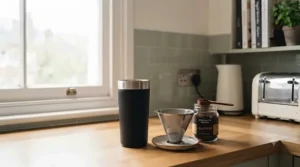
Where the official AeroPress filter leans on brand reputation, this option from Altura competes largely on price while still delivering a genuine stainless steel mesh disc built for the same brewing method. The standout advantage is straightforward value: a noticeably lower price than the official accessory, aimed at buyers who want the reusable benefit without the brand premium.
What most buyers overlook when comparing AeroPress filter alternatives is that fit tolerance matters more than the headline material spec — a disc that sits even slightly loose in the chamber can let grounds leak around the edge rather than through the mesh. Aggregated feedback on comparable third-party AeroPress filters tends to be positive on fit and flavour, with the most common criticism being a shorter expected lifespan than marine-grade 316 steel options before the mesh shows wear. For anyone testing whether they even like metal-filtered AeroPress coffee before committing to a pricier option, this is a sensible low-risk way in.
Pros:
- ✅ Significantly cheaper than the official AeroPress metal filter
- ✅ Genuine stainless steel mesh, reusable indefinitely with care
- ✅ Good entry point for testing metal-filtered AeroPress coffee
Cons:
- ❌ Typically lower-grade steel than marine-grade 316 alternatives
- ❌ Mesh may show wear sooner under heavy daily use
Usually available for under £15, it’s the pragmatic choice for anyone unconvinced they need to spend more.
7. Able KONE Reusable Stainless Steel Coffee Filter — best premium pick for Chemex precision
The Able KONE sits apart from every other filter on this list because of how it’s manufactured: a single piece of precision-welded, photochemically etched stainless steel with a graduated hole pattern, rather than woven mesh. That etching process is the standout feature — it creates dual-sided holes (round on one face, square on the other) specifically engineered to resist clogging during the brew, something woven mesh filters can struggle with as fines build up.
Here’s what the spec sheet won’t tell you, but serious pour-over enthusiasts note: because the KONE was engineered by Able Brewing specifically to replace Chemex’s proprietary thick paper filters, it fits the Chemex’s 6, 8, and 10-cup carafes precisely, and is also compatible with the Ratio Eight, Origami dripper, and several automatic drip brewers. Reviewers consistently praise the fuller body and elimination of paper-filter dependency (Chemex papers are notoriously hard to find in some UK shops), while the honest downside is price and a steeper learning curve — the very fine sediment it allows through means brewers used to paper-filter clarity need a short adjustment period. This is squarely a premium pick for Chemex owners and pour-over enthusiasts who’ve outgrown budget cones and want café-level engineering at home.
Pros:
- ✅ Precision-etched steel resists clogging better than woven mesh
- ✅ Purpose-built fit for 6, 8, and 10-cup Chemex carafes
- ✅ Compatible with several premium drippers beyond Chemex
Cons:
- ❌ Premium price compared with generic cone filters
- ❌ Fuller body means more sediment than Chemex paper filters
Sitting in the £35–£50 range, it’s a genuine investment piece, but one built to be the last filter this style of brewer ever needs.
Practical Usage Guide: Setting Up and Getting the Best Brew
Getting a reusable metal coffee filter to perform well starts before the first pour. Rinse a brand-new filter under hot water first — manufacturing residue and factory oils can otherwise flavour your first few brews, and this single step is skipped more often than any other in the first 30 days of ownership. Once rinsed, seat the filter properly in its holder or carafe; a filter that isn’t sitting flush against the vessel walls lets water bypass the coffee bed entirely, producing weak, unevenly extracted coffee that gets unfairly blamed on the filter itself rather than the setup.
Grind size needs adjusting versus paper filtering. Because metal mesh has larger pores than paper, a grind that was perfect for a paper cone will often let through excessive fines with a metal filter, producing over-extracted, slightly bitter or gritty results. Stepping up to a medium-coarse grind — closer to what you’d use for a cafetière — usually corrects this within one or two brews. Water temperature matters just as much: aim for just off the boil, roughly 92–96°C, since fully boiling water accelerates extraction and can scald the grounds, especially noticeable with fuller-bodied metal-filtered brews where there’s nowhere for excess bitterness to hide.
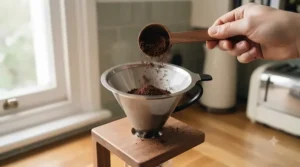
The optimisation trick most guides skip is bloom timing. Pour a small amount of hot water over the grounds first, wait 30 seconds for the coffee to “bloom” and release trapped CO2, then continue pouring in slow, circular motions. Skipping bloom is the single most common reason first-time metal filter users report muddy or inconsistent cups in their first fortnight of use.
Real-World Scenarios: Which Filter Suits Your Life
Picture three fairly typical UK coffee drinkers. First, a university student in a shared house, brewing one cup most mornings before an early lecture, working with a tight budget and minimal kitchen storage. For this profile, the LHS Pour Over Coffee Dripper or VANANA Reusable Pour Over Filter make the most sense — both are cheap, compact, and forgiving of imperfect technique, which matters when you’re learning.
Second, a family household in a hard-water region of South East England, brewing multiple cups daily for two or more adults and occasionally hosting guests for a proper filter coffee. Here the Bodum Pour Over Coffee Maker in its larger size, or the Coffee Gator Pour Over Set, suit the higher volume and daily wear far better than a single-serve travel filter, and their glass carafes make serving guests more presentable than a portable dripper balanced over individual mugs.
Third, a remote-working coffee enthusiast who already owns a Chemex from a previous gift or splurge and has been buying paper filters online because local shops rarely stock them. For this person, the Able KONE solves a genuine, recurring supply headache while upgrading flavour at the same time — arguably the strongest value case on this entire list, since it removes an ongoing purchasing frustration rather than just an environmental one. Meanwhile, anyone in this scenario who also owns an AeroPress for travel days should pair it with the AeroPress Stainless Steel Filter for consistency across both devices.
Problem → Solution: Fixing Common Reusable Filter Frustrations
Problem: Coffee tastes weak or watery. This is almost always a grind-size issue rather than a faulty filter — metal mesh needs a coarser grind than paper to avoid excessive fast-flow extraction. Step up one or two settings on your grinder and reassess.
Problem: Too much sediment in the cup. Try a secondary rinse of the filter before brewing to clear any loose fines from the mesh weave, and avoid stirring the grounds aggressively during bloom, which knocks fine particles through the mesh.
Problem: Filter smells or tastes metallic. This typically points to inadequate drying between uses. Always air-dry fully rather than storing a damp filter, and for persistent odours, a soak in a diluted white vinegar solution for 15 minutes followed by a thorough rinse usually resolves it.
Problem: Filter no longer fits snugly. Fine mesh filters can occasionally warp slightly under repeated heat cycling. Hand-washing rather than dishwasher use, particularly avoiding the heated dry cycle, helps preserve the original shape over the long term.
Problem: Slow, dripping-forever brew. Clogged mesh from built-up coffee oils is the usual culprit. A dedicated filter-cleaning brush, used weekly, clears trapped particles that a simple rinse leaves behind.
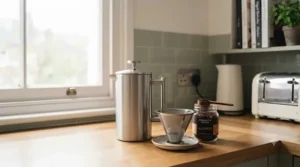
What Is a Reusable Metal Coffee Filter?
A reusable metal coffee filter is a permanent, washable filter — usually made of fine stainless steel mesh or precision-etched sheet metal — that replaces single-use paper filters in pour-over drippers, AeroPress devices, or drip coffee machines. Unlike paper, it allows coffee’s natural oils to pass through, producing a fuller-bodied cup while eliminating ongoing filter-paper purchases entirely.
Reusable pour-over filters and their AeroPress-specific cousins are part of a much broader shift in how coffee lovers think about brewing waste. According to figures from the British Coffee Association, the UK gets through tens of millions of cups of coffee every single day, and even a small proportion of that switching from disposable to permanent filtration adds up to a meaningful reduction in household paper waste over a year.
How to Choose a Reusable Metal Coffee Filter
- Identify your brewing method first. Cone filters fit pour-over drippers and Chemex-style carafes; flat discs fit AeroPress devices. These aren’t interchangeable, so this decision narrows your shortlist immediately.
- Check the mesh grade or steel type. Marine-grade 316 stainless resists corrosion longer than standard 304 grade, which matters if you’re brewing daily for years rather than occasionally.
- Match capacity to your household. A single-serve 1–2 cup filter suits solo drinkers; multi-cup cones or larger carafes suit families and anyone hosting regularly.
- Weigh mesh fineness against flavour preference. Finer mesh gives a cleaner cup closer to paper-filtered clarity; coarser mesh gives more body and oils but slightly more sediment.
- Consider dishwasher compatibility if convenience matters most. Not every filter tolerates repeated heated-dry cycles well, so check this if you’re not planning to hand-wash.
- Factor in replacement parts availability. Brands that sell spare carafes or filters separately, like Bodum, extend the realistic lifespan of the whole system.
- Set a realistic budget band. Budget cones under £15 are perfectly capable for casual brewing; premium options like the Able KONE earn their price through engineering precision and durability for daily, serious use.
Reusable Metal Coffee Filter vs Paper Filters
| Factor | Metal Filter | Paper Filter |
|---|---|---|
| Flavour & body | Fuller-bodied, more oils retained | Cleaner, lighter cup |
| Ongoing cost | One-off purchase, reused indefinitely | Recurring weekly purchase |
| Waste generated | None after initial purchase | Continuous paper waste |
| Cleaning effort | Rinse or wash after every use | Discard, no cleaning needed |
| Sediment in cup | Small amount, more with coarse mesh | Virtually none |
The clearest takeaway from this comparison is that metal filters win decisively on long-term cost and waste, while paper still holds a slim edge for anyone who prioritises absolute clarity over body and oils. Reusable pour-over filters generally suit people who already enjoy French press or cafetière-style coffee, since the flavour profile sits closer to that end of the spectrum than to delicate, paper-filtered light roasts.
✨ Don’t Miss These Exclusive Deals!
🔍 Take your coffee routine to the next level with these carefully selected filters. Click on any highlighted product to check current pricing and availability. These reusable metal coffee filters help you build a genuinely sustainable, zero-waste coffee habit your future self (and your bin bag) will thank you for!
Common Mistakes When Buying a Reusable Metal Coffee Filter
The most frequent mistake is buying a cone-shaped filter without checking it actually fits the specific dripper, carafe, or machine at home — cone filters are not universally sized, and a filter that’s a few millimetres out won’t seat properly, letting water bypass the coffee bed. A close second is assuming AeroPress and pour-over filters are interchangeable; they use fundamentally different shapes (flat disc versus cone) because the brewing mechanics differ.
Buyers also commonly underestimate how much grind size needs to change when switching from paper to metal, then judge the filter itself as poor quality when the resulting coffee tastes over-extracted or gritty. Finally, some shoppers chase the absolute cheapest option without checking the steel grade, only to find the mesh discolouring or warping within months — a classic case where the stated price doesn’t reflect total cost of ownership once early replacement is factored in.
Reusable Pour-Over Filters: Cone, Basket, or Flat-Bottom
Not all reusable pour-over filters share the same shape, and the differences genuinely change how your coffee tastes. Cone-shaped filters, like those in the VANANA, LHS, and Able KONE entries above, concentrate water flow through a single point at the base, producing faster, more intense extraction that suits medium-to-dark roasts well. Flat-bottomed designs spread water more evenly across the coffee bed, generally producing a more even, if slightly slower, extraction that some brewers prefer for lighter, more delicate roasts.
Basket-style permanent filters, more commonly found built into electric drip machines rather than manual pour-over kit, prioritise convenience and larger batch sizes over the fine control that manual cone dripping offers. If you’re deciding between reusable pour-over filter styles for the first time, cone shapes are the more forgiving and widely supported option for manual brewing, which is largely why they dominate this list.
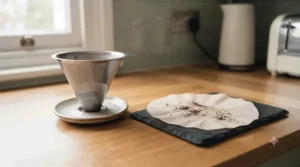
What to Expect: Real-World Performance
Specs on a page rarely translate directly into what happens in your kitchen, so here’s the practical version. Expect your first two or three brews with any new metal filter to taste slightly different from what you’re used to — usually heavier, sometimes with a touch more bitterness until your grind size and pour technique adjust. This settling-in period is normal, not a product fault, and most buyers report the “right” cup within a week of regular use.
Expect noticeably less waste in your kitchen bin within the first fortnight, since there’s no filter paper packaging or spent papers to discard. Expect maintenance to become a genuinely small, near-automatic step in your routine, similar to rinsing a cafetière plunger, rather than an ongoing chore. And expect the flavour difference between metal and paper filtering to be most obvious with naturally oily, darker roasts, and least noticeable with very light, delicately roasted single-origin beans, where paper’s clarity is arguably still the better match.
Sustainable Brewing and Zero-Waste Coffee: The Bigger Picture
Switching to a reusable metal coffee filter is a small, personal decision that sits within a much larger UK conversation about single-use waste. Government action on this front has accelerated in recent years — the UK has already restricted several single-use plastic items and, as outlined by GOV.UK, has committed to preventing all avoidable plastic waste by 2042 as part of a broader environmental strategy. While coffee filter papers aren’t plastic, they follow the same disposable logic that this wider policy shift is pushing consumers and manufacturers away from.
For genuinely zero-waste coffee, the filter is only part of the picture. Pairing a reusable metal filter with a manual grinder (avoiding pod-based capsule packaging entirely), composting spent coffee grounds rather than binning them, and buying beans from shops offering refill or compostable packaging closes the loop much further. None of this requires perfection — even switching the filter alone, while everything else stays the same, removes a genuinely recurring source of household waste with zero ongoing effort once the initial habit is formed.
Filter Cleaning and Maintenance
Proper filter cleaning and maintenance is what separates a filter that lasts years from one that’s discoloured and clogged within months. After every brew, rinse the filter under hot running water immediately, before coffee oils have a chance to dry onto the mesh — this single habit prevents the majority of long-term staining and odour issues. Once a week, a more thorough clean with washing-up liquid and a soft brush (many filters, including several on this list, come with one included) clears finer particles that a plain rinse misses.
For deeper maintenance, soak the filter in a mixture of warm water and white vinegar for 15–20 minutes roughly once a month, particularly in hard-water areas of the UK where mineral deposits build up faster on stainless steel surfaces. Rinse thoroughly afterwards to remove any lingering vinegar taste. Avoid abrasive scouring pads, which can scratch fine mesh and create rougher surfaces where coffee residue clings more easily going forward. Most filters on this list are dishwasher safe, but hand-washing generally preserves mesh shape and filter longevity better over several years of daily use.
Long-Term Cost & Value Analysis
The upfront cost of a reusable metal coffee filter is higher than a single pack of paper filters, but the comparison only makes sense over time. A household brewing one pot of filter coffee daily might get through several packs of paper filters annually — a small but genuinely recurring cost that never stops. A reusable metal filter, bought once in the £10–£50 range depending on the pick, effectively removes that ongoing spend entirely, with the only running cost being occasional replacement after several years of heavy use.
Total cost of ownership also favours pricier, better-engineered options more than it first appears. A budget cone at under £15 that needs replacing after a year of daily use due to mesh warping may end up costing more over a five-year period than a premium option like the Able KONE, built to genuinely last. This is the classic buy-once-cry-once argument, and it applies particularly well here because filter mesh, unlike many kitchen gadgets, has no moving parts or electronics to fail — its lifespan is almost entirely a function of steel quality and how it’s cared for.
Safety, Regulations & UK Compliance Guide
Anyone buying a reusable metal coffee filter for regular food contact use in the UK benefits from understanding the basic regulatory backdrop, even briefly. Materials that touch food and drink in the UK, including stainless steel kitchenware, fall under food contact material regulations, and the Food Standards Agency is the body responsible for ensuring these products don’t transfer harmful substances into what you eat or drink. Reputable stainless steel filters, particularly those specifying food-grade 304 or 316 steel, are manufactured to meet these standards.
In practical terms, this means checking that a filter’s listing specifies a genuine food-grade steel type rather than an unspecified “stainless steel” claim, since grading affects both safety and durability. It’s also worth noting that stainless steel is naturally non-reactive and doesn’t leach flavours or chemicals into hot water the way some lower-grade metals or certain plastics can under repeated heat exposure, which is part of why it’s such a durable, low-maintenance choice for daily brewing equipment.
Buyer’s Decision Framework
If you already own a Chemex, choose the Able KONE, because generic cone filters won’t seat correctly in its carafe. If you own an AeroPress, choose either the AeroPress Stainless Steel Filter or the Altura MESH depending on whether brand reassurance or price matters more to you. If you’re brewing solo and want minimal counter space, choose the LHS Pour Over Coffee Dripper. If you’re brewing for a household or want a complete starter kit rather than a standalone filter, choose the Bodum Pour Over Coffee Maker or the Coffee Gator Pour Over Set. And if budget is the single deciding factor above all else, the VANANA Reusable Pour Over Filter delivers genuine multi-cup flexibility for the lowest outlay on this list.
Frequently Asked Questions
❓ Does a reusable metal coffee filter make coffee taste different?
❓ How long does a stainless steel coffee filter last?
❓ Can I put a reusable pour-over filter in the dishwasher?
❓ Is a reusable metal coffee filter better for the environment than paper?
❓ Do metal coffee filters work with every coffee maker?
Conclusion
A reusable metal coffee filter is one of those rare kitchen swaps that genuinely delivers on more than one front at once — less recurring spend, less bin waste, and for many drinkers, a noticeably fuller-bodied cup than paper ever produced. The right pick really does come down to what you’re already brewing with: match the filter shape to your device first, then let budget and mesh fineness guide the rest of the decision.
Whether that means the unfussy, budget-friendly VANANA Reusable Pour Over Filter for a student kitchen, the precision-engineered Able KONE for a dedicated Chemex setup, or the AeroPress-specific options for anyone who already owns that particular brewer, each of the seven filters covered here earns its place through genuine specification differences rather than marketing gloss. Give your grind size and pour technique a week or two to adjust after switching, and don’t judge the flavour on the first cup alone — most people report their best results only start to show up once the small habit changes settle in.
Sustainable brewing doesn’t need to be complicated or expensive to start. One filter, properly chosen for your setup and looked after with a simple weekly clean, is genuinely all it takes to remove an entire category of disposable waste from your morning routine for good.
Recommended for You
- Unbleached vs Bleached Coffee Filter Papers: 7 Best Picks 2026
- AeroPress Filters vs Standard Paper Filters: 7 Best Picks (2026)
- Melitta Coffee Filters: 7 Best Picks for Every Machine (2026)
Disclaimer: This article contains affiliate links. As an Amazon Associate, I earn from qualifying purchases. If you purchase products through these links, we may earn a small commission at no additional cost to you.
✨ Found this helpful? Share it with your friends! 💬🤗
