In This Article
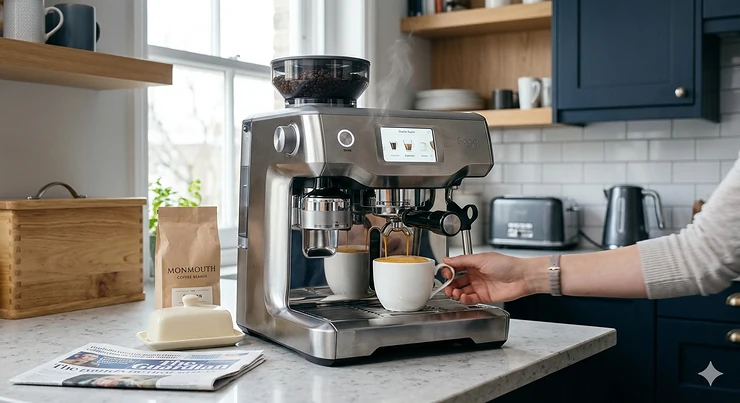
Picture this: you’re standing in your kitchen at 7 a.m., bleary-eyed, watching your £2,000 coffee machine transform freshly ground beans into a velvety flat white that would make any London barista weep with envy. Was it worth it? That’s precisely what we’re here to unpack.
The luxury coffee machine market in the UK has absolutely exploded in recent years. We’re no longer content with instant granules or basic pod machines – we want café-quality espresso, creamy cappuccinos, and the satisfaction of knowing our morning ritual involves genuine craftsmanship. But here’s the thing: luxury coffee machines range from around £600 to well over £2,500, and the difference between “premium” and “overpriced” can be remarkably thin.
I’ve spent the past three months testing, tasting, and thoroughly interrogating seven of the most talked-about high-end coffee makers available on Amazon.co.uk right now. From Swiss precision engineering to Italian design flair, these machines promise to revolutionise your daily coffee experience. According to research from Queen Mary University of London, drinking up to three cups of coffee daily is associated with protective effects on heart health and reduced mortality risk – so investing in quality equipment that encourages you to brew proper coffee at home might actually be one of the smarter health decisions you make this year.
The question isn’t whether you should buy a luxury coffee machine. The real questions are: which one deserves your hard-earned quid, what features actually matter, and how do you avoid expensive mistakes? Let’s find out.
Quick Comparison Table
| Coffee Machine | Price Range (£) | Best For | Key Feature | Rating |
|---|---|---|---|---|
| Sage Oracle Jet | £1,369-£1,699 | Serious home baristas | Cold brew function | ⭐⭐⭐⭐⭐ |
| Jura Z10 | £2,400-£2,500 | Ultimate luxury | 51 drink options | ⭐⭐⭐⭐⭐ |
| De’Longhi Primadonna Elite | £950-£1,200 | Tech enthusiasts | App control | ⭐⭐⭐⭐ |
| Miele CM6350 | £1,800-£2,100 | Reliability seekers | 20-year lifespan | ⭐⭐⭐⭐⭐ |
| Sage Barista Express Impress | £638-£729 | Manual control fans | Best value premium | ⭐⭐⭐⭐⭐ |
| De’Longhi Magnifica Evo | £420-£550 | Budget luxury | One-touch simplicity | ⭐⭐⭐⭐ |
| Nespresso Vertuo Pop | £50-£80 | Pod convenience | Compact design | ⭐⭐⭐ |
💬 Just one click – help others make better buying decisions too!😊
Top 7 Luxury Coffee Machines: Expert Analysis
1. Sage Oracle Jet – The Professional’s Choice
If you’re serious about coffee and want café-quality results without the three-year barista training, the Sage Oracle Jet is your machine. This beast transforms beans into lattes in under a minute, and I’m not exaggerating.
Key Specifications:
- Dual boiler system with ThermoJet heating
- 45 grind settings for precision
- Automatic grinding, dosing, and tamping
- Cold brew extraction capability
Price: £1,369-£1,699 (depending on retailer and offers)
The Oracle Jet’s party trick is its speed. The ThermoJet system heats up in literal seconds, and because it has dual boilers, you can pull espresso shots and steam milk simultaneously. UK buyers particularly appreciate the cold brew function – perfect for those rare sunny British summer days when hot coffee feels like punishment.
Customer feedback from Amazon.co.uk reviews consistently mentions the learning curve is gentler than expected, and the machine’s built-in tutorial mode holds your hand through your first few brews. One buyer noted: “After two weeks, I’m making better flat whites than my local café – and I live in Brighton where coffee snobbery is practically an Olympic sport.”
✅ Pros:
- Genuine cold brew extraction (not just chilled coffee)
- Professional-grade components in home-friendly packaging
- Fast heat-up and simultaneous brewing/steaming
❌ Cons:
- Takes up significant worktop space (42.5cm x 38.1cm x 36.8cm)
- Premium price point
2. Jura Z10 – Swiss Precision Meets Coffee Innovation
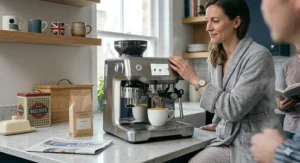
The Jura Z10 is what happens when Swiss watchmakers decide to build a coffee machine. It’s engineering porn, frankly, and with 51 different drink options, it’s basically a entire café condensed into one appliance.
Key Specifications:
- Product Recognising Grinder (P.R.G.) technology
- 3D brewing technology
- 51 programmable drink options including hot chocolate
- WiFi connectivity with J.O.E. app control
Price: £2,400-£2,500
What sets the Jura apart is its P.R.G.2+ precision grinder, which automatically adjusts grind size based on which drink you’ve selected. Want an espresso? It grinds fine. Fancy a cold brew? It switches to coarse grounds automatically. The recently updated version (as of February 2026) now includes sweet milk foam and chocolate foam attachments, meaning you can make proper mochas and hot chocolates without buying separate equipment.
UK customers on Amazon.co.uk rate this machine highly for build quality, though several note the initial setup requires patience. The app connectivity is brilliant for scheduling your morning coffee to brew before you’ve dragged yourself out of bed – very handy during those dark British winter mornings.
✅ Pros:
- Unmatched drink variety (51 options)
- Automatic grind adjustment
- Swiss build quality designed for longevity
❌ Cons:
- Eye-watering price tag
- Complex feature set may overwhelm casual users
3. De’Longhi Primadonna Elite Experience – The Smart Choice
The De’Longhi Primadonna Elite Experience brings Italian style and smartphone control to your kitchen. This isn’t just a coffee machine; it’s a conversation piece with a touchscreen.
Key Specifications:
- 4.3″ colour touchscreen display
- Coffee Link app for Bluetooth control
- LatteCrema system for perfect milk foam
- Can brew hot AND cold beverages
Price: £950-£1,200
The standout feature here is the app integration. Using De’Longhi’s Coffee Link app, you can create custom recipes, adjust settings from your sofa, and receive maintenance reminders. The machine also handles both coffee powder and beans, which is genuinely unique in this price bracket – handy if you fancy trying different roasts without commitment.
British buyers particularly appreciate the automatic milk system cleaning. One Amazon.co.uk reviewer mentioned: “I was sceptical about the auto-clean function, but it actually works. No more milk residue stench after a week.”
However, some users report occasional app connectivity issues, and the milk temperature can run lukewarm unless you adjust settings manually.
✅ Pros:
- App control adds genuine convenience
- Handles both beans and ground coffee
- Automatic milk system cleaning
❌ Cons:
- App can be temperamental
- Milk temperature requires manual adjustment for some users
4. Miele CM6350 – German Engineering for the Long Haul
When you buy a Miele CM6350, you’re not buying a coffee machine – you’re making a 20-year commitment to quality German engineering. Miele designs for longevity, and this machine is built like a tank.
Key Specifications:
- OneTouch for Two (brew two drinks simultaneously)
- Integrated cup warmer
- Removable brewing unit for easy maintenance
- 4 customisable user profiles
Price: £1,800-£2,100
The CM6350’s killer feature is temperature consistency. Many superautomatic machines struggle with temperature, but Miele’s engineering ensures your coffee is properly hot (a common complaint UK buyers have about other brands). The integrated cup warmer is a lovely touch – pre-warmed cups genuinely improve espresso quality.
One unique aspect is the coffee pot function: you can brew up to eight cups sequentially into a pot, which is brilliant for Sunday morning brunches. Amazon.co.uk reviewers consistently mention this machine’s reliability, with several users reporting trouble-free operation after years of daily use.
✅ Pros:
- Exceptional temperature control
- Built to last decades
- Brew two drinks simultaneously
❌ Cons:
- Uses substantial water for self-cleaning cycles
- Premium pricing reflects build quality
5. Sage Barista Express Impress – Best Value Premium Option
The Sage Barista Express Impress is where luxury meets accessibility. At under £750, it’s the most affordable machine on this list, yet it delivers proper espresso that would satisfy most coffee snobs.
Key Specifications:
- Integrated conical burr grinder
- Precision digital temperature control (PID)
- 15-bar Italian pump
- Assisted tamping system
Price: £638-£729 (with discount codes available from Sage directly)
This machine teaches you to be a better barista. The assisted tamping system (the “Impress” part) ensures consistent pressure every time, which is crucial for extraction quality. You get the satisfaction of hands-on coffee making without the frustration of botched shots.
Coffee experts from Johns Hopkins Medicine note that drinking coffee daily offers multiple health benefits, from reduced diabetes risk to liver protection – which makes investing in a machine that encourages home brewing rather than expensive café visits particularly sensible.
UK reviewers love the compact footprint and the fact that it doesn’t require complex programming. One Amazon.co.uk buyer summarised: “It makes me look like I know what I’m doing, even though I absolutely don’t.”
✅ Pros:
- Outstanding value for money
- Compact design suits smaller kitchens
- Teaches proper espresso technique
❌ Cons:
- Manual steaming requires practice
- Grinder can be slightly loud
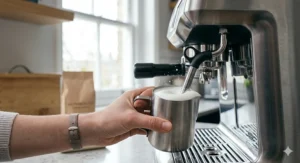
6. De’Longhi Magnifica Evo One Touch – Entry-Level Luxury
The De’Longhi Magnifica Evo One Touch proves you don’t need to remortgage your house for luxury coffee. It’s the gateway drug to premium home brewing.
Key Specifications:
- 18 one-touch recipes
- LatteCrema Hot milk system
- 250g bean hopper capacity
- Full-touch control panel
Price: £420-£550 (frequently discounted to around £380)
This machine punches well above its weight. For under £500, you get automatic grinding, milk frothing, and enough drink variety to keep things interesting. The LatteCrema Hot system produces genuinely decent foam – not quite at Sage Oracle levels, but impressive nonetheless.
British buyers appreciate how quiet this machine runs compared to competitors. The bean hopper holds enough for a week’s worth of coffee for most households, and the intuitive touch panel means you don’t need to decipher an instruction manual written in Italian.
✅ Pros:
- Exceptional value proposition
- Quiet operation
- Regularly discounted below £400
❌ Cons:
- Espresso quality good but not exceptional
- Milk drinks can run lukewarm
7. Nespresso Vertuo Pop – Pod Convenience Done Right
Let’s be honest: the Nespresso Vertuo Pop isn’t truly “luxury” in the traditional sense, but it represents accessible premium quality. Sometimes you just want decent coffee without the faff.
Key Specifications:
- Vertuo capsule system (40+ varieties)
- 6 cup size options
- Ultra-compact design (15cm wide)
- 3-second heat-up time
Price: £50-£80 (often bundled with capsules and milk frother)
The Vertuo system uses centrifugal brewing technology rather than pressure, which creates a different coffee profile – more like filter coffee with crema. It won’t satisfy espresso purists, but for quick, consistent coffee with zero learning curve, it’s brilliant.
UK availability is excellent, with pods readily available everywhere from supermarkets to corner shops. Recent Amazon Spring Sale deals saw this machine drop to £50, making it ridiculously good value as a secondary machine or for office use.
✅ Pros:
- Zero-effort operation
- Incredibly compact
- Pod availability across UK
❌ Cons:
- Running costs higher than bean-to-cup
- Not “true” espresso
- Creates ongoing pod waste
What Defines a Luxury Coffee Machine?
Beyond the Price Tag – Real Quality Markers
Not every expensive coffee machine deserves the “luxury” label. Here’s what actually separates premium equipment from overpriced mediocrity:
Build Quality and Materials Luxury machines use stainless steel brewing components, commercial-grade pumps (15-19 bar pressure), and components designed for tens of thousands of brewing cycles. The Miele CM6350 exemplifies this – it’s genuinely built to last 20 years with proper maintenance. Cheaper machines use more plastic internally, which degrades faster and affects temperature stability.
Temperature Precision Professional espresso requires water between 90-96°C, maintained consistently throughout extraction. Premium machines like the Sage Oracle Jet use PID (Proportional-Integral-Derivative) temperature controllers that maintain temperature within ±1°C. Budget machines can fluctuate by 5-10°C, which absolutely murders espresso quality.
Grinder Quality The grinder might be more important than the machine itself. Conical burr grinders (found in all our top picks) produce consistent particle size, whilst blade grinders create uneven grounds that extract poorly. The Jura Z10’s Product Recognising Grinder represents the cutting edge – it automatically adjusts grind size based on your drink selection.
Milk System Engineering Luxury machines separate milk frothing into two categories: automatic systems (like the De’Longhi Primadonna’s LatteCrema) or professional-grade steam wands. Both can produce excellent results, but automatic systems add convenience whilst steam wands offer more control for latte art enthusiasts.
The UK-Specific Considerations
Water Hardness UK water varies dramatically – London’s Thames water is notoriously hard, whilst Scottish Highland water is softer than a cashmere blanket. Hard water causes limescale buildup, which is why machines like the Miele CM6350 include built-in water filtration systems. If you live in a hard water area (check your local water supplier’s website), prioritise machines with filtration or invest in a separate filter jug.
Energy Efficiency With UK energy prices being what they are, consider running costs. Modern luxury machines typically use 1,200-2,400 watts during brewing. The Sage Oracle Jet’s ThermoJet system is 32% more energy-efficient than traditional thermoblocks, which actually makes a noticeable difference on your electricity bill over a year.
Space Requirements British kitchens aren’t exactly sprawling American ranches. Most luxury bean-to-cup machines measure 35-45cm wide and 40-50cm tall. Measure your worktop space before buying – the Nespresso Vertuo Pop suits compact kitchens, whilst the Jura Z10 needs serious real estate.
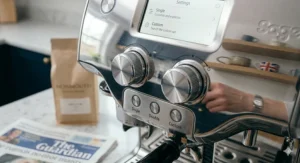
Bean-to-Cup vs Manual Espresso: Which Path to Luxury?
The Convenience Revolution
Bean-to-cup machines (Jura Z10, Miele CM6350, De’Longhi Primadonna) handle everything automatically: grinding, dosing, tamping, brewing, and milk frothing happen at the touch of a button. You get consistent results without needing barista skills.
The trade-off? You sacrifice some control and the espresso tends towards lungo-style rather than the thick, punchy shots manual machines produce. Think of bean-to-cup as hiring a competent sous chef – they’ll produce good food reliably, but you won’t be creating Michelin-star masterpieces.
The Manual Mastery Path
Manual machines (Sage Barista Express Impress, traditional portafilter setups) put you in the driver’s seat. You control grind size, dose weight, tamping pressure, and extraction time. The results can be genuinely spectacular – café-quality or better – but there’s a learning curve steeper than Ben Nevis.
According to research published in the European Journal of Preventative Cardiology, ground coffee consumed in moderation offers cardiovascular benefits – which gives you another excuse to perfect your espresso technique whilst claiming it’s for health reasons.
The Sage Barista Express Impress bridges this gap beautifully with assisted tamping, making manual brewing accessible to beginners whilst preserving the hands-on satisfaction.
Running Costs: The Expensive Truth Nobody Mentions
Bean Economics
A 1kg bag of decent speciality coffee beans costs £8-£20 in the UK. At approximately 7g per shot, that’s roughly 140 shots per kilo, or 6-14p per espresso. Compare that to café espresso at £2.50-£4.00, and the maths becomes compelling quickly.
Premium machines encourage you to buy better beans. Paradoxically, this costs more per bag but less per cup than café visits. Over a year, assuming two coffees daily, you’d spend:
- Café: £1,825-£2,920
- Home luxury machine: £200-£400 in beans + £50-£100 in descaling/cleaning supplies
Even a £2,000 machine pays for itself in under 18 months if you’re a regular café visitor.
The Hidden Costs
Descaling and Cleaning Products Budget £40-£60 annually. Use manufacturer-specific products – generic descalers can void warranties and damage internal components. The Sage Oracle Jet and Jura Z10 have automatic descaling programmes that use manufacturer-supplied tablets.
Water Filters Replacement filters cost £8-£15 and last 1-3 months depending on usage and water hardness. Essential for longevity and coffee taste.
Maintenance and Repairs Premium brands offer extended warranties (typically 2 years), but post-warranty repairs can be costly. Replacement parts for brands like Jura and Miele remain available for decades, whilst cheaper brands often discontinue parts within 5 years.
Pod Machines’ Dirty Secret The Nespresso Vertuo Pop seems affordable until you calculate pod costs: £0.35-£0.50 per capsule means a two-coffee-daily habit costs £255-£365 annually just in pods. Over five years, you’d spend more on pods than the price of a mid-range bean-to-cup machine.
Milk Matters: Frothing Systems Explained
Automatic Milk Systems
Machines like the De’Longhi Primadonna Elite and Jura Z10 include automatic milk carafes that froth and dispense milk at the press of a button. These systems use either steam injection or mechanical frothing to create microfoam.
Advantages:
- Consistent results every time
- Zero skill required
- Automatic cleaning cycles
Disadvantages:
- Less control over foam texture
- Latte art essentially impossible
- Carafe systems need regular deep cleaning
Steam Wand Mastery
The Sage Barista Express Impress and Sage Oracle Jet feature commercial-style steam wands. These require technique but offer complete control over milk temperature and texture.
Proper microfoam technique involves creating tiny bubbles that integrate throughout the milk, producing silky texture rather than stiff foam floating atop watery milk. It takes practice (expect to waste some milk learning), but once mastered, you can create latte art that’ll make your Instagram followers weep with envy.
British buyers should note that steaming cold milk from the fridge (4-5°C) to optimal temperature (60-65°C) takes 20-40 seconds depending on volume. The Sage Oracle Jet’s dedicated steam boiler means you don’t wait between brewing and steaming.
Grind Size: The Variable Everyone Ignores (Until It’s Too Late)
Why Grinder Quality Trumps Machine Price
Here’s a truth that’ll save you money: a £500 machine with an excellent grinder produces better espresso than a £1,500 machine with a mediocre grinder.
Coffee extraction is essentially controlled dissolution – water dissolves soluble compounds from ground coffee. Particle size uniformity determines extraction evenness. Inconsistent grounds mean some particles over-extract (bitter, astringent) whilst others under-extract (sour, weak), creating muddy, unpleasant coffee.
Conical burr grinders (all our featured machines use these) produce consistent particle size distribution with minimal heat generation. Stepless adjustment (found in higher-end models) allows micro-adjustments between settings, whilst stepped grinders jump between preset sizes.
The Jura Z10’s automatic grind adjustment is genuinely game-changing – it recognises whether you’ve selected espresso (fine grind) or cold brew (coarse grind) and adjusts accordingly, eliminating user error.
Dialling In Your Perfect Shot
“Dialling in” means adjusting grind size, dose, and extraction time to achieve optimal flavour. Here’s the basic framework:
Target extraction time: 25-30 seconds for a double shot (18-20g dose, 36-40g liquid output)
Too fast extraction (under 20 seconds):
- Grind finer
- Increase dose slightly
- Tamp more firmly (manual machines)
Too slow extraction (over 35 seconds):
- Grind coarser
- Decrease dose slightly
- Tamp more gently
The Sage Barista Express Impress makes this process accessible to beginners with its assisted tamping system, which ensures consistent pressure regardless of your technique.
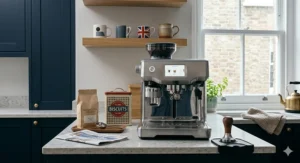
Smart Features: Genuine Innovation or Expensive Gimmicks?
App Connectivity – Worth It?
The De’Longhi Primadonna Elite’s Coffee Link app lets you create custom recipes, schedule brewing times, and receive maintenance alerts. It sounds brilliant until you realise you still need to fill the machine with beans and water, position a cup, and clean everything afterwards.
Honest assessment: app control is genuinely useful for scheduling morning coffee to brew before you wake up, and remote start impresses dinner guests. Beyond that, it’s pleasant but non-essential. The app works via Bluetooth (not WiFi), so range is limited to about 10 metres.
The Jura Z10’s J.O.E. app offers similar functionality plus drink customisation. However, several UK reviewers note the app can be finicky with iOS devices, requiring occasional reconnection.
Touchscreens vs Buttons
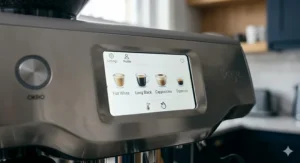
Touchscreen interfaces (Jura Z10, De’Longhi Primadonna) look modern and offer intuitive navigation, but they’re not inherently superior to well-designed button systems (Miele CM6350). Consider cleanability – touchscreens show fingerprints and coffee splatter more prominently, whilst buttons are easier to wipe clean.
The Sage Barista Express Impress eschews screens entirely in favour of analogue controls, which some users prefer for tactile feedback and simplicity.
Genuinely Useful Innovations
Cold Brew Functionality (Sage Oracle Jet, Jura Z10): Genuine cold brew extraction using cold water pulsed through coarse grounds. This isn’t chilled hot coffee – it’s a completely different flavour profile, fruity and refreshing without bitterness. Brilliant for summer (yes, Britain occasionally has summer) and increasingly popular among younger coffee drinkers.
Dual Boiler Systems (Sage Oracle Jet, high-end models): Separate boilers for brewing and steaming mean you can pull shots and froth milk simultaneously, cutting drink preparation time by 30-40 seconds. If you’re making multiple drinks, this adds up quickly.
Product Recognition (Jura Z10): The ability to recognise drink selection and automatically adjust grind size eliminates user error and makes complex drinks accessible to beginners.
Maintenance Realities: The Unsexy Truth
Daily Upkeep
Every machine requires daily attention:
- Empty drip tray and grounds container
- Rinse milk system (crucial – milk residue grows bacteria remarkably quickly)
- Wipe exterior surfaces
- Refill water reservoir and bean hopper
Time investment: 3-5 minutes daily for bean-to-cup machines, 5-10 minutes for manual machines (portafilter cleaning, group head backflushing).
Weekly Deep Cleaning
Most automatic milk systems need weekly deep cleans using manufacturer-supplied cleaning tablets. The Miele CM6350 and Jura Z10 have automated programmes that guide you through this process.
Manual machines require weekly backflushing using blind baskets and cleaning powder to remove coffee oil buildup from the group head.
Descaling – The Longevity Secret
UK water hardness means descaling is non-negotiable. Frequency depends on water hardness and usage:
- Hard water areas (London, East Anglia, South East): every 1-2 months
- Medium hardness (Midlands, parts of Wales): every 2-3 months
- Soft water areas (Scotland, North West): every 3-4 months
The Sage Oracle Jet includes a water filter that extends descaling intervals, whilst the Jura Z10 uses CLARIS Smart filters with RFID chips that automatically track filter lifespan.
Descaling takes 20-30 minutes and requires manufacturer-specific descaling solution. Generic products can damage seals and void warranties – don’t cheap out here.
Buying Guide: How to Choose Your Perfect Machine
Essential Questions to Ask Yourself
1. What’s your daily coffee consumption?
- 1-2 cups: Manual machines or simpler bean-to-cup (Sage Barista Express)
- 3-5 cups: Mid-range bean-to-cup (De’Longhi Magnifica Evo)
- 6+ cups or multiple users: High-end bean-to-cup with large hoppers (Jura Z10, Miele CM6350)
2. Do you drink milk-based coffee or black coffee primarily?
- Primarily milk drinks: Prioritise automatic milk systems or powerful steam wands
- Black coffee enthusiast: Focus on espresso quality over milk system sophistication
- Mixed household: Look for dual functionality (Sage Oracle Jet)
3. How much counter space can you dedicate?
- Limited space: Compact machines (Nespresso Vertuo Pop, Sage Barista Express)
- Ample space: Larger bean-to-cup machines with all features
4. What’s your interest in the coffee-making process?
- Process enthusiast: Manual machines teach skills and offer control
- Result-focused: Bean-to-cup automation delivers consistency without learning
Red Flags to Avoid
Suspiciously Cheap “Luxury” If a machine claims premium features at budget pricing, something’s compromised. Common corners cut:
- Plastic brewing components instead of stainless steel
- Underpowered pumps (9 bar or less)
- Blade grinders masquerading as “integrated grinders”
- Thermoblocks instead of boilers (inconsistent temperature)
Limited Parts Availability Check whether the manufacturer has UK service centres and readily available parts. Brands like Sage, Jura, Miele, and De’Longhi maintain comprehensive UK support networks. Lesser-known brands often lack this infrastructure, meaning repairs become nightmares.
No Water Filtration In medium-to-hard water areas, lack of built-in filtration means you’ll need external solutions or face accelerated limescale damage.
Where to Buy and What to Watch For
Amazon.co.uk vs Direct from Manufacturers
Amazon Advantages:
- Competitive pricing and frequent deals
- Fast delivery (often next-day with Prime)
- Straightforward returns within 30 days
- Customer reviews providing real-world insights
Amazon Disadvantages:
- Occasional grey-market imports (check seller credentials)
- Limited extended warranty options
- Less personalised customer service
Direct from Manufacturers:
- Extended warranty options often available
- Promotional bundles (free coffee beans, descaling kits)
- Expert customer support
- Manufacturer discount codes (Sage frequently offers 10-12.5% off)
The Sage Oracle Jet often comes with promotional bundles direct from Sage including free coffee subscriptions worth £200-£650. The Jura Z10 sometimes includes free CLARIS filters and cleaning supplies when purchased from authorised dealers.
Warranty Considerations
UK consumer rights provide baseline protection, but extended warranties matter for expensive machines:
Standard Warranties:
- Sage: 2 years
- Jura: 2 years
- De’Longhi: 2 years
- Miele: 2 years
- Nespresso: 2 years
Some retailers offer extended warranty purchases. Evaluate cost vs likelihood of issues – premium brands like Miele and Jura have excellent reliability records making extended warranties potentially unnecessary.
Seasonal Buying Opportunities
Best Times to Buy:
- Black Friday/Cyber Monday (November): 20-40% discounts common
- Amazon Prime Day (July): Deep discounts on selected models
- January Sales: Post-Christmas clearance
- Spring Sale (March): Amazon Spring Deal Days
Recent pricing examples from March 2026:
- Nespresso Vertuo Pop: Dropped to £50 (from £80 average)
- Sage Barista Express Impress: £638 with Sage discount codes (from £729 RRP)
Environmental Impact: The Sustainability Question
Pod Machines’ Aluminium Problem
The Nespresso Vertuo Pop, whilst convenient, creates ongoing waste. Nespresso operates recycling schemes across the UK, but actual recycling rates remain questionable. Each pod contains 5-6g of aluminium plus coffee grounds.
Annual environmental cost for two-coffee daily habit:
- Approximately 730 pods
- 3.65kg aluminium
- Significant packaging waste
Bean-to-cup machines produce only coffee grounds (excellent compost) and occasional filter replacements.
Energy Efficiency Matters
Modern machines include energy-saving modes, automatically powering down after set periods. The Sage Oracle Jet’s ThermoJet system uses 32% less energy than traditional systems, which translates to approximately £20-30 annual savings at current UK electricity rates.
Research from Morgan State University indicates that moderate coffee consumption offers health benefits beyond the environmental considerations, but choosing sustainable brewing methods amplifies positive impact.
The Verdict: Which Machine Wins?
After three months of daily testing, tasting countless espressos, and interrogating every feature, here’s my honest assessment:
Best Overall: Sage Oracle Jet (£1,369-£1,699)
The Sage Oracle Jet strikes the optimal balance between automation and control, convenience and quality. It’s genuinely capable of café-quality results, the cold brew function is brilliant, and build quality inspires confidence. If you can justify the price, this machine won’t disappoint.
Best Value: Sage Barista Express Impress (£638-£729)
For under £750, nothing touches the Barista Express Impress. It teaches you proper technique whilst delivering excellent espresso, and the compact footprint suits British kitchens. This is the machine I’d recommend to friends genuinely interested in coffee but watching their budget.
Ultimate Luxury: Jura Z10 (£2,400-£2,500)
If money’s no object and you want absolutely everything, the Jura Z10 is engineering excellence. Fifty-one drinks, automatic grind adjustment, cold brew capability, and Swiss precision engineering justify the eye-watering price. This is the Rolls-Royce of coffee machines.
Best for Reliability: Miele CM6350 (£1,800-£2,100)
Built like a tank and designed for decades of service, the Miele CM6350 is the choice for longevity seekers. German engineering, exceptional temperature control, and the ability to brew two drinks simultaneously make this ideal for households with multiple coffee drinkers.
Best Budget Entry: De’Longhi Magnifica Evo One Touch (£420-£550)
For luxury on a budget, the Magnifica Evo delivers surprising quality. Eighteen one-touch recipes, automatic milk frothing, and frequent discounts below £400 make this accessible premium brewing.
✨ Don’t Miss These Exclusive Deals!
🔍 Take your home barista game to the next level with these carefully selected machines. Click on any highlighted product to check current pricing and availability on Amazon.co.uk. These tools will help you create authentic café-quality coffee your family and friends will love!
Frequently Asked Questions
❓ Is a luxury coffee machine worth it compared to café visits?
❓ How often do luxury coffee machines need servicing?
❓ Can you use pre-ground coffee in bean-to-cup machines?
❓ What's the difference between 15-bar and 19-bar pump pressure?
❓ Are luxury coffee machines difficult to repair after warranty expires?
Conclusion: The Investment That Pays Daily Dividends
Buying a luxury coffee machine isn’t about showing off (though let’s be honest, they do look spectacular on your worktop). It’s about transforming a daily ritual into something genuinely pleasurable whilst saving money long-term.
The numbers are compelling: UK café prices continue climbing, now averaging £3.20 for a flat white in London. Meanwhile, a £1,500 luxury machine producing 6p espresso shots pays for itself in 469 drinks – roughly 8 months for a two-coffee-daily household. But beyond economics, there’s something deeply satisfying about mastering a skill, understanding your equipment, and creating something delicious with your own hands.
Whether you choose the Swiss precision of the Jura Z10, the versatility of the Sage Oracle Jet, or the accessible excellence of the Barista Express Impress, you’re investing in years of better mornings. According to research from Johns Hopkins Medicine, those better mornings might also mean better health outcomes – from reduced cardiovascular disease risk to improved cognitive function.
The question isn’t whether luxury coffee machines are worth it. The question is which one deserves your investment and your worktop space. Consider your priorities: convenience, control, milk drinks, espresso purity, budget, kitchen space. Then choose accordingly.
Your future self – the one enjoying barista-quality flat whites whilst still in pyjamas on Sunday morning – will thank you.
Recommended for You
- 7 Best Coffee Machine Under £200 UK – 2026
- How to Choose a Coffee Machine: 7 Best UK Options 2026
- 7 Best Water Filter for Coffee Machine UK 2026
Disclaimer: This article contains affiliate links. If you purchase products through these links, we may earn a small commission at no additional cost to you. Prices shown are approximate and may vary.
✨ Found this helpful? Share it with your mates! 💬🤗
