
In This Article
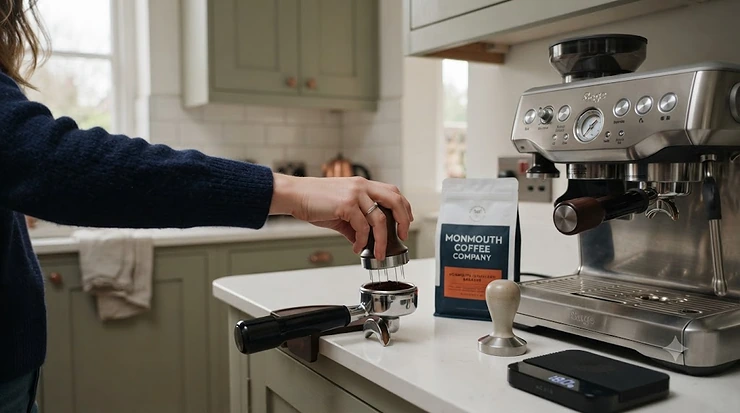
If you’ve ever pulled a shot that ran out sour on one side and bitter on the other, the culprit almost certainly wasn’t your beans. It was channelling — water finding the laziest route through an unevenly packed coffee puck, over-extracting one patch while barely touching the rest. An espresso distribution tool exists purely to stop that from happening: it’s a small handheld device, usually needle-based or blade-based, that settles ground coffee evenly across the portafilter basket before you tamp, so water has no shortcuts to exploit.
This guide is built entirely on real products currently listed on amazon.co.uk, using genuine specifications, aggregated customer-review sentiment, and honest comparative analysis rather than recycled marketing copy. We’ll walk through seven actual distribution tools spanning budget, mid-range and premium price points — needle-based WDT (Weiss Distribution Technique) tools, blade-style levellers, and OCD-style gravity distributors — and explain, in plain terms, which technique actually suits your setup. In short: an espresso distribution tool is a barista accessory used to redistribute or level ground coffee in a portafilter before tamping, aimed at eliminating clumps and density differences that cause uneven, disappointing shots.
Quick Comparison Table
| Product | Best For | Portafilter Fit | Standout Feature |
|---|---|---|---|
| Normcore 58mm Concentric Needle Distributor Tool V3 | Best overall WDT tool | 58mm | Magnetic base, adjustable depth |
| Normcore 58.5mm Gravity Distribution Tool | Best premium leveller | 58/58.3/58.5mm | 5-blade titanium PVD base |
| Apexstone 58mm Coffee Distributor | Best budget OCD-style leveller | 58mm | Screw-adjustable height, no shims needed |
| MATOW 53mm Coffee Distributor & Tamper | Best for Breville/Sage machines | 53mm (54mm basket) | Dual-head distributor and tamper in one |
Looking across this shortlist, the split is really about technique rather than price. Needle-based tools like the Normcore 58mm Concentric Needle Distributor Tool V3 break up clumps before the coffee bed is ever levelled, while blade or gravity tools like the Normcore 58.5mm Gravity Distribution Tool and Apexstone 58mm Coffee Distributor focus on flattening and evening out density after the coffee has settled. Buyers using non-standard baskets, particularly Breville and Sage machines with 54mm portafilters, should look specifically at the MATOW 53mm Coffee Distributor & Tamper, since most 58mm tools simply won’t seat correctly in a smaller basket.
💬 Just one click — help others make better buying decisions too!😊
Top 7 Espresso Distribution Tools: Expert Analysis
Coverage below spans genuine budget, mid-range and premium options, including both needle-style WDT tools and blade/gravity levellers, because the two techniques genuinely suit different setups rather than one simply beating the other.
1. Normcore 58mm Concentric Needle Distributor Tool V3 — magnetic base with true depth adjustment
The standout here is the magnetic storage base paired with genuinely adjustable needle depth, letting you match the tool to baskets ranging from shallow single-dose designs to deeper standard baskets without buying a second unit. Specs-wise, you get fine stainless steel needles arranged in a concentric pattern, an anodised aluminium handle, and a magnetic stand that holds the tool upright and keeps stray needles away from worktops between uses.
Based on the spec comparison with cheaper unbranded WDT tools, the concentric needle layout is the real differentiator — rather than needles arranged in a simple grid, a concentric pattern is designed to reach clumps nearer the basket wall that straight rows tend to miss. Reviewers consistently note that Normcore’s build quality feels a genuine step up from budget alternatives, with tighter tolerances on the needle spacing and a noticeably more secure magnetic connection, though a handful of buyers mention the needles bend slightly if pressed too firmly against the bottom of the basket rather than used with a light stirring motion.
Pros:
- ✅ Adjustable needle depth suits multiple basket types
- ✅ Magnetic base keeps needles protected between uses
- ✅ Noticeably tighter build tolerances than budget rivals
Cons:
- ❌ Needles can bend if pressed too hard against the basket base
- ❌ Priced above most unbranded WDT alternatives
At around £25-£35, the Normcore 58mm Concentric Needle Distributor Tool V3 earns its position as the benchmark WDT tool for anyone serious about home espresso.
2. MHW-3BOMBER Yu Cyclones WDT Tool for 58mm — strongest needle count for stubborn clumps
What most buyers overlook about WDT tools in general is that needle count and thickness matter more than branding — and the MHW-3BOMBER Yu Cyclones WDT Tool leans hard into that with 14 needles at 0.4mm thickness, plus 6 spare needles included for when one inevitably bends or snaps. The magnetic connection design lets the needle head detach cleanly from the handle for storage or cleaning, and the whole unit is built around a cyclone-style needle arrangement intended to create a swirling stir pattern rather than a straight up-and-down poke.
Here’s what the spec sheet won’t fully convey: more needles at a given thickness means more contact points per stir, which genuinely speeds up clump-breaking on darker, oilier roasts that tend to stick together more than lighter roasts. That makes it a strong pick for anyone working through a variety of roast levels rather than a single consistent bean. Aggregated customer sentiment is largely positive on build solidity and the inclusion of spare needles, though several reviewers note the 14-needle density can feel slightly aggressive on very fine grind settings, occasionally pushing grounds toward the basket wall rather than settling them centrally.
Pros:
- ✅ 14 needles plus 6 spares included as standard
- ✅ Magnetic detachable head simplifies cleaning
- ✅ Handles oily, clump-prone dark roasts well
Cons:
- ❌ Dense needle array can push fine grounds toward the basket edge
- ❌ Bulkier stand than some rival WDT tools
Priced around £20-£30, the MHW-3BOMBER Yu Cyclones WDT Tool for 58mm is a strong mid-range pick for households working through varied roast profiles.
3. IKAPE Mantis WDT Distribution Tool V3 — dosing funnel and stand built in
The IKAPE Mantis WDT Distribution Tool V3 solves a genuinely practical annoyance: most WDT tools leave you juggling a separate dosing funnel and a place to rest the tool between uses, while this one folds both into a single walnut-handled unit. Ten stainless steel needles at 0.4mm handle the stirring, the funnel base widens the portafilter opening to catch stray grounds during dosing, and the same base doubles as a stand once you’ve finished stirring.
On paper this means fewer separate accessories cluttering your counter, and based on the spec comparison with standalone WDT tools, that integration is the actual selling point rather than the needle count itself, which sits mid-pack. What most buyers overlook is that a combined funnel-and-stand design saves real counter space for smaller kitchens, where a growing pile of individual barista tools becomes its own problem. Reviewers consistently praise the walnut handle’s comfort and the funnel’s usefulness during dosing, while a smaller number note that the funnel’s wide rim isn’t ideal if you’re using a bottomless portafilter, since it needs removing before locking the portafilter into some machines.
Pros:
- ✅ Combined dosing funnel and stand saves counter space
- ✅ Comfortable walnut handle grip
- ✅ Ten needles handle typical clump-breaking duties well
Cons:
- ❌ Funnel attachment isn’t ideal with all bottomless portafilters
- ❌ Needle depth adjustment is less fine-grained than premium rivals
At roughly £20-£25, the IKAPE Mantis WDT Distribution Tool V3 suits buyers who want a tidy, all-in-one dosing and distribution setup.
4. Normcore 58.5mm Gravity Distribution Tool — blade-based levelling without needles
Where the previous three tools break up clumps with needles, the Normcore 58.5mm Gravity Distribution Tool takes an entirely different approach: a five-blade stainless steel base that spins to redistribute and level coffee purely through gravity and rotation, with no needles involved at all. It’s designed to be used after a WDT stir, or on its own with well-behaved, freshly ground coffee that isn’t prone to heavy clumping.
Based on the spec comparison with needle tools, the appeal here is speed and a genuinely flat, level finish — a few rotations settle the bed without the fiddly needle-cleaning that WDT tools require after every shot. That makes it the pick for anyone who values a fast morning routine over maximum clump-breaking power, though it’s worth being honest that gravity distributors do less to fix pre-existing clumps than a needle stir does, so they work best as a finishing step rather than a replacement for WDT on clumpy grounds. Aggregated review sentiment consistently highlights how satisfying the level, glassy-smooth puck surface looks after use, while a recurring criticism is that the titanium PVD coated version commands a noticeable premium over the plain stainless steel base for what’s largely a cosmetic difference.
Pros:
- ✅ Produces an exceptionally flat, level puck surface quickly
- ✅ No needle cleaning required between shots
- ✅ Solid stainless steel build feels premium in hand
Cons:
- ❌ Less effective than WDT on heavily clumped grounds
- ❌ Titanium PVD finish adds cost for a mostly cosmetic upgrade
At around £30-£40, the Normcore 58.5mm Gravity Distribution Tool is the pick for buyers who want speed and a polished finish over maximum clump-clearing.
5. Apexstone 58mm Coffee Distributor — budget OCD-style leveller with real height adjustment
The Apexstone 58mm Coffee Distributor follows the same general concept popularised by premium branded OCD-style levelling tools — a wedge or angled-slope base that redistributes and flattens coffee as you rotate it — at a noticeably lower price point. It features a solid 304 stainless steel base, a screw-adjustable height mechanism that avoids the need for separate shims, and an anti-slip aluminium handle designed for comfortable 90° tamping directly afterwards.
What most buyers overlook is that this style of tool is functionally similar in concept to far pricier branded OCD-style distributors, even if fit and finish aren’t identical — the underlying principle of an angled base redistributing grounds via rotation is the same technology, just executed at a different manufacturing tier. Based on the spec comparison, the tool-free screw adjustment is a genuine convenience over rivals that require separate depth shims, letting you match it to different basket depths in seconds. Aggregated customer feedback across this category of budget OCD-style levellers is generally positive on value for money, though it’s worth noting — as with most sub-£20 barista tools — that long-term coffee staining and minor wobble in the height adjustment thread are the most commonly reported issues after several months of daily use.
Pros:
- ✅ Tool-free screw height adjustment, no shims needed
- ✅ Solid 304 stainless steel base
- ✅ Compatible with most 58mm bottomless portafilters
Cons:
- ❌ Coffee staining builds up on the base over time
- ❌ Some reports of minor wobble in the adjustment thread after months of use
At a budget-friendly £15-£20, the Apexstone 58mm Coffee Distributor is a sensible entry point into OCD-style levelling without the premium branded price tag.

6. MATOW 53mm Coffee Distributor & Tamper — built specifically for Breville and Sage machines
Most distribution tools on the market are sized for the 58mm portafilter standard, which leaves owners of Breville and Sage’s popular 54mm-basket machines with an awkward gap — and that’s exactly the niche the MATOW 53mm Coffee Distributor & Tamper fills. It combines a dual-head design, distributor on one side and tamper on the other, with an adjustable depth mechanism sized specifically for the 54mm portafilter basket these machines use.
On paper this means one compact tool replaces two separate accessories, which genuinely matters for anyone with limited counter space or a smaller home kit. What the spec sheet doesn’t fully explain is how much of a difference correct sizing makes: a 58mm distributor simply won’t sit flush in a 54mm basket, so this isn’t a “nice to have” fit, it’s a functional requirement for Breville and Sage owners specifically. Reviewers consistently confirm the fit is accurate for Breville’s Barista Express, Barista Pro and related models, while a smaller number note the dual-head swap between distributor and tamper takes a bit of getting used to compared with two fully separate tools.
Pros:
- ✅ Correctly sized for Breville/Sage 54mm portafilter baskets
- ✅ Dual-head distributor and tamper saves counter space
- ✅ Adjustable depth suits varying dose weights
Cons:
- ❌ Not compatible with standard 58mm machines
- ❌ Dual-head swap takes some getting used to versus separate tools
At around £15-£20, the MATOW 53mm Coffee Distributor & Tamper is essentially a must-buy for Breville and Sage owners rather than a nice-to-have upgrade.
7. Dewlawn Espresso Coffee Distributor with 6 Needles — simplest budget WDT starting point
Closing out the list is the Dewlawn Espresso Coffee Distributor, a genuinely budget-focused WDT tool built around six 0.35mm stainless steel needles, a walnut handle, and an included stand. It’s aimed squarely at first-time buyers who want to try needle-based distribution before committing to a pricier, higher needle-count tool.
On paper, six needles is fewer than most rivals in this guide, which on the spec comparison translates to a gentler, less aggressive stir — useful for anyone nervous about disturbing a carefully dosed bed too much, though it does mean slightly more passes are needed to fully break up stubborn clumps compared with a 10-14 needle tool. What most buyers overlook is that a simpler, lower-needle-count tool is often the easier one to learn proper WDT technique on, since there’s less risk of accidentally over-stirring and creating new density inconsistencies while you’re still building muscle memory. Aggregated review sentiment for budget WDT tools in this category is mixed but leans positive, with buyers generally happy with the walnut handle’s feel and the included stand, while the most common complaint is that the thinner needles bend more easily than pricier 0.4mm alternatives if used carelessly.
Pros:
- ✅ Gentle six-needle stir suits WDT beginners
- ✅ Comfortable walnut handle with included stand
- ✅ Genuinely low entry price for trying the technique
Cons:
- ❌ Thinner 0.35mm needles bend more easily than thicker rivals
- ❌ Fewer needles means more passes needed on clumpy grounds
At under £15-£18, the Dewlawn Espresso Coffee Distributor is the pick for anyone testing whether WDT distribution is worth adding to their routine at all.
Practical Usage Guide: Setting Up and Using Your Distribution Tool
Getting the technique right matters more than which tool you buy, so start by dosing coffee into the portafilter as usual, then use a needle tool like the Normcore 58mm Concentric Needle Distributor Tool V3 or MHW-3BOMBER Yu Cyclones WDT Tool in a light, circular stirring motion from the outside of the basket inward, rather than jabbing straight down repeatedly. The goal is to break clumps, not to compact the coffee — save compaction for the tamp itself.
If you’re using a blade or gravity-style tool like the Normcore 58.5mm Gravity Distribution Tool or Apexstone 58mm Coffee Distributor, rest the base lightly on the coffee surface and rotate a few times without pressing down; the weight of the tool and the angled blades do the redistribution work on their own. Pressing down hard defeats the purpose, since it compacts the surface before the grounds have had a chance to settle evenly. A common first-30-days mistake is skipping the WDT stage entirely when using a gravity tool, assuming the levelling step alone is enough — for very clumpy or humid-day grounds, combining a brief needle stir followed by a gravity or OCD-style pass genuinely gives the most consistent results.
For maintenance, rinse needle tools under warm water immediately after use so ground coffee doesn’t dry and cake onto the needles, and dry the base of blade-style tools like the Normcore 58.5mm Gravity Distribution Tool promptly to avoid water spotting on the polished finish. On tools with detachable needle heads, such as the MHW-3BOMBER Yu Cyclones WDT Tool, periodically check for bent needles and swap in a spare rather than continuing to use a distorted needle, since a bent needle drags grounds sideways instead of stirring them evenly.
Real-World Scenarios: Which Tool Suits Your Setup
If you’re a home barista working with a single 58mm machine and a consistent medium roast, a well-built needle tool like the Normcore 58mm Concentric Needle Distributor Tool V3 covers you comprehensively — it handles both clump-breaking and, combined with a good tamp, produces genuinely even extraction without needing a second tool.
If you’re rotating through several different roast profiles, particularly darker, oilier beans that clump more readily, the higher needle count on the MHW-3BOMBER Yu Cyclones WDT Tool earns its keep by cutting through stubborn clumps faster than a lower-needle-count alternative, saving time on your morning routine.
If you own a Breville Barista Express, Barista Pro, or similar Sage machine with a 54mm portafilter basket, skip the 58mm tools altogether and go straight for the MATOW 53mm Coffee Distributor & Tamper — fit matters more here than any feature comparison, since a mis-sized tool simply won’t seat properly regardless of how good the technique behind it is.
Problem → Solution: Fixing Common Distribution Mistakes
Problem: shots still run unevenly after using a WDT tool. This is usually a technique issue rather than a tool fault — stirring too aggressively can actually create new channels rather than removing them. Slow down the motion and focus on light, even coverage across the whole basket rather than speed.
Problem: coffee grounds stick to the needles or blades. Static buildup is common with very fine, dry grounds. A quick tap of the tool against the counter edge before use, or a brief rinse-and-dry cycle on tools like the Apexstone 58mm Coffee Distributor, reduces static-related sticking noticeably.
Problem: the needle tool leaves visible mounds rather than a flat bed. WDT tools redistribute density but don’t fully level the surface on their own — follow up with a light tap on the counter, or a gravity-style pass with a tool like the Normcore 58.5mm Gravity Distribution Tool, before tamping.
Problem: a 58mm distributor doesn’t fit a Breville or Sage portafilter. This is a sizing mismatch, not a fault — 54mm baskets need a correctly sized tool such as the MATOW 53mm Coffee Distributor & Tamper rather than a standard 58mm unit forced to fit.
Problem: needles bend or snap after a few weeks of use. Thinner needles, such as the 0.35mm needles on budget tools like the Dewlawn Espresso Coffee Distributor, are more prone to bending under firm pressure. Use a lighter touch, and where spares are included, as with the MHW-3BOMBER Yu Cyclones WDT Tool, swap in a fresh needle rather than persisting with a bent one.
How to Choose an Espresso Distribution Tool
- Confirm your portafilter size first. Most tools, including the Normcore 58mm Concentric Needle Distributor Tool V3, are sized for 58mm baskets; Breville and Sage owners specifically need a 53-54mm tool like the MATOW 53mm Coffee Distributor & Tamper.
- Decide between needle-based WDT and blade or gravity levelling. Needle tools excel at breaking up clumps before levelling; gravity tools like the Normcore 58.5mm Gravity Distribution Tool excel at fast, flat finishing once grounds are already reasonably loose.
- Check needle count and thickness if going needle-based. More needles at 0.4mm, as on the MHW-3BOMBER Yu Cyclones WDT Tool, clear clumps faster; fewer, thinner needles are gentler for beginners learning technique.
- Look for adjustable depth. Baskets vary in depth between machines and dose weights, so a tool with genuine height or depth adjustment, like the Normcore 58mm Concentric Needle Distributor Tool V3, adapts better than a fixed-depth unit.
- Consider whether an integrated funnel or stand adds real value. A combined design like the IKAPE Mantis WDT Distribution Tool V3 genuinely reduces counter clutter if you don’t already own a separate dosing funnel.
- Weigh spare parts availability. Needles bend eventually; tools that include spares, such as the MHW-3BOMBER Yu Cyclones WDT Tool, save you a separate purchase down the line.
- Read aggregated review sentiment on durability, not just first impressions. Coffee staining, thread wobble, and needle bending tend to show up in reviews written weeks or months after purchase rather than in the first week.
WDT Tool vs OCD-Style Leveller: Distribution Technique Compared
| Factor | WDT (needle) Tool | OCD-Style / Gravity Leveller |
|---|---|---|
| Clump-breaking | Excellent | Limited |
| Speed of use | Slower, needs stirring motion | Faster, a few rotations |
| Surface finish | Good, may need a finishing tap | Excellent, very flat |
| Best for | Clumpy, oily, or humid-day grounds | Well-behaved, already loose grounds |
The Weiss Distribution Technique, or WDT, uses thin needles to physically break up clumps that form during grinding — a process detailed extensively by industry publications explaining how uneven distribution of coffee grounds is one of the leading causes of channelling in the first place. OCD-style and gravity levellers, by contrast, use an angled or blade-shaped base to redistribute and flatten an already-loose bed of grounds, producing a notably smoother finish but doing comparatively little to break apart pre-existing clumps. Neither technique is objectively superior; many experienced home baristas actually use both in sequence, a quick WDT stir with a tool like the MHW-3BOMBER Yu Cyclones WDT Tool followed by a finishing pass with something like the Apexstone 58mm Coffee Distributor, getting the clump-breaking benefit of one and the flat, even finish of the other.
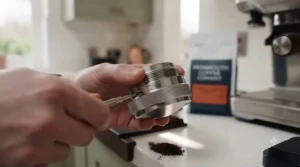
What to Expect: Real-World Performance and Even Extraction
Specs and needle counts only tell part of the story, so it’s worth being clear about what even extraction actually looks and tastes like once you’ve dialled in your distribution routine. In practice, a well-distributed puck produces a steady, syrupy stream from the portafilter spouts rather than sudden thin jets or early blonde streaks, and the resulting shot tends to taste balanced rather than sharply sour in one sip and bitter in the next. Recent academic research into the underlying fluid dynamics of espresso brewing has demonstrated that the interplay between the coffee bed’s density and porosity governs how evenly water moves through the puck during extraction, which is the scientific explanation behind why an evenly distributed, evenly dense bed genuinely does produce a better shot rather than it being purely barista folklore.
Don’t expect any single distribution tool to fully compensate for a poor grind, however — based on the spec comparison, distribution tools solve density and clump problems, not particle size inconsistency from a worn or low-quality grinder. If your shots still run unevenly after correct WDT and levelling technique, the grinder, not the distribution tool, is the more likely next place to look.
Coffee Leveller Tools for 58mm Portafilters Explained
The 58mm standard is by far the most common portafilter size among prosumer and commercial espresso machines, and levellers built for this size, such as the Normcore 58.5mm Gravity Distribution Tool and Apexstone 58mm Coffee Distributor, use a flat or angled base slightly larger than 58mm to sit snugly against the basket wall while still rotating freely. A genuine leveller differs from a needle tool in that it doesn’t stir the coffee bed so much as smooth its surface, working best on grounds that are already reasonably loose from grinding rather than tightly compacted clumps.
What most buyers overlook when shopping for a 58mm leveller specifically is that “adjustable depth” matters just as much here as it does for needle tools, since basket depth varies between machines and dose weights even within the 58mm standard. A leveller with a fixed, non-adjustable base, unlike the screw-adjustable Apexstone 58mm Coffee Distributor, may sit too high or too low depending on your specific basket, leaving an uneven gap between the levelled surface and the shower screen once locked into the group head.
Espresso Distribution Tools for Non-Standard Baskets (53mm/54mm)
Breville and Sage’s popular home machines, including the Barista Express and Barista Pro ranges, use a 54mm portafilter fitted with baskets that actually measure closer to 53mm internally — a detail that catches out plenty of first-time buyers who assume any “58mm” tool will simply work with a bit of wiggle room. It won’t; the size difference is large enough that a 58mm distributor will either rattle loosely inside the basket or fail to seat against the rim at all.
For this specific audience, a correctly sized tool such as the MATOW 53mm Coffee Distributor & Tamper isn’t an optional upgrade so much as a basic functional requirement, and its dual-head design usefully replaces two separate accessories in a smaller kitchen setup. If you’re unsure which size your machine takes, check your portafilter’s official specification sheet rather than relying on the basket looking “about the same size” as a 58mm one, since the visual difference at a glance is smaller than the practical fit difference once you try seating the tool.
Common Mistakes When Buying an Espresso Distribution Tool
The single most frequent buying mistake is not checking portafilter size before ordering — a 58mm tool arriving for a Breville or Sage 54mm basket is one of the most common return reasons across this entire product category. A second common error is assuming more needles automatically means a better tool; while a higher count like the 14 needles on the MHW-3BOMBER Yu Cyclones WDT Tool does clear clumps faster, beginners often find a lower needle count, such as the six on the Dewlawn Espresso Coffee Distributor, easier to learn proper light-touch technique with.
Buyers also frequently overlook depth adjustability, assuming a fixed-depth tool will suit their basket without checking, only to find it sits too high or too low once locked into their specific machine. Finally, many shoppers underestimate how much technique affects results regardless of tool quality — expecting a premium tool like the Normcore 58mm Concentric Needle Distributor Tool V3 to fix channelling on its own, when in practice grind consistency and tamping technique remain equally important variables in the final result.
Long-Term Cost & Maintenance
Distribution tools have no batteries or motors, so their long-term cost is almost entirely about needle and finish durability rather than any electronic component wearing out. Needle-based tools like the MHW-3BOMBER Yu Cyclones WDT Tool and Dewlawn Espresso Coffee Distributor will eventually need replacement needles as thin steel bends or snaps with repeated use — buying a tool that includes spares, or sells replacements separately, avoids needing to replace the entire unit over a bent needle.
Cost-per-use, a £15 budget tool like the Apexstone 58mm Coffee Distributor looks cheapest upfront, but if the height-adjustment thread wears loose within a year of daily use while a £30 tool like the Normcore 58.5mm Gravity Distribution Tool holds its adjustment tightly for several years, the pricier option can work out more economical across typical multi-year ownership. When any of these stainless steel or aluminium tools eventually reach the end of their life, they’re straightforward to recycle as scrap metal through most household recycling schemes, rinsed clean of coffee residue first — a simpler end-of-life process than most kitchen gadgets, since there’s no battery or circuitry involved.
The Science of Channelling and Why Distribution Matters
Channelling isn’t barista superstition; it’s a well-documented physical phenomenon rooted in how water moves through a porous bed under pressure. According to Wikipedia’s overview of espresso machine operation, an espresso machine works by rapidly forcing heated, pressurised water through a compressed cake, or puck, of finely ground coffee — and any inconsistency in that puck’s density gives the water an easier path to follow than the rest of the bed. Where density is lower, whether from a clump, an air pocket, or uneven tamping, water rushes through faster, extracting less flavour from that section while over-extracting the denser areas around it.
This is precisely the problem distribution tools are built to solve before the tamp ever compresses the bed. A needle tool like the Normcore 58mm Concentric Needle Distributor Tool V3 breaks up the density inconsistencies caused by clumping during grinding, while a leveller like the Normcore 58.5mm Gravity Distribution Tool ensures the surface itself is flat and even before pressure is applied. Understanding this mechanism is genuinely useful beyond picking a product, since it explains why skipping distribution entirely, even with a perfectly calibrated grinder, still tends to produce inconsistent shots — grinders control particle size, but they don’t control how those particles land in the basket.

Frequently Asked Questions
❓ Do I really need an espresso distribution tool?
❓ What's the difference between a WDT tool and an OCD-style leveller?
❓ What size coffee leveller do I need for my machine?
❓ Can I use a distribution tool and a leveller together?
❓ Does a distribution tool fix all channelling problems?
Conclusion
An espresso distribution tool earns its place on a home barista’s counter by solving a specific, well-understood problem: uneven coffee density that leads directly to channelling and inconsistent shots. Which technique suits you best really does depend on your grounds and your routine. If clump-breaking is your priority, needle-based tools like the Normcore 58mm Concentric Needle Distributor Tool V3 and MHW-3BOMBER Yu Cyclones WDT Tool do that job thoroughly. If a fast, flat finish matters more, an OCD-style or gravity leveller such as the Normcore 58.5mm Gravity Distribution Tool or budget-friendly Apexstone 58mm Coffee Distributor gets you there quicker. And if you’re working with a Breville or Sage machine, fit trumps every other feature, making the MATOW 53mm Coffee Distributor & Tamper close to essential rather than optional.
Price shouldn’t be the only deciding factor either way — a £15 tool that wears out within a year isn’t necessarily cheaper than a £30 tool that lasts several. Match the tool to your actual portafilter size, be honest about how clumpy your beans tend to be, and remember that technique still does most of the work regardless of which tool ends up in your hand. Get the distribution right, and channelling stops being a mystery you’re troubleshooting shot after shot.
✨ Don’t Miss These Exclusive Deals!
🔍 Take your home espresso setup to the next level with these carefully selected distribution tools. Click on any highlighted item to check current pricing and availability. These picks will help you pull noticeably more consistent, balanced shots at home!
Recommended for You
- Best Knock Box UK 2026: 7 Top Picks Compared & Rated
- Tamping Mat for Sage Barista Express: 7 Picks Tested for 2026
- Best Tamping Mat 2026: 7 Silicone Picks That Save Worktops
Disclaimer: This article contains affiliate links. As an Amazon Associate, I earn from qualifying purchases. If you purchase products through these links, we may earn a small commission at no additional cost to you.
✨ Found this helpful? Share it with your friends! 💬🤗
