
In This Article
A weekly coffee subscription is, in essence, a standing order that sends ground or whole-bean coffee to your door on a set schedule — usually every seven days — so the bag in your cupboard never quite runs out. For anyone in the UK who’s stood at the kettle on a wet Tuesday morning, scraping the last sad spoonful of instant out of a jar, the appeal writes itself. There’s something almost smug about a fresh bag of beans landing on the doormat at the exact moment the old one runs dry, like a tiny, caffeinated full circle.
What’s changed recently is choice. A decade ago, a coffee subscription in Britain meant signing up with one small roaster and hoping their taste matched yours forever. Now you can build a weekly habit straight through Amazon.co.uk’s Subscribe & Save scheme, mixing big Italian names like Lavazza with scrappy London roasters such as Grind, all billed in pounds, all arriving on your schedule, no faff. This guide pulls together seven real options available on Amazon.co.uk right now, weighs them against the wider subscription landscape, and digs into the bits that actually matter once the novelty of “ooh, coffee in the post” wears off — freshness in transit, storage in a typically small British kitchen, and what your rights actually are if you want out.
Quick Comparison: The 7 Picks at a Glance
| Product | Format | Weight | Price Range | Best For |
|---|---|---|---|---|
| Lavazza Qualità Rossa | Whole bean | 1kg | £15–£20 | Budget households wanting zero surprises |
| By Amazon House Blend | Whole bean | 1kg | £12–£15 | Large households, lowest cost per kilo |
| illy Classico | Whole bean | 250g/500g | £10–£16 | Small kitchens, bean-to-cup machines |
| Grind House Blend | Whole bean | 1kg | £18–£24 | City dwellers who care about sourcing |
| Tassimo Kenco Americano Grande XL | Pods | 80 drinks | £20–£25 | No-grinder households, offices |
| Coffee Masters Colombian Organic | Whole bean | 1kg | £17–£22 | Filter/pour-over fans wanting single-origin |
| Cafédirect Machu Picchu | Whole bean | 750g | £10–£14 | Ethically minded buyers, milky drinks |
The numbers tell their own little story. Amazon’s Subscribe & Save route wins on sheer convenience and tends to undercut boutique subscriptions on price per kilo, but it won’t introduce you to anything you haven’t already heard of. Single-roaster subscriptions cost more per bag yet reward loyalty with consistency — handy if you’ve found “the one” and don’t want it messed with. Multi-roaster boxes sit in the middle: a bit pricier, a bit more exciting, and rather good for anyone who gets bored easily. None of this is right or wrong, just a question of what kind of Tuesday morning you want.
💬 Just one click — help others make better buying decisions too! 😊
✨ Don’t Miss These Exclusive Deals!
🔍 Take your morning brew to the next level with these carefully selected products. Click on any highlighted item to check current pricing and availability on Amazon.co.uk. These picks will help you find exactly what you need!
Top 7 Weekly Coffee Subscriptions & Beans on Amazon.co.uk: Expert Analysis
1. Lavazza Qualità Rossa Coffee Beans
Lavazza Qualità Rossa is one of the best-selling whole bean coffees on Amazon.co.uk, and it’s not hard to see why. It’s an Arabica and Robusta blend roasted to a medium intensity, which in practice means it won’t bully a milky flat white but still has enough backbone for a proper espresso. Set this up on Subscribe & Save and you’re looking at somewhere in the £15–£20 range per kilo bag, undercut further with each repeat delivery discount Amazon applies.
What most buyers overlook is that Robusta blends like this one tend to hold their crema better in hard-water areas — useful if you’re in a chalky-water region like much of southern England. UK reviewers consistently praise the consistency between bags, which matters more than people think for a weekly habit; nobody wants their Monday coffee tasting wildly different from their previous Monday’s.
✅ Pros: widely available, consistent batch to batch, works in most machines
✅ Pros: genuinely good value per kilo on subscription
❌ Cons: not particularly adventurous flavour-wise
❌ Cons: Robusta content means more caffeine punch than some expect
Best for: budget-conscious households who want zero surprises. Verdict: rather good value, especially once the subscription discount kicks in.
2. By Amazon House Blend Coffee Beans
The by Amazon House Blend is Amazon’s own-label answer to the Lavazza crowd, and it leans on Rainforest Alliance certification as its main selling point. Medium roast, 1kg bags, and priced a notch below most third-party brands — typically in the low-to-mid teens in pounds when bought on subscription.
In my experience, own-brand coffee on Amazon gets dismissed too quickly. The Rainforest Alliance stamp isn’t just marketing fluff; it means the farms meet specific environmental and labour standards, which is worth knowing if sustainability factors into your buying decision at all. The flavour itself is unremarkable in a good way — balanced, no sharp edges, the sort of bean that disappears nicely into a French press without demanding attention.
✅ Pros: cheapest per-kilo option on this list
✅ Pros: certified sourcing, easy reorder via Subscribe & Save
❌ Cons: flavour profile is safe rather than exciting
❌ Cons: limited roast-level choice compared with specialist roasters
Best for: large households getting through coffee fast and watching the budget. Verdict: solid, unfussy, and easy on the wallet.
3. illy Classico Coffee Beans
illy Classico brings genuine Italian espresso pedigree to the subscription shelf — a 100% Arabica blend with caramel and floral notes, sold in 250g and 500g refill pouches that suit smaller UK kitchens where cupboard space is at a premium. Expect somewhere in the £10–£16 range depending on pack size.
The spec sheet won’t tell you this, but illy’s blend is specifically tuned for bean-to-cup machines as much as fresh grinding, which makes it a forgiving choice if your household has more than one type of coffee maker fighting for counter space — common in flat-shares and terraced houses where the kitchen rarely stretches to two appliances comfortably.
✅ Pros: smooth, balanced, genuinely café-like results
✅ Pros: smaller pack sizes suit compact UK storage
❌ Cons: pricier per kilo than Lavazza or the Amazon house blend
❌ Cons: only one roast intensity on offer
Best for: small households or couples wanting an espresso-bar feel at home. Verdict: well worth considering if you’ve got a bean-to-cup machine gathering dust.
4. Grind House Blend Specialty Coffee Beans
Grind House Blend is the closest thing on this list to a proper UK craft roaster making it onto Amazon’s shelves. Grind started as a single café in Shoreditch back in 2011 and now roasts its own organic, ethically sourced Arabica in-house. The 1kg bag typically sits in the £18–£24 range on Amazon.co.uk, noticeably pricier than the supermarket-style names above.
What most buyers overlook is that you’re paying for traceability here as much as flavour — Grind talk openly about sourcing above Fairtrade rates, and the beans arrive freshly roasted rather than sitting on a shelf for months. For UK buyers who care where their money actually goes, that’s the entire point of choosing a roaster like this over a mass-market blend.
✅ Pros: ethically sourced, organic certification, distinctly British roastery story
✅ Pros: noticeably fresher tasting than long-shelf-life blends
❌ Cons: one of the pricier picks here
❌ Cons: medium roast only — limited for dark-roast fans
Best for: city-dwellers who want their coffee money to mean something. Verdict: a touch indulgent, but rather hard to fault on ethics or taste.
5. Tassimo Kenco Americano Grande XL Coffee Pods
For households without a grinder, Tassimo Kenco Americano Grande XL pods are the practical answer — a pack of five sleeves giving roughly 80 drinks, priced typically in the low-to-mid £20s. Pods sidestep the entire “did I order the right grind?” question that trips up bean newcomers.
In practice, pod systems like Tassimo handle Britain’s notoriously variable water hardness better than many filter setups, since the machine controls extraction far more tightly than a cafetière ever could. Worth noting: per-cup cost is higher than beans, so this suits convenience-first households rather than anyone optimising for value.
✅ Pros: zero grinding or dosing guesswork
✅ Pros: long shelf life, ideal for offices or guest cupboards
❌ Cons: more expensive per cup than whole bean
❌ Cons: plastic pod waste, despite recycling schemes existing
Best for: busy households or anyone who’s never quite mastered a grinder. Verdict: convenient, if not the most economical choice long-term.
6. Coffee Masters Colombian Organic Fairtrade Coffee Beans
Coffee Masters Colombian Organic is a single-origin Fairtrade bean that’s picked up genuine industry recognition, including a Great Taste Award. Sold in 1kg bags, it typically lands in the high teens to low £20s range, putting it firmly mid-market.
Here’s the practical insight the listing won’t give you: single-origin Colombian beans like this tend to have brighter acidity than blends, which means they shine in pour-over or filter methods far more than in a pod machine. If your subscription habit revolves around a V60 or a simple filter jug rather than an espresso machine, this is the kind of bean that rewards the extra effort.
✅ Pros: genuine single-origin character, award-winning quality
✅ Pros: organic and Fairtrade certified
❌ Cons: brighter acidity won’t suit everyone’s palate
❌ Cons: less forgiving in basic instant-style brewers
Best for: filter coffee enthusiasts wanting single-origin character on subscription. Verdict: a properly interesting bean for the price.
7. Cafédirect Machu Picchu Organic Fairtrade Coffee Beans
Cafédirect Machu Picchu rounds out the list as the most overtly ethical pick — Cafédirect has built its entire UK reputation on Fairtrade trading models since the 1990s, long before “ethical sourcing” became a marketing buzzword. The medium-dark roast, organic, 100% Arabica bag (750g) usually sits in the £10–£14 bracket.
What stands out in UK customer feedback is how often people mention buying this specifically because of the brand’s transparency around farmer payments rather than the flavour alone — though the chocolatey, full-bodied profile holds its own regardless. For anyone whose weekly coffee habit doubles as a small ethical statement, this is the bag to put on repeat order.
✅ Pros: long-standing, transparent Fairtrade model
✅ Pros: rich, full-bodied flavour suits milky drinks
❌ Cons: smaller 750g bag means slightly more frequent reorders
❌ Cons: dark-leaning roast won’t suit light-roast purists
Best for: ethically minded buyers who still want proper flavour. Verdict: a thoroughly decent way to vote with your wallet.
A Practical Guide: Getting the Most From Your Weekly Coffee Subscription
Setting up that first weekly delivery is the easy part; keeping it running smoothly through a British winter is where people slip up. Store beans in an airtight container away from the cooker — damp, humid kitchens (a fairly universal feature of older UK housing) speed up staleness far quicker than most people realise, and condensation from boiling kettles doesn’t help. If you’re short on space in a flat or terraced kitchen, a single airtight canister kept in a cupboard beats leaving the delivery bag itself open on a worktop.
For the first month, resist the urge to switch frequency immediately. Most subscriptions let you adjust from weekly to fortnightly within the account settings, so give the default schedule two or three deliveries before deciding it’s too much or too little coffee for your household. And during the wetter months, when parcels sometimes sit on a doorstep before you’re home, consider a request to leave deliveries in a covered porch or with a neighbour — beans aren’t fussy about a few hours outside, but a soggy cardboard box isn’t doing your letterbox-friendly packaging any favours.
Real-World Scenarios: Matching the Subscription to Your Life
Picture a London commuter in a one-bed flat in Zone 2, working long hours and grinding through two strong coffees before 9am. For them, a weekly pod subscription like the Tassimo Kenco option removes any morning decision-making entirely — pop a pod in, done, no grinder cluttering a kitchen that barely fits a kettle.
Now picture a family in a semi-detached house in Birmingham, two adults drinking filter coffee most mornings plus the occasional guest needing a cup. A 1kg bag on a fortnightly cycle — something like the Coffee Masters Colombian — covers the household without the cupboard filling up with half-finished bags, which is exactly the kind of storage problem smaller British kitchens really don’t need.
Finally, a retired couple in a rural Cotswolds village, brewing slowly each morning and genuinely enjoying the ritual, might get the most from a single-roaster subscription like Grind’s — paying a little extra for traceability and variety they’d never stumble across on a supermarket shelf.
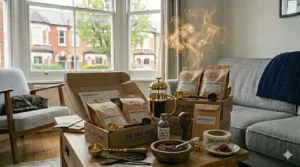
How to Choose a Weekly Coffee Subscription in the UK
- Work out your weekly usage first. Count cups per person per day, multiply by household size, and you’ll quickly see whether a 250g bag or a 1kg bag suits your pace.
- Match the format to your equipment. Beans need a grinder; ground coffee suits cafetières and filter machines; pods need a compatible machine — don’t subscribe to beans if nobody in the house owns a grinder.
- Check the cancellation process before signing up, not after. A genuinely flexible subscription lets you pause, skip, or cancel from your account without phoning anyone.
- Factor in storage realistically. If your kitchen is tight, smaller, more frequent bags beat one giant sack going stale in a cupboard.
- Decide how much “discovery” you actually want. If trying new origins excites you, a multi-roaster box earns its premium; if you’ve found your blend, stick with single-roaster or Subscribe & Save.
Common Mistakes When Buying a Weekly Coffee Subscription
The most common misstep is signing up for weekly delivery out of habit, then quietly drowning in unopened bags within a month — easily fixed by adjusting frequency in account settings rather than cancelling outright in frustration. A close second is ignoring grind compatibility: ordering whole beans with no grinder at home, or pre-ground coffee that’s the wrong fineness for an espresso machine, leads to disappointing cups that have nothing to do with the coffee’s actual quality.
UK buyers specifically tend to underestimate how quickly damp British kitchens degrade opened bags, blaming the brand for “going off” when poor storage is the real culprit. And plenty forget to check delivery thresholds: ordering a single low-cost bag from Amazon without hitting the free-delivery minimum, or assuming all roaster websites ship the same way (some serve England and Wales only, leaving Northern Ireland or remote Scottish postcodes as a surprise extra cost).
Weekly Coffee Subscription vs Supermarket Coffee vs Café Habit
| Option | Cost per Cup (approx.) | Freshness | Convenience |
|---|---|---|---|
| Weekly subscription | 25p–55p | High — roasted to order or recently packed | High, automated |
| Supermarket jar/bag | 15p–35p | Variable, often months old by purchase | High, but requires shop trips |
| Daily café coffee | £2.50–£4.50+ | Highest, made fresh per cup | Low — needs daily effort and queueing |
The maths here is fairly blunt: a daily café habit costs roughly ten times more per cup than even the priciest subscription on this list, while supermarket coffee wins on raw price but loses badly on freshness, since bags can sit on shelves for months before they even reach your trolley. A weekly subscription splits the difference rather neatly — proper freshness without remortgaging the house for your caffeine fix, which on a grey British Monday feels like the right trade-off.
What to Expect: Real-World Performance in British Conditions
Specs rarely mention the weather, but it matters more than people assume. Coffee beans are genuinely sensitive to humidity, and the UK’s damp climate — more drizzle than deep freeze — means an opened bag left near a steaming kettle or a draughty back door loses its edge faster than the same bag would in a drier climate. Letterbox-friendly packaging, which most UK subscriptions now use, helps here: it’s designed to seal tightly enough to survive sitting in a porch during a downpour without the contents turning soft or musty.
Shorter winter daylight hours also nudge UK drinking habits in a quietly measurable way — subscription services report a seasonal uptick in afternoon reorders through December and January, presumably because everyone’s reaching for an extra cup once it’s dark by 4pm. None of this changes which bean is “best,” but it does mean storage discipline matters more here than in, say, a dry Mediterranean kitchen.
Long-Term Cost & Value in the UK
Run the numbers over a year and the gap between options becomes clearer. A modest 250g weekly bag at the cheaper end of this list adds up to somewhere around £400–£550 annually, while a premium single-origin subscription at full size can edge towards £700–£900 a year for a similarly paced household. That sounds steep until you set it against a daily takeaway coffee habit, which easily clears £900–£1,300 a year even at modest café prices.
Remember, too, that Amazon.co.uk prices already include the standard 20% VAT, unlike US listings that often display pre-tax prices — so the figure on the page genuinely is what you pay, no surprise additions at checkout. Subscribe & Save discounts typically shave a further 5–15% off, which over a full year of weekly deliveries is not nothing.
Your Rights: UK Subscription Rules, Cooling-Off Periods & Caffeine Guidance
Under the Consumer Contracts Regulations, UK shoppers buying online — including subscription sign-ups — get a 14-day cooling-off period in which they can cancel without giving a reason, a notably stronger protection than exists in many other markets. Worth knowing, too: new UK rules on subscription contracts are set to tighten things further from spring 2027, requiring clearer renewal reminders and a genuinely straightforward online cancellation route, so the days of hunting for a hidden “unsubscribe” link should be numbered for any business operating in Britain.
On the health side, the Food Standards Agency advises that caffeine intakes up to roughly 400mg a day are unlikely to cause problems for most healthy adults — about four to five cups of instant coffee — while pregnant women are advised to stay closer to 200mg daily. Worth bearing in mind if your weekly subscription has crept from one cup a day to three without you quite noticing.
✨ Don’t Miss These Exclusive Deals!
🔍 Check current pricing and availability on Amazon.co.uk before they change — these subscriptions are popular for a reason.
FAQ
❓ Is a weekly coffee subscription worth it in the UK?
❓ How does Amazon Subscribe & Save work for coffee?
❓ Can I cancel a coffee subscription anytime in the UK?
❓ How much caffeine is safe to drink each day?
❓ Will my coffee subscription qualify for free delivery on Amazon.co.uk?
Conclusion
There’s no single “best” weekly coffee subscription, only the one that fits how your household actually drinks coffee — which, if you’ve made it this far, you probably now have a much better sense of. Budget households do well with Lavazza or Amazon’s own house blend; ethically minded drinkers lean towards Grind or Cafédirect; pod-machine households solve the whole question with Tassimo Kenco. What unites them all is the basic appeal of never standing at an empty cupboard on a Monday morning again.
Whichever you pick, remember you’re protected by genuine UK consumer rights if it isn’t right, and that the Food Standards Agency’s caffeine guidance is worth a glance if your weekly habit quietly becomes a daily one and a half. Coffee, in the end, should stay a small pleasure rather than a source of stress — and a subscription, set up properly, tends to keep it exactly that.
Recommended for You
- Best Single Origin Coffee Subscription UK 2026: 7 Top Picks
- Best Fortnightly Coffee Subscription UK 2026: 7 Top Picks
- Best Monthly Coffee Box UK 2026: 7 Brilliant Subscriptions Reviewed
Disclaimer: This article contains affiliate links. As an Amazon Associate, I earn from qualifying purchases. If you purchase products through these links, we may earn a small commission at no additional cost to you.
✨ Found this helpful? Share it with your mates! 💬🤗
