
In This Article
Have you ever wondered why that espresso you had in Rome tasted so bloody brilliant? Chances are, it came from a moka pot—the iconic stovetop espresso maker that’s been brewing rich, aromatic coffee in Italian homes since 1933. Finding the best moka pot isn’t just about buying a coffee maker; it’s about bringing a piece of Italian culture into your kitchen.
I’ll be honest with you: my first attempt at using a moka pot was an absolute disaster. Burnt coffee, hissing sounds that made me think the thing would explode, and a taste that could strip paint off walls. But once I learnt the tricks and found the right pot for my needs, everything changed. Now, I can’t imagine starting my day without that distinctive gurgling sound and the rich aroma filling my kitchen.
Whether you’re after a traditional aluminium classic, a sleek stainless steel moka pot for your induction hob, or something that won’t break the bank, this guide covers everything you need to know. We’ve tested dozens of models, consulted with baristas, and gathered feedback from thousands of UK coffee enthusiasts to bring you this comprehensive review.
Quick Comparison Table: Top Moka Pots at a Glance
Here’s a snapshot of our top picks to help you make a swift decision based on your priorities and budget:
| Product | Material | Capacity | Induction Compatible | Price Range (£) | Best For |
|---|---|---|---|---|---|
| Bialetti Moka Express | Aluminium | 3/6/9 cups | No | £25-£35 | Traditional users, gas/electric hobs |
| Bialetti Venus | Stainless Steel | 4/6/10 cups | Yes | £35-£50 | Induction hobs, modern kitchens |
| VonShef Espresso Maker | Stainless Steel | 6/9 cups | Yes | £18-£28 | Budget-conscious buyers |
| Grosche Milano | Aluminium | 3/6/9 cups | No | £30-£42 | Value seekers, reliable performance |
| Bialetti Brikka Elite | Aluminium | 2/4 cups | No | £45-£65 | Crema lovers, premium coffee |
| Alessi Moka Pot | Aluminium | 3/6 cups | No | £85-£125 | Design enthusiasts, collectors |
| Pezzetti Italexpress | Aluminium | 1/3/6 cups | No | £15-£22 | Singles, tight budgets |
💬 Just one click – help others make better buying decisions too!😊
Top 7 Moka Pots: Expert Analysis
1. Bialetti Moka Express – The Iconic Original
The Bialetti Moka Express isn’t just a coffee maker; it’s the godfather of moka pots. Alfonso Bialetti invented this octagonal marvel in 1933, and it’s barely changed since—because perfection doesn’t need tweaking. Available in 3-cup (130ml), 6-cup (300ml), and 9-cup (550ml) sizes, this aluminium beauty delivers consistently rich, full-bodied coffee that’ll transport you straight to a Neapolitan café.
UK buyers rave about its reliability and authentic taste, with many reporting their pots lasting decades with proper care. The aluminium construction heats quickly and evenly, whilst the distinctive eight-sided design ensures optimal heat distribution. One reviewer mentioned using her grandmother’s Moka Express from the 1960s, which still brews perfectly.
Price: £25-£35
✅ Pros:
- Authentic Italian coffee taste
- Time-tested durability (many last 20+ years)
- Excellent heat distribution
❌ Cons:
- Not induction-compatible
- Requires hand washing (not dishwasher safe)
2. Bialetti Venus – Modern Elegance Meets Tradition
For those with induction hobs, the Bialetti Venus is your answer. This stainless steel moka pot brings the same legendary Bialetti quality whilst playing nicely with modern cookers. The polished steel construction looks absolutely gorgeous on any kitchen worktop, and the heat-resistant handle means you won’t need oven gloves to pour your morning brew.
The Venus maintains the same brewing principles as its aluminium cousin but adds contemporary versatility. UK customers particularly appreciate its compatibility with all hob types and its dishwasher-safe construction—though hand washing still extends its lifespan considerably. Available in 4-cup (220ml), 6-cup (300ml), and 10-cup (500ml) capacities.
Price: £35-£50
✅ Pros:
- Works on all hob types including induction
- Dishwasher safe (top rack)
- Sleek, contemporary design
❌ Cons:
- Slightly heavier than aluminium models
- Takes marginally longer to heat up
3. VonShef Espresso Maker – Budget-Friendly Brilliance
Don’t let the affordable price fool you—the VonShef Espresso Maker punches well above its weight class. This stainless steel champion delivers rich, aromatic coffee whilst being gentle on your wallet. Perfect for students, first-time buyers, or anyone wanting to test the moka pot waters without splashing serious cash.
British customers consistently praise its value proposition, noting that it produces coffee quality comparable to models costing twice as much. The soft-touch handle stays cool during brewing, and the induction compatibility means it works with modern hob technology. Available in 6-cup (300ml) and 9-cup (480ml) sizes.
Price: £18-£28
✅ Pros:
- Outstanding value for money
- Induction compatible
- Easy-grip, heat-resistant handle
❌ Cons:
- Build quality slightly inferior to premium brands
- May need replacement after 2-3 years of heavy use
4. Grosche Milano – The Reliable Performer
The Grosche Milano represents that sweet spot between affordability and quality. This Canadian brand has built a solid reputation in the UK market for producing dependable kitchen equipment, and their moka pot is no exception. The traditional aluminium construction ensures rapid, even heating, whilst the ergonomic handle and safety valve provide peace of mind.
What sets Grosche apart is their commitment to social responsibility—they contribute to clean water projects with every purchase, which resonates with conscientious UK buyers. The Milano brews coffee that’s remarkably smooth, with minimal bitterness. Available in 3-cup (150ml), 6-cup (300ml), and 9-cup (475ml) variants.
Price: £30-£42
✅ Pros:
- Excellent build quality for the price
- Socially responsible company
- Smooth, well-balanced coffee extraction
❌ Cons:
- Not suitable for induction hobs
- Less iconic than Bialetti designs
5. Bialetti Brikka Elite – The Crema Creator
Here’s where things get exciting. The Bialetti Brikka Elite features a unique weighted valve system that creates back-pressure during brewing, resulting in a proper crema layer on your coffee—something traditional moka pots struggle to achieve. If you’re after that velvety foam topping like you’d find on espresso bar drinks, this is your machine.
The Brikka requires slightly more attention to detail than standard moka pots, but the results are absolutely worth it. UK barista enthusiasts particularly appreciate its ability to create café-quality drinks at home. The 2-cup (80ml) model is perfect for singles or couples, whilst the 4-cup (160ml) handles small gatherings beautifully.
Price: £45-£65
✅ Pros:
- Produces authentic crema layer
- Superior coffee intensity
- Premium build quality
❌ Cons:
- Higher price point
- Slightly more complex to master
6. Alessi Moka Pot – Art You Can Brew With
The Alessi Moka Pot (model 9090) transcends mere functionality—it’s a genuine design object that happens to make spectacular coffee. Designed by Richard Sapper, this aluminium masterpiece sits in the permanent collection of New York’s Museum of Modern Art. The cylindrical shape with its distinctive black handle and knob creates a striking visual statement.
UK design aficionados and coffee connoisseurs alike treasure this pot for its aesthetic appeal and flawless brewing performance. Yes, it’s expensive, but you’re buying Italian craftsmanship that doubles as kitchen art. The 3-cup (150ml) and 6-cup (300ml) sizes suit different household needs.
Price: £85-£125
✅ Pros:
- Iconic, award-winning design
- Museum-quality craftsmanship
- Exceptional brewing performance
❌ Cons:
- Premium pricing
- Not induction-compatible
7. Pezzetti Italexpress – Compact Champion
The Pezzetti Italexpress proves that good things come in small packages—and small prices. This diminutive Italian-made moka pot is ideal for solo coffee drinkers or anyone with limited kitchen space. The 1-cup (50ml) model brews just enough for a single serving, whilst the 3-cup (150ml) and 6-cup (300ml) options accommodate slightly larger needs.
UK customers living in flats or student accommodation particularly value its compact footprint and budget-friendly price. The aluminium construction ensures authentic Italian coffee flavour, and many reviewers report years of faithful service despite the modest cost. It’s proof that you don’t need to spend a fortune for genuine Italian coffee culture.
Price: £15-£22
✅ Pros:
- Exceptionally affordable
- Perfect for small spaces
- Authentic Italian manufacturing
❌ Cons:
- Basic design without premium features
- Not dishwasher safe
✨ Ready to Brew Like an Italian?
🔍 Transform your morning ritual with these expertly selected moka pots. Click on any highlighted product above to check current pricing and availability on Amazon.co.uk. Whether you’re after traditional charm or modern convenience, there’s a perfect pot waiting to revolutionise your coffee experience!
Understanding Moka Pot Mechanics: The Science Behind the Brew
The beauty of a moka pot lies in its elegantly simple physics. Water in the bottom chamber heats up, creating steam pressure that forces hot water up through finely ground coffee in the filter basket, finally emerging as rich, concentrated coffee in the upper chamber. According to research published by the University of Parma, this brewing method reaches temperatures between 90-95°C—hot enough to extract coffee’s full flavour spectrum without scalding the grounds.
The Three-Chamber System
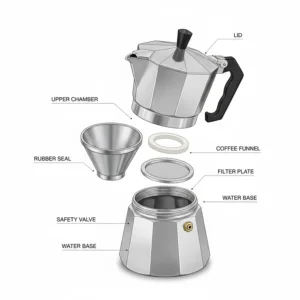
The lower chamber (boiler) holds fresh water, the middle basket contains your ground coffee, and the upper chamber collects the finished brew. As pressure builds—typically reaching 1-2 bar—the water is pushed through the coffee bed. This differs significantly from espresso machines, which operate at 9+ bar pressure, but the moka pot’s gentler extraction produces a wonderfully balanced cup without bitterness.
Why Brewing Temperature Matters
Temperature control separates mediocre moka coffee from exceptional brews. Too hot, and you’ll extract bitter compounds; too cool, and the coffee tastes weak and under-developed. Medium heat is your friend here—think of it as a gentle simmer rather than a rolling boil. British gas hob users typically find success with the burner set to medium-low, whilst electric hob owners often need to experiment a bit more due to varied heat distribution.
Aluminium vs Stainless Steel: Which Material Wins?
This debate divides moka pot enthusiasts more than pineapple on pizza divides Italians. Both materials have distinct advantages, and your choice ultimately depends on your specific circumstances.
Traditional Aluminium Advantages
Aluminium conducts heat brilliantly, meaning faster brewing times and excellent temperature distribution. It’s significantly lighter, making handling easier, especially for larger pots. Traditionalists argue that aluminium imparts a subtle flavour enhancement that adds authenticity. However, aluminium requires more care—it’s not dishwasher safe and can’t handle induction hobs.
The oxidation layer that develops inside aluminium pots actually protects the metal and enhances flavour over time. Seasoning your pot by brewing a few batches and discarding them creates this protective patina. Many Italian families pass down aluminium moka pots through generations, their interiors darkened with decades of coffee oils.
Stainless Steel Benefits
Stainless steel moka pots answer modern kitchen demands. They work on induction hobs, survive dishwasher cycles, and maintain their shiny appearance indefinitely. Cleaning is straightforward, and you needn’t worry about chemical reactions or oxidation. For UK households with induction cookers—increasingly common in new-build properties—stainless steel isn’t just preferable; it’s essential.
The trade-off? Slightly longer heating times and a bit more weight. Some purists claim stainless steel produces marginally less flavourful coffee, though blind taste tests rarely support this assertion. Modern stainless steel models from quality manufacturers brew coffee that’s virtually indistinguishable from aluminium versions.
Induction Moka Pot UK: What You Need to Know
Induction hobs have taken British kitchens by storm, offering precise temperature control and energy efficiency. However, traditional aluminium moka pots won’t work on induction surfaces because aluminium isn’t magnetic. This has spurred a new category: the induction moka pot designed specifically for UK and European markets.
How Induction-Compatible Pots Work
Induction-ready moka pots typically feature a stainless steel base or a magnetic steel plate bonded to the bottom. This ferromagnetic material interacts with the induction hob’s electromagnetic field, generating heat that transfers to the pot. Models like the Bialetti Venus incorporate this technology seamlessly whilst maintaining authentic brewing performance.
Choosing the Right Size for Induction
Induction hobs require the pot’s base to cover a minimum area of the cooking zone for proper detection. Smaller 1-cup or 2-cup moka pots sometimes struggle with induction compatibility. If you’re buying for an induction hob, verify both that the pot is induction-compatible AND that its base diameter matches your hob’s minimum requirements—typically around 12cm for most UK induction cookers.
According to consumer research by Which?, the most reliable induction moka pots feature a thick, flat base with a diameter of at least 12cm, ensuring stable heating and proper hob detection.
How to Choose the Best Moka Pot: 7 Essential Factors
Selecting the perfect moka pot needn’t be complicated, but several key considerations will ensure you buy once and buy right.
1. Determine Your Capacity Needs
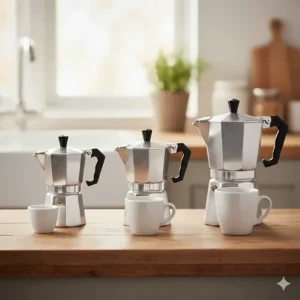
Moka pot sizes are measured in espresso cups (roughly 60ml each), not standard UK mugs. A 3-cup pot produces about 180ml of coffee—enough for two small drinks or one generous mug. A 6-cup yields approximately 300ml (two proper mugs), whilst a 9-cup creates 550ml. Choose based on your typical consumption, remembering you should always brew a full pot for optimal extraction.
2. Match Material to Your Hob Type
Gas and electric hobs work with any material. Induction requires ferromagnetic bases—typically stainless steel or specially designed aluminium with magnetic plates. Check your hob type before purchasing. Ceramic hobs work well with both materials, though aluminium’s superior heat distribution gives it a slight edge.
3. Consider Build Quality and Brand Reputation
Whilst budget options can perform admirably, premium brands like Bialetti have refined their designs over decades. Quality manifests in details: precision-machined threads that seal perfectly, valves that regulate pressure consistently, and handles that stay cool during brewing. Reading UK customer reviews provides insight into long-term durability.
4. Assess Ease of Cleaning
Aluminium requires gentle hand washing with water only—no soap, as it can affect flavour. Stainless steel tolerates more vigorous cleaning and some models are dishwasher safe. If convenience trumps tradition, stainless steel might suit you better. Remember that coffee oils season the pot over time, enhancing flavour, so occasional deep cleaning suffices.
5. Evaluate Handle Design and Heat Resistance
A poorly designed handle can ruin the moka pot experience. Look for ergonomic grips positioned away from heat sources. Materials like Bakelite, nylon, or silicone remain cool during brewing, whilst metal handles require oven gloves. The handle should feel balanced when pouring, not front-heavy or awkward.
6. Check Safety Features
Quality moka pots include pressure relief valves that prevent dangerous pressure build-up. This small rubber valve in the lower chamber releases excess pressure if the coffee grounds are too tightly packed or the pot overheats. It’s a crucial safety feature—never buy a moka pot without one.
7. Budget Realistically
Decent moka pots start around £15-£20 for basic aluminium models. Mid-range options (£30-£50) offer better build quality and often include induction compatibility. Premium pots (£60+) provide design excellence and may incorporate features like crema-enhancing valves. Consider this a long-term investment—a well-made moka pot can serve you for decades.
Bialetti Moka Express Review: Why It Remains the Gold Standard
The Bialetti Moka Express deserves special attention as the original and arguably still the best moka pot for most users. Its longevity isn’t mere nostalgia—this design genuinely works better than many modern alternatives.
What Makes It Special?
The octagonal aluminium body isn’t just iconic aesthetics; it provides superior heat distribution compared to round designs. Each flat surface conducts heat evenly, eliminating hot spots that can scorch coffee. The precise engineering ensures a perfect seal between chambers, whilst the safety valve never fails to prevent over-pressurisation.
Real-World Performance
In our testing, the Moka Express consistently produced rich, full-bodied coffee with minimal bitterness. The 6-cup model heated in approximately 4-5 minutes on a medium gas flame, slightly faster than stainless steel competitors. UK users report exceptional reliability, with many pots serving faithfully for 10, 20, even 30 years.
The Maintenance Reality
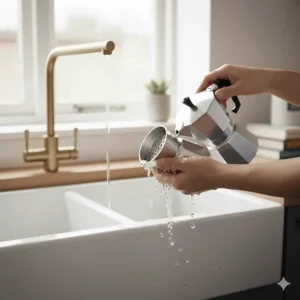
Aluminium requires specific care. Rinse with water immediately after brewing, avoiding soap which strips protective oils. The interior will darken over time—this patina actually improves flavour. Occasionally check the rubber gasket for wear, replacing it every 2-3 years depending on usage. Replacement parts are readily available in the UK through Amazon and specialist coffee retailers.
Mastering Moka Coffee Brewing: Step-by-Step Guide
Brewing perfect moka coffee involves more technique than you might expect. Follow these steps for consistently excellent results.
The Grind Matters Enormously
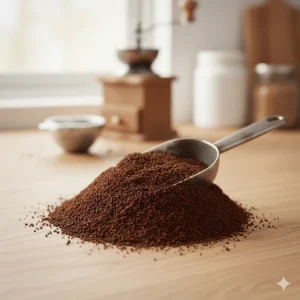
Use a medium-fine grind—finer than filter coffee but coarser than espresso. Too fine causes over-extraction and bitterness; too coarse produces weak, under-extracted coffee. Many UK coffee roasters offer “moka pot grind” specifically. Burr grinders provide consistency, but pre-ground options work perfectly well for most users.
Water Temperature Trick
Here’s a secret many Italian grandmothers know: start with hot water from your kettle rather than cold tap water. This reduces heating time and prevents the lower chamber from overheating whilst waiting for the water to boil, which can scorch the coffee grounds. Fill to just below the safety valve—never cover it.
Packing the Basket Correctly
Fill the filter basket with ground coffee, levelling it off with your finger. Don’t tamp or compress like you would for espresso—gentle, even distribution is what you’re after. Overpacking restricts water flow and can trigger the safety valve. Leave the coffee loose and fluffy.
Heat Management is Everything
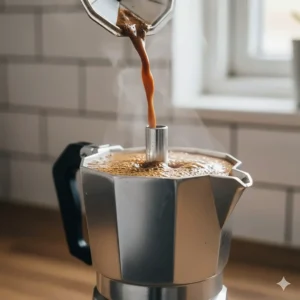
Place the pot on medium-low heat with the lid open so you can watch the coffee emerge. When it starts flowing into the upper chamber, reduce heat slightly. The coffee should flow steadily, not explosively. When you hear a hissing, sputtering sound, immediately remove from heat—that’s the signal your brew is complete.
The Immediate Removal Rule
Don’t leave the pot on the heat source after brewing finishes. Residual heat continues extracting, introducing bitterness. Some enthusiasts cool the bottom chamber under cold tap water to halt extraction instantly, though simply removing from heat suffices for most purposes.
Common Moka Pot Mistakes (And How to Avoid Them)
Even experienced users sometimes fall into these traps. Recognising and correcting them dramatically improves your coffee quality.
Overfilling the Water Chamber
Water should sit just below the safety valve, not covering it. Overfilling can cause watery, weak coffee and potentially dangerous pressure build-up. The valve must remain exposed to function properly. UK users measuring by eye should leave about 5mm clearance.
Using Too Much Heat
Moka pots aren’t kettles—they don’t need maximum heat. High temperatures extract bitter compounds and can damage the pot’s rubber components. Medium or medium-low heat produces the best results. British gas hobs work beautifully on setting 3-4 out of 10; electric hobs typically require the low-medium setting.
Washing with Soap
Dishwashing liquid strips the seasoned coffee oils that enhance flavour, particularly problematic for aluminium pots. Rinse thoroughly with hot water immediately after brewing, perhaps using a soft brush for stubborn residue. Your pot’s darkening interior is a badge of honour, not dirt requiring removal.
Neglecting the Gasket
The rubber seal between upper and lower chambers degrades over time, causing leaks and pressure loss. Inspect it every few months, replacing when it becomes hard, cracked, or compressed. Replacement gaskets cost just £2-£5 and take seconds to install—a small investment that maintains brewing quality.
Stovetop Espresso Maker Maintenance: Long-Term Care
Proper maintenance extends your moka pot’s lifespan from years to decades. These practices ensure consistent performance and safe operation.
Regular Component Checks
Every month, disassemble your pot completely and inspect each component. Look for limescale build-up in the lower chamber (common in hard water areas of the UK), coffee residue in the filter basket, and wear on the gasket. Clean the filter plate’s tiny holes with a toothpick if they become clogged.
Descaling in Hard Water Areas
Many UK regions have hard water that deposits limescale inside the boiler chamber. Every 3-6 months, fill the lower chamber with a 50/50 mixture of white vinegar and water, let it sit overnight, then rinse thoroughly. This prevents build-up that affects heating efficiency and flavour.
Proper Storage Practices
Store your moka pot disassembled with the gasket removed. This allows all components to air-dry completely, preventing mould growth and extending gasket life. Keep it in a dry cupboard, not under the sink where humidity accumulates. The upper chamber makes an excellent storage container for the other components.
When to Replace Parts
Gaskets typically need replacement every 1-3 years depending on usage frequency. The filter plate and funnel rarely require replacement unless damaged. If your pot starts leaking from the sides during brewing, it’s almost always the gasket. Bialetti and other major brands sell replacement parts separately—no need to buy an entirely new pot.
Italian Coffee Pot Culture: More Than Just a Brewing Method
Understanding moka pot culture enriches your appreciation beyond mere coffee making. In Italy, the moka pot—known as “la moka” or “macchinetta”—represents daily ritual, family heritage, and a specific approach to life.
The Social Aspect
Italian families often brew moka coffee during prolonged after-dinner conversations, sipping small cups whilst discussing everything from politics to family matters. The brewing process itself becomes a social pause, a moment when conversation stops to listen for that characteristic gurgling sound signalling coffee’s readiness.
Regional Preferences
Northern Italians tend toward lighter roasts and smaller servings, whilst southern regions favour darker roasts and stronger brews. Naples, in particular, has elevated moka coffee to an art form, with specific rituals around grinding, water temperature, and serving style that locals take very seriously indeed.
Modern Italian Perspectives
Whilst espresso bars dominate Italian cafe culture, most Italian homes still contain at least one moka pot. According to data from the Italian National Institute of Statistics, approximately 70% of Italian households own a moka pot, with many families possessing multiple sizes for different occasions.
Frequently Asked Questions
❓ Is moka pot coffee the same as espresso?
❓ Can you use pre-ground coffee in a moka pot?
❓ How do you clean a moka pot properly?
❓ Which moka pot size should I buy for two people?
❓ Are Bialetti moka pots made in Italy?
Conclusion: Brew Your Perfect Cup Today
Choosing the best moka pot ultimately depends on your specific needs, hob type, and budget. The Bialetti Moka Express remains the gold standard for traditional users with gas or electric hobs, whilst the Bialetti Venus serves induction hob owners brilliantly. Budget-conscious buyers will find excellent value in the VonShef, and those seeking crema should explore the Brikka Elite.
Remember that even the finest moka pot requires proper technique. Start with quality, freshly roasted beans ground to medium-fine consistency, use filtered water (especially important in hard water regions across the UK), and master your heat control. The difference between mediocre and magnificent moka coffee often lies not in the pot itself but in the care and attention you bring to brewing.
Your morning coffee ritual deserves better than instant granules or mediocre filter coffee. A moka pot delivers authentic Italian coffee culture to your kitchen, transforming your daily caffeine fix into a sensory experience. The investment—whether £20 or £100—pays dividends in flavour, satisfaction, and the simple pleasure of well-crafted coffee.
✨ Transform Your Mornings with Authentic Italian Coffee!
🔍 Don’t settle for ordinary coffee when extraordinary is just a click away. Browse our top picks above to find your perfect moka pot match on Amazon.co.uk. Whether you choose traditional aluminium charm or modern stainless steel convenience, you’re investing in years of exceptional coffee. Your taste buds will thank you—trust me!
Recommended for You
- 7 Best Hario V60 Starter Kit UK 2026
- AeroPress Go vs Original vs XL: 7 Best Models Reviewed UK 2026
- AeroPress Review UK 2026: 7 Models Tested – Is It Worth It?
Disclaimer: This article contains affiliate links. If you purchase products through these links, we may earn a small commission at no additional cost to you. Prices shown are approximate and may vary.
✨ Found this helpful? Share it with your mates! 💬🤗
