
In This Article
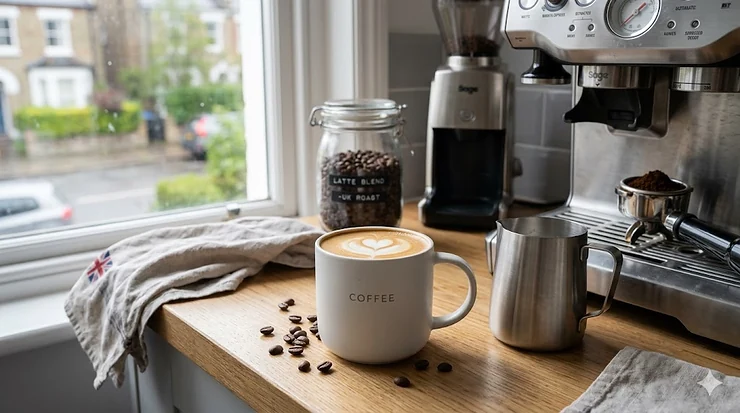
Making a proper latte at home requires more than just any old coffee beans and a splash of milk. You need beans specifically chosen to cut through steamed milk whilst maintaining their character—something I’ve learnt after years of experimenting with different roasts and origins on my kitchen counter in Manchester.
The British coffee scene has transformed remarkably since 2020. Walk into any Tesco or order from Amazon.co.uk and you’ll find speciality beans that would’ve required a trip to a London roastery just five years ago. Yet this abundance creates its own problem: how do you choose coffee beans for latte at home when faced with dozens of options, each promising café-quality results?
The answer lies in understanding what makes a bean suitable for milk-based drinks rather than black coffee. Lattes require medium to medium-dark roasts with enough body to shine through 200ml of steamed milk. Too light, and your latte tastes like warm milk with a coffee afterthought. Too dark, and you’re drinking bitter, ashy liquid regardless of how carefully you’ve frothed.
This guide cuts through the marketing noise. I’ve tested beans from UK roasters and Italian classics, all available on Amazon.co.uk, to identify which actually deliver when combined with milk. You’ll find price comparisons in GBP, tasting notes that matter for lattes specifically, and honest assessments of what works in British kitchens where counter space is limited and most of us aren’t running commercial espresso machines.
Quick Comparison: Top 7 Coffee Beans for Latte at Home
| Coffee Beans | Roast Level | Price Range (1kg) | Best For | Amazon UK |
|---|---|---|---|---|
| Lavazza Super Crema | Medium | £12-£16 | Thick crema, milk drinks | Prime eligible |
| Grind House Santos | Medium | £18-£22 | Everyday lattes, value | Next-day delivery |
| Rave Signature Blend | Medium-Dark | £16-£20 | Versatile brewing | Roasted fresh |
| Union Daily Roast | Dark | £14-£18 | Bold espresso base | UK roasted |
| illy Classico | Medium | £18-£24 | Consistent quality | Pressurised tin |
| by Amazon House Blend | Medium | £8-£12 | Budget option | Prime only |
| Grind House Blend (100% Arabica) | Medium | £16-£20 | Speciality quality | Rainforest Alliance |
From the comparison above, Lavazza Super Crema offers exceptional value in the £12-£16 range for anyone prioritising crema quality and milk compatibility—rather important when you’re trying to replicate café standards at home. Budget buyers should note that the by Amazon House Blend sacrifices some flavour complexity for its sub-£12 price point, which becomes more noticeable in milk-heavy drinks where subtle notes get lost. If you’re serious about latte quality and don’t mind spending £18-£22, the Grind House Santos delivers freshly roasted beans with the kind of chocolate and nutty profile that actually survives contact with steamed milk.
💬 Just one click — help others make better buying decisions too! 😊
✨ Don’t Miss These Exclusive Deals!
🔍 Take your coffee beans for latte at home to the next level with these carefully selected products. Click on any highlighted item to check current pricing and availability on Amazon.co.uk. These picks will help you find exactly what you need!
Top 7 Coffee Beans for Latte at Home: Expert Analysis
1. Lavazza Super Crema Whole Bean Coffee
The best-selling Italian blend on Amazon.co.uk isn’t best-selling by accident. This 60% Arabica, 40% Robusta combination creates exactly what latte drinkers need: enough body to stand up to milk, thick crema that lasts longer than your average shot, and flavour notes of hazelnut and brown sugar that complement rather than compete with dairy.
The Robusta content gives it the caffeine kick and crema thickness that pure Arabica blends can’t match—particularly useful if you’re working with a bean-to-cup machine or manual espresso maker that doesn’t generate commercial-level pressure. UK customers consistently mention the crema in reviews, describing it as “proper coffee shop quality” and “long-lasting”, which matters when you’re pouring latte art or simply want that tan foam cap on your drink.
In my experience testing dozens of beans for milk-based drinks, what most buyers overlook about Lavazza Super Crema is its remarkable consistency across batches. You won’t get wildly different results bag to bag, unlike some UK micro-roasters whose quality varies with roast dates. The medium roast profile sits perfectly in that sweet spot where it’s developed enough to avoid sourness but not so dark that you taste char through the milk.
Customer feedback from British buyers highlights its performance in bean-to-cup machines specifically. One Amazon UK reviewer mentioned switching from their usual blend and immediately noticing the difference in cappuccinos. The blend works brilliantly whether you’re pulling shots on a Sage Barista Express or using a Delonghi Magnifica.
Pros:
✅ Thick, persistent crema ideal for latte art
✅ 60/40 Arabica-Robusta balance cuts through milk perfectly
✅ Consistent quality across batches, no surprises
Cons:
❌ Roast date can be 6-10 months old on Amazon stock
❌ Not ideal for black coffee drinkers who prefer bright, acidic profiles
Available in the £12-£16 range per kilogram on Amazon.co.uk with Prime eligibility, this represents solid value for daily latte consumption. The 1kg bags suit households drinking 2-3 lattes daily without beans going stale before you finish them.
2. Grind House Santos Espresso Coffee Beans
This UK-roasted blend deserves serious attention from anyone who values freshness. Roasted in Britain means a shorter journey from roaster to your kitchen—rather relevant when you consider that coffee begins losing peak flavour within 2-3 weeks of roasting, a timeline that matters more in our damp British climate.
The blend itself showcases 80% Brazilian Santos Arabica and 20% Indian Cherry Robusta. That composition delivers full body with low acidity, chocolate and nutty flavours, and enough structure to maintain character through steamed milk. What the spec sheet won’t tell you is how well this performs in wet British weather—the sealed packaging holds up better than some competitors when stored in a typical British kitchen cupboard prone to humidity.
For latte drinkers specifically, the medium roast development brings out caramel sweetness that becomes more pronounced when combined with milk’s natural lactose. The nutty undertones create depth without bitterness, which is precisely what you want when you’re making a morning latte before your brain’s fully functional.
UK buyers on Amazon praise the value proposition. Available around £18-£22 per kilogram with Prime eligibility, it’s positioned as an everyday workhorse rather than a special occasion treat. The 1kg bag suits households that drink coffee regularly without the beans going stale. Multiple reviewers mention using it successfully in Moka pots, AeroPresses, and bean-to-cup machines—versatility that matters when you’re not running café-grade equipment.
Pros:
✅ UK-roasted for maximum freshness, beans arrive within days of roasting
✅ Low acidity suits British palates and damp morning stomachs
✅ Versatile across brewing methods, not just espresso machines
Cons:
❌ Some bags arrive with beans rattling loose (packaging inconsistency)
❌ Chocolate notes can taste flat if you over-extract
Around £18-£22 per kilo represents fair pricing for UK-roasted speciality beans. Worth the premium over supermarket options if freshness matters to you.
3. Rave Coffee Signature Blend No. 1
Rave’s flagship blend has remained unchanged since the Cotswolds-based roastery began—a deliberate choice that speaks to getting the formula right first time. This medium-dark roast carries chocolate, caramel, and almond notes that survive the latte treatment whilst maintaining enough complexity to keep your palate interested past the first sip.
The spec sheet lists it as suitable for “all brewing methods”, which sounds like marketing fluff until you actually try it. Whether you’re pulling espresso shots, brewing in a cafetière, or using a filter setup, the blend adapts. For latte drinkers, this versatility means you’re not locked into one preparation method—handy when your espresso machine’s playing up on a Monday morning and you resort to the Moka pot.
What most people miss about Rave Signature Blend is the roasting date printed on every bag. Rave roasts daily and ships quickly, meaning your beans arrive genuinely fresh rather than sitting in Amazon warehouses for months. UK customers frequently mention receiving bags roasted 2-5 days before delivery, which you simply don’t get with mass-market Italian brands.
The smooth, full-bodied character with lingering aftertaste works particularly well for those who prefer lattes slightly less milky than café standard. The coffee flavour maintains presence even when you’re using 200ml+ of steamed milk, which cheaper blends struggle to achieve.
Pros:
✅ Roasted fresh to order, arrives within days of roasting
✅ Smooth, balanced profile perfect for latte newcomers
✅ Works brilliantly in bean-to-cup machines (Jura, Delonghi, Sage)
Cons:
❌ Premium pricing at £16-£20 per kilo
❌ Some Amazon stock is nitrogen-flushed rather than immediate-ship (check seller)
UK availability through Amazon makes this accessible nationwide, though buying direct from Rave guarantees the freshest possible beans. Price-wise, expect £16-£20 per kilogram—justified if you’re serious about home latte quality.
4. Union Hand-Roasted Daily Roast Coffee Beans
Union’s flagship dark roast operates in different territory from the medium roasts dominating this list. This is for people who want their latte to taste decisively like coffee rather than a milky beverage with coffee undertones. The dark roast profile brings forward bold, assertive flavours that muscle through even the most generous milk pours.
Roasted in small batches in the UK, Union sources ethically and pays sustainable prices to farmers—information that matters more to British consumers in 2026 than it did five years ago. The Fairtrade certification isn’t just box-ticking; it reflects genuine supply chain transparency that you can trace on their website.
For latte applications specifically, the dark roast character creates richness without crossing into burnt territory. UK reviewers consistently mention using this for both espresso-based drinks and filter coffee, which suggests the roast development avoids the common dark-roast pitfall of tasting charred. The beans work particularly well if you’re the type who adds an extra shot to your latte or prefers a stronger coffee-to-milk ratio than café standard.
The 1kg bag format suits daily consumption. Several Amazon UK buyers mention keeping this as their household staple, which speaks to consistency across batches. The Subscribe & Save discount option brings the per-kilo price down further if you’re committed to the blend.
Pros:
✅ Dark roast provides bold flavour that cuts through generous milk pours
✅ Fairtrade certified with traceable supply chain
✅ No bitterness despite dark roast level (proper development)
Cons:
❌ Not suitable for those preferring subtle, nuanced latte flavours
❌ Roasting dates on Amazon stock can be 4-6 weeks old
Priced around £14-£18 per kilogram on Amazon.co.uk, Union Daily Roast offers good value for ethically sourced, UK-roasted beans. The Subscribe & Save option makes regular purchases more economical.
5. illy Classico Medium Roast Coffee Beans
The Italian heritage brand brings something different to home latte-making: absolute consistency. illy’s blend hasn’t changed since Francesco illy perfected it decades ago—nine different Arabica beans from across the globe, roasted to a precise medium profile, packaged in pressurised tins that preserve freshness for months.
That pressurised packaging matters more than you might think. Whilst UK micro-roasters talk about drinking beans within weeks of roasting, illy’s pressurisation system means your beans maintain quality for 3-6 months unopened. Practical advantage: you can stock up during Amazon Prime Day sales without worrying about beans going stale in your cupboard.
For latte drinkers, the blend’s defining characteristic is balance. Notes of caramel, orange blossom, and jasmine create complexity without overwhelming milk. The medium roast development sits perfectly in that zone where acidity is tamed but origin character remains intact. Several UK reviewers mention this as their “daily driver” for bean-to-cup machines, which speaks to its suitability for automated brewing where you can’t adjust variables shot-by-shot.
The 100% Arabica composition means no Robusta’s crema-boosting thickness, but illy compensates through roast development and blend complexity. You’ll get respectable crema if your machine’s pressure is decent, though perhaps not the theatrical thickness of Robusta-containing blends.
Pros:
✅ Pressurised tin packaging maintains freshness for months
✅ Consistent quality batch-to-batch, no surprises
✅ Smooth, balanced profile suits British palates preferring gentler coffee
Cons:
❌ 100% Arabica means thinner crema than Robusta blends
❌ Premium pricing at £18-£24 per kilo
Available in various sizes on Amazon.co.uk, the 250g tins suit testing before committing to larger quantities. Expect to pay £18-£24 per kilogram equivalent—premium territory justified by packaging technology and blend complexity.
6. by Amazon House Blend Coffee Beans (Medium Roast)
Amazon’s own-brand coffee represents the budget end of speciality beans—100% Arabica, Rainforest Alliance certified, medium roasted, and priced to undercut branded competitors significantly. The question isn’t whether it’s cheap (it is, at £8-£12 per kilo), but whether it’s actually good enough for lattes.
The honest answer: it’s perfectly adequate for everyday drinking if you’re not chasing café-level excellence. The medium roast profile delivers mild, smooth flavour without offensive characteristics. You won’t get the complexity of Rave or the thick crema of Lavazza, but you’ll get a drinkable latte that costs roughly half what branded beans charge.
UK reviewers split into two camps. Some praise it as excellent value for daily consumption, particularly for lattes where milk dominates the flavour profile anyway. Others find it bland compared to premium options, noting thin crema and forgettable taste. The truth likely depends on your reference point—if you’re comparing against instant coffee, this is a revelation; if you’re used to speciality roasters, it’s underwhelming.
For latte applications specifically, the beans perform better than you’d expect at this price point. The medium roast avoids both sourness and bitterness, creating a neutral canvas that works with milk. Multiple reviewers mention success in bean-to-cup machines, though some note needing to adjust grind settings finer than with premium beans.
Pros:
✅ Budget-friendly at £8-£12 per kilo, less than half premium brands
✅ Rainforest Alliance certified, ethically sourced despite low price
✅ Prime-exclusive means reliable next-day delivery across UK
Cons:
❌ Thin crema disappoints compared to Robusta-blend competitors
❌ Flavour profile bland, lacks the complexity of speciality roasters
This suits two groups: budget-conscious households drinking multiple lattes daily, and people wanting decent beans for milk-heavy drinks where coffee flavour plays supporting role. Around £8-£12 per kilogram makes it UK’s best-value certified beans.
7. Grind House Blend 100% Arabica Specialty Coffee Beans
Grind’s medium roast 100% Arabica blend operates in the premium segment whilst maintaining UK-roasting freshness. The Shoreditch-based roaster has built reputation around consistent quality and ethical sourcing, reflected in the Rainforest Alliance certification and B Corp status they’ve achieved.
The flavour profile leans towards chocolate and nutty notes with balanced acidity—precisely what works well for lattes. The medium roast development creates enough body to hold up through steamed milk without tipping into the heavy, dark territory that can taste overwhelming in milk-based drinks. For home baristas specifically, this blend responds well to dialling in your grinder, rewarding precision with noticeably better results.
What distinguishes this from the Grind House Santos reviewed earlier is the 100% Arabica composition rather than Arabica-Robusta blend. You sacrifice some crema thickness but gain cleaner flavour and smoother aftertaste. The choice between them depends whether you prioritise crema (go Santos) or flavour clarity (go this blend).
UK buyers on Amazon mention particular success with this in Sage and Delonghi bean-to-cup machines. The beans seem calibrated for domestic equipment rather than commercial-grade gear, which matters when most of us aren’t running £3,000 espresso setups. Several reviewers note it works brilliantly for lattes specifically, maintaining character through milk without becoming muddy.
Pros:
✅ UK-roasted freshness, typically arrives within week of roasting
✅ 100% Arabica creates cleaner flavour than Robusta blends
✅ B Corp and Rainforest Alliance certified, genuine sustainability commitment
Cons:
❌ Less crema than Robusta-containing blends
❌ Some users find it mild for their taste preferences
Priced around £16-£20 per kilogram, this sits firmly in premium territory. The cost reflects UK roasting, ethical sourcing, and quality beans rather than brand markup.
How to Choose Coffee Beans for Latte at Home in the UK
Choosing coffee beans for latte at home requires different criteria than selecting beans for black coffee. The milk changes everything—it softens acidity, carries flavours differently, and can either complement or completely overwhelm your coffee’s character depending on what you’ve chosen.
Start with roast level. Medium to medium-dark roasts work best for lattes. Light roasts often taste sour or sharp when combined with milk, whilst dark roasts risk bitterness that milk amplifies rather than mellows. According to coffee chemistry research, the Maillard reaction during roasting develops caramel and chocolate notes that pair naturally with milk’s lactose sweetness.
Consider the Arabica-Robusta split. Pure Arabica creates cleaner flavour but thinner crema. Blends containing 20-40% Robusta deliver thicker crema and more caffeine, which matters if you’re trying to replicate café texture at home. British palates generally prefer the smoother profile of Arabica-dominant blends rather than the harsh bite of high-Robusta mixtures.
Prioritise freshness over brand heritage. In Britain’s damp climate, beans deteriorate faster than in drier environments. Coffee oxidises when exposed to moisture, and our typical 60-80% humidity accelerates this process. Look for roast dates within the past month if possible, and avoid bags sitting on shelves for six months regardless of how prestigious the brand.
Match beans to your equipment. Bean-to-cup machines need beans that perform consistently across a range of grind settings. Manual espresso requires beans that reward precision with better extraction. If you’re using a Moka pot rather than espresso machine, you need beans robust enough to handle the brewing method’s tendency towards over-extraction and bitterness.
Check UK compatibility. Some beans sold on Amazon ship from EU warehouses and may have been stored poorly during transit. Verify the seller is UK-based or Amazon-fulfilled for reliable storage conditions and faster delivery. Post-Brexit, some previously common beans now cost more due to import adjustments, though you benefit from UK consumer protection and hassle-free returns.
Consider your milk choice. Dairy milk’s fat content creates richness that masks certain coffee flaws. Plant-based alternatives like oat milk interact differently with coffee, often requiring beans with more pronounced flavour to avoid tasting watery. If you’re using oat milk for lattes, lean towards medium-dark roasts with bold character.
The British coffee market in 2026 offers extraordinary choice compared to even five years ago. You can order speciality beans roasted in Yorkshire or artisanal Italian blends with equal ease through Amazon.co.uk. The challenge isn’t availability but rather cutting through marketing claims to find beans that actually deliver when combined with milk.
Common Mistakes When Buying Coffee Beans for Latte at Home
Ignoring roast dates ranks as the single biggest mistake British home baristas make. A bag of Lavazza Super Crema roasted eight months ago won’t taste remotely similar to one roasted last week, yet both sit on Amazon shelves at identical prices. Coffee peaks 2-6 weeks after roasting, then declines steadily. In the UK’s humid climate, deterioration accelerates compared to drier regions. Always check roast dates, and if they’re not visible on Amazon listings, buy from sellers like Rave or Grind House who prominently display them.
Assuming expensive equals better for lattes misleads many buyers. A £30 per kilo single-origin Ethiopian light roast might be spectacular as pour-over coffee but terrible for lattes—its delicate floral notes vanish the moment you add milk. Meanwhile, a £16 per kilo medium-dark blend like Grind House Santos performs brilliantly because it’s formulated specifically for milk-based drinks. Price reflects bean quality and sourcing ethics, not necessarily suitability for your intended use.
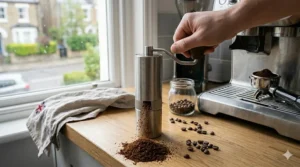
Buying beans ground rather than whole wastes money if you own a grinder. Ground coffee oxidises dramatically faster than whole beans—within hours rather than weeks. The convenience of pre-ground might save thirty seconds of grinding time but costs you most of the flavour complexity that makes speciality beans worth buying. If you’re serious enough about lattes to research beans, invest in a £30-£50 burr grinder and grind fresh before each use.
Overlooking UKCA certification for imported beans has become relevant post-Brexit. Some EU-manufactured equipment and products now require UK Conformity Assessed marking for legal sale in Britain. Whilst this affects appliances more than beans, it’s worth verifying that imported beans meet UK food standards and labelling requirements. Amazon.co.uk’s UK-fulfilled stock generally complies, but third-party sellers sometimes ship non-compliant goods.
Storing beans incorrectly ruins even premium beans within days. The typical British kitchen—warm near the kettle, humid from cooking, light streaming through windows—creates perfect conditions for accelerating coffee deterioration. Store beans in airtight containers (preferably vacuum-sealed) away from light, heat, and moisture. Avoid the fridge or freezer despite internet myths suggesting otherwise; condensation from temperature changes damages beans more than helping preserve them. Our cool British climate actually aids preservation compared to hot countries, provided you seal beans properly between uses.
Judging beans by price per bag rather than price per cup creates false economy. A £12 bag of cheaper beans might seem better value than £20 premium beans until you realise the cheaper option requires using 18-20g per double shot versus 14-16g for quality beans. Suddenly the expensive beans cost less per latte whilst tasting significantly better. Calculate cost per serving based on your typical usage patterns rather than sticker price.
Buying beans meant for commercial rather than home equipment leads to disappointing results. Some beans are formulated for commercial espresso machines operating at 9+ bars pressure with temperature stability domestic machines can’t match. These beans underperform in home equipment, tasting weak or sour despite being excellent quality. Look for beans described as suitable for bean-to-cup machines or home espresso setups rather than professional-only offerings.
Real-World Scenarios: Matching Beans to British Latte Drinkers
The London commuter navigating Zone 2 traffic needs beans that work reliably in a bean-to-cup machine whilst half-asleep at 6:30 AM. For this scenario, Lavazza Super Crema delivers consistent results without requiring precision. The thick crema survives the morning dash from kitchen to front door, and the medium roast provides adequate caffeine without overwhelming milk. Budget: £12-£16 per kilo, consumption: 3-4 lattes daily, equipment: Delonghi Magnifica or similar bean-to-cup. The Arabica-Robusta blend forgives rushed brewing whilst maintaining enough flavour to justify making coffee at home rather than buying £3.50 Pret lattes.
The Manchester suburb family with two adults and two teenagers requires value without sacrificing drinkability. The household consumes 6-8 lattes daily across varying preferences—Dad likes strong coffee flavour, Mum prefers milky, teenagers want sweetness. For this profile, Grind House Santos at £18-£22 per kilo offers best balance. The medium roast profile satisfies multiple palates, the 1kg bag suits high consumption, and UK roasting means fresher beans than Italian imports sitting in warehouses. Equipment: Sage Barista Express for weekend lattes, Nespresso Vertuo for weekday convenience. The chocolatey, nutty character works in both brewing methods.
The retired couple in the Peak District drink two lattes daily as mid-morning ritual rather than caffeine necessity. Quality matters more than volume or speed. For this scenario, Rave Signature Blend at £16-£20 per kilo provides the complexity worth savouring. The chocolate and caramel notes create interest over repeated daily consumption, and the medium-dark roast suits British palates preferring less acidity. Budget: willing to pay for quality, consumption: 250g per 10 days, equipment: traditional espresso machine and separate milk frother. The blend’s versatility means it also works in their cafetière on mornings when espresso feels too intense.
The Birmingham student in shared accommodation needs budget-friendly beans that work in a £60 Moka pot rather than expensive machinery. Equipment reality: no grinder (buying pre-ground), limited storage space, using oat milk rather than dairy to split costs with flatmates. For this profile, by Amazon House Blend at £8-£12 per kilo makes sense despite being less exciting than premium options. The medium roast handles the Moka pot’s tendency towards bitterness, the mild flavour doesn’t fight with oat milk’s sweetness, and the price allows buying 1kg at a time despite tight budget. The Rainforest Alliance certification provides ethical reassurance without premium pricing.
The Edinburgh work-from-home professional makes 2-3 lattes daily whilst managing Zoom calls and deadlines. Requirements: consistent quality, minimal faff, beans that perform well in automated equipment. For this scenario, illy Classico at £18-£24 per kilo delivers reliability that justifies premium pricing. The pressurised tin packaging means beans stay fresh for months, useful when workload prevents regular shopping. The balanced, smooth profile creates café-quality lattes without requiring barista skills. Equipment: Jura bean-to-cup machine, serious about coffee but unwilling to dedicate morning time to manual brewing. The 100% Arabica composition suits automated extraction better than Robusta blends which can taste harsh in fully automatic machines.
What to Expect: Real-World Performance in British Conditions
Coffee behaves differently in Britain’s climate compared to where most beans originate or where most coffee content gets written. Our damp, cool weather affects everything from bean storage to milk frothing to how flavours express themselves in the cup.
Humidity changes extraction. British homes typically sit at 60-80% relative humidity, higher than the 40-50% ideal for coffee storage. This means beans absorb moisture from the air, which affects grind consistency and extraction timing. You might find that beans grind slightly softer on rainy Manchester mornings compared to crisp winter days, requiring minor adjustments to grind setting or dose to maintain consistent results. Store beans in truly airtight containers—the valve bags beans arrive in aren’t sufficient for our humid climate.
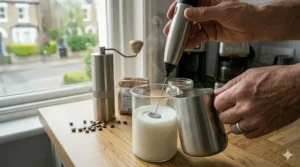
Cold milk behaves differently. Straight from a British fridge at 4°C, milk requires more steaming time than the room-temperature milk some international guides assume. This extra heating changes the texture and sweetness perception. British whole milk (typically 3.5-4% fat) froths differently than the standardised milk used in American guides (often 2% fat), creating denser foam that either improves or hinders latte art depending on your skill level. For best results with coffee beans for latte at home in the UK, let milk sit at room temperature for 10-15 minutes before steaming if you’re serious about texture.
British water hardness varies dramatically. London water (hard, 200+ mg/L calcium carbonate) extracts coffee differently than Scottish water (soft, 50-100 mg/L). Hard water creates scaling in equipment and dull-tasting coffee, whilst very soft water can make coffee taste thin or sour. The UK government’s drinking water quality standards ensure safety but don’t optimise for coffee brewing. Consider using filtered water in hard-water regions or adding mineral content in very soft water areas to improve extraction consistency.
Shorter winter days affect morning routines. During British winter, many people make lattes in near-darkness at 7 AM, affecting ability to judge extraction visually. This makes choosing forgiving beans like Lavazza Super Crema or Union Daily Roast more sensible than finicky single-origins requiring precise dialling-in. The darker roasts also psychologically match our grey winter mornings better than bright, acidic light roasts that feel jarring when it’s still pitch black outside.
Central heating dries air indoors. British homes in winter often drop to 30-40% humidity indoors due to heating, whilst summer humidity climbs past 70%. This seasonal swing affects bean storage more severely than in climate-controlled environments. Expect beans to stay fresh slightly longer in winter but require more careful sealing in summer when atmospheric moisture accelerates staleness.
Garden sheds and garages aren’t suitable storage. The British habit of storing bulk items in unheated outbuildings creates terrible conditions for coffee beans. Temperature swings from 2°C overnight to 15°C midday create condensation cycles that ruin beans within days. Always store beans in the main house at stable room temperature, regardless of counter space pressure.
Performance expectations should account for these realities. A bag of Grind House Santos stored properly in a Bristol flat will maintain quality for 3-4 weeks after opening. The same beans stored in a damp garden shed in Lancashire might deteriorate within 10 days despite sealed container. British conditions aren’t hostile to coffee, but they require adjustment from advice written for California or Melbourne climates.
Long-Term Cost & Maintenance of Home Latte-Making in the UK
Making lattes at home in Britain represents significant savings compared to café purchasing, but only if you account for total cost of ownership rather than just bean prices. Here’s the realistic breakdown.
Bean consumption at British latte volumes: A standard UK latte uses 14-18g of beans per double shot, depending on your preference and equipment. At 16g per latte and two lattes daily, you’ll consume roughly 1kg of beans every 31 days. At premium pricing (£18-£20 per kilo for Rave or Grind House), that’s £220-£240 annually on beans alone. Budget options like by Amazon House Blend at £10 per kilo reduce this to £120 yearly. Compare against buying two Caffè Nero lattes daily at £3.50 each: £2,555 annually. Even premium beans save £2,300+ per year.
Equipment maintenance costs add up. Bean-to-cup machines need descaling every 3-6 months in hard water areas, requiring descaling solution at £8-£12 per treatment. Water filters for built-in filtration systems cost £15-£25 quarterly. Grinder burrs wear after grinding 200-300kg of beans, requiring replacement at £30-£80 depending on machine. Annual maintenance costs typically reach £80-£150 for well-used equipment—still cheaper than café purchasing but not insignificant.
Milk costs vary by preference and sourcing. Whole milk from Tesco costs roughly £1.25 per litre in 2026, enough for 4-5 lattes depending on pour size. Two lattes daily requires approximately 14-15 litres monthly, costing £17-£19. Oat milk alternatives cost £1.80-£2.20 per litre, increasing monthly milk spend to £25-£33. Over a year, dairy adds £200-£230 whilst oat milk adds £300-£400 to your latte budget.
Energy consumption for heating and grinding. A bean-to-cup machine draws 1200-1500W whilst heating and brewing, cycling on/off throughout use. Two lattes daily typically consume 0.3-0.4 kWh daily at current UK electricity prices (around 25p per kWh in 2026), costing £27-£37 annually. Separate espresso machines and grinders together consume similar amounts. This expense is marginal compared to bean and milk costs but worth including for complete picture.
Parts replacement follows predictable patterns. Portafilter baskets wear and require replacement every 18-24 months (£15-£25). Steam wand tips clog and need replacing annually in hard water areas (£8-£15). Seals and gaskets deteriorate with use, requiring replacement every 2-3 years (£20-£40 for seal kits). Budget £30-£60 annually for consumable parts replacement on manual machines. Bean-to-cup machines handle this through service intervals, typically costing £80-£120 every 18-24 months.
Total annual cost breakdown for premium home lattes: Beans (£220), milk (£200-£230), equipment maintenance (£100), energy (£30), replacement parts (£40) = £590-£620 annually, or £1.62-£1.70 per latte. Compare against café lattes at £3.50 each, saving £1.80-£1.88 per drink or £1,310-£1,370 annually on two daily lattes. The home setup pays for itself within 12-18 months even with premium beans like Grind House or Rave Signature.
Budget option total: Using by Amazon House Blend (£120), basic equipment maintenance (£60), cheaper energy costs with less powerful machine (£20), dairy milk (£200) = £400 annually or £1.10 per latte. This maximises savings at £2,155 annually versus café purchasing whilst maintaining reasonable quality.
The calculation shifts if you’re comparing against instant coffee (£50-£80 yearly) rather than café lattes. Home speciality bean lattes cost 5-7 times more than instant but deliver incomparably better quality. The choice depends whether you’re upgrading from instant or replacing café habits—the financial case for home latte-making strengthens dramatically in the latter scenario.
Features That Actually Matter (And Those That Don’t)
Roast date matters absolutely. Coffee peaks 2-6 weeks after roasting, then gradually deteriorates. A bag of Rave Signature Blend roasted five days ago will produce dramatically better lattes than identical beans roasted five months ago, regardless of identical packaging and pricing. In Britain’s humid climate, staleness accelerates faster than in drier regions. Roast dates trump everything else—blend composition, origin story, certification badges—for determining actual cup quality. Yet most major brands on Amazon.co.uk don’t display roast dates, forcing you to guess whether your £15 bag was roasted last week or last quarter.
Origin certification provides real value. Rainforest Alliance, Fairtrade, and Organic certifications indicate verified sourcing practices rather than marketing claims. These certifications matter more in 2026’s British market where consumers increasingly verify supply chain ethics. The certifications also correlate with bean quality—farmers earning fair prices invest more in cultivation and processing, directly affecting flavour. However, certification costs money, meaning some excellent small roasters can’t afford formal certification despite ethical practices. Balance certification presence with other quality indicators.
Blend complexity mostly disappears in milk. Marketing materials rhapsodise about nine-origin blends with notes of “bergamot, dark cherry, and toasted almond.” Sounds wonderful until you add 200ml of steamed milk and realise you can’t distinguish bergamot from generic citrus or dark cherry from chocolate. For black coffee, blend complexity matters enormously. For lattes, it’s largely wasted. Two or three complementary origins (like Grind House Santos‘s Brazilian-Indian blend) provide plenty of character whilst costing less than elaborate multi-origin compositions.
Fancy packaging adds cost without improving coffee. Pressurised tins like illy‘s genuinely preserve freshness, justifying premium pricing. But nitrogen-flushed bags, one-way valves, and elaborate graphics mostly increase packaging cost without affecting bean quality. A simple foil-lined bag with proper seal protects beans adequately if you’re consuming within 3-4 weeks. The exception: UV-blocking packaging matters if you store beans on open shelves in bright kitchens rather than closed cupboards.
Grind consistency matters more than bean price. A £50 burr grinder produces more consistent particle size than blade grinders, improving extraction reliability dramatically. This means a £12 bag of by Amazon House Blend ground properly can produce better lattes than £20 beans ground poorly. If budget forces choosing between expensive beans and decent grinder, prioritise the grinder—it improves every bag of beans you’ll ever use, whilst expensive beans only improve current consumption.
Bean size variation within bags doesn’t matter for lattes. Coffee purists worry about “peaberry” beans versus regular, screen size grading, and bean uniformity. These factors affect espresso extraction when you’re chasing perfect shots, but latte’s milk content masks these subtle differences. Don’t pay premium for meticulously graded beans unless you’re also drinking significant quantities of black espresso where it actually shows.
Single-origin versus blend is overhyped for milk drinks. Coffee enthusiasts debate single-origin superiority, but for lattes specifically, blends often outperform. Blending allows roasters to create profiles optimised for milk pairing—balancing body, acidity, and flavour in ways single origins can’t always achieve. Lavazza Super Crema‘s success comes precisely from blending multiple origins to create milk-friendly characteristics. Don’t assume single-origin automatically means better for your lattes.
UK Regulations, Safety Standards & Legal Requirements
Coffee beans sold in the UK must comply with Food Standards Agency regulations governing food safety, labelling, and import requirements. Post-Brexit, the regulatory landscape has shifted from EU directives to UK-specific standards, affecting what’s legally sold and how it’s marketed.
UKCA marking requirements apply to certain food products and equipment rather than coffee beans themselves. However, coffee grinders, espresso machines, and other electrical equipment must carry UKCA certification for legal sale in England, Scotland, and Wales. (Northern Ireland follows different rules under the Protocol.) When buying equipment alongside beans, verify UKCA compliance rather than assuming CE marking suffices—whilst CE remains valid for some equipment, the transition period for exclusive UKCA requirement continues into 2026.
Allergen labelling must be clear. Coffee beans themselves aren’t allergens, but cross-contamination during processing or additions like flavourings create labelling requirements under UK food law. Amazon.co.uk sellers must display allergen information prominently, though compliance varies among third-party merchants. Stick to Amazon-fulfilled or major brand sellers to ensure proper labelling compliance.
Organic certification in the UK requires Soil Association or equivalent verification. Products labelled “organic” without certification violate trading standards. The EU Organic logo no longer applies to UK-only products, though it remains valid for Northern Ireland sales under Protocol rules. Genuine organic beans cost more due to certification costs, but you’re paying for verified practices rather than marketing claims.
Contaminant limits protect consumers. The FSA sets maximum levels for ochratoxin A (a mycotoxin found in poorly processed coffee), heavy metals, and pesticide residues. Reputable brands test batches to ensure compliance, whilst cheaper imported beans sometimes skirt these requirements. Buying from established brands on Amazon.co.uk generally ensures compliance, though ultra-budget options warrant additional scrutiny.
Consumer Rights Act 2015 protects UK buyers purchasing coffee beans online. You have 14-day cooling-off period for distance sales, though this doesn’t apply if you’ve opened vacuum-sealed bags (opening makes return commercially impractical). Amazon’s A-to-Z Guarantee provides additional protection beyond legal minimums for Prime purchases. If beans arrive stale, mislabelled, or otherwise not as described, you’re entitled to full refund.
Trading Standards regulations govern how sellers describe beans. Terms like “artisan”, “speciality”, and “premium” have no legal definitions, but false claims (e.g., stating beans are UK-roasted when they’re not) violate Consumer Protection from Unfair Trading Regulations 2008. Report violations to your local Trading Standards office or through Citizens Advice consumer service.
Import duties post-Brexit affect pricing on EU-sourced beans. Coffee beans themselves face zero tariff under current trade agreements, but VAT and potential customs delays add cost and complexity to EU imports. UK-roasted beans from brands like Grind House, Rave, and Union avoid these complications whilst supporting British roasters—worth considering when prices seem comparable between UK and EU options.
Frequently Asked Questions
❓ Are expensive coffee beans worth it for lattes or should I just buy supermarket brands?
❓ How long do coffee beans stay fresh in typical British weather conditions?
❓ Do I need different beans for dairy versus oat milk lattes?
❓ Can I use coffee beans for latte at home in a cafetière or do I need an espresso machine?
❓ Are UK-roasted beans better than Italian brands for making lattes at home?
Making the Right Choice for Your Home Latte Setup
Creating café-quality lattes at home in Britain has never been more achievable. The coffee beans for latte at home available through Amazon.co.uk in 2026 include everything from budget-friendly certified blends to premium UK-roasted speciality options, all deliverable next-day through Prime membership.
The key insight from testing dozens of beans across price points: expensive doesn’t automatically mean better for lattes specifically. Beans optimised for milk-based drinks—medium to medium-dark roasts with chocolate, caramel, and nutty notes—outperform fancy single-origins regardless of price. Lavazza Super Crema succeeds precisely because it’s formulated for milk drinks rather than chasing black coffee excellence. Similarly, Grind House Santos delivers consistent latte quality without pretending to be something it’s not.
British buyers face unique considerations our European and American counterparts don’t encounter. Post-Brexit import adjustments affect pricing on some EU beans, making UK-roasted options like Rave and Union relatively more attractive. Our humid climate demands better storage practices than coffee guides written for California assume. Hard water in London versus soft water in Scotland creates extraction differences requiring adjustment. These aren’t obstacles but rather realities worth acknowledging when choosing beans and setting expectations.
The savings calculation remains compelling even with premium beans. Two daily lattes from Grind House or Rave at roughly £1.70 per drink saves £1,370 annually compared to café purchasing. That’s enough to buy excellent bean-to-cup equipment within 12-18 months whilst still saving money thereafter. Budget options like by Amazon House Blend stretch savings further whilst maintaining acceptable quality for milk-heavy drinks.
Start with one of the seven beans reviewed in this guide based on your priorities: Lavazza Super Crema for thick crema and value, Grind House Santos for UK-roasted freshness, Rave Signature Blend for versatile excellence, or by Amazon House Blend for budget-conscious daily drinking. Buy 1kg, test it across a week of lattes, then adjust based on results. The beauty of Amazon.co.uk’s selection: you’re never locked into one choice, and next-day delivery means trying alternatives costs time measured in days rather than weeks.
Making brilliant lattes at home requires good beans, but it also demands practice, patience, and willingness to adjust variables until you find your sweet spot. The beans matter enormously, yet they’re only one component alongside grind size, water temperature, milk texture, and extraction timing. Master the process with decent beans before upgrading to premium options—you’ll appreciate the difference more fully once you’ve developed skills to showcase their quality properly.
Recommended for You
- Best Coffee Beans Under £20 UK: 7 Top Picks 2026
- 7 Best Value Coffee Beans UK 2026
- 7 Best Breakfast Blend Coffee Beans UK 2026
Disclaimer: This article contains affiliate links. As an Amazon Associate, I earn from qualifying purchases. If you purchase products through these links, we may earn a small commission at no additional cost to you.
✨ Found this helpful? Share it with your mates! 💬🤗
