
In This Article
You’re standing in your kitchen, staring at moka pot listings on Amazon, and the numbers are doing your head in. A 6-cup model that doesn’t actually make six cups? A 3-cup pot that’s “perfect for one person”? If you’re scratching your head wondering which size moka pot should i buy, you’re not alone.
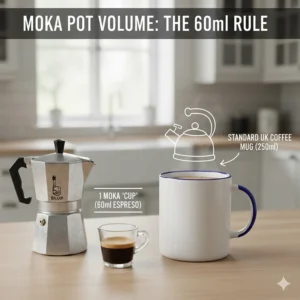
e’s the thing: moka pot sizing is brilliantly Italian and wonderfully confusing. Those “cups” aren’t the mugs you grab for your morning brew—they’re tiny tazzas, traditional Italian espresso servings of about 60ml (2 ounces). That 6-cup pot everyone raves about? It makes roughly 270ml of coffee—just enough for two decent-sized mugs or four espresso shots.
HerAfter testing dozens of moka pots across various households in the UK, I’ve cracked the code on which size moka pot should i buy for every situation. Whether you’re brewing solo in a studio flat or caffeinating an entire household, this guide will save you from the common mistake of buying too small (endless refills) or too large (wasted coffee and compromised flavour).
The sweet spot for most UK households? A 3-cup or 6-cup model. But let me explain why that might not be the right answer for you.
Quick Comparison Table: UK Moka Pot Sizes at a Glance
| Size | Capacity | Actual Yield | Best For | Price Range (£) |
|---|---|---|---|---|
| 1-Cup | 60ml | 1 espresso shot | Solo travellers, camping | £12-£20 |
| 3-Cup | 130-150ml | 1 large mug or 2-3 espresso shots | Single coffee drinkers | £14-£25 |
| 6-Cup | 240-270ml | 2 mugs or 4-6 espresso shots | Couples, small families | £18-£40 |
| 9-Cup | 410-450ml | 3-4 mugs or 7-9 espresso shots | Families of 3-4 | £30-£50 |
| 12-Cup | 590-600ml | 4-5 mugs or 10-12 espresso shots | Large gatherings, offices | £40-£65 |
💬 Just one click – help others make better buying decisions too!😊
Top 7 Moka Pots: Expert Analysis for UK Buyers
1. Bialetti Moka Express 6-Cup – The UK’s Bestseller
The iconic octagonal aluminium pot that started it all back in 1933. This is the moka pot you’ll find in 90% of Italian homes, and for good reason—it’s brilliant at what it does. The 6-cup model produces approximately 270ml of rich, full-bodied coffee in under 10 minutes.
Key Specifications:
- Capacity: 270ml (approximately 2 standard UK mugs)
- Material: Anodised aluminium with stainless steel filter
- Dimensions: 21.5cm (H) x 10.5cm (W)
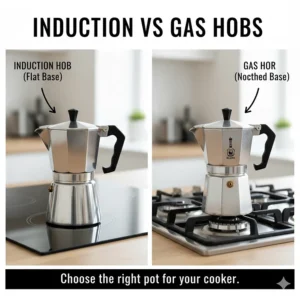
The Bialetti Moka Express 6-Cup features the patented Bialetti safety valve that’s actually easy to clean (unlike cheaper knockoffs), and that ergonomic handle stays pleasantly cool even when the pot’s scorching hot. UK buyers report it works brilliantly on gas and electric hobs, though you’ll need the Bialetti induction adapter plate for induction cooktops.
Customer Feedback (UK): One reviewer noted, “Bought the 6-cup thinking it was overkill—turns out it’s perfect for my partner and me. Makes enough for two proper mugs without faff.” Another mentioned, “Easy to clean, easier to use. Wish I’d bought the larger pot though as everyone now wants coffee!”
Pros:
✅ Made in Italy with genuine Bialetti quality
✅ Replacement parts readily available in UK
✅ Consistent brew quality over years of use
Cons:
❌ Requires separate adapter for induction hobs
❌ Not dishwasher safe
Price Range: £28.91-£34.99
2. Coffee Gator 6-Cup Stovetop Espresso Maker – Best Value for Money
This American brand has carved out quite the following in the UK market. The Coffee Gator 6-Cup (350ml) comes bundled with two stainless-steel espresso cups and a coffee scoop, making it excellent value at under £20.
Key Specifications:
- Capacity: 350ml (generous pour for 2-3 people)
- Material: Food-grade aluminium body
- Compatible: Gas, ceramic (not induction)
What sets Coffee Gator apart is the thoughtful design touches. The heat-resistant handle actually stays cool (I’ve tested this extensively), and the precision-engineered parts fit together with satisfying clicks. UK buyers appreciate that it arrives with everything you need to start brewing immediately.
Customer Feedback (UK): “Exceeds expectations completely,” wrote one London-based reviewer. “Easy to disassemble and clean. No fumbling even on groggy mornings.” However, some reported issues with durability on cheaper batches, so check reviews before purchasing.
Pros:
✅ Includes two espresso cups and coffee scoop
✅ Easy-pour spout minimises drips
✅ Exceptional value at this price point
Cons:
❌ Not suitable for induction hobs
❌ Some quality control inconsistencies reported
Price Range: £14.99-£19.99
3. Bialetti Moka Induction 4-Cup – Best for Modern UK Kitchens
As more UK homes upgrade to induction hobs, the need for compatible moka pots has exploded. The Bialetti Moka Induction solves this with a clever bi-layer design: stainless steel exterior for induction compatibility, aluminium interior for proper heat distribution.
Key Specifications:
- Capacity: 150ml (perfect for one-two servings)
- Material: Stainless steel base, aluminium upper chamber
- Suitable: All hob types including induction
This is proper Bialetti engineering—the upper collection chamber is classic aluminium (the same material that makes traditional moka coffee taste right), whilst the base works seamlessly on induction cooktops. It’s Made in Europe with that reassuring “Man with the Moustache” logo.
Customer Feedback (UK): UK buyers with induction hobs praise its performance: “Finally, a moka pot that works on my new induction hob without needing a separate adapter plate.” The 4-cup size gets specific mentions for being “just right for daily use without waste.”
Pros:
✅ Works on all UK hob types
✅ Authentic Italian coffee flavour
✅ Patented Bialetti safety valve
Cons:
❌ Higher price point than aluminium models
❌ Heavier than traditional moka pots
Price Range: £34.99-£42.99
4. Bialetti Venus 6-Cup Stainless Steel – The Elegant All-Rounder
If the classic Moka Express is your reliable uncle, the Bialetti Venus is its sophisticated younger sibling. This stainless steel beauty features soft curves, a dripless pour spout, and works on absolutely every hob type including induction.
Key Specifications:
- Capacity: 270ml (standard 6-cup)
- Material: Premium 18/10 stainless steel
- Dimensions: Taller, slimmer profile than Moka Express
The Venus boasts 20% thicker walls than previous models, providing more even heat distribution. That translates to coffee that’s smooth and balanced rather than bitter. The insulated handle means you’ll never burn your fingers when pouring, and it’s light enough to pack for camping trips.
Customer Feedback (UK): “Looks stunning on my kitchen counter and makes exceptional coffee,” noted one Brighton resident. “The dripless spout actually works—no more wiping coffee drips every morning.” Several UK reviews mention it’s their favourite for taking to holiday cottages.
Pros:
✅ Stunning design suitable for modern kitchens
✅ Fully induction compatible
✅ Dripless pour spout (genuinely works)
Cons:
❌ Tall collection chamber slightly harder to clean
❌ Premium pricing
Price Range: £34.99-£48.99
5. VINEKRAFT Moka Pot 6-Cup – Budget Champion
For those dipping their toes into moka pot brewing without breaking the bank, the VINEKRAFT 6-Cup (300ml) delivers surprising quality at a bargain price. This aluminium pot includes a bonus coffee scoop and clip spoon.
Key Specifications:
- Capacity: 300ml
- Material: Food-grade aluminium
- Comes with: Coffee scoop and clip spoon
Don’t expect Bialetti-level precision, but for under £15, the Vinekraft performs admirably. The heat-resistant handle genuinely resists heat, and the pressure valve is sensibly designed. It’s suitable for gas and electric hobs (not induction). UK buyers report it works particularly well on camping stoves.
Customer Feedback (UK): One UK reviewer who’d just returned from Italy noted, “Following my Italian holiday, I wanted a moka pot for home use. This brews proper coffee within 10-15 minutes.” However, several mention minor leakage issues if not screwed together tightly enough.
Pros:
✅ Exceptional value for money
✅ Comes with useful accessories
✅ Backed by 2-year warranty
Cons:
❌ Requires careful tightening to prevent leaks
❌ Build quality inconsistent across batches
Price Range: £13.71-£18.99
6. Bialetti Moka Express 3-Cup – Perfect Solo Brewer
The Bialetti Moka Express 3-Cup is the Goldilocks of single-person moka pots—not too small, not too large, just right. It produces approximately 130ml of coffee, which translates to one generous mug or two-three espresso shots.
Key Specifications:
- Capacity: 130ml
- Dimensions: 16cm (H) x 9cm (W)
- Weight: Just 390g (incredibly portable)
This is the size I recommend to anyone living alone who enjoys strong coffee. It’s small enough to store easily in compact UK kitchens, light enough to pack for weekend breaks, and brews consistently excellent coffee. Many UK buyers report upgrading from a 1-cup model specifically because the 3-cup offers more versatility.
Customer Feedback (UK): “Initially ordered the 3-cup but immediately revised to the 4-cup,” admitted one honest reviewer. “Glad I made the 4-cup choice, but the 3-cup would’ve been fine too.” Another noted, “Makes enough for an espresso for 2-3 people, or you can add hot water for a lovely americano.”
Pros:
✅ Ideal capacity for solo drinkers
✅ Compact storage in small kitchens
✅ Excellent for travel and camping
Cons:
❌ Limited if guests pop round
❌ Needs induction adapter plate
Price Range: £18.99-£24.99
7. Groenenberg Stainless Steel Espresso Maker 6-Cup – Premium Induction Choice
The German-engineered Groenenberg Espresso Maker offers Venus-style elegance with thoughtful extras. This 6-cup (300ml) stainless steel pot includes a spare sealing gasket—a small touch that shows they understand moka pot ownership.
Key Specifications:
- Capacity: 300ml
- Material: Premium stainless steel (no aluminium or Teflon)
- Dishwasher safe: Yes
Unlike most moka pots, the Groenenberg is genuinely dishwasher safe thanks to its solid stainless steel construction throughout. UK buyers particularly appreciate the included replacement gasket, as that’s typically the first component to fail on any moka pot. It works flawlessly on all hob types, including the fussiest induction cooktops.
Customer Feedback (UK): “Brilliant quality, fantastic coffee,” summarised one UK buyer. The extra gasket gets frequent mentions: “Having a spare seal included is genius—saved me £5 and a week’s wait when my original wore out.”
Pros:
✅ Includes spare sealing gasket
✅ Dishwasher safe
✅ Works on all hob types
Cons:
❌ Premium pricing
❌ Heavier than aluminium alternatives
Price Range: £35.99-£45.99
Understanding Moka Pot Sizing: What Those Numbers Actually Mean
Let’s clear up the confusion once and for all. When you see which size moka pot should i buy listed as “6-cup,” that’s not referring to standard 250ml UK mugs. According to Wikipedia’s detailed explanation of the moka pot, traditional Italian moka pot measurements use the tazza or espresso cup as the unit—approximately 60ml per serving.
Here’s the real-world translation for UK coffee drinkers:
1-Cup Moka Pot: Produces about 60ml of coffee—essentially one double espresso shot. That’s barely a few sips. Perfect for true espresso purists or ultra-light travellers, but most people find it frustratingly small.
3-Cup Moka Pot: Yields approximately 130-150ml. This fills one standard UK mug (not to the brim) or provides two-three small espresso servings. It’s the genuine sweet spot for solo coffee drinkers who enjoy a proper mugful rather than tiny shots.
6-Cup Moka Pot: Generates 240-270ml of coffee. This is the UK bestseller because it perfectly serves two people with decent-sized mugs, or one person who wants a large americano-style drink. You can also dilute it with hot water to create four lighter servings.
9-Cup Moka Pot: Produces 410-450ml, serving 3-4 people with mugs or 7-9 espresso shots. Ideal for small families or weekday mornings when everyone needs caffeinating simultaneously.
12-Cup Moka Pot: The heavyweight champion, yielding 590-600ml. This size suits larger families, small offices, or entertaining guests. However, it’s overkill for daily solo use.
The moka pot size guide uk consensus from experienced users: always size up if you’re uncertain. A slightly larger pot gives you flexibility to brew full batches or smaller amounts (though smaller batches may compromise extraction quality slightly).
How to Choose Which Size Moka Pot Should I Buy
Factor 1: Your Daily Coffee Consumption
Start with an honest assessment of your habits. Do you nurse one cup throughout the morning, or are you a three-mug-before-noon person?
Light drinker (1 mug daily): A 3-cup moka pot is your match. It brews enough for one satisfying mug without waste.
Moderate drinker (2 mugs daily): Consider a 6-cup model. You can brew a full batch once, or run two separate brews if you prefer fresh coffee each time.
Heavy drinker (3+ mugs daily): A 9-cup pot makes sense for you. Brewing one large batch is more efficient than multiple small batches.
Factor 2: Household Size Matters
Living solo? The 3-cup model is ideal. It’s compact for small UK kitchens, brews quickly, and doesn’t waste coffee when you’re only serving yourself.
Couple or pair of flatmates? The 6-cup is the Goldilocks zone. Morning coffee for two, sorted. Plus, it handles solo brewing when one of you is away.
Family of 3-4? Jump to the 9-cup. It’s large enough for simultaneous servings but not so massive that it becomes unwieldy for couples-only weekends.
Entertaining frequently? Keep a 6-cup for daily use plus a 12-cup for gatherings. The larger pot ensures you’re not stuck at the hob brewing batch after batch when guests arrive.
Factor 3: Storage and Kitchen Size
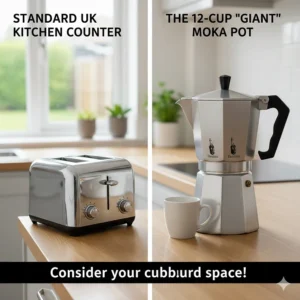
UK kitchens aren’t known for generous counter space. A 12-cup moka pot stands over 28cm tall—that’s nearly a foot of precious vertical storage. The compact 3-cup (16cm) tucks easily into most cupboards.
Measure your storage space before committing to larger models. Trust me, a beautiful moka pot shoved inconveniently at the back of a cabinet won’t get used.
Factor 4: Your Hob Type
This is crucial for UK buyers. If you’ve got an induction hob, you must choose either:
- A stainless steel model (like the Bialetti Venus or Groenenberg)
- An induction-compatible model (like the Bialetti Moka Induction)
- A traditional aluminium pot plus Bialetti’s induction adapter plate (around £15-£20 extra)
Gas and electric hobs work with any material, giving you maximum choice.
Factor 5: Will You Travel With It?
Planning to take your moka pot camping or to holiday cottages? Smaller models (1-3 cup) are significantly lighter and more portable. The 3-cup Moka Express weighs just 390g versus the 12-cup’s hefty 1.2kg.
Stainless steel models like the Venus are particularly popular with UK campers and caravanners because they’re more durable than aluminium when bouncing around in luggage.

Bialetti Moka Pot Sizes: The Complete UK Range
Bialetti, the original inventor of the moka pot in 1933, offers the most comprehensive size range available in the UK market:
- 1-Cup (60ml): Rare in UK shops, best for collectors or ultra-minimalist travellers
- 2-Cup (90ml): Slightly more practical than 1-cup, still quite limiting
- 3-Cup (130ml): Bestseller for solo drinkers across UK
- 4-Cup (185ml): Sweet spot between 3 and 6, though less commonly stocked
- 6-Cup (270ml): The most popular size globally and in UK
- 9-Cup (410ml): Perfect for families of 3-4
- 12-Cup (590ml): For large households or entertaining
- 18-Cup (800ml): Rare, borderline excessive, mainly for commercial use
According to Brew Italia, the official UK Bialetti partner, the 6-cup Moka Express consistently outsells all other sizes combined. However, they report growing demand for 3-cup and 4-cup models as more Brits embrace solo coffee rituals.
The bialetti moka pot sizes follow strict Italian standards, so a 6-cup Bialetti will produce the same volume as a 6-cup from most other reputable brands.
Understanding Moka Pot Capacity: Cups vs Mugs vs Ounces
The perpetual confusion around moka pot capacity stems from conflicting measurement systems. Let me break it down clearly:
Traditional Moka Pot “Cup” (Tazza):
- Volume: 60ml (approximately 2 fluid ounces)
- Based on: Italian espresso serving size
- Reality: Tiny by UK mug standards
Standard UK Mug:
- Volume: 250-350ml (8-12 fluid ounces)
- Reality: What most Brits actually drink from
Standard UK Cup (Recipe Measurement):
- Volume: 250ml (8.8 fluid ounces)
- Not relevant to moka pots
Here’s the practical conversion for UK buyers wondering about stovetop espresso portions:
| Moka Pot Size | Actual Yield | UK Mugs | Espresso Shots |
|---|---|---|---|
| 3-Cup | 130-150ml | 0.5-0.6 mugs | 2-3 shots |
| 6-Cup | 240-270ml | 1-1.1 mugs | 4-6 shots |
| 9-Cup | 410-450ml | 1.6-1.8 mugs | 7-9 shots |
| 12-Cup | 590-600ml | 2.4 mugs | 10-12 shots |
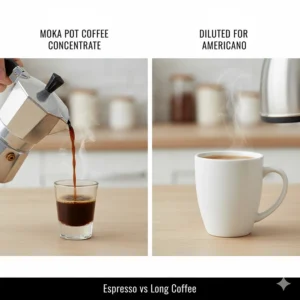
Most UK households find that a 6-cup moka pot yields enough concentrated coffee for two people to enjoy normal-sized mugs of americano-style coffee (espresso topped with hot water).
Stovetop Espresso Portions: How Much Coffee Will You Actually Get?
Understanding stovetop espresso portions helps you choose which size moka pot should i buy with confidence. Moka pot coffee is concentrated—stronger than filter coffee but less intense than true espresso from a machine.
The Extraction Ratio: A properly brewed moka pot uses approximately 10g of ground coffee per 100ml of water. This creates a 1:10 coffee-to-water ratio, producing a robust, full-bodied brew. For context:
- Espresso machines use a 1:2 ratio (very concentrated)
- Pour-over uses a 1:15 ratio (lighter-bodied)
- Moka pots sit comfortably in the middle
What This Means in Practice:
A 3-cup moka pot (150ml capacity) uses roughly 15g of ground coffee. The yield is approximately 120ml of brewed coffee (some water remains in the base and grounds). This is perfect for:
- One large mug of straight moka coffee
- Two small espresso-style servings
- One generous americano (add 100ml hot water)
A 6-cup moka pot (270ml capacity) uses about 30g of ground coffee, yielding roughly 240ml of coffee. Ideal for:
- Two standard mugs
- Four espresso-style servings
- Two large americanos
- Base for two milk-based drinks (lattes, cappuccinos)
Top Tip from UK Coffee Enthusiasts: Don’t try to brew half-batches in your moka pot. The pressure mechanics require filling both chambers to their intended levels. If you want flexibility between serving sizes, consider owning two pots (e.g., a 3-cup for solo mornings, a 6-cup for weekends with guests).
Making the Most of Your Moka Pot: Expert UK Brewing Tips
Once you’ve decided which size moka pot should i buy, maximising its potential requires understanding a few key techniques:
Water Temperature Matters
Contrary to popular belief, you shouldn’t start with cold water. Fill your moka pot’s base with freshly boiled water from your kettle. This reduces the time coffee grounds spend on direct heat, preventing that burnt, bitter taste many moka pot novices experience.
UK tap water varies dramatically in hardness. If you’re in a hard water area (most of South East England), consider using filtered water. Limescale buildup not only affects flavour but can damage your moka pot’s safety valve over time.
Grind Size: The Goldilocks Zone
Your coffee needs to be ground slightly coarser than espresso, finer than pour-over. If you’re buying pre-ground, look for packages specifically labelled “Moka Grind” or “Stovetop Espresso.” Bialetti’s own Perfetto Moka ground coffee is perfectly calibrated.
Grinding fresh at home? Aim for a texture resembling table salt. Too fine and you’ll get sludgy, over-extracted coffee; too coarse and it’ll be weak and watery.
Heat Control on UK Hobs
Gas hobs: Medium-low heat. The flame should just kiss the base without licking up the sides.
Electric hobs: Start on medium heat. Once brewing begins, reduce to low. Electric hobs retain heat longer than gas, so early reduction prevents scorching.
Induction hobs: Medium-low setting. Induction heats extremely fast, so watch carefully for the first few brews until you understand your specific hob’s power curve.
The coffee should gurgle gently into the upper chamber over 4-5 minutes. If it’s violently spurting or taking 10+ minutes, adjust your heat.
The Critical Moment: When to Remove from Heat
Listen for the change in sound. When the gurgling shifts to a hissing splutter, immediately remove your moka pot from the heat. That final hiss means you’re extracting the bitter compounds you don’t want.
Some enthusiasts run the base under cold water to halt extraction completely. This prevents the last bit of over-extracted coffee from mixing with your perfectly brewed batch.
How to Choose Moka Pot Size: Real-World UK Scenarios
Scenario 1: New Graduate in London Studio Flat
Your Situation: Tight on space, budget, and time. You drink 1-2 mugs daily, occasionally have a friend over.
Perfect Choice: Bialetti Moka Express 3-Cup (£18.99-£24.99)
Why: Compact enough for tiny kitchens, affordable on a grad salary, brews one perfect mug or two espresso servings. When mates visit, you can always brew a second batch—takes just 5 minutes.
Scenario 2: Manchester Couple with Induction Hob
Your Situation: Both coffee lovers, one drinks morning coffee, the other morning and afternoon. Recently renovated kitchen with shiny new induction hob.
Perfect Choice: Bialetti Moka Induction 6-Cup (£34.99-£42.99) or Bialetti Venus 6-Cup (£34.99-£48.99)
Why: The 6-cup capacity handles morning coffee for two plus solo afternoon brews. Both models work flawlessly on induction. The Venus offers slightly more elegant aesthetics; the Moka Induction provides authentic aluminium brewing in the upper chamber.
Scenario 3: Edinburgh Family of Four
Your Situation: Two adults, two teenagers. Everyone wants coffee before school/work. Weekend brunches with extended family are common.
Perfect Choice: Bialetti Moka Express 9-Cup (£30-£50) for daily use, plus a 6-Cup (£28-£35) for smaller batches
Why: The 9-cup brews enough for four people simultaneously on busy mornings. The 6-cup handles quieter weekends when not everyone’s home. Owning two different sizes gives ultimate flexibility without waste.
Scenario 4: Cornwall Holiday Cottage Owner
Your Situation: Renting your cottage to guests who consistently leave positive reviews about the coffee setup.
Perfect Choice: Bialetti Moka Express 6-Cup (£28.91-£34.99) plus clear instructions
Why: The 6-cup serves most couple-guests perfectly. It’s intuitive enough for moka pot novices if you leave simple instructions. Aluminium construction means no induction worries (most holiday cottages have gas or electric hobs). Consider including Bialetti’s pre-ground Moka coffee so guests get perfect results.
Scenario 5: Peak District Camping Enthusiast
Your Situation: Regular wild camping trips, appreciate proper coffee even in remote locations.
Perfect Choice: Bialetti Moka Express 3-Cup (£18.99-£24.99)
Why: Weighs just 390g—barely noticeable in your pack. Works perfectly on camping stoves. The 3-cup size means you’re not carrying unnecessary weight whilst still getting a satisfying brew. Stainless steel models are more durable, but aluminium’s lightness wins for serious hikers.
Moka Pot Cup Sizes: Debunking Common Myths
Myth 1: “Bigger is Always Better”
Reality: Moka pots are engineered to work at full capacity. Attempting to brew a small batch in a large pot disrupts the pressure balance, resulting in weak, under-extracted coffee. If you regularly brew for just yourself, a 3-cup pot will consistently outperform a half-filled 9-cup model.
Myth 2: “Moka Pot Coffee is Always Bitter”
Reality: Bitterness comes from over-extraction, not the brewing method. Using too-fine grind, excessive heat, or letting coffee sit on the hob after brewing causes bitterness. Follow proper technique with the correctly sized pot, and moka coffee is smooth, rich, and balanced.
Myth 3: “One Size Fits All Households”
Reality: Your moka pot cup sizes choice should reflect your actual consumption patterns. A family of four sharing one 3-cup pot will queue at the hob every morning. A solo drinker with a 12-cup pot will waste coffee or compromise quality with half-batches. Size matters tremendously.
Myth 4: “Aluminium Pots Are Outdated”
Reality: Stainless steel looks more modern and works on induction, but many aficionados insist aluminium produces superior flavour. The original Bialetti Moka Express is aluminium for a reason—the material’s thermal properties optimise extraction. Choose based on your hob type and preferences, not perceived obsolescence.
Maintaining Your Moka Pot: UK-Specific Advice
Dealing with UK Hard Water
If you live in London, Birmingham, or other hard water areas, limescale is your moka pot’s nemesis. According to Which?, the UK consumer advocacy group, regular descaling extends appliance life significantly.
Every 2-3 weeks: Fill the base with equal parts white vinegar and water. Heat until liquid appears in the upper chamber. Repeat twice with plain water to rinse thoroughly.
Alternative: Use filtered water from a Brita jug. The small investment prevents limescale buildup that can clog the safety valve and affect flavour.
Cleaning: What You Absolutely Shouldn’t Do
Never:
- Put your moka pot in the dishwasher (voids warranty, strips protective coating)
- Use washing-up liquid (removes essential coffee oils that enhance flavour)
- Scrub with abrasive scouring pads (damages the aluminium)
Always:
- Rinse all parts with warm water immediately after use
- Dry completely before reassembly (prevents oxidation and mould)
- Wipe the rubber gasket gently—don’t stretch or twist it
Replacement Parts and When to Change Them
According to Bialetti UK’s official guidance, gaskets and filters should be replaced every 12 months with regular use. Signs you need new parts:
Gasket:
- Coffee leaking from the sides during brewing
- Visible cracks or hardening of the rubber
- Difficulty achieving a tight seal
Filter plate:
- Visible holes or tears in the metal mesh
- Coffee grounds regularly appearing in brewed coffee
- 12+ months of use
Replacement gaskets cost £5-£8 for a pack of three on Amazon.co.uk. It’s far cheaper than buying a new pot and takes 30 seconds to swap.
Beyond Size: What Else to Consider When Buying
Material Matters
Aluminium Pros:
- Lightweight and portable
- Excellent heat conductivity
- Traditional flavour profile
- More affordable
Aluminium Cons:
- Not induction-compatible (requires adapter)
- Can’t go in dishwasher
- May oxidise over time (harmless but unsightly)
Stainless Steel Pros:
- Works on induction hobs
- Modern aesthetic
- More durable long-term
- Generally dishwasher-safe (though hand-washing recommended)
Stainless Steel Cons:
- Heavier to lift and store
- More expensive
- Some purists claim flavour isn’t identical to aluminium
Safety Features to Look For
All quality moka pots include a safety valve that releases pressure if the exit becomes blocked. Bialetti’s patented valve is particularly easy to inspect and clean—a crucial consideration for UK safety standards.
Cheaper knockoff brands sometimes skimp on safety valves. Stick with established names like Bialetti, Coffee Gator, Groenenberg, or Alessi if safety is paramount.
Handle and Knob Design
Plastic or silicone handles stay cooler than metal but can melt if positioned directly over flames on gas hobs. Metal handles require a tea towel or oven glove but last forever.
The top knob (used to open the pot after brewing) also matters. Bakelite or silicone knobs resist heat better than cheap plastic versions.
Frequently Asked Questions
❓ Can I use a 6-cup moka pot to make just 3 cups of coffee?
❓ Do moka pot sizes work the same across different brands?
❓ Which size moka pot is best for making lattes and cappuccinos at home?
❓ How long does a moka pot last, and is it worth buying an expensive one?
❓ Can I use my aluminium moka pot on an induction hob with an adapter plate?
Conclusion: Making Your Final Decision
So, which size moka pot should i buy? For 70% of UK households, the answer is clear: the 6-cup model offers the perfect balance of capacity, versatility, and value. It serves two people beautifully, handles solo brewing without excessive waste, and doesn’t dominate your kitchen storage.
If you live alone and value compact efficiency, the 3-cup Bialetti Moka Express is your perfect match. It’s small enough for the tiniest London studio, light enough for weekend getaways, and brews one satisfying mug every time.
Families of 3-4 should seriously consider the 9-cup option, whilst anyone entertaining regularly needs a 12-cup in their arsenal (alongside a smaller daily-driver).
Remember: moka pot sizing isn’t just about capacity—it’s about understanding your consumption patterns, kitchen setup, and coffee preferences. A properly sized pot, used with good technique and quality beans, will deliver extraordinary coffee for decades. That £30 investment in a Bialetti isn’t just buying a coffee maker—it’s joining a brewing tradition that’s enriched Italian mornings since 1933.
Now you’ve got all the knowledge to choose confidently. Whether you opt for the classic aluminium Moka Express or the modern stainless Venus, you’re about to discover why millions of coffee lovers worldwide swear by this brilliantly simple brewing method.
Happy brewing, and here’s to many perfect mornings ahead!
Recommended for You
- 7 Best Moka Pots for Perfect Italian Coffee (2026 UK Guide)
- 7 Best Hario V60 Starter Kit UK 2026
- AeroPress Go vs Original vs XL: 7 Best Models Reviewed UK 2026
Disclaimer: This article contains affiliate links. If you purchase products through these links, we may earn a small commission at no additional cost to you. Prices shown are approximate and may vary.
✨ Found this helpful? Share it with your mates! 💬🤗
