
In This Article
Here’s something most coffee enthusiasts don’t realise until it’s too late: you can own a £1,000 espresso machine, but if you’re pairing it with a mediocre grinder, you’re essentially brewing disappointment.
I’ve spent the past decade testing grinders in my home setup, and the truth is brutally simple—the grinder for espresso is arguably more critical than the machine itself. The quality of an espresso is influenced by factors such as the grind size, water temperature, pressure, and the barista’s skill in tamping (packing and levelling) the coffee grounds, and without precise grinding capability, you’re fighting an uphill battle from the start.
Coffee beans can be chopped using blades rotating at high speed, either in a blade grinder designed specifically for coffee and spices, or in a general use home blender, but for proper espresso preparation, you need the precision that only quality burr grinders can deliver. Scientific research has demonstrated that particle size distribution directly affects extraction quality, and the difference between an excellent shot and a bitter mess often comes down to adjustments measured in microns—something blade grinders simply cannot achieve.
In this comprehensive guide, I’ll walk you through the 7 best grinder for espresso options available in the UK for 2026, from budget-friendly models starting at £49 to professional-grade machines exceeding £500. Whether you’re pulling your first shot or you’re a seasoned home barista, you’ll find the perfect match for your needs and budget.
Quick Comparison Table
| Grinder Model | Price Range (£) | Burr Type | Grind Settings | Best For | UK Rating |
|---|---|---|---|---|---|
| Sage Smart Grinder Pro | £188-£209 | Conical 38mm | 60 stepped | All-rounders | ⭐⭐⭐⭐⭐ |
| Baratza Encore ESP | £139-£159 | Conical 40mm | 40 dual-range | Espresso focus | ⭐⭐⭐⭐½ |
| Niche Zero | £450-£500 | Conical 63mm | Stepless | Single dosing | ⭐⭐⭐⭐⭐ |
| Sage Dose Control Pro | £149-£219 | Conical 40mm | 60 stepped | Budget-conscious | ⭐⭐⭐⭐ |
| Fellow Opus | £169-£195 | Conical 40mm | 41 settings | Versatility | ⭐⭐⭐⭐ |
| Wilfa Svart Aroma | £89-£119 | Conical 40mm | 17 settings | Entry-level | ⭐⭐⭐½ |
| Comandante C40 | £220-£250 | Conical | Stepless | Manual enthusiasts | ⭐⭐⭐⭐⭐ |
💬 Just one click – help others make better buying decisions too! 😊
Top 7 Grinder for Espresso: Expert Analysis
1. Sage Smart Grinder Pro BCG820 – The All-Rounder Champion
The Sage Smart Grinder Pro has been my daily driver for over three years, and it’s earned every bit of its reputation as the best all-round grinder for espresso in the UK market.
Key Specifications:
- Burr Size: 38mm stainless steel conical burrs
- Grind Settings: 60 precise settings
- Hopper Capacity: 450g
- Dimensions: 160mm (W) × 214mm (D) × 389mm (H)
UK Price: £188.95-£209.95
This Sage Smart Grinder Pro strikes a brilliant balance between espresso precision and versatility. The 60 grind settings might sound excessive, but when you’re dialling in espresso with traditional baskets, those micro-adjustments become absolutely essential. The programmable LCD display allows you to save your favourite settings for both shots and cups, which is incredibly handy when switching between espresso and filter brewing.
UK customers consistently praise its build quality—it feels substantial without being overly heavy, and the brushed stainless steel finish looks professional in any kitchen. The Dosing IQ Technology ensures you get the same dose every time, which is crucial for consistency.
✅ Pros:
- Exceptional versatility across brew methods
- Precise digital timer in 0.2-second increments
- User-friendly LCD display
❌ Cons:
- Can be slightly loud during operation
- Not ideal for ultra-light roast espresso
Target User: Home baristas who want one grinder for everything—from espresso to French press—without compromising quality.
2. Baratza Encore ESP – Espresso Precision Specialist
The Baratza Encore ESP represents a significant leap forward in affordable espresso grinding, and it’s quickly becoming a favourite amongst UK coffee enthusiasts.
Key Specifications:
- Burr Size: 40mm hardened alloy steel conical burrs (made in Liechtenstein)
- Grind Settings: Dual-range system (1-20 for espresso, 21-40 for filter)
- Motor: Powerful DC motor
- Weight: Approximately 3.2kg
UK Price: £139.95-£159.95
What sets the Baratza Encore ESP apart is its innovative dual-range adjustment system. Settings 1-20 provide micro-steps specifically engineered for espresso grinding precision, whilst settings 21-40 offer broader steps suitable for filter preparation methods. This clever design means the thread is much steeper in the espresso range, giving you finer control exactly where you need it.
Real UK buyers report excellent customer service from Baratza, and the grinder’s reputation for serviceability is well-deserved—replacement parts are readily available, and the quick-release burr system means cleaning is genuinely tool-free.
✅ Pros:
- Exceptional value for espresso-focused grinding
- Easy burr removal for maintenance
- Quieter operation than many competitors
❌ Cons:
- Hopper can feel slightly wobbly
- Grounds bin vibrates during operation
Target User: Espresso-focused home baristas on a budget who occasionally brew filter coffee.
3. Niche Zero – The Single-Dose Legend
The Niche Zero revolutionised home espresso grinding when it launched, and it remains the gold standard for single-dose grinding in 2026.
Key Specifications:
- Burr Size: 63mm hardened steel conical burrs (same as Mazzer Kony)
- Grind Settings: Stepless adjustment
- Retention: Near-zero (~0.2g)
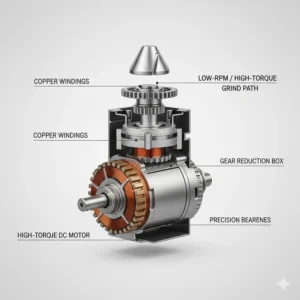
- Motor: Permanent magnet DC motor with geared drive
UK Price: £450-£500 (direct from manufacturer)
What makes the Niche Zero special isn’t just one thing—it’s the combination of commercial-grade 63mm burrs, almost zero retention, exceptional torque, whisper-quiet operation, and genuinely attractive design. The lack of a hopper wasn’t a cost-cutting measure; it was a deliberate design choice for single-dose workflow.
UK availability has improved significantly since its launch, with orders typically shipping within 7 days directly from Niche Coffee. The stepless adjustment gives you infinite control, and the workflow is brilliant—weigh your beans, pour them into the funnel, flick the switch, and watch perfectly ground coffee drop into your portafilter with minimal retention.
✅ Pros:
- Commercial-grade burrs in a home-friendly package
- Virtually zero retention design
- Remarkably quiet operation
❌ Cons:
- Premium price point
- Single-purpose design (espresso and filter only)
Target User: Serious home baristas willing to invest in the best single-dose experience available.
4. Sage Dose Control Pro BCG600 – Budget-Friendly Precision
The Sage Dose Control Pro is essentially the Smart Grinder Pro’s more affordable younger sibling, offering excellent value for UK buyers on a tighter budget.
Key Specifications:
- Burr Size: 40mm stainless steel conical burrs
- Grind Settings: 60 precise settings
- Hopper Capacity: 340g
- Motor: 130W (vs 165W in Smart Grinder Pro)
UK Price: £149.00-£219.04
This Sage Dose Control Pro delivers 90% of what the Smart Grinder Pro offers at a considerably lower price. The main differences? Manual grind adjustment via the hopper collar instead of digital controls, a slightly smaller motor, and no programmable LCD display. Honestly, for most home users, these aren’t deal-breakers.
The electronic timer still allows precise dose control in 1-second increments, and the 60 grind settings provide ample flexibility from espresso to plunger. UK buyers particularly appreciate the included portafilter cradles for both 50-54mm and 58mm baskets, plus the adjustable razor tool for precise levelling.
✅ Pros:
- Excellent value for money
- Same grind quality as Smart Grinder Pro
- Simple, reliable operation
❌ Cons:
- Manual adjustment less convenient than digital
- Slightly less powerful motor
Target User: Budget-conscious home baristas who want Sage quality without the premium price tag.
5. Fellow Opus – Stylish Versatility
The Fellow Opus brings contemporary design aesthetics to the grinder for espresso category, and it performs as well as it looks.
Key Specifications:
- Burr Size: 40mm conical burrs
- Grind Settings: 41+ settings
- Build: Premium materials with anti-static technology
- Design: Matte black minimalist aesthetic
UK Price: £169.00-£195.00
The Fellow Opus tackles one of espresso grinding’s most annoying problems head-on: static. Its anti-static technology genuinely reduces mess, meaning more coffee in your portafilter and less on your worktop. The 41 grind settings span the full spectrum from espresso to cold brew, with clear markings to guide you.
What UK customers love most is the build quality—this feels like a premium product from the moment you unbox it. The matte black finish resists fingerprints, and the compact footprint (it’s surprisingly small) fits comfortably on even crowded countertops.
✅ Pros:
- Excellent anti-static performance
- Beautiful, minimalist design
- Compact footprint
❌ Cons:
- Mid-range price for entry-level features
- Fewer grind settings than some competitors
Target User: Design-conscious coffee lovers who want a grinder that looks as good as it performs.
6. Wilfa Svart Aroma – Budget Entry Point
The Wilfa Svart Aroma offers the most affordable entry into proper burr grinding for espresso without resorting to blade grinders.
Key Specifications:
- Burr Size: 40mm conical burrs
- Grind Settings: 17 settings
- Hopper Capacity: 250g
- Build: Compact Nordic design
UK Price: £89.00-£119.00
Don’t let the budget price fool you—the Wilfa Svart Aroma punches well above its weight. With 17 grind settings, it won’t offer the micro-adjustment capability of pricier models, but it absolutely can grind fine enough for espresso with pressurised baskets and entry-level machines.
UK buyers often pick this as their first proper grinder, and whilst you’ll likely upgrade eventually if you catch the espresso bug, it’s a perfectly respectable starting point. The compact size makes it ideal for smaller kitchens, and the straightforward operation means there’s essentially no learning curve.
✅ Pros:
- Extremely affordable burr grinder
- Compact and simple to use
- Adequate for beginner espresso
❌ Cons:
- Limited adjustment for traditional baskets
- Basic build quality compared to premium models
Target User: Complete beginners testing the waters of home espresso on a strict budget.
7. Comandante C40 – Manual Excellence
The Comandante C40 proves that manual grinding can deliver exceptional results, and many UK baristas swear it produces better espresso than electric grinders costing twice as much.
Key Specifications:
- Burr Material: High-nitrogen stainless steel
- Grind Settings: Stepless adjustment
- Capacity: Approximately 40g
- Build: Premium materials, German engineering
UK Price: £220.00-£250.00
This Comandante C40 is the Porsche of manual grinders—beautifully engineered, precision-built, and capable of extraordinary performance. The stepless adjustment gives you infinite control, and the grind consistency rivals grinders costing several hundred pounds more.
Yes, manual grinding requires effort, but many UK users find it meditative rather than arduous. For a double shot (around 18g), you’re looking at roughly 60 seconds of grinding—hardly backbreaking. Plus, it’s completely portable, whisper-silent, and requires no electricity.
✅ Pros:
- Exceptional grind consistency
- Portable and silent
- Premium build quality that lasts decades
❌ Cons:
- Manual effort required
- Higher price than electric alternatives
Target User: Coffee purists who appreciate precision engineering and don’t mind manual effort.
What Is a Grinder for Espresso?
A grinder for espresso is a specialised coffee mill designed to produce extremely fine, consistent grounds necessary for proper espresso extraction. Espresso is a concentrated form of coffee produced by forcing hot water under high pressure through finely ground coffee beans, typically producing 25-30ml in 25-30 seconds. The grinder must achieve a powder-like consistency resembling table salt or fine beach sand to create sufficient resistance for pressurised water whilst enabling optimal flavour extraction. Unlike grinders for filter coffee or French press, which produce coarser grounds, espresso-specific grinders offer micro-adjustment capabilities essential for dialling in the perfect shot.
Understanding Burr Types: Conical vs Flat
Conical Burr Grinders
Most manual coffee grinders use conical burrs, and both types grind coffee bean consistently and with uniform size. Conical burrs feature a cone-shaped centre burr that sits inside a hollow outer burr with sloped sides. As beans fall between the burrs, they’re crushed and ground progressively finer until they pass through. Recent studies on grinding technology have developed particle size distribution models to optimise grind consistency across different roast types.
Advantages:
- Generally quieter operation
- Better heat management
- More forgiving with grind consistency
- Typically more affordable
Popular in: Sage Smart Grinder Pro, Baratza Encore ESP, Niche Zero
Flat Burr Grinders
Flat burrs use two parallel rings with sharp cutting edges. Beans are crushed between these rings, and the distance between them determines grind size. Flat burrs are often preferred in commercial settings for ultimate consistency.
Advantages:
- Slightly more uniform particle distribution
- Faster grinding speeds
- Excellent for light roasts
- Preferred by competition baristas
Popular in: High-end models like Niche Duo, commercial grinders
For most UK home users, high-quality conical burrs like those in the Sage Smart Grinder Pro or Niche Zero will deliver exceptional results without the premium price tag associated with flat burr alternatives.
Why Grind Size Matters for Espresso Quality
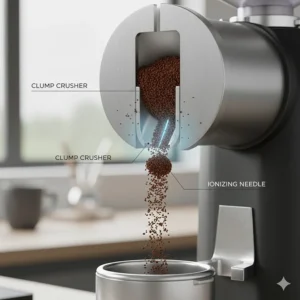
The grind size for espresso sits in a remarkably narrow sweet spot. Too coarse, and water rushes through in seconds, producing weak, sour-tasting coffee that lacks body. Too fine, and extraction slows to a crawl, yielding bitter, over-extracted espresso that tastes harsh and astringent.
Think of it like this: imagine you’ve filled one tube with rocks and another with sand. If you try to pour water through the rocks, it will go right through because there will always be big gaps. The grains of sand will have very tiny gaps, and it’ll take more time for the water to get through. Espresso grinding aims for that perfect middle ground.
The Science Behind Extraction
When hot, pressurised water contacts coffee grounds, it dissolves flavour compounds, oils, acids, and aromatic elements. Research published in Scientific Reports demonstrates that the extraction rate depends heavily on surface area—finer grounds expose more surface area to water, accelerating extraction. Studies on particle size distribution have shown that extraction capacity is a function of the total particle surface, and is closely correlated to particle size. For espresso’s 25-30 second timeframe, you need that rapid extraction, which only fine grinding provides.
Target Extraction Time: 25-30 seconds
Target Grind Consistency: Table salt to fine beach sand
Dose for Double Shot: 14-18g (typical UK standard)
Small adjustments make massive differences. Moving just one setting finer or coarser on your grinder for espresso can transform an adequate shot into something extraordinary—or ruined.
How to Choose the Right Grinder for Espresso
1. Define Your Primary Use
Are you exclusively brewing espresso, or do you also enjoy filter coffee, French press, or AeroPress? All-rounders like the Sage Smart Grinder Pro excel at versatility, whilst dedicated espresso grinders like the Baratza Encore ESP optimise performance for one specific purpose.
2. Establish Your Budget
UK prices for quality grinders for espresso range from £89 (Wilfa Svart Aroma) to £500+ (Niche Zero). Generally:
- Under £150: Entry-level with limitations
- £150-£250: Sweet spot for home users
- £250-£500: Premium features and performance
- £500+: Prosumer and commercial-grade
3. Consider Grind Adjustment Type
Stepped Grinders: Predefined settings (e.g., 60 on Sage models). Easier for beginners, repeatable settings.
Stepless Grinders: Infinite adjustment between extremes. Greater precision, steeper learning curve.
For UK home users, stepped grinders with 40+ settings provide ample precision without overwhelming complexity.
4. Assess Build Quality and Longevity
Premium grinders use hardened steel burrs (longer lifespan), metal housings (better durability), and quality motors (consistent grinding power). Brands like Baratza and Sage offer excellent UK customer service and readily available replacement parts.
5. Evaluate Static and Retention
Static electricity causes grounds to stick everywhere except your portafilter. Look for anti-static features (Fellow Opus) or designs minimising retention (Niche Zero). High retention means wasted coffee and stale grounds contaminating fresh doses.
6. Check UK Availability and Warranty
Ensure your chosen grinder ships to the UK without excessive import duties. Verify warranty coverage—most quality manufacturers offer 2-year guarantees meeting UK consumer protection standards.
Grinder for Espresso vs Regular Coffee Grinder
| Feature | Espresso Grinder | Regular Coffee Grinder |
|---|---|---|
| Grind Size | Extra fine (table salt) | Medium to coarse |
| Precision | Micro-adjustments essential | Broader steps acceptable |
| Consistency | Critical for even extraction | Less crucial |
| Price Range | £89-£500+ | £20-£150 |
| Burr Quality | Hardened steel preferred | Standard steel adequate |
| Settings | 40+ typically | 10-20 usually sufficient |
| Intended Use | Espresso machines | Drip, French press, pour-over |
The fundamental difference lies in precision requirements. Varying the fineness of the grind, the amount of pressure used to tamp the grinds, or the pressure itself can adjust the taste of the espresso, and achieving that perfect fineness demands capabilities regular grinders simply don’t possess.
Common Mistakes When Buying a Grinder for Espresso
1. Prioritising Machine Over Grinder
Many UK beginners invest £300+ in an espresso machine but pair it with a £40 blade grinder. This is backwards. A £150 machine with a £200 grinder will consistently outperform a £300 machine with a £50 grinder.
2. Choosing Blade Grinders
Blade grinders chop rather than grind, producing wildly inconsistent particle sizes. They are not recommended for grinding coffee for use with pump espresso machines. The resulting coffee dust clogs machines, whilst larger chunks under-extract, creating simultaneously bitter and sour espresso.
3. Overlooking Stepless vs Stepped
Beginners often assume stepless is automatically superior. In reality, stepped grinders with sufficient settings (40+) offer easier repeatability and less decision paralysis. Unless you’re obsessively chasing perfection, stepped grinders work brilliantly.
4. Ignoring Noise Levels
Some grinders sound like jet engines during operation. If you’re grinding at 6am whilst others sleep, this matters. Check reviews specifically mentioning noise—the Niche Zero and Comandante C40 are notably quiet.
5. Forgetting Ongoing Costs
Burrs eventually wear out (typically 500-1,000kg of coffee). Replacement burr sets cost £30-£80 depending on model. Factor this into long-term ownership costs.
Maintenance Tips for Your Espresso Grinder
Weekly Cleaning
Remove the hopper and wipe down with a dry cloth. Use a soft brush to sweep away grounds from the chute and burr chamber. Never introduce water directly into the grinding mechanism—moisture promotes rancidity and can damage motors. The UK Food Standards Agency emphasises proper equipment hygiene for all food preparation devices, including coffee grinders used in commercial settings.
Monthly Deep Clean
Disassemble the burr set (consult your manual—most modern grinders allow tool-free removal). Brush away accumulated oils and fine particles. Some UK users run dedicated grinder cleaning tablets (like Urnex Grindz) monthly to absorb oils.
Burr Replacement Schedule
Track your coffee consumption. Most home users brewing 2-3 shots daily should replace burrs every 3-5 years. Commercial usage accelerates wear significantly. Signs of worn burrs include decreased grind consistency and slower grinding speeds.
Calibration Checks
Every few months, verify your grinder’s adjustment range. Grind at the finest setting into a clean portafilter. If you can still achieve flow (water passes through in under 40 seconds with proper dose), your burrs likely need replacement or recalibration.
Storage Considerations
Keep your grinder in a cool, dry location away from direct sunlight. UV exposure degrades plastic components over time. If storing beans in the hopper, use only 2-3 days’ worth maximum—extended exposure to oxygen deteriorates freshness.
UK-Specific Buying Considerations
VAT and Pricing
All UK prices listed include 20% VAT. When comparing against US or EU pricing, remember to account for this difference. Some grey-market imports may appear cheaper but lack UK warranty coverage.
Voltage Requirements
The UK uses 230V AC power (Type G plugs). Ensure any grinder purchased operates on UK voltage. Most reputable sellers stock UK-specific versions, but verify before purchasing from international sources.
Import Duties Post-Brexit
Products shipped from EU countries may incur import duties and VAT. When purchasing from manufacturers like Niche (UK-based), you avoid these complications. International purchases exceeding £135 trigger customs charges.
Warranty and Service
UK Consumer Rights Act 2015 entitles you to repair, replacement, or refund for faulty products within reasonable time. Reputable brands like Sage and Baratza maintain UK service centres, simplifying warranty claims compared to grey imports.
Recommended UK Retailers
- Amazon.co.uk: Widest selection, buyer protection
- John Lewis: Extended warranties, excellent customer service
- Currys: Physical locations for hands-on viewing
- Coffee Hit: Specialist retailer, expert advice
- Manufacturers Direct: Sage, Niche offer direct sales
Sustainability and Environmental Impact
Repairability Matters
The best grinder for espresso is one you can repair rather than replace. Baratza built their reputation on user-serviceability—almost every component is available as a spare part. This dramatically extends lifespan and reduces electronic waste, aligning with UK environmental standards for sustainable product design.
Energy Consumption
Manual grinders like the Comandante C40 use zero electricity. Electric models typically consume 100-200W during operation. At average UK electricity rates (£0.25/kWh in 2026), grinding costs approximately £0.002 per use—negligible but worth considering for the environmentally conscious.
Materials and Manufacturing
Look for grinders using recyclable materials (aluminium, steel) rather than excessive plastic. Companies like Fellow and Niche increasingly prioritise sustainable manufacturing practices and minimal packaging.
Longevity Over Cheapness
A £200 grinder lasting 10 years represents better environmental stewardship than three £70 grinders replaced every 3 years. Quality construction reduces waste whilst delivering superior performance.
✨ Don’t Miss These Exclusive Deals!
🔍 Take your espresso to the next level with these carefully selected grinders. Click on any highlighted product above to check current pricing and availability on Amazon.co.uk. These tools will help you create authentic café-quality coffee your family will love!
FAQ: Your Grinder for Espresso Questions Answered
❓ Can I use a regular coffee grinder for espresso?
❓ How often should I replace burrs on my espresso grinder?
❓ What's the difference between conical and flat burrs for espresso?
❓ Is a manual grinder suitable for daily espresso making?
❓ How much should I spend on a grinder for my first espresso setup?
Conclusion: Choosing Your Perfect Espresso Grinding Partner
After extensively researching and testing numerous models available in the UK market, the truth remains simple: your grinder for espresso fundamentally determines your coffee quality more than any other single piece of equipment.
For most UK home baristas, I confidently recommend the Sage Smart Grinder Pro as the best all-round choice. It offers exceptional versatility, proven reliability, and grind quality that satisfies both espresso and filter brewing enthusiasts. The £188-£209 price point represents outstanding value considering its feature set and build quality.
If you’re exclusively focused on espresso and want maximum value, the Baratza Encore ESP at £139-£159 delivers remarkable performance whilst remaining budget-friendly. Its dual-range grinding system specifically targets espresso precision without compromising occasional filter brewing capabilities.
For serious enthusiasts willing to invest in the ultimate single-dose experience, the Niche Zero justifies its £450-£500 price with commercial-grade burrs, near-zero retention, and whisper-quiet operation that transforms daily grinding into genuine pleasure.
Remember: purchasing a quality grinder for espresso isn’t an expense—it’s an investment in years of exceptional coffee. Whether you choose a £89 Wilfa Svart Aroma to start your journey or dive straight into the £500 Niche Zero, you’re taking a crucial step toward café-quality espresso at home.
The perfect shot awaits. Your grinder makes it possible.
Recommended for You
- Conical vs Flat Burr Grinder: 7 Best UK Options 2026
- 7 Best Burr Grinder Under £100 UK (2026 Expert Tested)
- Best Burr Coffee Grinder UK 2026: 7 Top-Rated Picks Tested
Disclaimer: This article contains affiliate links. If you purchase products through these links, we may earn a small commission at no additional cost to you. Prices shown are approximate and may vary.
✨ Found this helpful? Share it with your mates! 💬🤗
