
In This Article
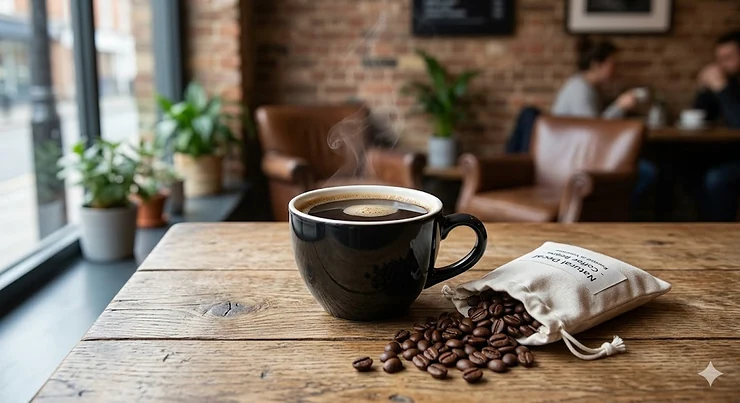
There’s a stubborn myth that refuses to die — the idea that decaf is the grey, watery, slightly apologetic cousin of real coffee. A drink you suffer through rather than savour. Something handed to you at 10 pm by a well-meaning host who doesn’t want anyone leaving their dinner party buzzing like an airport terminal. That reputation? Thoroughly undeserved, and frankly overdue for a rethink.
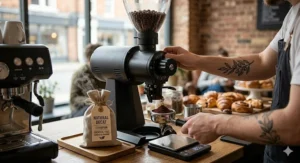
The truth is, the world of natural decaf coffee beans has quietly undergone a rather exciting revolution. The best natural decaf coffee beans available in the UK right now are processed using methods that are completely chemical-free — think Swiss Water, CO₂ extraction, and sugarcane ethyl acetate — preserving far more of the original bean’s character than older solvent-based techniques ever managed. The result is something genuinely worth drinking: complex, aromatic, and deeply satisfying. At any hour.
In this guide, we’ve done the legwork — researching the best options available on Amazon.co.uk, verified for UK delivery, sourced from reputable roasters, and tested against what actually matters in a British coffee drinker’s kitchen. Whether you’re caffeine-sensitive, pregnant, managing a heart condition, or simply someone who wants a proper espresso at 9 pm without staring at the ceiling until 3 am, there’s a bag here with your name on it.
Let’s get into it.
Quick Comparison: Best Natural Decaf Coffee Beans UK 2026
| Product | Process | Roast | Best For | Price Range |
|---|---|---|---|---|
| Decadent Decaf Signature Espresso | Swiss Water | Dark | Espresso lovers | £10–£14 (227g) |
| Decadent Decaf Dark Roast | Swiss Water + CO₂ | Dark | Bold everyday brew | £10–£14 (227g) |
| Rounton Coffee CO₂ Decaf | CO₂ (Sparkling Water) | Medium-Dark | Flavour purists | £12–£16 (250g) |
| Lavazza Decaf My Rich Break Intenso | CO₂ Natural | Medium-Dark | Italian espresso style | £12–£16 (500g) |
| Lavazza Caffè Decaffeinato | CO₂ Natural | Medium | Mild, balanced daily cup | £10–£14 (500g) |
| illy Decaf 100% Arabica | Proprietary natural | Medium | Premium milk drinks | £12–£18 (250g) |
| San Francisco Bay Decaf Gourmet Blend | Swiss Water | Medium | Budget-conscious quality | £14–£20 (908g) |
The table above reveals a telling pattern: the best natural decaf coffee beans on Amazon.co.uk cluster around the Swiss Water and CO₂ methods — and for good reason. Both are chemical-free, both preserve flavour compounds admirably, and both produce cups that would genuinely fool you in a blind tasting. If your priority is flavour complexity and you’re willing to spend a little more, Decadent Decaf and Rounton stand apart. If value per gram is your game, San Francisco Bay’s 908g bag offers remarkable bang for your pound.
💬 Just one click — help others make better buying decisions too! 😊
✨ Don’t Miss These Exclusive Deals!
🔍 Take your morning routine to the next level with these carefully selected natural decaf coffee beans. Click on any highlighted product to check current pricing and availability on Amazon.co.uk. Your perfect caffeine-free brew is waiting.
Top 7 Natural Decaf Coffee Beans: Expert Analysis
1. Decadent Decaf Signature Espresso Coffee Beans 227g
Launched in 2014, Decadent Decaf holds the distinction of being the UK’s first dedicated decaffeinated coffee brand — and this Signature Espresso is their crown jewel. Hand-roasted in West Sussex by father-and-son duo Richard and Greg on an old-fashioned Probat gas roaster, it carries Strength 5 on the roast scale and uses the Swiss Water Process to achieve 99.9% caffeine-free certification. That matters practically: Swiss Water uses no chemical solvents whatsoever, just water and green coffee extract — so what you’re left with is a clean bean that hasn’t been chemically battered into submission.
What the spec sheet can’t tell you is how remarkably this pulls as an espresso. The beans are developed slightly longer in the roaster than standard, compensating for the subtle flavour loss that decaffeination inevitably causes — clever, and it shows in the cup with a deep, chocolate-forward intensity and a crema that actually holds together. It’s Prime-eligible on Amazon.co.uk, sold through Tea & Coffee Emporium, and UK buyers consistently praise its consistency batch to batch.
UK customer reviews highlight it as “genuinely the best decaf I’ve tried” and “actually makes crema,” which for decaf fans is something close to a religious experience.
✅ Brilliant crema for a decaf — a rarity worth celebrating
✅ Multiple Great Taste Award winner
✅ Swiss Water certified, 99.9% caffeine-free
❌ 227g bags feel small if you’re a heavy drinker
❌ Pricier per gram than supermarket alternatives
Price range: around £10–£14 for 227g. For a hand-roasted, award-winning decaf, that’s well worth considering.
2. Decadent Decaf Strongest Dark Roast Coffee Beans 227g
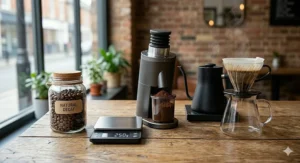
If the Signature Espresso is Decadent Decaf’s polished showpiece, this Dark Roast is its rougher, bolder older sibling — the one who turns up to Christmas dinner slightly overdressed and immediately takes over the room. Also Strength 5, also Swiss Water and CO₂ processed (a belt-and-braces approach to chemical-free decaffeination), and roasted darker still for those who believe a coffee should make a statement.
What distinguishes this from lesser dark-roast decafs is that the darkness doesn’t mask poor bean quality — it enhances genuinely good beans sourced from quality origins. The cup delivers bitter chocolate, a smoky edge, and a long finish that lingers in a way many decafs simply don’t. Particularly well-suited to cafetière brewing, where extended contact time rewards the depth of roast. Also from Tea & Coffee Emporium on Amazon.co.uk; Prime-eligible.
UK reviews note this as a go-to for ex-espresso-drinkers who’ve had to reduce caffeine intake for health reasons and didn’t want to compromise on intensity.
✅ Intense flavour for those who take their coffee seriously
✅ CO₂ + Swiss Water dual chemical-free process
✅ Excellent in cafetière or Moka pot
❌ Not for those who prefer lighter, fruitier profiles
❌ Same 227g size limitation as the Signature range
Price range: around £10–£14 for 227g — same pricing tier as the Signature Espresso, making this a matter of preference rather than budget.
3. Rounton Coffee Roasters CO₂ Decaf Coffee Beans
Based in North Yorkshire, Rounton Coffee Roasters occupies a slightly different corner of the UK decaf market: they use the CO₂ method exclusively — sometimes marketed as the “Sparkling Water Process” — and they’re rather proud of it. And rightly so. CO₂ extraction uses pressurised liquid carbon dioxide to bond selectively with caffeine molecules without disturbing the flavour compounds that give good coffee its character. It’s precise, clean, and arguably the most flavour-preserving decaffeination method available.
Rounton’s decaf offering has won awards — which for a small Yorkshire roaster competing in a crowded market is no small thing. The medium-dark roast profile sits in a comfortable middle ground: bold enough to satisfy those who crave substance, but with enough brightness to reveal the quality of the underlying beans. Their resealable bags are recyclable and carbon-neutral, which appeals to the increasingly eco-conscious UK buyer. Available on Amazon.co.uk and Prime-eligible.
UK reviewers frequently note the complexity and depth, remarking it “tastes like proper coffee, not a compromise.” For flavour purists who find Swiss Water decafs occasionally flat in the mid-tones, Rounton is the answer.
✅ Award-winning, CO₂-processed — the most selective decaffeination method
✅ Carbon-neutral, recyclable packaging
✅ Great for filter, pour-over, and cafetière
❌ Premium pricing over mass-market alternatives
❌ Less widely stocked than Decadent Decaf on Amazon
Price range: £12–£16 for 250g — a premium you pay for genuinely excellent beans.
4. Lavazza Decaf My Rich Break Intenso Coffee Beans 500g
Italy’s most beloved coffee institution entering the natural decaf conversation feels almost inevitable — and Lavazza doesn’t disappoint. The My Rich Break Intenso uses the CO₂ natural process to decaffeinate a blend of Arabica and Robusta beans sourced from South America, Africa, and South Asia. Intensity 6/10 on the Lavazza scale, medium-dark roast, and the Robusta component means this pulls together a genuine, full-bodied espresso with cocoa and woody tobacco notes that feel very much like classic Italian café coffee.
Here’s the thing most UK buyers miss about Intenso: the Robusta content, which detractors sometimes dismiss, is actually the secret weapon in milk-based drinks. A flat white, cappuccino, or the increasingly popular oat-milk latte all benefit from a base that can hold its flavour against the dairy. This does that. Brilliantly. Sold directly from Amazon on Amazon.co.uk — Prime-eligible with next-day delivery to most UK postcodes.
UK customers describe it as “the best decaf for an after-dinner espresso” and appreciate that it “doesn’t taste like it’s given something up.”
✅ 500g — excellent value per gram for the quality
✅ CO₂ natural process — no chemical solvents
✅ Superb in milk-based drinks (cappuccino, flat white)
❌ Arabica/Robusta blend won’t suit pure-Arabica purists
❌ Italian dark roast style — not ideal for filter coffee
Price range: £12–£16 for 500g. When you work out the cost-per-cup, this is one of the stronger value propositions in this guide.
5. Lavazza Caffè Decaffeinato Coffee Beans 500g
Where the Intenso makes a statement, the Caffè Decaffeinato whispers — and sometimes, that’s exactly what you need. Also CO₂ natural process, but lighter in roast (Intensity 3/10), with aromatic notes of dried fruits and a gentler, more balanced body. Think of it as the morning-meeting option: civilised, unfussy, and entirely agreeable in an Aeropress or a bean-to-cup machine.
This is the one to recommend to the decaf sceptic in your household. Its subtlety makes it approachable; it won’t alienate someone accustomed to supermarket filter blends, and it might just — quietly, over several weeks — convert them. For UK buyers with compact kitchen setups (which, let’s be honest, covers a substantial portion of the country’s terraced houses and city flats), the 500g size is practical without demanding dedicated storage. Sold and fulfilled by Amazon directly, Prime-eligible.
UK customer feedback is consistently warm, with reviewers noting the “pleasant everyday cup” and appreciating the consistency of the Lavazza brand.
✅ 500g, sold by Amazon — hassle-free ordering and delivery
✅ Lighter roast preserves more delicate aromatic notes
✅ Excellent for bean-to-cup machines and Aeropress
❌ Lighter roast means it won’t satisfy dark-roast devotees
❌ Mild intensity not suited to milk-heavy drinks
Price range: £10–£14 for 500g — arguably the best value-for-money entry point in this entire guide.
6. illy Decaffeinated 100% Arabica Coffee Beans 250g
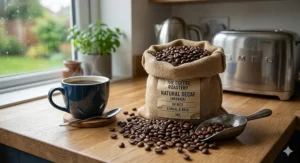
Few names in coffee carry the heritage that illy does. Since 1933, the Trieste-based brand has refined the art of the Italian espresso blend, and their decaf offering brings that same obsessive attention to quality. 100% Arabica, medium roast (Intensity 5/9), with tasting notes of smooth caramel, orange blossom, and jasmine. It’s the most elegant cup in this selection — complex, balanced, and clearly made from premium beans.
The honest truth about illy Decaf is that it works best with good equipment. In a high-quality bean-to-cup machine or a quality espresso machine, it produces something that would satisfy a professional barista. In a cafetière or a supermarket coffee maker, some of that elegance gets lost. Worth knowing before you invest. The 250g pressurised tin is part of the premium experience — it genuinely preserves freshness in a way that foil bags, even resealable ones, struggle to match in Britain’s damp climate. Sold by Amazon on Amazon.co.uk, Prime-eligible.
UK reviewers consistently note the “sophisticated” flavour profile, and coffee professionals on forums praise it as a benchmark for judging other decafs.
✅ Premium 100% Arabica — finest beans in this selection
✅ Pressurised tin preserves freshness superbly in UK damp conditions
✅ Outstanding in quality espresso machines and bean-to-cup
❌ Relatively expensive per gram
❌ 250g only — needs frequent reordering for daily drinkers
Price range: £12–£18 for 250g — the premium option. Justified, if you have the equipment to match.
7. San Francisco Bay Decaf Gourmet Blend Whole Beans 908g — Freshly Roasted in the UK
Don’t let the California name throw you — this particular version is freshly roasted in the UK for the Amazon.co.uk market, which makes a genuine difference to freshness. 100% Arabica, Swiss Water Processed (no chemicals, certified), medium roast with a clean, rounded flavour profile. Notes of gentle caramel and a smooth body that works across virtually any brewing method — cafetière, filter, drip, Aeropress.
The headline number here is 908g. At that quantity, this becomes comfortably the best value-per-gram option in this guide — and while it doesn’t match Decadent Decaf or Rounton for flavour complexity, it’s significantly more capable than most buyers expect from a budget-tier decaf. For households where multiple people drink decaf, or someone who simply goes through a lot of coffee, this makes excellent practical sense. Prime-eligible on Amazon.co.uk.
UK reviewers particularly appreciate the value and note it’s “consistently good without any unpleasant chemical aftertaste” — the last point being a meaningful marker of the Swiss Water quality.
✅ Best value-per-gram in this guide by some margin
✅ 908g — ideal for households or heavy drinkers
✅ Swiss Water Process, no chemicals, freshly UK-roasted
❌ Less complex flavour than premium single-origin options
❌ Large bag requires proper storage in cool, dry conditions (UK humidity is real)
Price range: £14–£20 for 908g. The sensible choice if you drink decaf daily and don’t want to think too hard about the economics.
What Does “Natural” Decaffeination Actually Mean?
This is the question worth asking before anything else — because the word “natural” gets thrown around with the casual abandon of a marketing department on a deadline. Let’s be specific.
There are broadly four decaffeination methods. Two are natural and chemical-free; one uses a naturally occurring solvent (contentious); and one is decidedly not natural at all.
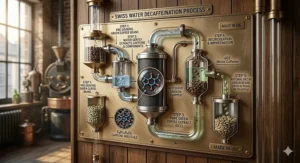
Swiss Water Process: Green coffee beans are soaked in a proprietary Green Coffee Extract — essentially water already saturated with coffee solubles — creating an osmotic environment where only caffeine migrates out of the bean. No solvents. Certified 99.9% caffeine-free and organic-compatible. The Swiss Water Process is independently certified and used by Decadent Decaf and San Francisco Bay across their entire decaf range.
CO₂ (Carbon Dioxide) Extraction: Pressurised liquid CO₂ bonds selectively with caffeine molecules, leaving flavour compounds largely undisturbed. This is arguably the most precise method — and the most flavour-preserving. Used by Rounton Coffee and Lavazza across their decaf lines. CO₂ is a natural gas, the process leaves zero solvent residue, and the flavour retention is genuinely impressive.
Sugarcane Ethyl Acetate (EA): EA is a naturally occurring compound derived from fermenting sugarcane. It’s selectively attracted to caffeine and is considered organic-compatible by many certifying bodies. Beloved by speciality roasters for its ability to preserve brightness and acidity — the method most commonly associated with light-roast single-origin decafs. Not widely available on Amazon.co.uk yet, but increasingly present in the UK speciality market.
Methylene Chloride / Dichloromethane (DCM): The old-school chemical method. Still used in cheap, mass-market decafs. Avoid it. You’ll know it by a slightly flat, “washed out” quality in the cup and the conspicuous absence of any mention of the process on the packaging.
For a more detailed overview of decaffeination chemistry, the Food Standards Agency provides regulatory guidance on permitted solvents in food processing — worth bookmarking if you want to go deeper.
How to Store Your Natural Decaf Coffee Beans (British Conditions Apply)
Here’s something the back of the bag rarely tells you: decaf beans are slightly more vulnerable to staling than regular coffee. The decaffeination process opens the bean’s cellular structure somewhat, making it more susceptible to oxidation and moisture absorption. In Britain — with its reliably damp air, temperamental seasons, and an average humidity that makes your kitchen feel like a greenhouse between October and March — this actually matters.
A few rules that are worth following:
Store your beans in an airtight container away from light, heat, and moisture. Not in the fridge — the condensation when you bring the bag in and out does more damage than the ambient temperature helps. Not near the kettle or the hob. Not on the windowsill in a charming display that looks good on Instagram but destroys your beans by Tuesday.
For larger bags (like the San Francisco Bay 908g option), decant into a smaller airtight container for daily use and keep the remainder sealed. The resealable bags on the Rounton and Decadent Decaf products are genuinely well-designed — use them properly by pressing out as much air as possible before sealing. And if you’re living in a particularly damp property (a Victorian terrace, say, or a ground-floor flat in a coastal town), a ceramic canister with a silicone seal is a worthwhile £10–£15 investment that will meaningfully extend the life of your beans.
Buy in quantities you’ll use within three to four weeks of opening. The enormous bag is only good value if it stays fresh.
Who Should Actually Switch to Decaf? Real UK Scenarios
The honest answer is: more people than you’d think. But let’s be specific rather than vague about it.
The evening espresso devotee in Edinburgh. You love a proper after-dinner coffee — it’s part of the ritual, the social pleasure of the thing. But you’ve noticed your sleep has been deteriorating, and your GP has gently suggested reducing caffeine after 2 pm. A Decadent Decaf Signature Espresso in your machine at 9 pm delivers everything you love about the experience — the crema, the intensity, the warmth — and you’ll actually sleep. The British Heart Foundation, in guidance from registered dietitian Tracy Parker, notes that switching to decaf after midday can meaningfully improve sleep quality for caffeine-sensitive individuals.
The new parent in Birmingham. You’re running on approximately four hours of sleep a night and your caffeine intake has reached levels your body is clearly objecting to — heart palpitations, anxiety, the shakes by mid-morning. Switching to a good natural decaf for your second and third cups of the day keeps the ritual intact without pushing your nervous system any further. The Lavazza Intenso in a bean-to-cup machine is the frictionless choice here: one bag lasts well, it’s Prime-eligible, and it genuinely satisfies.
The pregnant coffee drinker in Bristol. NHS guidance recommends limiting caffeine to under 200mg per day during pregnancy. A double espresso from regular beans can already reach 120–140mg. Swapping to natural decaf for most of your daily cups means you can still enjoy coffee without tracking milligrams obsessively. illy Decaf or Lavazza Decaffeinato are the tastiest options here — both feel like a treat rather than a sacrifice.
The retirement community in the Cotswolds. Research by the University Hospitals of Leicester NHS Trust found that switching to decaf reduced bladder sensitivity, nighttime bathroom visits, and associated fall risks in older patients — with over 76% of patients reporting they’d continue with decaf once they understood the benefits. The San Francisco Bay Gourmet Blend at 908g is the practical choice: good quality, honest value, and it’ll last a while.
How to Choose Natural Decaf Coffee Beans in the UK: A Practical Framework
Before you click add-to-basket on the prettiest bag, run through this framework. It takes thirty seconds and saves you from buying the wrong beans for your setup.
- Check the decaffeination method. Swiss Water and CO₂ are the gold standards for chemical-free processing. If the packaging doesn’t specify the method at all, that’s a significant red flag — skip it.
- Match the roast to your brewing method. Dark roasts (Strength 4–5) suit espresso machines, Moka pots, and cafetières. Medium roasts work brilliantly in Aeropresses, pour-overs, and filter machines. Light roasts are the specialist territory — extraordinary in a V60 or Chemex, underwhelming in a bean-to-cup machine set to espresso.
- Consider bag size against your consumption. A 908g bag is excellent value — but only if you’ll use it within three to four weeks. If you drink one cup a day, a 227–250g bag is more sensible and keeps you in fresher coffee.
- Check Amazon.co.uk Prime eligibility. Next-day delivery matters for coffee more than most products — freshness degrades quickly once a bag is opened, and knowing you can reorder reliably without waiting a week changes how you manage stock.
- Think about milk. If you primarily drink flat whites, cappuccinos, or lattes, prioritise medium-dark to dark roast beans with some Robusta content (Lavazza Intenso) — they hold their character against milk. If you drink espresso straight or long, 100% Arabica (illy, Decadent Decaf) is the more rewarding choice.
- Look for third-party certifications. Rainforest Alliance, Organic (EU or Soil Association), and Fairtrade marks tell you something meaningful about how the beans were farmed and traded — not just decaffeinated.
- Read UK reviews specifically. UK water hardness varies enormously — soft water in Scotland, hard water in London and the South East. A bean that tastes brilliant to a reviewer in Manchester might need a slightly different grind or water temperature in Kent. UK-specific reviews on Amazon.co.uk flag these nuances.
Common Mistakes When Buying Natural Decaf Coffee Beans in the UK
Buying based on price alone. Cheap decaf exists because it was cheaply decaffeinated — usually with solvent-based methods that strip flavour along with caffeine. The beans on this list start around £10–£14 for a smaller bag, and that reflects a genuine quality floor. You don’t need to spend £18 for a 250g tin, but you probably shouldn’t be spending £5 either.
Ignoring the roast date. Decaf beans stale faster than regular coffee. An undated bag is a warning sign. Freshly roasted decaf — like the San Francisco Bay option roasted in the UK for the Amazon.co.uk market — makes a meaningful difference to the cup.
Buying ground coffee when you have a grinder. Whole beans preserve freshness far longer than pre-ground. If you have a burr grinder — even a modest £30–£50 hand grinder — buy whole beans and grind fresh. The improvement in flavour is not subtle.
Assuming all natural decafs are organic. “Natural decaffeination process” and “organic certified” are different claims. Swiss Water and CO₂ processes are chemical-free regardless of organic certification, but the beans themselves may have been farmed conventionally. If organic certification matters to you (and it’s a legitimate concern given pesticide retention in coffee), look specifically for Soil Association or EU Organic logos on UK bags.
Dismissing decaf without trying good decaf. This is, statistically, the most common mistake. Most people’s reference point for decaf is a supermarket own-label bag produced with a solvent method and roasted months ago. That’s not what the products in this guide are. Try one and recalibrate.
FAQ: Natural Decaf Coffee Beans UK
❓ What is the most natural method of decaffeinating coffee beans?
❓ Are natural decaf coffee beans good for you?
❓ Do natural decaf coffee beans still contain some caffeine?
❓ Can I use natural decaf coffee beans in any coffee machine?
❓ What is the best natural decaf coffee process for preserving flavour?
Conclusion: Decaf Has Never Been This Good
Let’s put this plainly: if your experience of decaf dates back more than three or four years, it’s time to revisit. The natural decaf coffee beans available on Amazon.co.uk in 2026 — processed via Swiss Water, CO₂, or sugarcane EA — are categorically different from what came before. They taste like coffee. Good coffee. Coffee that doesn’t require apology or qualification.
For the espresso purist, Decadent Decaf Signature Espresso sets the benchmark and has the Great Taste Awards to prove it. For value across a large household, San Francisco Bay’s 908g Swiss Water Processed bag offers the best economics in the market. For something genuinely elegant — a gift, a treat, a proper Sunday morning cup — illy Decaf in its pressurised tin is hard to argue with. And if you want the Rolls-Royce of decaffeination methods in a British-roasted, award-winning bean, Rounton Coffee’s CO₂ Decaf is the one.
The important thing is to start somewhere good. Once you’ve had a properly processed natural decaf, the old stigma disappears rather quickly.
✨ Don’t Miss These Exclusive Deals!
🔍 Check current pricing and availability for all seven natural decaf coffee beans featured in this guide — click any highlighted product name to head straight to Amazon.co.uk and find your perfect chemical-free brew.
Recommended for You
- Best Decaf Ground Coffee UK 2026: 7 Expert Picks
- Best Decaf Espresso Beans UK 2026: 7 Top Picks Reviewed
- Best Swiss Water Decaf Coffee UK 2026: 7 Chemical-Free Picks
Disclaimer: This article contains affiliate links. As an Amazon Associate, I earn from qualifying purchases. If you purchase products through these links, we may earn a small commission at no additional cost to you.
✨ Found this helpful? Share it with your mates! 💬🤗
