In This Article
There’s a quiet revolution happening in Britain’s coffee culture — and it’s not about oat milk lattes or fancy pour-over contraptions. It’s about what isn’t in your coffee. Swiss water decaf coffee has moved from the “desperate option” shelf to a genuine first choice for millions of UK coffee lovers who refuse to sacrifice flavour just because they’ve cut caffeine.
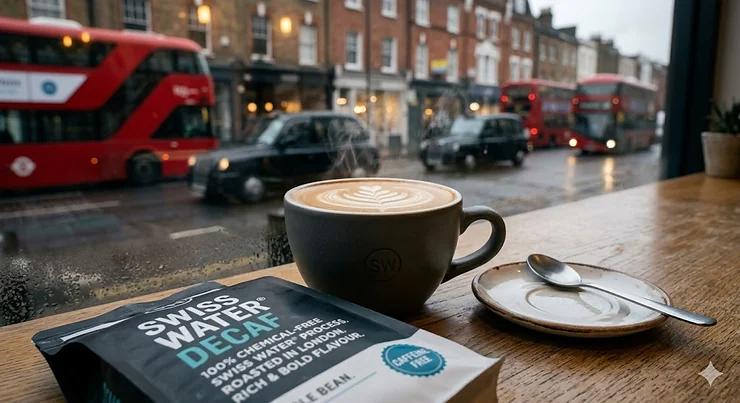
So, what exactly is Swiss water decaf coffee? Simply put, it’s coffee that’s been decaffeinated using only pure water — no chemical solvents, no methylene chloride, no residue you’d rather not think about. The process, which originated in Schaffhausen, Switzerland in the 1930s and was commercially perfected in Burnaby, British Columbia, uses a Green Coffee Extract (GCE) to draw out caffeine through osmosis and diffusion over roughly 8 to 10 hours. The result? Beans that are certified 99.9% caffeine-free while retaining the flavour compounds, antioxidants, and natural oils that give great coffee its character. According to the Swiss Water Process company, the method was developed specifically as an alternative to chemical decaffeination — and it shows in the cup.
For British drinkers, this matters more than ever. The NHS recommends that pregnant women limit caffeine to 200mg per day, and a cup of Swiss water decaf contains roughly 2–5mg — well within safe limits. For those managing anxiety, heart conditions, or simply struggling to sleep after a late-afternoon brew, Swiss water decaf offers the full coffee ritual without the physiological trade-offs.
What most UK buyers overlook is that not all decafs are created equal — in fact, some “decaf” coffees still use chemical solvents that can leave residues behind and noticeably affect taste. The difference between a chemically processed decaf and a well-made Swiss water decaf is genuinely dramatic. In this guide, I’ve pulled together the seven best options available on Amazon.co.uk right now, tested them against real British brewing habits, and given you the honest commentary that the product listings won’t.
Quick Comparison: Best Swiss Water Decaf Coffee UK at a Glance
| Product | Format | Roast | Strength | Best For | Price Range (GBP) |
|---|---|---|---|---|---|
| Decadent Decaf Signature Espresso | Beans/Ground | Dark | 5/5 | Espresso fans | £10–£14 (227g) |
| Decadent Decaf Ethiopian Sidamo | Beans/Ground | Light-Medium | 2/5 | Filter & pour-over | £10–£14 (227g) |
| Planet Java Blue Label Swiss Water Decaf | Beans/Ground | Medium | 3/5 | Everyday drinkers | £18–£24 (1kg) |
| Marley Coffee Simmer Down Organic | Beans/Ground | Medium | 3/5 | Organic & ethical shoppers | £10–£14 (227g) |
| Grumpy Mule Easy Does It Swiss Water Organic | Beans/Ground | Medium | 3/5 | Cafetière lovers | £18–£26 (6×200g) |
| Chapter 4 Coffee Swiss Water Decaf | Beans | Medium-Dark | 3–4/5 | Home baristas | £12–£16 (250g) |
| Decadent Decaf Costa Rican | Beans/Ground | Medium | 3/5 | Balanced everyday cup | £10–£14 (227g) |
The table above gives you a useful starting snapshot, but it only tells part of the story. The Decadent Decaf Signature Espresso and Planet Java Blue Label are the most versatile picks for the widest range of UK brewing set-ups, but if you’re grinding fresh for a V60 every morning, the Ethiopian Sidamo deserves serious consideration. Budget-wise, Planet Java’s 1kg bags offer by far the best value per gram for daily drinkers, while the individual 227g bags from Decadent Decaf suit those who prefer rotating origins and keeping things fresh.
💬 Just one click — help others make better buying decisions too!😊
Top 7 Swiss Water Decaf Coffees on Amazon.co.uk: Expert Analysis
1. Decadent Decaf Signature Espresso Coffee Beans 227g — Swiss Water Process
If you want one Swiss water decaf coffee that punches hardest for espresso, this is it. Hand-roasted in West Sussex by father-and-son team Richard and Greg, Decadent Decaf is the UK’s first dedicated decaffeinated coffee brand — and the Signature Espresso is their crown jewel.
The beans are rated Strength 5, their highest, and the dark roast profile delivers a genuinely bold, rich crema under pressure. What this means practically: it holds its own in a flat white or cappuccino without getting lost behind the milk, which is a real achievement for any decaf. The Swiss Water Process certifies 99.9% caffeine removal, and you genuinely cannot detect a difference from the caffeinated equivalent when brewed correctly. For anyone with a bean-to-cup machine on the kitchen worktop — and living in a compact British flat where counter space is precious — this 227g bag is the right size to stay fresh between uses.
UK buyers report consistently strong feedback: “Finally a decaf that doesn’t taste like regret” is one of the more eloquent reviews. The consensus is that flavour authenticity is excellent for the price range. Prime-eligible via Amazon.co.uk.
✅ Genuine dark espresso character — unusual for decaf
✅ UK hand-roasted — faster delivery and fresher beans
✅ Certified 99.9% caffeine-free, no chemical residue
❌ 227g bags disappear quickly if you’re brewing doubles daily
❌ Dark roast can be slightly intense for filter methods
Around £10–£14 for 227g — excellent value for a specialty-grade decaf espresso.
2. Decadent Decaf Ethiopian Sidamo Coffee Beans 227g — Swiss Water Process, 100% Arabica
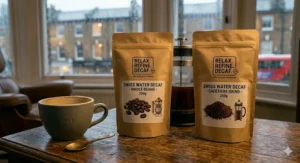
Single-origin decaf is still a novelty that surprises people, and the Ethiopian Sidamo is where Decadent Decaf really shows off. Sidamo, in southern Ethiopia, produces some of the world’s most distinctive coffee — floral, fruited, with a brightness that light-to-medium roasting brings forward beautifully.
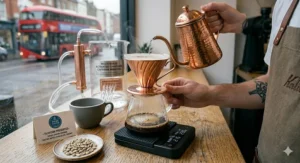
The light-medium roast and Strength 2 rating make this the polar opposite of the Signature Espresso. It’s designed for slow brewing: V60, AeroPress, cafetière, or even Chemex. What most UK buyers overlook is that Ethiopian coffees are among the most expressive of any origin, and the Swiss Water Process actually preserves more of that origin character than solvent-based decaffeination, which strips the natural oils alongside the caffeine. You genuinely get bergamot, jasmine, and dried stone fruit notes in the cup — things that make your morning feel considerably more civilised.
This is also 100% Arabica, which matters for flavour complexity and smoothness. Customer reviews consistently highlight the surprising brightness for a decaf, with several noting it as a genuine discovery. Available via Amazon.co.uk with Prime delivery.
✅ Rare single-origin Ethiopian terroir in a decaf format
✅ 100% Arabica — excellent for pour-over and filter methods
✅ Flavour complexity that rivals many caffeinated specialty coffees
❌ Light roast not well-suited to espresso machines
❌ Smaller 227g bags mean more frequent repurchasing
Around £10–£14 per 227g — a fair price for single-origin quality.
3. Planet Java Blue Label Swiss Water Decaf Coffee Beans 1kg — Award-Winning, Hand Roasted in the UK, 100% Arabica
This is the one to buy if you drink Swiss water decaf coffee every day and your primary concern is consistent quality without constantly reordering. Planet Java’s Blue Label is a premium Arabica blend sourced from Central America and East Africa, roasted in small batches in the UK — which means fresher beans and no cross-Channel logistics headaches post-Brexit.
The medium roast sits at Strength 3, which makes it genuinely versatile: it performs well in a cafetière, works comfortably in a bean-to-cup machine, and handles espresso without going bitter. The 1kg bag format is the real practical advantage here. For British households where the coffee machine runs all day — working from home has made many of us our own worst baristas — a kilogram of decaf bought once a month is far more sensible than juggling multiple small bags. The award-winning credentials aren’t marketing puffery; the balanced body and acidity that characterise Central American and East African blends are genuinely present.
UK reviews highlight the freshness and value, with several praising the consistent roast-to-roast quality. Prime-eligible on Amazon.co.uk, which means next-day delivery — rather handy when you’ve run out at 7am.
✅ Outstanding value per gram for daily drinkers
✅ Versatile medium roast — works across all main brew methods
✅ UK-roasted: fresher and no import delays
❌ Blended origin lacks the single-origin storytelling of pricier options
❌ 1kg commitment not ideal if you like rotating coffees
Around £18–£24 for 1kg — the best value-per-cup option in this list.
4. Marley Coffee Simmer Down Organic Swiss Water Decaf Coffee Beans 227g — Strength 3, 100% Arabica
Named after the Marley family legacy and rooted in the same Jamaican ethos of taking life a little more slowly, Simmer Down is the organic option in this lineup — and it’s one of the more thoughtful buys for anyone who cares about where their food comes from as well as how it tastes.
The medium roast at Strength 3 is approachable and balanced, with the organic certification adding confidence that no synthetic pesticides or fertilisers were involved in production. What’s worth noting for the UK buyer: organic certification here means the coffee meets EU Organic standards (still recognised under UK retained law post-Brexit), which requires at least 95% certified organic material and strict supply chain traceability. The Swiss Water Process pairs naturally with organic beans — in fact, it’s the only decaffeination method compatible with organic certification, since solvent-based methods would strip that status immediately.
The flavour profile is gently chocolatey and smooth — think a milk chocolate biscuit dunked in a good brew rather than anything sharp or acidic. UK customer reviews are warm, particularly from buyers who use it for cafetières and AeroPress at home. Prime-eligible via Amazon.co.uk.
✅ Certified organic — compatible with clean-living priorities
✅ Accessible flavour profile suits a wide range of tastes
✅ Genuinely Swiss Water Process — supports organic certification integrity
❌ 227g size goes quickly; no 500g or 1kg option currently on Amazon.co.uk
❌ Mild character may disappoint those seeking a strong espresso hit
Around £10–£14 for 227g — a solid mid-range choice with ethical credentials.
5. Grumpy Mule Easy Does It Swiss Water Organic Decaf Coffee Beans 200g × 6 Pack — Notes of Milk Chocolate
Grumpy Mule is one of those brands that does its job without making a fuss about it — which is rather on-brand for a Yorkshire-founded coffee roaster. The Easy Does It Swiss Water Organic comes in a convenient six-pack of 200g bags, and the milk chocolate flavour notes make it one of the more comforting options in this roundup.
The medium roast and organic certification tick the same boxes as the Marley Coffee entry, but the six-pack format suits households that go through coffee at pace. The individual 200g bags also mean you’re opening fresh coffee more frequently rather than leaving a large bag going slightly stale in the kitchen cupboard — particularly relevant in British homes where humidity can affect coffee storage faster than many people realise. The 1.2kg total volume gives you solid coverage for a month’s worth of daily decaf drinking.
Grumpy Mule has a strong following among cafetière users in particular, and the milk chocolate notes translate beautifully through a French press. UK reviews describe it as a reliable, crowd-pleasing cup. Available on Amazon.co.uk; check for Prime eligibility and free delivery thresholds.
✅ Six-pack format — fresher per opening, excellent household value
✅ Milk chocolate profile — universally accessible and comforting
✅ Swiss Water Organic — double credentials in one product
❌ Buying six packs means a commitment to one flavour profile
❌ 200g per bag can feel small for heavy drinkers
Around £18–£26 for the 6-pack — excellent value when split across a household.
6. Chapter 4 Coffee Swiss Water Decaf Coffee Beans 250g — Single Origin Arabica, UK Roasted
Chapter 4 Coffee is the specialist’s choice in this roundup — a smaller UK roaster producing single-origin Swiss water decaf coffee with genuine attention to sourcing and roasting craft. The 250g bags are roasted in the UK, which makes a real difference to freshness compared to imported pre-roasted alternatives.
The medium-dark roast at Strength 3–4 positions this nicely between the brightness of the Ethiopian Sidamo and the full intensity of the Signature Espresso. It works well in espresso, handles milk drinks competently, and rewards slower brewing methods with some complexity. What matters most here is the provenance: single-origin means you’re tasting a specific place, not a committee-approved blend, and that transparency appeals to the growing number of UK coffee drinkers who want to know their supply chain as well as they know their postcode.
This is the pick I’d suggest for someone moving from supermarket decaf to specialty-grade for the first time — it bridges the gap without being intimidating. Feedback from UK buyers highlights the clean, fresh flavour and appreciate the roast date transparency. Available on Amazon.co.uk.
✅ UK-roasted — guaranteed freshness and simpler supply chain
✅ Single-origin transparency suits provenance-conscious buyers
✅ Versatile medium-dark roast works across brew methods
❌ Slightly smaller brand means less reviews data than Decadent Decaf
❌ 250g bag — premium price per gram vs. Planet Java’s 1kg
Around £12–£16 for 250g — worth the premium for specialty-grade freshness.
7. Decadent Decaf Costa Rican Coffee Beans 227g — Swiss Water Process, Medium Roast, Strength 3, 100% Arabica
Costa Rica has a reputation for producing reliably excellent Arabica coffee — clean, balanced, and utterly consistent — and Decadent Decaf’s Costa Rican is the embodiment of that: an everyday decaf you can reach for on autopilot and never be disappointed by.
The medium roast at Strength 3 gives you a gently sweet, nutty profile with mild stone fruit notes — not as complex as the Ethiopian Sidamo, not as forceful as the Signature Espresso, but consistently good in any format. It’s the Swiss water decaf coffee equivalent of a dependable old jumper: never exciting, always exactly what you need. For the British drinker who wants one bag to work in their cafetière at breakfast, the office bean-to-cup machine at lunch, and an afternoon AeroPress brew — this is it.
UK buyers consistently praise the versatility and approachable flavour. Hand-roasted in West Sussex alongside Decadent Decaf’s other lines, freshness is reliable. Prime-eligible on Amazon.co.uk.
✅ Supremely versatile — works in every brew method
✅ Consistent, crowd-pleasing flavour — ideal for households with mixed preferences
✅ Great entry point into single-origin Swiss water decaf
❌ Less complexity than Ethiopia or Guatemala single-origins
❌ 227g bags require frequent reordering for high-volume households
Around £10–£14 for 227g — solid value for a dependable everyday Swiss water decaf.
How the Swiss Water Process Actually Works (And Why It Matters for Your Cup)
Understanding why Swiss water decaf coffee tastes better than chemically processed alternatives requires a brief detour into the science — but I promise it’s worth it, because it directly explains what you’re tasting.
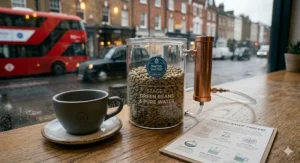
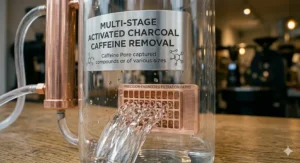
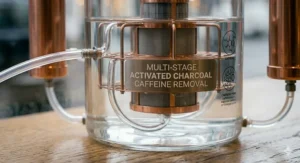
The Swiss Water® Process works through osmosis and diffusion rather than chemical solubility. Green (unroasted) coffee beans are first soaked in hot water, which draws out both caffeine and the flavour compounds that make coffee taste like itself. The caffeine is then removed from this liquid using activated carbon filters, leaving what’s known as Green Coffee Extract (GCE) — a solution full of flavour compounds but stripped of caffeine. Fresh green beans are then bathed in this GCE, which pulls out their caffeine (because the GCE is already saturated with flavour compounds, it can’t absorb more flavour — it only draws out caffeine). The process runs for approximately 8 to 10 hours until 99.9% of the caffeine has been removed.
What this means in practice: the natural oils, antioxidants, and flavour compounds that give specialty coffee its character are largely preserved. Chemical methods — using solvents like methylene chloride or ethyl acetate — work faster but strip away those natural compounds alongside the caffeine, leaving beans drier and flavour profiles flatter. That’s why cheap supermarket decaf often tastes oddly hollow; it’s not just poor beans, it’s poor process.
According to UK regulations cited by Raw Bean, decaffeinated coffee must contain no more than 0.1% caffeine by dry weight for roasted and ground coffee — a standard that Swiss Water not only meets but exceeds. It’s also worth knowing that over 80% of water used in the Swiss Water Process is returned clean to local waterways, making it one of the more environmentally responsible food processes in commercial use. For British buyers who care about sustainability — and an increasing number do — that’s a genuinely meaningful credential, not greenwashing.
Real-World Brewing: Who Should Buy What (A British User Guide)
Let me save you some trial and error with a few specific profiles drawn from the kinds of questions I see from UK coffee drinkers.
The London Flat Dweller with a Bean-to-Cup Machine You’re making one or two cups in the morning before heading to the Tube, your kitchen is approximately the size of a generous cupboard, and you want consistency without fuss. The Planet Java Blue Label 1kg is your answer — one monthly purchase, versatile roast, fits any bean hopper. Prime next-day delivery means you’re never caught short.
The Working-from-Home Parent in the Suburbs You’re making coffee all day, sharing the machine with a partner who insists on “proper” coffee, and you’ve switched to decaf after 2pm for sleep reasons. The Grumpy Mule Easy Does It 6-Pack keeps individual bags fresh, the milk chocolate profile gets no complaints from anyone in the house, and the six-pack format means one less weekly Amazon order.
The Specialty Coffee Enthusiast in Edinburgh or Bristol You own a decent grinder, you’ve heard of bloom time, and you find most decaf options beneath you — until now. The Decadent Decaf Ethiopian Sidamo or Chapter 4 Swiss Water Decaf will genuinely challenge your assumption that decaf can’t be interesting. Brew either through a V60 with water just off the boil (around 93–95°C), use a coarser grind than you would for caffeinated, and prepare to be surprised.
The Pregnant Coffee Lover Who Refuses to Drink Brown Water First, congratulations. Second, the NHS caffeine guidance for pregnancy permits up to 200mg daily, and any Swiss water decaf here delivers well under 5mg per cup. The Marley Coffee Simmer Down Organic is the cleanest option with organic certification — particularly reassuring during pregnancy when ingredient transparency matters most.
Common Mistakes When Buying Swiss Water Decaf Coffee in the UK
Mistake 1: Assuming all decaf is chemically processed This is the most common misconception that puts people off decaf entirely. It’s worth actively searching for “Swiss Water Process” on the product listing — not just “decaf.” The products in this guide all specify their process, which is exactly the transparency you should demand.
Mistake 2: Using identical brew settings to your caffeinated coffee Decaffeinated beans — even excellent Swiss water decaf coffee — behave slightly differently from caffeinated equivalents. The decaffeination process changes the bean structure very slightly, which can affect extraction. As a general rule: grind slightly coarser, brew at around 93°C rather than 96°C, and taste before adjusting. Dialling in a decaf shot on an espresso machine takes an extra 10 minutes of patience, but the result is worth it.
Mistake 3: Buying based on price alone The cheapest decaf on Amazon.co.uk almost certainly uses a chemical solvent. The price gap between solvent-processed and Swiss water decaf reflects a genuinely more expensive, more labour-intensive process. What you’re paying for is the absence of residue and the preservation of flavour. For context, the UK decaffeinated coffee market is projected to reach approximately £216 million by 2032 — demand is growing precisely because consumers are wising up to quality differences.
Mistake 4: Ignoring storage in British conditions Coffee doesn’t like humidity, and British kitchens — particularly in older terraced housing without great ventilation — can be surprisingly damp. Once opened, store your Swiss water decaf in an airtight container away from the kettle or hob. For the 1kg Planet Java bag, decant into smaller containers once opened to limit oxygen exposure. This sounds fussy but makes a genuine difference to how long your coffee tastes its best.
Mistake 5: Not checking whether the product ships from UK stock Post-Brexit, some coffee products listed on Amazon.co.uk ship from EU warehouses with variable delivery times and occasionally unexpected import delays. All products in this guide ship from Amazon UK fulfilment centres — check for the “Sent from Amazon Fulfillment” note on the listing before purchasing.
Swiss Water Decaf vs. Other Decaffeination Methods: The Honest Comparison
| Method | Chemicals Used | Caffeine Removal | Flavour Retention | Organic Compatible | UK Availability |
|---|---|---|---|---|---|
| Swiss Water Process | None | 99.9% | Excellent | ✅ Yes | Widely available |
| CO₂ Process | None | 99%+ | Very good | ✅ Yes | Limited |
| Methylene Chloride | Yes | 96–97% | Moderate | ❌ No | Common (budget options) |
| Ethyl Acetate | Yes (natural solvent) | 96–97% | Good | ❌ No | Common |
| Mountain Water Process | None | 99.9% | Excellent | ✅ Yes | Very limited in UK |
The comparison above makes the case plainly. Swiss Water and CO₂ processes are the two methods worth considering for quality and safety — and CO₂ is considerably harder to source in the UK market. Mountain Water Process (used primarily by Mexican facilities) is technically excellent but you’ll rarely find it on Amazon.co.uk. For the overwhelming majority of British decaf drinkers shopping on Amazon, Swiss Water Process is effectively the gold standard, and the brands in this guide have built their reputations entirely around it.
The environmental credentials are also worth flagging: solvent-based processes generate chemical waste and require specialist disposal. Swiss Water’s circular system — where the activated carbon filters are renewable and reusable, and the water is largely returned to local waterways — is a genuinely more sustainable industrial process. For UK buyers committed to responsible consumption, that’s a purchasing consideration, not just a marketing message.
How to Choose Swiss Water Decaf Coffee in the UK: 6 Key Criteria
Picking the right Swiss water decaf coffee from this list (or beyond it) comes down to six practical questions worth working through before you click “Add to Basket.”
- What’s your primary brew method? Espresso machine and bean-to-cup users want Strength 4–5 and a medium-dark to dark roast. Filter, cafetière, and AeroPress users can go anywhere from Strength 2 to 4 — lighter roasts reward slower methods.
- How much coffee do you get through? If you’re brewing two or more cups daily, Planet Java’s 1kg option saves money and eliminates the nuisance of constant reordering. Occasional drinkers should stick with 200–250g bags to maintain freshness.
- Are ethical credentials important to you? For organic certification, Marley Coffee and Grumpy Mule are the standouts. Both carry genuine organic status that has survived the post-Brexit regulatory transition.
- Do you want single-origin transparency? Decadent Decaf’s Ethiopian Sidamo and Costa Rican options, plus Chapter 4’s single-origin range, offer full traceability. Blended options like Planet Java Blue Label offer consistency and value but less origin storytelling.
- Are you buying for a household or just yourself? The Grumpy Mule six-pack’s individual 200g bags are ideal for households where you want freshness control without bulk commitment. Solo drinkers might find the six-pack format excessive.
- What’s your budget in GBP? Budget-conscious: Planet Java 1kg (best per-gram value). Mid-range flexibility: any Decadent Decaf 227g. Premium freshness: Chapter 4 UK-roasted option.
Long-Term Value & Sustainability of Swiss Water Decaf in the UK
One question worth considering before you commit: is Swiss water decaf coffee a cost you can sustain, and is it worth the premium over standard supermarket decaf?
Let’s be honest about costs. Swiss water decaf coffee on Amazon.co.uk typically costs somewhere between £10 and £24 depending on bag size and brand — meaningfully more per 100g than supermarket own-brand decaf, which is almost certainly chemically processed. But consider the total picture. A 1kg bag of Planet Java Blue Label, bought at around £18–£24, delivers approximately 60–80 espresso shots (using an 18–20g dose). At £20 for 70 shots, that’s under 30p per cup — far below any coffee shop, and considerably better value than the £3.50–£5 you’d pay for a specialty decaf flat white on the high street.
The long-term health rationale also has a financial dimension. Decaf coffee retains most of the antioxidant compounds present in regular coffee, which the National Coffee Association links to potential reductions in the risk of liver disease, type 2 diabetes, and other chronic conditions. While coffee isn’t medicine, choosing a higher-quality process that preserves those compounds rather than stripping them does have a cumulative logic to it.
From a sustainability standpoint, the Swiss Water Process’s minimal environmental footprint — no chemical waste, largely circular water use, renewable carbon filters — aligns with broader UK consumer trends toward responsible purchasing. Which? magazine’s growing coverage of ethical food sourcing reflects this shift, and it’s worth checking their coffee buying guides for independent verification of brand claims.
FAQ: Swiss Water Decaf Coffee UK
❓ What is the Swiss water process for decaffeinating coffee?
❓ Is Swiss water decaf coffee safe during pregnancy in the UK?
❓ Does Swiss water decaf coffee taste different from regular coffee?
❓ How much caffeine is in Swiss water decaf coffee UK?
❓ Can I get Swiss water decaf coffee on Amazon Prime UK with next-day delivery?
Conclusion: Make Your Next Cup Count
Swiss water decaf coffee isn’t a compromise — not anymore. The seven options in this guide represent some of the best chemical-free decaf available on Amazon.co.uk right now, covering everything from West Sussex hand-roasted espresso to single-origin Ethiopian pour-over, from organic family packs to specialist UK-roasted single origins. The common thread is the Swiss Water Process: a method that takes longer, costs more, and produces a genuinely superior result.
If I had to send you somewhere specific right now, I’d say: start with the Planet Java Blue Label 1kg if you want unbeatable everyday value, or the Decadent Decaf Signature Espresso if your espresso machine is where you spend most of your kitchen time. Both are available on Amazon.co.uk with Prime delivery, and both will remind you that choosing decaf doesn’t mean choosing to be bored.
The UK decaffeinated coffee market is growing rapidly for good reason: more people are realising that how their coffee is processed matters just as much as where it’s from. Swiss water decaf coffee is the logical conclusion of that thinking — cleaner, more flavourful, and increasingly available at prices that make switching an easy decision.
✨ Don’t Miss These Exclusive Deals!
🔍 Click on any highlighted product to check current pricing and availability on Amazon.co.uk. Your best cup of chemical-free decaf is just one click away!
Recommended for You
- Best Coffee Beans for AeroPress UK 2026: 7 Expert Picks
- Best Decaf Coffee Beans UK 2026: 7 Top Picks Reviewed
- 7 Best Low Acid Coffee Beans UK 2026 | Gentle on Stomach
Disclaimer: This article contains affiliate links. As an Amazon Associate, I earn from qualifying purchases. If you purchase products through these links, we may earn a small commission at no additional cost to you.
✨ Found this helpful? Share it with your mates! 💬🤗
