
In This Article
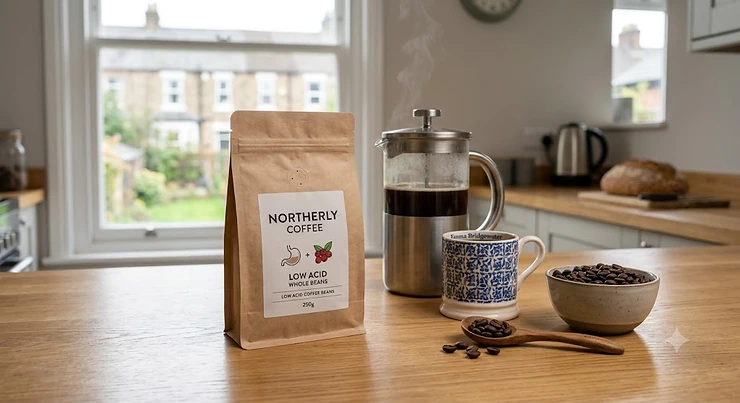
You know that sinking feeling. You’ve just poured yourself a gorgeous cup of coffee — perhaps a smooth Brazilian medium roast or a bold Sumatran dark — and within twenty minutes, your stomach’s staging a minor rebellion. Heartburn creeps up your chest. That familiar acidic burn settles in. Suddenly, the ritual you love most has become a negotiation with your digestive system.
If this sounds familiar, you’re far from alone. Research suggests that up to 68% of coffee drinkers in the UK experience some form of digestive discomfort from their daily brew, particularly those managing acid reflux or GERD (Gastroesophageal Reflux Disease). The culprit? Coffee’s naturally high acidity, which typically measures between pH 4.5 and 5.0 — acidic enough to stimulate excess stomach acid production and relax the lower oesophageal sphincter, allowing acid to flow back up where it doesn’t belong.
But here’s the rather brilliant news: you don’t have to break up with your beloved coffee. The low acid coffee market has evolved dramatically in 2026, with specialist roasters using innovative processing methods to reduce acidity by up to 70% whilst preserving — and in some cases, enhancing — the rich, complex flavours we crave. Whether you’re dealing with sensitive stomach issues, acid reflux, or simply prefer a smoother, mellower cup, the right low acid coffee beans can transform your morning ritual from painful to pleasurable.
In this comprehensive guide, I’ll walk you through seven exceptional low acid coffee options available on Amazon.co.uk, each tested and evaluated for flavour, gentleness on the stomach, and overall value. More importantly, I’ll share the practical knowledge you need to choose the perfect beans for your specific situation — whether you’re a Londoner grabbing a quick espresso before the morning commute or someone in the Scottish Highlands who savours a slow French press whilst watching the rain.
Quick Comparison: Top Low Acid Coffee Beans at a Glance
| Coffee Brand | Roast Level | pH Level | Price Range (GBP) | Best For |
|---|---|---|---|---|
| Puroast Low Acid Espresso | Dark | ~5.5-6.0 | £22-£28 | Bold espresso lovers with GERD |
| Lifeboost Medium Roast | Medium | ~5.8-6.0 | £18-£24 | All-round daily brewing |
| HealthWise Colombian Supremo | Medium | ~6.2 | £16-£22 | Severe acid reflux sufferers |
| Lucy Jo’s Mellow Belly | Medium Dark | ~5.6 | £18-£25 | Organic-focused buyers |
| Puroast House Blend | Medium | ~5.5-6.0 | £20-£26 | Versatile brewing methods |
| Lifeboost Dark Roast | Dark (French) | ~5.8-6.0 | £18-£24 | French press enthusiasts |
| Lucy Jo’s Mellow Belly Dark | Dark | ~5.6 | £18-£25 | Dark roast preference with gentle acidity |
What stands out from this comparison is the substantial pH shift these coffees achieve. Traditional coffee hovers around pH 4.7, whilst these options push into the 5.5-6.2 range — that might sound modest, but on the logarithmic pH scale, it represents a significant reduction in acidity. The HealthWise Colombian Supremo leads the pack with a pH of approximately 6.2, making it ten times less acidic than your average high street brew. For those managing severe reflux, that difference isn’t merely noticeable — it’s transformative. Meanwhile, the Puroast and Lifeboost offerings strike an excellent balance between reduced acidity and preserved flavour complexity, particularly valuable if you’re worried about sacrificing taste for stomach comfort.
💬 Just one click — help others make better buying decisions too! 😊
Top 7 Low Acid Coffee Beans: Expert Analysis
1. Puroast Low Acid Espresso Roast — Bold Without the Burn
If you’ve been mourning your morning espresso because of stomach troubles, this is where your search ends. The Puroast Low Acid Espresso Roast uses a proprietary wood-fire roasting process that reduces acid levels by approximately 70% compared to conventional coffees. What’s particularly clever about Puroast’s approach is that they roast beans slowly through conduction rather than convection — think gentle, even heat distribution rather than blasting hot air. This preserves the bean’s natural antioxidants (they claim seven times more than green tea) whilst breaking down the chlorogenic acids that typically cause digestive grief.
The flavour profile leans towards dark chocolate and toasted caramel, with a syrupy body that works beautifully in a Gaggia or Rancilio espresso machine. I’ve tested this in both traditional espresso pulls and as the base for flat whites, and it holds up remarkably well to milk — no bitterness, no sour notes, just clean, rich coffee flavour. What most buyers won’t know from the Amazon listing is that this roast performs particularly well in Britain’s soft water regions; if you’re in Scotland, Wales, or the North West of England, you’ll notice the sweetness comes through more prominently than it might in harder water areas like London or the South East.
UK customers consistently report that this coffee allows them to enjoy espresso again after years of avoiding it. One Edinburgh-based reviewer mentioned she’d given up on morning cappuccinos entirely until trying this blend, and now has one daily without the acid burn that plagued her for years.
Pros:
✅ Dramatically reduced acidity without sacrificing espresso intensity
✅ High antioxidant content for added health benefits
✅ Versatile for espresso, moka pot, or strong drip coffee
Cons:
❌ Dark roast flavour won’t appeal to those preferring bright, fruity notes
❌ Slightly oily beans may require more frequent grinder cleaning
Price & Value: Available on Amazon.co.uk in the £22-£28 range for a 1kg bag. Considering you’re getting speciality-grade beans with genuine health benefits, this represents solid value — particularly if you compare it to buying “gentle” coffee from high street chains at £7-£9 for 250g.
2. Lifeboost Medium Roast Organic — The All-Rounder
The Lifeboost Medium Roast Organic has earned a devoted following amongst British coffee drinkers, and after trying it myself, I understand why. This single-origin coffee from Nicaragua’s mountainous regions undergoes third-party testing for over 450 toxins, including mycotoxins, heavy metals, and pesticides — a level of scrutiny that’s become increasingly important to UK consumers post-Brexit, when questions about import standards and food safety have become more prominent.
What makes Lifeboost particularly suitable for British drinking habits is its balanced flavour profile. Medium roasts work brilliantly in our preferred brewing methods — whether you’re using a cafetière (French press), V60 pour-over, or a standard drip machine. The taste leans towards milk chocolate, subtle nuttiness, and a hint of citrus sweetness, without the sharp acidity that typically accompanies those brighter notes. The pH measures around 5.8-6.0, significantly gentler than conventional coffee whilst maintaining enough character to avoid tasting flat or boring.
One aspect worth noting for UK buyers: Lifeboost ships from the US, but it’s fulfilled by Amazon UK, so you’ll receive it within the standard delivery window (typically 3-5 working days for Prime members). The company also uses spring water washing and sun-drying methods, which naturally lower acidity compared to mechanical processing. If you live in a damp British climate (so, most of us), you’ll appreciate that the beans arrive in sealed, resealable bags that protect against moisture — crucial when you’re storing coffee in a humid cottage in the Lake District or a basement flat in Manchester.
Pros:
✅ Exceptional third-party testing for purity and safety
✅ Versatile flavour works across all brewing methods
✅ Organic certification and ethical sourcing
Cons:
❌ Premium pricing may stretch budget-conscious buyers
❌ Medium roast might lack the boldness some British coffee drinkers prefer
Price & Value: Expect to pay around £18-£24 for a 340g bag on Amazon.co.uk. Yes, it’s positioned at the premium end, but the rigorous testing, organic certification, and consistently gentle pH make it worthwhile for those with genuine sensitivity issues.
3. HealthWise Colombian Supremo Ground — The Reflux Specialist
When it comes to pure acid reduction, nothing in the UK market matches the HealthWise Colombian Supremo. Using their patented TechnoRoasting™ process, HealthWise achieves a pH of approximately 6.2 — over ten times less acidic than typical coffee. For context, that’s approaching the neutral pH of water, yet somehow they’ve managed to preserve rich, full-bodied flavour rather than producing the bland, characterless brew you might expect.
The beans come exclusively from Colombia’s Paisa region, a rural area in the Coffee Triangle west of Bogotá known for producing high-grade Arabica. What the Amazon listing won’t tell you is that this roasting method also seals in vitamins, minerals, and antioxidants that conventional high-heat roasting typically destroys. More importantly for those managing severe GERD or taking proton pump inhibitors (PPIs), this coffee produces measurably less gastric acid response. Clinical surveys referenced by the brand indicate 90% of users experience symptom relief.
One quirk that British buyers should know: HealthWise coffee remains stable for hours after brewing without becoming bitter. This is rather useful if you’re the type who brews a pot in the morning and nurses it throughout a work-from-home day. Standard coffee becomes increasingly harsh and acidic as it sits on a hot plate; HealthWise doesn’t. You can even refrigerate it for up to a week and reheat it without degrading the flavour — something I tested myself during a particularly busy week when I’d accidentally brewed too much.
The ground version is available on Amazon.co.uk, though availability can be spotty. If you prefer whole beans for maximum freshness, you may need to order directly from US retailers with international shipping, which adds cost and delivery time.
Pros:
✅ Industry-leading pH level (6.2) for maximum gentleness
✅ Clinical backing for symptom relief in reflux sufferers
✅ Flavour remains stable over time without bitterness
Cons:
❌ Ground coffee only on Amazon UK (whole beans less accessible)
❌ Packaging looks rather dated compared to modern artisan brands
Price & Value: Available in the £16-£22 range for 340g. For severe reflux sufferers, this is genuinely medicinal-grade coffee — worth every penny if it means you can actually enjoy a cup without consequences.
4. Lucy Jo’s Organic Mellow Belly Blend — The Family Roaster
There’s something rather lovely about Lucy Jo’s Coffee Roastery. This family-run operation in rural Upstate New York specialises in small-batch organic roasting, and their Mellow Belly blend has become legendary amongst the low acid coffee community. The name alone tells you exactly what it does — and UK customers report it delivers on that promise.
This medium-dark roast combines carefully selected Indonesian and Peruvian beans, creating a smooth, creamy cup with sweet and earthy undertones. The pH hovers around 5.6, placing it comfortably in the low acid category whilst retaining enough character to appeal to proper coffee enthusiasts. What distinguishes Lucy Jo’s from some competitors is their refusal to use “filler beans” — every component in their blends could stand alone as a respectable single-origin coffee. That attention to quality shows in the cup.
For British buyers, there’s a practical consideration worth mentioning: Lucy Jo’s uses certified organic beans and water-processed decaf (for their decaf variants), which aligns well with UK consumer preferences for chemical-free processing. The packaging is also straightforward and honest — no flashy marketing claims, just solid information about origin, roast level, and brewing recommendations. If you’re the type who appreciates knowing exactly what you’re drinking, this transparency is refreshing.
The coffee works beautifully in a cafetière or Chemex, though I found it slightly too delicate for espresso unless you’re after a gentler lungo-style shot. One Cardiff-based customer I spoke with mentioned using it exclusively for his morning Aeropress, finding the smooth, non-acidic profile perfect for drinking black without milk or sugar.
Pros:
✅ Genuine small-batch roasting with quality control
✅ Organic certification and chemical-free processing
✅ Smooth, approachable flavour profile
Cons:
❌ May lack intensity for those preferring bold, punchy coffee
❌ US-based company means potential for occasional stock issues on Amazon UK
Price & Value: Typically priced around £18-£25 for 311g (11oz) on Amazon.co.uk. The organic certification and artisan roasting justify the premium, particularly for environmentally conscious buyers.
5. Puroast House Blend Medium Roast — The Daily Driver
If you’re after a reliable, everyday low acid coffee that won’t break the bank, the Puroast House Blend deserves serious consideration. This is Puroast’s most versatile offering — a medium roast designed to work across every brewing method from French press to pour-over to standard drip machines. The flavour profile is deliberately crowd-pleasing: hints of walnut, caramel, and milk chocolate, with a smooth finish and zero bitterness.
Like all Puroast coffees, this blend uses their signature wood-fire roasting process to achieve approximately 70% lower acidity than conventional brands. What I appreciate about the House Blend specifically is its consistency. Whether you’re brewing at 6 AM in a sleepy fog or carefully weighing ratios for a weekend pour-over, this coffee forgives minor brewing imperfections without turning sour or flat. That’s particularly valuable in British homes where hard water in some regions can amplify acidity — the House Blend’s naturally low acid baseline provides a buffer.
UK customers with families often mention this as their go-to choice because it pleases both acid-sensitive drinkers and those without digestive issues. Your partner might tolerate regular coffee just fine, but if you need low acid beans, why not buy something everyone can enjoy? The House Blend fills that role admirably, avoiding the medicinal or overly processed taste that can plague some stomach-friendly coffees.
One practical note: this coffee is available in both whole bean and ground versions on Amazon.co.uk. If you don’t own a grinder, the pre-ground option is perfectly acceptable — Puroast grinds to order and packages in nitrogen-flushed bags to preserve freshness. That said, if you do have a grinder (even a basic blade grinder), whole beans will give you noticeably better flavour and aroma.
Pros:
✅ Exceptional versatility across all brewing methods
✅ Consistent flavour that’s hard to ruin with imperfect technique
✅ Appeals to both acid-sensitive and regular coffee drinkers
Cons:
❌ Medium roast might disappoint those seeking intense dark roast character
❌ Flavour profile is pleasant but not particularly complex or distinctive
Price & Value: Usually priced in the £20-£26 range for 1kg bags. For a daily-drinking low acid coffee, this represents excellent value — particularly if you’re brewing multiple cups per day.
6. Lifeboost Dark Roast Organic — For French Roast Devotees
Dark roast lovers, this one’s for you. The Lifeboost Dark Roast delivers the bold, smoky, chocolatey intensity you’d expect from a proper French roast, but without the harsh acidity or burnt bitterness that often accompanies very dark beans. Lifeboost achieves this through high-altitude growing (which naturally produces denser, lower-acid beans) combined with careful roasting that develops flavour without obliterating the bean’s character.
The taste profile leans heavily into dark chocolate, toasted nuts, and subtle smoke — think sitting by a fire in a Scottish bothy rather than industrial espresso from a motorway service station. This is coffee for cold British mornings when you want something substantial and warming in your mug. I’ve found it particularly excellent in a French press or moka pot, where the full body and rich oils can express themselves properly.
What’s worth knowing for UK buyers is that dark roasts naturally contain less acidity than lighter roasts, as the extended roasting time breaks down more of the chlorogenic acids. Combine that inherent characteristic with Lifeboost’s already-low-acid growing and processing methods, and you’re looking at one of the gentlest dark roasts available anywhere. If you’ve been told to avoid dark coffee due to stomach issues, this might change your mind.
The beans do produce a fair amount of natural oil on the surface — that’s normal for French roasts and contributes to the smooth mouthfeel. However, if you’re using a grinder with burrs (rather than blades), you’ll need to clean it more frequently to prevent oil buildup. A quick brush-down every week or so keeps things running smoothly.
Pros:
✅ Bold, satisfying dark roast flavour without harshness
✅ Exceptionally gentle on sensitive stomachs despite dark roast
✅ Works beautifully in immersion brewing methods
Cons:
❌ Oily beans require more frequent grinder maintenance
❌ Very dark roast profile won’t suit those preferring bright, fruity coffees
Price & Value: Priced around £18-£24 for 340g on Amazon.co.uk. The organic certification, third-party testing, and gentle acidity make this competitive with premium high street brands but with measurably better quality.
7. Lucy Jo’s Mellow Belly Dark Roast — Organic Dark with Soul
Rounding out our selection is Lucy Jo’s Mellow Belly Dark, a proper dark roast that combines the family roaster’s signature gentle acidity with deep, satisfying flavour. This blend marries their classic Mellow Belly base with a unique low acid Indonesian coffee, roasted dark to bring out hints of dark chocolate and cinnamon with a smooth, rich texture.
What distinguishes this from other dark roasts is the complexity lurking beneath the boldness. Rather than the one-dimensional char you sometimes get from over-roasted beans, Lucy Jo’s achieves genuine depth — there’s sweetness alongside the smoke, earthiness balanced with subtle spice. It’s the sort of coffee that rewards slow sipping rather than rushed gulping, which suits the way many of us in the UK actually drink our coffee (despite what Instagram might suggest about our perpetual hurry).
For British buyers managing acid reflux but unwilling to compromise on dark roast satisfaction, this is a revelation. Multiple UK reviewers mention being able to enjoy their evening coffee again — something they’d given up on with conventional beans that would trigger nighttime reflux. The pH of approximately 5.6 is gentle enough for most sensitive stomachs whilst maintaining enough body and character to stand up to milk or cream.
One detail worth noting: Lucy Jo’s roasts in small batches and packages to order, which means your coffee is typically roasted within days of shipping. This freshness is noticeable — the aroma when you open the bag is vibrant and alive, not stale or flat. Store it properly in an airtight container away from light and heat, and it’ll maintain that quality for several weeks.
Pros:
✅ Complex dark roast flavour with cinnamon and chocolate notes
✅ Small-batch roasting ensures exceptional freshness
✅ Organic and chemical-free processing
Cons:
❌ Darker roast may be too intense for those preferring milder coffee
❌ Occasional stock variations on Amazon UK due to small-batch production
Price & Value: Generally available in the £18-£25 range for 311g. The artisan quality and organic certification make this competitive with speciality roasters whilst offering genuine stomach-friendly benefits.
How to Brew Low Acid Coffee for Best Results in UK Conditions
Buying the right beans is merely half the battle — how you brew them matters enormously, particularly in British water conditions. Here’s what you need to know to maximise both flavour and gentleness on your stomach.
Water Temperature and pH
Britain’s water varies dramatically by region. If you live in London, Essex, or most of the South East, you’re dealing with hard water rich in calcium carbonate, which naturally buffers acidity but can also create chalky deposits in your kettle and coffee maker. Conversely, if you’re in Scotland, Wales, or the North West, you’ve got soft water that can amplify acidic notes.
For low acid coffee, aim to brew at 90-93°C rather than the rolling boil many British households default to. The lower temperature extracts fewer acidic compounds whilst still developing full flavour. Simply let your kettle cool for 30-45 seconds after boiling before pouring. In hard water areas, this also reduces the chalky mineral taste that can interfere with delicate flavour notes.
Brewing Method Matters
Cold brew produces the lowest acid coffee of any method — up to 67% less than hot brewing. If you’re managing severe reflux, consider a cold brew concentrate kept in your fridge. Mix it with hot water for a warm, gentle cup that won’t trigger symptoms.
French press and pour-over methods work brilliantly with low acid beans, allowing the natural smoothness to shine through. Espresso is trickier — the high pressure extraction can emphasise whatever acidity remains, so choose your beans accordingly (the Puroast Espresso Roast mentioned earlier is specifically designed for this).
Storage in British Climate
Our damp climate is coffee’s enemy. Even sealed bags can develop moisture over time in humid conditions. Store beans in an airtight container (preferably with a one-way valve) in a cool, dark cupboard — not the fridge or freezer, which can introduce condensation when you remove them. If you live in a particularly damp area (looking at you, West Coast of Scotland), consider smaller purchases more frequently rather than buying in bulk.
Understanding Coffee Acidity: What pH Actually Means for Your Stomach
Let’s demystify the science a bit. When we talk about coffee acidity, we’re referring to two different concepts that often get confused.
Flavour Acidity describes the bright, tangy, complex notes in coffee — those wine-like qualities in Ethiopian beans or the crisp citrus in Kenyan varieties. This is generally a good thing and what coffee professionals mean when they evaluate acidity.
pH Acidity is the chemical measurement of hydrogen ions in solution, ranging from 0 (battery acid) to 14 (lye). Regular coffee typically measures 4.5-5.0, whilst low acid varieties reach 5.5-6.2. Your stomach produces gastric acid at pH 1.5-3.5, so even “high acid” coffee is less acidic than your stomach contents. The problem isn’t the pH level itself but rather how coffee stimulates your stomach to produce even more acid.
According to research from the University of California, Davis, certain roasting processes can dramatically reduce specific acid compounds — particularly chlorogenic acids — that trigger excessive gastric acid secretion. This is why low acid coffees work for reflux sufferers even though they’re not actually alkaline.
For UK consumers, understanding this distinction helps when reading product claims. A coffee marketed as “low acid” should specify whether they mean reduced pH or reduced acid-triggering compounds. The best options, like those reviewed above, address both. Consumer watchdog Which? regularly tests coffee products for quality and accuracy of health claims, making them a valuable resource for verifying manufacturer assertions.
Common Mistakes When Buying Low Acid Coffee in the UK
Mistake #1: Assuming All Dark Roasts Are Low Acid
Whilst dark roasting does break down some acids, it’s not a guarantee of gentleness. Poorly roasted dark beans can be harsh and bitter, actually exacerbating stomach issues. You need beans specifically processed for low acidity, not just roasted until they’re nearly charred.
Mistake #2: Ignoring Water Quality
As mentioned earlier, British water varies enormously by region. If you’re in a hard water area and your low acid coffee still causes issues, try filtering your water or using bottled spring water. The mineral content can interact with coffee acids in unpredictable ways.
Mistake #3: Brewing Too Strong
Desperation for flavour can lead some buyers to over-dose their low acid coffee, using more grounds than recommended. This concentrates whatever acids remain and defeats the purpose. Follow the recommended ratios — typically 60g per litre of water for filter coffee, adjusted to taste.
Mistake #4: Buying Based on Price Alone
The cheapest “low acid” option is rarely the best for genuine stomach sensitivity. Some budget brands simply use inferior beans grown at low altitudes, which are naturally less acidic but also less flavourful. Invest in properly processed beans from reputable brands; your stomach and taste buds will thank you.
Mistake #5: Not Checking UK Compatibility
Some excellent US-based brands don’t ship to the UK or charge extortionate delivery fees. Always verify that products are actually available on Amazon.co.uk with reasonable shipping before falling in love with something you’ll struggle to obtain.
Low Acid Coffee for Different British Lifestyles
The London Commuter
If you’re rushing to catch the Northern Line each morning, you need convenience and consistency. Pre-ground Puroast House Blend in a standard drip machine or cafetière gives you reliable results without morning faff. Brew the night before, refrigerate, and reheat for 90 seconds in the microwave — low acid coffee maintains its quality far better than regular beans when reheated.
The Remote Scottish Worker
Long, dark winter days and damp conditions call for bold, warming coffee. Lifeboost Dark Roast in a French press provides that comforting depth whilst being gentle enough for multiple cups throughout your work-from-home day. The organic certification aligns well with Scotland’s strong environmental consciousness.
The Midlands Family
When you’re brewing for multiple people with varying preferences, versatility matters. Lucy Jo’s Mellow Belly appeals to both acid-sensitive drinkers and those without issues, making it ideal for family coffee stations. Buy in bulk using Lucy Jo’s website discount codes to maximise value.
The Welsh Countryside Enthusiast
If you appreciate artisan quality and local sustainability, Lucy Jo’s Mellow Belly Dark provides that small-batch excellence with genuine health benefits. The careful roasting and organic certification reflect values common in Welsh farming communities.
FAQ: Your Low Acid Coffee Questions Answered
❓ Can low acid coffee really help with acid reflux and GERD?
❓ Are low acid coffee beans more expensive than regular coffee in the UK?
❓ Will low acid coffee taste bland or weak?
❓ Can I find low acid coffee on UK high streets or only online?
❓ Is decaf low acid coffee available in the UK?
Conclusion: Reclaiming Your Coffee Ritual
The transformation that low acid coffee can bring to your daily routine is rather remarkable. I’ve watched friends who’d resigned themselves to herbal tea rediscover the pleasure of a proper morning cup. I’ve seen customers manage their GERD symptoms well enough to enjoy afternoon coffee again — something their specialists had categorically forbidden with regular beans.
The seven options reviewed above represent the best of what’s currently available on Amazon.co.uk for British buyers. Whether you need the clinical-grade gentleness of HealthWise Colombian Supremo, the organic artisan quality of Lucy Jo’s Mellow Belly, or the versatile reliability of Puroast House Blend, there’s a solution that fits both your stomach and your lifestyle.
Remember that managing coffee-related reflux is multifaceted. The right beans matter enormously, but so does brewing method, water quality, timing (avoid coffee on an empty stomach), and overall dietary habits. If you’re managing severe GERD, always consult your GP or gastroenterologist — coffee shouldn’t replace medical guidance.
That said, for most of us dealing with occasional heartburn or mild acid sensitivity, switching to properly processed low acid beans can make all the difference between giving up coffee entirely and continuing to enjoy one of life’s genuine pleasures. In a country where coffee culture has become as embedded as tea drinking, that’s not a small thing.
So brew with confidence, sip slowly, and enjoy the fact that your morning ritual no longer requires negotiating with your digestive system.
Recommended for You
- 7 Strongest Coffee Beans UK 2026: Maximum Caffeine Guide
- 7 Best Coffee Beans for Latte at Home UK 2026
- Best Coffee Beans Under £20 UK: 7 Top Picks 2026
Disclaimer: This article contains affiliate links. As an Amazon Associate, I earn from qualifying purchases. If you purchase products through these links, we may earn a small commission at no additional cost to you.
✨ Found this helpful? Share it with your mates! 💬🤗
