
In This Article
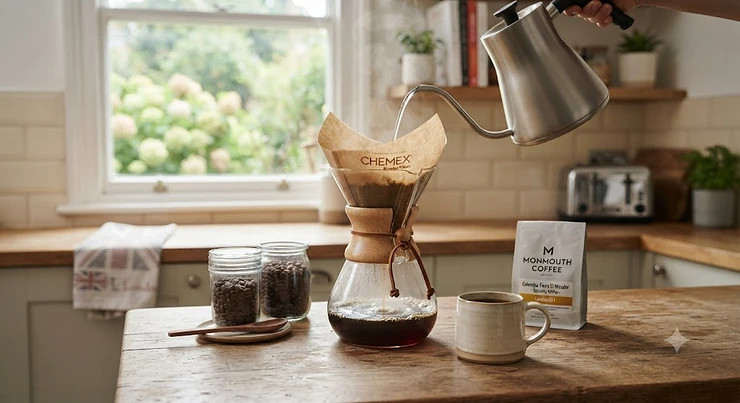
There’s a particular kind of heartbreak reserved for coffee lovers: you’ve bought the beans, ground them just right, warmed the kettle to the correct temperature — and then you reach into the cupboard and the filter box is empty. If you own a Chemex, this isn’t a minor inconvenience. Chemex coffeemakers don’t play nicely with bog-standard filter papers, and using the wrong one can turn a beautifully clear brew into a muddy, over-extracted disappointment. Chemex filter papers are the unglamorous workhorse behind that famously “clean” cup — thicker, denser, and engineered specifically to strip out the oils and fine sediment that give other filter coffee its slightly cloudy edge.

This guide exists because the filter aisle (virtual or otherwise) is more confusing than it should be. Circle or square? Bonded or unbleached? Does the cheap three-pack from a third-party seller actually perform, or is it a false economy? We’ve dug into the real specs, the genuine aggregated review sentiment, and the brewing science behind seven actual products available to UK buyers, so you can stop guessing and start brewing. Whether you’re topping up your first-ever Chemex or restocking a decade-long habit, chemex filter papers deserve more thought than a rushed basket-add — and by the end of this piece, you’ll know exactly which pack suits your cup, your budget, and your conscience.
What Is Chemex Filter Paper?
Chemex filter paper is a proprietary, extra-thick “bonded” paper — roughly 20-30% denser than a standard drip filter — designed specifically for the Chemex pour-over coffeemaker. It slows water flow just enough to trap coffee oils and fine sediment, producing a noticeably lighter-bodied, sediment-free cup compared with metal mesh or standard paper filters.
The design dates back further than most kitchenware still in daily use. Peter Schlumbohm patented the hourglass-shaped brewer in 1941, and it’s since earned a spot in the permanent collection of New York’s Museum of Modern Art — a strange kind of fame for a coffee jug, but a testament to how deliberately the whole system, filter included, was engineered. As the Chemex Coffeemaker’s history shows, the bonded filter isn’t an afterthought bolted onto the brewer; it’s half the invention. Swap it for a generic filter and you’re not really making Chemex coffee anymore — you’re making something else in a very photogenic jug.
Quick Comparison Table
| Product | Format | Best For | Price Range |
|---|---|---|---|
| Chemex Bonded Filter – Circle | Round, pre-folded | Classic 6/8/10-cup brewers, purists | £13-£16 per 100 |
| Chemex Bonded Filter – Natural Square | Square, pre-folded, unbleached | Eco-conscious buyers avoiding bleached paper | £13-£16 per 100 |
| Chemex Bonded Filter – Half Moon | Half-moon, pre-folded | 3-cup CM-1 models only | £11-£14 per 100 |
| Chemex Bonded Filter – Square (2 Pack) | Square, pre-folded, bulk | Daily drinkers wanting bulk value | £22-£27 per 200 |
| Chemex Filter – Unfolded | Flat circle, self-fold | Purists and travel brewing | £12-£15 per 100 |
| Salvatore Bianco Chemex-Compatible Filters | Square, pre-folded, unbleached | Budget-conscious buyers open to third-party brands | £8-£11 per 100 |
| Reusable Stainless Steel Filter | Metal cone, washable | Long-term users wanting zero ongoing filter cost | £14-£20 one-off |
Reading across that table, the real split isn’t budget-versus-premium so much as disposable-versus-permanent. The Chemex Bonded Filter – Circle and its square siblings sit in a tight price band because they’re all cut from the same laboratory-grade stock at the Chemex factory — you’re mostly choosing shape and brewer compatibility rather than quality tiers. The Salvatore Bianco Chemex-Compatible Filters undercut the official range by a genuine margin, which matters if you’re brewing daily and watching the pennies, while the Reusable Stainless Steel Filter flips the whole economics on its head by asking for one outlay and never billing you again.
💬 Just one click — help others make better buying decisions too!😊
Top 7 Chemex Filter Papers: Expert Analysis
1. Chemex Bonded Filter – Circle — the purist’s original choice
The round, pre-folded Chemex Bonded Filter – Circle is the filter most people picture when they think “Chemex,” and there’s a reason it’s stayed the default for over eighty years. It’s cut for the Classic Series 6, 8 and 10-cup brewers (not the smaller CM-1), and it’s the version most likely sitting in a specialty coffee shop’s cupboard.
The bonded paper is roughly 20-30% thicker than a standard drip filter, which sounds like a small spec until you see what it does in the cup: it slows the drawdown just enough that fine coffee “fines” and oils get physically trapped in the fibre, rather than sneaking through into your mug. In practice, that means less bitterness and none of the gritty mouthfeel you sometimes get from a metal mesh filter. It’s the right call for anyone who bought a Chemex specifically for that glassy, tea-like clarity — beginners chasing the “proper” Chemex taste and seasoned home baristas who’ve already tried the alternatives and come back. Reviewers consistently report that these hold up well during pouring, without the tearing or thin patches some cheaper filters develop when saturated. A recurring theme in aggregated feedback is that the filters “never burst,” even when a heavy-handed pour hits the paper directly.
Pros:
- ✅ Official laboratory-grade paper cut in-house by Chemex
- ✅ Consistently praised for tear-resistance under a full pour
- ✅ Produces the classic clean, sediment-free Chemex cup
Cons:
- ❌ Pricier per-filter than third-party alternatives
- ❌ Only fits Classic Series brewers, not the 3-cup CM-1
Priced in the £13-£16 range for 100 filters, this is solidly mid-pack rather than the cheapest option on the shelf — but if you want the taste the brewer was actually engineered to produce, it’s hard to justify going elsewhere for your everyday filter.
2. Chemex Bonded Filter – Natural Square — best for the bleach-averse
Square in shape but built from the same bonded stock as the circle, the Chemex Bonded Filter – Natural Square swaps the bright white oxygen-cleansed paper for an unbleached, natural-brown finish. Functionally the two are near-identical; the difference is entirely about what’s in the paper before the coffee ever touches it.
Unbleached doesn’t mean lower quality — it means the paper skips the oxygen-cleansing whitening stage, leaving a slightly earthier-looking filter that some drinkers also swear tastes marginally “cleaner,” though that’s more folklore than settled science. What is measurable is compatibility: this filter fits the same 6/8/10-cup Classic Series brewers as the circle, just folded into a square rather than round profile, and pre-folded for convenience. Buyers who specifically avoid bleached paper products — whether for sensitivity reasons or simple preference — gravitate here, as do people who like the visual look of natural kraft-style filters on open shelving. Aggregated reviews highlight the same structural strength as the standard bonded range: no ballooning, no leaking through the seams, and a fold that sits neatly in the funnel without collapsing.
Pros:
- ✅ Unbleached paper for buyers avoiding oxygen-cleansed white filters
- ✅ Same 20-30% thickness as the standard bonded range
- ✅ Neat pre-folded square that seats well in Classic Series brewers
Cons:
- ❌ No meaningful flavour difference versus the bleached circle, despite the perception
- ❌ Slightly less widely stocked than the white circle version
At a similar £13-£16 per 100 price point to the circle, this is a straight preference swap rather than an upgrade or downgrade — pick it if the aesthetic or the “unbleached” label genuinely matters to you.
3. Chemex Bonded Filter – Half Moon — the small-batch specialist
If you own the compact 3-cup CM-1 (or the CM-1C/CM-1GH variants), the Chemex Bonded Filter – Half Moon is not optional — it’s the only filter shape that fits properly, and this is one of those details that trips up a surprising number of first-time buyers.
The half-moon shape mirrors the smaller brewer’s narrower funnel, and because it’s a lower-volume brew, the thickness-to-airflow balance is tuned slightly differently than the larger circle and square filters. What most buyers overlook about this model is that using a full-size circle folded down to fit is a false economy — it sits unevenly, channels water down one side, and produces exactly the uneven extraction Chemex was designed to prevent. This filter exists precisely to solve that. It suits solo coffee drinkers, small households, or anyone who brews little-and-often rather than a full carafe at once — students in a shared kitchen, or anyone using a Chemex as a considered single-serve ritual rather than a batch brewer. Review sentiment here skews toward appreciation for the precise fit and folding ease, with a smaller but consistent group of buyers noting they initially ordered the wrong shape before realising CM-1 owners need this specific pack.
Pros:
- ✅ The only correctly-shaped filter for CM-1 3-cup brewers
- ✅ Same bonded 20-30% thickness as the larger formats
- ✅ Ideal portion size for single-serve, low-waste brewing
Cons:
- ❌ Useless for anyone with a 6, 8 or 10-cup Classic Series Chemex
- ❌ Smaller pack availability means slightly less price competition
Expect to pay around £11-£14 per 100, marginally less than the larger formats, reflecting the smaller paper cut — but the real value here is simply buying the right shape the first time.
4. Chemex Bonded Filter – Square (2 Pack) — best bulk buy
For households that get through a Chemex brew daily (or twice daily — no judgement), the Chemex Bonded Filter – Square (2 Pack) bundles 200 filters across two 100-count boxes, and the per-filter cost drops noticeably once you buy at that volume.
This is the same bonded square paper as the standalone Natural Square listing, just packaged for people who resent reordering filters every few weeks. Based on the spec comparison with single packs, buying the bulk bundle typically works out cheaper per filter — a meaningful saving if you’re brewing 300+ times a year, which a genuinely committed Chemex household easily can. The practical upside extends beyond price: fewer delivery trips, fewer moments of running out mid-week, and enough headroom to not panic-order at inflated prices when you’re down to your last three filters. It suits committed daily brewers, small offices with a shared Chemex, or anyone who’s already decided they’re sticking with the brand long-term and would rather buy once and forget about it for months. Reviewers who buy in bulk tend to comment on the reassurance of having stock in hand rather than any difference in brew quality — which makes sense, since it’s identical paper to the single-pack version.
Pros:
- ✅ Lower cost per filter than buying two single packs separately
- ✅ Reduces how often you need to reorder
- ✅ Identical bonded paper quality to the standard square filter
Cons:
- ❌ Larger box takes up more storage space
- ❌ Only sensible if you actually brew frequently enough to use 200
Sitting in the £22-£27 range for the full 200-count bundle, this is the value pick for anyone who already knows Chemex is a long-term habit rather than a passing experiment.
5. Chemex Filter – Unfolded — best for purists and packed bags
The Chemex Filter – Unfolded ships as flat circles rather than pre-creased shapes, leaving the folding entirely to you. It’s a small design choice that changes the whole feel of the ritual — and for a certain type of Chemex owner, that’s exactly the point.
Here’s what the spec sheet won’t tell you, but plenty of long-term users note: hand-folding lets you control precisely where the seam sits against the brewer’s pouring spout, something pre-folded filters standardise for you but don’t always get perfectly aligned. It’s a five-second extra step once you’ve done it a dozen times, and it’s genuinely useful if you travel with your Chemex or brewing kit — flat filters pack flatter, with none of the pre-folded shape getting squashed or creased wrong in a bag. This suits brewing purists who enjoy the ritual aspect of pour-over as much as the coffee itself, plus travellers and campers who need filters that survive being stuffed into a rucksack. Aggregated reviews are a little more mixed here than on the pre-folded ranges — most praise the flexibility, but a minority find the extra folding step an unwelcome faff on a rushed weekday morning.
Pros:
- ✅ Packs flat, ideal for travel or camping brew kits
- ✅ Lets you control exact fold placement against the spout
- ✅ Same bonded thickness and filtration performance as pre-folded versions
Cons:
- ❌ Requires a manual fold every single brew
- ❌ Not the fastest option for a rushed morning routine
At around £12-£15 per 100, it’s priced almost identically to the pre-folded circle — you’re not paying extra or saving money for the format, purely choosing convenience versus ritual.

6. Salvatore Bianco Chemex-Compatible Coffee Filters — best budget alternative
Not every good filter has to say “Chemex” on the box. The Salvatore Bianco Chemex-Compatible Coffee Filters are a third-party square, pre-folded, unbleached option sold in 50-count packs (commonly bundled as 2×50 for 100 total), and they undercut the official range by a genuine margin.
Based on the spec comparison, these are marketed as tear-resistant and compostable, targeting the same 5-13 cup compatibility range as the official square filters. What most buyers overlook about third-party filters generally is that “compatible” doesn’t automatically mean “identical performance” — paper density and fibre bonding vary between manufacturers, and a cheaper filter can occasionally mean a slightly faster drawdown or marginally more sediment passing through. Reviewers, however, report largely positive results here, with feedback noting the filters are “perfect for their Chemex brewer” and praising the pure taste and value for money — though as with any smaller-brand product, the review pool is naturally thinner than Chemex’s own bestselling lines, so treat the sentiment as encouraging rather than exhaustive. This is the pick for budget-conscious buyers, students, or anyone testing whether they’ll actually stick with pour-over before committing to the official brand’s pricing long-term.
Pros:
- ✅ Noticeably cheaper per filter than official Chemex packs
- ✅ Unbleached, tear-resistant, and marketed as compostable
- ✅ Positive aggregated review sentiment on taste and value
Cons:
- ❌ Smaller review pool than the official Chemex range
- ❌ Batch consistency can’t be verified to the same degree as factory-cut official filters
Typically priced around £8-£11 per 100, this is the clearest budget win on the list — a sensible way to trial daily Chemex brewing without committing to premium pricing from day one.
7. Reusable Stainless Steel Chemex-Compatible Filter — best long-term investment
The odd one out on this list, the Reusable Stainless Steel Chemex-Compatible Filter is a wide metal-base cone that replaces paper filters entirely — you rinse it, reuse it, and never buy a filter box again.
This is where the honest analysis gets interesting, because it’s a genuine trade-off rather than a straightforward upgrade. Metal mesh lets more of the coffee’s natural oils and finer sediment through than bonded paper does, which means the cup body is heavier and slightly cloudier than the famously “clean” Chemex style — some drinkers prefer this bolder mouthfeel, others feel it defeats the point of owning a Chemex in the first place. What the spec sheet won’t tell you is that daily cleaning matters enormously here: skip a thorough rinse and residual coffee oils can turn rancid, tainting your next brew with an off, stale note that no amount of good beans will fix. It suits sustainability-focused buyers who want to cut disposable waste entirely, and anyone who’s done the maths on filter costs over several years and wants to stop that spend outright. Reviewer sentiment is generally positive on durability and ease of cleaning, with the main criticism being that the resulting cup tastes noticeably different from paper-filtered Chemex coffee — which, to be fair, is exactly what the physics predicts.
Pros:
- ✅ Zero ongoing filter cost after the initial purchase
- ✅ Eliminates single-use paper waste completely
- ✅ Durable stainless steel construction built to last years
Cons:
- ❌ Produces a heavier-bodied, less “clean” cup than bonded paper
- ❌ Requires thorough daily cleaning to avoid rancid oil build-up
One-off pricing sits around £14-£20, which pays for itself within a few months of regular brewing — the real cost here isn’t cash, it’s the flavour trade-off you’re choosing to accept.
How to Choose Chemex Filter Papers
Picking the right filter isn’t complicated once you know what actually matters, but it’s easy to get distracted by marketing language that doesn’t affect your cup. Here’s the shortlist that genuinely counts:
- Match the shape to your brewer size first. Circle and square filters fit the Classic Series (6/8/10-cup); half-moon filters are exclusively for the 3-cup CM-1 range. Get this wrong and nothing else on this list matters.
- Decide bleached versus unbleached. This is almost entirely a preference and sustainability question, not a performance one — both filter equally well when made from genuine bonded stock.
- Weigh pre-folded convenience against unfolded flexibility. Pre-folded suits daily routine; unfolded suits travel, camping, or anyone who enjoys the ritual.
- Check the pack size against your actual brewing frequency. Bulk packs only save money if you’ll realistically use them within a sensible timeframe before paper quality can degrade in storage.
- Consider paper thickness claims critically. “20-30% thicker than standard” is a specific, verifiable Chemex spec — vague claims like “premium quality” from unfamiliar brands deserve more scepticism.
- Factor in total cost over a year, not just the box price. A cheaper pack that needs reordering twice as often may not actually save money.
- Decide whether disposable paper suits your values, or whether a reusable metal filter better fits a long-term sustainability goal.
Run through those seven checks and you’ll land on the right filter in under a minute — which, frankly, is less time than most people spend deciding what to have for breakfast.
Practical Usage Guide: Getting the Chemex Brewing Method Right
Buying the correct filter paper is only step one. The Chemex brewing method rewards a bit of technique, and most of the disappointing cups blamed on “bad filters” are actually down to folding or pouring habits. Here’s how to get it right from the first brew.
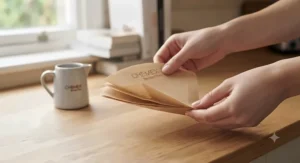
Folding the filter correctly is where most beginners stumble. For a circle filter: fold in half, then fold in half again to form a cone, then peel apart three layers on one side and one layer on the other — the three-layer side sits against the pouring spout groove, which acts as an air vent during brewing. Get this reversed and you’ll notice slower, uneven drawdown almost immediately. Square filters follow a similar logic: open the pre-folded creases into a cone shape, again keeping the thicker, multi-layer section against the spout groove.
Rinsing before brewing solves two problems at once — it removes any faint papery taste from the filter itself, and it pre-warms the glass carafe so your coffee doesn’t cool the moment it hits the vessel. Thirty seconds of hot water through an empty filter, tipped away before adding grounds, is genuinely worth the habit. For deeper technique on ratios, pouring speed, and UK water hardness variations that affect extraction, this UK-focused pour-over guide is worth a proper read.
Common mistakes in the first 30 days typically include pouring too fast (channelling water straight through instead of saturating the grounds evenly), using too fine a grind (which the thick bonded paper will resist, causing overflow), and storing filters somewhere damp, where they’ll absorb moisture and become brittle or prone to tearing mid-pour. Keep your box somewhere dry, grind coarser than you would for a metal V60 filter, and pour in slow, deliberate circles rather than a single stream.
Real-World Scenarios: Matching Filters to Buyers
The busy commuter student. Renting a small flat, brewing one cup before a 9am lecture, budget genuinely tight. The Salvatore Bianco Chemex-Compatible Coffee Filters make the most sense here — cheap enough to not sting when reordering monthly, pre-folded for speed, and good enough quality that the coffee itself won’t suffer while the bank balance recovers.
The daily two-carafe household. Two adults working from home, brewing a full 8-cup carafe morning and afternoon, going through filters fast enough that reordering feels like a chore. The Chemex Bonded Filter – Square (2 Pack) solves the maths here — buying 200 at once at a lower per-unit cost, with enough runway that a missed reorder doesn’t mean a coffee-less Tuesday.
The sustainability-minded solo brewer. Owns a compact CM-1, lives alone, has already cut down on other single-use products around the kitchen and wants their coffee habit to match. Either the Chemex Bonded Filter – Half Moon (correctly sized, still compostable) or the Reusable Stainless Steel Chemex-Compatible Filter fits — the metal filter if they’re happy trading some clarity in the cup for zero ongoing paper waste, the half-moon if they’d rather keep the classic Chemex taste and simply compost responsibly.
Problem → Solution: Fixing Common Chemex Filter Frustrations
Problem: coffee drips too slowly, almost stalling. This is nearly always grind-size related rather than a filter fault — the bonded paper is thick by design, and a too-fine grind (espresso-level, for instance) simply can’t pass through it at a reasonable rate. Solution: coarsen your grind to a texture closer to sea salt.
Problem: the filter tears or bursts mid-pour. Usually caused by a damp or damaged filter, or pouring too aggressively directly onto the paper rather than the coffee bed. Solution: store filters in a dry cupboard, and always pour onto the grounds, not the exposed paper edge.
Problem: coffee tastes papery or faintly cardboard-like. An unrinsed filter is almost always the culprit. Solution: rinse with hot water before adding grounds, every single time — no exceptions, even when you’re in a rush.
Problem: filter collapses into the carafe. This happens when the fold doesn’t seat properly against the funnel walls, often from rushed folding on pre-folded filters or an incorrect fold on unfolded ones. Solution: take the extra five seconds to press the filter firmly into all sides of the funnel before adding coffee.
Problem: running out of filters at the worst possible moment. A logistics problem, not a coffee one. Solution: set a reorder reminder once your box drops to roughly 20 filters remaining, or switch to a bulk pack like the Chemex Bonded Filter – Square (2 Pack) if this keeps happening.
Chemex Bonded Filters vs Standard Drip Coffee Filters
It’s tempting to assume “a filter is a filter,” but Chemex bonded filters and standard drip machine filters are engineered for genuinely different jobs. Standard drip filters — the kind sized for basket-style machines — are thinner, designed for faster water flow through an electric machine’s controlled drip rate. Push that same thin paper into manual pour-over brewing and water rushes through too quickly, under-extracting the coffee and leaving a thin, sour cup.
Chemex bonded filters solve the opposite problem: by being 20-30% thicker, they slow the water down deliberately, giving it time to properly extract flavour while simultaneously trapping oils and fine sediment that a standard filter’s looser weave lets straight through. The practical result, according to independent UK coffee industry writing on pour-over methods, is that Chemex-brewed coffee reads as notably “cleaner” and lighter-bodied than most other filter methods — closer to a delicate tea than a typical cafetière brew.
The trade-off is control and cost. Standard drip filters are cheaper and near-universal, fitting almost any basket-style machine without hunting for brand-specific stock. Chemex filters cost more per cup and only work with Chemex (or closely compatible cone) brewers — but for anyone who’s tasted the difference, that extra cost buys a genuinely distinct style of coffee, not just a marginal upgrade.
Common Mistakes When Buying Chemex Filter Papers
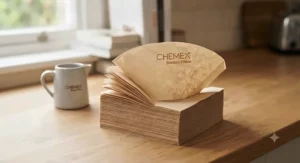
The most frequent mistake is buying the wrong shape for your brewer — CM-1 owners ordering circle filters, or Classic Series owners accidentally grabbing half-moon stock because the listing photos look similar at a glance. Always check your model number before adding to basket.
A close second is assuming all “Chemex-compatible” third-party filters are identical in quality. Some genuinely are excellent value, like the Salvatore Bianco Chemex-Compatible Coffee Filters — but paper density and bonding vary by manufacturer, and it’s worth reading recent review sentiment rather than assuming compatibility claims guarantee identical performance.
Buyers also frequently over-order bulk packs without checking their actual brewing frequency, ending up with filters sitting in storage for over a year — paper can pick up ambient kitchen odours or moisture over long storage periods, subtly affecting taste. And finally, a surprising number of people buy filters before checking their brewer’s exact model, particularly conflating the CM-1 with the larger Classic Series — an easy mix-up given how visually similar Chemex’s product photography can look at thumbnail size.
Long-Term Cost & Maintenance
Run the numbers and Chemex filter papers are a genuinely modest ongoing cost — but “modest” adds up over years of daily brewing, so it’s worth doing the maths properly rather than assuming.
At roughly £13-£16 per 100 official bonded filters, and assuming one filter per brew, a daily single-carafe habit costs somewhere between £47 and £58 a year. Switch to the bulk Chemex Bonded Filter – Square (2 Pack), and that same annual usage typically drops by a noticeable margin thanks to the lower per-unit bulk pricing. Opt for the budget Salvatore Bianco Chemex-Compatible Coffee Filters instead, and the annual spend falls further still, into the £30-£40 range for the same volume of brewing.
The Reusable Stainless Steel Chemex-Compatible Filter flips this entirely: a one-off £14-£20 spend, and from that point onward your only “maintenance cost” is a bit of washing-up liquid and thirty seconds of scrubbing after each brew. Break-even against paper filters typically lands somewhere around four to six months of regular daily brewing, after which the metal filter is pure savings — provided you’re happy with the heavier-bodied cup it produces. Maintenance-wise, paper filters need nothing beyond dry storage, while the metal filter needs a genuinely thorough rinse every single use; skipping that is the one false economy that can spoil an otherwise sound long-term investment.
Features That Actually Matter (And Those That Don’t)
Actually matters: bonded paper thickness. This is the single spec doing most of the work in producing that signature clean cup — it’s not marketing fluff, it’s a measurable, meaningful difference from standard filter paper.
Actually matters: correct shape-to-brewer matching. No amount of paper quality compensates for the wrong shape sitting awkwardly in your funnel.
Doesn’t really matter: bleached versus unbleached, from a pure taste perspective. Despite persistent claims online, any measurable flavour difference is marginal at best — this is a values and aesthetics choice, not a performance one.
Doesn’t really matter (much): brand prestige for the paper itself. The Salvatore Bianco Chemex-Compatible Coffee Filters demonstrate that solid bonded-style paper doesn’t require the official Chemex name printed on the box, provided the manufacturer has genuinely matched the density and fold.
Actually matters: storage conditions. A brilliant filter stored somewhere damp for six months will underperform a mediocre filter stored properly — this gets overlooked constantly in buying decisions that focus purely on the product itself.
Safety, Compostability & UK Recycling Rules
One thing that catches out well-meaning buyers: a filter labelled “compostable” on the box doesn’t automatically mean it belongs in your kerbside food or garden waste bin. Under current UK household recycling guidance, items labelled compostable or biodegradable — including coffee filters and pods — generally aren’t collected through standard council recycling or food waste streams, because they can contaminate industrial recycling processes designed for conventional materials. In practice, that means used Chemex filters (soaked coffee grounds and all) are usually best suited to a home compost bin or garden waste collection where your council explicitly accepts them, rather than assumed to be automatically “green bin friendly.”
For everyday safety, there’s genuinely little to worry about: bonded Chemex paper is food-safe, contains no plastics or synthetic coatings, and both bleached (oxygen-cleansed, not chlorine-bleached) and unbleached versions are considered safe for direct food contact. The only real safety note applies to the reusable metal filter option — stainless steel mesh can develop sharp edges at the rim over repeated use, so a gentle check before each wash is sensible, particularly in households with young children helping in the kitchen.

Frequently Asked Questions
❓ What are chemex filter papers made from?
❓ Can I use regular coffee filters in a Chemex?
❓ How many times can you reuse a Chemex filter?
❓ Are Chemex filter papers compostable in the UK?
❓ Why does Chemex coffee taste different from other filter coffee?
Conclusion
Chemex filter papers aren’t just an accessory — they’re arguably the actual invention, with the elegant glass hourglass doing the supporting role. Get the shape right for your brewer, decide honestly whether bleached, unbleached, bulk, or reusable metal suits your habits and your budget, and the rest of the Chemex ritual mostly takes care of itself. For most everyday brewers, the classic Chemex Bonded Filter – Circle remains the sensible default; budget-conscious households have a genuinely solid option in the Salvatore Bianco Chemex-Compatible Coffee Filters; and anyone thinking in years rather than months should seriously weigh the Reusable Stainless Steel Chemex-Compatible Filter against its flavour trade-offs. Whichever you land on, the difference between a good filter and the wrong one is the difference between a cup that sings and one that just… exists. Choose deliberately, brew patiently, and let the paper do the quiet work it was built for.
Recommended for You
- V60 Filter Papers UK: 7 Best Picks; Buying Guide 2026
- Coffee Filter Papers Under £10: 7 Best Value Picks for 2026
- 7 Best Probe Thermometer for Coffee Roasting
Disclaimer: This article contains affiliate links. As an Amazon Associate, I earn from qualifying purchases. If you purchase products through these links, we may earn a small commission at no additional cost to you.
✨ Found this helpful? Share it with your friends! 💬🤗
