
In This Article
Light roast coffee beans are having a proper moment in the UK, and not without reason. Unlike their darker counterparts that hide behind heavy roasting, these beans let the coffee’s natural character shine through—think bright citrus notes, delicate florals, and fruity complexity rather than the typical burnt caramel bitterness. According to research published by the Specialty Coffee Association, light roast development preserves more of the bean’s original chlorogenic acids and aromatic compounds.
When you choose light roast coffee beans, you’re essentially tasting the coffee’s terroir—the unique combination of soil, altitude, and climate where the beans were grown. Ethiopian light roasts might greet you with blueberry and jasmine, whilst Colombian offerings present orange zest and honey sweetness. The shorter roasting time preserves more of the coffee cherry’s original sugars and acids, creating that signature bright acidity and clean finish that converts even staunch dark roast devotees.
Here’s what most people overlook about light roasts: they actually contain marginally more caffeine per bean than dark roasts. The extended roasting process for darker beans breaks down caffeine molecules, whilst lighter roasts preserve them. Research shows the difference is modest but measurable—around 5-10%—though brewing method and bean origin matter more than roast level for final caffeine content in your cup. What matters more is the sensory experience. A properly brewed light roast should taste vibrant and complex, never sour or grassy. If yours tastes acidic in an unpleasant way, the extraction’s gone wrong—not the roast itself.
The UK market for light roast coffee beans has expanded considerably since 2020, with specialty roasters embracing Nordic-style roasting techniques and British consumers developing more adventurous palates. Whether you’re brewing a delicate pour-over on a Sunday morning or pulling espresso shots through your Sage Barista, there’s never been a better time to explore the bright, nuanced world of light roast coffee.
Quick Comparison: Best Light Roast Coffee Beans UK
| Coffee | Origin | Roast Style | Flavour Profile | Best For | Price Range |
|---|---|---|---|---|---|
| We Are Coffee Co Ethiopian | Ethiopia | Light, Single Origin | Pineapple, mango, strawberry jam, red plum | Pour-over enthusiasts | £18-£22/kg |
| Grind Light Blend | Brazil, Colombia blend | Light Blend | Vanilla, blackcurrant, cedar, hazelnut | All brewing methods | £22-£26/kg |
| by Amazon Intenso | Central/South America | Light Roast | Balanced, smooth, accessible | Budget-conscious buyers | £10-£14/kg |
| Pact Single Origins | Honduras, Ethiopia, Colombia | Light, Direct Trade | Orange, brown sugar, fruity | Adventurous coffee explorers | £30-£38/kg |
| Stokes Light Roast | Various origins | Light, Nordic-inspired | Fruity, floral, sweet | Filter brewing | £20-£28/kg |
| Brown Bear Brazilian | Brazil | Light | Chocolate, caramel, soft sweetness | French press, filter | £16-£20/kg |
| Assembly Single Origin | Seasonal rotating origins | Light, Specialty-grade | Complex, terroir-driven | Coffee enthusiasts | £28-£35/kg |
💬 Just one click—help others make better buying decisions too! 😊
Top 7 Light Roast Coffee Beans UK: Expert Analysis
1. We Are Coffee Co Ethiopian Light Roast — Fruity Powerhouse for Pour-Over Devotees
This Ethiopian single-origin delivers exactly what serious light roast drinkers crave: explosive fruit-forward flavours that would be impossible to achieve with darker roasting. Sourced from elevations between 1,950-2,000 metres in Ethiopia’s legendary growing regions, these beans undergo careful hand-roasting in small batches using a vintage Whitme flame roaster in Glasgow.
The flavour profile reads like a tropical fruit salad—pineapple, mango, strawberry jam, and red plum—but what the spec sheet won’t tell you is how clean the finish is. Many Ethiopian light roasts can turn overly acidic or tea-like when poorly executed, but this one maintains body alongside brightness. The 1kg bag format makes it excellent value for regular drinkers, particularly if you’re brewing pour-overs or using an AeroPress where the delicate flavours truly shine.
Expert take: This is precisely the sort of coffee that makes British buyers realise why Scandinavian roasters obsess over Ethiopian beans. The natural processing method (beans dried with the fruit still attached) creates those jammy, fermented notes that either delight or divide—there’s no middle ground. If you’ve only ever known dark Italian roasts, this will be a revelation. If you’ve been chasing bright, clean acidity for years, you’ve found your match. The roast date marking system they use (“AMZ Batch”) raised a few eyebrows amongst reviewers who prefer precise roast dates, but beans typically arrive within 2-4 weeks of roasting, which sits comfortably within the optimal flavour window for light roasts.
UK buyers particularly appreciate that these beans ship via Amazon Prime, meaning next-day delivery to most postcodes. For a light roast this delicate, minimising time between roasting and brewing matters. The flavour compounds that create those spectacular fruit notes are the same ones that deteriorate fastest once exposed to air.
Customer feedback summary: British reviewers consistently praise the “smooth, bright flavour with natural sweetness” and note it’s “perfect for pour-over or espresso.” One UK buyer mentioned needing to adjust extraction for espresso (turbo shots work better than traditional 25-30 second pulls), which is spot-on advice for lighter roasts that can turn sour if over-extracted.
✅ Explosive fruit flavours: pineapple, mango, strawberry
✅ High-altitude Ethiopian single origin
✅ Prime-eligible for next-day UK delivery
❌ Roast date could be more specific
❌ May be too bright for milk-based drinks
Price verdict: Around £18-£22 per kilo puts this in the specialty coffee bracket without straying into luxury territory. Comparable to what you’d pay at a good London coffee shop, but delivered to your door in Cumbria or Cornwall with the same freshness.
2. Grind Light Blend Specialty Coffee Beans — London-Roasted All-Rounder
Grind has built an empire of pink coffee shops across London, and their Light Blend whole bean coffee translates that café quality into home brewing with impressive consistency. This is a carefully constructed blend of Brazilian and Colombian 100% Arabica beans, roasted light to preserve origin character whilst maintaining enough body to work across multiple brewing methods.
The tasting notes—vanilla, blackcurrant, cedar, and hazelnut—sound ambitious for a light roast, and they deliver. What makes this blend clever is the balance between fruity brightness (blackcurrant) and comforting familiarity (vanilla, hazelnut). It’s a bridge coffee: light enough to showcase what Nordic-style roasting can do, accessible enough not to alienate someone transitioning from medium or dark roasts. The cedar note adds an interesting woody complexity that lingers pleasantly without turning bitter.
Expert take: Grind’s roasting facility in London gives them precise control over freshness for UK customers, and you can taste the difference. These beans arrive within days of roasting, sealed in compostable bags that are actually compostable (not just “biodegradable” greenwashing). The 1kg format offers solid value for daily drinkers, and the beans grind consistently whether you’re going fine for espresso or coarse for cafetière.
Here’s what rarely gets mentioned: light roasts can be temperamental in bean-to-cup machines because the harder beans wear down grinder burrs faster. Grind Light Blend seems to have found a sweet spot—light enough for complexity, developed enough not to destroy your grinder or pull watery shots. Several UK reviewers with Sage and De’Longhi machines reported excellent results straight out of the bag with minimal dialling-in.
The B Corp certification matters more than it sounds. It means Grind has been independently verified for social and environmental standards, which in practical terms means transparency about where your beans come from and how much farmers were paid. For a London company selling through Amazon, that level of accountability is refreshingly uncommon.
Customer feedback summary: British reviews are overwhelmingly positive, with particular praise for how well these beans perform in milk-based drinks like flat whites and cappuccinos. One reviewer noted these beans “preserve fruity notes lost in darker roasts,” which is precisely the point of light roasting.
✅ Versatile across all brewing methods
✅ B Corp certified and ethically sourced
✅ Freshly roasted in London for UK delivery
❌ Some inconsistency reported with espresso extraction
❌ Price point sits higher than budget options
Price verdict: At around £22-£26 per kilo, you’re paying for London rents, compostable packaging, and B Corp compliance—but also for genuinely fresh, well-roasted coffee that won’t let you down.
3. by Amazon Intenso Light Roast — Budget-Friendly Gateway to Bright Coffee
Amazon’s own-brand coffee gets overlooked by coffee snobs, which is their loss. This light roast blend of Central and South American Arabica beans punches well above its weight class, offering Rainforest Alliance certification and surprisingly clean flavours at a price that makes it viable for daily drinking without second-guessing the cost per cup.
The 1kg bag actually contains two 500g packs, which is rather clever for maintaining freshness. Once you crack open the first pack, the second stays sealed until you need it. The roast level genuinely qualifies as light—not the “we darkened it halfway but still called it light” approach some mainstream brands employ.
Expert take: What this coffee lacks in exotic origin stories and artisanal roasting narratives, it makes up for in sheer drinkability and value. The flavour profile skews toward balanced and smooth rather than explosive fruit bombs, making it an excellent entry point for British drinkers curious about light roasts but not quite ready to commit £30+ per kilo on Ethiopian microlots.
In practical terms for UK buyers: this is the light roast you buy when you drink 3-4 cups daily and can’t justify premium beans for every mug. Save your expensive single origins for weekend pour-overs and brew this through the week for your morning cafetière. The Rainforest Alliance certification means sustainable farming practices and fair treatment of workers, which at this price point is genuinely impressive.
UK reviewers particularly appreciate the mild, approachable character. One Belgian reviewer (Amazon.co.uk serves EU customers too, though that’s increasingly complicated post-Brexit) specifically praised the “nice cream” these beans produce in espresso, which suggests decent crema formation despite the light roast—something darker roasts typically handle more easily.
Customer feedback summary: Feedback centres on the “very good” quality and “balanced” flavour, with European reviewers noting “rich aromas well balanced with a lovely intensity without bitterness.” The value proposition resonates strongly with UK families and regular drinkers.
✅ Excellent value for daily drinking
✅ Rainforest Alliance certified
✅ Two 500g packs maintain freshness
❌ Less complex than specialty single origins
❌ Generic sourcing information
Price verdict: Around £10-£14 per kilo makes this unbeatable for everyday light roast drinking. At roughly 28-35p per cup, you’re spending less than a single shot at any high street café whilst drinking objectively fresher coffee.
4. Pact Coffee Single Origin Light Roasts — Direct Trade Microlots from Honduras to Ethiopia
Pact Coffee operates differently from most roasters—they work directly with individual farmers rather than buying through brokers, which means traceable lots, better farmer compensation, and genuinely unique coffees that rotate as harvests change. Their light roast offerings vary by season, but the Honduras San Lorenzo microlot from grower Wilfredo Sanchez exemplifies what makes Pact special.
These beans come from a tiny farm at 1,650 metres elevation, where Sanchez has been perfecting his craft since age 12. The direct trade relationship allows him to be incredibly precise about processing, resulting in that signature Honduran fruitiness—bright orange notes and brown sugar sweetness—that lighter roasting preserves beautifully. Pact roasts in Surrey and grinds moments before packing, which means your coffee arrives ridiculously fresh.
Expert take: This is coffee for people who care about stories, not just specs. The microlot approach means limited quantities—when Sanchez’s lot sells out, it’s gone until next harvest. That creates scarcity, but it also means you’re drinking something genuinely unique rather than a commodity blend designed for year-round consistency.
For UK buyers, the roasting and grinding in Surrey means domestic shipping and rapid delivery. The 500g bag format seems small compared to 1kg competitors, but Pact’s freshness obsession makes it worth the premium. These beans peak between 7-21 days post-roast for filter methods, so smaller bags actually make sense if you’re not burning through a kilo every fortnight.
The downside: Pact’s pricing reflects their direct trade premiums and fresh-roasting model. You’re paying for farmer equity and supply chain transparency, which may or may not matter to you depending on your coffee philosophy. What’s undeniable is the quality in the cup—these light roasts showcase origin character without the muted, over-developed notes that result from cost-cutting at the sourcing stage.
Customer feedback summary: UK reviewers consistently praise Pact’s customer service and freshness, noting that beans arrive “within 7 days of roasting” and the quality is “well-rounded and flavourful with no harshness.”
✅ Direct trade with traceable farms
✅ Roasted fresh in Surrey
✅ Microlot uniqueness
❌ Premium pricing
❌ Limited availability as lots rotate
Price verdict: Around £30-£38 per kilo places this firmly in specialty territory. The 500g format at £15-£19 makes more sense for light roast enthusiasts who value peak freshness over bulk buying.
5. Stokes Light Roast Collection — Lincoln Roasters Since 1902
Stokes Coffee brings over a century of British roasting expertise to the light roast category, specialising in beans that highlight “exquisite fruity and floral flavours” without the bitterness that ruins many amateur light roasting attempts. Their collection sources from premier coffee-growing regions with an emphasis on sustainability and ethical farming.
What distinguishes Stokes from newer specialty roasters is their institutional knowledge—they’ve been supplying cafés, restaurants, and hotels since 1902, which means they understand consistency and quality control at a level that startup roasteries simply can’t match. Their light roasts reflect that experience: carefully developed to avoid underdevelopment (which creates grassy, sour notes) whilst preserving the delicate aromatics that make light roasting worthwhile.
Expert take: Stokes represents the established British roasting tradition adapting to modern specialty coffee trends. Their light roasts won’t shock you with experimental processing methods or ultra-light Nordic profiles, but they will deliver reliably excellent coffee that tastes like it should—clean, bright, complex, but never harsh or underdeveloped.
For UK buyers concerned about sustainability, Stokes’ commitment to responsibly sourced beans from farms with ethical practices addresses growing environmental consciousness without the greenwashing that plagues the industry. When a 122-year-old company says “responsibly sourced,” they have more to lose from false claims than a two-year-old Instagram roastery.
The collection approach allows you to explore different origins—Ethiopian naturals, Colombian washed process, Kenyan bright acidity—all roasted with the same careful attention to preserving origin character. The velvety smooth finish Stokes achieves suggests expert development time and temperature control during roasting.
Customer feedback summary: Feedback emphasises the “delicious and aromatic lightly roasted beans” and the “symphony of smooth, nuanced flavours.” UK buyers particularly appreciate the balance between brightness and complexity.
✅ 122 years of British roasting expertise
✅ Emphasis on sustainability
✅ Multiple origins available
❌ Limited Amazon.co.uk availability
❌ Higher price point than mainstream brands
Price verdict: Around £20-£28 per kilo reflects the specialty grade and heritage roasting expertise. You’re paying for beans that won’t let you down, roasted by people who’ve been doing this since before your great-grandparents were born.
6. Brown Bear Brazilian Light Roast — Charitable Choice with Soft Sweetness
Brown Bear Coffee Co. distinguishes itself through partnership with Free the Bears UK, donating 5% of sales to rescue bears from bile farms in Southeast Asia. Beyond the feel-good factor, their Brazilian light roast showcases the soft, sweet characteristics Brazil is renowned for, with prominent chocolate and caramel notes that make this surprisingly approachable for a light roast.
The 100% Arabica beans from Brazil represent a different expression of light roasting than the fruit-bomb Ethiopians or the bright Colombians. Brazilian coffees, particularly when lightly roasted, tend toward nutty sweetness and chocolatey depth whilst maintaining cleaner acidity than darker roasts. This makes them excellent for drinkers who want the brightness of a light roast without completely abandoning the familiar comfort of chocolate notes.
Expert take: What’s interesting here is the “Omni grind” approach—Brown Bear pre-grinds to a single size that works reasonably well for French press, drip filters, and AeroPress. This compromises the “grind fresh immediately before brewing” gospel that specialty coffee enthusiasts preach, but it also makes light roast accessible to UK buyers who don’t own grinders. The pragmatism is refreshing.
For British buyers, the charity partnership adds tangible value beyond the coffee itself. Knowing 5% supports bear sanctuaries in Southeast Asia won’t improve the flavour, but it might improve how you feel about your morning routine. At around £16-£20 per kilo, the pricing makes this charity contribution essentially cost-free compared to similar-quality beans without philanthropic components.
The recommendation to drink this without milk speaks to the quality of the roast—these beans have enough inherent sweetness and complexity that adding dairy would mute rather than enhance. That said, if you must have milk, the chocolate and caramel notes hold up better than ultra-bright Ethiopian florals.
Customer feedback summary: British buyers appreciate both the “good brew at a nice price” and the charitable aspect. The soft, sweet Brazilian character receives consistent praise.
✅ 5% donated to Free the Bears UK
✅ Soft, sweet Brazilian character
✅ Pre-ground Omni option available
❌ No whole bean option limits freshness
❌ Limited grind size flexibility
Price verdict: At £16-£20 per kilo for pre-ground, this offers solid value with a charitable component. The convenience of not needing a grinder offsets the freshness compromise for casual drinkers.
7. Assembly Single Origin Seasonal Rotations — Specialty Coffee for the Committed
Assembly Coffee operates at the pinnacle of UK specialty coffee, offering rotating single-origin light roasts that showcase exceptional lots from around the world. Their commitment to sourcing only the finest beans means you’re drinking coffee that most high street roasters couldn’t access even if they wanted to—these are the limited-production, high-altitude, meticulously processed beans that win competitions and command premium prices.
Assembly’s approach to light roasting embraces Nordic philosophy: preserve everything the farmer and processor worked to develop, add nothing through excessive roasting development. The result is coffee that tastes distinctly of its origin—Kenyan brightness with blackcurrant and citrus, Colombian sweetness with stone fruit, Ethiopian complexity with floral aromatics and berry notes.
Expert take: This is not entry-level coffee. Assembly assumes you understand extraction ratios, water temperature, and grind size adjustment. Their beans reward precision and punish carelessness—brew parameters that work for darker roasts will produce sour, under-extracted disappointment with these ultra-light profiles.
For UK buyers already deep into specialty coffee, Assembly represents the destination rather than the journey. If you’ve graduated from supermarket beans to Pact to Origin and you’re still chasing more complexity, more clarity, more terroir expression—this is where that path leads. The seasonal rotation model means you’re constantly exploring rather than settling into comfortable repetition.
The price reflects both scarcity and quality. These beans often come from award-winning farms with limited production, processed using expensive methods (natural anaerobic fermentation, extended honey processing), and purchased at prices that allow farmers to invest in their next crop. You’re not just buying coffee; you’re funding agricultural excellence.
Customer feedback summary: Assembly’s reputation in the British specialty coffee community speaks louder than Amazon reviews. Enthusiasts consider them among the UK’s finest roasters for light roast single origins.
✅ Exceptional single-origin lots
✅ Nordic-style light roasting expertise
✅ Seasonal rotation maintains variety
❌ Requires brewing skill to extract properly
❌ Premium pricing limits accessibility
Price verdict: Around £28-£35 per kilo places this among the most expensive widely available options. For committed coffee enthusiasts, it’s worth every penny. For casual drinkers, it’s overkill.
The Nordic Revolution: Why Scandinavian Roasting Conquered British Palates
The Nordic roasting style has fundamentally reshaped how British coffee drinkers think about light roasts. Traditional British coffee culture leaned dark—think bitter Italian espresso and over-extracted cafetière sludge—but Scandinavian roasters proved that lighter development could produce more, not less, flavour complexity.
Nordic roasting emphasises three principles: preserve origin character, highlight natural acidity, and eliminate roast-derived bitterness. Roasters in Norway, Sweden, and Denmark demonstrated that high-quality beans from Ethiopia, Kenya, and Colombia contain extraordinary fruity and floral notes that darker roasting obliterates. The movement spread to London, Manchester, Edinburgh, and beyond as British roasters trained with Nordic pioneers and brought those techniques home.
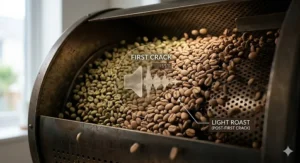
What makes Nordic-style light roasts distinctive is the relationship between roast temperature and time. Traditional roasting might take beans to 220°C over 12-15 minutes, developing caramelisation and Maillard reactions that create chocolate, nuts, and caramel. Nordic roasters typically stop around 205-210°C after 8-11 minutes, preserving more of the coffee cherry’s original sugars and acids.
The UK climate actually suits light roast appreciation better than many realise. British palates developed on tea—a beverage with bright acidity, floral aromatics, and delicate complexity. The sensory vocabulary for appreciating Earl Grey’s bergamot or Darjeeling’s muscatel translates directly to understanding Ethiopian Yirgacheffe’s jasmine notes or Kenyan AA’s blackcurrant brightness. Nordic roasting essentially gives British drinkers a coffee that behaves more like fine tea than traditional burnt espresso.
For UK buyers exploring Nordic-style beans, start with washed-process Ethiopians or Colombians. The clean processing method strips away the fruit before drying, creating transparent flavour profiles that showcase the Nordic roasting approach without the funky, fermenty notes that natural-process beans can develop. Once you’ve acclimated to bright acidity and floral aromatics, natural-process Ethiopians become the ultimate expression of what light roasting can achieve.
Brewing Light Roast in British Conditions: Water, Weather, and Patience
Light roast coffee beans demand different brewing approaches than darker roasts, and British conditions add unique complications that London roasters understand but Californian blogs ignore. Here’s what actually works in Manchester drizzle and Edinburgh chill.
Water Quality Across the UK
British water varies dramatically by region. London’s hard water (high calcium and magnesium) can mute light roast brightness and create chalky mouthfeel. Scottish soft water preserves delicate flavours but can over-extract if you’re not careful. Northern England sits somewhere between, whilst Cornwall’s relatively soft water suits light roasts beautifully.
If you live in hard water areas—most of London, Birmingham, parts of Yorkshire—consider filtered water for light roasts. The Brita standard filter works adequately, though serious enthusiasts invest in Third Wave Water packets or remineralise reverse osmosis water to specific TDS levels. The difference is night and day: London tap water turns Ethiopian florals into muddy bitterness, whilst filtered water lets jasmine and bergamot sing.
Temperature Matters More Than You Think
Light roast coffee beans are denser than dark roasts—less porous, harder to penetrate. Extract them with standard 92-94°C water and you’ll pull sour, underdeveloped disappointment. Most specialty roasters recommend 93-96°C for light roasts, which means boiling your kettle and waiting just 15-20 seconds rather than the traditional minute that works for darker beans.
British ambient temperatures affect this more than tropical climates. Pour boiling water into your ceramic V60 on a January morning in Newcastle and the slurry temperature might drop to 88°C within 30 seconds as your freezing dripper and cold room steal heat. Solution: preheat your brewing vessel thoroughly. Pour boiling water through your V60, Chemex, or AeroPress, let it sit 30 seconds, dump it, then brew immediately. The residual heat maintains proper extraction temperature throughout the brew.
Grind Size Calibration
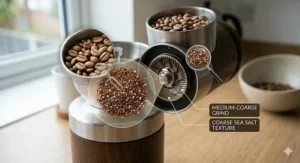
Light roasts require finer grinding than dark roasts for equivalent extraction. The denser bean structure means water needs more surface area contact to extract soluble compounds in reasonable time. What feels right for your usual medium roast will pull weak and sour with light beans.
Start finer than intuition suggests—almost espresso territory for pour-overs, true espresso fine for actual espresso. If your grinder has numbers, subtract 2-3 clicks from your normal setting. If it doesn’t, grind until the coffee feels sandy rather than coarse like breadcrumbs. Then taste and adjust: sour/hollow = grind finer; bitter/harsh = grind coarser.
The British Breakfast Pour-Over Method
Developed for damp mornings when you need brightness but also comfort:
- Boil fresh filtered water
- Grind 15g light roast beans to fine-medium (just coarser than espresso)
- Preheat V60/Chemex with boiling water
- Place grounds, create small well in centre
- Bloom with 30g water (2:1 ratio), wait 30-45 seconds
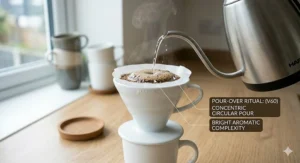
- Pour in slow concentric circles to 250g total
- Target 2:30-3:00 total brew time
This method compensates for UK water hardness, ambient temperature drops, and the need for higher extraction with light roasts. The slow pour maintains temperature, the fine grind increases extraction, the bloom releases CO2 trapped in fresh beans.
When Light Roasts Fail: Troubleshooting Sour, Weak, or Grassy Coffee
Light roast coffee is unforgiving. Dark roasts hide mistakes behind roast development; light roasts expose every brewing error in harsh detail. Here’s how British home brewers rescue disappointing cups.
Problem: Sour, Acidic, Unpleasantly Sharp
Cause: Under-extraction. Water passed through too quickly or too cool, leaving behind pleasant sweet compounds whilst extracting only acids.
UK-specific factor: Hard water in London, Birmingham, and Yorkshire can interfere with extraction chemistry, requiring even finer grinds or hotter water than soft-water regions.
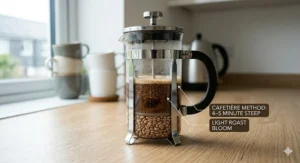
Solution: Grind finer, use hotter water (95-96°C), extend contact time. For pour-over, slow your pour to increase total brew time to 3:00-3:30. For French press, extend steep from 4 minutes to 5-6 minutes. For espresso, increase pressure or decrease flow rate.
Problem: Weak, Watery, Lacking Body
Cause: Insufficient coffee-to-water ratio or too coarse grind preventing proper extraction.
UK-specific factor: British tendency toward large mug sizes (300-350ml) rather than standard coffee cups (180-240ml) can dilute properly extracted coffee.
Solution: Increase dose to 1:15 or 1:14 ratio rather than traditional 1:16. For a 300ml mug, use 20g coffee instead of 18g. Grind finer to increase extraction yield. Accept that light roasts naturally have less body than dark—that’s the point.
Problem: Grassy, Vegetal, Unripe
Cause: Genuinely underdeveloped beans. Not a brewing error—a roasting defect.
UK-specific factor: Some budget light roasts available on Amazon.co.uk are just poorly roasted, ending development too early to avoid the grassy notes that appear before proper sweetness develops.
Solution: Buy better beans. Grind Light Blend, We Are Coffee Co Ethiopian, or Pact single origins don’t have this problem. The by Amazon Intenso occasionally shows vegetal notes if you’ve caught a bad batch—perfectly acceptable for the price, less acceptable for premium beans.
Problem: Flat, One-Dimensional, Boring
Cause: Stale coffee. Light roasts lose complexity faster than dark roasts because the volatile aromatics that create floral and fruity notes deteriorate quickly.
UK-specific factor: Amazon.co.uk sometimes warehouses coffee for weeks before shipping. Check roast dates religiously, especially for budget brands.
Solution: Buy from roasters who date their bags and ship quickly. Pact, Grind, We Are Coffee Co all roast fresh for UK delivery. If buying budget brands, check reviews for freshness complaints. Store opened bags in airtight containers in a cool, dark cupboard—NOT the fridge or freezer, which introduces moisture and odour contamination.

Ethiopian vs Colombian vs Nordic Blends: Choosing Your Light Roast Profile
Not all light roasts taste alike. Origin and processing method create wildly different flavour profiles, and understanding the categories helps UK buyers navigate the expanding specialty market.
Ethiopian Natural Process: Fruit Bomb Territory
Ethiopian natural-process coffees are dried with the coffee cherry still attached, allowing fruit sugars and fermentation compounds to penetrate the bean. Ethiopia is widely recognised as the birthplace of coffee, with wild Arabica varieties still growing in the country’s highlands. The result: explosive blueberry, strawberry, tropical fruit flavours with wine-like complexity.
Best for: Adventurous drinkers comfortable with unconventional flavours. Works brilliantly as filter coffee (V60, Chemex, AeroPress), less successfully in milk-based drinks where the delicate fruit notes get obliterated.
UK availability: We Are Coffee Co Ethiopian epitomises this style. Pact occasionally offers Ethiopian naturals in their rotating selection.
Brewing notes: These beans peak 10-21 days post-roast, falling off dramatically after 30 days. Buy smaller quantities more frequently rather than bulk-buying.
Colombian Washed Process: Sweet, Clean, Accessible
Colombian washed coffees strip away the fruit before drying, creating cleaner, more transparent flavour profiles. Expect orange citrus, honey sweetness, brown sugar, and light chocolate—bright but approachable.
Best for: Light roast newcomers and anyone who wants brightness without the funkiness that natural-process fermentation creates. Excellent in both black coffee and milk-based drinks.
UK availability: Grind Light Blend includes Colombian components. Coffee Masters Colombian offers single-origin expression at budget pricing.
Brewing notes: More forgiving than Ethiopians. Work well from 7-35 days post-roast, maintain quality longer once the bag’s opened.
Nordic-Style Blends: Designed for Balance
Nordic-inspired blends combine multiple origins to create complexity whilst maintaining approachability. Think Brazilian sweetness, Ethiopian brightness, Colombian balance—engineered for versatility.
Best for: Daily drinkers who want specialty quality without the variability of single origins. These blends taste reliably excellent across multiple brewing methods.
UK availability: Grind Light Blend and Stokes Light Roast Collection follow this philosophy.
Brewing notes: Blending irons out the extreme highs and lows of single origins. Less exciting for coffee geeks, more consistent for everyone else.
Brazilian Light Roast: Chocolate Meets Brightness
Brazilian light roasts occupy interesting territory—naturally low acidity beans roasted light to preserve sweetness whilst adding brightness through underdevelopment. Expect chocolate, caramel, nuts, but cleaner and livelier than traditional dark Brazilian roasts.
Best for: Dark roast drinkers transitioning toward lighter styles. The familiar chocolate notes provide comfort whilst the lighter roast introduces new complexity.
UK availability: Brown Bear Brazilian Light Roast. by Amazon Intenso likely includes Brazilian components in the blend.
Brewing notes: These beans handle milk brilliantly—the chocolate notes survive dairy dilution better than floral Ethiopians. Excellent for flat whites and cappuccinos.
Single Origin vs Blend: What Actually Matters for UK Home Brewers
The specialty coffee world fetishises single-origin beans—coffee from one farm, one region, expressing terroir like wine. Blends get dismissed as inferior commodity products. Neither position holds up under scrutiny for British home brewers.
When Single Origins Excel
Single origins showcase unique characteristics impossible to achieve through blending. That Ethiopian Yirgacheffe tastes like blueberries and jasmine because of Sidamo’s volcanic soil, high altitude, and indigenous heirloom varieties. Blend it with Brazilian beans and those delicate florals disappear.
For UK buyers interested in coffee as exploration—tasting different regions, processing methods, and flavour profiles—single origins provide the clearest window into what makes each coffee unique. The educational value alone justifies the premium pricing. Buy a natural-process Ethiopian, then a washed Colombian, then a honey-process Costa Rican, and you’ve effectively taken a masterclass in how processing affects flavour.
The downside: variability. Single origins change with harvest seasons, weather patterns, and processing decisions. That Ethiopian you loved in January might taste completely different by July. For some enthusiasts, that’s exciting. For others, it’s exhausting.
When Blends Deliver
Well-crafted blends balance consistency with complexity. A skilled roaster might combine bright Kenyan acidity, sweet Brazilian body, and floral Ethiopian aromatics to create something more versatile and reliable than any single component. Grind Light Blend exemplifies this approach—interesting enough for specialty enthusiasts, consistent enough for daily drinking.
For UK buyers who want good coffee without constant curation, blends offer tremendous value. You’re not chasing the perfect lot from the perfect harvest; you’re trusting a roaster’s expertise to deliver reliable excellence. The trade-off: you sacrifice uniqueness for dependability.
Blends also tend to perform better across multiple brewing methods. That ultra-bright Kenyan might shine as pour-over but turn thin and sour as espresso. A well-balanced blend works adequately everywhere rather than brilliantly in one application.
The Pragmatic British Approach
Buy both. Keep a rotating single origin for weekend pour-overs when you have time to appreciate nuance. Keep a reliable blend for weekday cafetière when you just need decent coffee without faffing about. The We Are Coffee Co Ethiopian for Sunday mornings, the Grind Light Blend for Tuesday commutes.
This approach also builds your coffee vocabulary faster. Tasting single origins teaches you what “bright Kenyan acidity” or “Ethiopian floral notes” actually mean. Then when you taste those characteristics in blends, you can identify components and appreciate the roaster’s skill in balancing them.
Storage Secrets: Keeping Light Roasts Fresh in Damp Britain
British humidity kills coffee faster than most online guides acknowledge. Those “store in a cool, dark place” instructions assume low-humidity climates, not Manchester drizzle and London fog.
The Airtight Container Imperative
Light roast coffee goes stale faster than dark roast because the volatile aromatics that create fruity and floral notes deteriorate quickly when exposed to oxygen. That means the bag’s original packaging, even if resealable, isn’t sufficient once opened.
Invest in proper airtight containers. Fellow Atmos vacuum canisters are excellent but expensive (around £30-£40). Budget alternatives like Airscape work nearly as well for £20-£25. Even basic OXO Pop containers (£12-£15) outperform keeping beans in the original bag.
For British homes with varying temperatures—summer warmth, winter heating cycling on and off—consistent cool storage matters more than many realise. That kitchen cupboard next to the oven? Terrible. The pantry under the stairs? Perfect.
The Freezer Controversy
American coffee forums debate freezer storage endlessly. Here’s what actually works in British conditions: freeze unopened bags if you’re buying in bulk during sales. Don’t freeze-thaw repeatedly—that introduces condensation that ruins beans.
Practical implementation: Buy three 250g bags of your favourite light roast during a sale. Keep one in your airtight container for immediate use. Freeze the other two in their sealed bags. When bag one’s finished, move bag two from freezer to counter, let it reach room temperature completely (6-8 hours) before opening, then use normally.
Never freeze beans you’ve already opened. The freeze-thaw cycle creates condensation that promotes staling and can introduce freezer odours. British freezers often run warmer than American models due to smaller size and more frequent door opening, exacerbating moisture problems.
Roast Date Reality Check
Light roasts peak 7-21 days after roasting for filter methods, 10-30 days for espresso. They remain good (not great) until 35-45 days post-roast. After 50 days, you’re drinking subpar coffee regardless of storage method.
This matters enormously when buying from Amazon.co.uk. Budget brands like by Amazon Intenso don’t always print roast dates, relying instead on best-before dates that could be months away whilst the beans are already 40+ days old. Premium brands like Pact, Grind, and We Are Coffee Co mark roast dates clearly because they ship quickly.
Check reviews for freshness complaints before buying. If multiple UK buyers mention stale beans or lack of roast dates, skip that listing regardless of price. Fresh mediocre beans beat stale premium beans every time.
The Two-Week Rule
Buy what you’ll consume in 14-21 days, no more. That might mean 250g bags for occasional drinkers, 500g for regular users, 1kg only for families putting through 3-4 cups daily. British specialty roasters offer smaller formats because freshness matters more than bulk discounts.
American advice often assumes cheap beans and large consumption—buying 5-pound bags (2.3kg) to save money. British specialty culture prioritises quality over quantity. Pay slightly more per gram for smaller bags that stay fresh rather than saving £5 whilst the last 400g goes stale.
Frequently Asked Questions
❓ Are light roast coffee beans stronger than dark roast?
❓ Do light roast coffee beans work well in espresso machines?
❓ How long do light roast coffee beans stay fresh in the UK?
❓ Are Ethiopian coffee beans always light roast?
❓ What's the best brewing method for light roast coffee beans in the UK?
Conclusion: Your Light Roast Journey Starts Here
The UK coffee scene has evolved remarkably in the past decade, with British roasters now rivalling their Scandinavian counterparts in producing exceptional light roast coffee beans. Whether you’re chasing the blueberry explosiveness of Ethiopian naturals, the clean sweetness of Colombian washed coffees, or the balanced versatility of Nordic-inspired blends, Amazon.co.uk offers access to specialty-grade beans previously available only through independent roaster websites.
What makes this moment particularly exciting for UK buyers is the democratisation of quality. Premium light roasts from Grind, Pact, and We Are Coffee Co arrive at your door in Inverness or Plymouth with the same freshness they’d have in central London. Budget-conscious drinkers can explore the category with by Amazon Intenso without breaking the bank. Enthusiasts can chase single-origin microlots through Pact’s direct trade programme or Assembly’s seasonal rotations.
The key to success with light roasts lies in matching beans to your brewing method, adjusting extraction parameters for British water hardness, and respecting freshness timelines. Buy smaller quantities more frequently, invest in basic equipment (grinder, scales, filtered water), and don’t be discouraged if your first attempts taste sour—light roasts reward persistence and precision.
Start your exploration with approachable blends like Grind Light Blend or Colombian single origins from Coffee Masters. Once comfortable with bright acidity and clean finishes, venture into Ethiopian territory with We Are Coffee Co’s fruit-forward offerings. Eventually, you might find yourself chasing seasonal microlots and discussing processing methods with fellow enthusiasts—or you might settle into reliable daily enjoyment of well-balanced blends. Both paths lead to better mornings.
The best light roast coffee beans UK are the ones that make you pause mid-sip, recognising flavours you didn’t know coffee could express. Whether that costs £10 per kilo or £35, whether it arrives from a century-old Lincoln roastery or a decade-old London startup, the quality exists and it’s available right now.
Recommended for You
- 7 Best Filter Ground Coffee UK 2026: Expert Picks & Reviews
- 7 Best Ground Coffee for Cafetiere UK 2026
- 7 Best Ground Coffee UK 2026: Premium Picks That Actually Deliver
Disclaimer: This article contains affiliate links. As an Amazon Associate, I earn from qualifying purchases. If you purchase products through these links, we may earn a small commission at no additional cost to you.
✨ Found this helpful? Share it with your mates! 💬🤗
