
In This Article
There’s something quietly brilliant about medium roast coffee beans — they don’t shout for attention like their darker cousins, nor do they demand the delicate precision of a light roast. Instead, they strike that Goldilocks sweet spot: balanced, approachable, and forgiving enough for your Monday morning haze whilst sophisticated enough to satisfy proper coffee enthusiasts. For most British households, a medium roast is the reliable friend you’d invite round for a brew without hesitation.
In my experience tasting hundreds of coffees over the years, medium roast coffee beans represent the ideal entry point for anyone transitioning from instant granules to proper beans. They preserve the origin character of the coffee — those fruity Ethiopian notes, the chocolatey depth of Brazilian beans, the nutty warmth of Colombian varieties — without the sharp acidity of lighter roasts or the heavy, sometimes charred bitterness of dark roasts. What most buyers overlook about medium roasts is their remarkable versatility: they perform brilliantly whether you’re pulling espresso shots, brewing filter coffee, or using a cafetière on a lazy Sunday morning.
The UK coffee market in 2026 has matured considerably. British consumers are drinking better coffee than ever, and Amazon.co.uk now stocks everything from supermarket staples to artisanal roasters who’ve perfected their craft over decades. This guide examines seven exceptional medium roast coffee beans available right now on Amazon UK — from budget-friendly everyday drinkers to premium options that justify their price with every sip. I’ve considered UK availability, British climate realities (yes, our damp weather does affect storage), and real-world performance across multiple brewing methods.
Quick Comparison Table: At a Glance
| Product | Origin | Price Range | Roast Intensity | Best For |
|---|---|---|---|---|
| Lavazza Caffè Crema Classico | Brazil, SE Asia | £18-£22/kg | Medium (7/10) | Bean-to-cup machines |
| Grind House Blend | 100% Arabica blend | £20-£25/kg | Medium | All brewing methods |
| illy Classico | 9 Arabica varieties | £32-£38/kg | Medium (5/9) | Premium daily espresso |
| Schwiizer Schüümli Crema | Central/South America | £13-£16/kg | Medium (3/5) | Budget conscious |
| by Amazon House Blend | Multi-origin | £10-£14/kg | Medium | Value seekers |
| Spiller & Tait Signature | Multi-origin | £24-£28/kg | Medium | UK-roasted quality |
| Blue Mountain (Brown Bear) | 100% Arabica | £16-£20/kg | Medium (3/5) | Smooth, mild preference |
💬 Just one click — help others make better buying decisions too! 😊
Top 7 Medium Roast Coffee Beans: Expert Analysis
1. Lavazza Caffè Crema Classico
The Lavazza Caffè Crema Classico represents everything the Italian giant does well: consistent quality, forgiving brewing characteristics, and a flavour profile that won’t alienate anyone at your dinner table. This 60% Arabica, 40% Robusta blend delivers cocoa and wood notes with a medium body that British palates tend to appreciate — neither too delicate nor overpoweringly strong.
The Robusta content gives this blend remarkable crema production, which matters if you’re using a bean-to-cup machine or pulling espresso shots. In practical terms, this means thick, golden foam that doesn’t disappear after thirty seconds — rather important when you’re making multiple coffees for guests. The roast sits at intensity 7/10, which translates to noticeable body without bitterness. I’ve found this performs particularly well in automatic machines where you can’t fine-tune extraction as precisely as with manual equipment.
What most UK buyers don’t realise is that Lavazza roasts and packs this in Belgium rather than Italy, sourcing beans from multiple countries. Whilst some coffee purists prefer single-origin beans for their distinctive character, this multi-origin approach delivers reliable consistency batch after batch — you won’t get wildly different flavours between purchases. The downside is that acidic edge some reviewers mention: if you prefer smoother, sweeter coffees, this might not be your first choice.
UK customers consistently praise the value proposition here. Available around £18-£22 per kilogram on Amazon.co.uk, often with Prime eligibility for next-day delivery, it’s positioned as an everyday workhorse rather than a special occasion treat. The 1kg bag suits households that drink coffee regularly without the beans going stale.
✅ Pros:
- Excellent crema production for milk-based drinks
- Rainforest Alliance certified (ethical sourcing matters to many UK buyers)
- Forgiving across multiple brewing methods
❌ Cons:
- Multi-origin blend lacks single-estate character
- Some find it overly acidic when brewed as black coffee
Price: Around £18-£22 per kilogram. Strong value for daily consumption, particularly for latte and cappuccino drinkers who appreciate that robust crema.
2. Grind House Blend Specialty Coffee
Grind House Blend flies somewhat under the radar compared to Italian heritage brands, but this UK-roasted 100% Arabica deserves serious attention from anyone who values freshness. Roasted in Britain means shorter journey from roaster to your kitchen — particularly relevant when you consider that coffee begins losing peak flavour within weeks of roasting.
The blend itself showcases medium roast characteristics beautifully: balanced acidity, caramel sweetness, and a clean finish without any charred notes. What I particularly appreciate is the versatility — this works equally well whether you’re pulling espresso, brewing V60 filter, or using a cafetière. Many medium roasts lean towards one preparation method, but Grind manages to perform across the board.
Being roasted in the UK means this coffee is optimised for British water, which tends to be harder (higher mineral content) than in many other countries. This isn’t marketing nonsense — water chemistry genuinely affects extraction, and British roasters who understand local conditions can dial in profiles that work better with our tap water. You’ll notice this particularly if you’re brewing filter coffee without a fancy water filtration system.
UK reviewers consistently mention the reliability factor: batch-to-batch consistency, proper degassing (the beans arrive at optimal freshness rather than overly fresh and still releasing CO2), and clear roast date labelling. At £20-£25 per kilogram, it sits in that middle ground between budget options and premium offerings — not the cheapest, but you’re paying for UK roasting labour and fresher beans.
✅ Pros:
- Freshly roasted in the UK (shorter supply chain)
- 100% Arabica with genuine speciality coffee credentials
- Barista-quality results achievable at home
❌ Cons:
- Slightly higher price than mass-market brands
- Less widely recognised name (though quality speaks for itself)
Price: In the £20-£25 range per kilogram. The premium over supermarket brands buys you UK roasting expertise and genuinely fresh beans.
3. illy Classico Medium Roast
If you want medium roast perfection and money isn’t your primary concern, illy Classico sets the standard. This Italian icon blends nine different Arabica varieties from Central and South America, India, and Africa into something remarkably balanced: caramel, orange blossom, and jasmine notes with zero bitterness. The attention to detail is evident from the first sniff when you crack open that pressurised tin.
That pressurised packaging deserves mention. Rather than a standard valve bag, illy uses nitrogen-flushed tins that preserve freshness for up to two years unopened. In our damp British climate where humidity can affect coffee storage, this matters more than you might think. Once opened, you’ve still got several weeks of peak flavour if you reseal properly — considerably longer than most bag-packed beans maintain their character.
The roast profile itself is a masterclass in restraint. Where many medium roasts can skew slightly bitter or overly bright, illy finds that sweet spot: gentle acidity that brightens the cup without making you pucker, body that feels substantial but not heavy, and a lingering sweet finish reminiscent of caramelised sugar. This is coffee you can serve to guests who “don’t really like coffee” and watch them request seconds.
In my experience, illy Classico particularly excels in espresso preparations, though it’s perfectly capable in other methods. The blend’s complexity means you’ll notice different notes depending on extraction: pulled as espresso, you’ll get more chocolate and caramel; brewed as filter, those floral notes become more prominent.
UK availability is excellent — Amazon.co.uk stocks various tin sizes, and Prime delivery usually arrives within a day or two. At £32-£38 per kilogram, it’s positioned as premium, and you’re largely paying for that consistency, the pressurised packaging, and the research that went into perfecting this blend over decades.
✅ Pros:
- Pressurised tin packaging (superior freshness preservation in UK climate)
- Nine Arabica varieties deliver genuine complexity
- Zero bitterness — remarkably clean cup
❌ Cons:
- Premium pricing (nearly double budget options)
- Tin packaging is less eco-friendly than recyclable bags
Price: Around £32-£38 per kilogram. Justified for those who value absolute consistency and long-term freshness, perhaps less so for casual daily drinking.
4. Schwiizer Schüümli Crema
The Schwiizer Schüümli Crema might be the best value proposition in this entire roundup. At £13-£16 per kilogram, this Swiss-roasted 100% Arabica delivers quality that punches well above its price point. Don’t let the Germanic name put you off if you’re not familiar with the brand — this is one of those quietly excellent products that serious coffee drinkers discover and stick with.
Swiss roasting expertise shows in the execution: a gentle medium roast (intensity 3/5) that emphasises aromatic, full-bodied character without any harshness. The flavour profile leans towards spicy berry notes with hints of toffee — not aggressive or challenging, just pleasant and inviting. This is the coffee equivalent of a comfortable jumper: you don’t think about it much, but you’re glad it’s there.
What’s particularly clever about Schwiizer Schüümli is how well it suits bean-to-cup automatic machines, which are increasingly popular in UK households. The beans produce minimal fines (dusty grounds that can clog mechanisms) and extract cleanly without the channeling issues you sometimes see with more oily dark roasts. If you’ve invested in a decent automatic machine, this blend will treat it kindly whilst delivering excellent results.
Rainforest Alliance certification indicates ethical sourcing, which matters to British consumers who increasingly consider sustainability when making purchasing decisions. The beans come from Central and South America, Africa, and Asia — a blended approach that ensures consistency rather than the flavour variations you’d get with single-origin seasonal harvests.
UK reviews are overwhelmingly positive, with particular praise for the crema quality (thick, velvety, stable) and the daily drinkability factor. At under £16 per kilo, you’re getting Swiss quality control without premium pricing — rather rare in the coffee world.
✅ Pros:
- Outstanding value (Swiss quality at budget-friendly pricing)
- Gentle 3/5 intensity suits all-day drinking
- Excellent crema production and machine compatibility
❌ Cons:
- Milder profile may disappoint those wanting bold, assertive coffee
- Less origin character than single-estate offerings
Price: £13-£16 per kilogram range. Exceptional value that makes this ideal for households that drink multiple cups daily.
5. by Amazon House Blend
Amazon’s own-label House Blend sits firmly in budget territory at £10-£14 per kilogram, but don’t dismiss it as supermarket dross. This Rainforest Alliance certified blend delivers perfectly acceptable medium roast coffee — not exciting, not complex, but reliable and inoffensive in the best possible way.
Roasted and packed in Belgium (like several major brands servicing the UK market), the House Blend sources beans from multiple countries to achieve consistency across batches. The flavour profile is deliberately safe: nutty base notes, hints of chocolate and caramel, balanced acidity that won’t upset anyone’s stomach. This is coffee designed to please the broadest possible audience, which means it won’t thrill specialty coffee enthusiasts but won’t disappoint casual drinkers either.
What you’re trading for that low price is character and complexity. Single-origin coffees offer distinctive flavours that tell you something about terroir — Ethiopian brightness, Brazilian chocolate, Colombian nuttiness. This blend smooths all those edges into something pleasant but unmemorable. If you view coffee as fuel rather than an experience, that’s perfectly fine and this delivers fuel efficiently.
UK customer reviews mention the value proposition repeatedly. For households where multiple people drink coffee throughout the day, spending £30+ per kilogram on premium beans becomes prohibitively expensive. At £10-£14, you can drink generously without guilt. The 2kg bag option (two 1kg packs) represents even better value and suits families or shared office kitchens.
The acidity issue several reviewers mention is worth noting. Multi-origin blends sometimes lean acidic when the roaster hasn’t quite nailed the balance, and this House Blend can taste sharp if brewed as black coffee, particularly through filter methods. Add milk and sugar, and it’s perfectly pleasant. Drink it black, and you might notice that acidic edge.
✅ Pros:
- Exceptional price point (£10-£14/kg)
- Rainforest Alliance certified (ethical sourcing)
- Available in bulk 2kg option (even better value)
❌ Cons:
- Lacks distinctive character or complexity
- Tendency towards acidity in black coffee preparations
Price: Around £10-£14 per kilogram. Best suited for budget-conscious households where coffee is daily necessity rather than gourmet experience.
6. Spiller & Tait Signature Blend
Award-winning UK roaster Spiller & Tait brings proper craft coffee credentials to Amazon’s marketplace with their Signature Blend. Roasted fresh in Britain, this multi-award-winning coffee represents what happens when artisanal expertise meets mainstream accessibility — not quite the exclusive preserve of speciality coffee shops, but several steps above mass-market offerings.
The blend itself showcases British roasting sensibilities: balanced rather than extreme, approachable rather than challenging, suitable for espresso but versatile enough for other methods. You’ll notice chocolate notes, a touch of fruit sweetness, and a smooth body that works beautifully in milk-based drinks. Where Italian roasters often push intensity, British roasters like Spiller & Tait tend towards refinement — this won’t overpower your palate but neither will it disappear into the background.
Being UK-roasted means genuinely fresh beans arrive at your door. Coffee is at its absolute peak 7-21 days post-roast, and whilst beans remain good for several weeks beyond that, you lose some of that sparkle over time. Buying from a British roaster who ships regularly means you’re often getting beans roasted within the past fortnight — considerably fresher than imports that might have sat in warehouses for months.
The award recognition isn’t just marketing fluff. Spiller & Tait has won multiple Great Taste Awards (the food world’s equivalent of Michelin stars), which indicates genuine quality recognised by expert judges. At £24-£28 per kilogram, you’re paying for that craft expertise, UK labour costs, and fresher beans.
UK customers particularly appreciate the consistency and the customer service aspect. If you have questions or issues, you’re dealing with a British company that understands UK consumer expectations rather than navigating international customer service channels.
✅ Pros:
- Multi-award-winning with Great Taste recognition
- UK-roasted (superior freshness)
- Versatile across all brewing methods
❌ Cons:
- Premium pricing (£24-£28/kg)
- Less availability than major international brands
Price: In the £24-£28 range per kilogram. The premium buys you award-winning quality and genuine UK craft roasting.
7. Blue Mountain Medium Roast (Brown Bear)
Don’t confuse this with Jamaican Blue Mountain, one of the world’s most expensive coffees — Brown Bear’s Blue Mountain is a sensibly priced 100% Arabica medium roast with strength 3/5 that delivers smooth, approachable coffee. Part of the purchase supports Free The Bears charity, which adds a feel-good element to your morning routine.
The roast profile is deliberately gentle: this won’t challenge your palate or demand attention, but rather provides a comforting, reliable cup that works any time of day. Flavour notes lean towards nutty and chocolatey without much acidity — ideal if you find brighter coffees unsettling or if you’re drinking multiple cups throughout the day and don’t want that acidic build-up.
What’s particularly clever about this blend is how it performs in various brewing methods despite being a milder roast. Cafetière brewing brings out the smooth body; espresso machines produce decent crema; filter methods yield a clean, gentle cup. That versatility matters if you don’t want to stock multiple coffee varieties for different preparation styles.
The charitable donation aspect resonates with many UK buyers who increasingly consider the broader impact of their purchases. Whilst you shouldn’t choose coffee solely based on charitable ties, it’s a pleasant bonus when you’re already getting decent quality at a fair price. At £16-£20 per kilogram, Blue Mountain sits comfortably in the middle tier — not budget, not premium, just solid middle ground.
UK reviews mention the smoothness repeatedly: this is coffee that won’t upset sensitive stomachs, won’t taste burnt, won’t make you grimace if you accidentally over-extract. That forgiving nature makes it particularly suitable for coffee newcomers or households where different people have varying preferences.
✅ Pros:
- Smooth, gentle profile (strength 3/5)
- Suitable for sensitive stomachs (low acidity)
- Purchase supports Free The Bears charity
❌ Cons:
- Mild character may bore those wanting bold flavours
- Less distinctive than single-origin alternatives
Price: Around £16-£20 per kilogram. Fair pricing for smooth, undemanding daily coffee with charitable contribution.
✨ Don’t Miss These Exclusive Deals!
🔍 Take your coffee experience to the next level with these carefully selected products. Click on any highlighted item to check current pricing and availability on Amazon.co.uk. These picks will help you find exactly what you need!
Why Medium Roast Coffee Beans Work Brilliantly for UK Households
Medium roast coffee occupies that sensible middle ground that British culture rather appreciates — not too flashy, not too understated, just properly balanced. In the UK coffee market, where consumers are increasingly sophisticated yet retain a fundamental preference for approachable flavours, medium roasts tick multiple boxes simultaneously.
The roasting process itself stops partway between first and second crack (typically around 210-220°C), preserving origin characteristics whilst developing those caramelised sugars that create sweetness and body, according to research published in scientific journals. What this means in practice is coffee that tastes distinctively like coffee — chocolatey, nutty, perhaps with fruit undertones — without the green, grassy notes of underroasted beans or the charred, bitter edge of very dark roasts. For British palates that gravitate towards breakfast tea rather than aggressive espresso, this balance feels natural.
The UK’s remarkable coffee consumption — 98 million cups daily according to the British Coffee Association — demonstrates our collective appreciation for quality coffee. Yet whilst the nation clearly adores coffee (with 80% of UK households purchasing coffee for home consumption), British preferences differ markedly from continental European traditions.
Our climate plays an unexpected role here. Britain’s perpetual dampness and moderate temperatures mean coffee beans don’t dry out as rapidly as they might in Mediterranean countries. Medium roasts, being less oily than dark roasts, handle this humidity better — you’re less likely to encounter rancid flavours from oxidised oils. Proper storage remains important (airtight containers, away from light and heat), but medium roasts prove more forgiving in typical British kitchen conditions.
The versatility factor cannot be overstated. Most UK households don’t specialise in a single brewing method — you might pull espresso in the morning, brew filter coffee on weekends, and occasionally dust off the cafetière for Sunday brunch. Medium roasts adapt to this eclectic approach far better than lighter or darker alternatives. Light roasts can taste weak and sour in espresso; dark roasts can overwhelm delicate filter brewing. Medium roasts just work across methods without demanding precision.
British water hardness, higher in many regions than continental Europe, affects extraction chemistry. The calcium and magnesium in hard water enhance extraction, which can make lighter roasts taste overly bright and dark roasts unbearably bitter. Medium roasts, with their balanced acidity and moderate soluble content, extract cleanly without those extremes. If you’re brewing with standard UK tap water (even filtered), medium roasts will likely taste better than the alternatives.
Price accessibility matters in British consumer culture. Whilst premium products certainly have their place, there’s an ingrained appreciation for value and practicality. Medium roasts occupy that sweet spot: widely available, reasonably priced, and delivering quality that satisfies without requiring specialist knowledge. You can pick up decent medium roast beans for £10-£15 per kilogram, making daily enjoyment affordable rather than extravagant.
The health-conscious dimension deserves mention. Medium roasts retain more antioxidants than darker roasts (which destroy some beneficial compounds through extended heat exposure) whilst being gentler on stomachs than high-acid light roasts. For UK consumers increasingly attentive to wellness without wanting to sacrifice enjoyment, medium roasts offer a sensible compromise.
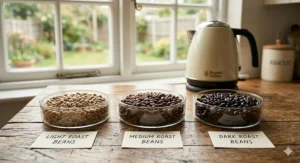
The Perfect Brewing Guide: Getting the Best from Medium Roast Beans
Brewing excellent coffee from medium roast beans doesn’t require barista-level expertise, but a few key principles dramatically improve results. The British tendency towards pragmatism serves well here — you don’t need expensive equipment, just attention to fundamentals.
Water quality matters more than most realise. British tap water varies considerably by region: London’s Thames Water is notoriously hard, Scottish Highland water incredibly soft, Northern cities somewhere between. Ideally, use filtered water (a simple Brita jug suffices) to remove chlorine and moderate hardness. If your coffee tastes flat or overly bitter despite following other guidelines, water is likely the culprit. The UK Government’s water quality standards ensure safety but don’t optimise for coffee brewing.
Grind size must match your method. Fine grind for espresso, medium for filter and pour-over, coarse for cafetière. Medium roasts are forgiving, but grinding too fine for your method results in bitter over-extraction; too coarse yields weak, sour under-extraction. Invest in a burr grinder (entry-level models start around £30) rather than blade grinders that produce inconsistent particle sizes. Consistency matters more than precision.
Brew ratio: 60 grams of coffee per litre of water. This translates to roughly 15 grams per 250ml cup — adjust to taste, but start here. British coffee drinkers often brew too weak, a hangover from instant coffee habits where conservative spoonfuls sufficed. With proper beans, generosity pays dividends.
Water temperature: 92-96°C for most methods. Boil the kettle, let it rest 30 seconds. Too hot extracts bitterness; too cool fails to extract flavour compounds fully. If you’re using a cafetière on a cold British morning, preheat the glass jug with hot water first — thermal shock aside, cold glass will drop your brewing temperature below optimal.
Espresso extraction takes 25-30 seconds for a double shot (around 60ml output from 18g of grounds). Faster indicates under-extraction (sour, weak); slower means over-extraction (bitter, harsh). Medium roasts are more forgiving than extremes, giving you a wider window for acceptable results.
Filter coffee brewing time: 3-4 minutes for most methods. Pour-over allows more control; standard drip machines should achieve this automatically. Cafetière (French press) benefits from a 4-minute steep, gentle plunge to avoid agitating grounds and creating silt.
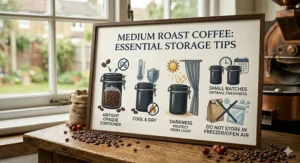
Storage: the 30-day rule. Once opened, coffee maintains peak flavour for roughly 30 days when stored properly (airtight container, cool and dark location). Don’t refrigerate or freeze — condensation damages beans. Britain’s moderate temperatures work in your favour here; just avoid the windowsill or cupboard above the cooker.
Damp British climate considerations: If you live in particularly humid areas or notice beans losing freshness faster than expected, consider vacuum-sealed containers. The investment (£15-30) pays off if you buy beans in bulk or want to preserve quality for the full month.
Experiment with ratios once you’ve mastered the basics. Some prefer stronger coffee (70g per litre), others lighter (50g per litre). Medium roasts tolerate this variation better than extremes — you won’t create undrinkable results even if proportions aren’t perfect.
Milk-based drinks showcase medium roasts beautifully. The balanced flavour holds up to steamed milk without disappearing, whilst avoiding the aggressive bitterness that makes dark roasts unpleasant in cappuccinos. Heat milk to 60-65°C (not boiling) for optimal sweetness and texture.
Common Mistakes When Buying Medium Roast Coffee Beans
Even experienced coffee drinkers make purchasing errors that undermine their enjoyment. Having observed British coffee consumption patterns for years, certain mistakes appear repeatedly.
Buying based on packaging rather than content. Glossy bags and Italian names don’t guarantee quality. Some of the best medium roasts come in understated packaging from lesser-known UK roasters who prioritise beans over branding. Read reviews, check roast dates if visible, and look for origin information rather than assuming expensive equals better.
Ignoring UKCA or Rainforest Alliance certification. Post-Brexit, UKCA marking indicates products meet British standards. For coffee, Rainforest Alliance or similar certifications suggest ethical sourcing and environmental responsibility — increasingly important to British consumers, though admittedly not affecting taste directly.
Assuming “medium roast” is standardised. One roaster’s medium might be another’s medium-dark. Intensity ratings (when provided) help: 3/5 or 5/10 typically indicates true medium; 7/10 skews darker. If trying a new brand, expect variation from your usual choice even within the same roast category.
Buying enormous quantities to save money. That 5kg bulk purchase seems economical until beans sit around for months losing flavour. Better to buy 1kg bags regularly than save a few pounds whilst drinking stale coffee. Factor in Amazon’s Subscribe & Save discounts (typically 5-15% off) for regular smaller purchases rather than occasional bulk orders.
Neglecting to check Amazon.co.uk availability. Some listings show products only available on Amazon.com or with expensive international shipping. Filter specifically for “Prime eligible” or “Dispatched from and sold by Amazon” to ensure UK stock and next-day delivery options.
Choosing unsuitable roasts for your brewing method. If you primarily make espresso, look for beans specifically marketed as espresso-suitable even within medium roast category — slightly darker and denser roasts extract better under pressure. Filter coffee drinkers benefit from slightly lighter medium roasts that emphasise clarity.
Underestimating British winter humidity. Autumn and winter dampness affects coffee storage more than summer drought. Beans left in opened bags absorb moisture, creating stale, flat flavours. Transfer to airtight containers immediately after opening, especially October through March.
Forgetting about grinder compatibility. Very oily beans (rare in medium roasts but occasionally present) can clog burr grinders, particularly in automatic machines. Read reviews mentioning grinder performance if you’re using bean-to-cup equipment — this matters more than most realise.
Ignoring regional water variations. If coffee consistently tastes odd despite proper brewing, investigate local water hardness. London and the Southeast have particularly hard water that might benefit from filtering or using bottled water for brewing.
Paying premium prices for commodity-grade beans. Not all expensive coffee deserves its price tag. £30+ per kilogram should buy you either genuine specialty-grade beans, unique processing, or exceptional provenance. If the description is vague (“premium blend,” “gourmet selection”) without specific origin details, you’re probably overpaying.
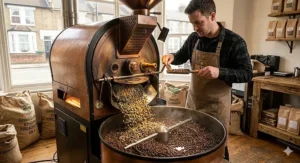
Medium Roast vs Dark Roast: Understanding the Real Differences
The great roast debate persists in British coffee circles, often fueled more by marketing than genuine understanding. Having worked with both extensively, the distinctions matter more than casual drinkers realise — though perhaps less than coffee snobs suggest.
Roasting duration and temperature create the fundamental difference. Medium roasts stop around 210-220°C, typically just after first crack ends. Dark roasts continue to 225-230°C and into second crack, where cellular structure begins breaking down. This extended heat exposure transforms the bean chemically: sugars caramelise further (eventually carbonising), acids diminish, and oils migrate to the surface.
Flavour profiles diverge significantly. Medium roasts preserve origin characteristics — you can still taste whether beans came from Ethiopia (bright, fruity) or Brazil (chocolatey, nutty). Dark roasts bury those distinctions beneath roasty, sometimes bitter flavours. Neither approach is inherently superior; preference is legitimate. British palates, shaped by breakfast tea culture, often find medium roasts more approachable than aggressively dark Italian or French roasts.
Caffeine content barely differs despite persistent myths claiming dark roasts are stronger. By weight, caffeine varies minimally between roast levels. What changes is density: dark roasts expand more during roasting, becoming lighter and less dense. If you measure by volume (scoops), medium roasts contain slightly more caffeine per scoop because they’re denser. Measured by weight (proper brewing practice), caffeine is essentially identical.
Acidity presents the clearest taste distinction. Medium roasts retain pleasant acidity that brightens the cup — think fruit notes, liveliness. Dark roasts mute acidity significantly, creating heavier, smoother cups that some find comforting, others find dull. If you suffer from acid reflux or sensitive stomach, genuinely dark roasts may prove gentler. If you find coffee boring, medium roasts offer more complexity.
British climate considerations favour medium roasts slightly. Our damp weather accelerates oxidation of the oils prominent on dark roast surfaces, potentially creating rancid flavours in poorly stored beans. Medium roasts, being less oily, tolerate typical British kitchen storage better. This matters more if you’re buying larger quantities or storing opened bags for weeks.
Brewing flexibility tilts toward medium roasts. They perform across methods — espresso, filter, cafetière — without demanding precision. Dark roasts excel in espresso and milk drinks where their bold profile cuts through dairy, but can overwhelm filter coffee or taste harsh when over-extracted. If you vary brewing methods, medium roasts prove more forgiving.
Price and availability in the UK market slightly favour medium roasts. Major retailers stock medium roasts more prominently, and entry-level prices start lower. Specialty dark roasts (French, Italian, Vienna) command premiums, though commodity dark roasts can be cheap. The mid-tier sweet spot (£15-25/kg) offers better quality in medium roasts than dark equivalents.
The science behind roasting supports medium roasts’ balanced profile. Research from UC Davis Coffee Center demonstrates that medium roasts maintain optimal levels of desirable volatile compounds whilst avoiding the excessive breakdown that occurs in darker roasts. The Maillard reaction and caramelisation processes create flavour complexity without destroying delicate origin characteristics.
Health and wellness perspectives give medium roasts marginal advantages. They retain more chlorogenic acids (antioxidants), though the practical health differences are modest unless you’re drinking extraordinary quantities. Some evidence suggests medium roasts preserve more beneficial compounds whilst avoiding potentially problematic compounds created during extended dark roasting.
The honest answer for most British households: medium roasts suit everyday drinking better. They’re versatile, widely available, reasonably priced, and crowd-pleasing. Reserve dark roasts for specific occasions (after-dinner espresso, strong morning jolt) rather than making them your daily driver. Your palate will appreciate the variety.
How to Choose Medium Roast Coffee Beans Suited to British Tastes
Selecting coffee that genuinely suits your preferences requires more thought than grabbing the first medium roast on offer, though the process needn’t be complicated. British consumers increasingly demand quality, but practical considerations still matter.
1. Assess your primary brewing method first
Bean-to-cup machine owners benefit from blends marked “suitable for automatic machines” — these produce fewer fines that clog mechanisms and extract cleanly. Espresso enthusiasts should look for medium roasts specifically labelled for espresso or with slightly darker medium profiles (intensity 6-7/10). Filter and cafetière drinkers can choose based purely on flavour preferences since these methods are forgiving.
2. Consider household consumption patterns
High-volume households (3+ cups daily) should prioritise value and consistency over exotic single-origins. The £10-16/kg bracket delivers perfectly acceptable daily drinking. Moderate consumers (1-2 cups) can justify £20-30/kg for superior quality. Weekend-only coffee drinkers might stretch to £30+/kg premium options that last months without waste.
3. Match intensity to your palate
If you’re transitioning from instant coffee or adding milk/sugar regularly, start with gentle medium roasts (intensity 3-4/10). Coffee purists or black coffee drinkers should aim for 5-6/10 where origin character shines without becoming challenging. Remember that British palates generally skew milder than Mediterranean preferences — what Italians consider medium might feel dark to British drinkers.
4. Origin matters more than marketing suggests
Brazilian beans deliver chocolate, caramel, nutty warmth — safe, crowd-pleasing. Colombian beans offer balanced sweetness with gentle fruit notes. Central American coffees (Guatemala, Costa Rica) bring clean, bright flavours. Blends smooth individual characteristics into consistent profiles. Single-origin appeals to enthusiasts wanting to explore terroir; blends suit those wanting reliable, unchallenging cups.
5. Storage realities in British homes
If you lack proper airtight storage, buy 250g-500g bags rather than 1kg. Smaller quantities stay fresh through natural consumption. Households with good storage (vacuum containers, cool pantries) can buy 1kg economically. Avoid 2kg+ unless you’re consuming coffee rapidly or sharing with multiple people.
6. Amazon UK Prime eligibility genuinely matters
Next-day delivery means fresher beans arrive sooner and you can reorder before running out. Non-Prime items might add £3-5 delivery or require minimum orders, negating any apparent savings. Factor shipping into cost comparisons.
7. Certification indicates values alignment
Rainforest Alliance, Fairtrade, and organic certifications appeal to British consumers increasingly concerned about ethical sourcing and environmental impact. These don’t directly affect taste, but if sustainability matters to you, certification provides third-party verification of claims.
8. Trial smaller quantities before committing
Found a promising-sounding coffee? Buy 250g first. Coffee is subjective — what experts rave about might not suit your palate. Better to “waste” £5-8 on a small bag you dislike than £20 on a kilo of regret.
UK Coffee Market Trends: What’s Changing in 2026
The British coffee landscape has matured considerably, moving beyond the instant-vs-beans binary that dominated previous decades. Several trends shape what’s available and what’s worth buying in 2026.
Specialty coffee democratisation continues. What once required visiting artisanal cafés in Shoreditch or Edinburgh now arrives via Amazon Prime. Medium roast single-origin coffees from specific estates in Colombia or Ethiopia sit alongside supermarket staples, accessible to anyone with internet connection and £20. This democratisation raises average quality across the market.
Sustainability certifications have moved from niche concern to mainstream expectation. British consumers increasingly verify Rainforest Alliance, Fairtrade, or B Corp status before purchasing. Coffee brands respond by highlighting ethical sourcing prominently. In practical terms, this means even budget options increasingly offer certified beans — a welcome shift.
UK roasters gaining prominence reflects both Brexit realities and consumer preference for local products. Shorter supply chains mean fresher coffee and reduced environmental impact. British roasters like Grind, Spiller & Tait, and Rounton Coffee compete effectively against established Italian and American brands. Amazon.co.uk now stocks these smaller roasters alongside multinational giants.
Bean-to-cup machines in British homes create demand for specific bean characteristics. Machines have become more affordable (decent models now under £300), driving purchases of beans optimised for automatic equipment. This influences roaster decisions: blends designed to produce excellent crema, extract cleanly, and minimise oily residue command growing market share.
Climate awareness subtly affects purchasing. British consumers consider carbon footprint, favouring closer origins (Central/South American beans shipped via Atlantic rather than Asian coffees crossing continents). Roasters respond by highlighting origin proximity and sustainable shipping methods.
Subscription models grow steadily. Amazon’s Subscribe & Save discounts coffee purchases 5-15%, appealing to British value consciousness. Direct-from-roaster subscriptions (often bypassing Amazon) deliver even fresher beans on schedules matching consumption. This shifts occasional purchasers toward regular commitments with specific roasters.
Price sensitivity remains characteristically British. Whilst premium options exist and sell well, the sweet spot remains £15-25/kg — good quality without indulgence. Budget options under £15/kg maintain strong sales, premium offerings above £30/kg serve enthusiasts willing to pay for exceptional quality.
Review culture influences purchasing profoundly. British consumers read reviews extensively before buying. Amazon’s verified purchase reviews carry particular weight. This transparency benefits genuinely good products whilst punishing overhyped offerings — meritocracy improves market quality.
Health and wellness considerations grow. Low-acid coffees, organic certifications, and antioxidant content feature in marketing. Medium roasts, being naturally balanced and retaining more beneficial compounds than dark roasts, align well with these concerns.
Frequently Asked Questions
❓ Are medium roast coffee beans suitable for espresso machines?
❓ How long do medium roast coffee beans stay fresh in the UK climate?
❓ What's the difference between medium roast coffee sold on Amazon UK versus coffee shop beans?
❓ Can I use medium roast beans in a cafetière without them tasting weak?
❓ Are expensive medium roast beans worth the extra cost for UK households?
Conclusion: Finding Your Perfect Medium Roast Match
Medium roast coffee beans occupy that sensible British sweet spot: balanced, versatile, and thoroughly reliable without being boring. Having explored seven excellent options available on Amazon UK, the truth is that “best” depends entirely on your specific circumstances — household consumption, brewing method, budget, and personal taste all factor into the equation.
For budget-conscious households drinking coffee daily, Schwiizer Schüümli Crema delivers remarkable value at £13-16 per kilogram without sacrificing quality. Its gentle 3/5 intensity suits all-day drinking, and Swiss roasting expertise ensures consistency batch after batch. If you’re stepping up from instant coffee or simply want reliable, pleasant coffee without complexity, start here.
Those valuing British provenance and craft quality should seriously consider Grind House Blend or Spiller & Tait Signature. UK roasting means genuinely fresh beans arrive at your door, and supporting British businesses resonates with many consumers. The £20-28/kg bracket represents excellent quality without entering premium territory where returns diminish rapidly.
Premium seekers willing to invest in absolute consistency and superior packaging will find illy Classico justified at £32-38/kg. That pressurised tin preservation matters in our damp British climate, and the nine-Arabica blend genuinely delivers complexity you won’t find in cheaper alternatives. This is coffee you serve to discerning guests without hesitation.
The beauty of medium roasts lies in their forgiving nature and broad appeal. Unlike light roasts that divide opinion or dark roasts that can overwhelm, medium roasts please most palates most of the time. They work across brewing methods, tolerate minor preparation errors, and deliver consistently satisfying results day after day.
Whatever you choose, prioritise freshness, proper storage, and appropriate brewing technique over obsessing about minute flavour differences. The gap between poorly stored premium beans and well-maintained budget beans often exceeds the gap between price points. Buy regularly in quantities you’ll consume within a month, invest in decent airtight storage, and take care with your brewing fundamentals.
British coffee culture has matured beautifully. We’ve moved beyond accepting whatever was cheapest or most convenient toward genuinely appreciating quality whilst retaining that characteristically British value consciousness. Medium roast coffee beans embody this evolution perfectly — accessible, approachable, and thoroughly worthwhile when chosen thoughtfully.
Recommended for You
- 7 Best Light Roast Coffee Beans UK 2026
- 7 Best Filter Ground Coffee UK 2026: Expert Picks & Reviews
- 7 Best Ground Coffee for Cafetiere UK 2026
Disclaimer: This article contains affiliate links. As an Amazon Associate, I earn from qualifying purchases. If you purchase products through these links, we may earn a small commission at no additional cost to you.
✨ Found this helpful? Share it with your mates! 💬🤗
