
In This Article
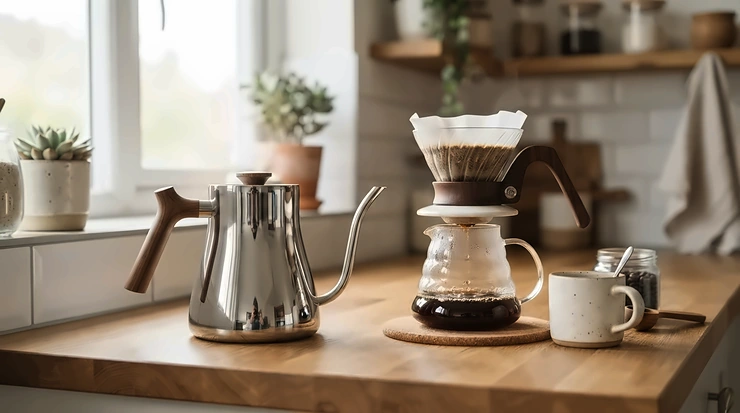
What is hard water filter coffee brewing? It’s the habit of running mineral-heavy tap water through a filter, usually an ion-exchange cartridge, before it meets your coffee. The aim is to cut the carbonate hardness behind limescale and dull flavour to a level your kit and your beans can cope with.
Britain has some of the safest tap water on the planet. In a big slice of the country, it’s also a quiet saboteur of your morning brew. Calcium and magnesium bicarbonates ride along in every litre. Heat them and they crash out as limescale, that chalky crust on your kettle element and, far worse, inside an espresso machine’s boiler. Meanwhile, in the cup, a heavy mineral content and high alkalinity flatten the bright, fruity notes you bought the beans for. Chalky. Dull. A bit sulky.
None of this is a health issue. Water hardness varies with local geology, and one UK supplier notes that water above roughly 200 mg/l of calcium carbonate counts as hard, without any harm to health. It’s a quality-and-kit problem, and one industry round-up puts hard water in around 60% of UK households.
So this guide profiles seven real products, from a budget water filter jug for coffee making to a plumbed-in cartridge for serious espresso gear. It explains what each one does about carbonate hardness, limescale and mineral content. We’ll also untangle soft water for pour over coffee, where “softer” helps right up until it doesn’t. Every assessment rests on published specifications, independent test coverage and aggregated reviews, not personal hands-on testing. Where the evidence is thin, I’ll say so.
Quick Comparison: Best Hard Water Filter Coffee Brewing Options
| Product | Type | Standout trait | Price range | Best For |
|---|---|---|---|---|
| Aqua Optima Liscia | Jug, 2.5 L total | Cheap, slim, 30-day cartridges | £10–£20 | Small households on a budget |
| Aquaphor Provence | Jug, 4.2 L | Cartridge rated up to 350 L | £20–£30 | Busy families |
| BRITA Marella XL | Jug, 3.5 L total | Carbonate hardness figure stated | £25–£35 | Hard-water kettles and filter coffee |
| BWT Penguin | Jug, 2.7 L total | Magnesium mineraliser cartridge | £30–£45 | Flavour-focused drinkers |
| ZeroWater 12-Cup | Jug, 2.8 L | Near-zero TDS, meter included | £30–£45 | Building your own brew water |
| Third Wave Water Classic Profile | Mineral sachets | Rebuilds mineral content | £15–£25 per 12 | Pour-over fans with purified water |
| BRITA Purity C150 Quell ST | Plumbed-in cartridge | Adjustable bypass | £100–£200 to start | Espresso machines on mains water |
Read down the table and a pattern emerges. The first three jugs are scale blockers first and flavour tools second. BWT Penguin sits in the middle by choosing which minerals it leaves behind, and the last three are specialist kit for people who want to steer the cup deliberately. If you simply want a calmer kettle, BRITA Marella XL or Aqua Optima Liscia will do the job. If light roasts are your thing, the ZeroWater 12-Cup plus Third Wave Water Classic Profile pairing is worth the extra faff.
💬 Just one click — help others make better buying decisions too!😊
Top 7 Hard Water Filter Coffee Brewing Picks: Expert Analysis
1. Aqua Optima Liscia — cheapest route to calmer kettles
The Aqua Optima Liscia is the entry ticket to a water filter jug for coffee making, and it’s quietly clever about running costs. It holds 2.5 litres in total, but only about 1.2 litres sits on the filtered side. Its slim 100 mm profile slides into most fridge doors. The Evolve+ cartridge pairs ion-exchange resin beads with activated carbon and is rated for roughly 30 days or 100 litres. In practice, 1.2 litres covers a couple of mugs or one pour-over session before you refill. That’s fine for one or two people and tiresome for a household.
Based on the spec comparison, the ion-exchange approach targets limescale-forming minerals. However, the listings reviewed don’t state a carbonate hardness capacity in litres the way BRITA does, so in very hard postcodes swap early rather than trusting the calendar. One useful bonus: Evolve+ cartridges are listed as compatible with most oval jugs, including Brita Maxtra models.
Reviewers consistently praise value and fridge fit. Common complaints are the small filtered side, a slightly fiddly lid and rigid plastic that can crack if dropped. Retail listings showed a rating of around 4.6 out of 5 from thousands of reviews at the time of research.
Pros:
- ✅ Very low upfront cost
- ✅ Slim shape fits fridge doors
- ✅ Cartridges fit many oval jugs
Cons:
- ❌ Only about 1.2 litres filtered per fill
- ❌ No published carbonate hardness capacity
Expect around £10–£20 depending on the cartridge bundle, which makes it a genuine bargain for small households.
2. Aquaphor Provence — big family jug, long-life cartridge
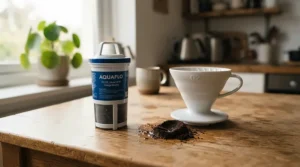
The Aquaphor Provence swaps frequent cartridge changes for volume: a 4.2-litre jug and an A5 cartridge rated for up to 350 litres, roughly three months by the maker’s guidance. Aquaphor says A5 reduces limescale, chlorine, heavy metals and microplastics, and an A5 Mg version adds magnesium back in. A battery-free indicator tracks cartridge life, and the flip-top lid fills one-handed.
Here’s the honest wrinkle. Rated life is a ceiling, not a promise. The harder your water, the sooner the resin runs out, so treat 350 litres as the best case and check results with a hardness strip. Still, for a family working through several cafetières a day, fewer swaps means fewer chances to forget one. The magnesium variant is the sensible choice for coffee, since a little magnesium supports flavour rather than leaving the water bare.
Reviewers frequently highlight taste and looks, and an Expert Reviews round-up has named it a best high-capacity jug. A few buyers call the filtration satisfactory rather than strong and mention the weight when full.
Pros:
- ✅ Generous 4.2-litre capacity
- ✅ Up to 350 litres per cartridge
- ✅ Magnesium-release cartridge option
Cons:
- ❌ Heavy to lift when full
- ❌ Cartridge life shortens in very hard water
Typically £20–£30, which is strong value per litre for busy households.
3. BRITA Marella XL — the hard-water workhorse
The BRITA Marella XL is the jug most UK kitchens already recognise, and the spec sheet explains why. It holds 3.5 litres with about 2 litres filtered, and ships with a MAXTRA PRO cartridge rated for 150 litres or four weeks. Crucially for hard water, the maker footnotes that carbonate hardness reduction has been tested up to 120 litres. An electronic Memo reminds you when to change the cartridge.
What does that mean at the kettle? Reading the footnote against the headline, carbonate hardness reduction likely tapers before the indicator trips in the hardest areas. A UK coffee supplier warns that filter performance dips before the four-week mark in hard water. Treat 120 litres as your real budget, then test. Beyond limescale, the cartridge also targets chlorine, lead and copper, which helps when a metallic edge creeps into light roasts.
An Expert Reviews round-up called it the best jug for families, and reviewers describe less scale in kettles and coffee makers alongside easy cleaning. A common complaint across Maxtra-type jugs is the cartridge prep before first use.
Pros:
- ✅ Generous 2-litre filtered capacity
- ✅ Carbonate hardness reduction stated to 120 litres
- ✅ Replacement cartridges easy to find
Cons:
- ❌ Cartridge needs prepping before first use
- ❌ Leaves mineral balance to chance
Expect around £25–£35, making it the best-value all-rounder for hard water.
4. BWT Penguin — magnesium-tuned for tea and coffee
The BWT Penguin is built around its cartridge, not the jug. The Magnesium Mineralizer exchanges calcium ions for magnesium ions, lightly softening the water while keeping minerals in the cup. The jug holds 2.7 litres with about 1.5 litres filtered. The cartridge is rated for 120 litres or 28 days, with capacity quoted at 15–18 °dH, roughly 270–320 mg/l, which is squarely hard-water territory. There’s an electronic indicator, and the body is dishwasher-safe (lid excepted).
Why bother? Coffee specialists note that magnesium leans towards sharp, fruity flavours while calcium pushes heavier, creamier ones, so the swap is a genuine flavour lever. Mind you, BWT’s flavour claims rest on its own sensory testing, and independent evidence is thin. It suits drinkers who like experimenting rather than anyone wanting lab-grade guarantees. It also only lightly softens, so extremely hard postcodes may still see scale.
Review evidence is limited. One retailer shows 4.9 out of 5, but from only nine reviews, so treat the enthusiasm cautiously.
Pros:
- ✅ Magnesium-for-calcium swap for flavour
- ✅ Capacity quoted for 15–18 °dH water
- ✅ Electronic change indicator
Cons:
- ❌ Proprietary cartridges cost more
- ❌ Smaller filtered capacity than rivals
Roughly £30–£45, which is worthwhile if flavour matters more than volume.
5. ZeroWater 12-Cup — near-zero TDS with a built-in meter
The ZeroWater 12-Cup isn’t a softener so much as a reset button. Its five-stage dual ion-exchange filter strips out virtually all dissolved solids (the maker claims about 99.6%), and a supplied TDS meter lets you check the result. One UK reviewer’s tap read 77 ppm and the filtered water read 000, which is the whole point.
Here’s the catch, and it’s a big one for coffee. Water at 000 brews flat, and brewing guidance wants a modest mineral content for proper extraction. So the ZeroWater 12-Cup is a base, not a finished brew water. Blend it half-and-half with tap to cut carbonate hardness cleanly, or rebuild minerals with sachets (see pick six). The meter doubles as your cartridge timer, but in hard water the resin exhausts faster, so running costs climb. That’s the trade-off.
Reviews skew positive across UK blogger and retailer write-ups, with fans noticing cleaner kettles. One Lakeland reviewer disliked the square shape, awkward pouring and a plastic taste.
Pros:
- ✅ TDS meter included
- ✅ Removes virtually all dissolved solids
- ✅ Perfect blank canvas for brew water
Cons:
- ❌ Filters burn out quickly in hard water
- ❌ Zero-mineral water tastes flat alone
Around £30–£45, with value that depends on how hard your tap is.
6. Third Wave Water Classic Profile — rebuilds mineral content on purpose
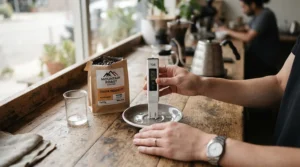
Third Wave Water Classic Profile flips the problem. Rather than subtracting from tap water, you add a precise mineral blend to purified water. One sachet treats a gallon (about 3.8 litres) of distilled or reverse-osmosis water, and a box holds 12. The Classic blend uses magnesium for sweetness and calcium for body, with low alkalinity so acidity stays lively. The maker’s Espresso Profile adds a potassium bicarbonate buffer, so machine owners should choose that one instead.
This is the purist’s route to soft water for pour over coffee: predictable, repeatable and aimed at a cleaner, brighter cup with less scale risk than hard tap. The maker also notes that minerals can change brew times, so expect to nudge your grind or pour rhythm. The catch is that you must supply distilled, RO or similar purified water, which adds cost and logistics.
Reviewers describe clear improvements over tap, and one blogger called it a great option for coffee lovers. The evidence, though, comes mostly from enthusiasts rather than lab trials.
Pros:
- ✅ Repeatable, SCA-style mineral content
- ✅ Low alkalinity keeps acidity bright
- ✅ Sachets keep for years
Cons:
- ❌ Needs distilled or RO water
- ❌ Ongoing cost per litre
Roughly £15–£25 for 12 sachets, or about 30–55p per litre before the purified water, which is a premium for obsessives.
7. BRITA Purity C150 Quell ST — plumbed-in protection for espresso machines
When a jug can’t keep up with a hungry espresso machine, the BRITA Purity C150 Quell ST steps in. This professional cartridge sits on the mains supply and uses a pre-filter, carbonate hardness reduction, activated carbon and a final fine filter. BRITA rates it at around 2,408 litres for coffee machines at 10 °dH (about 178 mg/l) with a 40% bypass. The variable-bypass head lets you blend raw water back in.
That bypass is the clever bit. Instead of all-or-nothing softening, you can dial in how much mineral content and alkalinity remain, then confirm the result with a carbonate hardness test kit (BRITA sells one). Based on the spec comparison, it’s the only option here that protects a boiler continuously rather than relying on someone remembering to refill a jug. It does need fittings and a compatible head, and Amazon availability varies by seller, so verify exactly what’s included.
Consumer reviews are thin. Sentiment comes mostly from trade suppliers, who praise its reliability for coffee kit.
Pros:
- ✅ Thousands of litres per cartridge
- ✅ Adjustable bypass tunes mineral balance
- ✅ Protects the boiler continuously
Cons:
- ❌ Needs plumbing and fittings
- ❌ Overkill for kettle-and-jug households
Expect around £100–£200 to start, with cartridges in the low £60s. That works out at roughly 3p a litre at 10 °dH, which is excellent for heavy users.
✨ Don’t Let Limescale Win!
🔍 Take your hard water filter coffee brewing routine to the next level with these carefully chosen options. Click any highlighted product name to check current pricing and availability, then pick the setup that fits your kettle, your machine and your beans. ☕
Practical Usage Guide: Setting Up Your Water Filter Jug for Coffee Making
A jug is only as good as its set-up, and most of the gains are won in the first month. Work through this order:
- Check your hardness first. Use your supplier’s postcode checker or test strips. The Drinking Water Inspectorate’s scale runs from 100–150 mg/l (slightly hard) to above 300 mg/l (very hard).
- Prep the cartridge. Most ion-exchange cartridges want a soak and a flush: dunk it, fit it, then discard the first couple of jugfuls. Follow your model’s leaflet.
- Filter cold water only. Hot water can damage resin, so filter first, then heat.
- Chill and use quickly. Keep the jug in the fridge and use it within a day or two, because stored water doesn’t improve with age.
- Date the cartridge. In hard areas, change it early, around three to three-and-a-half weeks on a four-week cartridge.
- Test weekly. A hardness strip or alkalinity drop kit shows when performance slips, whereas a TDS meter alone can’t separate hardness from alkalinity.
- Keep descaling. A filter reduces scale, but it doesn’t abolish it.
The classic first-month blunders? Skipping the flush, forgetting to reset the indicator, and judging flavour on the very first litre. Every water filter jug for coffee making rewards patience in week one.

Problem → Solution Guide: Fixing Limescale, Flat Cups and Sour Shots
Even a decent set-up throws up problems. Here are the five to check first.
Problem: a crust still forms in the kettle. The cartridge is probably past its best, because carbonate hardness reduction fades well before the calendar says so. Swap early and descale monthly. If scale returns within days, the BRITA Marella XL offers a stated 120-litre hardness window, while the plumbed-in BRITA Purity C150 Quell ST is the next step up.
Problem: flat, chalky coffee. That usually signals alkalinity that is too high. Try the BWT Penguin, or blend purified water with tap to dilute it.
Problem: sour, thin shots after filtering. Alkalinity may now be too low. Reduce the share of purified water, or rebuild minerals with Third Wave Water Classic Profile (the Espresso Profile for machines).
Problem: a metallic edge. Iron and copper can leach in from old pipes, and even small amounts taste metallic, according to Climpson & Sons’ coffee journal. Carbon stages in the BRITA Marella XL and Aquaphor Provence target this, so keep cartridges fresh.
Problem: constant refilling. Choose the Aquaphor Provence for its 4.2-litre body.
Real-World Scenarios: Which Setup Suits Which Brewer
The budget flat-sharer (around £20, daily cafetière). Picture a south-east rental, a furred-up kettle and one big pot each morning. The Aqua Optima Liscia fits: cheap, compact and easy to remember on a 30-day rhythm. Change the cartridge early and keep citric descaler handy.
The pour-over devotee (£60–£80, four or five brews daily). Light roasts, a London kitchen and very hard tap water. Pair the ZeroWater 12-Cup with Third Wave Water Classic Profile. In principle this works because the maker says deionised water is suitable, but confirm the meter reads zero, collect a full gallon per sachet and expect to tweak grind as brew times shift. This is soft water for pour over coffee done deliberately.
The home barista (£200 or more, daily flat whites). A plumbed-in machine in a hard-water new-build is a job for the BRITA Purity C150 Quell ST, set to a moderate bypass and verified with a carbonate hardness kit. If your machine uses a reservoir instead, the BWT Penguin is the lighter-touch alternative.
The family kitchen (£25–£35, a kettle that never rests). Go for the BRITA Marella XL and a date-it-on-the-cartridge habit.
How to Choose a Water Filter Jug for Coffee Making
Seven steps keep you out of the marketing fog:
- Know your water. Check hardness by postcode before buying. Very hard water sits above 300 mg/l on the Drinking Water Inspectorate’s scale and shortens cartridge life.
- Insist on the right chemistry. Chlorine-only carbon jugs won’t protect your kettle. You want ion-exchange resin that reduces carbonate hardness.
- Read the capacity fine print. Look for litres quoted at a stated hardness, such as BRITA’s 120-litre test figure or BWT’s 15–18 °dH band.
- Size to the filtered side. A 2.5-litre jug may filter only 1.2 litres per fill.
- Decide on mineral control. Magnesium cartridges nudge flavour, whereas plain ion exchange doesn’t.
- Calculate cost per litre. Divide cartridge price by realistic litres, not box claims.
- Check independent testing. Which? tests jugs with hardness strips and reports significant variation in softening performance between models, so spec sheets aren’t the whole story.
The short version for any hard water filter coffee brewing routine: pick on carbonate hardness evidence first, flavour second and price third.
Carbonate Hardness and Mineral Content: What the Numbers Mean
Two ideas get tangled here. Total hardness counts dissolved calcium and magnesium. Carbonate hardness, often called temporary hardness, is the slice bound to bicarbonate, and it’s what precipitates as limescale when water heats. It also behaves like alkalinity in your cup, buffering the acids that make coffee taste lively. Mineral content, usually read as TDS, is the broader tally of everything dissolved.
Why care? The Specialty Coffee Association’s targets are surprisingly modest. Sources quote them slightly differently, but roughly: 150 ppm TDS (75–250 acceptable), hardness around 50–175 ppm as calcium carbonate, alkalinity near 40 ppm, a pH close to 7 and no chlorine. The Climpson & Sons coffee journal echoes the 75–250 ppm range with 150 ppm as ideal. Compare that with a very hard tap above 300 mg/l and the gap is obvious.
Ion-exchange cartridges attack carbonate hardness by swapping calcium and magnesium for hydrogen ions, which turn bicarbonate into carbon dioxide. That lowers alkalinity but leaves non-carbonate hardness behind, so mineral content falls only partly. One handy conversion: one degree German hardness (°dH) is about 17.8 mg/l. And because a TDS meter can’t separate hardness from alkalinity, a strip or drop test earns its keep.
Soft Water for Pour Over Coffee: Good Idea or Flat-Cup Trap?
Pour-over is the most forgiving method for scale, because there’s no boiler, just a kettle you can descale in minutes. That tempts people towards soft water for pour over coffee, and partly they’re right. Light roasts often shine with lower alkalinity, with some well-known coffee authors suggesting roughly 30–40 ppm, which keeps acidity bright instead of buffered into mush.
But soft doesn’t mean empty. Water stripped of minerals can brew flat and under-extracted, which is why brewing guidance steers away from distilled water on its own. Minerals are flavour carriers too: magnesium tends to highlight sharp, fruity notes while calcium emphasises heavier, creamier ones. So the sweet spot is moderately soft, with some hardness and little alkalinity.
Three ways to get there:
- Filter with a carbonate-hardness jug such as the BRITA Marella XL, then taste.
- Blend purified and tap water, using the ZeroWater 12-Cup meter as a guide.
- Rebuild from scratch with Third Wave Water Classic Profile.
One warning: a whole-house salt softener swaps calcium for sodium, and the Drinking Water Inspectorate advises keeping one unsoftened tap for drinking. Finally, retune your recipe, because changing minerals shifts extraction speed.
Hard Water Filter Coffee Brewing vs Tap, Bottled and Plumbed-In Alternatives
| Option | Scale protection | Flavour control | Effort and cost | Best For |
|---|---|---|---|---|
| Untreated tap | None | None | Free, but frequent descaling | Soft-water postcodes |
| Bottled still water | Variable, check the label | Pot luck | Ongoing cost, plastic waste | Occasional use |
| Jug filter, such as BRITA Marella XL | Moderate until the cartridge fades | Limited | Low | Everyday kettle and cafetière |
| Purified base plus minerals, such as ZeroWater 12-Cup with Third Wave Water Classic Profile | High | High | Higher effort | Pour-over fans |
| Plumbed-in, such as BRITA Purity C150 Quell ST | High, adjustable | Moderate to high | Installation, then low running cost | Espresso machines |
The table shows a ladder of effort. Jugs deliver most of the practical benefit for kettles and filter coffee, and filtering at home also cuts the plastic waste of buying bottled. Bottled water is the wild card, since the mineral content of bottled spring waters can range from about 50 to 300 ppm, so you’d need to read every label. Plumbed-in systems earn their cost only where a boiler is at stake.
Common Mistakes When Buying a Water Filter Jug for Coffee Making
Buying on chlorine claims alone. Many jugs are marketed on chlorine and heavy-metal reduction. If scale is your problem, look for stated carbonate hardness reduction.
Trusting total capacity. A 2.5-litre jug may deliver only 1.2 litres of filtered water per fill.
Treating cartridge life as gospel. Hard water exhausts resin early, so rated litres are a best case.
Pouring zero-TDS water straight into a machine. It brews flat, and some machines rely on a minimum mineral content for their sensors, so check the manual.
Judging by TDS alone. The number can’t tell hardness from alkalinity.
Skipping the postcode check. Without it, you’re guessing whether you need a budget jug or a mains cartridge.
Features That Actually Matter (And Those That Don’t)
What earns its place:
- Carbonate hardness reduction stated in litres at a stated °dH
- Filtered-side capacity, not total volume
- A reliable change indicator
- Cartridge availability and cost per litre
- Some way to measure results: strips, a TDS meter or an alkalinity kit
What’s mostly noise:
- Stage counts. Five-stage versus seven-stage is marketing arithmetic. Resin type and capacity matter more.
- Alkaline pH boasts. High alkalinity is the opposite of what bright coffee wants.
- Glass versus plastic. It affects looks, not limescale.
- Vague “adds minerals” lines. Look for named minerals, as with the BWT Penguin and the Aquaphor Provence A5 Mg cartridge.
Limescale, Long-Term Cost and Maintenance
Limescale is the slow tax on coffee kit. Which? notes that hard water is most common in the south-east and London, with parts of the east coast, including large parts of Yorkshire, also scaling kettles quickly. Filtering reduces build-up but never eliminates it, so keep descaling the kettle roughly monthly in hard areas and follow your espresso machine’s manual.
| Option | Upfront range | Cartridge life | Running-cost verdict | Best For |
|---|---|---|---|---|
| Aqua Optima Liscia | £10–£20 | About 30 days or 100 L | Lowest, a few pence per litre | Tight budgets |
| Aquaphor Provence | £20–£30 | Up to 350 L | Low if the rating holds | Families |
| BRITA Marella XL | £25–£35 | 150 L or 4 weeks | Moderate | Hard-water kettles |
| BWT Penguin | £30–£45 | 120 L or 28 days | Moderate to high | Flavour tweakers |
| ZeroWater 12-Cup | £30–£45 | Meter-driven | Rises sharply in hard water | Blending and mixing |
| Third Wave Water Classic Profile | £15–£25 per 12 | About 3.8 L per sachet | Roughly 30–55p per litre plus purified water | Pour-over purists |
| BRITA Purity C150 Quell ST | £100–£200 | About 2,408 L at 10 °dH | Around 3p per litre, heavy upfront | Espresso machines |
Pennies matter less than the pattern. Jugs are cheap to start but costlier per litre, while the plumbed-in option inverts that. A household filtering about 3 litres a day gets through a 100-litre cartridge in roughly a month, which is why long-life cartridges like the Aquaphor Provence‘s matter. Heavy espresso users will recoup the BRITA Purity C150 Quell ST outlay faster than occasional drinkers.
Hard Water Filter Coffee Brewing FAQ
❓ How often should I change a water filter jug cartridge in a hard water area?
❓ Is a water filter jug enough to protect a bean-to-cup coffee machine?
❓ Can I use ZeroWater 12-Cup water in an espresso machine?
❓ What is the best water filter jug for coffee making on a budget?
❓ Does soft water for pour over coffee actually taste better?
Conclusion: Your Hard Water Filter Coffee Brewing Game Plan
Hard water won’t hurt you, but it will wear down your kit and dull your cups. The fix needs neither a plumber nor a chemistry degree. Start with your postcode’s hardness, choose a filter that genuinely reduces carbonate hardness, and let evidence rather than marketing stages steer you.
If you want the least-fuss upgrade, the BRITA Marella XL is the dependable all-rounder, while the Aqua Optima Liscia keeps costs minimal and the Aquaphor Provence suits busy families. Flavour-chasers should look at the BWT Penguin. Pour-over purists can build their own brew water with the ZeroWater 12-Cup and Third Wave Water Classic Profile. If a serious espresso machine is on the line, the BRITA Purity C150 Quell ST is the grown-up solution.
Whatever you choose, test rather than guess. A hardness strip, an alkalinity kit and a monthly descale will tell you more than any spec sheet. Hard water filter coffee brewing is less about perfect water than controlled water, and now you have the map.
✨ Ready to Taste the Difference?
🔍 Take your coffee to the next level with these carefully selected products. Click any highlighted product name above to check current pricing and availability, then brew something worth getting out of bed for. ☕
Recommended for You
- Cortado Glasses For Gifts: 7 Best Picks They’ll Love (2026)
- Oat Milk Flat White At Home: 7 Essential Picks (2026)
- Milk Frother For Small Kitchens: 7 Smart Buys, No Regrets (2026)
Disclaimer: This article contains affiliate links. As an Amazon Associate, I earn from qualifying purchases. If you purchase products through these links, we may earn a small commission at no additional cost to you.
✨ Found this helpful? Share it with your friends! 💬🤗
