
In This Article
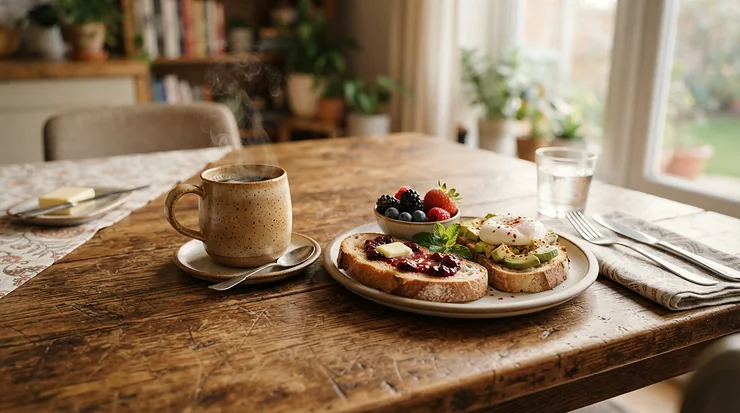
An oat milk flat white at home is a small, espresso-forward milk coffee: a concentrated double shot, barista-style oat milk steamed into glossy microfoam, and a compact 150–180ml cup with no foam cap and no dairy. Think of it as a latte that went to the gym and came back with better posture.

Here’s the thing, though. The café version looks effortless because a barista has repeated it thousands of times. At home, three culprits wreck most attempts: the wrong carton, milk heated past its comfort zone, and a cup far too big for the job. Fix those and the drink transforms. The flat white has Antipodean roots, with Australia and New Zealand both staking a claim, and its identity rests on proportion: more coffee punch, less milk fluff.
That makes oat milk a natural partner. Its mild sweetness plays nicely with espresso, and barista formulations are engineered to hold together under heat and acid. Done well, a dairy-free flat white at home can rival the one you’d queue for.
So this guide does the legwork. You’ll find seven real products across budget, mid-range and premium: two barista oat milks, three machines, a grinder and a cup. There’s also a step-by-step method, troubleshooting and cost maths. One honest note: this is a research-led guide built on specs, published reviews and aggregated owner feedback. It doesn’t claim I’ve pulled shots on every machine. Prices appear as ranges only, so always check the current price before you buy.
Quick Comparison: Your Oat Milk Flat White at Home Shopping List
Short on time? This table puts every pick in one place, from carton to cup. Ranges reflect the time of research and shift often, so check current price before buying.
| Product | Role in the Cup | Typical Price Range | Best For |
|---|---|---|---|
| Oatly Barista Edition | Barista oat milk | Around £1.70–£2.50 per litre | Best foam reliability |
| Alpro Barista Oat Drink | Barista oat milk | Around £1.70–£2.20 per litre | Everyday availability |
| De’Longhi Dedica Style EC685 | Entry-level machine | Around £150–£250 | Tight budgets, small kitchens |
| Sage Bambino Plus | Automatic-milk machine | Around £370–£500 | Beginners who dread steaming |
| Gaggia Classic Evo Pro | Manual enthusiast machine | Around £450–£600 | Hands-on tinkerers |
| Sage Smart Grinder Pro | Burr grinder | Around £180–£210 | Dialling in a ristretto shot |
| ACME Flat White Cup | 150ml ceramic cup | Roughly £8–£15 per cup | Getting proportions right |
Read down the price column and the pattern is clear. The two cartons cost pennies per drink, so the real decision sits in the machine and grinder. The Sage Bambino Plus is the sweet spot if you want consistent milk without learning technique. The De’Longhi Dedica Style EC685 is the cheapest way in, and the Gaggia Classic Evo Pro rewards patience. Whichever you choose, budgeting for a grinder and an ACME Flat White Cup is what separates a decent drink from a café-grade one.
💬 Just one click — help others make better buying decisions too!😊
Top 7 Picks for an Oat Milk Flat White at Home: Expert Analysis
Every pick below is judged on what it does to your drink, not on how loudly the listing shouts. Specs come with plain-English meaning, and review sentiment is labelled as aggregated feedback.
1. Oatly Barista Edition — the benchmark for foam that behaves
If this guide had a house milk, it would be this one. Oatly Barista Edition is the carton many UK cafés reach for, so the foam you’re chasing at home was probably developed around it.
The label is short but purposeful: oats at around 10%, rapeseed oil at around 2% and dipotassium phosphate, an acidity regulator. In practice, the oil gives body so the milk pours like silk rather than water. The phosphate helps it cope when hot, acidic espresso arrives, which is the moment weaker oat drinks curdle into grainy flecks. One UK testing site steamed it to 65°C and reported tight, glossy microfoam. At home, I’d still stop a few degrees lower to protect against splitting.
Here’s what to weigh: processing. One independent review classes it as ultra-processed (NOVA group 4) and points to the organic version if that bothers you, at the cost of thinner foam. For one flat white a day, foam reliability probably wins.
Aggregated feedback is consistent. Which? put Oatly, Alpro and Califia Farms barista blends head to head for frothy coffee at home. Olive magazine’s taste panel named Oatly best for foaming, and Veganuary’s guide calls it the gold standard. The usual grumbles are price per litre and a sweetness that shows with light roasts.
Pros:
- ✅ Steams into glossy microfoam with little fuss
- ✅ Mild sweetness sits behind medium-roast espresso
- ✅ Café-standard carton that’s widely stocked
Cons:
- ❌ Classed as ultra-processed by some reviewers
- ❌ Costs more per litre than own-label oat drinks
Around £1.70–£2.50 a litre (check current price): the safest first carton to learn on.

2. Alpro Barista Oat Drink — easiest barista carton to find
Availability sounds boring until you’re troubleshooting consistency. That’s where Alpro Barista Oat Drink earns its place: it’s a barista-formulated carton you can usually grab on an ordinary supermarket shop.
Retailer guides and testers describe it as steaming easily into silky microfoam that holds its structure. One UK review site’s hot-cup test saw no visible separation in the first two minutes, comparable to the premium barista picks. That matters more than it sounds. The espresso-meets-milk moment is where most oat milk meltdowns happen, and surviving it is the core skill a flat white carton needs.
Based on the spec comparison, the trade-off is finesse. Olive magazine’s panel gave Oatly the foaming crown but tagged Alpro as its best all-rounder, and Veganuary’s guide notes that reviewers love it. That makes it ideal for practice. While you’re learning when to stop the steam, you’ll waste some milk, and an easy-to-restock carton softens the cost.
Aggregated sentiment skews towards “dependable” rather than “spectacular”. Where reviewers rank it below its rival, the gap is framed as foam finesse rather than failure.
Pros:
- ✅ Steams to silky microfoam that holds its shape
- ✅ Stayed intact in a hot-cup stability test
- ✅ Easy to restock at many supermarkets
Cons:
- ❌ Not the top foamer in comparative round-ups
- ❌ Barista cartons cost more than basic oat drinks
Around £1.70–£2.20 a litre (check current price): the best-value way to practise.
3. De’Longhi Dedica Style EC685 — slimmest route into real espresso
At just 15 cm wide, the De’Longhi Dedica Style EC685 is the espresso machine for kitchens where the worktop already has a toaster, a kettle and an opinion.
It pairs a 15-bar pump with a thermoblock heater, a 1.1-litre tank and a pressurised portafilter. The thermoblock means quick warm-ups. The pressurised basket forgives imperfect grinding, though it also masks the small adjustments that make a ristretto shot sing. The wand is a two-setting panarello, a type that usually makes thick cappuccino foam, although one UK retailer rates it as the best of its kind.
TechRadar’s review steamed 150ml of milk on the cappuccino setting in about 30 seconds, reaching roughly 59°C. It found fine, stable bubbles with dairy or oat. It also advises pulling the espresso first and steaming second, because the boiler needs cooling afterwards.
Owner sentiment is mixed. Some owner reviews on an Australian site describe bubbly rather than silky milk and suggest removing the frothing sleeve for better texture. A few report faults. I couldn’t verify a large UK review sample, so treat this as directional.
Pros:
- ✅ 15 cm width suits small kitchens
- ✅ Thermoblock heats quickly
- ✅ Two-setting wand forgives beginners
Cons:
- ❌ Panarello wand favours foam over silk
- ❌ Boiler must cool between steaming and brewing
Around £150–£250 (bundles cost more; check current price): the budget entry that rewards low expectations.
4. Sage Bambino Plus — automatic microfoam for nervous beginners
Anyone anxious about steaming should start here. The Sage Bambino Plus takes the hardest manual skill off the table.
Its Auto MilQ wand textures milk hands-free, with three temperature settings and three texture levels, plus a manual mode. The ThermoJet heating system reaches brewing temperature in about three seconds. A 54mm portafilter takes an 18–19g dose, a sensible size for a ristretto shot, and the 1.9-litre tank sits in a compact body about 19.5 cm wide.
Why does this matter for steaming oat milk without splitting? Oat milk gives you a narrow window between glossy and bubbly, and an automatic wand repeats the same programme every time. I’d start on the lowest or middle temperature and texture settings. TechRadar’s test of the non-Plus Sage Bambino found its manual wand reached about 55°C in roughly 45 seconds and worked just as well on oat milk.
Reviewers consistently praise the hands-free milk and the small footprint. UK review sites call it a strong first step into home espresso. The common caveats are that there’s no grinder and no pressure profiling.
Pros:
- ✅ Hands-free microfoam with adjustable temperature
- ✅ Near-instant heat-up
- ✅ Compact footprint for small kitchens
Cons:
- ❌ Needs a separate grinder
- ❌ 54mm basket and no pressure profiling limit upgrades
Around £370–£500 (check current price): the strongest all-round value if consistency beats tinkering.
5. Gaggia Classic Evo Pro — manual wand for those who like control
The Gaggia Classic Evo Pro suits people who see steaming as a craft and don’t mind being slightly wrong on the way to right.
It ditches the old panarello for a commercial-style two-hole steam wand. It has a 15-bar pump with an updated pressure-relief valve that holds extraction near the standard 9 bars, and a 58mm portafilter, the commercial standard. It stands about 36 cm tall and weighs around 9 kg, so it won’t slide around while you wrestle a jug.
Honest analysis: a manual wand is a gift for oat milk because you choose exactly when to stop. Stretch briefly, spin, and cut the steam early to avoid the split. The price is learning time, and it’s a single-boiler design, so you brew first and steam second.
Sentiment is divided. The Coffee Chronicler calls it ideal for tinkerers. One test lab scored its milk steaming and extraction lower. A retailer-page buyer said their earlier Sage Bambino was easier for flat whites thanks to timers and automatic milk. Expect a steeper curve, not a worse machine.
Pros:
- ✅ Commercial-style wand gives real control
- ✅ 58mm portafilter opens up accessory choices
- ✅ Heavy, solid build
Cons:
- ❌ Steeper learning curve with no automation
- ❌ Single boiler means waiting between brew and steam
Around £450–£600 (check current price): premium for people who enjoy the process.
6. Sage Smart Grinder Pro — dose-accurate grinding for short pulls
A ristretto shot is a grinder’s exam, and the Sage Smart Grinder Pro is a sensible mid-priced invigilator.
It’s a conical burr grinder with 60 grind settings and Dosing IQ, adjustable in 0.2-second steps, with an LCD showing settings and a 450g hopper. Two cradles hold 50–54mm and 58mm portafilters, so it fits all three machines here. Those 60 settings are what let you creep finer or coarser until the shot tastes sweet rather than sour or harsh.
Time-based dosing is a convenience, not a guarantee, so I’d still weigh each dose to 18g on a small scale. Grinders in this class also hold back a little coffee, so run a quick purge after changing beans or settings.
Verifiable sentiment is limited but positive. A UK retailer reviewer praises daily use for espresso and cafetière, and a German review site found it very consistent. I couldn’t confirm a large UK review pool, so weigh that accordingly.
Pros:
- ✅ 60 settings for fine ristretto dialling
- ✅ Cradles fit 50–54mm and 58mm portafilters
- ✅ Grinds straight into the portafilter
Cons:
- ❌ Time-based dosing still needs a scale check
- ❌ Adds another appliance to the worktop
Around £180–£210 (check current price): worth it because grind quality changes more than machine features do.
7. ACME Flat White Cup — 150ml proportions built for the drink
The cup is a measuring instrument disguised as crockery. The ACME Flat White Cup holds 150ml (5.1oz), which retailers describe as ideal for a Wellington-style flat white, a small, strong, double ristretto milk drink.
The wide opening gives milk room to pour and show a pattern. The maths explains the size. A double ristretto is roughly 30–44ml, so about 100–120ml of milk brings it almost to the rim, leaving no space for a foam mountain. In a 240ml mug, you’d be forced to add more milk and dilute everything.
Verified feedback is thin. One buyer says the size is perfect for a double espresso and looks good without a saucer. I couldn’t verify UK pricing, so treat the range as an estimate. Pre-warm it before every drink, as thick ceramic holds heat well once it’s warm.
Pros:
- ✅ Proportions mirror a classic flat white
- ✅ Wide opening shows off pours
- ✅ Sold singly and in multi-packs
Cons:
- ❌ Too small for anyone wanting a bigger drink
- ❌ Stock and pricing vary by UK retailer
Roughly £8–£15 a cup (check current price): the cheapest upgrade in this guide.
Machine Face-Off: Which Wand Wins?
| Feature | De’Longhi Dedica Style EC685 | Sage Bambino Plus | Gaggia Classic Evo Pro |
|---|---|---|---|
| Steam wand | Two-setting panarello | Auto MilQ plus manual mode | Commercial-style two-hole, manual |
| Portafilter | Pressurised, forgiving | 54mm | 58mm |
| Footprint | 15 cm wide | About 19.5 cm wide | About 20 cm wide, heavy |
| Learning curve | Low | Lowest | Highest |
| Price range | Around £150–£250 | Around £370–£500 | Around £450–£600 |
| Best For | Small budgets | Hands-off milk | Hands-on control |
Looking at the comparison above, the Sage Bambino Plus delivers the most predictable oat milk, but if control matters more than convenience, the Gaggia Classic Evo Pro‘s wand justifies its learning curve. Budget buyers should note that the De’Longhi Dedica Style EC685 trades silkier texture for its lower price and slim width.
✨ Ready to Upgrade Your Morning Coffee?
🔍 Take your oat milk flat white at home to the next level with these carefully chosen products. Click any highlighted item to check current pricing and availability, and bring café-quality results into your own kitchen!
How to Make an Oat Milk Flat White at Home: A Step-by-Step Method
Here’s a routine built from published barista guidance. Once you’re practised it takes about five minutes.
- Warm the cup. Rinse your small ceramic cup with hot water. Cold ceramic steals heat from the drink within seconds.
- Grind and dose. Weigh around 18g of coffee for a double basket. The Sage Smart Grinder Pro can grind straight into the portafilter, but a scale confirms the dose.
- Pull the shot first. Aim for a ristretto shot: roughly 27g of liquid from 18g in (1:1.5), up to 36g (1:2). If it runs too fast and tastes thin or sour, grind finer.
- Steam second. Pour about 150ml of cold oat milk into a clean jug so the wand tip stays submerged. Let in air for only two or three seconds, then lower the tip to spin the milk. Stop around 55–60°C, the point where the jug is hand-hot but not scalding.
- Pour straight away. Tap, swirl, and pour within seconds. Then purge and wipe the wand.
Order matters. Pulling the espresso before steaming gives the shot a brief breather, which helps with splitting. It’s also the sequence the De’Longhi Dedica Style EC685 needs because of its boiler cooling.

Steaming Oat Milk Without Splitting: A Problem-and-Solution Guide
Splitting is the number-one oat milk complaint. It comes from heat, acidity and protein instability colliding, and most fixes simply slow that collision down.
Problem 1: Grainy flecks in the cup
Too much heat plus acidic coffee. Stop steaming at roughly 55–60°C, choose a medium roast over a bright light one, and pour the milk slowly. On the Sage Bambino Plus, pick the lowest or middle temperature preset. On the Gaggia Classic Evo Pro, simply cut the wand earlier.
Problem 2: Big, dry bubbles
You’ve added too much air. Keep the tip just under the surface for two or three seconds, then submerge it. With the De’Longhi Dedica Style EC685, one owner suggests removing the frothing sleeve for a plainer, silkier result, so check De’Longhi’s guidance first.
Problem 3: Thin, watery foam
Check the carton first. Use a barista-labelled one such as Oatly Barista Edition or Alpro Barista Oat Drink, shake it well, and keep it fresh and cold.
Problem 4: Separation in the jug
Don’t steam and wait. Pour within moments, and use a clean jug, since residue can upset a delicate milk.
Problem 5: Weak or blocked wand
Purge before and after steaming, and wipe the tip straight away so dried milk can’t clog it.
Real-World Scenarios: Which Setup Fits Your Kitchen?
Three profiles show how the pieces fit together.
The renter with a galley kitchen. Space is tight and the ceiling is well under £500. The De’Longhi Dedica Style EC685, Alpro Barista Oat Drink and one ACME Flat White Cup make a sensible start. Expect a bubblier texture, keep the temperature modest, and add a grinder when funds allow.
The weekday commuter. Five mornings a week, no patience for technique. The Sage Bambino Plus, Sage Smart Grinder Pro and Oatly Barista Edition run to roughly £550–£750 for machine and grinder. The automatic wand does the consistent work while you find your shoes.
The weekend hobbyist. Happy to stand over a jug on a Saturday. The Gaggia Classic Evo Pro with the Sage Smart Grinder Pro costs roughly £630–£810 for the pair. It’s more to learn and more to enjoy.
A quick decision framework: if you want hands-off milk, choose an automatic wand because oat milk’s window is narrow. If you want control, choose a manual wand because you can stop early. If your budget is tight, choose the cheapest machine and spend on a good carton and cup first.
How to Choose Gear for an Oat Milk Flat White at Home
Start with the milk, then the steam wand, then the grinder, then the cup, in that order of impact.
- Pick a barista-labelled oat carton. These add oil and stabilisers so the milk steams and survives acidic espresso.
- Decide how much steaming skill you want. An automatic wand gives repeatable results; a manual wand gives control.
- Check portafilter and basket. A pressurised basket forgives sloppy grinding, while non-pressurised baskets reward careful dialling.
- Budget for a burr grinder. A ristretto shot depends on fine, consistent adjustment.
- Match the footprint. Measure your worktop and the gap under any wall cupboards.
- Choose a 150–180ml cup. Smaller than a latte glass, it keeps the proportions honest.
- Plan your cleaning routine. Wipe the wand daily and descale as the maker advises.
The Ristretto Shot: Why a Short Pull Suits an Oat Milk Flat White
A ristretto shot is a restricted espresso, pulled with less water from the same dose. The result is smaller, sweeter and more concentrated. Many specialty cafés use a ristretto base at around 1:1.5 for flat whites, because it adds sweetness and reduces bitterness against the milk.
Oat milk is the natural partner. Its mild sweetness meets the concentrated shot halfway, so the coffee stays clearly audible. Because oat milk is sensitive to acidity, a medium roast is the safer partner, and a very short pull of light-roast coffee can sour the drink.
The machine shapes how precise you can be. A Sage Bambino Plus takes an 18–19g dose and rewards dialling in. The Gaggia Classic Evo Pro gives you manual control of the whole pull. The pressurised basket on the De’Longhi Dedica Style EC685 is forgiving but limits fine-tuning, so a true ristretto shot is partly aspirational there.
Whichever machine you use, change one thing at a time: dose, grind or yield. Taste, adjust, repeat.
Velvety Microfoam: What It Looks Like and How to Get It
Velvety microfoam looks like wet paint. It’s glossy and smooth, with no visible bubbles and no foam cap. In one barista comparison, steamed oat milk behaved much like whole milk and came out polished, like wet paint. A good flat white carries only a thin layer, often under half a centimetre.
Technique is in two moves. First, introduce air for just two or three seconds with the tip barely under the surface. You should hear a soft hiss, not a roar. Second, submerge the tip and spin the milk to fold the air into a smooth vortex. Stop around 55–60°C, then tap the jug and swirl before pouring.
Your wand changes the recipe. The De’Longhi Dedica Style EC685‘s panarello draws air in automatically, so it leans towards stiffer foam. The Gaggia Classic Evo Pro‘s two-hole wand rewards a light touch. On the Sage Bambino Plus, I’d choose the lowest texture level for a flat white, because the drink wants density rather than height.

Why a Small Ceramic Cup Changes the Whole Drink
The size of the cup is the recipe. A flat white sits at roughly 150–180ml, compared with 240ml or more for a latte. In a 240ml cup you’d need more milk, which breaks the coffee-to-milk ratio, and the small cup is what makes the drink what it is.
The small ceramic cup does three things. It holds the proportion of roughly one-fifth coffee to four-fifths milk. Thick ceramic keeps heat once pre-warmed. And its wide mouth gives the microfoam room to pour. The ACME Flat White Cup at 150ml is built around these ideas, and a 160–180ml cup is a sensible alternative if you want a little extra milk.
Practical check: confirm your cup fits under the group head. The non-Plus Sage Bambino accepts cups up to 13cm tall, so a compact cup is no problem. Always pre-warm the cup, because a cold one will cool your oat milk before the first sip.
Dairy-Free Flat White at Home vs the Alternatives
A dairy-free flat white at home isn’t the only route, so here’s how it compares.
| Option | Control | Consistency | Ongoing Cost | Best For |
|---|---|---|---|---|
| Home espresso setup with barista oat milk | High | Improves with practice | Low per cup | Daily drinkers |
| High-street café | None | Varies by barista | Highest per cup | Occasional treats |
| Moka pot with handheld frother | Medium | Moderate | Low | Light budgets |
A home espresso setup costs more upfront but is cheapest per cup over time, and you control the temperature, strength and milk. A café offers convenience but no control over how your oat milk is heated. A moka pot is cheaper to start but can’t match the pressure and microfoam of an espresso machine.
For a dairy-free flat white at home, my view is that the best value sits in the middle: a Sage Bambino Plus or De’Longhi Dedica Style EC685 with a barista carton. You get repeatable results without paying enthusiast prices.
Long-Term Cost and Maintenance
The real question is cost per cup. A flat white uses roughly 100–130ml of oat milk. At around £1.70–£2.50 a litre, that’s about 17p–33p per drink. If you spend around £10 on 250g of beans, an 18g dose is about 72p. That puts a home oat milk flat white at home at roughly £0.90–£1.10 per cup, while high-street prices are typically several pounds, so check your local café.
| Setup | Upfront Range | Typical Running Cost per Cup | Maintenance |
|---|---|---|---|
| De’Longhi Dedica Style EC685 + Alpro Barista Oat Drink | Around £150–£250 | Roughly £0.90–£1.10 | Descale, wipe wand |
| Sage Bambino Plus + Sage Smart Grinder Pro + Oatly Barista Edition | Around £550–£710 | Roughly £0.90–£1.10 | Descale, clean group, wipe wand |
| Gaggia Classic Evo Pro + Sage Smart Grinder Pro | Around £630–£810 | Roughly £0.90–£1.10 | Backflush, descale, wipe wand |
Illustrative arithmetic: if you save around £2 per cup, a £600 setup pays back in about 300 cups. That’s a year of near-daily drinks. Beyond purchase, the work is simple: wipe the wand after every use, rinse the group head, and descale on a regular schedule. Those habits protect both taste and the machine.
Features That Actually Matter (And Those That Don’t)
Marketing loves big numbers, but only a handful of features change what lands in your cup.
What matters: the steam wand type, the portafilter and basket, grinder adjustability, a barista-labelled carton, and a correctly sized cup. These decide texture, shot quality and temperature.
What doesn’t: headline bar ratings. The widely cited standard for espresso is 9 bars at the puck, so a “15-bar” pump is a rating, not a promise of better coffee. Apps, touchscreens and extra presets also add little if the wand and grinder are mediocre.
Cartons vary more than you’d expect. Olive magazine’s blind oat milk taste test gave different winners for different jobs: Oatly Barista Edition for foaming, Alpro Barista Oat Drink as an all-rounder, and another brand for café au lait. That’s a useful reminder that “oat milk” isn’t one product. If your first carton foams poorly, try another before blaming your technique.

FAQ: Oat Milk Flat White at Home
❓ Is the Sage Bambino Plus worth buying for an oat milk flat white at home?
❓ What's the cheapest espresso machine that can make a decent oat milk flat white?
❓ Can I use ordinary oat milk instead of a barista blend?
❓ Do I need a separate grinder for a dairy-free flat white at home?
❓ Is the Gaggia Classic Evo Pro better than the Sage Bambino Plus for oat milk?
Conclusion
A great oat milk flat white at home comes down to five decisions: a barista-labelled carton, a wand you can control (or one that controls itself), a grinder that lets you chase a sweet ristretto shot, restraint with the heat, and a cup that keeps the proportions honest.
For most people, I’d start with Oatly Barista Edition or Alpro Barista Oat Drink, pair it with the Sage Bambino Plus and Sage Smart Grinder Pro, and serve it in an ACME Flat White Cup. If budget is tight, the De’Longhi Dedica Style EC685 is a perfectly respectable beginning. If you love the craft, the Gaggia Classic Evo Pro is waiting. Whichever route you take, remember the golden rule of steaming oat milk without splitting: stop earlier than you think you should.
Recommended for You
- Milk Frother For Small Kitchens: 7 Smart Buys, No Regrets (2026)
- Decaf Cappuccino For Evening Drinking: 7 Best Beans (2026)
- Manual Espresso Machine For Beginners: 7 Best Picks (2026)
Disclaimer: This article contains affiliate links. As an Amazon Associate, I earn from qualifying purchases. If you purchase products through these links, we may earn a small commission at no additional cost to you.
✨ Found this helpful? Share it with your friends! 💬🤗
