
In This Article
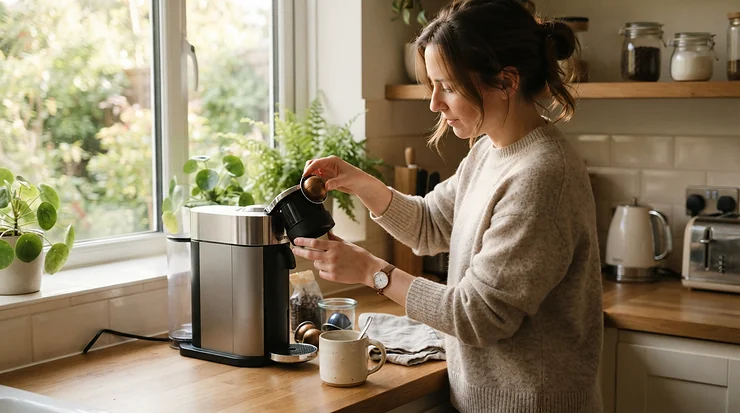
A manual espresso machine for beginners is a portafilter-based brewer where you control the key steps yourself: grinding, dosing, tamping and either lifting a lever, pumping a piston or flicking a switch to start the shot. It trades push-button convenience for control, teaching the fundamentals of espresso at a modest cost.
Here’s what nobody tells you at the start. Espresso is a brewing method, not a bean or a roast. It means forcing hot water through a tightly packed bed of fine grounds. Push-button machines hide that process behind a menu. A manual espresso machine for beginners puts it back in your hands, which is why it teaches so quickly. Grind too coarse and the shot gushes out thin and sour. Tamp unevenly and the water bores a tunnel through the puck. You feel cause and effect within thirty seconds.
That’s the pitch. The catch is that “manual” is a slippery word. It can mean a £100 electric machine with a switch, a hand-pumped gadget that lives in a rucksack, or a gleaming lever machine that wants your whole forearm. So this guide sorts seven real options by who they suit and translates every spec into what it means at the kitchen counter.
A note on honesty before we start. Everything below rests on spec sheets, published reviews and the patterns that keep showing up in owner feedback. We make no claim of hands-on testing. Prices are ranges as of late 2026, so always check the current price before you buy.
Quick Comparison: Manual Espresso Machine for Beginners at a Glance
Here’s the whole field on one screen. Skim it first, then read the detailed entries for any machine that catches your eye.
| Machine | Type | Power Source | Best For | Price Range |
|---|---|---|---|---|
| De’Longhi Stilosa EC230 | Electric pump, manual control | Mains | Tight budgets and milk-drink practice | around £90-£120 |
| Flair NEO Flex | Direct lever | Kettle water, no mains | Curious beginners who want a gauge | around £100-£140 |
| Wacaco Picopresso | Hand pump | Kettle or flask water | Travel and tiny kitchens | around £110-£130 |
| Cafelat Robot Barista | Lever | Kettle water, no mains | Plastic-free, long-term lever fans | roughly £350-£500 |
| Gaggia Classic Evo Pro | Electric pump, manual control | Mains | Milk drinks and tinkerers | roughly £350-£550 |
| Flair 58 | Direct lever, electric preheat | Mains preheat plus kettle | Pressure profiling enthusiasts | roughly £500-£700 |
| La Pavoni Europiccola | Boiler-fed piston lever | Mains | Ritual lovers with patience | roughly £600-£800 |
Looking at the comparison above, the De’Longhi Stilosa EC230 and Flair NEO Flex are the low-risk entry points. Both cost about the same as a mid-range kettle. The real fork in the road is power: electric machines like the Gaggia Classic Evo Pro give you steam for milk drinks, while the lever and pump machines give you silence, portability and a very direct feel for pressure. Anyone drawn to the La Pavoni Europiccola should treat it as a passion purchase rather than a practical one.
💬 Just one click — help others make better buying decisions too!😊
Top 7 Manual Espresso Machines for Beginners: Expert Analysis
These seven run from budget to premium and from mains-powered to arm-powered. Each entry explains what the specs mean in practice, who the machine suits, and what reviewers keep saying about it.
1. De’Longhi Stilosa EC230 — cheapest real portafilter on the high street
The De’Longhi Stilosa EC230 earns its slot by costing about what a decent dinner does while still handing you a genuine portafilter and a proper steel steam wand.
The pump is rated at 15 bar, the boiler is stainless steel, the tank holds around a litre and the portafilter is a 51mm unit. In practice, 15 bar is the pump’s ceiling, not the pressure at the coffee. So the machine leaves grind and tamping to do the heavy lifting, which is exactly the lesson a beginner needs. The EC230 ships with non-pressurised baskets, while its siblings, the EC235 and EC260, use pressurised ones for pre-ground coffee.
Based on the spec comparison, this is the sensible choice if you mainly want lattes and cappuccinos and need to find out whether you enjoy the hobby. What the spec sheet won’t tell you is that the small 51mm basket and modest temperature stability put a ceiling on quality. Expert Reviews’ write-up praises it as a bargain that produces good espresso and cappuccinos. Plan on pairing it with a hand grinder.
Reviewers consistently praise the value and the metal wand. A common complaint in owner reviews is inconsistent water temperature and a flimsy plastic tamper. Some owners also report disappointing crema when using stale pre-ground coffee.
Pros:
- ✅ Real portafilter at an entry-level price
- ✅ Genuine metal steam wand for milk practice
- ✅ Compact, plug-in simplicity
Cons:
- ❌ Temperature stability is inconsistent shot to shot
- ❌ Plastic tamper and basic included accessories
Expect around £90-£120 at the time of research. The value verdict is excellent for a first step, with the caveat that you’ll want to upgrade the tamper quickly.
2. Flair NEO Flex — lever espresso with a gauge for the lowest outlay
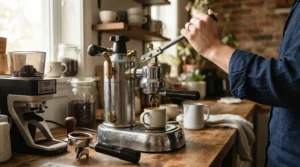
The 2024 relaunch of the Flair NEO Flex added an integrated pressure gauge and a thin, no-preheat brew cylinder. That makes it the cheapest route into lever espresso with real feedback.
The cylinder holds 60ml of water, the dose tops out at 18g, and yields reach roughly 45ml. Two portafilters come in the box: a forgiving flow-control version and a bottomless 2-in-1 that shows you every mistake. In practice, a 60ml cylinder means one shot per pull, and the gauge’s “Espresso Zone” tells you whether your arm is in the right range. CoffeeGeek’s review notes the gauge isn’t precise in exact bar, but it’s a clear improvement on the first-generation unit.
Here’s what to weigh. The Flair NEO Flex suits the frugal, curious beginner who drinks black coffee or americanos. It needs no mains power, so it doubles as a camping companion. You’ll need a capable grinder and a kettle, though.
Reviewers consistently describe it as easy to learn and good value. The recurring complaint is that on some units the gauge sits awkwardly against the lever. A few buyers say it hampered pressure build, while others found no issue at all.
Pros:
- ✅ Integrated pressure gauge at an entry price
- ✅ Two portafilters: forgiving or precise
- ✅ No electricity needed, easy to pack
Cons:
- ❌ Gauge shows a zone rather than exact bar
- ❌ 60ml cylinder limits you to one shot per fill
Expect around £100-£140. The verdict is outstanding value for lever curiosity, as long as you budget for a grinder.
3. Wacaco Picopresso — pocketable hand pump with a proper basket
The Wacaco Picopresso crams a stainless 52mm basket into a body about the size of a small camera lens.
It weighs 350g, holds 80ml of water and takes an 18g dose. Wacaco quotes up to 18 bar, but Home Coffee Expert reports roughly 7-9 bar actually reaching the puck, while Tom’s Guide notes the claim is vague. Treat 18 bar as a pump-side figure, not an extraction pressure. The takeaway is simple: it can make real espresso, but only if the grind is fine and the machine is thoroughly preheated.
This is the standout hand pump espresso maker for travel, which we’ll unpack further below. As a first and only machine, it’s less forgiving than a lever with a gauge. On paper it suits beginners who already own, or will buy, a decent hand grinder and a scale.
Reviewers consistently rate it highly for portability and shot quality. Olive Magazine awarded it 4.5 stars. Common cautions are that it takes practice and leaves little room for error. There’s also a real scalding risk if you’re careless with near-boiling water.
Pros:
- ✅ Standard-style 52mm stainless basket
- ✅ Tiny, light and quick to clean
- ✅ Needs no power or compressed capsules
Cons:
- ❌ No pressure gauge for feedback
- ❌ Demands a fine grinder, scale and thorough preheat
Expect around £110-£130. It’s good value as a travel machine, and a fair first machine only for the committed.
4. Cafelat Robot Barista — plastic-free lever with a gauge-equipped Barista edition
The Cafelat Robot Barista is a retro-futuristic cast frame that skips plastic from the brew path onwards.
It has a roughly 57.5mm steel basket holding about 145ml including coffee, a built-in gauge on the Barista version, a cast body of around 3kg, and no cord. In practice, the weight keeps it planted while you lean on the arms. The standard-size basket means ordinary 58mm-class tampers and puck screens are easy to find. Home Barista contributors note that a lever’s naturally declining pressure profile forgives beginners.
Based on the spec comparison, the Cafelat Robot Barista suits patient beginners who want a machine that lasts decades. One owner of the gauge version said it taught them how much effort 6-8 bar really takes, which is a lesson no push-button machine will ever give you.
A frequent first-timer complaint is low pressure. Cafelat’s own guidance on Trustpilot says this usually traces to grind, not the machine. Another recurring note is that the gauge is awkward to read mid-pull.
Pros:
- ✅ Rugged, plastic-free build
- ✅ Gauge teaches pressure feel
- ✅ Standard-size accessories fit easily
Cons:
- ❌ Gauge is hard to read while pressing
- ❌ Needs a kettle and a separate grinder
Expect roughly £350-£500 depending on colour and bundle. It’s a premium-feeling buy that rewards long-term commitment.
5. Gaggia Classic Evo Pro — the mod-friendly workhorse with steam
The Gaggia Classic Evo Pro is the machine that half of home espresso forums quietly recommend, mostly because the community has already solved every problem it has.
It has a single boiler, a 58mm commercial-size portafilter, a 3-way solenoid valve that leaves dry pucks, a commercial-style steam wand and a tank of about 2.1 litres. In practice, the 58mm group means a huge pool of baskets, tampers and puck screens. The solenoid makes cleanup tidier.
There’s a pressure caveat. Several sources note the OPV (overpressure valve) is calibrated to 9 bar in North America, but UK and EU units commonly ship with a higher-pressure spring. A cheap 9-bar spring swap is well documented.
On balance, it’s the best fit for beginners who love milk drinks and enjoy tweaking. Single boilers can’t brew and steam at once, and temperature management takes some learning.
Reviewers consistently praise the parts ecosystem and durability. Common complaints are the aggressive out-of-the-box pressure on European units and debate over a newer boiler coating.
Pros:
- ✅ Commercial-size 58mm group and accessories
- ✅ 3-way solenoid for dry, tidy pucks
- ✅ Steam wand handles proper milk drinks
Cons:
- ❌ Single boiler: no simultaneous brew and steam
- ❌ Temperature and OPV tuning add learning
Expect roughly £350-£550. The verdict is strong value if you want one machine to grow with.
6. Flair 58 — electric preheat meets full pressure profiling
The Flair 58 turned the brand’s fiddly kettle-preheat workflow into a plug-in routine, and that’s its whole appeal.
It has a 58mm portafilter taking 16-22g, an electric preheat controller with three temperature settings (about 85, 90 and 95°C), roughly 90ml of water capacity, an integrated gauge and a longer lever with a T-grip. In practice, the preheat controller removes the biggest source of beginner inconsistency, which is brew-head temperature. The long lever makes slow, deliberate pressure changes physically easier.
The Flair 58 suits beginners who already know they’ll love pressure profiling and are prepared to spend accordingly. There’s no steam wand, so milk drinks mean a separate frother. Check that any listing is a UK-plug, 230V unit.
Reviewers consistently praise the thermal stability and the quieter, calmer workflow. The most common criticism is price relative to other manual options. Others stress that a strong grinder is non-negotiable.
Pros:
- ✅ Electric preheat for stable temperature
- ✅ Long lever for finer pressure control
- ✅ Standard 58mm accessories fit
Cons:
- ❌ Premium price for a black-coffee-only machine
- ❌ Needs kettle, grinder and extra workflow steps
Expect roughly £500-£700. It’s worth it only if pressure profiling excites you.
7. La Pavoni Europiccola — heirloom lever with a boiler and steam
The La Pavoni Europiccola is less an appliance than a mechanical heirloom, all chrome-plated brass and tactile ritual.
It has a 0.8-litre boiler, a 1000W element, a 51mm basket and a weight of about 5.5kg. In practice, a heat-up of roughly eight to ten minutes and metalwork that gets seriously hot mean you must respect it. TechRadar’s six-month reviewer found it rewarding but demanding. The reviewer called out a steep learning curve, middling milk frothing and some cleaning fiddliness.
Here’s the honest analysis. It’s the least beginner-friendly machine on this list. Yet for the right temperament, it’s the most satisfying. Accessories for the 51mm basket can also be harder to source, as Home Grounds notes.
Reviewers consistently describe the pour as addictive once it clicks. One review site suggests two to four weeks of inconsistent shots first, though that’s a single opinion rather than a rule.
Pros:
- ✅ Beautiful, repairable, built to last decades
- ✅ Boiler supplies hot water and steam
- ✅ Lever teaches pressure feel like nothing else
Cons:
- ❌ Steepest learning curve in this list
- ❌ 51mm basket accessories are harder to find
Expect roughly £600-£800. It’s a luxury for the patient romantic, not a rational starter machine.
How the Seven Compare at a Glance
| Machine | Basket Size | Pressure Feedback | Milk Steaming | Best For |
|---|---|---|---|---|
| De’Longhi Stilosa EC230 | 51mm | None | Yes, manual wand | Budget milk drinks |
| Flair NEO Flex | Compact (listed around 40mm) | Gauge zone | No | Cheap lever curiosity |
| Wacaco Picopresso | 52mm | None | No | Travel espresso |
| Cafelat Robot Barista | About 57.5mm | Gauge (Barista) | No | Plastic-free longevity |
| Gaggia Classic Evo Pro | 58mm | None built in | Yes, commercial wand | Milk drinks and mods |
| Flair 58 | 58mm | Gauge | No | Profiling and temperature control |
| La Pavoni Europiccola | 51mm | By feel | Yes, boiler steam | Ritual and patience |
The table makes the trade-off plain. Machines with a gauge, such as the Flair NEO Flex, Cafelat Robot Barista and Flair 58, give you feedback that coaches your arm. Steam-equipped machines like the Gaggia Classic Evo Pro serve milk drinkers better. Anyone watching their budget should note that the Wacaco Picopresso and De’Longhi Stilosa EC230 deliver the most espresso per pound.
Your First 30 Days: Setup, Dialling In and Maintenance
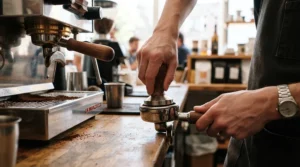
Most beginner disappointment happens in the first fortnight, and nearly all of it is fixable. Here’s a practical routine that works across every machine above.
Week one: get a baseline. Start with a 1:2 recipe: 18g of ground coffee in, about 36g of liquid out, in 25-30 seconds. The Wacaco Picopresso even lists a 36g recommended output. Weigh everything. A cheap scale transforms guesswork into data.
Weeks two and three: change one variable at a time. If the shot gushes in ten seconds and tastes sour, grind finer. If it chokes and tastes bitter, grind coarser. Keep a notebook. Don’t swap beans, dose and grind in the same session.
Week four: refine and clean. Rinse lever and pump machines with warm water, and dry silicone seals. On the Gaggia Classic Evo Pro, learn the basics of backflushing with plain water, and descale on schedule. Large parts of England are hard-water areas, so filtered water extends every machine’s life.
First-month mistakes to avoid:
- Tamping hard but unevenly. Level matters more than force.
- Skipping preheat on the lever machines, which often shows up as a sour shot.
- Using stale pre-ground coffee in a non-pressurised basket.
- Chasing “perfect” shots instead of repeatable ones.
Which Beginner Are You? Real-World Scenarios
Spec tables don’t fit your life. Here are three profiles to match the machine to the person.
The student in a rented flat. Budget around £100-£150, limited worktop space and one drink a day. The De’Longhi Stilosa EC230 suits milk drinks and the Flair NEO Flex suits black coffee. Either needs a hand grinder, which will often cost as much as the machine, so budget for it.
The weekend hiker and commuter. Frequent trips, little patience for bulky kit and mostly black coffee. The Wacaco Picopresso wins on weight and simplicity. Pair it with a flask of hot water and a small scale.
The couple with £500 and a love of lattes. Weekend brunches, steady use and room on the counter. The Gaggia Classic Evo Pro gives steam, a standard 58mm workflow and room to grow. As a rough back-of-envelope estimate, if home drinks replace about one £3-£4 café drink a day, a £500 setup pays back in roughly six months. That’s an estimate, not a guarantee.
The patient tinkerer. Higher budget, evenings free and an appetite for gadgets. The Cafelat Robot Barista or Flair 58 suit the quiet, controlled path. The La Pavoni Europiccola suits the romantic.
How to Choose a Manual Espresso Machine for Beginners
Choosing well comes down to seven questions. Answer them in order and the shortlist usually writes itself.
- Decide your power source. Mains machines like the Gaggia Classic Evo Pro heat water for you. Kettle-fed levers like the Cafelat Robot Barista trade convenience for silence and portability.
- Set a total budget, not a machine budget. A decent grinder, scale and tamper can rival the machine’s cost. Plan the whole kit.
- Look for pressure feedback. A gauge on the Flair 58 or Flair NEO Flex shortens the learning curve dramatically.
- Check the basket size. Standard 58mm baskets unlock the widest accessory range. A 51mm machine may limit upgrades.
- Decide whether you want milk. Only the De’Longhi Stilosa EC230, Gaggia Classic Evo Pro and La Pavoni Europiccola here include steam.
- Consider space and portability. A Wacaco Picopresso vanishes into a drawer. A cast lever machine wants a permanent spot.
- Be honest about patience. If you want good coffee in week one, choose the simpler machines. If you enjoy projects, any lever will repay you.
Lever Espresso Machine for Home Use: What to Expect
A lever espresso machine for home use replaces the electric pump with your arm and a mechanical advantage. That brings real benefits and real chores.
The first benefit is feedback. You feel resistance building as the puck saturates, and that sensation teaches grind and dose faster than a screen ever could. The second is silence. There’s no pump whine, which suits shared flats and early mornings. The third is longevity. With few electronics, a well-made lever espresso machine for home use can last decades.
The chores are equally real. Kettle-fed levers like the Flair NEO Flex, Cafelat Robot Barista and Flair 58 ask you to boil water, preheat parts and manage temperature manually. Cooler brew heads often cause sour shots, which explains the Flair 58‘s electric preheat. Home Barista contributors also note that a lever’s pressure naturally declines through the shot. This is forgiving, and it’s also why levers suit a certain taste.
Think of a lever espresso machine for home use as cooking with a cast-iron pan rather than a microwave. It’s slower, it’s more satisfying, and it needs more attention. Boiler levers like the La Pavoni Europiccola add mains power and steam, but also heat, weight and a steeper curve.
Hand Pump Espresso Maker for Travel: Does It Make Sense?
A hand pump espresso maker for travel sounds like a gimmick until you weigh the alternative: hotel-room sachets. The category has matured, and the Wacaco Picopresso is the clear leader for committed users. The cheaper Wacaco Nanopresso uses a plastic basket, which Tom’s Guide judged less durable.
What you actually need for a hand pump espresso maker for travel is a short kit:
- A small hand grinder capable of fine espresso grinds
- A pocket scale
- A flask holding near-boiling water
- A cloth, because hot water and tabletops don’t mix
Here’s the honest view. The Wacaco Picopresso weighs 350g and fits in a daypack, but espresso quality depends on technique you must already have. The Flair NEO Flex also works as a travel machine thanks to its no-mains design, though it’s bulkier. A hand pump espresso maker for travel will never replace a good home setup. It will, however, rescue a camping trip.
Safety matters too. You’re handling near-boiling water under pressure in awkward places, so keep it on a flat surface and your fingers clear of the brew chamber.
Pressure Profiling Explained (Without the Jargon)
Pressure profiling means changing the pressure on the puck during a shot rather than holding it flat. A typical beginner approach starts with a gentle pre-infusion at perhaps 2-4 bar, ramps up towards 6-9 bar, then eases off near the end.
Why bother? The Niche Coffee explainer on why pressure matters so much in espresso notes that around 9 bar is the widely accepted optimum for extracting a rich, balanced shot. Profiling lets you nudge around that target. Gentle early pressure helps the puck saturate evenly and reduces channelling. Easing off late can tame bitterness.
Pressure profiling used to require machines costing thousands. Lever machines made it accessible. With a gauge on the Flair 58, Cafelat Robot Barista or Flair NEO Flex, you can see what your arm is doing. The Flair 58‘s long lever makes pressure profiling especially smooth. Electric machines like the Gaggia Classic Evo Pro and De’Longhi Stilosa EC230 hold roughly fixed pump pressure, so pressure profiling isn’t their strength.
Should a beginner care? Honestly, not on day one. Get grind, dose and tamp right first. Pressure profiling is the seasoning, not the meal. But choosing a machine that allows it keeps your options open.
Portafilter Basket and Coffee Tamper: The Cheap Upgrades That Matter
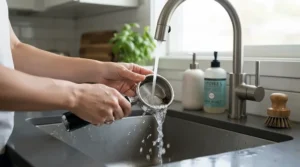
Two small parts shape your results more than most buyers expect: the portafilter basket and the coffee tamper.
Portafilter Basket Basics
A portafilter basket holds the coffee puck. Size matters because accessories are built around it. The Wacaco Picopresso uses 52mm, the De’Longhi Stilosa EC230 and La Pavoni Europiccola use 51mm, and the Gaggia Classic Evo Pro and Flair 58 use 58mm. The Cafelat Robot Barista uses a roughly 57.5mm basket. The 58mm family has the biggest aftermarket.
Pressurised baskets, found on siblings like the De’Longhi EC235, are forgiving with coarse pre-ground coffee but fake some of the crema. Non-pressurised baskets reward a proper grinder. Every portafilter basket also has a dose range, so match your dose to it.
Coffee Tamper Essentials
A good coffee tamper matches the basket’s internal diameter with minimal gap. The plastic tamper bundled with budget machines is often the first thing owners replace. What matters is a level press, not brute force. A cheap upgrade is a flat-based steel coffee tamper in the right size. Add a distribution tool if you notice channelling.
Manual Espresso Machine vs Bean-to-Cup: The Honest Comparison
| Factor | Manual Machine | Bean-to-Cup or Pod |
|---|---|---|
| Learning curve | Steeper, but you learn real skills | Minimal |
| Cost to start | Machine plus grinder, scale and tamper | Often one box |
| Consistency | Depends on you | High, repeatable |
| Cleaning | Simple parts, hands-on | Internal brew units to maintain |
| Control | Total over grind, dose and pressure | Limited menu options |
| Best for | Hobbyists and curious learners | Busy households wanting convenience |
The table shows why beginners shouldn’t feel guilty about either choice. A bean-to-cup machine is the rational choice if you want a flat white in 40 seconds with no thought. Choose a manual espresso machine for beginners if the process itself appeals to you. It’s also usually cheaper to repair and upgrade piece by piece. Honestly, it’s a hobby purchase, not a utility purchase.
Common Mistakes When Buying a Manual Espresso Machine for Beginners
A few pitfalls trip people up again and again. Here’s how to avoid them.
Skipping the grinder. A manual machine paired with weak grinding gives sour, uneven shots. If money is tight, buy a cheaper machine and a better grinder.
Chasing “15 bar” labels. Bar ratings on the box describe the pump’s ceiling, not what the coffee experiences. Focus on basket type, temperature stability and feedback instead.
Ignoring regional pressure differences. Coffee Blog UK’s Gaggia Classic Pro review points out that European units commonly ship with the higher-pressure OPV, so budget for a cheap 9-bar spring if you buy the Gaggia Classic Evo Pro.
Buying the wrong plug. Grey-import US models, including some Flair 58 listings, may be 120V. Confirm UK plug, 230V and UKCA or CE marking before buying.
Underestimating hot water. Kettle-fed machines like the Cafelat Robot Barista involve near-boiling water. Keep children and pets clear.
Buying pressurised baskets by accident. Check the basket type before expecting café-style results.
Long-Term Cost and Maintenance
The sticker price is only the start. For a realistic total cost of ownership, add a grinder, scale, coffee tamper, descaler, filtered water and fresh beans.
Electric machines such as the Gaggia Classic Evo Pro and De’Longhi Stilosa EC230 need periodic descaling, and UK hard water speeds that up. Lever machines like the Flair NEO Flex and Cafelat Robot Barista have fewer parts to fail but depend on silicone seals that eventually wear. One long-term Robot owner on Home Barista reported around 500 shots without needing replacements. The La Pavoni Europiccola is repairable but benefits from regular care.
As a rough guide, home espresso costs well under £1 in beans and milk per drink, against roughly £3-£4 at a café. At that rate, even a £500 setup pays for itself within about six months of daily use. A £100 machine pays back far sooner, which is why the De’Longhi Stilosa EC230 is such a safe experiment.
Value verdict? Buy once if you’re committed, and start cheap if you’re curious.
FAQ
❓ What is the best manual espresso machine for beginners on a small budget?
❓ Do I need a separate grinder for a manual espresso machine for beginners?
❓ Is a lever espresso machine for home use worth it over a pump machine?
❓ Which coffee tamper size should I buy for my portafilter basket?
❓ Can a hand pump espresso maker for travel replace my home machine?
Conclusion
Choosing a manual espresso machine for beginners is really choosing the kind of learner you want to be. If you want the cheapest honest start, the De’Longhi Stilosa EC230 and Flair NEO Flex deliver. If portability matters, the Wacaco Picopresso is the one. If you want a machine to grow into, the Gaggia Classic Evo Pro gives steam and a huge accessory world, while the Cafelat Robot Barista, Flair 58 and La Pavoni Europiccola reward long-term commitment.
Whichever you pick, remember the real recipe: fresh beans, a good grinder, a level tamp and patience. Machines matter, but technique matters more. Start simple, change one variable at a time, and the coffee improves quickly.
✨ Ready to Start Your Espresso Journey?
🔍 Click on any highlighted machine above to check current pricing and availability. Pick the one that matches your budget, your space and your patience, then enjoy the satisfying first shot that finally tastes the way you hoped!
Recommended for You
- Stovetop Espresso Maker For Small Flat: 7 Best Picks (2026)
- Affordable Travel Coffee Mug: 7 Best Budget Picks UK (2026)
- Leak-Proof Travel Mug: 7 Best Picks Your Bag Can Trust (2026)
Disclaimer: This article contains affiliate links. As an Amazon Associate, I earn from qualifying purchases. If you purchase products through these links, we may earn a small commission at no additional cost to you.
✨ Found this helpful? Share it with your friends! 💬🤗
