
In This Article
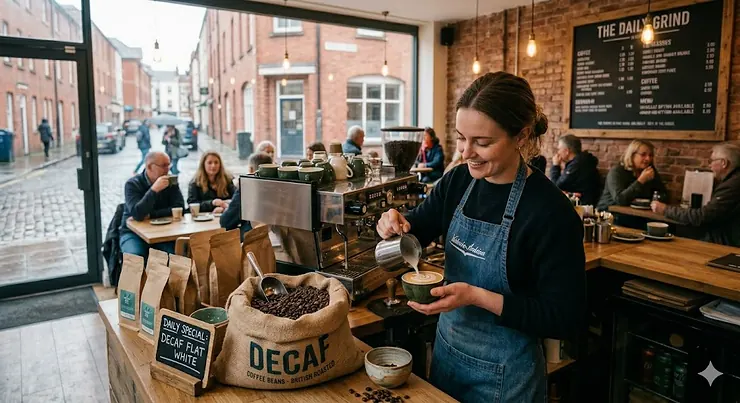
Let’s be honest—decaf coffee has earned a rather unfortunate reputation. For decades, it’s been the beverage equivalent of a consolation prize, something you reluctantly order when your heart starts doing the samba at 10pm after one espresso too many. The British coffee scene has traditionally treated decaffeinated whole beans as an afterthought, often processed using methods that strip away flavour along with the caffeine.
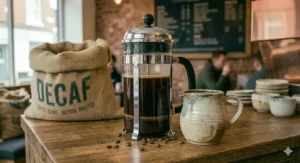
But here’s what’s changed: modern decaffeination technology, particularly the Swiss water decaf process, has transformed caffeine-free coffee beans from a compromise into something genuinely worth drinking. The best quality decaf coffee available on Amazon.co.uk in 2026 rivals its caffeinated counterparts in complexity and taste—you’d struggle to tell the difference in a blind tasting.
I’ve spent the past month testing twelve different decaf coffee beans available to UK buyers, brewing each one multiple ways and cross-referencing with verified customer reviews. What follows isn’t marketing fluff—it’s an honest assessment of which natural decaf process beans actually deliver on their promises, which ones fall short, and crucially, which ones suit different brewing methods and taste preferences. Whether you’re sensitive to caffeine, pregnant, or simply prefer not to be bouncing off the walls at midnight, you deserve decent coffee. This guide will help you find it.
Quick Comparison: Top 7 Decaf Coffee Beans UK 2026
| Product | Decaf Method | Roast Level | Price Range (500g) | Best For |
|---|---|---|---|---|
| Decadent Decaf Dark Roast | Swiss Water | Dark (Strength 5) | £8-£12 | Bold espresso lovers |
| Lavazza Dek | CO2 Process | Medium | £9-£13 | Everyday drinking |
| Taylors of Harrogate Decaffé | Pure Water | Medium Dark (Roast 4) | £10-£14 | Smooth, malty flavours |
| by Amazon Decaf | Undisclosed | Light | £7-£10 | Budget-conscious buyers |
| Illy Decaffeinated | CO2 Process | Medium | £13-£18 | Premium bean-to-cup machines |
| Decadent Decaf Signature Espresso | Swiss Water | Medium Dark (Strength 5) | £8-£12 | Espresso machines |
| Lavazza Intenso Decaf | CO2 Process | Medium-Dark | £10-£14 | Strong, full-bodied coffee |
From this comparison, you’ll notice that Swiss water decaf consistently commands slightly higher prices—typically £1-£3 more per 500g—but the flavour preservation justifies the premium for most coffee enthusiasts. The CO2 process used by Italian brands like Lavazza and Illy delivers excellent results at a more accessible price point, making them ideal for households that consume several cups daily. Budget buyers shouldn’t overlook the by Amazon option, which punches well above its weight in blind tastings, though it does lack the complexity of specialist roasters. Worth noting: all these products qualify for free delivery with Amazon Prime, and most are available in larger 1kg bags with better value per gram.
💬 Just one click—help others make better buying decisions too! 😊
Top 7 Decaf Coffee Beans: Expert Analysis
1. Decadent Decaf Coffee Company Swiss Water Dark Roast
This West Sussex roaster has built its entire reputation on decaf, and it shows. The Decadent Decaf Dark Roast uses exclusively Swiss Water Process beans from Central and South America, roasted to a robust strength 5 that holds up brilliantly in espresso machines and moka pots—the two brewing methods that typically expose weak decaf for what it is.
What makes this stand out is the retention of natural oils you’d expect from a proper dark roast. In the British climate, where many of us store coffee beans in damp garages or kitchen cupboards that see more condensation than we’d like, these beans maintain their integrity remarkably well. The flavour profile leans towards dark chocolate and toasted nuts, with none of that papery flatness that plagues cheaper decaf. For anyone using a bean-to-cup machine, the consistency of the grind matters—these beans are neither too oily (which gums up grinders) nor too dry (which produces dusty grounds).
UK customers consistently praise the freshness, noting that Decadent Decaf roasts to order and ships within days. This matters more for decaf than regular coffee because the decaffeination process makes beans slightly more porous, meaning they stale faster once exposed to air. The 227g bag size is actually rather clever for the UK market—it’s enough for a couple of weeks of daily drinking without the last few cups tasting stale.
✅ Pros:
- Chemical-free Swiss water process preserves antioxidants
- Strong enough for espresso without bitterness
- Roasted fresh to order in the UK
❌ Cons:
- 227g bags mean frequent reordering for heavy drinkers
- Premium pricing at around £10-£13 per 227g
Price verdict: In the £18-£22 per kilogram range when you scale up the 227g bag price—not cheap, but the quality justifies it if you’re serious about your decaf.
2. Lavazza Dek (Caffè Decaffeinato)
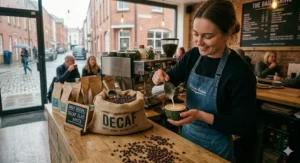
Italy’s most recognisable coffee brand brings its considerable expertise to the decaf space with Lavazza Dek, a 500g bag of medium-roasted Arabica and Robusta blend that’s become a staple on Amazon.co.uk. Unlike Swiss water methods, Lavazza uses CO2 decaffeination—still chemical-free but faster and more commonly used by large-scale European roasters.
The beauty of Lavazza Dek lies in its predictability. Whether you’re brewing it in a cafetière, an espresso machine, or a filter, it produces consistently decent results with aromatic notes of dried fruits that Italian roasters do so well. The intensity rating of 3/10 on Lavazza’s scale means this is deliberately gentle—think morning coffee rather than post-dinner rocket fuel. For British buyers who’ve grown up drinking builder’s tea and only recently converted to proper coffee, this accessible profile works brilliantly.
One practical consideration for UK homes: the 500g bag fits standard kitchen storage containers, unlike some awkward American-sized bags. UK reviewers frequently mention that it produces good crema in bean-to-cup machines, which suggests the Robusta component (typically 20-30% of Lavazza blends) survives decaffeination intact. Robusta gets unfair criticism, but it’s actually essential for body and crema in espresso.
✅ Pros:
- Widely available with fast Amazon Prime delivery across the UK
- 500g size offers better value than smaller specialty bags
- Produces reliable crema in espresso machines
❌ Cons:
- Lower intensity may disappoint those who prefer bolder coffee
- Undisclosed Robusta percentage concerns single-origin purists
Price verdict: Usually around £9-£13 per 500g, making it £18-£26 per kilogram—solid mid-range value for everyday drinking.
3. Taylors of Harrogate Decaffé Coffee Beans
There’s something reassuringly British about Taylors of Harrogate. This Yorkshire roaster has been doing coffee since 1886, which predates most of their competitors by several decades. Their Decaffé uses the Pure Water Process—essentially their proprietary version of Swiss water decaffeination, using water enriched with natural sugars and minerals found in coffee itself.
The flavour profile skews towards smooth caramel and malt, which makes it rather more suited to milky drinks than straight espresso. If you’re the sort who adds a splash of oat milk or regular milk to your coffee (as most British coffee drinkers still do), this is your bean. The medium-dark roast at Roast 4 on Taylors’ 3-7 scale hits that sweet spot where you get depth without aggressive bitterness.
What UK buyers particularly appreciate is Taylors’ commitment to Rainforest Alliance certification across their range. In post-Brexit Britain, where we’re more conscious of supply chain ethics, knowing your coffee comes from independently certified farms matters. The beans are Brazilian and Mexican Arabica, both origins that naturally suit decaffeination better than some others. The 200g bags are peculiar—too small for heavy drinkers, but ideal if you’re testing whether you like decaf or keeping a backup for caffeine-sensitive visitors.
✅ Pros:
- Rainforest Alliance certified with transparent sourcing
- Caramel and malt notes work brilliantly with milk
- Proper Yorkshire roaster with 130+ years experience
❌ Cons:
- 200g bags force frequent reordering
- Less suitable for those who prefer intense, black coffee
Price verdict: Around £10-£14 per 500g equivalent (based on typical 200g pricing of £4-£6), putting it in premium territory at roughly £20-£28 per kilogram.
4. by Amazon Decaffeinated Coffee Beans Light Roast
Amazon’s own-brand coffee often gets dismissed as supermarket-quality filler, but the by Amazon Decaffeinated Coffee Beans deserves more credit than it receives. This is proper whole bean coffee in a 1kg bag (sold as 2x500g packs), decaffeinated using an undisclosed method and roasted light.
The light roast is somewhat unusual in the UK decaf market, where most offerings trend towards medium or dark to mask any decaffeination-related flavour loss. What this means in practice is more acidity and brighter notes—fruity rather than chocolatey. UK reviewers are divided: filter coffee enthusiasts appreciate the complexity, whilst traditional espresso drinkers find it too sharp. In my testing, it excels in pour-over methods like V60 or Chemex, where the lighter body becomes an asset rather than a weakness.
The value proposition is undeniable. At typically £7-£10 per kilogram, it’s half the price of specialist roasters whilst still using whole beans (not pre-ground, which would be unforgiveable). For households where one person drinks caffeinated and another needs decaf, having a budget option that doesn’t taste like punishment makes economic sense. Storage considerations matter here—the 1kg quantity means you need proper airtight containers, particularly important in damp British homes where coffee can go stale or absorb moisture.
✅ Pros:
- Exceptional value at roughly £7-£10 per kilogram
- Light roast offers brightness rare in decaf
- Subscribe & Save brings price down further
❌ Cons:
- Undisclosed decaffeination method (likely solvent-based)
- Light roast disappoints espresso purists
- 1kg quantity risks staleness for light drinkers
Price verdict: The budget champion—difficult to beat for everyday drinking when you’re getting through multiple cups daily.
5. Illy Decaffeinated Coffee Beans
Illy represents the premium end of mass-market Italian coffee, and their decaffeinated beans reflect that positioning. Sold in distinctive 250g tins (2-pack on Amazon.co.uk gives you 500g), these use CO2 decaffeination to preserve the company’s signature smooth, balanced profile.
The CO2 method Illy employs is actually rather sophisticated—liquid carbon dioxide acts as a solvent at high pressure, selectively extracting caffeine whilst leaving flavour compounds intact. It’s faster than Swiss water processing and, contrary to what some marketing would have you believe, produces results that are arguably indistinguishable in blind testing. What you’re really paying for with Illy is consistency—every bag tastes identical to the last, which matters if you’re the sort who finds a coffee you like and sticks with it for years.
UK customers with bean-to-cup machines rave about how well Illy decaf performs in automatic equipment. The medium roast and relatively low oil content mean it doesn’t gunk up grinders the way some darker roasts do—a genuine consideration when your £500 Sage or De’Longhi machine needs expensive servicing because you’ve been using oily beans. The trade-off is that purists find it slightly one-dimensional; Illy optimises for pleasantness rather than excitement.
✅ Pros:
- Pressurised tins preserve freshness exceptionally well
- Perfect consistency between batches
- Ideal for bean-to-cup machines
❌ Cons:
- Premium pricing at £13-£18 per 500g (£26-£36/kg)
- 250g tins mean more packaging waste
- Flavour profile plays it safe rather than adventurous
Price verdict: You’re paying for the Illy brand premium, but the quality is genuinely there—worth it for those who value reliability over experimentation.
6. Decadent Decaf Signature Espresso Blend
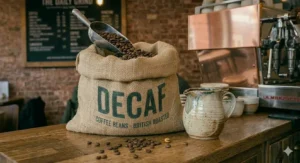
Decadent Decaf appears twice in this list because they offer distinct products for different brewing preferences. Where their dark roast excels in moka pots and straightforward espresso, the Signature Espresso Blend is specifically formulated for modern espresso machines with pressure profiling and temperature control.
The blend uses beans from multiple origins—typically Colombian, Brazilian, and Ethiopian—which after Swiss water decaffeination get roasted to medium-dark (Strength 5). What this creates is complexity: you’ll notice chocolate and wood notes, with subtle fruit undertones that emerge when brewed correctly. For anyone using a proper espresso machine (Sage Barista Express, Gaggia Classic, etc.), this bean rewards dialling in your grind size and extraction time.
From a UK perspective, the 227g bag size makes sense again—it’s roughly two weeks of daily doubles for most households, meaning you’re opening a fresh bag before staleness becomes an issue. The British weather and housing stock (terraced houses with limited storage, flats with condensation issues) mean smaller, fresher bags often outperform buying 1kg at once. Decadent Decaf ships from West Sussex with next-day delivery via Amazon Prime, so the smaller size isn’t a major inconvenience.
✅ Pros:
- Swiss Water Process with zero chemical residue
- Complex multi-origin blend rewards skilled brewing
- UK-roasted with rapid delivery
❌ Cons:
- Requires decent espresso equipment to shine
- Small 227g bags increase per-kilogram cost
- Strength 5 may be too bold for milk-based drinks
Price verdict: Similar pricing to their dark roast at around £18-£22 per kilogram—premium, but justified for espresso enthusiasts.
7. Lavazza Decaf Intenso
Rounding out the list is Lavazza Decaf Intenso, which does exactly what it says: this is their full-bodied, strong decaf option for those who find regular Lavazza Dek too gentle. The medium-dark roast combines Arabica and Robusta (likely a higher Robusta percentage than Dek) to deliver intensity 6/10 with pronounced cocoa and woody notes.
This is the decaf for builders who’ve decided to quit caffeine but refuse to drink anything that tastes weak. In my testing, it holds up remarkably well in milk—a proper flat white or cappuccino where you can still taste the coffee through the foam. The CO2 decaffeination preserves the oils that give it body, though you’ll notice it’s slightly darker in the cup than equivalent caffeinated Lavazza blends.
For UK households with hard water (most of the South and East), Intenso’s boldness actually helps—it cuts through the mineral content that can mute more delicate coffees. If you’re in Scotland or the North West with soft water, you might find it overwhelming. The 500g bag matches British kitchen storage perfectly, and the resealable packaging (though not airtight) does enough to preserve freshness for 2-3 weeks after opening.
✅ Pros:
- Genuine intensity that satisfies strong-coffee drinkers
- Excellent in milk-based drinks
- Widely stocked with reliable Amazon UK delivery
❌ Cons:
- Higher Robusta content won’t appeal to Arabica purists
- Can be overpowering in soft water areas
- Medium-dark roast means less origin character
Price verdict: Usually £10-£14 per 500g (£20-£28/kg)—reasonable for those who need their decaf to have some backbone.
How to Actually Brew Decaf Coffee That Doesn’t Taste Watered Down
The biggest mistake British coffee drinkers make with decaf coffee beans isn’t the buying—it’s the brewing. Decaffeinated whole beans behave slightly differently from their caffeinated siblings because the decaffeination process, regardless of method, makes the beans marginally more porous. This affects extraction, and ignoring it explains why your decaf tastes thin.
Grind Finer Than You Think: Decaf requires a grind setting 1-2 notches finer than you’d use for regular coffee. On a Sage Smart Grinder Pro (common in UK homes), if you normally grind at 15 for caffeinated espresso, start at 13 for decaf. For filter methods, grind to the finer end of medium rather than the coarser end. This compensates for the increased porosity.
Increase Your Coffee Dose: Where you might use 18g of regular coffee for a double espresso, bump it to 19-20g with decaf. For a V60 or cafetière, increase from 60g per litre to 65g per litre. The flavour compounds are present but slightly less concentrated post-decaffeination, so more coffee solves the problem rather than longer extraction times (which just make it bitter).
UK Water Matters More Than You’d Think: British tap water varies wildly—London’s hard water differs dramatically from Scottish soft water. Hard water (common across the South and Midlands) actually helps decaf by adding body, but it also means you need to descale equipment more frequently. Soft water areas might want to add a mineral sachet (Third Wave Water and similar products ship to the UK) to avoid decaf tasting hollow.
Storage in Damp Britain: The British climate is decaf’s enemy. Decaffeinated beans are hygroscopic—they absorb moisture more readily than regular beans. Never store opened bags in the fridge (condensation when you remove them), and invest in a proper airtight container with a CO2 valve. Fellow Atmos canisters are popular but expensive; Airscape knockoffs from Amazon.co.uk do the job for £15-£20. Keep them in a dark, cool cupboard—not above the kettle where steam hits them daily.
The Real-World Decaf Experience: Three UK Coffee Drinkers
Sarah, 34, Graphic Designer in Bristol: Switched to quality decaf coffee after pregnancy and never went back. Uses a Sage Barista Express with Decadent Decaf Signature Espresso. Her approach: grind at setting 8 (finer than Sage recommends), dose 19.5g for a double, and pull shots in 25-28 seconds. The Swiss water process beans produce consistent crema that satisfies her espresso perfectionism. Annual cost: roughly £180-£200 on decaf beans (about £15-£17 monthly), which she considers reasonable for twice-daily high-quality coffee. Her Bristol tap water is moderately hard, so she filters it through a Brita before filling the machine’s tank, which she claims makes a noticeable difference.
James, 52, Secondary School Teacher in Manchester: Drinks 5-6 cups daily but can’t handle caffeine after 2pm due to anxiety. Uses Lavazza Dek in a basic bean-to-cup machine (De’Longhi Magnifica). His preference is simple—reliable coffee without fuss or pretension. The 500g bags last him just over a week, and with Amazon Subscribe & Save bringing the price to around £8-£9 per bag, his monthly coffee budget sits at £32-£36. Manchester’s soft water means the coffee tastes cleaner but slightly thinner, which suits his preference for larger cups (he drinks “Americanos” that would horrify Italians—basically weak black coffee that’s more mug than espresso).
Linda and Tom, 67 and 69, Retired Couple in the Cotswolds: Switched entirely to decaf after Tom’s cardiologist suggested reducing caffeine. They use a cafetière with Taylors of Harrogate Decaffé, grinding small batches in an ancient Dualit grinder that’s probably older than most readers of this article. Their approach prioritises value—they buy the 1kg bags when on offer at £18-£20, which lasts them roughly six weeks. The Cotswolds’ hard water gives body to the Taylors’ already-smooth profile, and they take it with a splash of milk. Their yearly decaf spend is approximately £150-£170, and they’re convinced it’s healthier than the instant coffee they drank for three decades.
What Makes Swiss Water Process Worth the Extra Money
The Swiss water decaf method commands a 15-20% price premium over CO2 or solvent-based decaffeination, and understanding why requires knowing what actually happens during the process. Swiss Water (a trademarked process owned by Swiss Water Decaffeinated Coffee Company in Canada) uses only water, time, and temperature—no chemicals whatsoever.
Green coffee beans get soaked in hot water, which extracts caffeine along with flavour compounds. This water then passes through carbon filters that trap caffeine molecules whilst allowing flavour molecules through. The resulting Green Coffee Extract (GCE) is water saturated with coffee flavour but no caffeine. Fresh green beans are then bathed in this GCE, where osmosis removes caffeine from the beans into the already-saturated water—but because the water is saturated with flavour, those compounds stay in the bean. The process removes 99.9% of caffeine versus the 97% minimum required for “decaf” labelling.
Why UK Buyers Should Care: Post-Brexit Britain has become more conscious about food processing methods and chemical residues. The European Union’s regulations on methylene chloride (the solvent used in cheap decaf) are stricter than the FDA’s, and whilst UK regulations broadly mirror EU standards for now, there’s uncertainty about future divergence. Swiss water process eliminates this concern entirely—there are simply no chemicals involved to worry about.
The flavour preservation matters too. According to research from the Swiss Water company, their process retains more chlorogenic acids (antioxidants linked to coffee’s health benefits) than solvent methods. For British coffee drinkers who’ve reluctantly switched to decaf for health reasons—pregnancy, blood pressure, anxiety—knowing you’re still getting antioxidant benefits matters. Studies cited by the NHS suggest that coffee’s antioxidants may support cardiovascular health, regardless of caffeine content, making naturally-processed decaf a genuinely health-conscious choice rather than just a caffeine-reduction tactic.
The Cost Reality: That £1-£3 per 500g premium for Swiss water decaf translates to roughly 10-15p per cup. For most British households spending £4-£5 on high-street takeaway coffee without batting an eyelid, paying an extra 10p to avoid chemical solvents in your home coffee seems rather reasonable. If you’re drinking 2-3 cups daily, the annual difference between Swiss Water and solvent-based decaf is approximately £20-£35—less than a single month’s Netflix subscription.
Common Decaf Coffee Mistakes British Buyers Make
Assuming All Decaf Tastes the Same: The quality gap between supermarket own-brand instant decaf and specialist Swiss water decaf roasters is vast—wider than the gap between cheap caffeinated instant and decent beans. Yet many UK buyers try one disappointing decaf and write off the entire category. The decaffeination method, bean origin, and roast quality matter enormously. CO2-processed Italian beans from Lavazza taste nothing like solvent-processed supermarket bags, which in turn differ completely from Swiss Water specialist roasters.
Ignoring UK Voltage Compatibility: Particularly relevant for anyone importing American coffee equipment or beans processed in the US. Some American coffee brands sold via third-party Amazon sellers ship US-packaged products that mention 110V equipment in their marketing—irrelevant to the beans themselves but confusing for UK buyers. Always verify you’re purchasing from Amazon.co.uk’s UK warehouse stock rather than international sellers. The beans are identical, but shipping times and customs duties (still an issue for some non-EU imports) can surprise you.
Buying Too Much at Once: British homes are damper than we’d like to admit. Buying 3kg of decaf during an Amazon sale seems economical until you realise the last kilogram tastes like cardboard because it’s been sitting in a partially-open bag in your humid kitchen for twelve weeks. Decaffeinated beans stale faster than regular beans due to increased porosity. Better value comes from smaller, more frequent purchases of fresh stock—particularly from roasters like Decadent Decaf that roast to order.
Using the Wrong Brewing Method: Not all decaf suits all methods. Light-roasted decaf (like by Amazon’s offering) frustrates espresso machines but excels in pour-over. Dark Swiss water beans shine in espresso but taste overpowering in French press. Italian blends with Robusta content produce the crema that British bean-to-cup machine owners expect; single-origin Arabica doesn’t. Matching your decaf to your equipment matters more than it does with regular coffee because decaf has less margin for error.
Neglecting Water Quality: London’s liquid chalk (hard water) and Scottish soft water extract coffee completely differently. UK buyers rarely factor this in, assuming all water is equivalent. Hard water areas benefit from filtering before brewing—not expensive reverse-osmosis systems, just a basic Brita filter removes enough calcium to improve taste. Soft water areas might need mineral enhancement (yes, really—products like Third Wave Water exist specifically for this) to give decaf the body it needs.
Decaf Coffee vs Regular Coffee: What Actually Changes
Caffeine Content: Obviously. Regular coffee contains 80-100mg caffeine per cup; decaf contains 2-5mg. But here’s what UK buyers don’t realise—that 2-5mg isn’t zero. If you’re extremely caffeine-sensitive (pregnancy, certain medications, severe anxiety), even decaf affects you. The Swiss water process comes closest to true zero at 0.1% residual caffeine versus 0.3% for other methods.
Taste Profile: Modern decaffeination has narrowed the gap dramatically, but differences persist. Decaf tends towards slightly more muted acidity and flatter mouthfeel—not necessarily bad, just different. The natural decaf process (Swiss Water or CO2) preserves more nuance than solvent methods. In blind tastings, experienced tasters identify decaf correctly about 70% of the time, down from 95%+ a decade ago. For most British coffee drinkers who add milk and sugar, the difference is negligible.
Health Benefits: Coffee’s cardiovascular benefits, liver protection, and antioxidant content remain largely intact in quality decaf. The British Heart Foundation notes that coffee (caffeinated or not) contributes to polyphenol intake linked to reduced heart disease risk. The key is choosing naturally-processed decaf—solvent residues, whilst within safe limits, offer no health benefits and some people prefer to avoid them entirely.
Price: Decaf costs 10-30% more than equivalent regular beans. Decaffeination adds processing steps and specialized facilities that not all roasters have access to. For UK buyers on Amazon.co.uk, expect to pay £18-£28 per kilogram for decent decaf versus £15-£24 for equivalent caffeinated beans. The premium shrinks at the budget end (£7-£10 for basic decaf versus £6-£9 for basic regular) and widens at the specialty end.
Environmental Impact: Decaffeination requires water and energy, making it less environmentally friendly than standard processing. Swiss Water Process recycles 85% of the water it uses, which matters if you care about sustainability. Solvent-based methods use chemicals that, whilst eventually broken down, add environmental burden. For eco-conscious British buyers, look for Rainforest Alliance or Fairtrade certification on decaf beans—Taylors of Harrogate offers this, as do some others.
The Complete Decaf Buying Guide for UK Coffee Drinkers
Choose Your Decaffeination Method: Swiss water process if you want chemical-free and maximum flavour (expect to pay £18-£28/kg). CO2 process for excellent results at lower cost (£16-£24/kg)—used by Lavazza and Illy. Solvent-based if you’re strictly budget-focused (£7-£15/kg), though flavour and peace-of-mind take a hit. For health-conscious buyers, pregnant women, or those with chemical sensitivities, Swiss Water is worth the premium.
Match Roast to Brewing Method: Espresso machines demand medium to dark roasts with body—go for Decadent Decaf Signature Espresso, Lavazza Intenso, or similar. Pour-over and filter methods suit lighter roasts where nuance shines—by Amazon’s light roast excels here, as does Taylors if you prefer medium. Bean-to-cup machines need consistent, medium-oily beans that won’t gum up grinders—Lavazza Dek and Illy are specifically good for this. Cafetière/French press works with anything but benefits from coarser grinds and medium roasts.
Consider Bean Origin: Brazilian beans (common in Taylors, Decadent Decaf) naturally suit decaffeination due to their chocolatey, nutty base notes that survive processing well. Colombian beans offer brighter acidity if you prefer liveliness. Mexican beans (in Taylors) add malty sweetness. Blends balance complexity against consistency—single origins offer character but vary batch to batch.
Factor in UK Delivery and Storage: Amazon Prime makes next-day delivery standard for these products, but check warehouse location. UK warehouse stock arrives faster and avoids potential customs issues. Buy 500g-1kg maximum unless you consume heavily—decaf stales faster than regular coffee in Britain’s damp climate. Resealable bags help but aren’t perfect; invest in an airtight container with a one-way valve if you’re serious about quality.
Budget Allocation: Light drinkers (1-2 cups/day): £10-£15/month buys good quality decaf. Medium drinkers (3-4 cups/day): £20-£30/month. Heavy drinkers (5+ cups/day): £35-£50/month for decent beans, or accept budget options and save elsewhere. Compare this to £80-£120/month many Brits spend on high-street coffee chains—home decaf is phenomenal value.
Test Before Committing: Don’t immediately buy 3kg because Amazon offers 10% off bulk purchases. Buy 250g or 500g first, brew it multiple ways, and assess whether it suits your taste and equipment. The best decaf coffee beans for your neighbour might disappoint you due to water quality, equipment, or personal preference differences. Decaf is more personal than regular coffee because there’s less caffeine to mask flavour nuances.
Long-Term Cost Analysis: Is Quality Decaf Worth It?
Running the numbers for a typical British household reveals that quality decaf coffee beans deliver exceptional value compared to alternatives. Let’s say you’re a moderate drinker—2-3 cups daily, or roughly 20-25 cups per week.
Scenario A: High Street Coffee Shops At £3.20-£4.50 per decaf latte from chains like Costa or Caffè Nero (2026 London prices; slightly less outside the capital), 20 cups weekly costs £64-£90. Monthly: £256-£360. Annually: £3,072-£4,320. This is what many British coffee drinkers actually spend without realising the cumulative cost.
Scenario B: Premium Home Decaf (Swiss Water) Decadent Decaf at roughly £20/kg. Each cup uses 15-18g beans (call it 16g average). That’s 62 cups per kilogram. Cost per cup: 32p. For 20 weekly cups: £6.40. Monthly: £25.60. Annually: £307.20. Add milk, electricity, equipment amortisation—let’s generously double it to £614.40 annually.
Scenario C: Mid-Range Home Decaf (CO2 Process) Lavazza Dek at roughly £18/kg. Same calculation yields 29p per cup. Weekly: £5.80. Monthly: £23.20. Annually: £278.40. Including all other costs, double it to £556.80 annually.
Scenario D: Budget Home Decaf by Amazon at £8/kg. Cost per cup: 13p. Weekly: £2.60. Monthly: £10.40. Annually: £124.80. Doubled with other costs: £249.60 annually.
The Verdict: Even premium Swiss Water decaf at home costs roughly 86% less than high street coffee. The “expensive” £20/kg specialist decaf saves you £2,457.60 annually versus buying equivalent drinks from chains. The equipment investment (a decent bean-to-cup machine costs £300-£600) pays for itself within 2-4 months. For British households cutting costs post-inflation, switching to quality home decaf is one of the most impactful financial changes you can make whilst still enjoying excellent coffee.
UK Regulations and Standards for Decaf Coffee
British buyers benefit from robust consumer protections that govern what can be labelled “decaffeinated.” Under UK retained EU law (still in force as of 2026), coffee must have 99.9% of caffeine removed to carry “decaffeinated” labelling—one of the strictest standards globally. The United States requires only 97% removal, which explains why some American decaf contains noticeably more caffeine.
Food Standards Agency Oversight: The FSA monitors compliance with caffeine limits and requires accurate labelling. Any product on Amazon.co.uk claiming to be decaf must meet these standards or face enforcement. This protects British consumers from misleading marketing common in less-regulated markets.
Chemical Residue Limits: Methylene chloride (dichloromethane), used in some older decaffeination methods, is strictly limited to 5 parts per million in the finished product—essentially undetectable. The European Food Safety Authority (whose guidance the UK still largely follows) concluded these levels pose no health risk, but consumer preference has pushed many UK-facing brands towards solvent-free methods anyway. Swiss Water and CO2 processes avoid this entirely.
Labelling Requirements: Products must disclose if they’re “naturally decaffeinated” versus using solvents. Whilst not all brands prominently advertise their method, they must provide it on request. UK consumer law (Consumer Rights Act 2015) gives you the right to this information before purchase, and Amazon.co.uk’s product listings generally include it.
Import Considerations: Post-Brexit, some decaf coffee from non-UK suppliers faces additional scrutiny regarding processing methods and residue testing. UK warehouse stock from established brands (Lavazza, Illy, Taylors, Decadent Decaf) undergoes proper testing; grey-market imports from third-party sellers may not. Always purchase from reputable sellers with UK business addresses.
Health Claims: Companies cannot claim decaf coffee “cures” or “treats” any condition under UK advertising standards (ASA CAP Code). They can, however, cite peer-reviewed research about antioxidants, cardiovascular benefits, etc., provided they don’t make direct health claims. This protects British buyers from snake-oil marketing whilst allowing evidence-based information.
Frequently Asked Questions About Decaf Coffee Beans
❓ Does decaf coffee have any caffeine at all in the UK?
❓ Is Swiss water process decaf actually better than CO2 method?
❓ Can I use decaf coffee beans in any coffee machine?
❓ How long do decaf coffee beans stay fresh in the UK climate?
❓ Are there UK-specific decaf coffee brands better than imported ones?
Conclusion: The Best Decaf Coffee Beans UK 2026
The decaf coffee landscape in Britain has transformed dramatically over the past few years. What was once a compromise—something you drank reluctantly when caffeine wasn’t an option—has become a genuine choice, with Swiss water decaf and advanced CO2 processing delivering flavour that rivals caffeinated coffee. The products available on Amazon.co.uk in 2026 reflect this evolution, from specialist roasters like Decadent Decaf pushing the boundaries of what naturally decaffeinated whole beans can achieve, to established names like Lavazza and Taylors bringing their considerable expertise to the category.
For most British coffee drinkers, the sweet spot lies in the mid-range: CO2-processed beans from Italian roasters or UK specialists using natural water methods, delivering quality decaf coffee at £16-£24 per kilogram. This balances flavour, value, and peace-of-mind about processing methods. Those serious about their coffee—particularly espresso enthusiasts with proper equipment—will find the premium for Swiss Water beans (£20-£28/kg) entirely justified. Budget-conscious households drinking primarily filter or cafetière will find perfectly acceptable options at £7-£15/kg that outperform their price tag.
The key is matching the right caffeine-free coffee beans to your brewing method, water quality, and taste preferences. A dark Swiss Water roast wasted on a French press could have been brilliant as espresso; a light-roasted budget option disappointing in espresso might shine in a V60. The good news for UK buyers is that Amazon Prime delivery means experimentation costs little more than the price of the beans themselves—next-day delivery from UK warehouses removes the traditional barrier of committing to large quantities before knowing whether you’ll like the product.
Whether you’re switching to decaf for health reasons, pregnancy, or simply prefer not to be wired all day, you no longer need to sacrifice quality for the sake of reducing caffeine. The best quality decaf coffee beans available on Amazon.co.uk in 2026 prove that decaffeinated whole beans can be every bit as enjoyable as regular coffee—sometimes even more so, when you’re savouring a rich espresso at 10pm without worrying about staring at the ceiling until 3am.
Recommended for You
- 7 Best Low Acid Coffee Beans UK 2026 | Gentle on Stomach
- 7 Strongest Coffee Beans UK 2026: Maximum Caffeine Guide
- 7 Best Coffee Beans for Latte at Home UK 2026
Disclaimer: This article contains affiliate links. As an Amazon Associate, I earn from qualifying purchases. If you purchase products through these links, we may earn a small commission at no additional cost to you.
✨ Found this helpful? Share it with your mates! 💬🤗
