
In This Article
Coffee beans for AeroPress occupy a rather special position in British coffee culture. Unlike espresso beans that demand specific roast profiles or filter coffee that benefits from lighter roasts, the AeroPress thrives with virtually any bean—provided you understand what you’re after. This versatile brew method produces what coffee professionals call a “clean cup”: bright, clear flavours without the sediment of a French press or the sometimes astringent bite of pour-over when done badly.
According to the British Coffee Association, the UK drinks approximately 98 million cups of coffee daily, and an increasing number of those cups are being brewed at home with manual methods. The AeroPress has become the go-to device for British coffee enthusiasts who want café-quality results without the £2,000 investment in an espresso machine. What most buyers overlook is that the AeroPress’s pressure-assisted extraction highlights both the strengths and weaknesses of your beans—cheap, stale supermarket coffee tastes distinctly average, whilst freshly roasted speciality beans absolutely sing.
Throughout this guide, I’ll walk you through seven exceptional coffee beans for AeroPress available on Amazon.co.uk, from budget-friendly everyday drinkers around £12 per kilo to premium single-origin offerings pushing £25 for 250g. Each selection has been chosen for its performance in the AeroPress specifically—considering flavour clarity, body, and how the beans respond to the pressure brewing that defines this method. Whether you’re chasing fruity Ethiopian brightness, chocolatey Colombian comfort, or something boldly experimental, there’s an option here that’ll transform your morning routine.
Quick Comparison: Top Coffee Beans for AeroPress UK
| Coffee | Origin | Roast | Flavour Profile | Price Range | Best For |
|---|---|---|---|---|---|
| Lavazza Qualità Oro | Central & South America | Medium | Smooth, honeyed, floral | £13-£16/kg | Daily drinking, beginners |
| Rave Coffee Signature Blend | Multi-origin | Medium | Chocolate, caramel, balanced | £18-£22/250g | Clean cups, versatility |
| Union Hand-Roasted Revelation | Ethiopia | Light-Medium | Citrus, berries, floral | £20-£24/250g | Bright, fruity profiles |
| Exhale Coffee Organic | Central America | Medium | Clean, nutty, polyphenol-rich | £16-£19/450g | Health-conscious, mould-free |
| Illy Brazil Single Origin | Brazil | Medium | Caramel, dried fruit, smooth | £14-£17/250g | Sweet, approachable |
| Pact Coffee House Blend | Various | Medium-Dark | Rich, chocolatey, bold | £18-£21/250g | Strong, full-bodied |
| Brown Bear Blue Mountain | Central America | Medium | Smooth, mild, approachable | £12-£15/kg | Budget option, everyday use |
Looking at this lineup, the Lavazza Qualità Oro offers exceptional value for daily brewing—at under £16 per kilo, it’s hard to fault for consistency and availability. However, if you’re after the clarity and complexity that truly showcases what an AeroPress can do, the Union Hand-Roasted Revelation or Rave Signature Blend justify their higher price with significantly more interesting cups. The sweet spot for most UK households sits around £18-£22 per 250g: enough to ensure quality beans roasted within the past month, without venturing into competition-grade territory that demands precise technique to extract properly.
💬 Just one click—help others make better buying decisions too! 😊
✨ Don’t Miss These Exclusive Deals!
🔍 Take your AeroPress brewing to the next level with these carefully selected products. Click on any highlighted item to check current pricing and availability on Amazon.co.uk. These picks will help you find exactly what you need!
Top 7 Coffee Beans for AeroPress: Expert Analysis
1. Lavazza Qualità Oro – The Reliable Everyday Workhorse
The Lavazza Qualità Oro is 100% Arabica, medium-roasted in Italy, and produces the kind of consistently smooth espresso that British households have relied upon for decades—though it performs equally well in an AeroPress. The beans come from Central and South America, a blended approach that ensures you’re getting the same cup whether you order in January or July, unlike single-origin seasonal harvests where flavour shifts with the growing cycle.
In the AeroPress, the Oro delivers a honey-sweet base with gentle floral notes and just enough body to feel substantial without being heavy. The medium roast means it’s forgiving across different water temperatures—particularly useful on British mornings when you can’t be bothered waiting for your kettle to cool from boiling to the optimal 85-90°C. UK reviews consistently praise the crema quality when used in espresso machines, but what translates to the AeroPress is that velvety mouthfeel and the absence of bitter harshness even when you over-extract slightly.
What most buyers overlook is the value proposition here: at around £14 per kilogram with Prime delivery, you’re getting Italian quality control and beans roasted by a company that’s been doing this since 1895. For context, that’s roughly £3.50 per 250g—less than a third of what you’d pay for freshly roasted UK speciality beans. The trade-off? You won’t get the bright, distinctive character of a single-origin Ethiopian or the surprise of discovering new tasting notes. Instead, you get reliable, pleasant coffee that works beautifully in milk drinks and black coffee alike.
Pros:
- Exceptional value under £16/kg with consistent Prime availability
- Forgiving across brewing parameters—ideal for AeroPress beginners
- Smooth, approachable flavour that works black or with milk
Cons:
- Roasted weeks before reaching UK warehouses—not as fresh as local roasters
- Less complexity than single-origin speciality beans
Price: Around £13-£16 per kilogram. Best value for households brewing multiple cups daily.
2. Rave Coffee Signature Blend – Speciality Quality, Cotswolds-Roasted
Rave Coffee is a Cotswolds-based roastery that’s earned a devoted following among British speciality coffee drinkers. The Signature Blend combines beans from multiple origins—typically Colombian, Brazilian, and Central American—roasted to a medium profile that extracts beautifully in the AeroPress’s pressure-assisted method. What sets Rave apart from Italian commercial roasters is freshness: these beans are roasted to order and typically reach your letterbox within 3-7 days of roasting, which makes an enormous difference to flavour retention.
In the cup, expect prominent chocolate and caramel notes with a clean, balanced acidity that never tips into sourness. The body sits in that satisfying middle ground—not watery like under-extracted pour-over, not syrupy like French press, but structured and present. This is the kind of coffee that performs consistently whether you’re using the standard AeroPress method, the inverted technique, or experimenting with different brew times. UK customers note it’s particularly good for experimenting: because the roast is balanced and the beans are fresh, you can actually taste the impact of changing grind size or water temperature rather than fighting against stale, flat coffee.
The Rave Signature Blend costs more than supermarket offerings—you’re looking at £18-£22 for 250g—but the quality jump is immediate and obvious. For British households serious about home brewing, this sits in that sweet spot where you’re paying for genuine speciality quality without venturing into competition-grade beans that demand barista-level precision. Worth noting: Rave offers free UK delivery on orders over £20, so stocking up on two bags makes economic sense.
Pros:
- Roasted fresh in the UK—arrives within days of roasting
- Balanced, versatile flavour profile perfect for AeroPress experimentation
- Clean cup with good body and complexity
Cons:
- Higher price than commercial brands—requires £20+ spend for free delivery
- May be too balanced for those seeking boldly distinctive flavours
Price: Around £18-£22 per 250g. Exceptional quality for serious home brewers.
3. Union Hand-Roasted Revelation – Ethiopian Brightness in a Cup
If you want to experience what “clean cup” truly means, the Union Hand-Roasted Revelation showcases exactly what the AeroPress does brilliantly. This single-origin Ethiopian coffee—sourced from smallholder farms and roasted light-to-medium in London—explodes with citrus, red berries, and floral jasmine notes that would be completely lost in an espresso machine’s intensity or muddled by a French press’s sediment. The AeroPress’s paper filter and controlled extraction let these delicate flavours shine clearly.
Union is one of Britain’s original ethical coffee pioneers—they were sourcing directly from farmers and paying fair prices long before “direct trade” became trendy. The Revelation specifically comes from Ethiopia’s coffee-growing heartland, where wild Arabica varieties produce some of the most distinctive flavour profiles in the world. In your AeroPress, you’ll notice the tea-like body first—lighter than Colombian or Brazilian beans—followed by a bright, juicy acidity that tastes like grapefruit zest and blackcurrant rather than harsh or sour.
This is decidedly not a coffee for adding milk; the delicate flavours would be completely overwhelmed. It’s also not ideal if you prefer robust, heavy-bodied coffee first thing in the morning. However, for a mid-morning cup where you actually want to pay attention to what you’re drinking, or for impressing visiting coffee-snob friends, the Revelation delivers complexity that justifies its £20-£24 per 250g price. UK reviews consistently mention the “wow factor” when brewing this properly—that moment when you realise your home setup can genuinely produce café-quality speciality coffee.
Pros:
- Exceptional flavour clarity and complexity—showcases AeroPress strengths
- Ethically sourced from smallholder Ethiopian farmers
- Bright, fruity profile unlike typical supermarket beans
Cons:
- Higher price point around £22-£24 per 250g
- Delicate flavours don’t work well with milk
Price: Around £20-£24 per 250g. Premium single-origin for discerning palates.
4. Exhale Coffee Organic – Mould-Free, Health-Focused Brewing
Exhale Coffee Organic occupies a niche in the UK market that’s growing rapidly: health-conscious consumers who want organic certification, mycotoxin testing, and verified polyphenol content alongside good flavour. The company specifically tests batches for mould and mycotoxins—a legitimate concern given that coffee is an agricultural product often stored in humid conditions—and markets heavily to the wellness-focused crowd who view their morning coffee as functional nutrition rather than just a caffeine hit.
In the AeroPress, Exhale’s medium roast delivers a clean, nutty profile with gentle sweetness and low acidity—deliberately calibrated to avoid the digestive discomfort some people experience with more acidic coffee. The beans come from Central American farms that meet organic certification standards (which, post-Brexit, means both EU organic and USDA organic rather than a UK-specific standard that doesn’t yet exist for coffee). The flavour isn’t as exciting as Ethiopian single-origins or as boldly chocolatey as darker roasts, but that’s rather the point: this coffee prioritises purity and digestibility over complexity.
What makes Exhale relevant for AeroPress brewing specifically is the clean extraction. Because the beans are certified mould-free and the roast is light-to-medium, you get none of the musty, earthy off-flavours that occasionally plague cheaper coffee. The 450g bag size is thoughtful—more than the typical 250g so you’re not constantly reordering, but not a full kilogram that might go stale if you’re brewing varied coffee throughout the week. At £16-£19 for 450g, it sits in the mid-range: more than supermarket brands, less than premium speciality, with the health certifications justifying the premium for buyers who value that assurance.
Pros:
- Certified organic, mycotoxin-tested, polyphenol-rich
- Clean extraction ideal for AeroPress—no off-flavours
- 450g bag size balances freshness with value
Cons:
- Less flavour complexity than speciality single-origins
- Premium price partially reflects health marketing rather than pure taste
Price: Around £16-£19 per 450g. Best for health-conscious coffee drinkers.
5. Illy Brazil Single Origin – Sweet, Approachable, Foolproof
The Illy Brazil Single Origin is what I recommend to friends transitioning from instant coffee or pod machines to proper bean brewing. Brazilian coffee is inherently sweet, low-acid, and forgiving—characteristics that shine in the AeroPress’s relatively gentle extraction. Illy’s medium roast brings out pronounced caramel and dried fruit notes (think raisins and dates rather than fresh berries) with a smooth, almost syrupy body that feels substantial without being heavy.
Brazil produces more coffee than any other country, but that doesn’t mean it’s all bulk commodity—Illy sources from specific estates in regions like Minas Gerais and São Paulo where altitude, soil, and processing methods create beans with distinctive sweetness. The 250g tins are nitrogen-flushed to preserve freshness longer than typical packaging, though you’ll still want to use the beans within 4-6 weeks of opening for optimal flavour. UK availability through Amazon Prime means next-day delivery is standard, handy when you’ve run out mid-week and need a reliable backup.
In the AeroPress, this coffee is wonderfully foolproof. Unlike finicky Ethiopian or Kenyan beans that demand precise water temperature and timing to avoid sour under-extraction or bitter over-extraction, the Illy Brazil happily produces a pleasant cup across a wide range of parameters. The caramel sweetness means it works beautifully with a splash of milk—something that would overpower more delicate beans—whilst still being satisfying black. At around £14-£17 for 250g, it’s competitively priced for what you’re getting: consistent quality from a globally recognised Italian roaster with over 80 years of experience.
Pros:
- Sweet, approachable flavour ideal for AeroPress beginners
- Forgiving across different brewing parameters
- Nitrogen-flushed packaging preserves freshness longer
Cons:
- Less complexity than Ethiopian or Central American origins
- Roasted in Italy weeks before UK delivery—not as fresh as local roasters
Price: Around £14-£17 per 250g. Reliable, foolproof quality.
6. Pact Coffee House Blend – Bold, Chocolatey, Full-Bodied
Pact Coffee pioneered the subscription model in the UK before it became ubiquitous, but their House Blend is equally available for one-off purchases through Amazon. This is a medium-dark roast combining beans from multiple origins—typically Colombian, Guatemalan, and Brazilian—calibrated specifically for British taste preferences: bold chocolate notes, low acidity, and enough body to cut through milk if you’re making an AeroPress “faux cappuccino” by frothing separately.
The darker roast means you’re trading some of the origin-specific brightness and floral complexity for roast-forward flavours: dark chocolate, toasted nuts, a hint of molasses. In the AeroPress, this translates to a richer, more robust cup than the lighter roasts on this list—closer to what you’d get from a cafetière but without the sediment and oils that can taste muddy. British customers who grew up on instant coffee or high-street chains often prefer this style: it tastes recognisably “like coffee” rather than surprising you with unexpected fruity or floral notes.
Pact roasts in London and ships within days of roasting, which places them firmly in the speciality category despite the darker roast. The House Blend costs around £18-£21 for 250g—similar to other UK speciality roasters—with free delivery on orders over £20. Worth noting: if you live in a compact British flat where storage is tight, Pact’s packaging is notably efficient, and they’ll collect the used bags for recycling through their returns programme, which aligns with UK environmental expectations better than Italian brands shipping across Europe.
Pros:
- Bold, chocolatey flavour profile popular with UK palates
- Works excellently with milk whilst remaining satisfying black
- Fresh London roasting with sustainable packaging
Cons:
- Darker roast means less origin-specific complexity
- May be too robust for those preferring bright, fruity coffee
Price: Around £18-£21 per 250g. Ideal for bold, full-bodied AeroPress brews.
7. Brown Bear Blue Mountain – Budget-Friendly Everyday Drinking
The Brown Bear Blue Mountain sits firmly in budget territory—under £15 per kilogram—but don’t dismiss it as supermarket dross. This is a 100% Arabica medium roast sourced from Central American farms, and whilst it won’t challenge premium single-origins for complexity, it delivers perfectly acceptable everyday coffee at a price that makes sense for households burning through beans rapidly or serving guests who’d never taste the difference anyway.
The name references Jamaica’s famous Blue Mountain region, though these beans are actually from elsewhere in Central America (Honduras, Guatemala, Nicaragua typically). The medium roast produces a smooth, mild profile with gentle chocolate notes and minimal acidity—essentially inoffensive coffee in the best possible way. In the AeroPress, it brews into a clean cup without the papery aftertaste that cheaper supermarket beans sometimes carry, though you won’t discover exciting new tasting notes or complex layered flavours.
What makes Brown Bear relevant for UK buyers is the value proposition: at £12-£15 per kilogram with regular Amazon deals, you’re paying roughly £3-£4 per 250g. That’s less than a quarter of what premium speciality beans cost, which matters if you’re brewing multiple cups daily, making coffee for a household of four, or simply don’t want to spend £20+ per week on beans. The company donates to Free The Bears charity—a token gesture, admittedly, but one that resonates with British consumers who appreciate companies that at least acknowledge ethical considerations. For an everyday AeroPress brew where you’re half-focused on emails or getting the kids ready, this does the job perfectly well.
Pros:
- Exceptional value under £15 per kilogram
- Smooth, inoffensive flavour suitable for daily drinking
- Good for households with high consumption or budget constraints
Cons:
- Lacks complexity and distinctive character of speciality beans
- Roast date often 2-3 months prior to UK delivery
Price: Around £12-£15 per kilogram. Best budget option for everyday use.
How to Choose Coffee Beans for AeroPress in the UK
Selecting the right coffee beans for AeroPress requires understanding what this unique brewing method actually does. Unlike espresso machines that rely on extreme pressure (9 bars) to extract concentrated shots, or French presses that produce heavy-bodied coffee with oils and sediment, the AeroPress uses gentle pressure combined with paper filtration to create what professionals call a “clean cup.” This means you taste the coffee’s inherent characteristics—origin, roast level, processing method—without interference from brewing variables.
Start with roast level as your primary decision point. Medium roasts work brilliantly in the AeroPress because they balance origin-specific flavours with roast-developed sweetness. Lighter roasts highlight brightness and acidity—wonderful if you enjoy fruity, tea-like coffee, but potentially sour if you’re accustomed to darker roasts. Dark roasts emphasise chocolate, caramel, and roasted flavours whilst reducing acidity, though they can taste flat or one-dimensional compared to medium roasts. For UK buyers new to speciality coffee, start with medium roast single-origins from Brazil or Colombia before venturing into lighter Ethiopian or Kenyan beans.
Freshness matters enormously, particularly for AeroPress brewing where the paper filter reveals every flaw. Coffee peaks 3-14 days after roasting and gradually loses complexity over the following weeks. Italian brands like Lavazza or Illy roast weeks before UK delivery, which is fine for their price point and availability, but UK speciality roasters like Rave, Union, or Pact roast to order and ship within days. The flavour difference is immediate: fresh beans bloom vigorously when you add water, release vibrant aromatics, and produce more complex cups. Stale beans sit flat, smell faintly cardboard-like, and taste dull regardless of brewing skill.
Origin characteristics become apparent once you’re brewing decent beans properly. Brazilian coffee tends sweet, nutty, and low-acid—ideal for beginners or milk drinks. Colombian and Central American beans balance sweetness with bright acidity and chocolate notes. Ethiopian coffee explodes with fruit and floral complexity—spectacular when done right, confusing if you’re expecting traditional “coffee” flavours. Consider your British climate too: on grey, drizzly mornings, you might crave the comfort of chocolatey Colombian beans, whilst a rare sunny Saturday afternoon suits the bright playfulness of Ethiopian Yirgacheffe.
Grind size requires a burr grinder—blade grinders produce inconsistent particle sizes that extract unevenly. For AeroPress, start with a medium-fine grind (slightly finer than table salt, coarser than espresso). Adjust based on taste: if your coffee tastes sour or weak, grind finer for more extraction. If it tastes bitter or harsh, grind coarser for less extraction. Whole beans stay fresh 3-4 weeks when properly stored; pre-ground coffee stales within days. Invest £30-£50 in a basic burr grinder like the Hario Mini Mill or Wilfa Svart—the improvement to your daily coffee justifies the cost within weeks.
Ethical sourcing increasingly matters to UK consumers. Look for Rainforest Alliance, Fairtrade, or Direct Trade certifications indicating farmers received fair compensation. Post-Brexit, some EU-certified organic beans now carry import duties that slightly increase UK prices, though most speciality roasters absorb these costs rather than passing them to customers. Be aware that “single-estate” or “traceable” coffee from UK roasters often involves more ethical practices than certified beans from large commercial operations, though the certifications provide verifiable standards that smaller roasters might not formally pursue.
Budgeting sensibly for the UK context means balancing quality against consumption volume. If you’re brewing 2-3 cups daily, spending £18-£22 per 250g (roughly £1.20-£1.50 per cup) on speciality beans makes sense—you’re still spending less than half what a high-street café charges whilst getting superior coffee. For households with four people each drinking multiple cups, the maths shifts: consider rotating between premium beans for your personal morning brew and budget options like Brown Bear or Amazon own-brand for afternoon cups or guests. Many UK speciality roasters offer subscription services with 10-15% discounts, which reduces cost if you’re committed to their beans long-term.
Understanding AeroPress Brewing: What Makes It Different
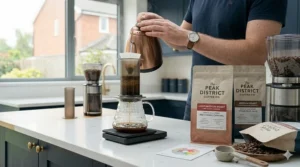
The AeroPress occupies a rather unique position among home brewing methods, combining elements from multiple techniques into something that doesn’t quite fit traditional categories. It uses air pressure to force hot water through coffee grounds and a paper filter, creating a clean, smooth cup in just minutes, but the pressure involved is far gentler than espresso machines—you’re applying manual force rather than mechanical pumps generating 9 bars of pressure.
This matters for UK home brewers because it means the AeroPress is remarkably forgiving. Unlike pour-over methods that demand precise pouring technique and water temperature control, or espresso machines where slight variations in grind size drastically alter extraction, the AeroPress produces consistently good results across a surprisingly wide range of parameters. Miss your target water temperature by 10°C? The coffee still tastes fine. Grind slightly too coarse? Just extend the brewing time by 30 seconds. This resilience makes it ideal for bleary-eyed British mornings when precision feels aspirational.
The paper filter fundamentally defines what AeroPress coffee tastes like. Unlike metal filters in French presses or percolators that allow oils and fine particles through, paper traps these elements and produces what coffee professionals describe as “clean cup”: bright, clear flavours without textural sediment or lingering oiliness. This technique extracts bright flavours while filtering out oils and sediments that might create bitterness. For British palates accustomed to instant coffee or filter machines, this cleanliness registers as “smooth” or “easy drinking” rather than the heavier body of cafetière coffee.
The brewing process itself involves two distinct extraction phases. First, coffee steeps in hot water for 60-120 seconds—this is immersion brewing, similar to a French press, where flavour compounds dissolve into the water evenly. Then, when you press the plunger, you force water through the coffee grounds and filter under gentle pressure—this accelerates final extraction and creates the characteristic body and sweetness. This combination explains why AeroPress coffee doesn’t taste identical to any other method: it has more body than pour-over, less sediment than French press, more complexity than drip machines, yet isn’t as concentrated as espresso.
For UK brewing conditions, the AeroPress offers practical advantages beyond flavour. British homes tend smaller than American or Canadian properties, meaning kitchen counter space runs premium. The AeroPress stores compactly—roughly the footprint of a tall mug—and requires no electrical power, unlike bean-to-cup machines or espresso setups. It’s also nearly indestructible: the original polycarbonate model can literally be dropped on tile floors without breaking, whilst the newer Tritan plastic version weighs almost nothing. This durability matters in rental flats where you might move house annually, or for taking to offices where you’d rather not risk expensive equipment.
The speed factor resonates particularly well with British work culture. From adding coffee to drinking your finished cup takes approximately 2-3 minutes—faster than waiting for a cafetière to steep, dramatically faster than pour-over methods that require careful attention, and comparable to pod machines without generating plastic waste. For London commuters or anyone racing through morning routines, this efficiency transforms home brewing from aspirational to practical. You can genuinely make proper coffee before your train arrives rather than defaulting to overpriced station kiosks selling burnt-tasting Americanos.
Single Origin vs Blends: What Works Best in Your AeroPress?
The single-origin versus blend debate divides coffee enthusiasts globally, but the AeroPress’s characteristics offer clear guidance for UK buyers making this choice. Single-origin coffees come from a specific country, region, or even individual farm, showcasing distinctive flavour profiles that reflect terroir—the combination of soil, altitude, climate, and processing methods unique to that location. Blends combine beans from multiple origins, calibrated by roasters to achieve consistent flavour profiles regardless of seasonal variations or supply chain changes.
In your AeroPress, single-origin coffees perform spectacularly when you want to actually taste where the coffee comes from. Ethiopian Yirgacheffe explodes with blueberry and jasmine notes that would be completely lost in espresso’s intensity. Colombian single-estates deliver balanced sweetness with apple and caramel complexity. Kenyan beans bring tomato-like acidity and blackcurrant brightness that some people adore and others find too assertive. The AeroPress’s clean extraction highlights these distinctive characteristics beautifully—nothing interferes with tasting what makes Ethiopian coffee fundamentally different from Brazilian.
However, single-origins demand more attention and adjustment. A light-roast Ethiopian needs different parameters than a medium-roast Colombian: water temperature, grind size, and steeping time all shift to extract optimally. For British households where multiple people brew coffee with varying skill levels, this variability can frustrate. One person’s perfectly extracted Ethiopian Yirgacheffe becomes the next person’s sour, under-extracted disappointment when they use the same settings with different beans. This learning curve matters if you’re brewing whilst half-awake or trying to get children ready for school simultaneously.
Blends solve the consistency problem by design. Roasters combine origins to create flavour profiles that remain stable month-to-month regardless of which farm’s harvest is currently available. The Rave Signature Blend tastes recognisably like itself whether you buy in January or July, unlike single-origin Kenyan coffee where seasonal variations genuinely affect flavour. For UK buyers who want reliably good coffee without constantly adjusting technique, quality blends from roasters like Rave, Pact, or Union offer the best of both worlds: speciality-grade beans with enough complexity to remain interesting, but balanced profiles that brew consistently.
British speciality roasters increasingly disclose blend components rather than treating recipes as trade secrets. You’ll see descriptions like “Colombian 60%, Brazilian 25%, Ethiopian 15%”—transparency that helps you understand what you’re tasting and which origins you might want to explore individually. This educational approach serves UK consumers well, building knowledge gradually rather than expecting everyone to immediately distinguish Guatemalan Antigua from Colombian Huila based solely on tasting notes.
Cost considerations matter here too. Single-origin speciality coffee from UK roasters typically runs £18-£28 per 250g, whilst quality blends cost £16-£22 for the same quantity. The price difference reflects both sourcing complexity—buying entire lots from single farms costs more than combining commercial-grade beans from multiple origins—and market positioning. For budget-conscious British households, choosing a carefully crafted blend from a reputable roaster delivers better value than a mediocre single-origin from an unknown source. You’re paying for the roaster’s skill in combining origins rather than the cachet of “single-estate Ethiopian.”
Seasonality affects single-origins dramatically. Coffee harvests occur at different times globally: Ethiopian beans arrive in UK warehouses December through March, Kenyan coffee peaks June through October, Central American harvests run November through April. If you buy single-origin beans, you’re effectively eating seasonally—what’s available and freshest changes throughout the year. Blends bypass this by always combining whatever’s currently optimal. For UK buyers who enjoy following seasons and trying different origins throughout the year, single-origins offer variety and education. For those who want consistency and simplicity, blends make more sense.
The AeroPress genuinely shines with both approaches. Its versatility means you can brew delicate Ethiopian Yirgacheffe one morning and robust Colombian Supremo the next, adjusting parameters to suit each bean’s characteristics. This flexibility is rather the point: unlike espresso machines calibrated for specific beans or French presses that muddle subtle flavours under heavy body and oils, the AeroPress adapts to whatever coffee you’re using. Start with a quality blend to learn the basics, then venture into single-origins once you’ve developed preferences and brewing confidence.
Common Mistakes When Buying Coffee Beans for AeroPress
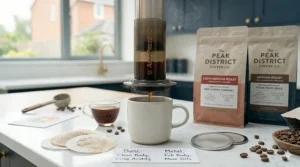
British coffee buyers frequently make several predictable errors when selecting beans for AeroPress brewing, often based on misunderstandings about what this method actually requires. The most common mistake is buying pre-ground coffee. Whilst convenient, ground coffee stales dramatically faster than whole beans—you’re looking at peak flavour lasting 3-5 days rather than 3-4 weeks. The AeroPress’s paper filter brutally exposes staleness: flat, cardboard-like aromas and dull, lifeless flavours that no brewing technique can rescue. Invest £30-£50 in a basic burr grinder like the Hario Mini Mill or Porlex hand grinder. The improvement to your daily coffee justifies this cost within weeks.
The second error is assuming darker roasts work better because they’re “stronger.” Roast level affects flavour profile, not caffeine content—dark roasts actually contain slightly less caffeine than light roasts because extended roasting breaks down caffeine molecules. British buyers raised on instant coffee often gravitate toward dark roasts expecting bold, robust flavours, then find the coffee tastes burnt or one-dimensional in their AeroPress. Medium roasts extract more cleanly, reveal more complexity, and generally produce more satisfying cups. Reserve dark roasts for when you specifically want roast-forward flavours like dark chocolate and caramelised sugar, not as a default choice.
Buying beans without checking roast dates causes disappointment and wasted money. Coffee peaks 3-14 days after roasting and gradually loses vibrancy over subsequent weeks. Many beans sold through Amazon UK—particularly Italian brands like Lavazza, Illy, or supermarket own-brands—arrive 6-12 weeks post-roast. They’re not spoiled or unsafe, but they’ve lost the aromatic complexity and bright flavours that make speciality coffee worth brewing properly. UK roasters like Rave, Union, Pact, and Exhale roast to order and ship within days, delivering genuinely fresh beans. The price premium (£18-£22 vs £12-£15 per 250g) reflects this freshness and dramatically improves your coffee quality.
British buyers frequently ignore origin characteristics, selecting beans randomly rather than considering flavour preferences. If you dislike acidic or fruity flavours, Ethiopian and Kenyan beans will disappoint despite rave reviews—their bright, complex profiles simply won’t suit your palate. Conversely, if you find typical coffee boring and one-dimensional, Brazilian or commercial blends won’t excite you regardless of brewing skill. Start by identifying whether you prefer chocolatey/nutty flavours (Colombian, Brazilian origins), fruity/floral complexity (Ethiopian, Kenyan origins), or balanced profiles (quality blends combining multiple origins). This self-awareness prevents buying highly-rated beans that simply don’t match your taste preferences.
Storing beans incorrectly wastes their potential. Leaving coffee in opened bags on the counter exposes beans to oxygen, light, and humidity—the trinity of coffee staleness. British kitchens tend damp thanks to our charming weather, which accelerates degradation. Transfer beans to airtight containers kept in cupboards away from heat sources. The Food Standards Agency provides general food storage guidance, though for coffee specifically, room-temperature storage in airtight containers preserves quality for 3-4 weeks, which matches consumption rates for most households.
The final common error is misunderstanding “espresso beans” versus “filter beans” labelling. This distinction refers to roast profile and intended brewing method, not bean type—all coffee comes from Arabica or Robusta plants regardless of how it’s packaged. Beans labelled “espresso” typically roast darker to withstand high-pressure extraction and cut through milk. Beans labelled “filter” typically roast lighter to highlight clarity and complexity. The AeroPress sits between these methods, performing well with both, though medium roasts generally extract most successfully. Don’t feel obligated to buy beans specifically labelled for AeroPress; focus on roast level and origin characteristics instead.
Post-Brexit complications add another layer for UK buyers. Some European speciality roasters now charge import duties or restrict UK delivery, whilst others absorb costs to maintain market access. When ordering from EU roasters through third-party Amazon sellers, check delivery costs and import duties carefully—that seemingly attractive Italian single-origin might cost an extra £8 in customs charges. British roasters avoid this entirely, and many major brands have established UK warehouses to maintain Prime eligibility. This Brexit reality makes supporting UK speciality roasters both more economical and more straightforward than importing from the continent.
AeroPress Brewing Guide: Getting the Most from Your Beans
Extracting optimal flavour from coffee beans for AeroPress requires understanding the fundamentals of coffee extraction. Precision, timing, and intentionality are vital for achieving the sweet, balanced cups that make AeroPress brewing worthwhile. The beauty of this method lies in its forgiveness—unlike espresso where slight variations dramatically alter results—whilst still rewarding attention to technique with better-tasting coffee.
Water temperature fundamentally affects extraction. Hotter water extracts more compounds more quickly, cooler water extracts less. For medium roasts, target 85-90°C (185-194°F)—if you’ve boiled a kettle, wait 30-60 seconds before pouring. Light roasts need hotter water (90-95°C) to fully extract fruity complexity. Dark roasts need cooler water (80-85°C) to avoid over-extracting bitter compounds. British tap water varies regionally: London’s hard water contains minerals that affect extraction differently than Scotland’s soft water. If your coffee consistently tastes off despite following guidelines, try bottled water to eliminate water quality as a variable.
Coffee-to-water ratio controls strength. A standard starting point is 1:15—that’s 15 grams of coffee to 225 grams of water. Use a digital scale (£10-£15 on Amazon.co.uk) rather than measuring spoons; volumetric measurements vary wildly depending on grind size and bean density. For stronger coffee, use 1:12 ratio. For lighter brewing, try 1:17. British households without scales often estimate “two AeroPress scoops” of coffee, which works adequately but prevents consistent results—you’re guessing rather than controlling variables.
Grind size requires a burr grinder for consistency. Start with medium-fine (between table salt and granulated sugar), then adjust based on taste. If your coffee tastes sour, weak, or overly acidic, grind finer to increase extraction. If it tastes bitter, harsh, or astringent, grind coarser to reduce extraction. The standard AeroPress method extracts quickly (90 seconds total), so medium-fine grind provides sufficient surface area. Inverted method with longer steeping (2-3 minutes) works better with medium or even medium-coarse grind.
Brewing technique offers remarkable flexibility. The standard method involves placing the AeroPress atop your mug, adding coffee, pouring water, stirring briefly, inserting the plunger, and pressing gently. The inverted method flips the AeroPress upside-down, allowing longer steeping without liquid dripping through prematurely. British homes with small kitchens often prefer standard method for simplicity and reduced spill risk, whilst enthusiasts who enjoy experimenting favour inverted method for greater control over steeping time. Both produce excellent coffee; choose based on whether you prioritise consistency or customisation.
Pressing speed affects final flavour subtly but noticeably. Press slowly and steadily over 20-30 seconds, applying gentle consistent pressure. A slow press leads to a cleaner, higher clarity cup. Pressing too fast forces water through unevenly and can introduce bitterness. Stop pressing when you hear a hissing sound—that’s air being forced through the puck, indicating you’ve extracted all the liquid. Pressing beyond this point extracts undesirable bitter compounds and serves no purpose.
Filter choice impacts texture and flavour. Standard paper filters produce the cleanest cups—bright, clear flavours without oils or sediment. Metal filters (available from third-party sellers) allow more body through and suit those who prefer heavier, French-press-style coffee. Fellow Prismo attachment adds pressure to create more espresso-like results whilst using standard filters. For British buyers starting out, stick with included paper filters until you’ve developed preferences, then experiment with alternatives if desired.
Recipe starting point for British kitchens: Use 15g coffee (medium-fine grind), rinse paper filter with hot water, add coffee to AeroPress, pour 225g water at 88°C, stir 10 times gently, insert plunger and wait 60 seconds, press slowly over 30 seconds. This produces approximately 200ml of concentrated coffee—drink as-is for strong, full-flavoured results, or add hot water to taste for Americano-style longer coffee. Adjust variables based on your preferences, keeping notes on what works with specific beans so you can replicate successful brews.
FAQ: Coffee Beans for AeroPress UK
❓ Can you use any coffee beans for AeroPress?
❓ Are medium or dark roast beans better for AeroPress in the UK?
❓ How fine should I grind coffee beans for AeroPress?
❓ Do coffee beans for AeroPress need to be fresh roasted?
❓ Can I use AeroPress for making lattes with coffee beans?
Conclusion: Finding Your Perfect AeroPress Coffee Beans
Selecting coffee beans for AeroPress ultimately depends on understanding what you value most: convenience and consistency, or complexity and variety. For British households wanting reliable daily coffee without constant adjustment, quality blends from Rave, Pact, or budget-friendly Lavazza Qualità Oro deliver excellent results across different brewing parameters. These beans perform consistently whether you’re bleary-eyed on Monday morning or attentively brewing on a leisurely Sunday, making them ideal for families or anyone who views coffee as functional fuel rather than artisanal experience.
For coffee enthusiasts who genuinely enjoy tasting where beans come from, single-origin offerings like Union Hand-Roasted Revelation or speciality selections from UK roasters reward careful attention with complex, distinctive cups. The AeroPress’s clean extraction showcases these beans brilliantly, revealing fruity Ethiopian brightness or balanced Colombian sweetness that gets lost in heavier brewing methods. This approach requires more investment—both financially at £20-£24 per 250g and in developing brewing skills—but transforms daily coffee from routine to ritual.
The medium roast focus throughout this guide reflects both AeroPress characteristics and British taste preferences. Lighter roasts demand precise technique and suit those who enjoy bright, tea-like complexity. Darker roasts provide familiar comfort but sacrifice the clarity and nuance that makes AeroPress brewing worthwhile. Medium roasts balance origin-specific flavours with roast-developed sweetness, extracting cleanly across various parameters whilst revealing enough complexity to remain interesting over repeated brewing.
Freshness matters enormously, particularly in the UK where speciality roasters like Rave, Union, Exhale, and Pact compete on quality and transparency. Paying £18-£22 per 250g for beans roasted within the past week produces demonstrably better coffee than £14 per 250g for beans roasted 2-3 months ago. The price difference reflects genuine value—fresher beans mean more aromatic complexity, brighter flavours, and cups that actually taste like the origin descriptions rather than generic “coffee flavour.” For serious home brewing, this investment pays immediate dividends.
Post-Brexit, supporting British roasters makes practical and economic sense. EU imports sometimes carry customs charges, delivery takes longer, and returns prove complicated. UK speciality roasters offer Prime delivery, straightforward returns under Consumer Rights Act 2015, and beans roasted specifically for British water and taste preferences. This isn’t nationalism—it’s pragmatism. Local roasters understand that London’s hard water extracts differently than Edinburgh’s soft water, and they calibrate roasts accordingly.
The seven beans covered here span the quality and price spectrum available to UK buyers through Amazon.co.uk. Lavazza Qualità Oro and Brown Bear Blue Mountain serve budget-conscious households or those new to proper coffee. Rave Signature Blend, Pact House Blend, and Exhale Organic occupy the mid-range sweet spot where quality justifies cost for daily drinking. Union Hand-Roasted Revelation and Illy Brazil Single Origin showcase what exceptional beans can achieve when brewed properly. Start wherever makes sense for your budget and experience level, then explore as your preferences develop.
Remember that the AeroPress’s greatest strength is versatility. Unlike espresso machines calibrated for specific beans or French presses that muddle delicate flavours, this method adapts to whatever coffee you’re brewing. Experiment with different origins, roast levels, and brewing parameters. Take notes on what works with specific beans. Most importantly, enjoy the process of improving your daily coffee beyond what high-street chains charge £3.50 for—you’re producing café-quality results at home for a fraction of the cost, with complete control over what goes in your cup.
Recommended for You
- Best Decaf Coffee Beans UK 2026: 7 Top Picks Reviewed
- 7 Best Low Acid Coffee Beans UK 2026 | Gentle on Stomach
- 7 Strongest Coffee Beans UK 2026: Maximum Caffeine Guide
Disclaimer: This article contains affiliate links. As an Amazon Associate, I earn from qualifying purchases. If you purchase products through these links, we may earn a small commission at no additional cost to you.
✨ Found this helpful? Share it with your mates! 💬🤗
