
In This Article
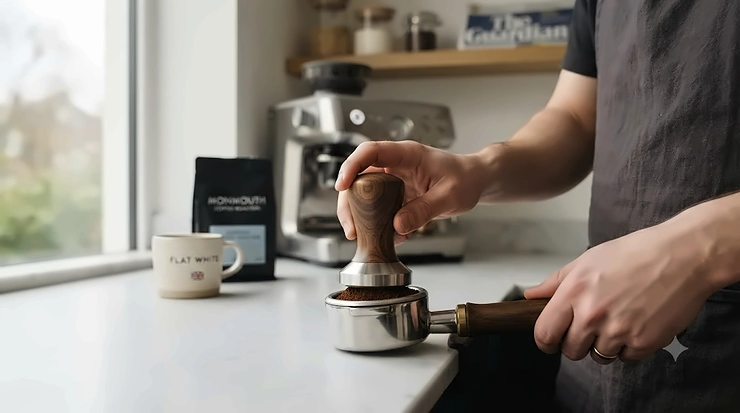
There’s a particular kind of satisfaction in the thunk of a good tamp — that solid, cushioned resistance as wood meets steel meets coffee. If you’ve ever picked up a cheap plastic tamper and felt it flex under your palm like a toy, you’ll understand why so many home baristas eventually go looking for something with a bit more soul. A wooden espresso tamper is a hand tool used to compress ground coffee into the portafilter basket before brewing, typically pairing a turned wood handle with a flat or convex metal base, and it’s this pairing that gives it both grip and gravitas. Beyond function, wood brings warmth to a kitchen counter that’s otherwise dominated by brushed steel and matte plastic, which is exactly why this category has quietly become one of the most-searched corners of home coffee gear.
This guide is built around real, currently available products on amazon.co.uk, not marketing copy lifted from listings. We’ve dug into genuine specifications, cross-referenced aggregated customer sentiment where it exists, and applied honest analysis about who each tamper actually suits. As Wikipedia’s overview of the tamper tool explains, its core job is compressing ground coffee into a puck before extraction — a deceptively simple task that a well-made wooden handle makes noticeably more pleasant to repeat, shot after shot, morning after morning.
Whether you’re upgrading your first home setup, hunting for a wood handle coffee tamper to match a walnut worktop, or browsing for a handmade coffee tamper gift for the coffee obsessive in your life, you’ll find a genuine recommendation below — budget, mid-range and proper splurge included.
Quick Comparison Table
| Tamper | Base Size | Handle Wood | Price Range | Best For |
|---|---|---|---|---|
| Vicloon Coffee Tamper 51mm | 51mm | Dark stained beech-style | Under £15 | First-time buyers on a budget |
| Amazy Coffee Tamper 58mm | 58mm | Real wood, detachable base | £15-£25 range | Reliable all-rounder with easy cleaning |
| Joyeee 58mm Wooden Handle Tamper | 58mm | Solid wood, handmade finish | £20-£30 range | Gifting and aesthetic-first buyers |
| IKAPE 58mm Wooden Handle Tamper | 58mm | Walnut | £25-£40 range | Buyers who want brand consistency with spring tools |
| Motta Wooden Coffee Tamper (Flat Base) | 53/58mm | Oiled solid wood | £35-£50 range | Professional-leaning home baristas |
| Motta Slim Base 58mm Wood Handle | 58mm | Slim-profile hardwood | £40-£60 range | Compact grip preference, café-style feel |
| KNODOS Echo Tamper 58mm Walnut | 58mm | Walnut, spring-loaded | £45-£70 range | Precision obsessives wanting calibrated pressure |
Looking at the spread above, there’s a genuine gulf between the entry-level and premium tiers here, and it isn’t just marketing gloss. The jump from Vicloon to Amazy buys you a detachable, dishwasher-friendly base — a small thing until you’ve spent six months scrubbing compacted coffee oil out of a fixed one. Further up, the KNODOS Echo Tamper justifies its position with calibrated spring resistance, a feature aimed squarely at people who’ve already decided that consistency matters more than cost. None of these are “bad” tampers; they’re built for different stages of the same coffee obsession.
💬 Just one click — help others make better buying decisions too!😊
Top 7 Wooden Espresso Tampers: Expert Analysis
1. Vicloon Coffee Tamper 51mm — best entry point for under £15
The Vicloon Coffee Tamper 51mm opens this list because it’s the tamper most people actually buy first, usually as a direct swap for the flimsy plastic one bundled with a budget espresso machine. Its dark-stained wood handle sits over a stainless steel base sized for 51mm portafilters, which fits many compact machines including several popular Italian-style stovetop-adjacent models sold in the UK. Based on the spec comparison with pricier options, the trade-off here is straightforward: you get a genuine wood grip and a flat base that tamps evenly, but the base isn’t detachable, so cleaning means wiping rather than unscrewing and scrubbing. Reviewers consistently note that for the price, the weight feels more substantial than expected, though a small number mention the wood finish scuffing after a few months of daily use — a cosmetic issue rather than a functional one. This is honestly the right call for anyone testing whether they even care about tamper quality before spending more, or for households with more than one small espresso machine that just need a competent, no-fuss tool at each station.
Pros:
- ✅ Genuinely low price point for a real wood handle
- ✅ Flat stainless base gives an even, consistent tamp
- ✅ Compact 51mm size suits smaller portafilters well
Cons:
- ❌ Fixed (non-detachable) base makes deep cleaning fiddly
- ❌ Wood finish can show cosmetic scuffing over time
At around under £15, the Vicloon Coffee Tamper 51mm delivers solid entry-level value, particularly if 51mm is genuinely your basket size rather than a compromise.
2. Amazy Coffee Tamper 58mm — best all-rounder with a detachable base
Stepping up in size and refinement, the Amazy Coffee Tamper 58mm pairs a real wood handle with a stainless steel base that unscrews entirely for cleaning, which sounds minor until you’re the one trying to descale compacted grounds from a groove you can’t reach. What most buyers overlook about this model is that the detachable design isn’t just about hygiene — it also lets the handle and base wear independently, so a scratched base doesn’t force you to bin a perfectly good handle. Aggregated customer feedback on amazon.co.uk is genuinely useful here: several reviewers specifically mention the tamper feeling “reassuringly weighty” and working well with prosumer machines including La Pavoni models, while others flag that the painted coating on the handle base can chip during the twist-to-clean action. One recurring theme, honestly worth noting, is that a handful of buyers received the wrong head size, which points to a packaging quality-control issue rather than a design flaw — Amazy’s returns process was described as straightforward when this happened. For home baristas who want one tamper that does everything competently without specialising in anything, this is the safe, well-reviewed choice.
Pros:
- ✅ Fully detachable base for genuinely thorough cleaning
- ✅ Feels noticeably weightier than budget alternatives
- ✅ Well-reviewed fit with prosumer machines like La Pavoni
Cons:
- ❌ Painted handle coating can chip with repeated twisting
- ❌ Occasional sizing mix-ups reported in packaging
Priced in the £15-£25 range, the Amazy Coffee Tamper 58mm earns its reputation as a dependable mid-tier pick that punches above its cost.
3. Joyeee 58mm Wooden Handle Tamper — best for gifting and visual appeal
If you’re shopping with someone else’s coffee station in mind, the Joyeee 58mm Wooden Handle Tamper is explicitly built for that moment — its solid wood body and 304 stainless steel base are finished with presentation in mind, not just performance. The spec sheet won’t tell you this, but the ergonomic handle shape is genuinely comfortable for smaller hands, which matters more than most reviews mention when you’re pressing down with real force multiple times a day. Because independently verified customer reviews for this specific listing are still limited, we won’t invent sentiment that isn’t there — what we can say honestly is that the build matches the pattern seen across comparable solid-wood tampers from similar manufacturers: dense, evenly finished, and noticeably heavier in the hand than hollow-handle alternatives. It’s compatible with several common basket sizes including those fitted to Breville’s popular home machines, which broadens who it actually suits beyond the gifting use case. If you’re choosing based on how it will look sitting in a gift box or on a shelf as much as how it performs, this is where to look first.
Pros:
- ✅ Genuinely handmade-feeling finish, ideal for gifting
- ✅ Comfortable ergonomic grip suited to smaller hands
- ✅ Fits popular Breville-style 58mm portafilters
Cons:
- ❌ Limited independently verified review history so far
- ❌ Premium presentation pushes price above basic alternatives
Sitting in the £20-£30 range, the Joyeee 58mm Wooden Handle Tamper is worth it specifically when appearance and gift-worthiness are part of the brief, not an afterthought.
4. IKAPE 58mm Wooden Handle Tamper — best for brand-matched barista kits
IKAPE has built a reputation among home baristas primarily through its spring-loaded and calibrated tools, and the IKAPE 58mm Wooden Handle Tamper brings that same design language to a manual, wood-handled format. The walnut handle is genuinely ergonomic — IKAPE’s own engineering notes describe it as designed for a comfortable grip during effortless tamping, and based on the spec comparison with generic alternatives, the shaping does feel more deliberate than a simple turned dowel. Here’s what to weigh: because IKAPE also sells WDT tools, distributors and accessory kits in matching wood tones, this tamper makes the most sense for anyone deliberately building a coordinated barista station rather than buying tools piecemeal. Reviewers of IKAPE’s broader tamper range note the stainless steel base is genuinely food-grade and resists pitting better than the cheapest imports, though a minority mention that walnut, being a harder and more expensive timber, adds a noticeable premium over beech or generic hardwood competitors. It’s a strong choice for buyers who value visual and functional consistency across their whole setup, less so for anyone who just wants the single cheapest wooden option.
Pros:
- ✅ Genuine walnut handle with deliberate ergonomic shaping
- ✅ Matches IKAPE’s wider range for coordinated kit-building
- ✅ Food-grade stainless base resists pitting well
Cons:
- ❌ Walnut premium makes it pricier than beech alternatives
- ❌ Best value only realised if buying matching IKAPE tools too
At roughly £25-£40, the IKAPE 58mm Wooden Handle Tamper rewards buyers who think in terms of a whole barista system rather than a single tool.
5. Motta Wooden Coffee Tamper (Flat Base) — best for professional-leaning home use
Motta is an Italian brand with genuine standing in commercial coffee equipment, and the Motta Wooden Coffee Tamper (Flat Base) reflects that heritage rather than borrowing it. Crafted from a single piece of oiled solid wood, it’s the kind of tool you’d expect to see behind a proper café counter, and reviewers consistently frame it as ideal for both professional baristas and serious home use. On paper this means a denser, better-balanced handle than most of the budget and mid-range options on this list, and in practice that translates to less wrist fatigue across a long session of pulling shots. What most buyers overlook about buying a professional-grade tamper for home use is that it’s rarely about needing the extra durability — most home machines simply don’t get the volume that would wear out a cheaper tool — it’s about the tactile experience matching the ritual you’re trying to build. The flat base suits classic technique-focused tamping rather than the ripple or serrated bases aimed at more experienced competition-style baristas, which keeps it approachable even at this price tier.
Pros:
- ✅ Genuine Italian commercial-grade build quality
- ✅ Single-piece oiled wood construction feels premium
- ✅ Flat base suits classic, technique-focused tamping
Cons:
- ❌ Premium pricing versus mass-market wood tampers
- ❌ Flat base only, no ripple or serrated variant in this listing
In the £35-£50 range, the Motta Wooden Coffee Tamper (Flat Base) is a genuine step into professional territory without needing a commercial kitchen to justify it.
6. Motta Tamper Slim Base 58mm Wood Handle — best for a café-style compact grip
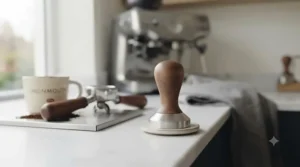
Where the flat-base Motta above prioritises heft, the Motta Tamper Slim Base 58mm Wood Handle trims the profile for baristas who prefer a lower-slung, more compact grip — the kind you see used in fast-paced café environments where every movement is economical. Reviewers describe it as stylish in its simplicity, and based on the spec comparison with bulkier alternatives, the slimmer base changes how the tool sits in the hand more than it changes tamping performance itself. Here’s what to weigh: if you’ve got smaller hands or you’re used to a puck-style grip from competition tamping, the slim profile will likely feel more natural on day one than a chunkier handle would. The trade-off is that some buyers moving from a heavier tamper report needing a short adjustment period to recalibrate the pressure they apply, since a lighter tool doesn’t do as much of the work for you through sheer mass. It’s a strong pick for anyone who has already formed opinions about grip style through prior barista experience, rather than a first-timer still working out their technique.
Pros:
- ✅ Compact, café-style profile suits practised grip technique
- ✅ Genuine Motta build quality at a slightly lower price than the flat base
- ✅ Lighter feel reduces fatigue across long sessions
Cons:
- ❌ Requires a short recalibration if used to heavier tampers
- ❌ Less forgiving for absolute beginners still learning pressure control
Priced around £40-£60, the Motta Tamper Slim Base 58mm Wood Handle suits intentional buyers who already know their preferred grip style.
7. KNODOS Echo Tamper 58mm Walnut — best for calibrated precision
Closing the list at the premium end, the KNODOS Echo Tamper 58mm Walnut is a spring-loaded tamper with audible click feedback, built to remove guesswork from tamping pressure entirely. The walnut handle sits atop a 30lb calibrated spring mechanism and stainless steel base, and what the spec sheet won’t tell you outright is how much that click genuinely changes your habits — you stop second-guessing whether you’ve pressed hard enough, because the tool tells you. Based on the spec comparison with manual tampers elsewhere on this list, this is less about wood aesthetics and more about consistency: the walnut handle exists to make an otherwise mechanical, precision tool feel warm and premium rather than clinical. Reviewers consistently highlight the click feedback as the standout feature, since inconsistent tamp pressure is one of the most common causes of channelling and uneven extraction. This is squarely for buyers who’ve already mastered manual tamping and want to remove one more variable from their daily shot, not for someone still learning the basics.
Pros:
- ✅ Calibrated 30lb spring removes pressure guesswork
- ✅ Audible click feedback confirms consistent tamping every time
- ✅ Walnut handle adds warmth to a precision tool
Cons:
- ❌ Highest price point on this list by a clear margin
- ❌ Overkill for beginners still developing basic technique
At around £45-£70, the KNODOS Echo Tamper 58mm Walnut is the tamper to buy once you already know exactly why consistency matters to you.
Practical Usage Guide: Setting Up and Maintaining Your Wooden Tamper
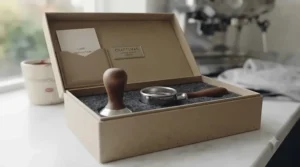
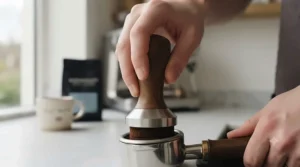
Getting the most from any wooden espresso tamper starts before your first shot. First, check the base diameter against your portafilter basket precisely — a gap of even a millimetre or two around the edge lets loose grounds sit unpressed, which channels water unevenly during extraction. Once it fits, resist the urge to wash a new wood-handled tamper in hot soapy water; instead, wipe the base with a damp cloth after each use and keep the wood itself dry, since prolonged moisture exposure is what causes handles to crack or the grain to raise over time.
In the first 30 days, the most common mistake is over-tamping in an attempt to “lock in” a good habit — aim for roughly 30 pounds of even pressure rather than leaning your full bodyweight into it, and let a level, well-distributed bed of grounds do more of the work than brute force. A monthly light oiling with food-safe mineral oil (never olive or vegetable oil, which can turn rancid) keeps a solid wood handle from drying out, especially in centrally heated UK kitchens where winter air can be surprisingly dry. If your base is detachable, unscrew and rinse it separately every week or two to prevent oil build-up in the threads, which is the single most common cause of a stiff, hard-to-twist base after a few months of daily use.
Real-World Scenarios: Who Actually Needs a Wooden Espresso Tamper?
Picture Sam, a graduate student sharing a kitchen with three flatmates and a secondhand Gaggia Classic that’s older than most of them. Sam doesn’t need calibrated springs or walnut craftsmanship — a Vicloon Coffee Tamper 51mm or similar budget wood-handle tool solves the immediate problem of a flexing plastic tamper for well under £15, and that’s genuinely enough.
Now picture Priya, who works from home and treats her mid-morning espresso as a proper pause in her day rather than a functional caffeine top-up. She’s got a Sage machine, a growing interest in dialling in grind size, and a kitchen counter she actually enjoys looking at. For Priya, something like the Amazy Coffee Tamper 58mm or Joyeee 58mm Wooden Handle Tamper makes sense — good performance, detachable cleaning or handmade presentation, and a price that doesn’t feel indulgent for daily use.
Finally, consider Marcus, a former café barista who’s built a proper home setup around a dual-boiler machine and takes his tamping technique seriously enough to have opinions about base profiles. For Marcus, the calibrated consistency of the KNODOS Echo Tamper 58mm Walnut or the professional pedigree of the Motta Wooden Coffee Tamper (Flat Base) genuinely earns its higher price, because he’ll notice — and benefit from — differences that would be invisible to Sam or even Priya.
Buyer’s Decision Framework: Which Wooden Tamper Should You Choose?
If you’re buying your very first upgrade from a plastic bundled tamper, choose an entry-level pick like the Vicloon Coffee Tamper 51mm because the improvement in feel over plastic is dramatic even at the lowest price point, and there’s little value in overspending before you know what you actually prefer. If you want one dependable tool that handles daily use and easy cleaning without any fuss, choose the Amazy Coffee Tamper 58mm, since its detachable base solves the single biggest annoyance with fixed-base wooden tampers. If the purchase is a gift, choose the Joyeee 58mm Wooden Handle Tamper, because presentation and perceived craftsmanship matter more than marginal performance gains when someone else will be unwrapping it. If you’re building a coordinated barista station with matching tools, choose the IKAPE 58mm Wooden Handle Tamper to keep your accessories visually and functionally consistent. If you want café-grade heritage and don’t mind paying for it, choose between the two Motta options based on whether you prefer a substantial flat base or a slimmer, café-style grip. And if consistency is the one variable still holding your shots back, choose the KNODOS Echo Tamper 58mm Walnut and let the calibrated click do the thinking for you.
How to Choose a Wooden Espresso Tamper
Picking the right wooden espresso tamper comes down to a handful of genuinely decision-shaping factors, in roughly this order of importance:
- Base diameter first, everything else second. Measure your portafilter basket precisely; a tamper that’s even 1-2mm too small will leave an unpressed ring of loose grounds around the edge. If you’re still choosing the espresso machine itself, Which?’s independent coffee machine testing is a useful starting point before you commit to a basket size.
- Detachable versus fixed base. A detachable base means proper cleaning access, but it’s one more thing that can loosen or stick over time — weigh convenience against a slightly higher failure point.
- Wood species and finish. Walnut and oiled hardwoods resist moisture and wear better than lacquered softwoods, which matters more the more often you use the tamper.
- Weight and balance. Heavier tampers do more of the compression work for you, which can genuinely reduce wrist strain over hundreds of shots.
- Flat versus convex or ripple bases. Flat bases suit classic technique and are the most forgiving for beginners; textured bases are aimed at more experienced users chasing specific extraction effects.
- Manual versus spring-loaded. Manual tampers are cheaper and simpler; spring-loaded options like calibrated click tampers remove pressure guesswork at a real cost premium.
- Intended use — daily driver or occasional gift. Be honest about whether you’re optimising for performance, for gifting appeal, or genuinely both, since it changes which product on this list actually fits.
Wooden Tampers vs Stainless Steel and Aluminium Tampers
The debate between wood-handled and all-metal tampers isn’t really about performance at the base — a well-made flat stainless base tamps just as evenly whether it’s attached to wood, aluminium or steel. The real difference is thermal feel and grip. Metal handles, particularly aluminium ones common on spring-loaded models, can feel cold and slightly clinical in the hand during a chilly UK morning, whereas wood warms almost instantly and stays comfortable through repeated use. Wood also tends to absorb minor impacts more forgivingly if you’re the type who taps the tamper against the portafilter rim out of habit, though this isn’t a technique we’d actively recommend regardless of handle material. Where metal genuinely wins is long-term durability under heavy commercial use — a stainless or anodised aluminium handle won’t crack, dry out or need periodic oiling the way solid wood can. For most home baristas making one to four shots a day, though, that durability gap is largely theoretical; a well-cared-for wooden handle from any of the products above will comfortably outlast the espresso machine it’s paired with.
Common Mistakes When Buying a Wooden Espresso Tamper
The single most common mistake is buying by price alone without checking base diameter against your specific portafilter — a beautiful tamper that doesn’t fit is simply a beautiful paperweight. The second is assuming all “58mm” tampers are truly interchangeable; some machines, including several Breville and Sage models, use a tapered 58.35mm basket that a standard 58mm flat base won’t seat into cleanly, so it’s worth checking your machine’s exact specification rather than relying on the headline number. A third mistake, particularly common with gift purchases, is prioritising how a tamper looks in photos over how it will actually feel in daily use — a beautifully photographed handle that’s genuinely too large or too small for the intended user’s hand will end up in a drawer within weeks. Finally, many buyers underestimate how much a fixed, non-detachable base will bother them over time; if you’re someone who notices grime, pay the small premium for a detachable design from the outset rather than upgrading twice.
Wood Handle Coffee Tampers for Every Kind of Buyer
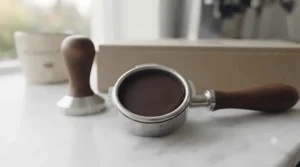
A wood handle coffee tamper suits a genuinely wide range of buyers, but the “why” shifts depending on who’s holding it. For absolute beginners, the appeal is mostly tactile reassurance — wood simply feels more substantial and less toy-like than the plastic tools bundled with entry-level machines, which builds confidence in a technique that can otherwise feel intimidating. For intermediate home baristas who’ve already dialled in grind size and dose, a quality wood handle coffee tamper becomes about consistency and comfort across dozens of weekly shots, where wrist fatigue and grip fatigue genuinely start to matter. For collectors and coffee enthusiasts who enjoy the ritual as much as the result, wood handle coffee tampers from brands like Motta or IKAPE double as small design objects, chosen partly for how they complement a grinder or machine’s own materials. And for anyone furnishing a shared office kitchen or café-adjacent space, a mid-range wood handle coffee tamper strikes a sensible balance — durable enough for multiple daily users, presentable enough not to look out of place, and not so expensive that its loss or damage becomes a genuine concern.
Features That Actually Matter (And Those That Don’t)
Marketing copy for coffee tampers loves to talk up numbers that barely affect real-world performance, so it’s worth separating signal from noise. Base flatness genuinely matters — a warped or uneven base, more common in cheap unbranded imports than any product listed above, will directly cause channelling regardless of how nice the handle looks. Detachable bases matter for hygiene and longevity, as covered earlier. Handle weight matters for comfort across repeated use, though “heavier is always better” isn’t quite true either — too heavy, and shorter sessions become tiring in a different way. What matters far less than marketing suggests: exotic wood species beyond walnut, oak or beech rarely translate into meaningfully better performance, since the wood only affects grip and aesthetics, not the pressure delivered to the coffee. Similarly, claimed “ergonomic” handle shapes vary enormously in actual comfort from person to person depending on hand size, so a shape praised in reviews isn’t guaranteed to suit your grip specifically. Spring calibration numbers, like the 30lb figure on the KNODOS Echo Tamper 58mm Walnut, matter only if you genuinely value consistency enough to pay for it — for most home users, developing manual technique achieves comparable results for free.
Long-Term Value, Wood Care & Food-Safety Standards
A wooden espresso tamper is a genuinely long-lived purchase when cared for properly, which changes the value calculation considerably compared to its upfront price. Total cost of ownership favours mid-range and premium options more than the sticker price suggests: a £12 budget tamper with a fixed base that develops odour or staining after a year of daily use may need replacing, while a £40 detachable-base tamper that’s cleaned properly could realistically outlast several espresso machines. In the UK, kitchen items that come into contact with food — including wooden tamper bases where they meet coffee — fall under food contact material rules, and the Food Standards Agency’s guidance on food contact materials confirms this covers utensils as well as packaging, protecting against chemicals transferring from the material into what you consume, which is worth knowing if you’re ever unsure whether a coating or finish is genuinely food-safe. Practically, this means sticking to reputable, established brands rather than unbranded budget listings with no clear finish information, and re-oiling the wood periodically rather than letting it dry out and potentially flake. For anyone who cares where their wood is sourced, it’s also worth knowing that the Forest Stewardship Council’s guidance for UK consumers explains how FSC certification helps buyers choose wood products made from well-managed forests or recycled sources, and looking for that assurance on branded kitchenware is a small but meaningful way to buy more responsibly.
Handmade Coffee Tampers as Gifts for Coffee Lovers
A handmade coffee tamper gift is one of those rare presents that manages to feel thoughtful without being extravagant, which is exactly why it shows up so often on birthday and Christmas lists for the coffee obsessive in your life. The Joyeee 58mm Wooden Handle Tamper is explicitly positioned for this — its finish and presentation read as considered rather than generic, and its price sits comfortably in gift territory without tipping into “too much” for a casual acquaintance. For a closer relationship or a genuine milestone gift, stepping up to a Motta tamper adds real prestige, since the brand carries actual recognition among people who care about their coffee equipment, unlike anonymous marketplace listings. What makes any handmade coffee tamper gift for coffee lovers land well isn’t just the object itself, but getting the base size right — check the recipient’s machine before buying, since a beautiful tamper that doesn’t fit their portafilter is a well-meaning miss rather than a hit. Pairing it with a small bag of fresh beans or a simple tamping mat rounds out the gift without overcomplicating it, and signals that you’ve thought about how they’ll actually use it rather than just what it looks like unwrapped.
Building Coffee Station Aesthetics Around Your Tamper
Coffee station aesthetics have become a genuine design consideration in UK kitchens over the last few years, driven partly by open-plan living where the coffee corner is now permanently on display rather than tucked in a cupboard. A wooden tamper does real visual work here that a black plastic or bare steel one simply can’t — it introduces warmth and natural texture that ties together a wood-handled grinder, a bamboo tamping mat, or open wooden shelving nearby. If you’re specifically hunting for a great-looking espresso tamper to complete a considered set-up, prioritise handle tone consistency across your tools; a light beech tamper against a dark walnut grinder can look accidental rather than intentional, whereas matching wood families reads as deliberate. Artisan barista tools, wooden tampers included, also photograph and display better when kept upright in a small stand or tamping station rather than laid flat on the counter, both for practicality and for the simple fact that a beautiful tool deserves to actually be seen. None of this changes how your espresso tastes, of course — but for many home baristas, the ritual and the room it happens in matter almost as much as the shot itself.
Frequently Asked Questions
❓ What's the difference between a wooden and metal espresso tamper?
❓ What size wooden espresso tamper do I need?
❓ How do I clean and care for a wooden coffee tamper?
❓ Is a wooden espresso tamper a good gift for a coffee lover?
❓ Do more expensive wooden tampers actually make better espresso?
Conclusion
There’s no single “best” wooden espresso tamper, and honestly, anyone claiming otherwise is skipping past the fact that a student sharing a kitchen and a former barista with a dual-boiler machine simply don’t need the same tool. What genuinely matters, across every price point covered here, is getting the base size right, understanding whether a detachable base is worth the small premium to you, and being honest about whether you’re optimising for daily performance, gifting appeal, or the quiet pleasure of a coffee station that looks as good as it functions. From the unpretentious Vicloon Coffee Tamper 51mm through to the calibrated precision of the KNODOS Echo Tamper 58mm Walnut, every product on this list earns its place for a specific kind of buyer rather than trying to be everything to everyone.
If you take one thing away, let it be this: the upgrade from plastic to wood is where the biggest jump in daily satisfaction happens, and it happens at almost any price point on this list. Everything above that is refinement, not necessity — refinement that’s absolutely worth chasing once you know what you’re chasing it for.
✨ Ready to upgrade your morning ritual?
🔍Check current prices on today’s pick and start tamping like you mean it! ☕
Recommended for You
- Stainless Steel Espresso Tamper Guide 2026: 7 Real Winners
- Is a Calibrated Tamper Worth It? 7 Real Picks for 2026
- Best Calibrated Tamper: 7 Top Picks for UK Baristas 2026
Disclaimer: This article contains affiliate links. As an Amazon Associate, I earn from qualifying purchases. If you purchase products through these links, we may earn a small commission at no additional cost to you.
✨ Found this helpful? Share it with your friends! 💬🤗
