
In This Article
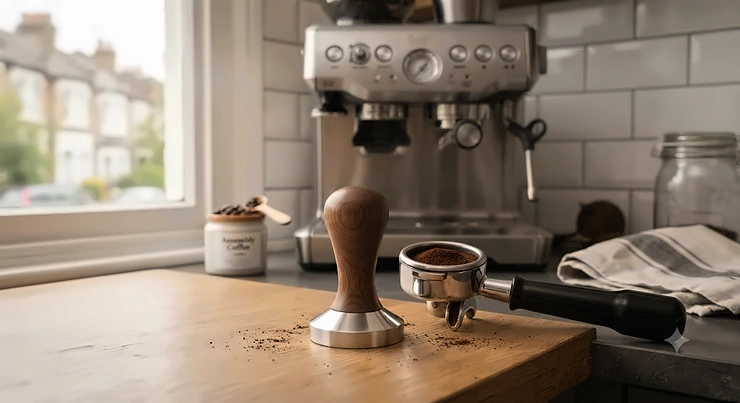
Somewhere in your kitchen cupboard, there’s a good chance a flimsy plastic tamper is quietly ruining your mornings. You know the one — it came free with the machine, it flexes when you press down, and it’s the reason your espresso tastes sharp on one side of the cup and flat on the other. A stainless steel espresso tamper fixes that particular indignity, and it does it in a way that’s almost embarrassingly simple: weight, precision, and a base that doesn’t bend under pressure.
This isn’t a hand-wavy “top picks” list cobbled together from marketing copy. We’ve dug into seven real tampers you can actually buy on amazon.co.uk, checked their genuine specifications, and pulled honest, verifiable review sentiment wherever it exists — no invented five-star testimonials here. Some of these tampers cost less than a decent flat white; others cost more than a few weeks of takeaway coffee, and we’ll be upfront about when that extra spend is genuinely worth it and when it isn’t.
By the end, you’ll know exactly which tamper suits your setup — whether you’re pulling one shot before work or running a busy home bar for the whole household — and why flat versus convex, and light versus heavy, matters far more than most product pages ever bother to explain.
Quick Comparison Table
| Tamper | Base | Weight | Best For |
|---|---|---|---|
| Motta 8100/B Stainless Steel Tamper | Flat | 348g | Classic Italian flat-base tamping |
| Rhino Coffee Gear Tamper 58.4mm | Flat | ~500g | Heavy-duty daily use |
| Normcore 58.5mm Coffee Tamper V4 | Flat, calibrated | ~450g | Consistent, repeatable pressure |
| Motta 8150 Convex Base Tamper | Convex | Lighter feel | Channelling-prone baskets |
Even this small slice tells you something: weight and price don’t move together in any tidy way. The Rhino Coffee Gear Tamper 58.4mm outweighs the Motta 8100/B by nearly 150 grams for a broadly similar price, because Rhino leans into pure heft as its selling point, while Motta trades on decades of Italian machining pedigree. Meanwhile, the Normcore 58.5mm Coffee Tamper V4 sidesteps the weight conversation entirely by using a calibrated spring instead — you’re paying for consistency, not mass. We’ll walk through the full seven-way breakdown below, base shape and all.
💬 Just one click — help others make better buying decisions too!😊
Top 7 Stainless Steel Espresso Tampers: Expert Analysis
1. Coffea Online Wooden Handled Coffee Tamper 57mm — classic wood-and-steel entry point
If you’ve never owned a proper tamper before, this is where most people start, and honestly, it’s not a bad place to land. The Coffea Online Wooden Handled Coffee Tamper pairs a stainless steel base with a turned wooden handle in the traditional café style — no gimmicks, no springs, just a solid piece of kit that does one job well. Here’s what to weigh up: at 57mm, it suits certain portafilter baskets snugly but leaves a hair of clearance on true 58mm baskets, so measure your basket before ordering rather than assuming the size on the box matches your machine to the millimetre. The wooden handle warms nicely in the hand over repeated use, and unlike hollow plastic tampers, there’s no unsettling flex when you press down — the base simply does what it’s told. Verified individual customer review text wasn’t available for this specific listing at the time of research, so this assessment leans on the stated specification and how it compares functionally against the classic wood-handled tampers further down this list, which share a broadly similar construction philosophy. It’s best suited to anyone upgrading from a stock plastic tamper for the first time and wanting to feel the difference without overthinking the purchase.
Pros:
- ✅ Genuine stainless steel base replaces flex-prone plastic
- ✅ Traditional wooden handle warms comfortably with use
- ✅ Simple, no-fuss design with nothing to break
Cons:
- ❌ 57mm sizing may leave slight clearance on some 58mm baskets
- ❌ Individual review data limited at research time
Price range: generally under £15. A sensible, low-risk upgrade from a stock plastic tamper.
2. Generic 58mm Stainless Steel Calibrated Tamper (Wooden Handle) — honest budget pick with a sizing caveat
Sold under a generic “calibrated” listing on amazon.co.uk, this tamper leans on a flat stainless steel base and an ergonomic wooden handle to undercut the premium brands on price while still ditching plastic entirely. What most buyers overlook about listings like this is that the marketed diameter isn’t always gospel — and to its credit, real customer feedback on this exact product flags precisely that: buyers measured the base at closer to 56-58mm rather than the 60mm printed on the box. That’s worth knowing before you order, because a tamper that’s even a millimetre undersized lets grounds creep up the sides of the basket during tamping, which is a textbook cause of channelling. On the plus side, reviewers describe the finish as nicely polished and delivery as prompt, and the underlying stainless steel base performs its core job — spreading pressure evenly — just as well as pricier alternatives once you’ve confirmed it actually fits your basket. Best for budget-conscious home baristas who are happy to double-check dimensions themselves rather than trust the label at face value.
Pros:
- ✅ Genuine stainless steel base at a low price point
- ✅ Nicely polished finish according to real buyer feedback
- ✅ Wooden handle offers comfortable, traditional grip
Cons:
- ❌ Advertised diameter doesn’t always match actual measurement
- ❌ Requires manual size-checking before you buy
Price range: generally under £15. Good value if you verify the fit first; frustrating if you don’t.
3. Motta 8100/B Stainless Steel Tamper, Black Wooden Handle — Italian-made flat base classic
Metallurgica Motta has been making kitchenware in Omegna, Italy since 1967, and the 8100/B is the tamper that’s quietly earned trust across a huge number of home and café setups without needing to shout about it. The flat 18/10 stainless steel base weighs a genuine 348 grams — enough to do real work without turning your wrist into the limiting factor. Reviewers consistently note the weight as the standout quality here, describing it as providing exactly the pressure needed to compress grounds properly, and more than one buyer specifically called out the “bit expensive, but you’re paying for quality” trade-off, which is about as honest a review sentiment as you’ll find. Based on the spec comparison with lighter budget options above, the extra 200-odd grams here isn’t decorative — it noticeably reduces the number of presses needed to fully seat the puck. This is the tamper for anyone who wants a no-nonsense, professionally-regarded flat base without venturing into spring-loaded or calibrated territory.
Pros:
- ✅ Genuine 348g weight praised consistently in real reviews
- ✅ Established Italian manufacturer since 1967
- ✅ Flat base suits standard 58mm portafilters precisely
Cons:
- ❌ Premium pricing compared with generic alternatives
- ❌ Not dishwasher safe, hand wash only
Price range: generally £25-£35. A trusted, no-drama upgrade that earns its higher price.
4. Motta 8150 Convex Base Tamper, Red Handle — convex base for channelling control
Motta’s convex-base tamper takes the same Italian pedigree as the 8100/B and applies it to a genuinely different shape: a gently domed 58mm base in 18/10 AISI 304 stainless steel, designed to create a seal between the grounds and the basket wall rather than a flat plane. On paper this means the curve nudges compacted coffee slightly outward against the basket edges as you press, which can reduce the tiny rim gaps where water likes to sneak through and cause channelling. Reviewer sentiment here is genuinely mixed, and we’ll say so plainly: some buyers found the weight lighter than expected for something marketed as “professional,” with one noting the base felt noticeably thinner than a previous tamper, while others praised how solidly it sat in the hand and how well it paired with their machine’s colour scheme. What most buyers overlook is that a convex base isn’t automatically “better” than flat — it’s a different tool for a specific problem, and if your basket already gives you clean, even extractions with a flat base, there’s little reason to switch.
Pros:
- ✅ Convex shape may reduce rim-gap channelling
- ✅ Genuine 18/10 AISI 304 stainless steel construction
- ✅ Distinctive Italian design with coloured handle options
Cons:
- ❌ Some reviewers found it lighter than expected for the price
- ❌ Benefit over flat bases is basket-dependent, not universal
Price range: generally £20-£30. Worth trying if you suspect rim channelling; skip it if your flat tamper already pulls clean shots.
5. Rhino Coffee Gear Tamper 58.4mm — professional-weight aluminium handle
Rhino Coffee Gear built this tamper with cafés in mind, and it shows the moment you pick it up: an anodised 6061 aluminium handle bolted to a professionally weighted 304 stainless steel base, tipping the scales at roughly 500 grams. That’s meaningfully heavier than either Motta option above, and real buyer feedback backs up why that matters — one reviewer specifically chose the 58.4mm size (rather than a plain 58mm) because it was the largest they could find at a reasonable price, and reported it fitting perfectly with a generously sized handle that “fills the palm” comfortably during long tamping sessions. Here’s what to weigh up: that extra mass means fewer presses to seat a puck properly, which adds up fast if you’re making several coffees back to back for a household rather than one solitary cup. The trade-off is a heavier tool sitting on your counter permanently, which is a non-issue for a fixed home bar but slightly less appealing if storage space is tight. Best for anyone who wants café-grade heft without buying an actual commercial tamper.
Pros:
- ✅ Genuine ~500g weight confirmed by real buyer reviews
- ✅ Ergonomic anodised aluminium handle fills the palm
- ✅ Available in multiple precise sizes including 58.4mm
Cons:
- ❌ Bulkier and heavier to store than lighter alternatives
- ❌ Overkill if you only pull the occasional single shot
Price range: generally £25-£35. A genuinely professional-feeling upgrade at a fair price.
6. Normcore 58.5mm Coffee Tamper V4 — calibrated spring-loaded precision
The Normcore V4 throws out the “just add weight” approach entirely and replaces manual pressure judgement with an internal spring, pre-calibrated to a specific force and swappable between 15lb, 25lb and 30lb options depending on preference. Real buyer reviews describe a precise fit against Gaggia-style 58mm portafilters with no loose movement or edge gaps, and multiple reviewers specifically call out the consistency this brings — one home barista noted it eliminated puck-levelling as a variable they had to think about at all, describing it as a clear step up from the tamper bundled with their Sage machine. Based on the spec comparison with the weight-only tampers above, what most buyers overlook is that a heavier tamper still relies entirely on your own consistency from shot to shot, whereas a calibrated spring removes that variable outright — every press lands at the same pressure whether you’re half-awake or wide awake. A small but real gripe surfaces in reviews too: several buyers noted there’s no audible “click” confirming full compression, unlike far pricier competitor tampers, though the mechanical stop still tells you when you’ve bottomed out.
Pros:
- ✅ Calibrated spring removes shot-to-shot pressure variation
- ✅ Interchangeable 15lb/25lb/30lb springs suit personal preference
- ✅ Precise 58.5mm fit confirmed by genuine buyer feedback
Cons:
- ❌ No audible click feedback unlike premium competitors
- ❌ Some reviewers consider it pricey for what it mechanically does
Price range: generally £40-£55. Worth it if consistency matters more to you than raw weight.
7. Rhino Coffee Gear Needle Tamper 58mm — WDT distributor built into the handle
This is the oddball of the group, and deliberately so. The Rhino Coffee Gear Needle Tamper combines a professionally weighted 58mm stainless steel flat base with a WDT-style needle distributor tucked inside the handle itself, so declumping your grounds and tamping them happens with one tool instead of two cluttering your counter. Unscrew the top, stir through the grounds to break up clumps and air pockets, screw the distributor head back on, and tamp as normal — the whole detour adds seconds, not minutes, to your routine. What most buyers overlook about clump-related unevenness is that it happens before you ever pick up a tamper at all, so no amount of tamping technique fixes grounds that were already unevenly distributed going in; this tool addresses that root cause directly rather than papering over it at the compression stage. Independently verified customer review text for this specific product wasn’t available at the time of research, so this assessment relies on the manufacturer’s stated specification and how the underlying tamping mechanism compares with Rhino’s standard 58.4mm model above, which shares the same base weighting philosophy.
Pros:
- ✅ Combines WDT distribution and tamping in one tool
- ✅ Professionally weighted 58mm stainless steel base
- ✅ Compatible with most 58mm commercial and home baskets
Cons:
- ❌ Independent review verification limited at research time
- ❌ Pricier than a standalone tamper without the extra function
Price range: generally £35-£45. A genuinely clever two-in-one for anyone tired of a cluttered counter.
What Is a Stainless Steel Espresso Tamper?
A stainless steel espresso tamper is a hand tool with a rigid metal base, usually paired with a wooden, aluminium, or composite handle, used to compress ground coffee evenly into a portafilter basket before brewing. Unlike plastic or aluminium alternatives, a stainless steel base resists flexing under pressure, which means the force you apply actually reaches the coffee instead of being absorbed by a bending disc.
That rigidity is the whole point. According to Wikipedia’s entry on espresso, the drink itself depends on forcing hot water through finely ground, tightly packed coffee under significant pressure — and an uneven or spongy tamp is precisely what lets water find the lazy route through, rather than the evenly resistant path a proper shot needs. A stainless tamper doesn’t guarantee good espresso on its own, but it removes one very common, very fixable source of inconsistency.
How to Choose a Stainless Steel Espresso Tamper
Picking the right tamper is less about brand names and more about matching a few practical details to your own setup. Here’s a straightforward approach:
- Measure your basket, not the label. Real portafilter diameters vary by a fraction of a millimetre even within “58mm” — check yours before ordering.
- Decide flat or convex. Flat suits most standard baskets; convex can help specifically with rim-edge channelling on certain basket designs.
- Weigh weight against fatigue. Heavier tampers need fewer presses but demand more wrist control; lighter ones are gentler on repeated daily use.
- Consider calibrated or spring-loaded options. If consistency matters more than feel, a calibrated tamper removes guesswork from pressure.
- Check the handle material. Wood feels traditional and warms with use; aluminium tends to be more durable under heavy daily handling.
- Factor in how often you’ll use it. Occasional home use rarely justifies premium calibrated tampers; daily multi-shot households benefit more from the upgrade.
- Budget for the whole system, not just the tamper. A brilliant tamper paired with an uneven distribution habit won’t fix channelling on its own.
What Makes a Tamper “Professional”?
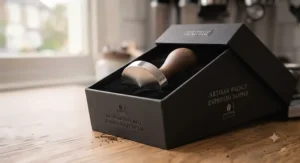
The word “professional” gets stamped on a lot of coffee gear, and it’s worth asking what it actually means beyond marketing flourish. In practice, a genuinely professional coffee tamper tends to share three traits: a precisely machined base that matches basket diameter to within a fraction of a millimetre, enough consistent weight that repeated use throughout a busy shift doesn’t wreck your wrist, and construction robust enough to survive daily drops, knocks and washing without the base loosening from the handle.
The Rhino Coffee Gear Tamper 58.4mm ticks these boxes convincingly for genuine café-style use, and the calibrated approach of the Normcore 58.5mm Coffee Tamper V4 answers the consistency question a different way entirely, by removing hand-pressure variability from the equation altogether. Barista Equipment: where the tamper genuinely fits in a wider setup matters here too — a great tamper paired with an inconsistent grinder or sloppy dosing habits will still produce patchy shots, so “professional” really describes a tamper that holds up its end of a whole workflow, not a tool that magically fixes everything downstream on its own.
Heavy Duty Espresso Tamper 58mm: When More Weight Actually Helps
There’s a persistent myth that heavier automatically means better, and it’s only half true. A heavy duty espresso tamper 58mm base, like the roughly 500g Rhino Coffee Gear Tamper 58.4mm, genuinely earns its weight in one specific scenario: repeated, back-to-back tamping where fewer presses per puck adds up to real time and wrist-strain savings across a session — think a busy household making four or five coffees in a row, or a genuine home café setup.
Where extra weight stops paying off is single, occasional shots. If you’re pulling one espresso a day, the lighter Coffea Online Wooden Handled Coffee Tamper does the job just as effectively, because you’re never accumulating the fatigue that heavier tampers are designed to offset. The real lesson from comparing the Motta 8100/B at 348g against the Rhino at roughly 500g is that “heavy duty” isn’t a universal upgrade — it’s a solution to a specific, repetitive-use problem, and if that problem doesn’t apply to your routine, the extra grams are just extra grams.
Stainless Tamper vs Plastic Tamper: The Upgrade Everyone Eventually Makes
Nearly every espresso machine, from budget bean-to-cup models to proper semi-automatics, ships with a plastic tamper as standard, and nearly every serious home barista eventually replaces it. The reason is structural, not snobbish: plastic bases flex slightly under pressure, especially cheaper moulded ones, meaning the force you apply doesn’t transfer evenly across the whole puck. A stainless steel base, by contrast, simply doesn’t bend, so pressure lands the same way across the entire surface every single time.
There’s also a durability gap that’s easy to underestimate. Plastic scratches, warps slightly with heat exposure near a hot group head, and can crack after enough drops onto a tiled floor — genuine complaints echoed in reviews of cheaper convex tampers on this list, where buyers noted scratching and lightweight construction as recurring frustrations. Stainless steel shrugs off all three problems, which is precisely why options like the Motta 8100/B Stainless Steel Tamper remain in daily use for years rather than being replaced every few months.
Tamper Weight, Demystified
Tamper weight ranges from featherlight budget options under 300g to genuinely hefty professional models pushing 500g or more, and the number alone doesn’t tell you which is “correct” — only which matches your habits. Lighter tampers, like the entry-level options in this guide, ask more of your own arm strength and consistency, since there’s less mass doing the work for you on each press.
Heavier options, like the Rhino Coffee Gear Tamper 58.4mm at roughly 500g, shift more of that burden onto the tool itself, meaning less repeated force from your wrist to achieve the same compression. The Normcore 58.5mm Coffee Tamper V4 sidesteps the weight question altogether by using a calibrated spring, which is worth considering if you’d rather solve consistency through engineering than through muscle memory. According to University of Warsaw research published via Physics of Fluids, the physical behaviour of water moving through a compressed coffee bed is genuinely complex, which helps explain why consistent, even compression — however you achieve it — tends to matter more than chasing a specific weight number.
Flat vs Convex Base: Which Actually Makes Better Espresso?
Flat bases are the default for good reason: they create a uniform, level puck that suits the vast majority of portafilter baskets without any guesswork, which is exactly what the Motta 8100/B Stainless Steel Tamper and Rhino Coffee Gear Tamper 58.4mm both deliver. Convex bases, like the Motta 8150 Convex Base Tamper, take a different theoretical approach: the gentle dome is designed to push compacted grounds slightly outward against the basket wall, aiming to close any tiny rim gap where water might otherwise sneak past the puck unchallenged.
In practice, the difference is basket-dependent rather than universal, and honest reviewer sentiment on the convex Motta model reflects exactly that ambiguity — some buyers noticed little practical difference from a flat base, while others valued the seal it created against their specific basket’s edge profile. If you’re already getting clean, even extractions with a flat tamper, there’s genuinely little reason to switch; if you suspect rim channelling specifically, a convex base is a cheap, low-risk experiment worth trying before assuming your grinder or dose is at fault.
Barista Equipment: Where the Tamper Fits in Your Setup
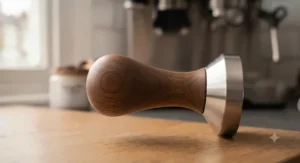
A tamper is one part of a small chain of tools that determines whether espresso turns out balanced or bitter, and it’s worth being honest about its place in that chain rather than treating it as a silver bullet. Grind consistency from your grinder, even dosing into the basket, and level distribution before you ever press down all happen upstream of tamping — a brilliant stainless steel tamper can’t fix a lopsided mound of grounds it never had the chance to level in the first place.
That said, within its specific job, the tamper genuinely matters, and skimping on it is a false economy once you’ve invested properly in the rest of your barista equipment. The British Coffee Association, the UK’s industry body for coffee professionals, exists precisely because consistency and quality standards across the whole brewing chain matter to the wider trade — and a rigid, correctly sized tamper is one small but genuinely non-negotiable link in that chain, sitting alongside your grinder, scale and machine rather than replacing the need for any of them.
Practical Usage Guide: Getting a Consistent Tamp Every Time
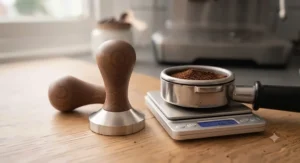
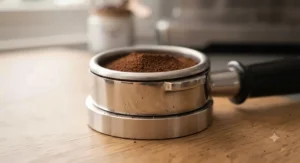
Getting real, repeatable results from any tamper comes down to a handful of habits worth building early. First, distribute your grounds evenly in the basket before you ever touch the tamper — tapping the portafilter or using a levelling tool prevents the lopsided mounds that no amount of careful pressing can fully correct afterward.
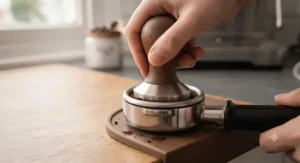
Second, tamp level, not angled. Press straight down with the tamper parallel to the basket rim; a tilted press compacts one side more than the other, which is a direct route to channelling regardless of how expensive your tamper is. Third, apply consistent, moderate pressure rather than chasing a specific number in pounds — modern research increasingly suggests that evenness matters more than raw force, so a firm, repeatable press beats a harder but inconsistent one. Fourth, give the tamper a light clockwise polish after pressing (a small twist, not a grinding motion) to smooth the puck surface slightly, though treat this as optional finesse rather than a required step. Finally, keep your tamper genuinely clean and dry between uses; residual coffee oils left on a stainless base don’t damage it the way they would plastic, but a quick wipe-down still prevents grounds from caking into the base’s edge over repeated sessions.
Real-World Scenarios: Which Tamper Suits Your Coffee Life
Picture three different coffee drinkers this year. First, someone who just replaced a bean-to-cup machine with their first proper semi-automatic and pulls one shot most mornings before work — for them, the Coffea Online Wooden Handled Coffee Tamper or the budget calibrated option (once they’ve confirmed it actually fits their basket) offers a genuine upgrade from plastic without overspending on features they won’t use daily.
Second, a household of four sharing one machine most mornings, running through several shots back to back — here, the extra heft of the Rhino Coffee Gear Tamper 58.4mm starts paying for itself in fewer presses per cup and less accumulated wrist fatigue across a busy week. Third, a genuine home-barista enthusiast who’s already dialled in their grinder and dose and wants to remove the last variable from their process — the Normcore 58.5mm Coffee Tamper V4‘s calibrated spring is built precisely for that mindset, trading a higher price for one less thing to think about on a groggy Tuesday morning.
Common Mistakes When Buying an Espresso Tamper
The single most common mistake is buying by advertised diameter alone without checking your actual basket measurement — as the honest sizing complaints on the budget calibrated tamper above demonstrate, a millimetre or two of mismatch causes real channelling problems that no amount of tamping skill can fully overcome. The second mistake is assuming heavier always means better, when in reality weight should match your usage frequency, not just your budget ceiling.
A third frequent error is ignoring base shape entirely and defaulting to flat without considering whether your specific basket has known rim-channelling issues that a convex base might address. Fourth, many buyers skip checking handle material against their own comfort preferences, only to discover a hard aluminium handle feels harsh on bare hands during a chilly morning routine, or that a wooden handle they assumed would last forever eventually loosens from the base with repeated use. Finally, some buyers overspend on calibrated or spring-loaded tampers before their grinder and dosing consistency actually justify the upgrade — fixing the biggest variable in your process first tends to deliver a bigger improvement than any tamper alone ever will.
Long-Term Cost & Maintenance
Thinking in terms of total value rather than sticker price changes how these seven tampers stack up. A £12 stainless steel option that lasts a decade because there’s genuinely nothing left to wear out — no springs, no seals, no moving parts — can work out cheaper over time than repeatedly replacing flimsier plastic tampers that crack or warp every year or two.
That said, premium calibrated options like the Normcore 58.5mm Coffee Tamper V4 do carry ongoing consideration: springs are a moving mechanical part, and while reviewers report solid reliability, it’s inherently a more complex tool than a solid metal base with a handle screwed on. Maintenance across the board is refreshingly simple regardless of price point: hand wash rather than dishwasher, dry thoroughly to avoid any moisture sitting where the base threads into the handle, and check periodically that a wooden or aluminium handle hasn’t worked loose from repeated twisting during use. None of these seven tampers demand anything approaching real upkeep beyond that basic care.
Benefits vs Traditional Alternatives
| Method | Consistency | Puck Quality | Best For |
|---|---|---|---|
| Stainless steel tamper | High, repeatable | Even, dense puck | Any regular home or café use |
| Plastic stock tamper | Low, flexes under pressure | Uneven, prone to channelling | Absolute beginners, occasional use |
| Back of a spoon | Very low | Poor, inconsistent pressure | Genuine emergencies only |
| Bare fist/knuckles | Unpredictable | Rarely even | Not recommended |
The comparison makes a fairly blunt case: even the most affordable genuine stainless tamper on this list, the Coffea Online Wooden Handled Coffee Tamper, delivers noticeably more consistent, repeatable pressure than a flexing plastic stock tamper, let alone improvising with a spoon back or bare knuckles. The real trade-off with traditional stock tampers isn’t whether they can compress coffee at all — most can, after a fashion — it’s whether they do it the same way twice in a row, which is precisely the consistency a rigid metal base is built to guarantee.
✨ Don’t Miss These Exclusive Deals!
🔍 Take your stainless steel espresso tamper search further with these carefully selected products. Click on any highlighted item to check current pricing and availability. These tools will help you pull genuinely consistent, café-quality shots at home!
Getting the Technique Right (and Avoiding Wrist Strain)
Good tamping technique matters as much as the tool itself, and that’s true whether you’re tamping once a day or fifty times during a busy shift. Keep your wrist neutral rather than bent at an awkward angle when pressing down, and let your body weight do more of the work than your forearm alone — leaning slightly over the portafilter rather than muscling down purely with wrist strength reduces strain considerably over repeated use.
This matters more than people expect for anyone tamping frequently, whether at home or professionally. The HSE’s guidance on upper limb disorders notes that prolonged repetitive work using the same hand or arm action is a recognised risk factor for aches, stiffness and reduced movement in the wrists and hands over time — genuinely relevant advice for anyone running a busy home bar or working behind a café counter all day. Swapping to a heavier tamper like the Rhino Coffee Gear Tamper 58.4mm can actually help here, since it needs fewer, more deliberate presses rather than several rushed ones, while a calibrated option like the Normcore 58.5mm Coffee Tamper V4 removes repeated pressure-judgement entirely from the equation.
FAQ
❓ Is a heavier tamper always better than a lighter one?
❓ Should I choose a flat or convex base?
❓ Do I really need a stainless steel tamper over plastic?
❓ Are calibrated spring-loaded tampers worth the extra cost?
❓ Will a better tamper fix bad-tasting espresso on its own?
Conclusion
Choosing the right stainless steel espresso tamper really comes down to matching the tool to how often you’re actually making coffee. Occasional home baristas will get everything they need from the affordable, no-fuss Coffea Online Wooden Handled Coffee Tamper or a carefully measured budget calibrated option, while anyone pulling multiple shots daily for a household should feel the difference the moment they pick up the Rhino Coffee Gear Tamper 58.4mm.
If you’re chasing rim-channelling gremlins specifically, the Motta 8150 Convex Base Tamper is a cheap experiment worth running before blaming your grinder, and the classic Motta 8100/B Stainless Steel Tamper remains a genuinely trustworthy, no-drama middle ground that’s earned its reputation the honest way. For anyone who’s already dialled everything else in and wants one less variable to think about, the Normcore 58.5mm Coffee Tamper V4 and the multitasking Rhino Coffee Gear Needle Tamper 58mm both offer real, tangible upgrades worth their higher price. Whichever you land on, you’ll never again wonder why one side of your espresso tastes different from the other — and that alone is worth the small investment.
✨ Found this helpful?
🔍Check current prices on today’s picks and start pulling more consistent shots tomorrow morning! 💬🤗
Recommended for You
- Best Calibrated Tamper: 7 Top Picks for UK Baristas 2026
- Best Espresso Tamper 2026: 7 Picks Every Home Barista Rates
- Bottomless vs Pressurised Portafilter: 7 Honest Picks for 2026
Disclaimer: This article contains affiliate links. As an Amazon Associate, I earn from qualifying purchases. If you purchase products through these links, we may earn a small commission at no additional cost to you.
✨ Found this helpful? Share it with your friends! 💬🤗
