
In This Article
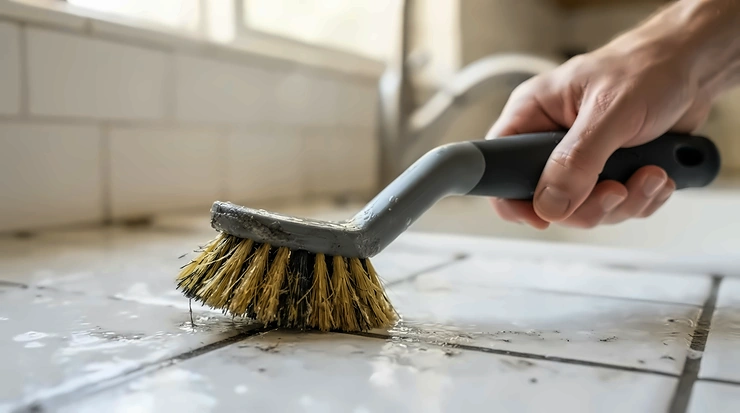
A group head brush for espresso machine use is a short, stiff-bristled hand tool, usually angled and shielded against splashes, that scrubs spent coffee, oils and fine grit from the group head, shower screen and gasket area where the portafilter locks in. Used daily, it stops coffee grounds residue turning into bitter, rancid build-up.

Here’s the awkward truth about home espresso: this morning’s shot inherits yesterday’s mess. Every extraction flings fine particles and oils upwards. They settle around the group head and portafilter seat, bake onto the shower screen and quietly sour. You won’t see it happening. You’ll just taste it, as a dull, ashy edge that no fresh bag of beans can fix.
The fix is gloriously unglamorous. A good group head brush for espresso machine owners costs roughly what two takeaway flat whites do, and it takes about thirty seconds to use. The trick is picking the right one. Bristle stiffness, handle length, splash protection and portafilter size all change how well a brush actually works.
To keep this honest, the analysis below rests on published specifications and aggregated review sentiment from retailer and third-party listings. It does not rest on personal bench-testing. Where review data is thin, I say so. Prices are indicative ranges only, so check the live listing before buying.
Quick Comparison: Which Brush Fits Your Routine?
If you’re in a hurry, this table matches five of the seven picks to what you actually need. The full breakdown follows.
| Pick | Standout Feature | Review Signal (Aggregated) | Best For |
|---|---|---|---|
| Pallo Coffeetool | Brush, scoop and steam wand poker in one handle | Roughly 4.7-4.8 stars on US retailer listings | All-round daily use |
| Number-One Coffee Machine Brush Cleaner | Pack of two with water-deflecting fins | About 4.5 stars on the Amazon US listing | Tight budgets |
| Zhehao Espresso Machine Cleaning Kit | Includes a 58mm blind filter | About 4.6 stars on the Amazon US listing | New 58mm machine owners |
| CAFEMASY 5-Piece Espresso Brush Set | Dedicated 6mm steam wand brush | About 4.6 stars on the Amazon US listing | Milk-drink households |
| Normcore Barista Brush | Walnut handle, medium-firm PET bristles | About 4.6 stars on the Amazon US listing | Dry brushing and looks |
Ratings come from retailer and third-party summaries I could verify. Star ratings on amazon.co.uk move around, so treat these as directional.
The table shows a clear split. The Pallo Coffeetool earns its place by doing three jobs, while Number-One wins on pure cost. If your machine has a 58mm group, the Zhehao kit saves you a separate blind filter purchase. Households that steam milk daily should weigh the CAFEMASY set, since a steam wand brush is a rarity. The Normcore is the dry-brushing specialist and the best-looking item on this list.
💬 Just one click — help others make better buying decisions too!😊
Top 7 Group Head Brush for Espresso Machine Picks: Expert Analysis
1. Pallo Coffeetool — brush, scoop and steam wand poker in one
The Pallo Coffeetool refuses to be only a brush. One end of the handle is a detergent scoop, and unscrewing the bristle head reveals a poker for clearing blocked steam wand holes.
The angled handle stands about 9 inches (23 cm) tall, with water-deflector fins between bristles and hand. In practice, you can scrub the shower screen with water running without scalding your knuckles. The bristle head is a threaded, replaceable cartridge, so worn bristles cost a small refill rather than a whole new tool.
On paper, this is the most complete single handle here for brushing, dosing backflush powder and clearing a clogged steam tip. One older side-by-side blog comparison put it at around 26 g, so it feels light in the hand. The trade-off is a fairly broad head, which can feel snug in narrow channels.
Retailer listings show averages of roughly 4.7-4.8 stars, with buyers praising the sturdy bristles. A minority report the head working loose or being a tight squeeze. Pallo’s own advice is to brush clockwise so the threaded insert doesn’t unscrew. It comes in black and cherry.
Pros:
- ✅ Replaceable bristle cartridges reduce long-term waste
- ✅ Scoop and steam wand poker add real versatility
- ✅ Splash fins keep hands away from hot water
Cons:
- ❌ Head can loosen if brushed anticlockwise
- ❌ Broad head may struggle in narrow grooves
Indicative range: around £8-£14, so check current price. For the feature count, it’s strong value.
2. Urnex Scoopz — the stiff-bristled workhorse from the Cafiza makers
The Urnex Scoopz is the no-nonsense option. It’s a bright red brush on one end and a measuring scoop on the other, from the company behind the widely used Cafiza detergent.
It measures 23 cm (9 in) and weighs about 20 g. A large splash guard sits above the bristles, and the scoop is sized so two scoops equal 3 g of powder. That removes the guesswork from backflushing, though you should always follow the label on your own detergent. The bristles are deliberately stiff. They shift stubborn coffee grounds residue, but they’re a touch aggressive for delicate surfaces.
My reading is that this suits people who want one dependable tool and already use Urnex chemistry. UK café suppliers such as Nisbets and Urnex’s own UK site stock it, which hints at its commercial pedigree. Reviewers tend to describe the bristles as holding their shape over time. The same stiffness makes it a poor choice for grinder burrs.
Third-party summaries of the Amazon US listing put it around 4.6 stars. One US retailer listing shows a perfect 5.0, though the review count is too small to lean on.
Pros:
- ✅ Scoop sized for accurate backflush dosing
- ✅ Stiff bristles hold shape under repeated use
- ✅ Long handle and large splash guard
Cons:
- ❌ Too stiff for grinder burr cleaning
- ❌ Single-purpose compared with multi-tool rivals
Indicative range: around £8-£13, so check current price. Verdict: excellent value if you’re already in the Urnex ecosystem.
3. Rhino Coffee Gear Group Head Brush — a sculpted arch for splash safety
The Rhino Coffee Gear Group Head Brush solves the hot-water problem with geometry. Its sculpted arch steers water away from your hand rather than down the handle.
It’s the shortest brush on this list at about 17 cm. That makes it easier to control around a compact group head, but it also puts your hand closer to the action. The arch matters more here than it would on a longer handle. A built-in scoop at the base handles backflush powder dosing, and the bristles are replaceable, with spares sold as a three-pack.
The design suits home users with small machines who want a neat, compact tool. It also sits comfortably in the “buy a spare” category. Rhino positions its gear as tough enough for busy environments, though that’s the maker’s claim rather than independently verified. UK specialists such as Coffee Hit and Coffeedesk stock it, and the brand also appears across European retailers.
Honestly, I couldn’t find a sizeable pool of independent ratings during research. Treat it as promising on design but unproven on longevity.
Pros:
- ✅ Arch design deflects hot water from the hand
- ✅ Replaceable bristles sold as a three-pack
- ✅ Compact enough for tight group heads
Cons:
- ❌ Short handle keeps your hand nearer the heat
- ❌ Limited independent review data available
Indicative range: around £6-£10, so check current price. It’s a low-risk, low-cost experiment.
4. Number-One Coffee Machine Brush Cleaner — two brushes for the price of one
The Number-One Coffee Machine Brush Cleaner is about arithmetic. You get a pack of two, which is rare in this category.
At 8.6 inches (about 22 cm), it has enough length to keep your hand clear of a hot group head. The nylon bristles are heat-resistant, water-deflecting fins protect your fingers, and a scoop on the end measures powder. Keeping one at the machine and one in a drawer means a lost or worn brush never interrupts your routine.
The analysis here is simple. If you want a competent, no-frills brush and already own detergent, this is the value play. One roundup cautions that bristles can soften if held under water hotter than roughly 93°C (200°F) for long periods. That’s close to brew-water temperature, so brush briskly rather than parking the bristles in the stream.
Aggregated sentiment from the Amazon US listing sits around 4.5 stars across several hundred reviews. Buyers favour the comfortable length and the value of the twin pack.
Pros:
- ✅ Pack of two doubles your value
- ✅ Comfortable length keeps hands safe
- ✅ Scoop and splash fins included
Cons:
- ❌ Bristles may soften under prolonged very hot water
- ❌ Scoop is larger than some users need
Indicative range: around £6-£10, so check current price. It’s the strongest value verdict on the list.
5. Zhehao Espresso Machine Cleaning Kit — blind filter included for backflushing
The Zhehao Espresso Machine Cleaning Kit is a starter bundle with a genuinely useful extra: a 58mm stainless steel blind filter.
The kit includes four pieces, a dual-headed brush with spoon and stiff nylon bristles on an angled head. Water-deflecting fins keep hands dry. The blind filter is the real headline. You can’t backflush with detergent without one, and buying it separately adds cost and a second shopping trip.
For newcomers with a 58mm group, this removes a purchase decision. The stiff bristles are good at lifting grit but deserve a light touch around soft rubber gaskets. Check your size first. Many Sage (Breville) home machines use 54mm groups, so the blind filter would not fit, though the brushes still would.
Aggregated sentiment from the Amazon US listing is strong, at about 4.6 stars across 800-plus reviews. The recurring negative is the occasional report of incomplete packages, so check contents when it arrives.
Pros:
- ✅ 58mm stainless blind filter included
- ✅ Angled head reaches shower screen corners
- ✅ Four-piece kit covers the basics
Cons:
- ❌ Stiff bristles need care on gaskets
- ❌ Occasional reports of missing parts
Indicative range: around £10-£18, so check current price. Good value if your machine is 58mm.
6. CAFEMASY 5-Piece Espresso Brush Set — the only steam wand brush here
The CAFEMASY 5-Piece Espresso Brush Set earns its place by covering ground other picks ignore: the steam wand.
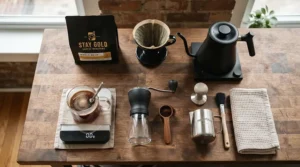
The set spans five brushes for the group head, a long-reach group head option, the grinder, portafilter spouts and a slim 6mm steam wand tip. Milk residue is a different animal from coffee oil. It hardens, blocks tiny steam holes and weakens steam pressure, so a dedicated slim brush is the sensible tool for it. Long handles keep fingers away from hot surfaces.
My take is that this is a “set up my whole coffee corner” purchase. It replaces a small drawer of improvised tools. The catch is that casual users may never touch some of the five. If you only pull the occasional black americano, a single brush would do.
Aggregated sentiment from the Amazon US listing sits around 4.6 stars across several hundred reviews. Buyers praise the comprehensive coverage and long-handle safety. Storage is the main practical irritation.
Pros:
- ✅ Dedicated 6mm steam wand brush
- ✅ Covers group head, grinder and spouts
- ✅ Long handles keep fingers safe
Cons:
- ❌ More brushes than casual users need
- ❌ Needs planned storage space
Indicative range: around £8-£15, so check current price. For milk-drink households, it’s excellent value.
7. Normcore Barista Brush — a walnut-handled dry-brushing specialist
The Normcore Barista Brush is the one you’d happily leave on the counter. It pairs a walnut handle with recyclable PET bristles of medium firmness.
It’s about 6.69 inches (17 cm) long, so it favours control over reach. The medium bristles shift dry grounds without being harsh on polished steel. That makes it ideal for group heads, portafilter baskets, grinder surfaces and general counter dusting. A one-year manufacturer warranty is reported by a review roundup, which suits the premium positioning.
The honest limitation is that it’s built for dry work. Wet, sticky grounds are better handled by a stiffer nylon brush, and the rounded handle won’t stand upright on its own. I’d treat it as a finishing tool alongside a splash-guarded brush, not as your only one. For prosumer machine owners, the visual coherence is a real, if subjective, perk.
Aggregated sentiment from the Amazon US listing is about 4.6 stars, with praise for the balance of stiffness and gentleness and for the build.
Pros:
- ✅ Medium bristles protect polished surfaces
- ✅ Attractive walnut handle with ergonomic curves
- ✅ Recyclable PET bristles and one-year warranty
Cons:
- ❌ Struggles with wet, sticky grounds
- ❌ Handle cannot stand upright alone
Indicative range: around £12-£20, so check current price. A premium choice for the aesthetically minded.
Side-by-Side Specs and Price Ranges
| Product | Format | Key Extra | Price Range (Indicative) | Review Signal | Best For |
|---|---|---|---|---|---|
| Pallo Coffeetool | ~23 cm angled brush | Scoop, steam poker, replaceable head | £8-£14 | ~4.7-4.8 (US retailers) | All-rounders |
| Urnex Scoopz | 23 cm brush | 3 g scoop dosing | £8-£13 | ~4.6 (Amazon US) | Urnex users |
| Rhino | ~17 cm arched brush | Replaceable bristles | £6-£10 | Little data | Compact machines |
| Number-One | ~22 cm, pack of 2 | Twin pack, scoop | £6-£10 | ~4.5 (Amazon US) | Budget buyers |
| Zhehao | 4-piece kit | 58mm blind filter | £10-£18 | ~4.6 (Amazon US) | 58mm beginners |
| CAFEMASY | 5-piece set | Steam wand brush | £8-£15 | ~4.6 (Amazon US) | Milk drinkers |
| Normcore | ~17 cm wooden brush | Walnut handle, PET bristles | £12-£20 | ~4.6 (Amazon US) | Dry brushing |
Looking at the table, the Number-One and Rhino sit lowest on cost, but only the Number-One brings a decent review pool. If you’re paying for versatility, the Pallo adds the most functions per pound. The Zhehao is only a bargain if you have a 58mm group, because the blind filter is its main selling point. The Normcore costs more for materials and looks, not for extra cleaning power.
✨ Don’t Miss These Handy Picks!
🔍 Take your daily maintenance routine to the next level with these carefully selected brushes.Click on any highlighted product to check current pricing and availability on Amazon. A cleaner group head means better-tasting espresso for you and everyone who drinks it!
How to Choose a Group Head Brush for Espresso Machine Owners
Choosing well is mostly about matching the brush to your machine and your habits. Work through these steps in order.
- Check your group head size and shape. Breville’s portafilter guide notes that home machines often use 54mm or 49mm portafilters, while 58mm is the café standard. The brush barely cares, but a blind filter does.
- Decide on handle length. Roundup advice suggests 8 inches or more keeps your hand clear during backflushing. Shorter handles around 6-7 inches suit detailed work.
- Insist on splash protection. Fins, a guard or an arch should sit between bristles and fingers. It’s the difference between a pleasant routine and a flinch.
- Pick bristle firmness for your gaskets. Stiff nylon clears baked-on grit fast. Medium-firm bristles are kinder to soft seals.
- Look for the extras you’ll use. A scoop helps if you backflush. A steam wand brush matters if you steam milk.
- Consider replaceability. Threaded heads like the Pallo‘s and Rhino‘s reduce waste, while twin packs like Number-One‘s give you a spare.
Espresso Group Head Cleaning Brush: Bristles, Handles and Fit
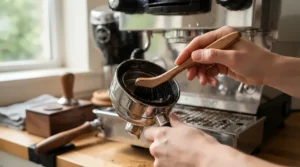
An espresso group head cleaning brush sounds simple, yet three design choices decide whether it’s a joy or a nuisance.
Bristle material. Nylon is the common choice, resisting heat and scrubbing well. Natural bristles such as boar hair are gentler and shine on dry dusting. Silicone is a newer option that resists heat but, according to one review roundup, can be less effective on oily residue. For wet group head work, nylon is the sensible default, as found on the Urnex Scoopz, Pallo and Zhehao.
Head width. This is the sleeper spec. A brush that’s slightly too wide won’t slide into the groove around the shower screen, and a head that’s too thin can miss the edges. Owners of E61-style groups have reported different outcomes with the Pallo‘s head, which shows how much fit depends on your specific machine.
Handle ergonomics. The curve and thumb support change fatigue more than people expect. A slight flex in the handle can even absorb pressure during longer sessions.
What the spec sheet won’t tell you is how the brush feels at full tilt, with water running and a hot group head inches away. That’s why splash protection is worth prioritising over any other feature.
Coffee Machine Cleaning Brush Set vs a Single Brush
Is a coffee machine cleaning brush set worth it? It depends on how many surfaces you’re actually cleaning.
A set makes sense when you’re building a new espresso corner. The CAFEMASY set gives you five tools at once, spanning group head, spouts, grinder and steam wand. The Zhehao kit bundles a blind filter and a dual-headed brush. Either saves you hunting for one tool after another, and buying in one go is usually cheaper per item.
A single brush wins when you already own backflush detergent and just need a reliable scrubber. The Urnex Scoopz and Number-One are classic examples. You pay for what you use and nothing else.
One practical rule applies to sets. Dedicate each brush to one job. Milk residue and coffee oils are different contaminants, so a brush that has been in a steam wand tip shouldn’t later scrub your group seal. Colour-coding cloths is standard café practice, and the same logic works for brushes at home.
Stained bristles on wooden or nylon brushes are cosmetic. Splaying, shedding or loss of stiffness is the real signal to replace.
Group Head Brush vs Toothbrush, Cloth and Backflush Alone
Plenty of people start with an old toothbrush. It works, but it isn’t the best tool.
| Method | Reaches Screen and Gasket Edges | Hot-Water Hand Safety | Gasket-Friendly | Best For |
|---|---|---|---|---|
| Dedicated group head brush | Excellent, angled head | High (fins, guard or arch) | Good, depends on stiffness | Daily use |
| Old toothbrush | Fair, short handle | Low | Good, soft bristles | Emergency use |
| Damp cloth alone | Poor around grooves | High | Excellent | Wiping the exterior |
| Backflush detergent alone | Limited, no scrubbing | High | Excellent | Deep periodic cleaning |
Looking at this comparison, the dedicated brush is the only option that combines reach with hand safety. A toothbrush has a short handle, which means your fingers sit near hot water and a hot group. A cloth can’t get into grooves. Detergent dissolves oils but doesn’t physically lift clumped grounds, which is why backflush instructions often pair detergent with a brush. In other words, these methods are partners rather than rivals.
Barista Cleaning Brush for Home Setups and Busy Cafés
A barista cleaning brush has to suit its owner’s pace, and a home user and a café worker need different things.
Beginners. Start with a forgiving, inexpensive tool. The Number-One twin pack lets you practise with a spare, and the Zhehao kit hands you a blind filter if you own a 58mm machine.
Home enthusiasts. The Pallo suits those who like one multi-function handle. Adding a Normcore for dry dusting gives you both a wet and dry option on the counter.
Milk-drink households. The CAFEMASY set is the logical choice, because steam wand care is where most neglect happens.
Café and bar users. Speed, hygiene and consistency matter most. The Urnex Scoopz is the pragmatic bar-side option, with a long handle and splash guard. The Rhino is marketed toward busy environments, though that’s a manufacturer positioning rather than an independent verdict. Colour-coding brushes by task is a sensible adaptation of standard café cloth practice.
In every case, the best barista cleaning brush is the one that gets used daily. A cheap brush used every morning beats an expensive one gathering dust in a drawer.
Daily Maintenance: The Two-Minute Routine That Protects Your Shots
Daily maintenance is where a brush earns its keep. Skip it, and residue builds quietly until your shots taste off. Which? advises regularly cleaning the portafilter and brew head of a traditional espresso machine, and the routine below puts that into practice.
After each session:
- Knock out the spent puck and rinse the basket and portafilter.
- Flush the group for two to three seconds to clear loose particles from the shower screen and gasket area.
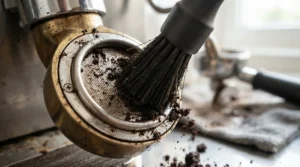
- With water running, scrub the shower screen and the channel around it using your brush. Move clockwise if you use a Pallo, so the threaded head stays tight.
- Wipe the screen area with a clean cloth.
- If you steam milk, wipe the wand straight away and purge briefly.
Weekly: soak baskets and metal portafilter spouts in hot water with espresso detergent, then scrub the shower screen more thoroughly.
Monthly or as needed: a detergent backflush, but only if your manual says your machine supports it. Not every model is designed for it.
Here’s the key point. A brush handles coffee oils and grit, but it can’t dissolve limescale. Descaling is a separate job, and Which? calls it the most important cleaning task for avoiding problems.
Portafilter Cleaning: Baskets, Spouts and Blind Filters
Good portafilter cleaning is half the battle, because the portafilter is the part that physically touches your coffee. Most people clean the basket and forget the spout, which is where oils gather.
Here’s a sensible weekly sequence:
- Knock out the puck and rinse under hot water.
- Remove the basket if it lifts out, and soak the basket and portafilter body in hot water with espresso detergent for about 15-30 minutes, following the product’s instructions.
- Use a brush to scrub the underside of the spouts and the lip where the basket sits. A Normcore is good for dry removal. A stiffer Urnex Scoopz or Zhehao brush deals with stubborn deposits.
- If basket holes clog, use a pin to unblock them. Which? notes this happens more with very fine grinds.
- Rinse thoroughly until the water runs clear.
For detergent backflushing, you’ll need a blind basket, which is the Zhehao kit’s main perk. The Urnex Scoopz scoop is sized for powder dosing, though dosing varies by product, so follow the detergent’s label. Always rinse with clean water afterwards. Run the cycle again until no soapy residue or taste remains.
Coffee Grounds Residue: Problem and Solution Guide
Coffee grounds residue is predictable, which means it’s fixable. Here are four common problems and how to tackle each.
Problem 1: A gritty ring around the gasket. Grit here can prevent a clean seal and fall into the next shot. Solution: brush clockwise with water running, then wipe. A Pallo or Urnex Scoopz reaches the channel well.
Problem 2: Uneven spray or pale streaks in the shot. A clogged shower screen disperses water unevenly. Solution: scrub the screen daily and, if your manual allows, remove it for a deeper clean.
Problem 3: A bitter, ashy aftertaste. This usually signals rancid oils. Solution: combine a brush session with a detergent backflush, then run clean water through.
Problem 4: Grounds trapped in a narrow groove. A broad head can’t reach. Solution: use a slimmer brush. The CAFEMASY set includes a long-reach group head brush, and a narrower head like the Rhino‘s may suit tight spots.
The principle is consistency. Coffee grounds residue is easiest to shift when it’s fresh and damp, and hardest once it’s baked on and rancid.
Long-Term Cost, Hard Water and Brush Lifespan
A brush is a cheap tool, but it’s still worth thinking about total cost. One review roundup suggests quality brushes last about 6-12 months with regular use before the bristles splay or shed.
| Approach | Upfront Outlay (Indicative) | Typical Lifespan | Approx. Monthly Cost |
|---|---|---|---|
| Single brush such as Urnex Scoopz | £8-£13 | 6-12 months | ~£0.65-£2.20 |
| Replaceable-head design such as Pallo or Rhino | £6-£14 plus spare heads | Handle lasts; heads are replaced | Lowest over years; head prices vary |
| Multi-brush set such as CAFEMASY | £8-£15 | 6-12 months, varies by brush | ~£0.65-£2.50 |
| Kit with blind filter such as Zhehao | £10-£18 | Brushes 6-12 months; filter lasts longer | ~£0.85-£3 |
Looking at the numbers, even the dearest option costs pennies per week. Replaceable heads win on waste over several years, provided you actually buy the spares. The Zhehao kit looks pricier, but you’re paying for a blind filter that outlives the brushes.
Hard water adds a wrinkle. Guides suggest roughly 60% of UK homes are in hard water areas, and the Drinking Water Inspectorate explains that hardness comes from dissolved calcium and magnesium and varies with local geology. Postcode guides place London in the very hard band. Scotland is typically the softest. Limescale needs a descaler, not a brush, so budget for both.
Common Mistakes When Buying a Brush
Most disappointments come from a handful of avoidable errors.
Buying on price alone. A £4 brush with no splash protection can cost you a burnt knuckle and a ruined habit.
Ignoring handle length. Short handles are fine for detail work but put your hand near hot water during backflushing.
Assuming a brush replaces descaling. It doesn’t. Bristles lift grit and oils, but only a descaler tackles mineral scale.
Overlooking gasket sensitivity. Stiff bristles, like those on the Zhehao and Urnex Scoopz, work brilliantly on grit but deserve lighter pressure on soft seals.
Skipping a size check on blind filters. A 58mm blind filter won’t fit a 54mm group, so confirm before you buy a kit.
Storing brushes badly. Roundup advice is to stand brushes bristle-up in a dry place, because prolonged wetness can loosen the crimping and shorten brush life.
Avoid these six, and almost any pick on this list will serve you well.

FAQ
❓ How often should I use a group head brush for espresso machine cleaning?
❓ Can I use a toothbrush instead of an espresso group head cleaning brush?
❓ Is a coffee machine cleaning brush set worth buying for a Sage machine?
❓ Do I need detergent as well as a barista cleaning brush?
❓ How do I stop coffee grounds residue sticking around the gasket?
Conclusion
A group head brush for espresso machine owners is the cheapest upgrade in home coffee. It’s also the one most likely to improve flavour. The shot in your cup is only as clean as the surfaces it passes through, and a thirty-second scrub is far easier than rescuing a neglected machine later.
So which should you pick? The Pallo Coffeetool is the strongest all-rounder, thanks to its scoop, steam wand poker and replaceable head. The Number-One is the value pick, with two brushes in the pack. The Zhehao kit suits 58mm beginners who need a blind filter, and the CAFEMASY set is the sensible buy for milk lovers. The Urnex Scoopz is the dependable bar-side workhorse. The Normcore is the elegant dry-brushing finisher, and the Rhino is a low-cost, compact experiment worth watching.
Whatever you choose, build the habit around it. Daily maintenance beats occasional heroics every time. Check current prices on Amazon, pick the brush that matches your machine, and give your group head the care it deserves.
Recommended for You
- Espresso Machine Cleaning Tablets: 7 Essential UK Picks (2026)
- Descaling Solution vs Citric Acid For Coffee Machines: 7 Best Coffee Picks 2026
- Coffee Machine Descaler: 7 Best Picks For UK Homes (2026)
Disclaimer: This article contains affiliate links. As an Amazon Associate, I earn from qualifying purchases. If you purchase products through these links, we may earn a small commission at no additional cost to you.
✨ Found this helpful? Share it with your friends! 💬🤗
