
In This Article
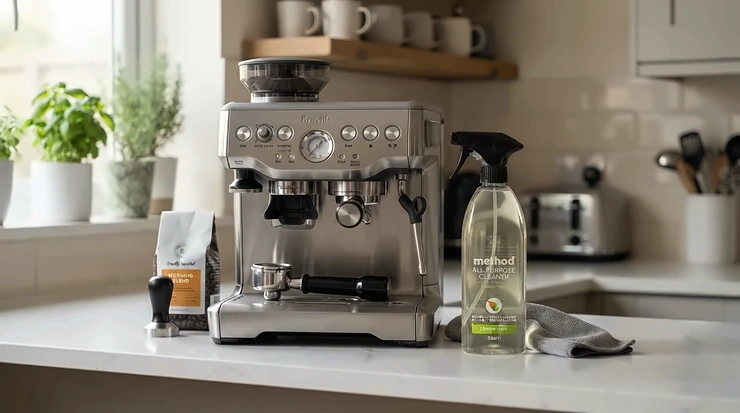
Here is an uncomfortable truth about your morning flat white: the froth is only as good as the last thing that touched the wand. Milk is sugary, fatty and protein-rich. That is why it tastes so lovely, and also why it clings, bakes and sours inside anything that heats it. Give a steam wand a lazy wipe and within days a thin film of milk residue starts building in the tip. A few weeks later the sour smell, the sputtering steam and the faintly “off” latte arrive right on schedule.
A proper milk frother cleaning solution fixes this. Washing-up liquid and a sponge can’t reach the places that matter: steam wand tips, one-touch milk circuits, silicone tubes and the whisk discs inside standalone frothers. These formulas are built to dissolve milk fat, protein and sugars in exactly those spots. Pick the right milk frother cleaning solution and you reduce bacterial build-up, protect your machine and get better foam without buying a single new gadget.
This guide compares seven real products sold on amazon.co.uk, covering liquids, tablets and plant-based formulas. You’ll see how each handles milk residue, who it suits and what the spec sheet leaves out. You’ll also get steam wand hygiene routines, a clear answer on when you need a milk frother descaler instead, and a schedule for any milk system cleaner for coffee machine owners. Nothing here comes from hands-on testing. It is built from published instructions, product listings and the review themes that could be verified, then turned into practical analysis.
Quick Comparison Table: 7 Best Milk Frother Cleaning Solution Options
| Product | Format and size | Chemistry / key trait | Indicative price band* | Best For |
|---|---|---|---|---|
| Durgol Milk System Cleaner | Liquid, 500ml (about 10 treatments) | Gentle formula, built-in dosing cap | £10-£15 range | Mixed households: capsule machine plus standalone frother |
| Urnex Rinza Acid | Liquid concentrate, 1.1L | Acid formula for residue and mineral scale | £15-£25 range | Hard-water kitchens and steam wands |
| De’Longhi Eco Multiclean | Liquid, 250ml | Biodegradable-led milk-circuit cleaner | Under £10 | De’Longhi bean-to-cup owners |
| Puly Milk Plus | Liquid, 1L with built-in doser | Daily and weekly wand and frother cleaner | £15-£25 range | Heavy milky-drink households |
| Urnex Rinza M90 tablets | 40 x 10g tablets | Pre-measured, no pouring | £10-£15 range | Anyone who hates measuring |
| Caffenu Milk Frother Cleaner | Alkaline liquid, 1L (200ml also sold) | Universal milk-circuit cleaner | £10-£15 range | Value refills and first-timers |
| Urnex Biocaf | Plant-based liquid, 1L | Phosphate-free, biodegradable | £15-£25 range | Eco-minded buyers and plant-milk drinkers |
*Indicative bands from retail listings at the time of research. Prices vary by seller and pack size, so check current price.
The table shows two clear trade-offs. The tablet and low-dose bottles keep each clean cheap, while Durgol Milk System Cleaner buys convenience and a simple fortnightly routine at a higher cost per treatment. If you live in a hard-water postcode, Urnex Rinza Acid is the one to shortlist first. If you own a De’Longhi, De’Longhi Eco Multiclean matches the brand’s own cleaning logic.
💬 Just one click — help others make better buying decisions too!😊
Top 7 Milk Frother Cleaning Solution Picks: Expert Analysis
1. Durgol Milk System Cleaner — best all-rounder with a built-in dosing cap
The measuring cap is the quiet hero here, because under-dosing and over-dosing are the two classic ways to waste a milk frother cleaning solution. The maker’s routine for integrated systems is 50ml (two cap measures) plus 450ml of water in the milk container, run through your machine’s cleaning cycle, then rinsed. For standalone frothers you add 50ml, top up with water, wait 15 minutes and rinse. A 500ml bottle covers about ten treatments, which is roughly four to five months at the fortnightly interval Durgol itself suggests.
Based on the spec comparison, this suits households with more than one milk path, such as a capsule machine and a handheld frother. Durgol describes it as suitable across bean-to-cup, Nespresso, capsule and pod machines. That makes it a flexible milk system cleaner for coffee machine owners who don’t want three bottles. One caution from a UK retailer listing: it isn’t suitable for homes with septic tanks.
Review sentiment is thin but telling. One UK Amazon reviewer described it clearing stubborn residue from a stainless jug used for oat milk, despite daily washing-up. Another retailer reviewer felt they had left it too long between cleans. The takeaway is to clean before residue becomes visible.
Pros:
- ✅ Measuring cap removes dosing guesswork
- ✅ Covers machines and standalone frothers
- ✅ Clear fortnightly routine from the maker
Cons:
- ❌ Not suitable for septic tank homes
- ❌ Only about ten treatments per bottle
Price: in the £10-£15 range, which is fair value if you want one simple product for everything. Check current price.

2. Urnex Rinza Acid — best for hard-water kitchens
Amazon UK lists this as the Urnex FC687 Rinza acidic liquid concentrate in a 1.1L bottle. The dose is 30ml per 500ml of warm water, soaked for 15-30 minutes for steam wands, jugs and removable parts. It can also be drawn through a frother’s suction tube. Urnex’s UK page positions the acid version for areas where water hardness scales milk systems.
That acid chemistry matters because mineral film gives milk residue something rough to grip. In practice, a descaling-capable milk frother cleaning solution can break the cycle in kettle-furring postcodes. It is a concentrate, though. Never use it neat, and rinse everything thoroughly afterwards.
Verified feedback comes mostly from café and commercial buyers on US retailer pages. They soak wands and pitchers, sometimes overnight, for baked-on milk. Retailer guidance on frequency varies widely. One coffee retailer suggests a deep soak about every six months for stubborn wand build-up, while Urnex pitches Rinza for regular café use. For a home setup, weekly to monthly is a sensible band, depending on how often you froth.
Pros:
- ✅ Acid chemistry also targets mineral scale
- ✅ Soaks wands, jugs and frother parts
- ✅ About 36 doses per bottle at 30ml
Cons:
- ❌ Concentrate needs careful dosing and rinsing
- ❌ Overkill for soft-water areas
Price: in the £15-£25 range, which works out sensibly per dose. Check current price.
3. De’Longhi Eco Multiclean — best for De’Longhi carafe systems
The standout is the tiny dose. De’Longhi’s guidance is 10ml of cleaner in 90ml of water, run through the milk programme, then repeated with clean water to rinse. Removable frother parts soak for 20-30 minutes. On that ratio, a 250ml bottle stretches to roughly 25 small doses, so the compact bottle is less stingy than it looks. De’Longhi describes the formula as more than 99% readily biodegradable ingredients. You can also dab a little on a cloth to wipe the exterior.
Here’s what to weigh: because the maker designs the cleaning programmes on its own bean-to-cup machines, this product’s instructions align naturally with them. It is marketed as suitable for all brands, so it isn’t a lock-in. De’Longhi also suggests a quick jug rescue, mixing 10ml with 90ml of water and pressing the milk delivery button if someone forgot to clean straight after use.
A robust summary of Amazon UK review sentiment couldn’t be verified, so no claim is made here. Treat this as a spec-led pick.
Pros:
- ✅ Tiny 10ml dose stretches the bottle
- ✅ Biodegradable-led formula
- ✅ Also wipes machine exteriors
Cons:
- ❌ Small bottle means regular reordering
- ❌ Dosing geared to carafe circuits, not big soaks
Price: under £10, which is excellent value per clean. Check current price.
4. Puly Milk Plus — Italian daily-use workhorse
The routine is the selling point. For a steam wand, mix 25ml into 500ml of cold water in a jug, dip the wand and burst the steam five to seven times. Then purge, add clean water and steam three more times to rinse. For frothers and milk tubes, you run the solution through and repeat with clean water three times. Retailers describe a built-in dosing bottle and an overnight soak option for clogged tips. At 25ml per 500ml, one litre gives roughly 40 doses.
This is a practical steam wand cleaning solution because the cold-water burst method fits into a morning without taking anything apart. Retailer guidance suggests weekly use at home, or every 30 shots, whichever comes first. If you froth daily, that rhythm beats waiting for the sputter that signals a blocked tip.
Verified feedback is mostly retailer and barista guidance rather than a large UK Amazon review sample, so treat the “NSF certified” claim on retailer pages as the maker’s claim to double-check on the label.
Pros:
- ✅ Quick cold-water steam wand routine
- ✅ Around 40 doses from one litre
- ✅ Overnight soak option for clogged tips
Cons:
- ❌ Three rinse rounds eat into your morning
- ❌ A litre is a lot for light users
Price: in the £15-£25 range, and economical if you froth often. Check current price.
5. Urnex Rinza M90 tablets — best pre-measured option
The standout is zero measuring. Each 10g tablet dissolves in 1 litre of warm water, then you run the solution through an auto-frother’s suction tube, followed by clean cold water to rinse. For wands and jugs you soak for 15-30 minutes. Urnex notes cationic surfactants for extra cleaning power. Amazon UK sells a pack of 40 tablets.
On paper, a litre per tablet suits circulating through tubes or filling a jug. It is less efficient for dunking one wand tip, where you’d waste most of the solution unless you also soak the jug and spare parts in it. That makes the tablets a great fit for a household with a bean-to-cup machine and a tidy mindset, and an awkward one for someone who only cleans a wand.
Independent review sentiment for this exact product couldn’t be verified, so the case rests on the maker’s instructions and format logic. Frankly, the tablet format is the main reason to buy.
Pros:
- ✅ No measuring or spills
- ✅ Works for auto-frothers, wands and jugs
- ✅ Easy dose tracking: one tablet, one clean
Cons:
- ❌ A full litre is wasteful for a wand tip
- ❌ Tablets need a moment to dissolve
Price: in the £10-£15 range, and tidy value per clean. Check current price.
6. Caffenu Milk Frother Cleaner — best flexible-size value refill
The standout is choice: a 200ml trial bottle (listed as seven doses) and a 1L refill. The 1L listing describes an alkaline milk system cleaner. For automatic one-touch circuits you mix 50ml with 500ml of cold water, feed the suction tube into the solution and run it all through. The listing also mentions a warm-water mix for other uses.
Do the dose maths and 50ml per 500ml gives about 20 full-strength doses from a litre. Yet the 1L listing advertises up to 32 cleans. Presumably that assumes a lighter dose for some uses, so follow the label for your machine. That is exactly the kind of detail a spec sheet hides, and it is why the cost-per-clean figure later in this guide uses the conservative number.
At the time of research, the 1L listing carried a “Best Seller” badge in the milk frother cleaners category. That suggests popularity, not proven performance, and it isn’t a review summary. Detailed written reviews couldn’t be verified.
Pros:
- ✅ Small trial size lowers the risk
- ✅ Clear one-touch circuit instructions
- ✅ Maker says it leaves no residue
Cons:
- ❌ Dose count claim needs checking against the label
- ❌ Fewer independent write-ups than rivals
Price: in the £10-£15 range, with decent value if the lower dosing works for you. Check current price.
7. Urnex Biocaf — best eco-minded pick for plant milks
The hook is the formula: plant-based, biodegradable and phosphate-free, with Urnex describing it as an alkaline cleaner made for both dairy and plant-based milk residue. The mix is 30ml per 500ml of water for auto-frothers, and a 15-30 minute soak for steam wands and pitchers, with a measuring cap for accuracy. At 30ml per 500ml, a litre gives roughly 33 doses.
If you froth oat, soy or almond milk regularly, a formula developed with those drinks in mind is a reasonable bet. Treat it as the maker’s claim rather than proven fact. One practical wrinkle: Amazon UK’s listing text emphasises calcium build-up removal, while Urnex’s own page frames it as an alkaline milk-residue cleaner. Read the label on your bottle before assuming which chemistry you’ve bought.
Independent UK review evidence for this product couldn’t be verified. The strongest argument for it is the ingredient and sustainability profile, not a proven performance edge.
Pros:
- ✅ Phosphate-free and biodegradable
- ✅ Aimed at dairy and plant milks
- ✅ Dosing cap and about 33 uses per bottle
Cons:
- ❌ Listing wording on chemistry is inconsistent
- ❌ Little independent UK review evidence
Price: in the £15-£25 range, which is reasonable if sustainability matters to you. Check current price.
What Is a Milk Frother Cleaning Solution?
A milk frother cleaning solution is a concentrated liquid, powder or tablet that dissolves the milk fat, protein and sugars left inside steam wands, automatic frothers, milk jugs and internal milk lines. You dilute it in water, circulate it or soak the parts, then rinse thoroughly, restoring flavour, froth quality and hygiene.
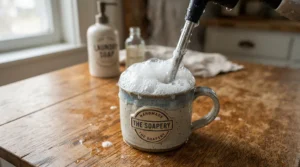
Why not hot water alone? Hot water shifts sugars but barely dents baked-on protein and fat. Milk frothers come in three broad types: manual, handheld electric and automatic, plus the steam wands on espresso machines. They share one weakness. Every design has narrow, warm, wet channels where milk residue lingers, and sponges can’t reach them.
Three formula families dominate the shelves. Alkaline liquids, which the makers describe for Caffenu Milk Frother Cleaner and Urnex Biocaf, lean on breaking down fat and protein. Acid formulas such as Urnex Rinza Acid add scale-fighting. Gentler, universal-positioned liquids like Durgol Milk System Cleaner and De’Longhi Eco Multiclean aim for broad compatibility. In everyday talk you’ll hear “steam wand cleaning solution”, “milk system cleaner for coffee machine” or just “frother cleaner”. These are mostly one family of products wearing different labels.
How to Choose a Milk Frother Cleaning Solution: 7 Steps
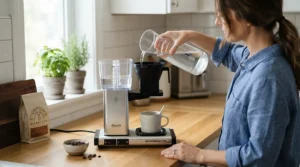
- Map your milk path. Integrated milk lines want circulation, steam wands want soaking, and standalone frothers want a fill-and-wait. Check that the product lists your type.
- Match chemistry to your water. Hard-water kitchens benefit from acid-based formulas that also touch mineral film. Soft-water kitchens can stick with alkaline cleaners aimed at fat and protein.
- Pick a format you’ll actually use. Dosing-cap liquids are flexible, tablets remove measuring, and powders suit people who clean in bulk. The best format is the one you won’t skip.
- Do the dose maths. Divide bottle size by the dose per clean. A cheap bottle at 50ml a go can cost more per clean than a pricier one at 25ml.
- Check plant-milk credentials. If you froth oat or soy daily, look for a product that names plant-based milks, as Urnex Biocaf does.
- Read the compatibility small print. Look at septic tank warnings, machine-warranty wording and rinse instructions. Your machine manual outranks any bottle.
- Treat hygiene claims honestly. Look for recognised standards on the label rather than vague “sanitises” language, as the safety section below explains.
Milk Residue and Bacterial Build-Up: What Is Really Happening Inside Your Frother
Milk residue isn’t just cosmetic. Heat bakes proteins onto metal, the tip narrows, steam turns weak or sprays sideways, and the film becomes a pantry for microbes. Dairy research describes this clearly: biofilm-forming bacteria colonise equipment surfaces and can detach to contaminate milk passing over them. That research concerns industrial dairy equipment rather than home machines, so don’t over-read it. The mechanism is still a fair guide to why bacterial build-up is a risk whenever milk lingers in warm, damp channels.
Here is what that means for steam wand hygiene. A visible film signals that the clean-up is overdue. A sour smell suggests residue has been sitting a while. Sluggish steam usually means milk has partly blocked the tip holes. Washing-up liquid helps on the outside, but it can’t circulate through tubes or reach the inside of a narrow wand. That is the gap a milk frother cleaning solution fills.
The sensible takeaway is prevention. A thirty-second purge-and-wipe after each drink, plus a scheduled soak or circulation with a cleaning solution, keeps milk residue from maturing into something harder to shift.
Steam Wand Cleaning Solution: A Step-by-Step Guide
A steam wand cleaning solution works best on top of a daily habit. Here is a routine that costs almost nothing in time.
Every drink (about 20 seconds):
- Purge a short burst of steam before frothing to clear condensation.
- Froth your milk.
- Wipe the wand straight away with a damp, dedicated cloth while the milk is still soft. Don’t reuse a cloth that has touched grinder dust or the worktop.
- Purge again to blow out any milk trapped inside.
Weekly (about 20 minutes, mostly waiting):
- Let the machine cool so you don’t get burned.
- Mix your cleaner to the label. For example, Urnex Biocaf and Urnex Rinza Acid use 30ml per 500ml of warm water, while Puly Milk Plus uses 25ml per 500ml of cold water.
- Soak the tip for 15-30 minutes, or use Puly Milk Plus‘s cold-water steam-burst method.
- Clear the tip holes gently with a pin or cleaning brush.
- Purge, rinse in clean water and wipe dry.
Doing the weekly step before milk visibly cakes on is the cheapest insurance for steam wand hygiene you can buy.
Milk System Cleaner for Coffee Machine: A Bean-to-Cup Routine
Bean-to-cup machines hide their milk path in tubes, valves and carafes you can’t see. A milk system cleaner for coffee machine owners is therefore a different job from a wand soak.
The method is nearly identical across brands. Mix the dose, put it in the milk container or insert the suction tube, then run the machine’s milk cleaning cycle. Follow with at least one clean-water cycle, and ideally three, as Urnex advises.
Doses differ. Durgol Milk System Cleaner uses 50ml plus 450ml of water. De’Longhi Eco Multiclean uses 10ml plus 90ml. Urnex Rinza M90 tablets use one 10g tablet per litre of warm water. Caffenu Milk Frother Cleaner uses 50ml per 500ml of cold water for one-touch circuits.
How often? Durgol suggests at least fortnightly if your manufacturer doesn’t specify, and Puly retailers suggest weekly for home use. Your machine’s manual is the final word. Also take out any removable carafe parts and soak them in the used solution, which Durgol recommends for best results. Wash the carafe lid and seals separately, because they trap more residue than any other part.
Milk Frother Descaler vs Milk Frother Cleaning Solution
People mix these up constantly. A milk frother descaler dissolves mineral scale, the chalky limescale left by hard water. A milk frother cleaning solution dissolves organic residue: fat, protein and sugars from milk. The two interact, because rough scale gives milk residue something to grip. A scaled tip also blocks more easily, so descaling can improve milk delivery even when your cleaning routine is spotless.
| Product type | What it targets | Strength | Limit | Best For |
|---|---|---|---|---|
| Milk frother cleaning solution | Milk fat, protein, sugars | Dissolves residue in tubes and wands | Doesn’t replace machine descaling | Weekly milk-path hygiene |
| Milk frother descaler | Limescale and mineral film | Frees blocked tips and heating parts | Doesn’t dissolve milk residue | Hard-water kitchens |
| Washing-up liquid | Surface grease | Cheap and handy | Can’t flush internal channels | Jugs and outer wands |
| White vinegar | Light mineral deposits | Fine for removable standalone parts | Not suited to machine lines without checking the manual | Occasional frother-part soaks |
Think of them as a pair: cleaning solution weekly, descaler on your manual’s schedule. Urnex Rinza Acid and Urnex Biocaf are described in listings as addressing calcium or mineral build-up too, but that overlap shouldn’t replace your machine’s own descaling programme. After any descale, run clean water through the steam function several times to flush the loosened mineral debris and descaler. Never use a descaler in the same cycle as a cleaner.

Real-World Scenarios: Which Cleaner for Which Kitchen?
These are illustrative profiles, not real customers. Each is built from the specs above.
Scenario 1: the oat-latte household. A couple make three or four oat lattes a day with a handheld frother and a steel jug, in a soft-water area. Residue on steel builds fast, even with daily washing. Urnex Biocaf, built for dairy and plant milks, or Durgol Milk System Cleaner, with its simple 50ml frother soak, fits best.
Scenario 2: the De’Longhi bean-to-cup owner. One person has a mid-range De’Longhi with a milk carafe and wants a low-effort monthly clean. De’Longhi Eco Multiclean matches the brand’s own routine at 10ml per 90ml of water. It’s inexpensive per clean and sits happily in a drawer.
Scenario 3: the hard-water espresso fan. A semi-automatic machine in a hard-water postcode means scale and baked-on wands. Urnex Rinza Acid for weekly soaks, plus a separate descaling schedule, tackles both layers.
✨ Don’t Miss These Exclusive Deals!
🔍 Take your coffee routine to the next level with these carefully selected cleaners. Click on any highlighted item to check current pricing and availability. These picks will help you create café-quality, fresh-tasting milky drinks your family will love!
Common Mistakes When Buying and Using a Milk Frother Cleaning Solution
- Waiting until residue is visible. By then milk residue has hardened. Durgol’s own advice is to clean before a large amount accumulates, ideally at least fortnightly.
- Skipping the rinse. Cleaners are made for dilution and flushing. Under-rinsing risks off-flavours and unwanted residue in your next latte.
- Treating a cleaner as a disinfectant. The Food Standards Agency explains that detergents remove grease but don’t kill bacteria, while disinfectants do. Unless the label says otherwise, assume a milk cleaner is a cleaner.
- Mixing products. Never combine a descaler, a cleaner and household bleach or vinegar in one go.
- Using a dirty cloth. A grubby cloth moves bacteria back onto a freshly cleaned wand, so give wand-wiping its own cloth.
- Ignoring the manual. Dose, contact time and warranty conditions vary by machine.
Long-Term Cost and Maintenance: What Each Clean Really Costs
Cost per clean is what matters, not bottle price. Divide the price band by the number of doses to compare fairly.
| Product | Pack | Dose guidance | Approx. doses | Rough cost per clean* |
|---|---|---|---|---|
| Durgol Milk System Cleaner | 500ml | 50ml per clean | About 10 | About £1.00-£1.50 |
| Urnex Rinza Acid | 1.1L | 30ml per 500ml | About 36 | About 40p-70p |
| De’Longhi Eco Multiclean | 250ml | 10ml per 100ml mix | About 25 | Under 40p |
| Puly Milk Plus | 1L | 25ml per 500ml | About 40 | About 40p-60p |
| Urnex Rinza M90 tablets | 40 tablets | 1 tablet per litre | 40 | About 25p-40p |
| Caffenu Milk Frother Cleaner | 1L | 50ml per 500ml | About 20 (listing claims up to 32) | About 50p-75p |
| Urnex Biocaf | 1L | 30ml per 500ml | About 33 | About 45p-75p |
*Derived from indicative price bands and stated doses. Check current price for exact figures.
Looking at the numbers, the pre-measured tablets and De’Longhi Eco Multiclean are cheapest per clean on paper. Durgol Milk System Cleaner costs more per treatment, but its dose covers a whole machine run and comes with a simple routine. For large-bottle products, the real saving only happens if you actually use them before the formula sits unused for months.
Long-term, a weekly clean costs pennies compared with a technician callout or a replacement milk module. Pair that with your descaler schedule, and you’re covered.
Safety, Standards and Steam Wand Hygiene Compliance
A few rules keep this safe. Follow the label dilution exactly, keep chemicals away from food, and rinse every part until no cleaner remains. Wear gloves if the label suggests it, and keep products out of reach of children.
Standards help you read claims. UK guidance for food businesses says that disinfectants should carry BS EN 1276 or BS EN 13697 on the label. Home kitchens aren’t bound by that rule, but it’s a useful benchmark. The listing text reviewed for these seven products doesn’t cite those codes, so treat them as milk residue cleaners rather than certified disinfectants. Where hygiene matters more, such as cafés or shared offices, follow your business’s own cleaning schedule.
Septic tanks need special care. Durgol notes its milk system cleaner isn’t suitable for septic tank homes, so check each label before flushing. Finally, descale and clean on the schedule in your machine manual. That keeps steam wand hygiene on track without breaching any warranty terms.

Frequently Asked Questions
❓ Can I use washing-up liquid instead of a milk frother cleaning solution?
❓ How often should I use a milk system cleaner for coffee machine milk lines?
❓ Do plant-based milks need a different cleaner?
❓ How long should I soak a steam wand in cleaning solution?
❓ Are milk frother cleaning solutions safe for septic tanks?
Conclusion
The best milk frother cleaning solution is the one you will genuinely use on schedule. For most households, Durgol Milk System Cleaner is the simplest all-rounder, with its dosing cap and clear fortnightly routine. Hard-water kitchens should shortlist Urnex Rinza Acid, De’Longhi owners will find De’Longhi Eco Multiclean a natural fit, and heavy daily steam wand users should look at Puly Milk Plus.
If measuring annoys you, Urnex Rinza M90 tablets remove the guesswork. If value matters, Caffenu Milk Frother Cleaner offers flexible sizes. If you froth plant milks and care about ingredients, Urnex Biocaf is the one to check. Whichever you choose, add a daily purge-and-wipe habit and a weekly soak to keep milk residue and bacterial build-up in check, and descale on your manual’s timetable.
Recommended for You
- Group Head Brush For Espresso Machine: 7 Best UK Picks (2026)
- Espresso Machine Cleaning Tablets: 7 Essential UK Picks (2026)
- Descaling Solution vs Citric Acid For Coffee Machines: 7 Best Coffee Picks 2026
Disclaimer: This article contains affiliate links. As an Amazon Associate, I earn from qualifying purchases. If you purchase products through these links, we may earn a small commission at no additional cost to you.
✨ Found this helpful? Share it with your friends! 💬🤗
