
In This Article
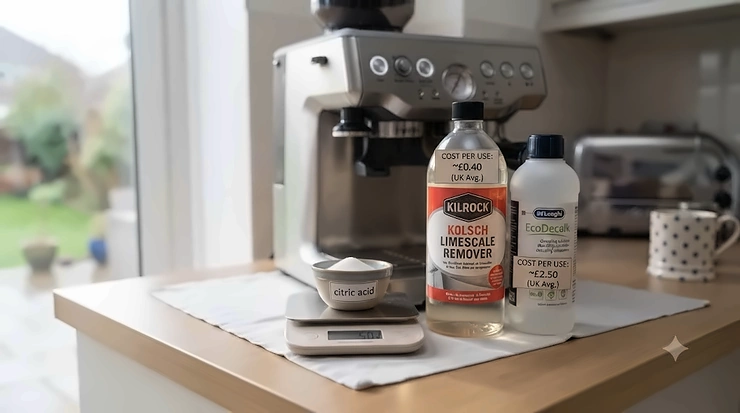
Somewhere in your kitchen cupboard, right now, there’s probably a half-used sachet of something powdery next to the sugar, or a bottle with a crossed-out expiry date wedged behind the kettle. Is it the right stuff? That question — descaling solution vs citric acid for coffee machines — trips up more coffee drinkers than it should, mostly because both camps swear blind that their method is the only sensible one. Descaling solution is what it says on the tin: a ready-mixed, often proprietary acid blend engineered specifically to strip limescale from the internals of a coffee machine without eating through rubber seals or aluminium boilers. Citric acid, by contrast, is the raw, naturally occurring compound found in lemons and other citrus fruit, sold as a cheap powder that you dilute yourself. One is convenience in a bottle; the other is a chemistry-cupboard classic….In hard water areas — and according to the Drinking Water Inspectorate, which is responsible for ensuring the quality of public water supplies, that’s a huge swathe of the UK — limescale isn’t an occasional nuisance, it’s a slow-motion appliance killer. This guide compares seven real products so you can pick the right side of the fence for your machine, your budget, and your patience level.
Quick Comparison Table
| Product | Type | Best For | Price Range |
|---|---|---|---|
| De’Longhi EcoDecalk | Plant-based branded solution | De’Longhi machine owners | £9-£16 |
| Nespresso Descaling Kit | Branded citric-based solution | Pod machine warranty protection | £12-£16 |
| Durgol Swiss Espresso | Sulphamic acid concentrate | Hard water, fast results | £11-£15 |
| HG Coffee Machine Descaler | Citric acid liquid | Budget eco-friendly cleaning | £6-£9 |
| Dri-Pak Citric Acid Powder | Pure citric acid | DIY descaling on a budget | £4-£10 |
| Essential Values Universal Descaler | Citric-based solution | Multi-brand households | £10-£14 |
| ACTIVE Coffee Machine Descaler | Universal solution | All-rounder, larger machines | £13-£17 |
Looking at the spread above, the split isn’t really “branded vs cheap” — it’s chemistry vs convenience. The three pure or near-pure citric acid options (HG Coffee Machine Descaler, Dri-Pak Citric Acid Powder, and to a lesser extent Essential Values Universal Descaler) cost less per treatment but ask more of you in terms of measuring and mixing. The branded solutions front-load the convenience and, in machines still under warranty, that convenience can matter more than the few pounds you’d save doing it yourself.
💬 Just one click — help others make better buying decisions too!😊
Top 7 Descaling Solution and Citric Acid Products: Expert Analysis
1. De’Longhi EcoDecalk — plant-based formula for De’Longhi machines
The clue’s in the name: this is De’Longhi’s own-brand descaler, and it leans hard into being biodegradable rather than just calling itself “eco” for marketing points. It comes as two 500ml bottles giving roughly 10 treatments between them, built around a plant-based acid rather than the harsher mineral acids some rivals use. Based on the spec comparison, the gentler formula matters most if your machine has delicate rubber seals or a bean-to-cup grinder unit — De’Longhi specifically engineers this descaler to be compatible with the alloys and gaskets in its own range, which isn’t something a generic descaler can promise. Reviewers consistently note that it’s odourless during use and doesn’t leave the faint chemical aftertaste some budget descalers do in the first cup or two post-treatment. Where it falls slightly short is versatility: if you own a Sage, a Jura, or a basic filter machine, you’re paying a De’Longhi premium for a formula that isn’t tailored to your hardware.
Pros:
- ✅ Plant-based, biodegradable formula
- ✅ Engineered specifically for De’Longhi internals
- ✅ Two bottles give roughly 10 treatments
Cons:
- ❌ Priced higher than generic citric options
- ❌ Less cost-effective for non-De’Longhi machines
In the £9-£16 range depending on pack size, this is the safe, warranty-friendly choice for De’Longhi owners rather than the cheapest way to fight limescale.
2. Nespresso Descaling Kit — official pod-machine warranty protection
Nespresso doesn’t publish the exact acid blend in its official kit, but what it does guarantee is compatibility with every capsule machine in its current and recent range, including the fiddly internal tubing that’s genuinely difficult to reach with a DIY mix. What most buyers overlook about this kit is that it’s less about raw descaling power and more about warranty insurance — Nespresso’s own terms reference using approved descaling products, and turning up with an unapproved chemical if something goes wrong later can complicate a warranty claim. The kit includes a measuring cap for precise dilution, which removes the single biggest risk with citric acid: guessing the ratio. Aggregated UK review sentiment is broadly positive, with buyers noting the process is quick and machines “feel” faster to heat afterwards, though a vocal minority find the price steep for what’s essentially a single-use sachet.
Pros:
- ✅ Officially approved, protects your warranty
- ✅ Precise, pre-measured dilution ratio included
- ✅ Compatible across the Nespresso range
Cons:
- ❌ Among the priciest per treatment on this list
- ❌ Exact acid formula isn’t disclosed
At £12-£16 for what usually amounts to a single treatment, this is the pick for anyone still inside their Nespresso warranty window who doesn’t want to gamble on it.
3. Durgol Swiss Espresso — fast-acting concentrate for hard water areas
Durgol takes a different chemical route entirely, using sulphamic acid rather than citric acid, and it’s worth understanding why that matters. Sulphamic acid dissolves calcium carbonate faster and at lower concentrations than citric acid does, which is why Durgol can promise a treatment time of around five to ten minutes where citric-based descalers often need thirty. Here’s what to weigh: that speed is genuinely useful if you’re in a Hard or Very Hard water postcode (the East of England, much of the South East, and the Midlands are the usual suspects) where limescale builds back up fast between cleans. Reviewers in these areas report visibly cleaner steam wands and quicker heat-up times immediately after use, which lines up with the chemistry. The trade-off is that sulphamic acid is more aggressive on certain metals, so always check your manual before using it on older aluminium boilers.
Pros:
- ✅ Fastest-acting formula on this list
- ✅ Swiss-manufactured, widely trusted in espresso circles
- ✅ Works well in very hard water regions
Cons:
- ❌ Not citric acid — unsuitable for some older aluminium parts
- ❌ Smaller bottle size means more frequent repurchasing
Priced around £11-£15 for two 125ml bottles, it’s the premium pick for anyone battling genuinely hard water and impatient with slow-acting descalers.
4. HG Coffee Machine Descaler — budget citric acid liquid
This is where the “citric acid” side of the debate gets its strongest real-world representative. HG’s descaler is explicitly citric-acid based, pre-mixed as a liquid rather than a powder you measure yourself, and marketed as odourless and fully biodegradable. Based on the spec comparison, the instructions ask for a 75ml dose topped up to 750ml with water — a 1:10 dilution — which gives roughly six treatments per 500ml bottle. What most buyers overlook is that this is essentially the same active ingredient as pure citric acid powder, just pre-dissolved for convenience, so you’re paying a small premium over raw powder for accuracy and less mess. It’s compatible with “all types of espresso and pod-coffee machines” according to the manufacturer, making it a genuinely universal option rather than a brand-locked one.
Pros:
- ✅ True citric acid formula, gentle on seals
- ✅ Pre-mixed liquid removes guesswork
- ✅ Odourless and fully biodegradable
Cons:
- ❌ Six treatments per bottle is fewer than some rivals
- ❌ Less widely stocked than the bigger US-import brands
At £6-£9 for a 500ml bottle, this sits right at the sweet spot between DIY citric acid and a fully branded solution — arguably the most honest “descaling solution vs citric acid” hybrid on the list.
5. Dri-Pak Citric Acid Powder — the purest DIY descaling option
If you want to cut out the middleman entirely, this is it: food-grade citric acid powder, the same compound that gives sherbet its fizz and lemons their sourness, sold by weight rather than as a branded “descaling solution” at all. The spec sheet won’t tell you this, but user reports suggest a rough ratio of 25-30g of powder dissolved in 500ml of warm water works for most domestic machines — always check your manual first, since exact ratios vary by model. What most buyers overlook about pure citric acid is that it’s genuinely the cheapest way to descale a machine by a wide margin; a single 1kg bag can deliver well over a dozen treatments at a fraction of the cost per use of a bottled equivalent. It is, however, entirely on you to get the concentration right, and there’s no measuring cap included to remove that guesswork.
Pros:
- ✅ Lowest cost per treatment of any option here
- ✅ Natural, single-ingredient, food-grade formula
- ✅ Works across kettles, coffee machines and more
Cons:
- ❌ No pre-measured dosing — requires weighing scales
- ❌ Powder can clump if stored somewhere damp
Typically £4-£10 depending on pack size (400g to 1kg), this is the definitive budget and DIY pick, and the product that best answers the “just use citric acid” argument.
6. Essential Values Universal Descaler — citric-based, multi-brand convenience
Essential Values sits in the middle ground: a citric-acid-based liquid, pre-mixed like the HG option, but marketed with a heavier emphasis on universal compatibility across Breville, Keurig, Nespresso, and De’Longhi machines specifically. Reviewers consistently note that it works well as a “one bottle, whatever machine you own” solution for households juggling more than one type of coffee maker — handy if you’ve got a pod machine at home and a bean-to-cup at the office. Based on the spec comparison, it typically ships as a multi-bottle pack offering four to six treatments, positioning it as slightly pricier per use than raw citric acid but more convenient than mixing your own batches each time. It’s a sensible middle path for anyone who wants the citric acid chemistry without doing the maths themselves.
Pros:
- ✅ Citric-acid based, gentle across multiple brands
- ✅ Multi-bottle packs simplify repeat use
- ✅ Genuinely universal machine compatibility
Cons:
- ❌ Costs more per treatment than raw powder
- ❌ Reviews are more mixed than the top branded options
At £10-£14 for a multipack, it’s a solid pick for multi-machine households who want citric acid convenience without brand lock-in.
7. ACTIVE Coffee Machine Descaler — the universal all-rounder
ACTIVE positions itself as compatible with pretty much everything — Keurig, Nespresso, Breville, De’Longhi, Jura, and Ninja machines all get a mention on the label — and the 32oz bottle backs that scale up with roughly eight treatments per purchase. What most buyers overlook is that “universal” descalers like this one tend to use a slightly stronger acid blend than pure citric acid to guarantee results across such a wide range of hardware, which is worth knowing if your machine has particularly delicate internal seals. Aggregated review sentiment is strongly positive on effectiveness, with plenty of buyers reporting visibly restored water flow and reduced brew time after a single treatment. It’s a sensible pick for households with an older or larger machine where a gentler citric-only formula might need two or three passes to shift stubborn scale.
Pros:
- ✅ Works across nearly every major machine brand
- ✅ Roughly eight treatments per bottle
- ✅ Strong performance on stubborn, long-neglected scale
Cons:
- ❌ Stronger formula than pure citric acid
- ❌ Larger bottle takes up more storage space
At £13-£17 for the 32oz bottle, it’s the practical all-rounder if you’d rather buy one bottle and stop thinking about compatibility altogether.
DIY Descaling: The Citric Acid Method Step-by-Step
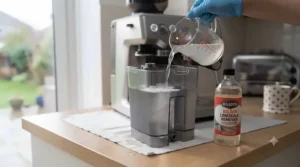
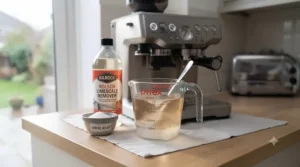
Doing DIY descaling with citric acid isn’t complicated, but the small details are where people go wrong. Start by checking your manual for a maximum concentration — most domestic machines tolerate a 1:10 to 1:15 ratio of citric acid to warm water, roughly 25-30g per 500ml. Dissolve the powder fully in warm (not boiling) water first; undissolved granules can clog narrow tubing, which is the single most common DIY mistake. Pour the mixture into an empty reservoir, run your machine’s dedicated descaling cycle if it has one, or run half a brew cycle, pause for ten minutes, then run the rest. Finish with at least two full cycles of plain water to flush any residual acid — skipping this step is the second most common mistake, and it’s the one that leaves your next few coffees tasting faintly sour. Finally, wipe down the drip tray and reservoir by hand; citric acid does the internal work but does nothing for the parts water doesn’t reach.
Real-World Scenarios: Matching the Right Descaler to Your Machine
Picture three households. First, a flat-sharing student in a Very Hard water postcode with a basic pod machine and a tight budget — Dri-Pak Citric Acid Powder is the obvious call, delivering a dozen-plus treatments for less than the price of one branded kit. Second, a family in the Home Counties with a De’Longhi bean-to-cup machine still under warranty and zero interest in DIY chemistry — the De’Longhi EcoDecalk or the Nespresso Descaling Kit (if it’s the pod version) removes any warranty risk entirely. Third, a small office running an espresso machine daily in a hard water area, where downtime costs more than the descaler itself — Durgol Swiss Espresso earns its premium through sheer speed, getting the machine back in service in minutes rather than half an hour.
Common Descaling Problems and How to Solve Them
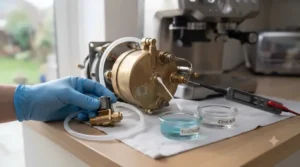
Problem: Coffee tastes sour after descaling. This almost always means an incomplete rinse — run two more full cycles of plain water through the reservoir. Problem: Descaler won’t fully dissolve. Powder-based citric acid needs warm water to dissolve properly; cold water leaves granules that can clog fine tubing. Problem: Machine still shows the descale warning after treatment. Heavy long-term buildup sometimes needs two consecutive treatments rather than one — this is common if descaling has been left for over a year. Problem: Unsure which acid your machine allows. Always default to your manual’s guidance; some manufacturers explicitly warn against sulphamic acid on aluminium components, which is where a citric-based product like HG Coffee Machine Descaler is the safer universal fallback.
Descaling Solution vs Citric Acid: The Real Difference
Here’s the honest answer to the question in the title: chemically, most bottled “descaling solutions” and pure citric acid aren’t different substances at all — many, including HG Coffee Machine Descaler and Essential Values Universal Descaler, are citric acid, just pre-measured and diluted for you. The real distinction is between citric acid (gentle, slow-acting, widely manufacturer-approved) and stronger acids like the sulphamic acid used in Durgol Swiss Espresso, which work faster but demand more caution around certain metals. What most buyers overlook is that “descaling solution” is a category, not a single ingredient — always check the label rather than assuming a branded bottle means something fundamentally different from a bag of powder from the baking aisle. For most domestic machines, citric acid in any form does the job perfectly well; the premium you pay for a branded solution buys convenience, dosing accuracy, and in some cases warranty peace of mind, not necessarily stronger cleaning power.
Natural Descaler for Coffee Machine: What Actually Works
If “natural” matters to you specifically — not just effective, but derived from a recognisable, non-synthetic source — citric acid is genuinely the strongest candidate on the market, since it’s naturally occurring in citrus fruit and widely used in food production. De’Longhi EcoDecalk uses a plant-based formula, which is the closest a branded product gets to that same natural profile while still offering De’Longhi-specific compatibility. Vinegar is sometimes suggested as a truly natural alternative, but it’s worth flagging honestly: white vinegar is acetic acid, which is both weaker against limescale and more likely to leave a lingering smell and taste than citric acid, so it’s a poor substitute rather than an equal one. If natural is genuinely your priority, Dri-Pak Citric Acid Powder or HG Coffee Machine Descaler are the two most defensible picks on this list — both use citric acid as their primary or sole active ingredient.
Eco-Friendly Coffee Machine Cleaning and Natural Cleaning Agents
Eco-friendly coffee machine cleaning isn’t just about the descaler itself — it’s the whole routine, packaging included. Citric acid ships as a simple powder with minimal plastic, biodegrades readily, and according to the World Health Organisation’s guidelines, water hardness above 200 mg/l as calcium carbonate produces scale build-up, so regular descaling with a low-impact natural cleaning agent genuinely reduces the amount of harsher chemical cleaning your machine needs over its lifetime. Between the seven products here, Dri-Pak Citric Acid Powder, HG Coffee Machine Descaler, and De’Longhi EcoDecalk all lean into biodegradable, low-residue formulas — a meaningful difference if you’re pouring the rinse water straight down a domestic drain rather than a treated wastewater system. Reviewers consistently praise the lack of harsh chemical smell across all three, which tends to correlate with a genuinely milder formula rather than just clever marketing.
Manufacturer Warranty: Will Using Citric Acid Void It?
This is the question that stops a lot of people reaching for the cheap powder, and the honest answer is: it depends entirely on your machine’s terms, not on citric acid itself. Most manufacturers, including De’Longhi and Nespresso, don’t ban citric acid outright — what voids warranties more often is using the wrong concentration, an unapproved harsher acid, or skipping the manufacturer’s own descaling cycle entirely. If your manual explicitly names an approved descaler, using that (like the Nespresso Descaling Kit or De’Longhi EcoDecalk) is the lowest-risk route while under warranty. Outside the warranty period, citric acid — whether from Dri-Pak Citric Acid Powder or a pre-mixed liquid like HG Coffee Machine Descaler — is generally considered safe across the vast majority of domestic machines when used at the correct dilution. When in doubt, a quick check of your model’s manual or manufacturer website settles the question far more reliably than a forum post.
Long-Term Cost & Maintenance: Cost Per Use Compared
| Product | Approx. Treatments | Rough Cost Per Use |
|---|---|---|
| Dri-Pak Citric Acid Powder | 12-15+ | Under £1 |
| HG Coffee Machine Descaler | 6 | £1-£1.50 |
| Essential Values Universal Descaler | 4-6 | £2-£2.50 |
| ACTIVE Coffee Machine Descaler | 8 | £1.60-£2 |
| Durgol Swiss Espresso | 2 (from 2-bottle pack) | £5.50-£7.50 |
| De’Longhi EcoDecalk | 5-10 | £1.30-£1.80 |
| Nespresso Descaling Kit | 1 | £12-£16 |
Do the maths over a year of quarterly descaling and the gap is stark: raw citric acid from Dri-Pak Citric Acid Powder can cost under £4 annually, while sticking exclusively to single-use kits like the Nespresso Descaling Kit could run past £50. The counterpoint is downtime and risk — if a wrong DIY ratio damages a machine still under warranty, the “savings” evaporate fast, so total cost of ownership should always factor in your appetite for measuring your own chemicals versus paying for certainty.
Descale Timing and Regulations Guide
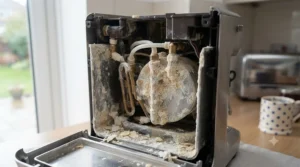
There’s no legal regulation dictating how often you must descale a coffee machine, but the Drinking Water Inspectorate confirms there are no regulatory standards for water hardness in drinking water. Limescale build-up itself is simply calcium carbonate depositing wherever hard water is heated — meaning hardness varies hugely by postcode and nobody’s coming to fix it for you.As a rough rule, machines in Soft or Moderately Soft areas (much of Scotland, the North West, and West Wales) can often stretch to descaling every two to three months, while machines in Hard or Very Hard postcodes — commonly East Anglia, the East Midlands, and the South East — need monthly attention to avoid heating element damage. Checking your specific water hardness through your supplier’s postcode checker takes two minutes and removes the guesswork entirely.
Curious how a scale build-up actually behaves inside a heating element? Here’s a quick look at what’s really going on beneath the surface.That narrowed channel is exactly what an acid — citric or otherwise — dissolves away, restoring both flow rate and the machine’s original heat-up time.
FAQ
❓ Is citric acid as effective as descaling solution for coffee machines?
❓ Can I use citric acid instead of descaling solution in a Nespresso machine?
❓ How often should I descale my coffee machine with citric acid?
❓ Does DIY descaling with citric acid damage coffee machines?
❓ What is the most eco-friendly coffee machine descaler?
Conclusion
So, descaling solution vs citric acid for coffee machines — who actually wins? Honestly, it’s less a duel and more a Venn diagram with a lot of overlap. Citric acid, in raw or pre-mixed form, handles the vast majority of domestic descaling jobs cheaply and gently. Branded descaling solutions earn their keep through convenience, precise dosing, and — crucially, if your machine is still covered — warranty protection that’s worth more than the money saved doing it yourself. The seven products above cover every angle: Dri-Pak Citric Acid Powder for the DIY purist, De’Longhi EcoDecalk and Nespresso Descaling Kit for warranty peace of mind, Durgol Swiss Espresso for genuinely hard water, and HG Coffee Machine Descaler, Essential Values Universal Descaler, and ACTIVE Coffee Machine Descaler sitting comfortably in between. Whichever you choose, the machine — and the coffee — will thank you far more than the calcified alternative.
Recommended for You
- Coffee Machine Descaler: 7 Best Picks For UK Homes (2026)
- Valve Coffee Bags For Freshness: 7 Best Picks for UK (2026)
- Resealable Coffee Bags: 7 Best Picks for UK Kitchens (2026)
Disclaimer: This article contains affiliate links. As an Amazon Associate, I earn from qualifying purchases. If you purchase products through these links, we may earn a small commission at no additional cost to you.
✨ Found this helpful? Share it with your friends! 💬🤗
