
In This Article
Freshly roasted coffee behaves like a living thing. For days after it leaves the roaster, it exhales carbon dioxide. Seal it into an ordinary bag and that gas has nowhere to go, so the bag puffs up like a startled pufferfish. Leave the beans open instead and oxygen quietly strips out the flavour you worked so hard to create. That impossible choice is exactly why valve coffee bags for freshness exist.
A one-way valve coffee bag lets the gas out, refuses to let air back in, and gives your beans a fighting chance of tasting the way the roaster intended. Simple in theory. In practice, the shelves are a maze of foil, kraft, matt, windowed and eco-labelled pouches, sold in packs anywhere from 10 to 100, and they are far from equal.
This guide is written for UK shoppers on amazon.co.uk: home roasters bagging their own batches, small sellers testing their first retail packs, and anyone tired of watching good beans go flat. We compare seven real listings, unpick how the valve works, decode the bag material jargon and match each option to a specific kind of buyer.
One honest note before we start. This analysis rests on published specifications, listing data and aggregated customer ratings, not lab testing. Where a rating pool is too thin to trust, we say so. Prices are given as ranges at the time of research and move often, so check the current price before you buy.
What Are Valve Coffee Bags for Freshness?
Valve coffee bags for freshness are sealed, multi-layer pouches fitted with a one-way degassing valve. The valve lets carbon dioxide escape from freshly roasted beans while blocking oxygen and moisture from entering, so the coffee stays protected from staling while it releases gas after roasting instead of swelling the bag.
The gas is no small matter. Researchers writing in the Journal of Agricultural and Food Chemistry describe CO2 as a molecule that makes up roughly 1–2% of freshly roasted coffee’s weight. It doubles as a freshness indicator and a protective atmosphere inside packaging. That last point is neat. While gas streams out of the valve, it nudges oxygen away from the beans.
So a degassing coffee bag does two jobs at once: vent the CO2, and defend against air, light and moisture. The second job is down to the layers of the pouch, not the valve. It is also worth being realistic about limits. A valve does not stop oxidation, and it cannot rescue beans that were stale before bagging. It simply gives good coffee the best possible resting place.
Quick Comparison: Valve Coffee Bags for Freshness at a Glance
Here is the whole field on one screen before we go deeper.
| Product | Capacity / Pack | Material / Finish | Rating (at time of research) | Price Range | Best For |
|---|---|---|---|---|---|
| OUKEYI Kraft Pouches | 250g, pack of 25 | Kraft paper, zip | 4.2★ (39 global ratings) | £15–£20 | Small hobby batches |
| Spactz Foil Coffee Bags | 250g, pack of 50 | Matt aluminium foil, zip | No verifiable pool | £10–£15 | Budget foil in bulk |
| ZOOFOX 1lb Coffee Bags | 500g, pack of 50 | Foil laminate, flat bottom | 4.1★ (16) | £12–£18 | Larger 500g batches |
| Blue Kraft Degassing Bags | 250g, pack of 50 | Kraft, pull-tab zip | 4.2★ (20) | £25–£32 | Gifts and shelf display |
| Obsoorth 16oz Foil Bags | 500g, pack of 25 | White aluminium foil | No verifiable pool | £18–£25 | Bigger roasts, light blocking |
| Rightpak Valve Pouches | Multiple sizes, pack of 100 | Laminated, tear notch | Not verified on Amazon UK | Check current price | Regular sellers |
| EVG Kraft Valve Pouches | 250g and other sizes, pack of 50 | Kraft or foil, window options | 4.5★ (6, small pool) | £15–£25 | Mixed batch sizes |
Looking at the table above, the Spactz Foil Coffee Bags and ZOOFOX 1lb Coffee Bags cost the least per bag. The ZOOFOX 1lb Coffee Bags have a small rating pool and the Spactz Foil Coffee Bags had none we could verify, so a single test pack is wise before committing. Buyers who care about presentation should look at the Blue Kraft Degassing Bags, which cost more per bag but are built for gifting. Treat any star rating from a tiny pool as a hint, not a verdict.
💬 Just one click — help others make better buying decisions too!😊
Top 7 Valve Coffee Bags for Freshness: Expert Analysis
Every entry below is judged on what its specs mean in practice, then cross-checked against the rating data visible on each listing. Where evidence is thin, we flag it rather than paper over it.
1. OUKEYI Kraft Pouches — best low-cost kraft look for small batches
The standout feature is the warm, natural kraft finish in a 250g size, which flatters a hand-labelled home roast far better than a shiny foil sachet.
The pack holds 25 pouches, each listed at roughly 15cm wide by 22cm tall, with a zip closure and a degassing valve. In practice that means one pouch per standard 250g batch, and a pack that will last a weekly roaster about half a year. That is a sensible commitment before enthusiasm wanes.
Here’s what to weigh. Kraft paper on its own is not a barrier, and the listing stresses the paper rather than spelling out any inner foil layer. Ask the seller before assuming it is foil-lined, especially if you plan to store beans beyond a couple of weeks.
The listing averages 4.2 stars from 39 global ratings, and no UK-written reviews were visible at the time of research. The few written comments praised the size and quality for gift favours, while two overseas reviewers reported a chemical-like odour on opening.
Pros:
- ✅ Natural kraft look suits hand-labelled gifts
- ✅ 250g size fits standard home batches
- ✅ Pack of 25 limits waste and outlay
Cons:
- ❌ Inner barrier layers not clearly stated
- ❌ Some overseas reviewers noted a chemical smell
Expect the £15–£20 range, roughly 65p–70p a bag, which is fair value provided the barrier layers check out.
2. Spactz Foil Coffee Bags — cheapest per bag in full foil
The hook here is pure volume: fifty matt black aluminium bags for roughly the price of a modest 25-pack elsewhere.
Each pouch is a 250g vertical stand-up with a zip closure and a one-way exhaust valve. Aluminium foil is the most complete light and oxygen barrier among the materials in this guide, and the matt black finish adds a further screen against a bright kitchen window. Based on the spec comparison, it is the strongest protective shell for the least money.
The catch is provenance. The same listing wording appears under other brand names in the search results, including Pentium and Ksrnsne, which points to generic white-label stock. That isn’t automatically bad, but consistency between batches shouldn’t be taken for granted, so squeeze-test the valve on your first few bags. It suits budget-minded bulk buyers who want foil protection and don’t need branding.
No meaningful review pool could be verified at the time of research, so there is no crowd evidence either way. Treat it as a sensible gamble, not a proven favourite.
Pros:
- ✅ Full foil barrier against light and oxygen
- ✅ Lowest cost per bag in this list
- ✅ Matt black finish masks oily dark roasts
Cons:
- ❌ No verifiable review data found
- ❌ Generic white-label stock may vary in quality
At around £10–£15 for 50, or roughly 25p–30p a bag, it is the best value on paper here.
3. ZOOFOX 1lb Coffee Bags — biggest capacity per bag
The standout is capacity: a 500g (1lb) flat-bottom bag, roughly double the size of most rivals in this guide.
The listing family describes an outer film with food-grade polyethylene and a PET-aluminium middle layer, which does the heavy lifting against oxygen and moisture. Add a tear-open side zip, an eight-sided rounded seal and the option to heat seal the top, and you get a bag that can be resealed at home or sealed shut for selling. The flat bottom stands tall in a cupboard.
Big bags are a double-edged sword. If you roast 500g at a time or split larger batches, they are ideal. If you drink 250g a week, a half-empty 500g bag means extra oxygen in the headspace every day it stays open. Drum-roaster owners and bulk-bean buyers are the natural audience.
Reviewers give the listing 4.1 stars from 16 ratings. That is respectable but a small pool, so read it as a signal, not proof.
Pros:
- ✅ 500g capacity suits bigger roasts
- ✅ Heat-sealable and resealable zip
- ✅ Flat bottom stands neatly on shelves
Cons:
- ❌ Small review pool behind the 4.1 average
- ❌ Oversized for single 250g batches
Roughly £12–£18 for 50, or about 30p a bag, makes it excellent value for larger batches.
4. Blue Kraft Degassing Bags — most distinctive look for gifting
The standout is the blue kraft colouring paired with a pull-tab zipper, which gives these bags real shelf presence.
The pack contains 50 flat-bottom 250g pouches with a one-way degassing valve, and a second size is offered. The pull-tab is the clever bit: it lets you tear open a heat-sealed top without scissors, then reseal with the zip. The flat bottom means the bag stands up on a market stall or kitchen shelf.
What most buyers overlook is that presentation and protection are different things. The listing information visible at the time of research didn’t detail the inner barrier layers, so confirm them before trusting these for longer storage. For gift bags and short-turnaround sales, though, the look does a lot of work.
The UK listing averages 4.2 stars from 20 ratings, which is a modest but usable pool. Reviewers seem broadly satisfied, though the sample is too small to spot patterns with any confidence.
Pros:
- ✅ Pull-tab zip opens cleanly without scissors
- ✅ Flat bottom gives strong shelf presence
- ✅ Two size options available
Cons:
- ❌ Highest cost per bag among 250g options
- ❌ Barrier layers not detailed in visible listing
Expect £25–£32 for 50, roughly 55p–65p a bag: sensible for gifting, less so for pure storage economics.
5. Obsoorth 16oz Foil Bags — white foil with serious light-blocking
The hook is a clean white exterior wrapped around an aluminium foil barrier in a generous 500g size.
The set of 25 pouches is described as high-barrier and heat-sealable, with a resealable zip and a one-way valve. White reflects more light than black, which helps if bags sit near a window. Foil handles the oxygen and moisture side. The trade-off is cosmetic: white shows oil marks and coffee dust more readily than dark finishes.
This is a middle-ground option: bigger than the 250g crowd, but sold in a smaller pack than the 50-count rivals, so cost per bag is the highest here. It suits a home roaster running 500g batches who wants foil protection without buying 50 bags they won’t use for a year.
At the time of research, no verifiable review pool turned up for this listing. That doesn’t mean it’s bad, only that there’s no crowd evidence to lean on, so buy a single pack and test the valve first.
Pros:
- ✅ Aluminium foil barrier against oxygen and moisture
- ✅ 500g size suits larger roasts
- ✅ Heat-sealable with resealable zip
Cons:
- ❌ Highest cost per bag in this list
- ❌ No verifiable review data found
Around £18–£25 for 25, or roughly 75p–£1 a bag, so pay for it only if you need the 500g foil format.
6. Rightpak Valve Pouches — UK-based supplier built for bulk
The standout is the supplier itself: RightPak Ltd sells matt stand-up pouches in packs of 100, with tear notches and a full size chart.
The Amazon UK listing describes a polyester material, resealable zip, one-way degassing valve, laminated food-grade interior and an expandable bottom gusset. The brand’s own size chart runs from roughly 70g up to 1kg, and its website also lists kraft-and-metallised laminates and recyclable ranges. In practice, that means if you outgrow one size, you can reorder the same format rather than starting from scratch.
Here’s the analysis. A UK-based supplier with a defined size chart makes consistency easier, which matters if you’re selling. The catch is the 100-bag commitment, which is heavy for a hobbyist. Check the size chart carefully, because capacity depends on which size you pick.
Amazon UK ratings could not be verified during research, so there’s no aggregated sentiment to report either way.
Pros:
- ✅ Wide size range from small to large
- ✅ Tear notch opens without scissors
- ✅ UK supplier makes reordering consistent
Cons:
- ❌ Pack of 100 is a big upfront outlay
- ❌ Amazon UK ratings not verified
Check current price. For context, the brand’s own site lists comparable small valve pouches in 100-packs in the high-£30s including VAT, so budget accordingly.
7. EVG Kraft Valve Pouches — widest choice of sizes and finishes
The hook is flexibility: 11 size options and finishes including kraft, white and aluminium, with or without a window.
A typical option is a 140x220x40mm pouch listed for around 250g, while larger formats reach a 180x300x50mm pouch listed at roughly 620g. Sizing matters because a snug bag means less oxygen-filled headspace. Roasters with varied batch sizes can match pouch to beans rather than forcing everything into one format.
One warning: windowed variants let light in, and light speeds up ageing. For anything stored beyond a few days, the windowless kraft or aluminium versions are the smarter choice. Window versions suit shop display where turnover is fast.
The kraft window variant shows 4.5 stars from just six ratings, while the white window variant shows 3.0 from two. Those pools are far too small to conclude anything.
Pros:
- ✅ 11 sizes to match different batch weights
- ✅ Windowless and aluminium finishes available
- ✅ One-way valve and zip lock included
Cons:
- ❌ Tiny rating pools on each variant
- ❌ Window versions sacrifice light protection
Around £15–£25 for 50 depending on size and finish, roughly 35p–45p a bag, which is good value if you pick windowless.
Top 7 at a Glance: Barrier, Closure and Cost Per Bag
| Product | Barrier (as listed) | Closure | Rough Cost Per Bag | Best For |
|---|---|---|---|---|
| OUKEYI Kraft Pouches | Kraft; inner layers not stated | Zip | 65p–70p | Small hobby batches |
| Spactz Foil Coffee Bags | Matt aluminium foil | Zip | 25p–30p | Budget foil in bulk |
| ZOOFOX 1lb Coffee Bags | BOPP / PE / PET-aluminium | Zip + heat seal | Around 30p | 500g batches |
| Blue Kraft Degassing Bags | Kraft; layers not detailed | Pull-tab zip | 55p–65p | Gifts and display |
| Obsoorth 16oz Foil Bags | Aluminium foil | Zip + heat seal | 75p–£1 | Bigger roasts, light blocking |
| Rightpak Valve Pouches | Laminated food-grade interior | Zip + tear notch | Check current price | Regular sellers |
| EVG Kraft Valve Pouches | Kraft, foil option | Zip | 35p–45p | Mixed batch sizes |
The cost gap looks bigger than it is. Across 52 weekly roasts, the difference between the cheapest and priciest bag here is roughly £30 a year, a fraction of what one wasted batch of good beans costs. So barrier quality and valve reliability should drive the decision, not the price per bag. For pure protection per pound, the Spactz Foil Coffee Bags and ZOOFOX 1lb Coffee Bags stand out, with the EVG Kraft Valve Pouches close behind in windowless form.
How to Choose Valve Coffee Bags for Freshness
Use this checklist to filter the field quickly.
- Match bag size to batch weight. A pouch should be nearly full, because empty space is oxygen. Pick 250g bags for 250g of beans, not 500g bags “just in case”.
- Check the barrier layers. Look for foil or metallised film in the description. Kraft paper alone offers little protection, and some listings never state the inner layers.
- Prefer windowless pouches. Light degrades roasted coffee, so windows suit display, not storage.
- Confirm the valve is genuinely included. Reviewers of similar pouches elsewhere on Amazon have reported missing or weak valves, so squeeze-test one bag as soon as it arrives.
- Choose the closure you’ll actually use. A resealable zip suits daily use, while heat-sealable tops suit selling.
- Look for food-contact assurance. Ask for a declaration of compliance if you sell your coffee.
- Buy one small pack first. Test the smell, the valve and the seal before scaling up to 100 bags.
One-Way Valve Coffee Bag: How the Valve Actually Works
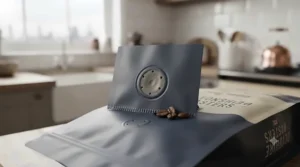
A one-way valve coffee bag hides some clever engineering behind a plastic button roughly the size of a 5p coin. Inside, a flexible disc sits over tiny holes, sealed with a thin film of oil-like fluid. A University of Guelph thesis on valve behaviour tested this using silicone oils of different thicknesses to see how the valves open and close. When internal pressure builds past a threshold, the disc lifts and gas escapes. When pressure equalises, it settles and seals again.
Two numbers matter: the pressure at which the valve opens and the pressure at which it closes. Open too late and the bag bulges. Reseal poorly and oxygen sneaks in. The same research stresses that resealing is critical to keeping air out.
Valves aren’t perfect. Some aroma leaves with the gas, and one patent background notes that valves work off pressure differences, so their behaviour can shift with altitude. Chaff or oil can also clog them. Practical fixes are simple: gently squeeze the filled bag and feel for a hiss, and wipe the valve with a dry cloth. Never vacuum-seal a valved pouch either. One reviewer of a similar product found the bag refilled with air afterwards.
CO2 Degassing Explained: How Long Should Beans Rest?
CO2 degassing follows a steep curve, not a straight line. Most gas leaves in the first day or two, and one roaster’s summary suggests roughly half in the first 24 hours. The rate then tapers over days, sometimes lingering for weeks depending on roast, bean and storage. Valve manufacturer Plitek puts a typical window at a couple of days up to around ten. Grinding changes everything, because it shatters the bean structure and pushes gas out in a rush, which is why pre-ground coffee stales so fast.
Why does this matter at the brewing stage? As Perfect Daily Grind explains, coffee that is too fresh throws off bubbles that disrupt contact between water and grounds, leading to uneven extraction. Many roasters therefore suggest resting beans for a few days before brewing, and often a little longer for espresso.
The valve makes waiting painless. Beans can sit in a sealed pouch, protected from air, while CO2 degassing runs its course. There is even a small bonus: outgoing gas partially flushes oxygen from the headspace during that first week, giving beans a bit of built-in protection.
Bag Material: Foil, Kraft or Recyclable Laminate?
Bag material decides how well the pouch defends against oxygen, moisture and light. Most quality pouches are laminates: a typical spec is PET, aluminium and LLDPE layers around 130 microns thick. Kraft-paper pouches usually add a foil or metallised inner layer. Recyclable ranges, including some with recyclable valves, exist too, though their barrier performance is worth checking case by case.
Professional roasters judge packaging by two measurements: oxygen transmission rate and moisture vapour transmission rate. Lower is better for both. Consumer listings rarely publish either number, so ask sellers if you can. A stated layer structure, such as kraft plus metallised PET plus PE, tells you far more than the word premium.
Then there is safety. Under the framework rules set out by the Food Standards Agency, food packaging must not transfer harmful amounts into food, alter its composition or spoil its taste and smell. Suitable packaging is usually marked for food contact or carries the wine-glass-and-fork symbol. That is why the chemical-odour comments on one listing deserve attention. If a new bag smells wrong, do not fill it with your beans.
Valve Coffee Bags vs Traditional Storage: Which Wins?
Storage rivals each have a job, and the best setup often combines them.
| Option | CO2 Handling | Oxygen Protection | Light Protection | Best For |
|---|---|---|---|---|
| Foil-laminate valve bag | Excellent, vents gas | Strong | Strong | Spactz Foil Coffee Bags, ZOOFOX 1lb Coffee Bags |
| Kraft valve bag | Excellent, vents gas | Depends on liner | Good | OUKEYI Kraft Pouches, Blue Kraft Degassing Bags |
| Ordinary zip bag | Poor, may balloon | Moderate | Varies | Fully rested beans only |
| Airtight canister | Only if valved | Good if full | Good if opaque | Beans in daily use |
| Clear glass jar | Poor | Moderate | Poor | Cupboard storage only |
Looking at the comparison above, valve pouches win during the resting window, when CO2 degassing is at its peak. Canisters take over once beans are settled and in daily use, and a canister with its own valve is useful for the same reason. One barista-turned-writer even argues the best storage is simply the bag the coffee arrives in. Avoiding the fridge is wise, as beans absorb moisture and odours. Buyers who want maximum protection should choose the Obsoorth 16oz Foil Bags or the Spactz Foil Coffee Bags, while gift-givers will prefer the Blue Kraft Degassing Bags.
Common Mistakes When Buying Degassing Coffee Bags
Even careful shoppers trip over a few predictable pitfalls.
- Buying bags that are too big. A 500g pouch for 200g of beans leaves a pocket of oxygen. Match the size to the roast.
- Trusting the word valve in a title. Reviewers of similar products have reported bags arriving without valves. Squeeze-test on day one.
- Choosing windows for long storage. Light ages beans, so windowed EVG Kraft Valve Pouches are best kept for display, not the cupboard.
- Grinding before bagging. Ground coffee degasses and stales far faster, so bag beans whole.
- Vacuum-sealing valve pouches. It defeats the valve and may pull air back in.
- Ignoring the smell test. A chemical odour is a red flag, not a quirk.
- Over-buying. A pack of 100 saves pennies per bag but wastes pounds if you only roast on Saturdays.
Coffee Bag With Valve for Home Roasters: A Practical Bagging Guide
A coffee bag with valve for home roasters solves a very specific problem: you are producing coffee at its most volatile, on your own schedule. As Wikipedia’s overview of coffee roasting notes, roasted beans are less stable than green ones, which is why home roasting can deliver such fresh coffee in the first place. Here is a simple routine for the first 30 days.
- Cool fully. Bag beans only once they reach room temperature, so no steam gets trapped.
- Remove chaff. Loose husks can jam the valve.
- Fill snugly. Aim for a nearly full pouch, then press out the air by hand.
- Seal and label. Add the roast date and roast level so you can track resting time.
- Store dark and cool. A cupboard away from the oven beats a sunny worktop.
- Start brewing at day three to five. Adjust for taste and method.
- Wipe the valve weekly. A quick dry cloth keeps it working.
Common first-month mistakes include bagging warm beans, over-squeezing until aroma is forced out, and leaving the pouch open while brewing. In short, home roasting rewards routine.
Home Roasting Case Studies: Which Bag Suits Which Roaster?
The Saturday Hobbyist
Roasts 250g every weekend on a compact air roaster in a small kitchen, and wants to spend under £20. A pack of 25 covers about six months. The OUKEYI Kraft Pouches give the right size and a friendly look, while the Spactz Foil Coffee Bags offer stronger barrier protection at a lower price. Verdict: choose the foil pack if you store beans for more than two weeks.
The Two-Person Household
Roasts 500g monthly in a garage on a drum roaster and drinks it steadily over four weeks. The ZOOFOX 1lb Coffee Bags or Obsoorth 16oz Foil Bags fit the batch size in one pouch. The trade-off is headspace as the bag empties, so decant half into a smaller pouch after the first fortnight.
The Market-Stall Side Hustle
Bags 25–30 pouches a week and needs consistent sizing and neat presentation. The Rightpak Valve Pouches offer bulk value and tear notches, the EVG Kraft Valve Pouches flex across batch sizes, and the Blue Kraft Degassing Bags suit gift lines. Buy 100 only once you have confirmed the valve and smell on a small test pack.
✨ Ready to Keep Every Roast at Its Best?
🔍 Take your home roasting to the next level with these carefully compared valve pouches. Click on any highlighted product name to check current pricing and availability. A few minutes of comparison now will protect every batch you roast afterwards!
Problem → Solution: Puffed Bags, Weak Valves and Stale Beans
Problem 1: The bag looks puffed up
Some swelling is normal in the first 48 hours. If it persists, chaff or oil may be blocking the valve. Squeeze gently near the valve and wipe it clean. A valve that never hisses on a full, gently squeezed bag may be faulty, so contact the seller.
Problem 2: A chemical smell on opening
This has been reported by overseas reviewers on at least one listing. Air the empty bags out in a ventilated space for a day, and if the odour persists, do not use them for food. Ask the seller for food-contact documentation.
Problem 3: Coffee tastes flat after a week
Too much headspace is a likely culprit. Move beans into a smaller pouch, such as the 250g option from the EVG Kraft Valve Pouches, and keep them out of light. Most roasters aim to finish beans within two to four weeks of roasting.
Problem 4: Bubbly, uneven extraction
Your beans are probably too fresh. Rest them longer in the valve pouch, and give the grounds a proper bloom.
Problem 5: The valve doesn’t seem to work
Test a few bags from the pack, not just one. If several fail, the batch is the problem, which is worth remembering with generic stock like the Spactz Foil Coffee Bags.
FAQ
❓ Can you reuse valve coffee bags for freshness?
❓ Are degassing coffee bags safe for food contact in the UK?
❓ Should I freeze coffee in a valve bag?
❓ What size valve bag holds 250g of whole beans?
❓ Is it cheaper to buy coffee bags with valve in bulk?
Conclusion
Valve coffee bags for freshness are one of the cheapest upgrades in coffee. They let CO2 escape, keep oxygen out and give beans a protected place to rest while CO2 degassing runs its course. Based on the spec comparison, the Spactz Foil Coffee Bags and ZOOFOX 1lb Coffee Bags deliver the strongest protection per pound, provided you squeeze-test the valve. The OUKEYI Kraft Pouches suit small hobby batches, the Blue Kraft Degassing Bags suit gifts, the Obsoorth 16oz Foil Bags suit larger roasts, the Rightpak Valve Pouches suit regular sellers, and the EVG Kraft Valve Pouches suit anyone juggling batch sizes.
Whichever you choose, the rules stay the same. Pick a pouch that is nearly full, favour windowless finishes, check the bag material and the smell, and buy a small pack first. A degassing coffee bag is only as good as its weakest layer or its least reliable valve, and a one-way valve coffee bag that has been tested and trusted is worth far more than a bargain that leaks.
Recommended for You
- Resealable Coffee Bags: 7 Best Picks for UK Kitchens (2026)
- Affordable Coffee Storage Canister: 7 Best Budget Picks (2026)
- Glass Coffee Jar vs Stainless Steel Canister: 7 Best UK Picks (2026)
Disclaimer: This article contains affiliate links. As an Amazon Associate, I earn from qualifying purchases. If you purchase products through these links, we may earn a small commission at no additional cost to you.
✨ Found this helpful? Share it with your friends! 💬🤗
