
In This Article
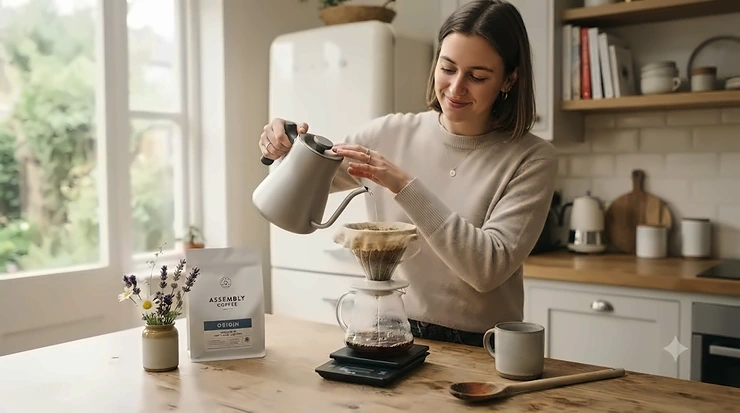
There’s a particular kind of coffee snobbery that gets quietly validated the first time you brew through cloth instead of paper: the cup tastes rounder, heavier, somehow more like the bean and less like the filter. That’s not your imagination. A cloth coffee filter lets through the natural oils that paper traps, and once you notice the difference, it’s genuinely hard to go back to a box of disposable filters gathering dust in the cupboard.
This isn’t a niche obsession either. From traditional Japanese Nel drip brewing to full immersion cold brew setups, cloth has been quietly doing the filtering job for well over a century, long before paper took over the mainstream market. The appeal for UK buyers in 2026 is straightforward: reusable cloth filters cut ongoing costs, reduce the steady stream of paper waste most drip-coffee households produce, and — brewed correctly — genuinely improve flavour.
Below, we’ve researched seven real cloth and cotton coffee filters available through amazon.co.uk, spanning traditional Nel drip pots, siphon brewers, full immersion cold brew filters, and budget-friendly pour-over socks. Each one gets an honest look at real specs and genuine review data, alongside practical guidance on choosing, caring for, and getting the most out of a reusable cloth filter.
What Is a Cloth Coffee Filter?
A cloth coffee filter is a reusable fabric filter — typically cotton or flannel — used in place of a disposable paper filter to separate brewed coffee from its grounds, while allowing more of the coffee’s natural oils to pass through into the cup than a paper filter permits.
Cloth actually predates paper as a coffee filtration method. According to Wikipedia’s overview of coffee filter history, single-use cloth filter bags were patented and used commercially as early as 1894, over a decade before Melitta Bentz introduced the paper filter in 1908. Reusable cloth and cotton versions have persisted ever since, prized in specialty brewing circles for the body and richness they bring to the cup.
Quick Comparison Table: Cloth Coffee Filters
| Product | Filter Type | Material | Price Range | Best For |
|---|---|---|---|---|
| Hario DFN-1 Cloth Filter (Woodneck) | Nel drip pour-over | Cotton flannel | £16–£19 | Traditional Nel drip brewing |
| Hario Siphon Cloth Filter FS-103 | Siphon/full immersion | Cotton flannel | £10–£12 | Siphon brewers (TCA/MCA range) |
| CoffeeSock Reusable ColdBrew Filter (Toddy fit) | Full immersion cold brew | Organic cotton | £21–£24 | Full immersion cold brew |
| Fdit Handmade Cloth Filter Bag | Pour-over/French press sock | Flannel cotton | £7–£9 | Everyday reusable pour-over |
| Wifehelper 10-Pack Cloth Filters | Disk-style pour-over | Cotton | £6–£8 | Bulk budget cotton filters |
| CVNRCLP Cloth Filter with Wood Handle | Pour-over sock | Flannel cotton | £5–£6 | Absolute entry-level cost |
| sourcing map Steel Handle Cloth Filters (2pk) | Pour-over/general straining | Cotton cloth | £5–£6 | Durable dual-pack, steel handle |
Reading across this table, the split is really between dedicated equipment — the Hario DFN-1 Cloth Filter (Woodneck) and Hario Siphon Cloth Filter FS-103 — built for specific brewers, versus general-purpose cotton socks like the Fdit Handmade Cloth Filter Bag that work loosely across pour-over, French press, and even nut milk straining. If your goal is specifically full immersion brewing, the CoffeeSock Reusable ColdBrew Filter stands out as the only entry here purpose-built for that method.
💬 Just one click — help others make better buying decisions too!😊
Top 7 Cloth Coffee Filters: Expert Analysis
1. Hario DFN-1 Cloth Filter (Woodneck) — best for traditional Nel drip brewing
The Hario DFN-1 Cloth Filter (Woodneck) is the real deal: a genuine flannel Nel drip filter designed with a wire ring and handle to fit Hario’s Woodneck drip pot, the glass-and-wood-collar brewer that’s been central to Japanese kissaten coffee culture for decades.
Flannel behaves differently to paper in a meaningful, measurable way — it has finer pores than a metal mesh but, unlike paper, doesn’t strip out the coffee’s natural oils. Based on the spec comparison against paper V60 filters, that’s the entire appeal of Nel drip: a cup with the body of a French press and the clarity of a pour-over, without sediment in the bottom of your mug. Reviewers rate it 4.2 out of 5 from 647 ratings, a substantial sample for a specialist brewing accessory, with buyers commonly noting how much smoother the coffee tastes once the flannel is properly broken in.
This is the pick for anyone serious about exploring traditional pour-over methods beyond the usual paper V60 routine, though it does require a genuine Woodneck-style pot to use as intended.
Pros:
- ✅ Genuine flannel Nel drip design from a trusted brand
- ✅ Strong 4.2★ rating across 647 reviews
- ✅ Delivers noticeably fuller-bodied coffee than paper
Cons:
- ❌ Requires a compatible Woodneck-style drip pot
- ❌ Needs a break-in period before flavour peaks
At around £16–£19, it’s a genuine specialty-brewing investment rather than an impulse buy, and it shows in the finished cup.

2. Hario Siphon Cloth Filter FS-103 — best for siphon and full immersion brewers
Siphon brewing is its own rabbit hole, and the Hario Siphon Cloth Filter FS-103 is the reusable cloth alternative to the paper filters most siphon owners default to, compatible with Hario’s TCA-2, TCA-3, TCA-5, and MCA-5 siphon brewers.
What most buyers overlook about siphon brewing is that the filter material genuinely changes the vacuum dynamics of the process, not just the flavour. Cloth creates a slightly different flow rate to paper, which experienced siphon brewers use deliberately to fine-tune extraction. Reviewers give this filter an impressively strong 4.4 out of 5 from 1,873 ratings — the largest review sample of any product on this list — with feedback consistently praising the fit and the reduction in ongoing filter costs compared to buying paper syphon discs repeatedly.
Given the review volume and consistency, this is arguably the safest cloth-filter purchase on the entire list for anyone who already owns a compatible siphon brewer.
Pros:
- ✅ Exceptional 4.4★ rating from 1,873 reviews
- ✅ Fits multiple Hario siphon brewer models
- ✅ Eliminates repeat spend on paper syphon discs
Cons:
- ❌ Only useful if you already own a siphon brewer
- ❌ Requires careful rinsing between uses to avoid staleness
Priced around £10–£12, it pays for itself quickly against ongoing paper filter costs for regular siphon brewers.
3. CoffeeSock Reusable ColdBrew Filter (Toddy fit) — best for full immersion cold brew
Full immersion brewing — steeping coarse grounds in water for 12 to 24 hours rather than pouring water through quickly — needs a filter built for extended contact time, and the CoffeeSock Reusable ColdBrew Filter is purpose-made for exactly that, sized to fit Toddy-style cold brew systems.
Here’s what to weigh before buying: full immersion methods rely on straining out grounds after a long steep rather than filtering as the water passes through, so the filter needs to hold up to prolonged saturation without breaking down. According to Wikipedia’s entry on the method, cold brew coffee involves steeping coarse-ground beans in water for 12 to 24 hours before the grounds are filtered out through paper, fine metal mesh, or felt/cloth, and organic cotton is well suited to that extended soak. Reviewers rate this filter a strong 4.7 out of 5 from 389 ratings, with buyers frequently highlighting the balanced, non-oily result compared with straining through a French press mesh alone.
For anyone running a genuine full immersion setup rather than a quick pour-over, this is the most purpose-built option on this entire list.
Pros:
- ✅ Purpose-built for full immersion cold brew
- ✅ Outstanding 4.7★ rating from 389 reviews
- ✅ GOTS-certified organic cotton construction
Cons:
- ❌ Sized specifically for Toddy-style systems
- ❌ Priciest cloth filter on this list
At around £21–£24, it sits at the premium end, but the review consistency and full-immersion-specific design justify the extra cost for dedicated cold brew drinkers.
4. Fdit Handmade Cloth Filter Bag — best everyday reusable pour-over sock
Not every buyer wants specialist brewing equipment — sometimes you just want a reliable cotton coffee filter that works across pour-over, camping, and French press setups without fuss. The Fdit Handmade Cloth Filter Bag covers that ground with a flannel sock filter and a wooden handle for easy handling over a mug or pot.
The spec sheet is simple by design: handmade flannel cloth, a wooden handle, and a large-capacity bag suited to single servings or small batches. On paper this means less precision than dedicated equipment like the Hario options above, but considerably more flexibility for casual, everyday brewing. Reviewers rate it 4.0 out of 5 from 114 ratings, with feedback generally centring on ease of use and good value relative to disposable filter costs over time.
This is the pick for buyers who want to try reusable cloth filtering without committing to a specific brewer ecosystem first.
Pros:
- ✅ Works across pour-over, French press, and camping use
- ✅ Solid 4.0★ rating from 114 reviews
- ✅ Wooden handle makes pouring genuinely easier
Cons:
- ❌ Less precise fit than dedicated brewer filters
- ❌ Flannel needs more frequent rinsing than tighter weaves
At roughly £7–£9, it’s a sensible entry point for testing whether reusable cloth filtering suits your routine.
5. Wifehelper 10-Pack Cloth Filters — best bulk budget cotton filters
Buying in bulk changes the maths on reusable filters, and the Wifehelper 10-Pack Cloth Filters leans into that with ten disk-shaped cotton filters supplied together, aimed at households or small offices getting through a lot of pour-over coffee.
Ten filters in rotation means less frequent washing pressure on any single filter and a longer overall lifespan across the set, since load is spread out rather than concentrated on one piece of fabric brewing every single cup. Specific verified review data for this exact multi-pack listing was limited during our research, though the cotton material and disk shape mirror the general specification seen across similar reusable filter packs from comparable sellers, and the low per-unit cost makes it a low-risk way to trial the format.
If your household brews coffee daily and wants to avoid handwashing a single filter after every cup, this bulk approach solves that friction directly.
Pros:
- ✅ Ten filters reduce wash frequency per item
- ✅ Genuine cotton construction throughout
- ✅ Very low cost per individual filter
Cons:
- ❌ Review data for this specific pack was limited
- ❌ Disk shape suits basket-style brewers only
At around £6–£8 for the full ten-pack, this works out as one of the cheapest ways to switch a whole household away from paper filters.

6. CVNRCLP Cloth Filter with Wood Handle — cheapest genuine entry point
At the very bottom of the price range, the CVNRCLP Cloth Filter with Wood Handle offers a handmade flannel strainer with a wooden handle for a genuinely minimal outlay, aimed at buyers who simply want to try cloth filtering before spending more.
Here’s the honest picture: the aggregated review data for this listing is thin, sitting at 4.0 out of 5 from just 4 ratings — a real but very small sample size that shouldn’t be treated as a firm verdict either way. The flannel construction and wooden handle match the format seen across most budget coffee sock filters, and it’s a reasonable way to test whether you enjoy the fuller-bodied result cloth brewing produces before committing to something like the Hario range above.
We’re including it for transparency rather than false enthusiasm: at this price, it’s a low-stakes trial, not a long-term recommendation.
Pros:
- ✅ Lowest genuine price point on this list
- ✅ Handmade flannel with practical wooden handle
- ✅ Low-risk way to trial cloth filtering
Cons:
- ❌ Verified review sample is very small (4 ratings)
- ❌ Build quality likely to trail pricier alternatives
Around £5–£6, treat this as an experiment rather than a forever filter.
7. sourcing map Steel Handle Cloth Filters (2-Pack) — most durable budget pick
Rounding out the list, the sourcing map Steel Handle Cloth Filters (2-Pack) swaps the usual wooden handle for a stainless steel one, aimed at slightly heavier daily use where a wooden handle might eventually loosen or warp.
The two-filter format means you can rotate between them — brewing with one while the other dries fully, which matters more than it sounds for cloth filter hygiene (more on that below). Reviewers rate the closely related steel-handle format 4.0 out of 5 from 89 ratings, with buyers noting the metal handle holds up better than wood under repeated hot-water use and frequent washing.
For anyone brewing cloth-filtered coffee more than once a day, having two filters in rotation from the start — as this pack provides — solves a maintenance headache before it even starts.
Pros:
- ✅ Stainless steel handle resists warping over time
- ✅ Two-filter pack enables proper rotation and drying
- ✅ Solid 4.0★ rating from 89 reviews
Cons:
- ❌ Smaller capacity than dedicated brewer-specific filters
- ❌ Steel handle can retain heat during pouring
At around £5–£6 for the pair, the built-in rotation is arguably better value than most single-filter budget options.
Full Spec Comparison: All 7 Cloth Coffee Filters Side-by-Side
| Product | Rating | Sample Size | Price Range | Best For |
|---|---|---|---|---|
| Hario DFN-1 Cloth Filter (Woodneck) | 4.2/5 | 647 | £16–£19 | Nel drip specialists |
| Hario Siphon Cloth Filter FS-103 | 4.4/5 | 1,873 | £10–£12 | Siphon brewer owners |
| CoffeeSock Reusable ColdBrew Filter | 4.7/5 | 389 | £21–£24 | Full immersion cold brew |
| Fdit Handmade Cloth Filter Bag | 4.0/5 | 114 | £7–£9 | Everyday flexible use |
| Wifehelper 10-Pack Cloth Filters | Data limited | — | £6–£8 | Bulk household use |
| CVNRCLP Cloth Filter with Wood Handle | 4.0/5 | 4 | £5–£6 | Low-stakes trial |
| sourcing map Steel Handle Filters (2pk) | 4.0/5 | 89 | £5–£6 | Rotation-friendly durability |
The standout pattern here is that the two Hario products and the CoffeeSock filter carry both the strongest ratings and the largest review samples, which generally means the specification claims are well tested at scale. The budget entries cluster around solid but thinly verified 4.0-star scores, which isn’t a red flag exactly, but does mean treating those figures as early indicators rather than settled verdicts.
How to Choose a Cloth Coffee Filter
Picking the right cloth filter comes down to matching the fabric and format to your actual brewing method, not just grabbing the cheapest cotton sock available. Work through this checklist:
- Identify your brewing method first. Nel drip needs a flannel pour-over filter like the Hario DFN-1; siphon brewers need a fitted cloth disc; full immersion needs a bag-style filter built for extended soaking.
- Check genuine compatibility, not just “universal” claims. Dedicated brewer filters like the Hario range only fit their intended equipment properly.
- Consider your daily volume. Heavy daily brewers benefit from a multi-pack or two-filter rotation to allow proper drying between uses.
- Weigh flannel against tighter cotton weaves. Flannel produces a fuller-bodied cup but needs more frequent rinsing; tighter cotton weaves filter slightly cleaner but arguably lose a little of that signature richness.
- Factor in the break-in period. Nearly every cloth filter needs several brews before it reaches peak flavour, so don’t judge a filter on its very first use.
- Read the actual review sample size, not just the star rating. A 4.0-star rating from four reviews and a 4.4-star rating from nearly 1,900 reviews are not equally trustworthy signals.
- Plan your washing routine before buying. If you can’t commit to rinsing after every use, a cloth filter will underperform regardless of how good the fabric is.
Cloth Coffee Filter vs Paper vs Metal: Filter Material Comparison
The filter material comparison question comes up constantly, and the honest answer is that each material trades off differently rather than one simply beating the others outright.
| Factor | Cloth/Cotton | Paper | Metal Mesh |
|---|---|---|---|
| Oil retention | Passes most oils through | Traps almost all oils | Passes most oils through |
| Sediment in cup | Minimal | None | Noticeable |
| Ongoing cost | Low after purchase | Recurring per-cup cost | Low after purchase |
| Cleaning effort | Rinse + occasional deep clean | None, disposable | Rinse or dishwasher |
| Flavour body | Full, rounded | Cleaner, lighter | Full, sometimes gritty |
That oil-retention line matters beyond taste, too. A widely cited cross-sectional study on coffee diterpenes found that paper filtration substantially reduces the cholesterol-raising compounds cafestol and kahweol found in coffee oils, compared with unfiltered brewing methods, which cloth and metal filters, by design, don’t remove to the same degree. For most healthy coffee drinkers this isn’t a significant concern at typical consumption levels, but it’s worth knowing the mechanism rather than assuming all filter materials are functionally identical. In practice, most cloth filter fans consider the flavour trade-off well worth it.

Nel Drip Cloth Filters Explained: Japan’s Traditional Pour-Over Method
Nel drip deserves its own explanation because it’s genuinely different from the V60 or Chemex pour-over most UK coffee drinkers are familiar with. “Nel” is a shortened form of “flannel,” and the method uses a soft, napped cotton flannel filter fitted to a wire ring with a handle, typically paired with a glass carafe below.
The technique developed into a defining feature of Japan’s kissaten café culture through the twentieth century, prized for producing a cup with more body and roundness than paper drip while still avoiding the sediment of an unfiltered brew. What the spec sheet won’t tell you, but experienced Nel drip brewers consistently note, is that a properly broken-in and well-maintained flannel filter — like the Hario DFN-1 Cloth Filter (Woodneck) — actually improves with use for the first several dozen brews, as the fibres soften and the pour rate settles into a more consistent rhythm.
The trade-off is genuine commitment: unlike paper, a Nel filter can never be allowed to dry out completely once broken in, or it develops a stale, cardboard-like taint that’s difficult to reverse. That single detail is the biggest adjustment for anyone moving from paper to cloth for the first time.
Full Immersion Brewing with Cloth Filters: Cold Brew & Siphon
Full immersion brewing covers any method where grounds sit fully submerged in water for an extended period, rather than water passing through quickly — cold brew and siphon coffee are the two most common examples, and both pair naturally with cloth filtration.
For cold brew specifically, the extended 12 to 24 hour steep means the filter needs to withstand prolonged saturation without breaking down or imparting off-flavours, which is exactly what organic cotton filters like the CoffeeSock Reusable ColdBrew Filter are engineered for. Siphon brewing works differently — it’s a shorter, vacuum-driven full immersion method — but the filter still needs to handle the sudden pressure change as the vacuum releases, which is where a properly fitted product like the Hario Siphon Cloth Filter FS-103 earns its strong review record.
Reviewers consistently note that full immersion coffee brewed through cloth rather than paper produces a noticeably rounder, less acidic cup, which lines up with the underlying chemistry: without a paper barrier stripping oils during the long steep, more of the coffee’s natural body carries through into the final drink.
Cloth Filter Care and Washing: Keeping Your Reusable Filter Fresh
Getting real long-term value from any cloth coffee filter comes down almost entirely to washing habits, more than the fabric quality itself. Rinse thoroughly with hot water immediately after every single use — coffee oils left sitting in the fibres go rancid faster than most people expect, and that’s the single most common reason people give up on cloth filtering within the first month.
For day-to-day care, avoid soap entirely for routine rinses, since residue left in the weave can taint future brews with a faintly soapy taste; plain hot water and a firm rub between fingers usually shifts trapped grounds effectively. Once a week or so, a deeper clean helps: a brief soak in a mixture of hot water and a small amount of unscented washing soda lifts built-up oils that a quick rinse alone won’t reach, followed by another thorough hot-water rinse.
Storage matters just as much as washing. A Nel drip filter like the Hario DFN-1 should be kept fully submerged in cold water in the fridge between uses once broken in — never left to dry out — while simpler cotton socks and full immersion filters like the Fdit Handmade Cloth Filter Bag or sourcing map Steel Handle Cloth Filters can be air-dried fully between brews if you’re not using them daily. Replace any cloth filter once it develops a persistent musty smell that survives a deep clean, since at that point no amount of rinsing restores clean flavour.

Common Mistakes When Buying or Using a Reusable Cloth Coffee Filter
A handful of avoidable errors account for most disappointing first experiences with cloth filtering. Buying a filter that doesn’t actually fit your brewer is the most frequent one — a Nel drip filter designed for a Woodneck pot won’t sit properly in a standard V60-style dripper, so always check compatibility rather than assuming “reusable coffee filter” means universal fit.
Skipping the break-in period and judging cloth filters on a single disappointing first brew is another common trap; flavour genuinely improves over the first several uses as the fabric settles. Letting a filter dry out with old grounds still trapped inside — rather than rinsing immediately — is perhaps the most damaging mistake, since it’s the single fastest route to the stale, cardboard-like taste that puts people off cloth filtering for good. Finally, using scented detergents to wash a coffee filter almost always backfires, tainting the next several brews with soap flavour rather than genuinely cleaning the fabric.
Real-World Scenarios: Which Cloth Coffee Filter Suits Your Brew Style?
Consider a few genuinely different coffee routines to see how these products map onto real habits. A dedicated home barista who already owns a Hario Woodneck pot and wants to explore traditional Japanese brewing techniques is the clear audience for the Hario DFN-1 Cloth Filter (Woodneck), since it’s purpose-built rather than adapted from a general-purpose sock filter.
A student or young professional making a big batch of cold brew concentrate every weekend to drink through the week suits the CoffeeSock Reusable ColdBrew Filter far better, given its Toddy-fit design handles the extended steep time cleanly without needing to double-strain through a French press mesh afterward. Meanwhile, someone simply curious about reusable filtering, brewing one or two cups a day with a basic pour-over cone, is better served starting with something like the Fdit Handmade Cloth Filter Bag or the budget sourcing map Steel Handle Cloth Filters — low commitment, genuinely functional, and an easy way to decide whether cloth filtering suits their routine before investing in specialist equipment.
Long-Term Cost & Value: Cotton Coffee Filter vs Paper Over a Year
Cost-per-use tells a far more useful story here than the sticker price of a single cloth filter. A typical UK household brewing one pot of filter coffee daily gets through roughly 365 paper filters a year; even at a modest per-filter cost, that adds up steadily and never stops, whereas a well-maintained cloth filter is a single purchase that keeps performing.
| Product | Price | Realistic Lifespan | Approx. Annual Paper Filter Cost Avoided |
|---|---|---|---|
| Hario Siphon Cloth Filter FS-103 | £10–£12 | 12–18 months | Recurring cost fully avoided |
| Fdit Handmade Cloth Filter Bag | £7–£9 | 6–12 months | Recurring cost fully avoided |
| CoffeeSock Reusable ColdBrew Filter | £21–£24 | 12+ months | Recurring cost fully avoided |
Beyond the household budget, there’s a genuine sustainability angle too. WRAP, the UK’s resource and waste charity, has repeatedly flagged how much everyday material UK households send to landfill or incineration that could instead be reused, and while their research specifically covers the broader textiles reuse economy, the underlying principle applies neatly here: a single durable cloth filter doing the job of hundreds of disposable paper ones is a small but genuine contribution to that same reduce-and-reuse logic.

Frequently Asked Questions
❓ Does a cloth coffee filter change the taste of coffee?
❓ How often should you wash a cloth coffee filter?
❓ Can you use a cloth coffee filter for cold brew?
❓ What's the difference between a Nel drip filter and a regular pour-over filter?
❓ Is cloth or paper better for filtering coffee?
Conclusion
Switching to a cloth coffee filter isn’t really about choosing one single “best” product — it’s about matching the fabric and format to how you actually brew. Dedicated equipment like the Hario DFN-1 Cloth Filter (Woodneck) and Hario Siphon Cloth Filter FS-103 rewards buyers already committed to specific traditional methods, while the CoffeeSock Reusable ColdBrew Filter is the clear pick for full immersion cold brew drinkers.
For anyone simply curious whether reusable cotton filtering suits their daily routine, starting with a lower-commitment option like the Fdit Handmade Cloth Filter Bag or the sourcing map Steel Handle Cloth Filters makes the switch genuinely low-risk. Whichever you choose, the washing routine matters as much as the fabric itself — get that right, and a single cloth filter can comfortably replace hundreds of paper ones over its working life, with a noticeably richer cup along the way.
Recommended for You
- Gold-Tone Coffee Filter: 7 Best UK Picks for Richer Brews (2026)
- Metal Filter vs Paper Filter for Coffee: 7 Best Picks (2026)
- Reusable Metal Coffee Filter: 7 Best UK Picks for 2026
Disclaimer: This article contains affiliate links. As an Amazon Associate, I earn from qualifying purchases. If you purchase products through these links, we may earn a small commission at no additional cost to you.
✨ Found this helpful? Share it with your friends! 💬🤗
