
In This Article
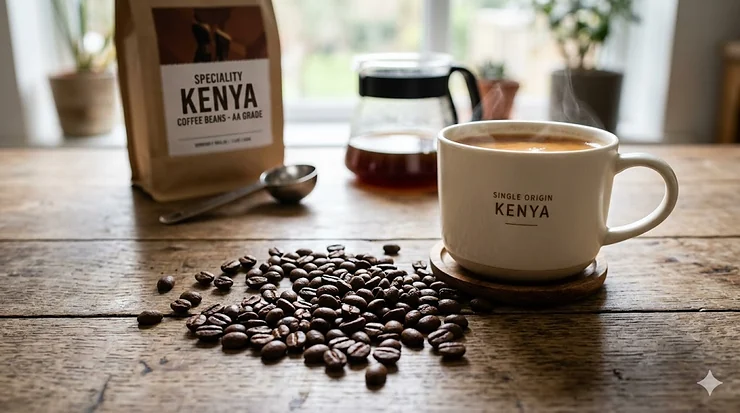
If you’ve never experienced that unmistakable blackcurrant punch of a proper Kenyan coffee, you’re rather missing out on one of the world’s most distinctive brews. Kenyan coffee beans deliver flavours so vibrant and bright that they’ve earned the nickname “the connoisseur’s cup” among specialty coffee circles.
What makes Kenyan coffee beans so special? It’s a combination of rich volcanic soil around Mount Kenya, high-altitude growing conditions between 1,400 and 2,000 metres, and the celebrated SL28 and SL34 varieties developed in the 1930s at Scott Agricultural Laboratories. These factors converge to create coffee with electric acidity, full body, and those signature berry notes that British palates have appreciated since colonial times—when blackcurrant Ribena was distributed free during World War II to combat vitamin C deficiencies.
The best Kenyan coffee beans available on Amazon.co.uk today showcase this heritage brilliantly. From budget-friendly options around £15 per kilogramme to premium AA-grade selections in the £30-£35 range, there’s a Kenyan coffee to suit every British kitchen—whether you’re grinding beans for your morning pour-over in Manchester or pulling espresso shots in your Camden flat.
In this guide, I’ll walk you through seven exceptional Kenyan coffee bean options available right now on Amazon.co.uk, explain what the AA grading actually means for your cup, and help you choose the perfect roast for your brewing method. By the end, you’ll understand why Kenyan coffee commands premium prices and know exactly which beans deserve your hard-earned pounds.
Quick Comparison: Best Kenyan Coffee Beans at a Glance
| Product | Roast Level | Size Options | Price Range (GBP) | Best For |
|---|---|---|---|---|
| Brown Bear Mount Kenya | Medium | 227g / 1kg | £8-£30 | All-rounders seeking charity support |
| Scott&Co. Kenyan AA | Medium | 500g | £15-£18 | Budget-conscious buyers wanting AA quality |
| Coffee Direct Kenya AA | Medium | 227g / 908g / 1kg | £8-£25 | Those who prefer established UK roasters |
| Café Direct Kenya | Medium | 227g / 1kg | £18-£22 | Fair Trade supporters |
| Union Hand-Roasted Yayu Forest | Medium-Light | 200g / 1kg | £20-£35 | Specialty coffee enthusiasts |
| Pact Coffee Kenya Gatomboya | Medium | 250g / 1kg | £25-£32 | Subscription lovers wanting freshness |
| HasBean Kenya Peaberry | Light-Medium | 250g / 1kg | £28-£38 | Adventurous drinkers seeking rarity |
From the comparison above, it’s clear that Brown Bear Mount Kenya offers exceptional value for money if you’re looking to try Kenyan coffee without breaking the bank, whilst the higher-priced options like HasBean justify their premium through rare bean grades and lighter roasting profiles that showcase the fruit-forward complexity Kenyan coffees are famous for. What most buyers overlook, however, is that even budget Kenyan options deliver substantially more character than mid-range Colombian or Brazilian beans—you’re paying for terroir and varietals that simply cannot be replicated elsewhere.
💬 **Just one click — help others make better buying decisions too!**😊
Top 7 Kenyan Coffee Beans: Expert Analysis
1. Brown Bear Mount Kenya Medium Roast Coffee Beans
The Brown Bear Mount Kenya stands out as the people’s favourite for good reason—it delivers classic Kenyan brightness without the eye-watering price tag you’d expect from specialty roasters. Grown at 2,000 metres in the shadow of Mount Kenya’s foothills, these beans showcase the region’s rich volcanic soil and ideal growing conditions.
The medium roast (strength 3 out of 5) strikes a rather clever balance. You’ll get pronounced citric acidity and stone fruit sweetness without the aggressive tartness that can catch out first-time Kenyan drinkers. The cup finishes clean, with those telltale blackcurrant notes British tasters have cherished since the Ribena era. What the spec sheet won’t tell you is how forgiving these beans are across brewing methods—they work brilliantly in everything from a basic cafetière to a V60 pour-over.
Customer feedback consistently praises the freshness upon delivery, with UK buyers noting the beans arrive well within their roasting window. Several reviewers mention that whilst Brown Bear’s packaging looks rather different now (the rustic design has given way to bolder colours), the coffee inside remains top-notch. A particularly astute observation: one buyer noted these beans excel in bean-to-cup machines, which can be hit-or-miss with lighter African coffees.
✅ Pros:
- 5% of sales support Free The Bears charity (over £52,000 donated to date)
- Available in both 227g taster size and economical 1kg bags
- Consistently fresh with Prime delivery across mainland Britain
❌ Cons:
- New packaging design divides opinion among long-time fans
- May taste slightly bitter if you’re accustomed to milder Latin American coffees
The 1kg bag typically sits in the £27-£30 range (around £30/kg with Subscribe & Save discount), making this one of the better-value Kenyan offerings on Amazon.co.uk. For a coffee that donates to wildlife conservation whilst delivering authentic Kenyan character, it’s rather difficult to argue with that proposition.
2. Scott&Co. Kenyan AA Medium Roast Whole Beans
The Scott&Co. Kenyan AA represents precisely what British coffee drinkers should expect from the AA designation—large, dense beans that deliver nutty flavours with just enough acidity to remind you this isn’t a safe, predictable Brazilian roast. Hand-roasted in Yorkshire in small batches, these beans arrive sealed in protective atmosphere packaging that genuinely makes a difference in shelf life.
What sets Scott&Co. apart is their transparent approach to sourcing. These AA-grade beans come from plantations on Mount Kenya’s mountainside, about 160 kilometres north of Nairobi, where altitude and terroir conspire to produce beans worthy of the highest Kenyan classification. The “AA” grading means these beans measure 7.2-7.8mm in diameter—substantially larger than AB or C grades—which translates to more even roasting and fuller flavour development.
UK customer reviews reveal an interesting split: seasoned Kenyan coffee drinkers describe it as “pleasantly medium” with “no bitter aftertaste,” whilst those new to East African coffees occasionally find the acidity surprising. One particularly helpful reviewer noted they accidentally ordered beans instead of ground, ground them in a NutriBullet, and suspected the heat from grinding mellowed the flavour compared to the pre-ground version—a useful reminder that proper burr grinders matter more with Kenyan coffees than with forgiving Brazilian blends.
✅ Pros:
- Genuine AA-grade beans at accessible pricing (around £15-£18 per 500g)
- Hand-roasted in Britain, supporting UK small businesses
- Nutty profile works beautifully with milk-based drinks
❌ Cons:
- Some find the acidity too assertive on first taste
- 500g bag size may disappoint heavy coffee drinkers
For UK buyers seeking AA-grade Kenyan coffee without venturing into specialty roaster pricing, Scott&Co. delivers admirable quality. The fact it’s roasted in Yorkshire rather than imported pre-roasted means you’re getting beans at their peak freshness—rather important when you’re paying premium prices for African coffees whose volatile aromatics fade faster than sturdier South American varieties.
3. Coffee Direct Kenya AA
Coffee Direct has been a stalwart of the UK coffee scene for years, and their Kenya AA offering demonstrates why they’ve built such loyalty. These beans, sourced from Kenya’s fertile Nyeri region, undergo the country’s distinctive double-fermentation washing process—cherries are pulped, fermented for 24 hours, agitated thoroughly, then fermented for another 24 hours before final washing. This painstaking method is what gives Kenyan coffees their legendary cup clarity.
The beans themselves are roasted to what Coffee Direct calls a “city roast”—slightly darker than a standard light roast but nowhere near oily. This approach teases out subtle flavour notes that lighter roasts sometimes leave underdeveloped. Expect a sharp, winey taste with pronounced fruity undertones and that classic Kenyan acidity that walks the line between bright and aggressive.
What most buyers overlook about this product is the range of sizes available—from a 227g trial bag (ideal for testing whether you enjoy Kenyan profiles) up to a full kilogramme for committed drinkers. The grading system here is straightforward: these are genuine AA beans, meaning they’ve passed through the strictest size screens and represent the top tier of Kenyan coffee exports. British customers particularly appreciate that Coffee Direct ships from UK warehouses, making Prime delivery genuinely next-day rather than the week-long waits some continental sellers impose.
✅ Pros:
- Multiple size options from taster to bulk (227g, 908g, 1kg)
- Established UK roaster with reliable quality control
- Double-fermentation processing showcased beautifully
❌ Cons:
- Premium pricing reflects quality (around £20-£25/kg at time of research)
- Strong acidity may require adjustment for new Kenyan drinkers
The 908g bag offers the sweet spot between value and commitment—you’re getting nearly a kilogramme but can finish it before staleness creeps in (Kenyan coffees, with their volatile fruit esters, benefit from consumption within 4-6 weeks of opening). For British buyers who want a reliable, well-established roaster behind their beans, Coffee Direct justifies its pricing through consistency and proper sourcing transparency.
4. Café Direct Machu Picchu Kenya Blend
Whilst Café Direct is perhaps better known for their pioneering Fair Trade work (they were amongst Britain’s first Fair Trade coffee companies in 1991), their Kenyan offering demonstrates that ethical sourcing and exceptional flavour needn’t be mutually exclusive. These beans come from smallholder cooperatives in Kenya’s Central Province, where farmers receive guaranteed minimum prices regardless of market fluctuations—rather important when global coffee prices can swing 40% in a single season.
The medium roast profile here leans slightly lighter than Brown Bear or Scott&Co., which allows more of those classic Kenyan blackcurrant and citrus notes to shine through. You’ll notice lemon zest on the nose, progressing to darker berry notes in the cup, with a crisp finish that doesn’t overstay its welcome. What the Fair Trade certification means in practical terms is full supply chain traceability—you’re not getting mystery beans from undisclosed estates but coffee from named cooperatives who reinvest premiums into community infrastructure.
UK reviewers consistently mention the freshness, with several noting the roast date clearly printed on packaging (a surprisingly rare practice even among premium roasters). The Subscribe & Save option drops the price to around £18-£20/kg, making this competitive with non-Fair Trade alternatives. One reviewer astutely observed that whilst the packaging looks rather plain compared to boutique brands, “what’s inside the bag matters more than what’s printed on it.”
✅ Pros:
- Fair Trade certification with transparent sourcing
- Lighter roast showcases Kenya’s fruit-forward character
- Consistent roast dating for freshness verification
❌ Cons:
- May taste too acidic for those preferring darker roasts
- Smaller 227g bags disappear quickly for daily drinkers
For British buyers who appreciate knowing their coffee purchase supports sustainable farming practices whilst delivering genuine Kenyan character, Café Direct represents excellent value in the £18-£22 range. The fact you can verify exactly where your money goes (community health clinics, water projects, school improvements) adds satisfaction beyond what’s in your morning cup.
5. Union Hand-Roasted Revelation Espresso Blend
The Union Hand-Roasted Revelation blend brings a rather different approach—instead of single-origin Kenyan beans, you’re getting a carefully constructed espresso blend that features Kenyan coffee as a cornerstone alongside Brazilian and Ethiopian components. For British espresso drinkers, this matters because straight Kenyan coffees can be challengingly acidic when pulled as espresso, whilst Union’s blend tames that brightness with the chocolatey depth of Brazilian beans and the floral complexity of Ethiopian coffees.
What sets Union apart in the UK market is their commitment to direct trade relationships—they maintain long-term partnerships with specific farms and cooperatives, visiting regularly and investing in infrastructure improvements. The Kenyan component here comes from the Nyeri region, contributing those signature blackcurrant notes that British palates recognise from everything from Ribena to cassis liqueurs.
Roasted in East London and distributed throughout Britain via their own logistics network, Union beans arrive remarkably fresh—often within 10-14 days of roasting, which is exceptional for supermarket-stocked coffee. The medium roast works brilliantly for espresso machines, producing shots with balanced acidity, syrupy body, and a hazelnut-toned crema that looks rather professional. UK customers with temperamental espresso machines particularly appreciate how forgiving this blend is—it pulls consistently across a wider pressure and temperature range than finicky single-origin beans.
✅ Pros:
- Purpose-built for espresso with Kenyan character balanced by complementary origins
- Exceptional freshness through Union’s direct distribution network
- Available in major UK supermarkets for convenience
❌ Cons:
- Blend format means you’re not getting 100% Kenyan experience
- Premium pricing reflects London-roasted specialty positioning (£28-£35/kg range)
The 200g bag makes a sensible entry point—you’ll get roughly 20-25 espresso shots to determine whether this blend suits your machine and palate before committing to the more economical kilogramme size. For British espresso enthusiasts who want Kenyan brightness without the overwhelming acidity of straight Kenya AA shots, Union’s thoughtful blending delivers exactly what’s needed.
6. Pact Coffee Kenya Gatomboya
Pact Coffee has built their reputation on freshness above all else, and their Kenya Gatomboya offering demonstrates this philosophy brilliantly. These beans are roasted to order at Pact’s facilities and shipped within 24 hours—a stark contrast to beans that might sit in Amazon warehouses for weeks. For Kenyan coffees, whose delicate fruit esters degrade faster than robust Indonesian or Brazilian varieties, this freshness window genuinely transforms the cup.
The Gatomboya washing station in Nyeri processes cherries from surrounding smallholder farms, with the double-fermentation method producing remarkable cup clarity. Pact’s medium roast strikes a clever balance—light enough to preserve Kenya’s characteristic brightness but developed enough that you’re not extracting grassy, underdeveloped notes. Expect grapefruit zest, blackcurrant, and a hint of brown sugar sweetness that rounds out the acidity without masking it.
What most UK buyers appreciate about Pact is the subscription model’s flexibility—you can adjust delivery frequency based on your consumption without getting locked into rigid schedules. Several British customers mention using Pact for their “special occasion” coffee whilst keeping a more economical option for weekday drinking, which makes rather good sense given the £25-£32/kg pricing. One particularly insightful review noted that these beans “taste different in the best way possible” compared to supermarket Kenyan coffees, attributing the difference to roast-to-delivery time.
✅ Pros:
- Roasted-to-order model ensures exceptional freshness
- Subscription flexibility suits varied consumption patterns
- Single-farm sourcing provides terroir expression
❌ Cons:
- Premium pricing reflects bespoke roasting model
- Subscription pressure may not suit occasional coffee drinkers
The 250g starter size lets you trial Gatomboya without committing to Pact’s subscription model (you can purchase one-off bags), though the per-kilogramme pricing improves substantially with their regular delivery plans. For British coffee enthusiasts who view beans as perishable goods deserving the same freshness standards as produce, Pact’s approach makes perfect sense—even if it costs a few pounds more than warehouse-stocked alternatives.
7. HasBean Kenya Peaberry
The HasBean Kenya Peaberry represents the pinnacle of British specialty coffee offerings—a rare bean mutation roasted by one of the UK’s most respected micro-roasters. Peaberries occur when a coffee cherry develops just one round bean instead of the usual two flat-sided beans, resulting in roughly 5% of any harvest being peaberry-grade. Kenyan peaberries command particular attention because they concentrate the origin’s fruit-forward character into an even more intense expression.
HasBean’s light-medium roast lets these rare beans speak for themselves. You’ll encounter layers of complexity that evolve as the coffee cools: bright raspberry and redcurrant up front, followed by floral jasmine notes, finishing with a lingering sweetness reminiscent of blackcurrant jam. The body is lighter than standard AA-grade Kenyans but delivers remarkable clarity—every flavour component remains distinct rather than muddling together.
UK specialty coffee circles regard HasBean (run by coffee education pioneer Stephen Leighton) as something of a gold standard for transparently sourced, impeccably roasted beans. Their Kenyan peaberry typically comes from the Nyeri or Kirinyaga regions, with full traceability to specific washing stations or cooperatives. British customers willing to invest £28-£38/kg do so knowing they’re getting beans selected and roasted with genuine expertise rather than marketing fluff.
✅ Pros:
- Rare peaberry grade offers unique cup character
- Light-medium roast showcases Kenya’s complexity beautifully
- UK specialty roaster with exceptional sourcing standards
❌ Cons:
- Premium pricing reflects rarity and micro-roaster positioning
- Lighter roast may underwhelm those expecting bold, dark coffee
The 250g bag makes sense as an occasional indulgence rather than daily driver—think of HasBean peaberry as your weekend coffee whilst more economical options handle weekday consumption. For British coffee enthusiasts who appreciate the nuances that separate good coffee from exceptional coffee, the premium pricing feels justified once you taste what properly sourced and roasted Kenyan peaberry can deliver.
How to Choose Kenyan Coffee Beans for British Conditions
Choosing the right Kenyan coffee beans for your home involves more than grabbing the first AA-grade bag you spot on Amazon.co.uk. British buyers face unique considerations—from our climate’s impact on storage to regional water hardness affecting extraction.
Consider Your Brewing Method First
Kenyan coffees reward certain brewing methods more generously than others. If you’re using a pour-over method (V60, Chemex, or AeroPress), the medium to light roasts from HasBean or Pact will showcase those celebrated fruit notes beautifully. The slower extraction and paper filtration let complex flavours develop without muddiness. Conversely, if you’re pulling espresso shots, you’ll want something like Union’s blend or the slightly darker Brown Bear roast—straight Kenyan coffees can produce shots so acidic they’re unpleasant without milk.
French press users should lean towards medium roasts like Scott&Co. or Coffee Direct, as the immersion brewing tempers extreme brightness whilst still delivering body. Bean-to-cup machine owners have reported excellent results with Brown Bear Mount Kenya specifically—the beans grind consistently and handle the automated brewing variables better than finicky light roasts.
Match Roast Level to Your Palate
British coffee drinkers raised on traditional roasts often find light-roasted Kenyan coffees jarringly acidic at first taste. If you’ve spent years drinking medium-dark Colombian or Brazilian coffees, jumping straight to a light-roasted Kenya peaberry might send your palate reeling. Start with medium roasts (Brown Bear, Scott&Co., Coffee Direct) that preserve Kenyan character whilst offering familiar chocolatey or nutty notes to anchor the experience.
Once you’ve adjusted to Kenyan brightness, you can explore lighter roasts that push fruit-forward flavours to the forefront. The progression from medium to light-medium to light mirrors how British palates historically adapted to wine—we started with sweet, fortified wines before embracing drier expressions.
Understand the AA Grading System
The “AA” designation you’ll see on many Kenyan coffees refers to bean size, not quality per se—though larger beans often correlate with better growing conditions. AA beans measure 7.2-7.8mm diameter, making them the second-largest grade after the rare “E” (elephant) grade. AB beans (6.8-7.2mm) can taste excellent too, often coming from the same farms, but AA commands premium pricing due to uniform roasting and perceived prestige.
What most UK buyers miss is that AA grading doesn’t guarantee anything about roast freshness, storage conditions, or processing quality. A stale AA bean delivers a worse cup than a fresh AB bean every single time. Focus on roast dates and seller reputation rather than getting fixated on grade alone.
Factor in British Water Quality
Britain’s famously hard water poses challenges for coffee extraction, particularly with high-acidity beans like Kenyans. If you live in London, the Southeast, or other hard-water regions, those bright citrus notes can turn unpleasantly sour as minerals interact with coffee acids. According to the Food Standards Agency, proper brewing temperature and water quality matter tremendously for food safety and quality—principles that apply equally to coffee extraction. Consider using filtered water or bottled Scottish spring water (with its lower mineral content) for brewing Kenyan coffees. Alternatively, slightly darker roasts (medium rather than light-medium) tend to be more forgiving with hard water.
Northern and Scottish buyers with naturally soft water can explore the lightest roasts without this concern—your water won’t clash with the coffee’s natural acidity, allowing those delicate fruit notes to shine through properly.
Storage Matters More Than You Think
British weather—particularly our damp autumns and winters—accelerates coffee staling if beans aren’t stored properly. Kenyan coffees, with their volatile fruit esters and oils, suffer more noticeably than robust Indonesian or Brazilian varieties. Store beans in airtight containers away from light and moisture, and buy quantities you’ll consume within 3-4 weeks of opening. The romantic notion of bulk-buying a 5kg sack might save money initially, but you’ll be drinking mediocre coffee by week six.
For flats and terraced houses with limited storage space, the 250g-500g bag sizes make perfect sense—you’ll finish them whilst they’re still singing rather than watching quality decline in oversized bags.
Understanding Kenya’s Famous SL28 and SL34 Varieties
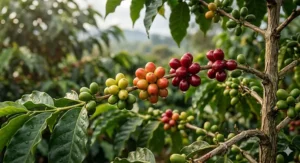
When coffee professionals discuss Kenyan coffee beans, they inevitably mention SL28 and SL34—the variety designations that define roughly 80% of Kenya’s exported coffee. Understanding these varieties helps British buyers appreciate why Kenyan coffees command premium prices and deliver such distinctive character.
The Scott Laboratories Legacy
The “SL” stands for Scott Agricultural Laboratories, a research station established by the British colonial government in Kenya in 1922 (the buildings were originally a First World War hospital named after missionary Dr Henry Scott). In the 1930s, researchers collected 42 different coffee varieties from across East Africa, methodically testing which combinations of drought resistance, yield, and cup quality would serve Kenyan farmers best.
SL28 emerged as the star selection—a variety discovered from a single tree in Tanzania’s Moduli district that proved remarkably drought-tolerant whilst delivering exceptional flavour. What makes SL28 particularly fascinating is its rusticity: trees can be neglected for years, even decades, then return to productive health with minimal intervention. World Coffee Research notes there are 60-80 year old SL28 trees still producing quality coffee across Kenya today, a testament to the variety’s resilience.
SL34, selected from a tree on the Loresho Estate in Kabete, adapted better to high-altitude areas with substantial rainfall. Both varieties trace their genetic lineage back to Bourbon-Typica families brought to Kenya by French missionaries from Réunion Island in the 1890s, which partly explains their complex flavour profiles.
Why SL Varieties Taste Different
The blackcurrant notes British tasters identify so readily in Kenyan coffees aren’t marketing fiction—they’re genuine flavour compounds concentrated in SL28 and SL34 varieties grown at high altitude in volcanic soil. When you taste “wine-like characteristics” or “sharp berry notes,” you’re experiencing the interplay between variety genetics, terroir, and Kenya’s distinctive double-fermentation processing.
Interestingly, blackcurrant became the go-to descriptor partly because British tasters had cultural familiarity with the fruit (thanks to wartime Ribena distribution), whilst American tasters sometimes describe the same coffees as having “blackberry” notes—what they know from experience. The flavour compounds are identical; our descriptive vocabulary differs based on what fruits we’ve actually eaten.
Modern Challenges and Alternatives
Whilst SL28 and SL34 deliver exceptional cup quality, they’re susceptible to coffee leaf rust and coffee berry disease—devastating fungal infections that can wipe out entire harvests. This vulnerability led Kenyan researchers to develop newer, disease-resistant varieties like Ruiru 11 and Batian. These hybrids sacrifice some cup complexity for agricultural resilience, creating ongoing debates about quality versus sustainability.
Most premium Kenyan coffees sold in Britain still feature SL28 and SL34 prominently, though you’ll occasionally see blends incorporating Ruiru 11 or Batian. If maximum flavour expression matters more to you than supporting disease-resistant agriculture, stick with products explicitly mentioning SL varieties.
The Kenyan Double-Fermentation Washing Process
One factor distinguishing Kenyan coffee beans from competitors worldwide is the country’s unique double-fermentation washing method—a processing technique that amplifies the bright acidity and cup clarity British specialty coffee drinkers cherish. Understanding this process helps you appreciate why properly processed Kenyan coffees justify premium pricing.
Stage One: Pulping and First Fermentation
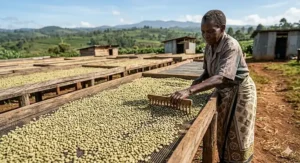
After handpicking, coffee cherries are pulped through screens that remove the outer skin whilst leaving mucilage (a sticky layer) clinging to the beans. These mucilage-coated beans then ferment in ceramic-tiled tanks for 24 hours, during which naturally occurring microbes break down sugars and alter the beans’ chemical composition. Most coffee-producing countries stop here, washing the beans and proceeding to drying.
Stage Two: Agitation and Second Fermentation
Kenya’s distinctive step involves thorough agitation after the first fermentation—beans are stirred vigorously to remove loosened mucilage—followed by a second 24-hour fermentation period. This additional stage develops flavour compounds that give Kenyan coffees their characteristic brightness and complexity. Finally, beans are washed again and soaked overnight before drying on raised beds.
Why British Buyers Should Care
The double-fermentation method directly creates those flavour notes you’re paying premium prices for: bright acidity, blackcurrant undertones, and remarkable cup clarity where individual flavour components remain distinct rather than muddling together. When you compare a washed Kenyan coffee to a natural-processed Ethiopian or honey-processed Costa Rican, you’re tasting processing methods as much as terroir.
Cheaper Kenyan coffees sometimes skip the second fermentation to save time and labour costs, resulting in beans that taste “Kenyan-ish” but lack the electric brightness of properly processed examples. Products from established brands like Coffee Direct, Brown Bear, and specialty roasters guarantee full double-fermentation processing, which partly justifies their pricing versus mystery-origin supermarket bargains.
Common Mistakes When Buying Kenyan Coffee Beans in Britain
British coffee buyers make several predictable errors when venturing into Kenyan coffees for the first time. Avoiding these pitfalls saves money and disappointment whilst helping you find beans that genuinely suit your preferences.
Mistake 1: Ignoring Roast Dates
Unlike Brazilian or Colombian coffees that forgive staleness with muted but acceptable flavour, Kenyan coffees degrade dramatically once their peak freshness window closes. Those delicate blackcurrant and citrus notes you’re paying premium prices for disappear within 6-8 weeks of roasting, leaving behind flat, grassy flavours that bear little resemblance to what the beans should deliver.
Always check roast dates when ordering from Amazon.co.uk. Sellers like Pact and HasBean print roast dates prominently because freshness forms their competitive advantage. If a listing doesn’t mention roast dates or provides vague “best before” dates months away, assume the beans have been sitting in warehouses long enough that volatile aromatics have fled.
Mistake 2: Buying Based on Price Alone
The temptation to choose the cheapest Kenyan coffee on Amazon.co.uk ignores crucial quality variables. That £12/kg “Kenya AA” from an unknown seller with no customer reviews probably isn’t genuinely AA-grade, or it’s been sitting unsold long enough that pricing reflects desperation rather than value. Kenyan coffee production costs—including labour-intensive handpicking and double-fermentation processing—establish a price floor below which genuine quality becomes impossible.
Budget-conscious British buyers should target the £18-£25/kg range (Brown Bear, Scott&Co., Coffee Direct) where reputable roasters operate. Going cheaper risks disappointment; going substantially more expensive enters specialty territory where you’re paying for specific farm lots and roasting expertise that casual drinkers may not fully appreciate.
Mistake 3: Underestimating British Water Impact
As mentioned earlier, Britain’s regionally variable water quality dramatically affects coffee extraction—particularly with high-acidity beans like Kenyans. Buyers in hard-water areas (Southeast England, London, parts of the Midlands) who brew Kenyan coffee with unfiltered tap water often find the result unpleasantly sour or astringent, then wrongly conclude they “don’t like Kenyan coffee.”
Before abandoning Kenyan beans entirely, try brewing with bottled Scottish spring water or filtered water. If the coffee suddenly tastes balanced and fruity rather than harsh, your water was the culprit. Alternatively, slightly darker roasts (medium rather than light-medium) interact less aggressively with mineral-heavy water.
Mistake 4: Choosing the Wrong Grind for Your Method
Pre-ground Kenyan coffee represents poor value because those volatile aromatics degrade within hours of grinding. Yet many British buyers order pre-ground anyway, either lacking a grinder or underestimating how much difference freshly ground beans make. With Kenyan coffees specifically, the gap between freshly ground and pre-ground is enormous—you’re essentially discarding the characteristics you paid premium prices to experience.
If you’re serious about Kenyan coffee but don’t own a burr grinder, investing £30-£50 in a decent manual grinder (like Hario or Porlex models popular in Britain) transforms your coffee more dramatically than upgrading from mid-range to premium beans.
Mistake 5: Expecting Kenyan Coffee to Taste Like Colombian
Perhaps the most common error: British buyers raised on traditional medium-dark Colombian or Brazilian coffees assume all “good coffee” tastes similar, just with minor variations. They order Kenyan beans expecting slightly different but fundamentally familiar flavours, then recoil when confronted with aggressive acidity and unfamiliar fruit notes.
Kenyan coffee occupies a completely different flavour space from Latin American coffees. If you prefer chocolatey, nutty, low-acid coffees, Kenyan offerings may never satisfy regardless of quality or price. Conversely, if you enjoy vibrant, fruit-forward flavours and can appreciate wine-like acidity, Kenyan coffees become revelatory. Manage your expectations accordingly rather than blaming the beans for not tasting like something they were never meant to be.
Brewing Kenyan Coffee Beans: Getting the Best Results in British Kitchens
Owning exceptional Kenyan coffee beans means little if your brewing method fails to extract their potential. British coffee drinkers can optimise results by matching beans to brewing equipment and adjusting variables that affect extraction.
Pour-Over Methods: Where Kenyan Coffees Shine
V60, Chemex, and AeroPress brewing showcase Kenyan coffees brilliantly because paper filtration removes oils whilst allowing complex flavours to develop. Use a medium-fine grind (slightly coarser than espresso, finer than cafetière) and water just off boiling (93-96°C). The key with Kenyan coffees is controlled extraction—pour in circular motions, maintaining even saturation, and aim for total brew times around 2.5-3.5 minutes.
British buyers with electric kettles that only reach boiling should let water cool 30-45 seconds before pouring. Alternatively, temperature-controlled kettles (popular brands like Fellow and Hario are readily available on Amazon.co.uk in the £40-£80 range) eliminate guesswork entirely.
Espresso: Taming the Acidity
Pulling straight Kenyan espresso requires skill and equipment capable of temperature stability. If your machine can’t hold 93°C consistently, those bright fruit notes turn unpleasantly sour. Most British home espresso users find success with slightly longer ratios (1:2.5 or 1:3 instead of traditional 1:2), which produces a less concentrated shot that balances acidity with sweetness.
Milk-based drinks benefit enormously from Kenyan beans—the acidity cuts through milk fat beautifully, preventing the muddled flavours that plague darker roasts in cappuccinos and flat whites. If you primarily drink milky coffee, even premium Kenyan beans justify their cost by delivering vibrant flavour that survives dilution.
French Press: The Forgiving Option
Cafetière brewing suits medium-roasted Kenyan coffees well, as the immersion method and metal filtration preserve body whilst tempering extreme acidity. Use a coarse grind, four-minute steep time, and pour carefully without disturbing settled grounds at the bottom. French press produces a heavier cup than pour-over methods—you’ll lose some of Kenya’s renowned clarity but gain approachable richness.
British buyers who find pour-over Kenyan coffees too bright often appreciate the same beans brewed in a cafetière, where the method’s natural characteristics soften those aggressive edges.
Bean-to-Cup Machines: Automation with Caveats
Automatic machines handle Kenyan beans reasonably well if you choose forgiving medium roasts (Brown Bear, Scott&Co.) rather than finicky light roasts. The key is adjusting grind settings finer than you’d use for Brazilian or Colombian beans—Kenyan coffees extract faster due to their density and processing method. Start at your machine’s default setting, then adjust finer in small increments until you achieve balanced flavour without over-extraction bitterness.
Several British reviewers specifically mentioned Brown Bear Mount Kenya working brilliantly in bean-to-cup machines, which makes sense given its medium roast profile and size consistency.
Water Temperature Matters More Than You Think
Kenyan coffees’ high acidity means they’re particularly sensitive to brewing temperature. Too hot (above 96°C), and you’ll extract harsh, astringent compounds that overwhelm fruit notes. Too cool (below 90°C), and extraction stalls, leaving grassy, underdeveloped flavours. The 93-95°C sweet spot lets fruit sugars dissolve properly whilst minimising harsh acids.
British buyers with basic equipment can approximate proper temperature by using freshly boiled water for darker roasts but letting it cool slightly for lighter Kenyan roasts. Proper temperature control represents one of the cheapest upgrades you can make to improve coffee quality.
Kenyan Coffee vs Ethiopian Coffee: What British Buyers Should Know
British coffee drinkers often wonder how Kenyan and Ethiopian coffees compare, as both African origins appear prominently in specialty coffee circles and deliver fruity, complex flavour profiles. Understanding the differences helps you choose which suits your preferences.
Origins and Growing Conditions
Ethiopian coffee represents the birthplace of arabica coffee, with wild-growing varieties never cultivated elsewhere. The genetic diversity produces coffees ranging from blueberry-forward naturals to delicate floral washed lots, with substantial variation between regions (Yirgacheffe, Sidamo, Harrar). Kenyan coffee, whilst originally sourced from Ethiopian stock via French missionaries, evolved through deliberate breeding (the SL varieties) to emphasise specific characteristics.
Growing altitude overlaps substantially—both countries produce coffee at 1,400-2,000+ metres—but Kenya’s volcanic soils contribute mineral complexity that Ethiopian coffees (grown in different geological contexts) don’t replicate. Conversely, Ethiopia’s wild varieties offer genetic diversity that Kenya’s deliberate breeding narrowed.
Processing and Flavour Impact
Kenyan coffees overwhelmingly undergo washed processing with the distinctive double-fermentation method, producing bright acidity and remarkable clarity. Ethiopian coffees split between washed and natural processing, with naturals delivering wild berry flavours that sometimes overwhelm rather than complement. British buyers who find natural Ethiopian coffees “too funky” or “fermenty” often appreciate washed Kenyan coffees’ cleaner expression.
That said, washed Ethiopian coffees (particularly from Yirgacheffe) can rival Kenyan clarity whilst offering more delicate, tea-like bodies and floral characteristics. If you prefer subtlety over boldness, Ethiopian coffees might suit you better than Kenya’s full-throttle fruit assault.
Acidity Comparison
Both origins deliver substantial acidity, but the character differs. Kenyan acidity tends toward citric brightness (lemon, grapefruit) with wine-like qualities, whilst Ethiopian acidity often presents as softer, more rounded (bergamot, jasmine, stone fruit). British buyers sensitive to aggressive acidity may find Ethiopian coffees more approachable, though this varies tremendously by specific lot and processing.
Price and Availability in Britain
Ethiopian coffees generally cost slightly less than comparable Kenyan offerings on Amazon.co.uk, partly because Ethiopia produces substantially more coffee (roughly 400,000 tonnes annually versus Kenya’s 40,000 tonnes). However, both origins command premium pricing compared to Latin American coffees, so the difference rarely exceeds a few pounds per kilogramme.
Which Should You Choose?
If you appreciate bold, assertive flavours with prominent acidity and full body, Kenyan coffees deliver exactly that. If you prefer delicate, tea-like complexity with floral aromatics, Ethiopian coffees (particularly washed Yirgacheffe) make better sense. Many British coffee enthusiasts keep both origins on hand, choosing based on mood and brewing method rather than pledging allegiance to one country.
How to Store Kenyan Coffee Beans in British Climates
Britain’s damp climate poses particular challenges for coffee storage, as moisture accelerates staling whilst temperature fluctuations drive volatile aromatics out of beans. Kenyan coffees, with their delicate fruit esters, suffer more noticeably than forgiving Brazilian or Colombian varieties.
Airtight Containers Are Non-Negotiable
Those attractive kilogramme bags from Brown Bear or Coffee Direct aren’t suitable long-term storage vessels once opened. Invest in proper airtight containers with CO2 valves (allowing degassing without admitting oxygen)—brands like Airscape, Fellow Atmos, or OXO SteeL pop containers work brilliantly and are readily available on Amazon.co.uk in the £15-£35 range.
If you’re storing 500g or less, even simple mason jars with rubber seals suffice. The key is minimising oxygen exposure, which oxidises coffee oils and drives away aromatic compounds within days of opening bags.
Keep Beans Away from British Dampness
Flats and terraced houses without proper ventilation accumulate moisture, particularly in kitchens where kettles and washing-up introduce humidity. Never store coffee beans near sinks, kettles, or in cupboards above the hob where steam congregates. Instead, choose cool, dry locations away from heat sources and moisture—a pantry cupboard away from external walls works better than under-sink storage or windowsill shelves.
If you live in particularly damp conditions (basement flats, poorly ventilated Victorian terraces), consider silica gel packets in your coffee storage containers as additional moisture insurance.
Temperature Stability Matters
Whilst some coffee enthusiasts freeze beans for long-term storage, this practice works poorly in British households where freezers cycle frequently for daily use. Each temperature fluctuation causes condensation on beans, introducing moisture that accelerates staling. Unless you’re freezing vacuum-sealed portions you won’t touch for months, skip the freezer entirely.
Room temperature storage (ideally 15-21°C) suits opened coffee bags better than refrigeration or freezing, provided you’re consuming beans within 3-4 weeks. If you won’t finish a kilogramme bag that quickly, consider splitting it into smaller portions in separate containers, opening one at a time.
Light Degrades Coffee Faster Than You Think
Transparent glass containers might look attractive on kitchen counters, but UV exposure from windows (even on Britain’s notoriously grey days) degrades coffee oils and accelerates staling. Use opaque containers or store transparent ones inside cupboards away from light.
This matters particularly for Kenyan coffees whose volatile fruit esters disappear first when beans stale. That bright blackcurrant note you paid premium prices for vanishes within weeks if beans sit in direct light.
Buy Quantities You’ll Actually Consume
British buyers tempted by bulk-buying economics should remember that stale coffee wastes money more dramatically than smaller, fresher purchases cost extra. A £30 kilogramme bag that tastes mediocre by week six represents worse value than three £12 purchases of 250g bags consumed at peak freshness.
For most British households drinking 1-2 cups daily, 250-500g bags hit the sweet spot between economy and freshness. Only daily multi-cup drinkers truly benefit from kilogramme bags—and even then, splitting into smaller storage containers upon opening preserves quality better than keeping all beans in one large container.

Frequently Asked Questions About Kenyan Coffee Beans
❓ Are Kenyan coffee beans stronger than other coffees?
❓ Why does Kenyan coffee taste like blackcurrants to British drinkers?
❓ Can I use Kenyan coffee beans in my espresso machine?
❓ What's the difference between Kenya AA and Kenya AB coffee beans?
❓ How long do Kenyan coffee beans stay fresh in British conditions?
Conclusion: Finding Your Perfect Kenyan Coffee Match
Kenyan coffee beans represent one of the world’s most distinctive and rewarding coffee experiences—provided you choose varieties that match your preferences and brewing equipment. From the accessible brightness of Brown Bear Mount Kenya (ideal for British buyers seeking value with character) to the rare complexity of HasBean Kenya Peaberry (for enthusiasts willing to invest in exceptional lots), there’s a Kenyan coffee to suit every palate and budget available right now on Amazon.co.uk.
The key insights British buyers should remember: prioritise roast freshness over grade designations, match roast levels to your taste preferences rather than assuming lighter always means better, and adjust for your local water quality before concluding you “don’t like” Kenyan coffees. Those signature blackcurrant notes and wine-like acidity that make Kenyan coffee special require proper handling—from storage in airtight containers to brewing with temperature-controlled water—but the results justify the extra attention.
Whether you’re brewing morning pour-overs in Edinburgh’s soft water or pulling espresso shots in London despite the challenges of hard water, the right Kenyan coffee beans transform daily coffee drinking from routine to revelation. Start with established brands like Brown Bear or Scott&Co. in the £18-£30/kg range to understand what Kenyan character means for your palate, then explore specialty offerings from Pact, Union, or HasBean if you develop appreciation for the origin’s unique qualities.
The British coffee scene has evolved remarkably over the past decade, with consumers increasingly appreciating origin-specific characteristics rather than treating all coffee as interchangeable. Kenyan coffee beans, with their electric brightness and fruit-forward complexity, represent exactly the kind of distinctive offering that rewards curious drinkers willing to venture beyond safe, predictable choices. Your next exceptional cup is just a few clicks away on Amazon.co.uk—choose wisely, store properly, and brew with care.
Recommended for You
- 7 Best Single Origin Coffee Beans UK 2026
- 7 Best Colombian Coffee Beans UK 2026
- 7 Best Ethiopian Coffee Beans UK 2026
Disclaimer: This article contains affiliate links. As an Amazon Associate, I earn from qualifying purchases. If you purchase products through these links, we may earn a small commission at no additional cost to you.
✨ Found this helpful? Share it with your mates! 💬🤗
