
In This Article
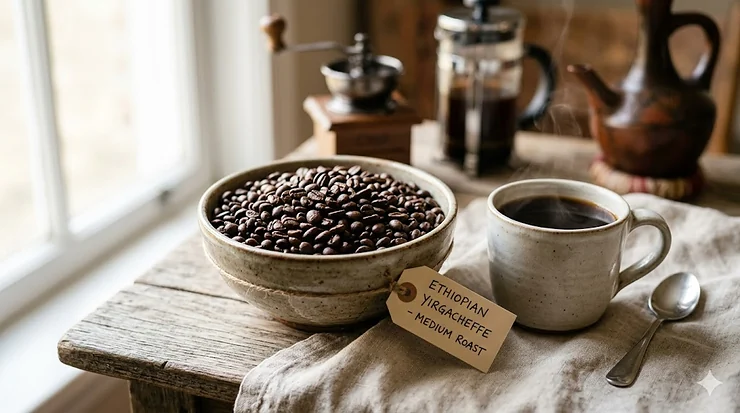
Ethiopian coffee beans represent something rather special in the world of speciality coffee — they’re not just another origin, they’re the birthplace of the entire Arabica species. If you’ve been brewing the same supermarket blend for years and wondering why coffee enthusiasts wax lyrical about Ethiopian varieties, you’re about to discover flavours you didn’t know coffee could produce.
What sets Ethiopian coffee beans apart from everything else on your local coffee shop’s menu? It starts with genetics. Ethiopia is where Coffea arabica, the coffee plant, originates, and the country accounts for around 17% of the global coffee market. This isn’t marketing speak — it’s quite literally where your morning brew began its journey thousands of years ago. According to legend, the 9th-century goat herder Kaldi discovered the coffee plant after noticing the energising effect it had on his flock, though this story didn’t appear in writing until 1671.
Ethiopia hosts an estimated 6,000 to 15,000 unique heirloom varieties — indigenous coffee plants that have evolved naturally over millennia in Ethiopian forests. Unlike the handful of cultivars grown elsewhere, these heirloom varieties create a flavour complexity that’s utterly unmatched. You’ll encounter tasting notes like blueberry jam, bergamot tea, jasmine, and even wine-like characteristics — flavours that would seem absurd in coffee if they weren’t so distinctly present in the cup.
For British coffee drinkers, Ethiopian beans offer an escape from the chocolatey, nutty profiles that dominate most blends. They’re bright, fruity, and floral — the sort of coffee that makes you pause mid-sip and actually pay attention. Whether you’re brewing a morning V60 in your Manchester flat or pulling espresso shots in a Edinburgh café, Ethiopian beans deliver a sensory experience that feels alive rather than merely caffeinated.
Quick Comparison: Top Ethiopian Coffee Beans Available on Amazon.co.uk
| Product | Origin/Processing | Roast Level | Price Range | Best For | Prime Eligible |
|---|---|---|---|---|---|
| We Are Coffee Co 1kg | Ethiopian Highland | Light | £25-£35 | Pour-over enthusiasts | ✓ |
| Union Yayu Forest 1kg | Yayu Wild Forest | Medium | £30-£40 | Conservation-conscious buyers | ✓ |
| Illy Monoarabica Ethiopia 250g | Yirgacheffe | Light-Medium | £8-£12 | Premium gift seekers | ✓ |
| Coffee Direct Sidamo 908g | Sidamo Province | Medium | £15-£25 | Budget-conscious aficionados | ✓ |
| The Mill Sidamo 250g | Sidamo Highland | Medium | £6-£9 | Newcomers to Ethiopian coffee | ✓ |
| Adems Sidamo Green 1kg | Sidamo Unroasted | Green (unroasted) | £18-£28 | Home roasting hobbyists | ✓ |
| Hormozi Coffee Yirgacheffe 227g | Yirgacheffe Washed | Light | £7-£11 | Sample-size exploration | ✓ |
💬 Just one click — help others make better buying decisions too! 😊
Top 7 Ethiopian Coffee Beans: Expert Analysis & UK Availability
1. We Are Coffee Co Ethiopian Coffee Beans 1kg
If you’re serious about exploring what Ethiopian coffee can truly deliver, this single-origin offering from We Are Coffee Co deserves your immediate attention. Grown at altitudes between 1,950 and 2,000 metres in the Ethiopian highlands, these beans undergo careful hand-roasting in small batches using a vintage Whitmee flame roaster — the sort of artisanal approach that actually makes a difference in the cup.
The flavour profile reads like a fruit bowl: pineapple, mango, strawberry jam, and red plum notes dance through each sip. UK reviewers consistently praise the fruity fragrance that fills the room when brewing, noting the beautiful crema it produces in espresso machines and the slightly bitter, light, fruity sharpness that distinguishes it from commercial blends. This light roast showcases everything distinctive about Ethiopian coffee without the heavy-handed roasting that can bulldoze delicate flavour notes.
For British homes, this works brilliantly across multiple brewing methods. The 1kg bag means you’re not constantly reordering, and it arrives via Amazon Fulfillment, which typically means next-day delivery for Prime members. The beans remain fresh for roughly 4-6 weeks after opening if stored properly in an airtight container away from light and moisture — rather important in our damp climate where coffee can absorb unwanted flavours from the air.
Pros:
✅ Distinctive fruit-forward profile unavailable in supermarket blends
✅ Small-batch UK roasting ensures fresher beans than mass-produced alternatives
✅ Generous 1kg size offers better value per cup than smaller boutique bags
Cons:
❌ Light roast may taste thin to those accustomed to dark Italian roasts
❌ Price point sits above budget options (though quality justifies the premium)
Price verdict: Around £25-£35 for 1kg represents fair value for speciality-grade Ethiopian coffee roasted in Britain. You’re paying for quality beans and ethical sourcing, not just marketing.
2. Union Coffee Yayu Wild Forest Ethiopia 1kg
Union Coffee’s Yayu Forest offering stands apart not just for its flavour, but for what your purchase supports. The Yayu Forest Reserve is one of the last remaining places for conservation of wild Arabica coffee, and Union works with the Royal Botanic Gardens Kew, partners in Ethiopia, and the Darwin Initiative to help preserve this coffee forest. Twenty-five pence from each pack goes directly towards ongoing conservation work.
The coffee itself delivers a medium roast with soft citrus acidity, syrupy body, and notes of marzipan, dark chocolate, and bourbon biscuit on the aftertaste. It’s less aggressively fruity than some Ethiopian varieties, making it more approachable for those transitioning from traditional blends. UK customers report it as “absolute coffee bean heaven” when fresh, though some note that beans roasted over six weeks prior to delivery can taste underwhelming — a reminder to always check roast dates when ordering.
This coffee suits British brewing preferences beautifully. It’s roasted in small batches by Union’s award-winning roastmasters here in the UK, and the medium roast level means it works equally well as morning filter coffee or afternoon espresso. The syrupy body stands up nicely to a splash of milk, though purists will want to drink it black to appreciate the citrus brightness.
Pros:
✅ Purchase directly supports wild coffee forest conservation in Ethiopia
✅ Roasted fresh in the UK by respected specialty roaster with transparent sourcing
✅ Medium roast versatility suits multiple brewing methods and taste preferences
Cons:
❌ Occasional freshness issues with Amazon stock (roast dates can exceed 6 weeks)
❌ Higher price point reflects conservation contribution and ethical sourcing practices
Price verdict: Expect to pay around £30-£40 for 1kg. The conservation element adds value beyond just the beans — you’re investing in coffee’s genetic future whilst enjoying an excellent cup today.
3. Illy Monoarabica Ethiopia 250g
For those who want to dip their toes into Ethiopian coffee without committing to a kilogramme bag, Illy’s Monoarabica Ethiopia offers premium quality in a manageable size. The roast is specially calibrated to enhance natural aromatic notes, delivering a delicate and aromatic blend with gentle notes of jasmine that relaxes the senses. This is Ethiopian coffee through an Italian lens — refined, consistent, and impeccably packaged.
Illy’s pressurised tin packaging preserves freshness for up to two years unopened, which matters significantly for British buyers who might not drink coffee daily. Once opened, you’ll want to consume it within a month, but the 250g size makes this achievable even for solo drinkers. The jasmine notes are pronounced but not overwhelming — think orange blossom and chamomile rather than perfume shop.
What you’re paying for here is consistency and convenience. Illy selects only the top 1% of Arabica beans, and their quality control means every tin delivers the same experience. For British buyers accustomed to premium Italian coffee brands, this provides a reliable entry point into Ethiopian origins without the variability sometimes found in smaller roasters’ offerings.
Pros:
✅ Pressurised packaging maintains freshness far longer than standard bags
✅ Premium Italian roasting expertise applied to Ethiopian beans
✅ Smaller 250g size perfect for sampling or gifting
Cons:
❌ Higher cost per kilogramme compared to bulk purchases
❌ Italian roasting style may mute some of the wilder Ethiopian flavour characteristics
Price verdict: Around £8-£12 for 250g (roughly £32-£48/kg) positions this as a premium option. You’re paying for Illy’s brand reputation, packaging technology, and consistent quality — worthwhile for those who value reliability over adventure.
4. Coffee Direct Sidamo Coffee Beans 908g
If you’re looking for authentic Ethiopian Sidamo coffee without the premium price tag, Coffee Direct delivers solid value. These beans from the Sidamo Province are highly valued for their intense flavours of spice and wine, with hints of chocolate, whilst the deep floral aromas, mild strength and bright crisp acidity make them ideal for filter coffees at any time of day. The 908g bag (roughly 2lb) offers a generous amount at a price point that won’t make you wince.
The Sidamo region produces some of Ethiopia’s most distinctive coffee, and these beans capture that character well when fresh. The spice and wine notes are more pronounced than in many Ethiopian offerings, giving the coffee a complexity that holds up across multiple cups. UK reviewers report mixed experiences, however — the first bag often impresses, whilst subsequent purchases can vary significantly in quality. This inconsistency reflects the challenges of maintaining quality control at lower price points.
For British coffee drinkers who consume multiple cups daily and want Ethiopian character without luxury pricing, this represents a practical choice. The whole bean form means you can grind fresh each time, and the flavour profile suits the British palate’s appreciation for tea-like brightness and floral notes. Just be prepared for some batch-to-batch variation.
Pros:
✅ Significantly lower cost per kilogramme than premium specialty offerings
✅ Authentic Sidamo beans with characteristic spice and wine notes
✅ Larger 908g bag reduces frequent reordering
Cons:
❌ Quality inconsistency between batches reported by UK customers
❌ Some bags arrive tasting past their prime (potential storage issues)
Price verdict: Around £15-£25 for 908g (roughly £17-£28/kg) makes this the budget champion. Accept some variability in exchange for affordability, and you’ll find this delivers decent Ethiopian character for everyday drinking.
5. The Mill Ethiopia Sidamo Coffee Beans 250g
The Mill’s Sidamo offering targets newcomers to Ethiopian coffee with an approachable profile and sensible pricing. These beans are grown in highlands at elevations of 1,850-2,100 metres and offer a well-balanced, complex, smooth flavour with distinct characteristics including a rich aroma with chocolate and red fruit overtones. The natural processing method — where cherries dry in the sun on raised beds before processing — creates the naturally sweet flavour that means you won’t need to add sugar.
For British buyers unfamiliar with Ethiopian coffee’s bright, fruity character, this provides a gentler introduction than some of the more aggressively floral Yirgacheffe varieties. The chocolate notes ground the profile in familiar territory, whilst the red fruit overtones hint at what makes Ethiopian coffee special. It works particularly well in a French press or cafetière, which suits how many Britons already brew their morning coffee.
The 250g size feels right for exploration. You’re not committing to a kilogramme of something you might not enjoy, and the lower price point removes the financial risk. Prime delivery means you can order on a whim and have it tomorrow, making this an excellent choice for satisfying sudden curiosity about Ethiopian coffee.
Pros:
✅ Beginner-friendly profile balances familiar chocolate notes with Ethiopian fruit character
✅ Natural processing creates inherent sweetness without added sugar
✅ Small 250g size minimises financial risk for first-time buyers
Cons:
❌ Higher cost per kilogramme than bulk purchases (though appropriate for sample size)
❌ May lack the intensity sought by experienced Ethiopian coffee enthusiasts
Price verdict: Around £6-£9 for 250g (roughly £24-£36/kg) represents reasonable value for a gateway Ethiopian coffee. Perfect for testing whether you enjoy the origin before investing in larger quantities.
6. Adems Sidamo Ethiopian Green Coffee Beans 1kg
For the growing community of UK home roasters, Adems offers unroasted Sidamo beans that let you control every aspect of your coffee’s final character. These Grade AAA beans undergo full washing and sun-drying on raised beds, producing cupping notes of dark chocolate, caramel wafer, lemon acidity, and grapefruit finish when properly roasted. Green beans store for months without degrading, solving the freshness problem that plagues pre-roasted coffee.
Home roasting has surged in popularity across Britain, particularly in cities where speciality coffee culture thrives. A simple popcorn popper or dedicated home roaster lets you transform these green beans into the freshest coffee you’ve ever tasted — often within 24 hours of roasting, which is impossible to achieve with commercial purchases. The ritual appeals to the same British sensibilities that drive home brewing beer and sourdough baking.
What most buyers overlook about green beans is the economic advantage. You’re purchasing coffee at import prices rather than retail, and 1kg of green beans yields roughly 800-850g of roasted coffee after moisture loss. That makes the per-cup cost remarkably low, though you must invest time learning to roast properly. The learning curve isn’t steep, but expect your first few batches to be educational rather than exceptional.
Pros:
✅ Absolute freshness control — roast exactly when you want to drink
✅ Significantly lower cost per cup than purchasing pre-roasted speciality beans
✅ Green beans store for 6-12 months without quality degradation
Cons:
❌ Requires equipment and skill to roast (learning curve for beginners)
❌ Roasting process creates smoke and chaff that needs management in UK homes
Price verdict: Around £18-£28 for 1kg of green beans (yielding 800-850g roasted) represents exceptional value at roughly £22-£35/kg roasted equivalent. Factor in equipment costs, but serious coffee drinkers recoup the investment within months.
7. Hormozi Coffee Ethiopian Yirgacheffe 227g
Yirgacheffe deserves its reputation as the crown jewel of Ethiopian coffee regions, and Hormozi’s offering lets you explore why without significant financial commitment. This smaller 227g bag captures the quintessential Yirgacheffe character — intensely floral, tea-like, with pronounced citrus notes that distinguish it from every other Ethiopian region. Washed Yirgacheffe coffees are known for their florals and stone fruits, with profiles ranging from jasmine to apricot depending on specific varieties and processing.
For British coffee enthusiasts who’ve mastered brewing Ethiopian Sidamo and want to understand what makes Yirgacheffe special, this provides the answer. The flavour is brighter, more complex, and requires precise brewing to extract properly. Under-extract and you’ll get sour tea; over-extract and bitterness overwhelms the delicate florals. But dial it in correctly — perhaps using a V60 or AeroPress with water around 93°C — and you’ll taste coffee that seems to hover between beverage and perfume in the most delightful way.
The compact size suits London and Edinburgh flats where storage space comes at a premium. It’s also brilliant for building a home tasting flight — purchase this alongside a Sidamo and a natural-process Ethiopian to understand how region and processing method affect flavour. That sort of comparative exploration transforms casual coffee drinking into genuine appreciation.
Pros:
✅ Authentic Yirgacheffe character at entry-level pricing
✅ Sample size enables exploration without wastage or significant expense
✅ Light roast showcases the delicate florals Yirgacheffe is famous for
Cons:
❌ Requires precise brewing technique to extract properly (not forgiving to errors)
❌ Very small package size means frequent reordering for regular drinkers
Price verdict: Around £7-£11 for 227g (roughly £31-£48/kg) positions this as premium per-kilogramme but accessible for sampling. The small size justifies the higher rate — you’re paying for exploration convenience rather than bulk efficiency.
How Washed Ethiopian Coffee Differs from Natural Process Beans
One of the most consequential decisions in Ethiopian coffee production happens after harvest: how the cherry surrounding the bean gets removed. This choice fundamentally alters what ends up in your cup, and understanding the difference helps you select beans that match your taste preferences.
Washed Process: Clean Brightness
The washed process involves depulping coffee cherries and fermenting them in water for a specific duration, then thoroughly washing to remove remaining pulp before drying on raised beds or patios. This method, prevalent in Yirgacheffe and parts of Sidamo, produces exceptionally clean cups with bright acidity and pronounced floral notes.
Washed Ethiopian coffees taste more like tea than traditional coffee — imagine Earl Grey with its bergamot notes, or jasmine green tea’s delicate florals. The process strips away fruit sugars that would otherwise influence flavour, letting the bean’s inherent characteristics shine through unadorned. For British palates accustomed to tea’s refinement, washed Ethiopian coffees often feel more intuitive than the fruit-bomb naturals.
The challenge with washed coffees lies in brewing. They’re less forgiving than natural-process beans — slight over-extraction brings bitterness that can overwhelm the delicate florals you’re paying premium prices to experience. Use water around 92-94°C, aim for shorter contact times, and grind slightly coarser than you might for other origins. The reward is a cup that tastes genuinely different from every other coffee in your cupboard.
Natural Process: Fruit-Forward Intensity
Natural processing takes the opposite approach: coffee cherries are spread in the sun right after picking, placed on raised beds or tables to dry evenly, with the fruit pulp remaining on the bean throughout. The beans essentially ferment inside the cherry for weeks, absorbing fruit sugars and developing wild, jammy flavour profiles.
Natural Ethiopian coffees taste like blueberry compote, strawberry jam, sometimes even red wine. They’re syrupy, sweet, and explosively fruity in ways that can genuinely shock first-time drinkers. “This is coffee?” becomes a common reaction. The body tends to be heavier than washed coffees, and the finish lingers on your palate long after you’ve swallowed.
For British coffee drinkers, naturals work brilliantly as afternoon or evening coffee — they’re substantial enough to feel like dessert in a cup. They’re also more forgiving in brewing; the fruit sugars provide a buffer against over-extraction, and they maintain flavour even when brewed slightly too long or too hot. If you’re new to Ethiopian coffee and want something immediately impressive, start with a natural-process Sidamo or Guji.
Which Should You Choose?
Your brewing method and taste preferences provide the answer. Washed Ethiopian coffees excel in pour-over methods (V60, Chemex, AeroPress) where you can control every variable precisely. They’re morning coffees — bright, alert, intellectually engaging. Natural-process beans thrive in French press or as espresso, where their body and sweetness create immediate satisfaction. They’re afternoon indulgences — comforting, flavourful, emotionally satisfying.
British weather offers another consideration: on grey, drizzly mornings when you need brightness to compensate for the lack of sunshine, reach for washed Yirgacheffe. On cosy winter evenings when you want warmth and sweetness whilst reading by the fire, natural-process Sidamo delivers exactly what the moment requires.
Why Ethiopian Heirloom Varieties Deliver Flavours You Won’t Find Elsewhere
Walk into any British speciality coffee shop and you’ll see bags labelled “Ethiopian Heirloom” with minimal variety information beyond that generic term. It seems evasive — why can’t roasters specify which variety you’re buying? The answer reveals something fascinating about Ethiopian coffee’s genetic diversity.
The Reality of 10,000+ Varieties
Ethiopia houses an estimated 6,000-15,000 distinct heirloom varieties, with most remaining genetically unidentified due to the impracticality and expense of comprehensive DNA testing. These aren’t cultivated varieties bred by agricultural research centres — they’re indigenous plants that evolved naturally over thousands of years in Ethiopian forests and smallholder gardens.
Most Ethiopian coffee farmers grow multiple varieties intermixed on the same plot. When cherries arrive at processing stations, they’re typically combined from dozens of farms, creating a genetic mixtape that defies precise identification. The term “heirloom” serves as industry shorthand acknowledging indigenous origin, uncharacterised diversity, and mixed populations grown side-by-side. It’s not evasiveness — it’s honesty about the impossibility of precise variety tracking in Ethiopia’s fragmented farming landscape.
For UK coffee buyers, this genetic chaos creates the flavour complexity that makes Ethiopian coffee special. You’re not drinking a single variety optimised for yield and disease resistance — you’re tasting the cumulative flavour potential of hundreds of genetic variations that have survived in nature because they produce exceptional coffee, not just high volumes.
Regional Genetic Signatures
Whilst individual variety identification proves impractical, regional patterns emerge clearly. Yirgacheffe varieties differ genetically from those in Guji, which differ from Kaffa forest varieties — centuries of natural selection and farmer seed-saving have created distinct regional genetic profiles. This explains why Yirgacheffe consistently delivers floral, tea-like profiles whilst Guji tends toward berry-forward sweetness.
British buyers should pay more attention to region than variety when selecting Ethiopian coffee. A bag simply labelled “Ethiopian Heirloom” tells you less than one specifying “Yirgacheffe Washed” or “Guji Natural” — the region and processing method predict flavour far more reliably than variety designations that can’t be verified anyway.
JARC Varieties: The Exception
Not all Ethiopian coffee comes from wild heirloom populations. The Jimma Agricultural Research Centre has developed 40 varieties bred specifically for pest resistance and higher yields. These JARC varieties appear occasionally in commercial coffees and deliver consistent quality, though coffee enthusiasts often prefer the unpredictable brilliance of true heirlooms.
For practical purposes, unless a bag specifically mentions a JARC variety number (like 74110 or 74112), assume you’re buying heirloom genetics. That genetic wildness accounts for batch-to-batch variation that frustrates some buyers but delights others — every bag offers subtle flavour discoveries even from the same farm and harvest.
The Kaldi Legend: Separating Ethiopian Coffee Folklore from Historical Fact
Every origin story worth telling contains both truth and embellishment, and Ethiopian coffee’s foundation myth proves no exception. Understanding what we actually know versus what makes for compelling storytelling helps contextualise the beans you’re brewing each morning.
The Goat Herder Tale
According to legend, the 9th-century goat herder Kaldi discovered coffee after noticing the energising effect it had on his flock when they ate bright red berries from a particular shrub, though this story didn’t appear in writing until 1671. That eight-century gap between supposed event and documentation should raise immediate scepticism — oral traditions evolve considerably across such timespans.
The legend typically continues with Kaldi reporting his discovery to monks at a nearby monastery, who initially disapproved and threw the berries into fire. The enticing aroma from roasting beans supposedly prompted them to rescue the roasted seeds, grind them, and dissolve them in hot water — creating the world’s first cup of coffee. It’s narratively satisfying and contains plausible elements, but it’s folklore rather than verified history.
For British coffee drinkers seeking the genuine origins of their morning brew, the Kaldi story serves better as cultural context than historical fact. It reveals how Ethiopians themselves understand coffee’s place in their heritage — as an indigenous discovery born from observation of nature rather than deliberate cultivation.
What We Actually Know
The coffee plant originates in the Ethiopian region of Kaffa, and coffee has been growing in Ethiopia for thousands of years in the forests of the southwestern highlands. Genetic evidence confirms Ethiopia as Coffea arabica’s centre of origin — the place where the species evolved and diversified before spreading elsewhere.
Ethiopia is the world’s fifth largest coffee producer and Africa’s top producer, with over 4 million small-scale farmers producing coffee, and roughly half the coffee consumed domestically. This domestic consumption tradition suggests coffee’s role in Ethiopian culture extends far deeper than export economics — it’s woven into daily social rituals through the elaborate coffee ceremony that remains central to Ethiopian hospitality.
For understanding the coffee in your cup, the key historical fact is this: coffee spread from Ethiopia to Yemen around 600 years ago, and from Arabia began its journey around the world. Everything outside Ethiopia represents coffee’s diaspora — descendants of seeds that originated in these highland forests you’re now supporting with your Amazon.co.uk purchases.
Why the Legend Persists
Coffee roasters and marketers perpetuate the Kaldi story because it’s memorable and positions Ethiopian coffee as authentic in ways other origins can’t claim. For British buyers, the legend functions as useful shorthand: when you see Kaldi referenced on packaging, you’re signalled that the roaster values Ethiopian coffee’s historical primacy and wants to connect consumers to that heritage.
The truth needs no embellishment: Ethiopian coffee is genuinely original in ways that matter. The genetic diversity, the indigenous varieties, the centuries of cultivation experience — these verifiable facts provide more compelling reasons to buy Ethiopian beans than any goat herder tale, however charming.
How to Brew Ethiopian Coffee Beans for Maximum Flavour in British Water
British tap water presents unique challenges for brewing exceptional coffee. Our water tends to be moderately hard to hard depending on region, with London water notoriously high in calcium and magnesium whilst Scottish water runs considerably softer. This mineral content profoundly affects how coffee extracts, and Ethiopian beans — with their delicate floral notes and bright acidity — respond particularly sensitively to water chemistry.
Understanding Your Water
Hard water (prevalent across much of England, particularly the Southeast) contains high mineral content that can mute Ethiopian coffee’s distinctive brightness. The calcium and magnesium bind with flavour compounds, creating a duller cup that misses the point of paying premium prices for Yirgacheffe or Sidamo beans. Soft water (common in Scotland, Wales, and parts of Northern England) extracts more aggressively, sometimes pulling unwanted bitterness from light-roasted Ethiopian beans.
The ideal water for Ethiopian coffee sits somewhere between these extremes — moderately mineralised with a balanced calcium-to-magnesium ratio. If you live in a hard water area, consider using bottled water for your best Ethiopian coffees. Tesco Ashbeck and Waitrose Essential still water work brilliantly, with mineral profiles that enhance rather than obscure Ethiopian coffee’s character. In soft water areas, your tap water likely works fine, though you might need to adjust brewing parameters to prevent over-extraction.
Brewing Methods That Showcase Ethiopian Character
Pour-Over (V60, Chemex): These methods excel with washed Ethiopian coffees. Grind medium-fine (similar to granulated sugar), use water at 92-94°C, and maintain a 1:16 coffee-to-water ratio. Pour slowly in circular motions, keeping total brew time between 2:30-3:30 minutes. The clean extraction highlights floral notes whilst avoiding bitterness. For British homes, an electric kettle with temperature control (around £30-50 on Amazon.co.uk) makes this process reliable rather than guesswork.
French Press: Suits natural-process Ethiopian beans beautifully. Grind medium-coarse (breadcrumb texture), use water at 94-96°C, and steep for exactly 4 minutes before plunging slowly. The immersion method extracts the syrupy body and fruit notes whilst the metal filter allows beneficial oils through. Clean your French press thoroughly after each use — Ethiopian coffee’s fruity characteristics can leave residual oils that turn rancid in Britain’s damp climate, creating off-flavours in subsequent brews.
AeroPress: Brilliantly versatile for Ethiopian coffee, particularly in compact British flats where space limits equipment. For bright, clean cups, use the standard method with fine-medium grind and 80-second brew time. For heavier body resembling French press, try the inverted method with 2-minute steep. Water temperature between 85-92°C works across most Ethiopian varieties. The AeroPress’s portability suits British lifestyles — brew excellent coffee in your office, on camping trips, or in holiday cottages without dragging heavy equipment along.
Espresso: Requires more finesse with Ethiopian beans than darker roasts. Pull shorter shots (1:2 ratio, 25-30 seconds) to preserve acidity and prevent excessive bitterness. Many British home espresso machines struggle with light-roasted Ethiopian beans — the harder bean structure from shorter roasting requires higher pressure and precise temperature control. If your shots taste sour or watery, your machine may lack sufficient power for these beans. Consider medium-roast Ethiopian varieties for more forgiving extraction.
Adjusting for British Climate
Our damp climate affects coffee storage and brewing in ways Mediterranean or Scandinavian coffee drinkers needn’t consider. Ethiopian coffee beans absorb moisture from humid air, which dulls flavour and accelerates staling. Store beans in airtight containers away from steam-prone kitchen areas. The countertop next to your kettle seems convenient until you realise the constant humidity exposure is ruining your £30 bag of Yirgacheffe within a week.
Grind fresh immediately before brewing — pre-ground coffee stales within hours in British humidity. A decent burr grinder (hand or electric, around £40-150 on Amazon.co.uk) transforms your coffee quality more than any other single investment. The Hario Mini Mill hand grinder suits small British kitchens perfectly and costs under £40, whilst the Sage Smart Grinder Pro (around £150) handles everything from espresso to French press with consistent results.
British winter mornings present particular challenges. When your kitchen hovers around 15°C, preheating your brewing equipment matters significantly. Rinse your V60, Chemex, or French press with hot water before brewing — otherwise, the equipment sinks heat from your brew water, dropping extraction temperature and producing sour, under-extracted coffee. This two-second habit dramatically improves winter coffee quality.
Common Mistakes British Buyers Make When Purchasing Ethiopian Coffee Beans
After reviewing hundreds of UK customer experiences with Ethiopian coffee, clear patterns emerge in what disappoints buyers versus what delivers satisfaction. Most frustration stems from mismatched expectations or basic mistakes in selection and storage rather than actual bean quality.
Ignoring Roast Dates
Many UK customers report disappointment when Ethiopian beans arrive roasted over six weeks prior to delivery, resulting in underwhelming flavour compared to fresh batches. Amazon’s inventory system doesn’t always rotate stock efficiently, particularly for smaller roasters’ products. Ethiopian coffee’s delicate floral and fruit notes fade faster than robust Indonesian or Brazilian beans — what tastes vibrant within two weeks of roasting becomes muted and cardboardy by week eight.
Always check the roast date before purchasing from Amazon.co.uk. Some sellers display roast dates on product pages; others require contacting them directly. For premium Ethiopian coffees costing £30-40 per kilogramme, you deserve beans roasted within the past fortnight. Consider subscribing to roasters’ direct websites rather than relying on Amazon stock rotation — companies like Union and We Are Coffee Co roast to order when you purchase from their sites, guaranteeing freshness impossible through marketplace channels.
Buying Too Much at Once
British buyers often purchase 1kg bags for economy, then wonder why the coffee tastes brilliant for the first fortnight and disappointing by week four. Unless you consume 250g+ weekly (roughly 3-4 cups daily for one person), a kilogramme bag exceeds what you can drink whilst beans remain peak-fresh. Ethiopian coffee’s volatile aromatics degrade faster than the robust compounds in darker roasts.
The solution: buy smaller quantities more frequently, or invest in proper storage. If you must purchase in bulk, immediately divide the kilogramme into four portions of 250g each. Store three in the freezer in airtight containers (ideally vacuum-sealed bags or mason jars), keeping only one portion for immediate use. Freezing pauses staling rather than reversing it — freeze fresh beans within days of roasting, not stale ones hoping to resurrect them. Defrost each portion fully before opening the container to prevent condensation from ruining the beans.
Expecting Chocolate and Nuts
British coffee culture largely centres around chocolatey, nutty profiles from medium-dark roasts. Ethiopian coffee tastes nothing like this. Ethiopian heirloom coffees tend to be fruity and floral, with profiles ranging from berry fruits, stone fruits, citrus, florals, bergamot, and green tea notes depending on region and processing. New buyers expecting familiar coffee flavours often react negatively to their first Ethiopian experience — “this tastes like perfume” or “is this tea or coffee?” appear frequently in reviews.
If you’re exploring Ethiopian coffee for the first time, understand you’re entering unfamiliar flavour territory. Start with natural-process Sidamo beans, which offer fruit-forward sweetness more immediately accessible than washed Yirgacheffe’s tea-like florals. Brew it properly (don’t over-extract), and give yourself 3-4 cups to recalibrate your palate before deciding whether you enjoy the origin. Many initially sceptical British drinkers become Ethiopian coffee devotees once they stop expecting it to taste like their usual blend.
Brewing Too Hot or Too Long
Ethiopian coffee’s delicate flavour compounds degrade quickly under excessive heat or extended extraction. British kitchens typically use boiling kettles (100°C), which is far too hot for light-roasted Ethiopian beans. Dense Ethiopian beans produce more fine particles when ground, which can lead to clogging or over-extraction, making the cup taste dry or bitter. You must grind slightly coarser than normal and reduce brew temperature to 92-94°C maximum.
Invest in a temperature-controlled kettle or simply wait 60-90 seconds after boiling before pouring over your grounds. For French press, the higher brewing temperature (94-96°C) works fine, but ruthlessly adhere to the 4-minute steep time — 5+ minutes extracts bitter compounds that ruin Ethiopian coffee’s brightness. British tea-drinking culture teaches us to brew longer for strength, but this logic backfires spectacularly with Ethiopian coffee. More extraction time equals worse flavour, not better.
Neglecting Storage Conditions
British homes’ damp climate accelerates coffee staling through moisture absorption. Leaving Ethiopian beans in their original bag with a folded-over top invites disaster within days. The beans pull moisture from humid air (particularly problematic near cookers, dishwashers, or windows where condensation forms), which dulls aromatics and promotes staling.
Immediately transfer beans to airtight containers stored in cool, dark cupboards away from heat sources and humidity. Glass mason jars with rubber seals work excellently and cost under £10 for a set on Amazon.co.uk. Avoid clear containers left on countertops — light degrades coffee almost as fast as oxygen. Some British coffee enthusiasts keep beans in opaque, airtight containers inside cupboards, which provides double protection against humidity and light.
The fridge seems tempting for UK homes without air conditioning, but unless beans are sealed perfectly in airtight containers, they’ll absorb food odours within 48 hours. Your expensive Yirgacheffe shouldn’t taste like last night’s curry. Room temperature storage in proper containers beats refrigeration 999 times out of 1,000.
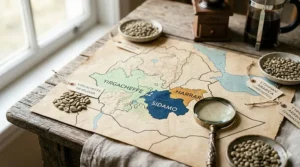
Ethiopian Coffee Regions Decoded: Yirgacheffe vs Sidamo vs Harrar
Ethiopia’s coffee-growing regions each deliver distinct flavour profiles shaped by altitude, soil, microclimate, and traditional processing methods. Understanding these regional characteristics helps British buyers select beans matching their taste preferences without trial-and-error purchasing.
Yirgacheffe: The Floral Aristocrat
Yirgacheffe coffees are known for their vibrant and complex flavour profiles, typically exhibiting medium body, bright acidity, and floral and fruity notes including jasmine, melon, citrus, blueberry, and wine-like characteristics. This region, technically a microregion within Sidamo, has achieved such renown that it trades under its own designation with protected status.
Yirgacheffe suits British coffee drinkers who appreciate tea’s refinement and complexity. The best Yirgacheffe coffees taste more like Earl Grey or jasmine tea than conventional coffee — delicate, perfumed, intellectually engaging rather than comfort-seeking. They’re morning coffees for contemplative moments, not grab-and-go convenience. Washed Yirgacheffe particularly showcases florals and stone fruits, delivering intensely bright and clean profiles.
For UK buyers, Yirgacheffe represents premium Ethiopian coffee at premium prices. Expect to pay £35-50 per kilogramme for quality examples. The investment rewards those who’ve developed palates for subtle distinction — newcomers to Ethiopian coffee might find Yirgacheffe too delicate or strange, better to start with Sidamo’s more approachable profile and graduate to Yirgacheffe once you understand what makes Ethiopian coffee special.
Sidamo: The Versatile Classic
Sidamo coffee is well-balanced with cupping notes exhibiting berries and citrus with complex acidity, grown at elevations from 1,500 up to 2,200 metres where beans grow more slowly and therefore have more time to absorb nutrients and develop more robust flavours. Sidamo delivers Ethiopian character without Yirgacheffe’s extremity — it’s fruit-forward and floral but grounded enough to feel recognisable as coffee.
For British buyers exploring Ethiopian coffee, Sidamo provides the ideal starting point. The most distinctive flavour notes found in Sidamo coffees are lemon and citrus with bright crisp acidity, making them ideal for filter coffees at any time of day. You’ll encounter the berry sweetness and floral aromatics that define Ethiopian coffee, but with sufficient body and balance to satisfy those accustomed to fuller-flavoured beans.
Sidamo’s versatility extends to brewing methods — it works brilliantly in French press, pour-over, AeroPress, or even as espresso when roasted slightly darker. UK availability proves excellent across Amazon.co.uk, with prices ranging from budget-friendly £20/kg options to premium £40/kg selections. The region’s large production volume ensures consistent availability year-round, unlike smaller microregions that sell out quickly.
Harrar: The Wild Card
Harrar coffees are known for their medium to full body, winey acidity, and complex flavour profile including blueberry, strawberry, blackberry, dark chocolate, and often having a unique wild and earthy taste with hints of spice. Grown in Eastern Ethiopia at lower elevations than Yirgacheffe or Sidamo, Harrar coffees traditionally undergo natural processing, creating intensely fruity profiles with gamey, almost fermented undertones.
British buyers either love or hate Harrar coffee — rarely does anyone feel neutral. The wild, wine-like characteristics can taste extraordinarily complex or uncomfortably funky depending on the batch and your palate preferences. It’s Ethiopian coffee’s adventurous edge, less refined than Yirgacheffe but more distinctive than mainstream Sidamo. The earthy notes appeal to those who enjoy natural wines or aged cheeses — flavours that challenge rather than comfort.
UK availability for Harrar proves spottier than Yirgacheffe or Sidamo. When you encounter quality Harrar beans on Amazon.co.uk, they’re worth trying if you’ve already explored gentler Ethiopian regions and want something genuinely different. Don’t start your Ethiopian coffee journey here unless you’re particularly adventurous — the unique character can put off newcomers whilst delighting experienced coffee enthusiasts seeking novelty.
UK Legal Requirements: What You Need to Know About Importing Ethiopian Coffee
British buyers purchasing Ethiopian coffee through Amazon.co.uk needn’t worry about import duties or customs clearance — the seller handles these complexities before listing products. However, understanding the regulatory landscape helps explain pricing and why certain products appear on UK Amazon whilst others don’t.
Post-Brexit Import Considerations
Since Brexit, coffee imported directly from Ethiopia faces different treatment than during EU membership. Commercial importers must comply with UKCA (UK Conformity Assessed) marking requirements for packaged goods, though raw agricultural products like coffee beans receive some exemptions. Beginning in 2017, reforms to Ethiopia’s ECX trading rules aimed to restore traceability and allow greater flexibility in the coffee value chain, enabling buyers to trace coffees back to original washing stations. These reforms benefit UK specialty roasters seeking transparent supply chains.
For British consumers, post-Brexit changes primarily manifest in pricing. Some Ethiopian coffees now carry slightly higher UK prices due to import adjustments, though you benefit from UK consumer protection, hassle-free returns under the Consumer Rights Act 2015, and local warranty support. Products sold through Amazon.co.uk by UK-registered sellers offer stronger consumer protections than grey-market imports from EU or US Amazon sites.
Food Standards and Safety
Ethiopian coffee imported to the UK must comply with Food Standards Agency regulations regarding pesticide residues, mycotoxins, and contamination. Reputable sellers on Amazon.co.uk source from suppliers meeting these standards, but budget imports occasionally bypass proper testing. Organic certification (EU Organic or Soil Association) provides additional assurance that beans meet strict standards for chemical-free cultivation.
British buyers should verify that Ethiopian coffee sellers maintain proper UK food business registration. Legitimate companies display registration details in product listings or seller information. This registration ensures they follow UK food safety protocols, trace contamination when necessary, and maintain insurance covering product liability — protections you forfeit when purchasing from unregistered overseas sellers.
Consumer Rights Act 2015 Protection
UK consumers purchasing Ethiopian coffee through Amazon.co.uk enjoy 14-day cooling-off periods under Consumer Contracts Regulations for online purchases, stronger than protections in many other markets. If beans arrive stale, mislabelled, or significantly different from descriptions, you can return them for full refunds regardless of whether you’ve opened the package.
This protection matters particularly for Ethiopian coffee, where freshness directly determines quality. If beans arrive roasted months prior despite seller claims of fresh roasting, the Consumer Rights Act supports your refund request. Document roast dates with photos when packages arrive — this evidence strengthens claims if sellers dispute freshness issues.
Frequently Asked Questions
❓ Are Ethiopian coffee beans suitable for espresso machines in the UK?
❓ How long do Ethiopian coffee beans stay fresh after opening in British climate?
❓ What's the difference between Ethiopian coffee sold on Amazon.co.uk versus direct from roasters?
❓ Can I use Ethiopian coffee beans in a standard drip coffee maker common in British homes?
❓ Are organic Ethiopian coffee beans worth the premium price on Amazon.co.uk?
Conclusion: Your Path to Better Ethiopian Coffee in the UK
Ethiopian coffee beans deserve their premium pricing and enthusiast following — they genuinely deliver flavour experiences unavailable from any other origin. The fruity brightness, floral aromatics, and wine-like complexity stem from thousands of years of genetic evolution in coffee’s birthplace, creating diversity no cultivated varieties can match.
For British coffee drinkers ready to move beyond supermarket blends, Ethiopian coffee provides the most dramatic flavour upgrade available. Start with natural-process Sidamo beans to experience fruit-forward sweetness in familiar territory, then progress to washed Yirgacheffe once you’ve recalibrated your palate for tea-like refinement. Store beans properly in Britain’s damp climate, brew at appropriate temperatures, and always check roast dates before purchasing.
The products reviewed here — from budget-friendly Coffee Direct Sidamo to premium Union Yayu Forest — all deliver authentic Ethiopian character when fresh and properly brewed. Your choice depends on budget, brewing method, and whether you prioritise conservation support or simple value. Amazon.co.uk makes accessing these beans effortless with Prime delivery across Britain, though direct roaster purchases guarantee maximum freshness for premium varieties.
Ethiopian coffee rewards attention and care in ways robustly-roasted beans never do. The effort invested in proper brewing, storage, and selection returns dividends in every cup — flavours that make you pause mid-conversation and actually taste what you’re drinking. That transformation from caffeinated utility to genuine sensory pleasure justifies the premium pricing and learning curve entirely.
Recommended for You
- Best Italian Roast Coffee Beans: 7 Bold UK Picks (2026)
- Best Dark Roast Coffee Beans UK 2026: 7 Expert Picks
- Best Medium Roast Coffee Beans UK 2026 – Top 7 Picks
Disclaimer: This article contains affiliate links. As an Amazon Associate, I earn from qualifying purchases. If you purchase products through these links, we may earn a small commission at no additional cost to you.
✨ Found this helpful? Share it with your mates! 💬🤗
