
In This Article
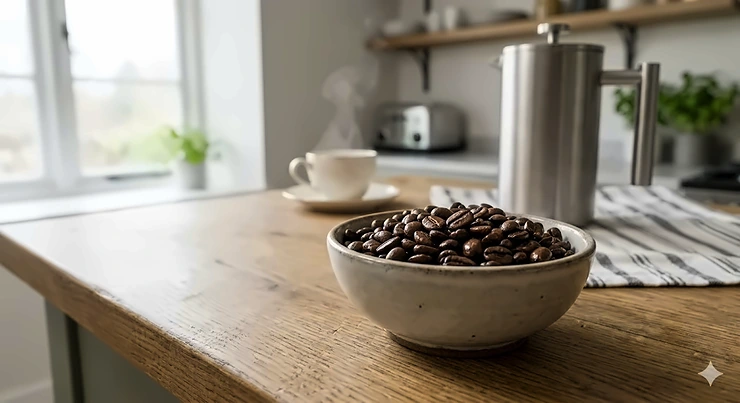
There’s something rather magnificent about cracking open a bag of proper Italian roast coffee beans — that smoky, almost volcanic aroma that fills your kitchen and promises a coffee experience far removed from your average high street brew. Italian roast coffee beans represent one of the darkest roasting styles available, where beans are pushed to temperatures exceeding 455°F (235°C), creating an almost black, gloriously oily surface that glistens like obsidian.
What most UK buyers don’t immediately grasp is that “Italian roast” refers to the roasting method rather than the bean’s geographical origin. These beans undergo such intense heat that they develop bold, smoky flavours with notes of dark chocolate, charred wood, and bittersweet spice — whilst simultaneously losing much of their original fruity characteristics. According to research on coffee roasting chemistry, this extended roasting process causes beans to lose between 15-18% of their weight through moisture evaporation, creating a more porous structure that extracts beautifully under the high pressure of espresso machines.
For those of us navigating Britain’s often dreary mornings, Italian roast delivers that robust, no-nonsense kick that cuts through the grey drizzle. Whether you’re pulling espresso shots on a bean-to-cup machine in your compact London flat or brewing a strong cafetière in your Yorkshire cottage, these beans offer intensity and depth that lighter roasts simply can’t match. The beauty lies in their versatility — they’re equally at home in a traditional moka pot, a professional espresso machine, or even a simple French press, though they particularly shine when prepared as espresso, creating that thick, velvety crema Italian café culture is famous for.
In this comprehensive guide, I’ve researched and analysed the best Italian roast coffee beans currently available on Amazon.co.uk, evaluating everything from flavour profiles and UK availability to value for money and real customer feedback from British buyers. Let’s find your perfect brew.
Quick Comparison: Top Italian Roast Coffee Beans
| Product | Roast Level | Bean Type | Price Range (1kg) | Best For | Prime Eligible |
|---|---|---|---|---|---|
| Lavazza Qualità Rossa | Medium-Dark (5/10) | Arabica/Robusta | £14-£18 | Everyday drinking | ✅ |
| Kimbo Espresso Napoli | Dark (Intense) | Arabica/Robusta | £20-£28 | Traditional espresso | ✅ |
| illy Classico | Medium | 100% Arabica | £26-£32 | Smooth, refined taste | ✅ |
| Italian Aroma Cappuccino | Dark (Full City) | Arabica blend | £22-£28 | Rich, sweet espresso | ✅ |
| Taylors of Harrogate Rich Italian | Medium-Dark (4/6) | Arabica blend | £18-£24 | Balanced strength | ✅ |
| Segafredo Intermezzo | Dark | Arabica/Robusta | £16-£22 | Budget-conscious | ✅ |
| Caffè Vergnano 1882 | Medium-Dark | Arabica blend | £20-£26 | Premium quality | ✅ |
💬 Just one click — help others make better buying decisions too!😊
Top 7 Italian Roast Coffee Beans: Expert Analysis
1. Lavazza Qualità Rossa — The Everyday Italian Classic
The Lavazza Qualità Rossa has been gracing British kitchens since the 1970s, and there’s a reason it remains one of Amazon.co.uk’s bestsellers. This medium-dark roast (intensity 5/10) delivers that recognisable Italian character without overwhelming your palate first thing on a Monday morning.
The blend combines Arabica and Robusta beans sourced from Brazil, Africa, and Southeast Asia, creating a well-rounded profile with hints of chocolate and dried fruit. What the spec sheet won’t tell you is how forgiving these beans are — grind them slightly too coarse or extract a touch too long, and you’ll still end up with a perfectly drinkable cup rather than the bitter disaster some darker roasts become. This makes them particularly suitable for bean-to-cup machines where you’re not manually dialling in every shot.
UK customers consistently praise the creamy texture and balanced strength, noting it works brilliantly both as straight espresso and in milk-based drinks. One Brighton-based reviewer mentioned using them daily for the past three years without any hint of flavour fatigue — high praise indeed. The 1kg bag typically lasts a household about three weeks with moderate consumption.
Pros:
✅ Excellent value in the £14-£18 range
✅ Forgiving extraction window suits beginners
✅ Creates beautiful crema for cappuccinos
Cons:
❌ Medium-dark roast won’t satisfy extreme dark roast enthusiasts
❌ Some find it slightly one-dimensional for espresso purists
Price-wise, you’re looking at around £15-£17 for 1kg on Amazon.co.uk, often with Subscribe & Save discounts that knock another 5-10% off. For everyday drinking without breaking the bank, it’s genuinely hard to fault.
2. Kimbo Espresso Napoli — Authentic Neapolitan Intensity
If Lavazza is the friendly introduction to Italian coffee, Kimbo Espresso Napoli is the deep dive into southern Italian espresso culture. Roasted in Naples using methods handed down through generations, these beans deliver the sort of intensity that makes your morning commute through Manchester drizzle feel almost bearable.
This dark roast blend of Arabica and Robusta creates a powerful, full-bodied espresso with pronounced smoky and roasted notes. The key specification here is the roast level — significantly darker than Lavazza, which translates to more oils on the bean surface and a bolder, more assertive flavour profile. What this means in practice: you’ll want to dial your grinder finer and possibly drop your extraction temperature by a degree or two to avoid over-extraction, particularly if you’re working with hard water (common across much of Southeast England and the Midlands).
British customers report mixed experiences depending on their equipment and preferences. Those with quality espresso machines rave about the thick, persistent crema and traditional Italian bar taste. However, a few reviewers noted receiving beans roasted 6-7 months prior to delivery — not ideal when freshness matters. Worth checking the roast date upon arrival.
Pros:
✅ Authentic Neapolitan roasting tradition
✅ Exceptional crema production
✅ Traditional Italian bar flavour profile
Cons:
❌ Can taste overly bitter if over-extracted
❌ Occasional freshness issues with Amazon stock
Expect to pay around £22-£28 per kilogramme. Not the cheapest option, but if you’re recreating that Naples café experience in your Nottingham kitchen, it’s worth the investment.
3. illy Classico — The Sophisticated Alternative
illy Classico occupies a curious position in the Italian roast world — technically a medium roast, yet possessing enough body and character to satisfy those seeking Italian coffee tradition without the charred intensity. This 100% Arabica blend represents illy’s signature approach: meticulous bean selection from Central and South America, India, and Africa, all meeting rigorous quality standards.
The medium roast profile means these beans retain more of their origin characteristics — notes of caramel, orange blossom, and jasmine become apparent, particularly when brewed slightly cooler (around 92°C rather than the standard 94-96°C). This is coffee for the discerning palate, the sort you’d serve when your Italian mother-in-law visits and you need to prove you understand the difference between good coffee and caffeinated motor oil.
What sets illy apart for UK buyers is consistency. Every tin delivers the same quality, batch after batch — rather reassuring when you’re paying £26-£32 per kilogramme. The iconic pressurised tin packaging maintains freshness brilliantly, though once opened, transfer the beans to an airtight container to preserve those delicate aromatics in our damp British climate.
Pros:
✅ Exceptional consistency and quality control
✅ Smoother, less bitter than traditional dark roasts
✅ Pressurised tin maintains freshness
Cons:
❌ Premium pricing may not suit daily budget
❌ Medium roast might disappoint hardcore dark roast devotees
The premium positioning is justified by the quality, but at £28-£32, these are weekend beans rather than Monday morning fuel for most households.
4. Italian Aroma Cappuccino — Hand-Roasted British-Italian Fusion
The Italian Aroma Cappuccino blend represents an interesting hybrid: traditional Italian roasting methods applied by a UK-based family company established in 1992. These beans undergo drum roasting here in Britain using techniques passed down from the founders’ Tuscan heritage, creating a “full city roast” that sits between medium-dark and dark.
This Arabica blend delivers a strong, full-bodied coffee with rich sweetness and pronounced chocolate notes. The roasting approach creates beans with a dark chocolate colour rather than the near-black of extreme Italian roasts, meaning you retain more complexity whilst still achieving that robust Italian character. Particularly effective for milk-based drinks — that 16-ounce latte the product description mentions translates to roughly 470ml, perfectly sized for your morning travel mug.
UK customer feedback highlights the excellent crema production and value proposition. Being roasted domestically means fresher beans reaching your door compared to imports sitting in warehouses. Several Scottish buyers mentioned the beans handle their harder water better than some Italian imports, producing less limescale buildup in their machines — a practical consideration often overlooked in coffee reviews.
Pros:
✅ UK-roasted ensures freshness
✅ Excellent for milk-based drinks
✅ Balances intensity with complexity
Cons:
❌ Less widely available than mainstream brands
❌ 1kg bags only (no smaller sizes for trial)
At around £22-£28 per kilogramme, these beans occupy the mid-premium segment and deliver commendable quality for the price.
5. Taylors of Harrogate Rich Italian — Yorkshire Meets Naples
There’s something gloriously British about a Yorkshire-based roaster tackling Italian coffee, and Taylors of Harrogate Rich Italian manages the feat with considerable aplomb. This medium-dark roast (strength 4/6 on Taylors’ scale) combines the robust character of Italian roasting with the slightly more restrained British approach.
The Arabica blend features beans from Central and South America, roasted in Harrogate to develop flavours of almonds and dark chocolate. What makes these beans particularly suitable for UK conditions is the roast profile — dark enough for richness but not so extreme that the natural bean oils rapidly oxidise in our damp climate. Store them properly (airtight container, cool dark cupboard) and you’ll maintain flavour for 3-4 weeks after opening.
Customer reviews consistently mention the “mid-strength” positioning as a positive — strong enough for a proper morning wake-up, refined enough for afternoon drinking without overwhelming your senses. One particularly useful tip from a long-time user: let the beans breathe for 20-30 minutes after opening the bag before sealing in your storage container to eliminate any ashy aroma from extended time in the packaging.
Pros:
✅ British roasting suits UK storage conditions
✅ Balanced strength appeals to wider audience
✅ Fair Trade certified
Cons:
❌ May lack intensity for extreme dark roast fans
❌ Almond notes can dominate if over-extracted
Pricing sits around £18-£24 for 1kg (often sold as 2x1kg packs), offering solid value from a trusted British brand.
6. Segafredo Intermezzo — The Budget Italian Workhorse
Segafredo Intermezzo proves you don’t need to spend £25+ per kilogramme for decent Italian roast coffee. This blend of Arabica and Robusta beans delivers a dark roast profile at a price point that won’t make you wince when your flatmate helps themselves to “just one cup.”
The Robusta content gives these beans the sort of resilience that handles less-than-perfect brewing conditions — slightly wrong water temperature, marginally incorrect grind size, British tap water with its varying mineral content across regions — and still produces an acceptable result. This makes them particularly suitable for office environments or shared households where you can’t control every variable.
The flavour profile leans towards bold and straightforward rather than nuanced — strong coffee taste with bitter-chocolate notes and minimal acidity. UK buyers appreciate the no-nonsense approach: you get reliable, strong coffee without pretension. However, several reviewers noted these beans lack the complexity of premium options, with one Manchester-based customer describing them as “perfectly adequate for Monday mornings when you just need caffeine delivery rather than a sensory experience.”
Pros:
✅ Excellent value under £20 per kilogramme
✅ Robust flavour handles variable brewing
✅ Widely available on Amazon.co.uk
Cons:
❌ Lacks complexity of premium beans
❌ Can taste slightly harsh when drunk black
At around £16-£22 per kilogramme, these beans represent the sweet spot between affordability and quality for daily consumption.
7. Caffè Vergnano 1882 — Heritage Italian Excellence
Established in 1882, Caffè Vergnano brings genuine historical pedigree to your morning cup. This Piedmont-based roaster has been perfecting Italian coffee for over 140 years, and their experience shows in the meticulous bean selection and roasting precision.
The medium-dark Arabica blend showcases beans from Central and South American origins, roasted to emphasise balanced sweetness alongside traditional Italian depth. What distinguishes Vergnano from mass-market options is the attention to detail — beans are selected for uniform size to ensure even roasting, and the roasting profile is adjusted seasonally to account for crop variations. This level of craft results in coffee that tastes distinctly Italian whilst avoiding the aggressive bitterness some darker roasts exhibit.
British customers particularly appreciate the smooth finish and lower acidity, making these beans suitable for those with sensitive stomachs. The crema production sits somewhere between the thick, persistent layer of ultra-dark roasts and the thinner coverage of medium roasts — ideal for latte art if that’s your thing. Several UK café owners stock these beans for their residential espresso blends, which speaks volumes about professional acceptance.
Pros:
✅ 140+ years of roasting heritage
✅ Balanced profile suits sensitive stomachs
✅ Professional-grade quality
Cons:
❌ Premium pricing (£20-£26 range)
❌ Less widely stocked than major brands
Pricing reflects the heritage and quality, sitting at around £20-£26 per kilogramme on Amazon.co.uk when available (stock can be intermittent).
How to Store Italian Roast Coffee Beans in the UK Climate
Proper storage becomes particularly crucial with Italian roast coffee beans in Britain’s damp conditions. Those oils glistening on the bean surface — beautiful indicators of dark roasting — also make the beans more susceptible to oxidation and moisture absorption.
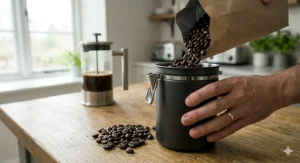
The enemy list includes: air, moisture, light, and heat. Our British climate provides ample moisture year-round, so an airtight container is non-negotiable. Skip the decorative glass jars sat on your worktop — UV light degrades coffee oils within days. Instead, invest in an opaque, airtight container (ceramic, stainless steel, or dark plastic) stored in a cool, dark cupboard away from your hob and kettle.
The Three-Week Rule: Once opened, Italian roast beans maintain peak flavour for roughly three weeks. Beyond that, those surface oils begin oxidising, creating stale, rancid notes. If you’re a solo drinker consuming maybe 30g daily, consider buying 500g bags rather than kilogramme quantities — paying slightly more per 100g beats drinking subpar coffee for the last two weeks.
Freezer Storage Controversy: Some swear by freezing beans for long-term storage; others consider it heresy. If you must freeze, divide your beans into weekly portions in airtight bags, removing only what you need and never refreezing. Frozen beans should be used immediately without thawing to prevent condensation forming on the oils.
Humidity Monitor Hack: If you live in particularly damp areas (looking at you, Scottish Highlands and Welsh valleys), consider adding a small silica gel packet to your storage container. Replace it monthly. Your beans will thank you with sustained flavour.
The British climate also means your beans may require slight grind adjustments on especially humid days — grind marginally coarser when the air feels heavy to maintain proper extraction times.
Traditional Italian Coffee Preparation Methods for UK Homes
The Moka Pot Method
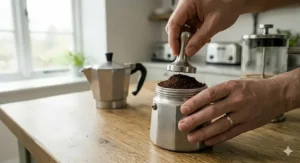
The classic stovetop moka pot remains the most accessible way to brew Italian roast coffee at home, requiring nothing more than your hob and about £15-£25 for a decent Bialetti or similar. Fill the base chamber with water just below the pressure valve, insert the filter basket filled with medium-fine ground coffee (don’t tamp — just level it), and place over medium-low heat.
The crucial detail most UK tutorials ignore: our electric hobs take longer to heat than Italian gas hobs, so patience matters. Rushing with high heat creates bitter, over-extracted coffee. You’re aiming for a gentle gurgle rather than an aggressive eruption. When you hear the characteristic spluttering sound and coffee stops flowing, immediately remove from heat — residual heat will complete the extraction. Serves approximately 180-240ml depending on pot size.
Espresso Machine Brewing
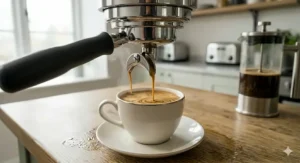
For proper espresso extraction, you’ll need water heated to 92-96°C, 9 bars of pressure, and approximately 25-30 seconds extraction time for a double shot (around 60ml). UK tap water varies significantly by region — soft water in Scotland and Wales, hard water in Southeast England and East Anglia. Hard water creates limescale buildup and can taste minerally, so consider a water filter jug (Brita or similar) for your espresso machine reservoir.
Italian roast beans generally require slightly finer grinding than medium roasts but not as fine as you’d use for very light roasts. Start with an 18-20g dose for a double basket, extract for 25-30 seconds, and adjust grind size until you achieve roughly 36-40g liquid output with thick, persistent crema.
French Press for Dark Roast
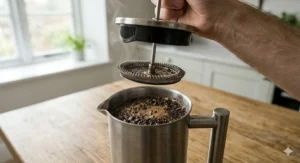
Whilst not traditionally Italian, the French press handles Italian roast surprisingly well, particularly for those who find espresso too intense. Use a coarse grind (think coarse sea salt texture), ratio of 60g coffee per litre of water at 94°C, and steep for exactly four minutes. The longer steep time some recommend for light roasts will over-extract dark roasts into bitter territory. Plunge slowly and serve immediately — leaving coffee in contact with grounds continues extraction.
Italian Roast vs Medium Roast: Which Suits British Tastes?
The great roast debate continues in UK coffee circles, with medium roast advocates claiming superiority whilst Italian roast devotees defend their darker preference. Reality, as usual, lies somewhere in the middle — it depends entirely on your brewing method, milk preference, and personal taste.
Choose Italian roast when: You’re primarily making espresso-based drinks (cappuccinos, lattes, flat whites), prefer robust flavour that cuts through milk, enjoy bold, smoky notes, or need caffeine delivery without caring much for nuanced flavour profiles. Italian roast also suits automated bean-to-cup machines better, as they’re more forgiving of imperfect extraction variables.
Choose medium roast when: You drink mostly black coffee, appreciate origin-specific flavour characteristics (fruity Ethiopian, chocolatey Colombian), have a sensitive stomach that objects to high acidity from dark roasts (counterintuitively, darker roasts have lower acidity but can irritate some digestive systems differently), or prefer filter coffee methods over espresso.
The British compromise: Many UK households keep both on hand — Italian roast for morning espresso and milk drinks, medium roast for afternoon black coffee. This dual-roast approach costs more upfront but prevents flavour fatigue and suits our varied drinking habits throughout the day.
According to research from the British Coffee Association, UK coffee consumption patterns show increasing sophistication, with 65% of households now owning multiple coffee preparation devices. This suggests British coffee culture has matured beyond one-size-fits-all approaches.
Common Mistakes When Buying Italian Roast Coffee Beans
Mistake #1: Ignoring Roast Date
The biggest error UK buyers make on Amazon.co.uk is failing to check roast dates before purchasing. Coffee is a fresh product — those beans sitting in a warehouse for eight months before reaching your door have already lost significant flavour. Always check packaging upon delivery and don’t hesitate to return stale beans. Reputable sellers roast frequently and rotate stock properly, but the occasional old batch slips through.
Mistake #2: Buying 5kg “Bulk Deals” for Home Use
That tempting £60 for 5kg seems economical until you calculate consumption rates. A typical household brewing two cups daily uses approximately 1kg monthly. That 5kg purchase translates to five months — well beyond the 3-4 week optimal freshness window after opening. Unless you’re running a small café or have a house full of coffee drinkers, stick to 1kg bags maximum.
Mistake #3: Assuming Darker = Stronger Caffeine
Italian roast actually contains marginally less caffeine than lighter roasts because the extended roasting process burns off some caffeine content. The “stronger” perception comes from bolder flavour, not higher caffeine. If you’re chasing caffeine content specifically, lighter roasts technically provide more milligrams per gramme of beans.
Mistake #4: Not Adjusting Grind for UK Water Hardness
Your grind setting interacts with water mineral content. Hard water areas (London, Bristol, Birmingham) may require slightly coarser grinding to prevent over-extraction, whilst soft water areas (Scotland, Cornwall, Wales) can handle finer grinds. This regional variation rarely gets mentioned in generic brewing guides but makes a noticeable difference to your cup quality.
Mistake #5: Storing in the Fridge
Fridges contain moisture and odours — both enemies of coffee. That Italian roast sat next to your stilton cheese and spring onions is absorbing flavours you definitely don’t want in your morning espresso. Room temperature, airtight, dark cupboard storage beats refrigeration every time.
The Environmental Impact: Sustainable Italian Roast Options
Coffee production carries significant environmental implications, from deforestation for plantations to water usage during processing. When shopping on Amazon.co.uk, look for these certifications indicating more sustainable practices:
Rainforest Alliance: Ensures farming practices protect forests, waterways, and worker rights. Several of the reviewed beans (particularly Lavazza and Vergnano) carry this certification, demonstrating commitment to sustainable sourcing despite the challenges of large-scale production.
Fairtrade: Guarantees minimum prices for farmers and prohibits exploitative labour practices. Taylors of Harrogate offers Fairtrade Italian roast options, though they command slight premiums over non-certified equivalents.
Organic: Prohibits synthetic pesticides and fertilisers, though this certification focuses more on chemical inputs than broader sustainability. Organic Italian roast beans remain relatively rare on Amazon.co.uk but are gradually increasing in availability.
The UK market shows growing awareness of coffee sustainability — Which? research indicates 42% of British coffee buyers now consider environmental credentials when purchasing, up from 28% in 2020. However, sustainable certifications typically add £2-£4 per kilogramme to retail pricing, creating a value judgment each buyer must make individually.
Carbon Footprint Consideration: Beans roasted in the UK (like Italian Aroma and Taylors) carry lower transport emissions than those roasted in Italy and shipped to Britain. However, Italian-roasted beans often use shorter supply chains for green coffee imports through Mediterranean ports. Neither approach holds clear environmental superiority — both have trade-offs worth considering.
Italian Roast Coffee Beans for Different UK Audiences
For London Commuters
Living in London means navigating packed tubes, expensive rents, and general daily chaos that demands serious coffee. Your criteria: speed of preparation, consistency despite rushed extraction, and flavour robust enough to drink whilst dodging tourists on Oxford Street. Recommendation: Lavazza Qualità Rossa or Segafredo Intermezzo — both tolerate imperfect brewing and deliver reliable results from bean-to-cup machines or quick cafetière preparation. The £14-£22 price range won’t devastate your already strained London budget.
For Countryside Dwellers (Scotland, Wales, Rural England)
Rural UK living often means softer water, potentially longer delivery times, and more leisurely morning routines that permit proper coffee ritual. Your advantage: better water quality for extraction; your challenge: ensuring beans remain fresh between deliveries. Recommendation: Order Kimbo Espresso Napoli or illy Classico in smaller quantities more frequently. The premium quality justifies the slightly higher per-unit cost, and you’ll appreciate the complexity when you’ve got time to savour each sip overlooking your garden rather than gulping whilst sprinting for the 7:42 train.
For University Students
Student life demands affordable caffeine delivery on a budget that barely accommodates beans, let alone fancy equipment. Your priority: maximum impact per pound spent whilst avoiding instant coffee territory. Recommendation: Segafredo Intermezzo offers the best value proposition, particularly when you catch Amazon Subscribe & Save discounts. Pair with a £15 Bialetti moka pot or French press and you’re producing café-quality coffee for roughly 20p per cup — considerably cheaper than Costa’s £3.50 flat whites.
For Coffee Snobs (Affectionate)
You own multiple grinders, track roast dates religiously, and cringe when someone microwaves cold coffee. Your equipment investment already exceeds £1,000, so bean quality matters immensely. Recommendation: Rotate between illy Classico and Caffè Vergnano 1882, with occasional Kimbo Espresso Napoli when you’re craving that aggressive Neapolitan intensity. Order smaller quantities (500g when available) more frequently to maintain peak freshness, and don’t hesitate to try smaller UK roasters beyond Amazon’s offerings.
For Households with Mixed Preferences
One person loves dark roast espresso; another prefers milky, sweet lattes; a third drinks only decaf after 2pm. Managing these conflicting preferences without buying five different products requires strategic selection. Recommendation: Taylors of Harrogate Rich Italian as your baseline — its medium-dark profile satisfies espresso drinkers whilst remaining approachable enough for latte lovers. Supplement with decaf options (Lavazza offers decaf versions) for afternoon/evening consumption.
FAQ: Italian Roast Coffee Beans for UK Buyers
❓ How long do Italian roast coffee beans stay fresh in the UK?
❓ Can I use Italian roast beans in a filter coffee machine?
❓ Are Italian roast coffee beans more expensive than medium roast in the UK?
❓ What's the difference between Italian roast and French roast coffee?
❓ Do I need an espresso machine to enjoy Italian roast coffee beans?
Conclusion: Finding Your Perfect Italian Roast
After extensive research and analysis of Italian roast coffee beans available on Amazon.co.uk, several clear conclusions emerge for British buyers navigating this dark and smoky landscape.
Budget-conscious daily drinkers should seriously consider Lavazza Qualità Rossa or Segafredo Intermezzo — both deliver reliable Italian character at £14-£22 per kilogramme whilst tolerating the imperfect brewing conditions of rushed weekday mornings. These beans won’t win speciality coffee awards, but they’ll provide consistent caffeine delivery without requiring second mortgages or barista training.
Those pursuing authentic Italian espresso experience should invest in Kimbo Espresso Napoli despite the premium pricing. The Neapolitan roasting tradition produces coffee that tastes genuinely Italian rather than merely Italian-inspired, creating thick crema and bold flavour that justifies the extra £6-£10 per kilogramme for espresso enthusiasts.
Coffee drinkers preferring smoother, more refined profiles whilst maintaining Italian heritage should explore illy Classico or Caffè Vergnano 1882. Yes, they’re pricier, but the meticulous quality control and balanced flavour profiles suit British palates that sometimes find traditional dark roasts overly aggressive.
The standout value proposition comes from Italian Aroma Cappuccino — UK-roasted for guaranteed freshness, traditionally crafted, and priced competitively at £22-£28 per kilogramme. For the significant portion of British coffee drinkers consuming primarily milk-based drinks, these beans deliver exceptional performance.
Remember that “best” remains fundamentally subjective in coffee. The beans producing transcendent espresso for your colleague might create battery acid in your cup due to different equipment, water chemistry, or taste preferences. Start with 250-500g bags when trying new beans, track what works for your specific setup and palate, and don’t be swayed by coffee snobbery suggesting only one “correct” choice exists.
The UK coffee market has matured remarkably over the past decade, with British buyers now demanding and receiving quality previously unavailable outside specialist importers. Amazon.co.uk stocks an impressive range of Italian roast options suiting every budget and preference level, with Prime delivery ensuring fresh beans reach your door within 24 hours across most of Britain.
Italian roast coffee beans offer bold, uncompromising flavour that cuts through Britain’s grey mornings and pairs beautifully with our national love of milky coffee drinks. Whether you’re pulling shots on a £2,000 espresso machine in your Shoreditch loft or brewing cafetière coffee in your Sheffield terrace, the right Italian roast transforms your daily ritual from routine caffeine delivery into genuine pleasure. Choose wisely, store properly, and embrace the dark side.
✨ Don’t Miss These Exclusive Deals!
🔍 Take your coffee experience to the next level with these carefully selected Italian roast coffee beans. Click on any highlighted product to check current pricing and availability on Amazon.co.uk. These picks will help you find exactly what you need for that perfect morning brew!
Recommended for You
- Best Dark Roast Coffee Beans UK 2026: 7 Expert Picks
- Best Medium Roast Coffee Beans UK 2026 – Top 7 Picks
- 7 Best Light Roast Coffee Beans UK 2026
Disclaimer: This article contains affiliate links. As an Amazon Associate, I earn from qualifying purchases. If you purchase products through these links, we may earn a small commission at no additional cost to you.
✨ Found this helpful? Share it with your mates! 💬🤗
