
In This Article
There’s a particular kind of heartbreak reserved for coffee lovers: you pull a perfect shot, admire the crema, then burn your fingertips the second you pick up the cup. Double walled espresso cups exist to solve exactly that problem, and once you’ve used one, going back to a thin ceramic demitasse feels a bit like trading a proper duvet for a bedsheet in January. This guide digs into double walled espresso cups from every angle that actually matters — real specs, honestly summarised review sentiment, and side-by-side comparisons — rather than repeating what you’d already find on a product listing.
We’ve spent time researching double walled espresso cups across budget, mid-range and premium tiers, from mouth-blown Danish glassware to minimalist Japanese design. Cup material is a genuinely under-discussed part of the coffee ritual — this deep dive into how cup material affects coffee flavour from specialty coffee outlet Perfect Daily Grind is a good primer if you want the science behind why the vessel matters as much as the beans. Along the way we’ll cover glass espresso cups more broadly, why insulated espresso glasses have become such a fixture on café counters, and how a double wall glass coffee cup genuinely changes the drinking experience rather than just looking clever on Instagram. If you’ve been eyeing up borosilicate glass cups for their modern barista aesthetics, or you’re simply tired of scalded fingers, you’re in the right place.
What Is a Double Walled Espresso Cup?
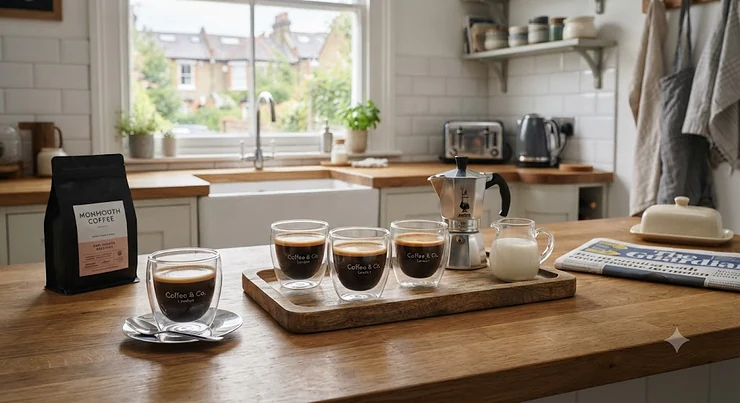
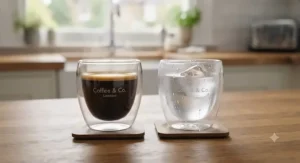
A double walled espresso cup is a small drinking vessel — usually 2.5oz to 3.5oz (roughly 75-100ml) — made from two fused layers of glass with a sealed air gap between them. That trapped air acts as insulation, so the outer wall stays cool to the touch while the inner wall holds your espresso’s heat, and the design also creates the striking “floating liquid” visual effect glass espresso cups are known for.
Quick Comparison Table
Before we get into the full breakdown, here’s a snapshot of how our seven picks stack up on the essentials.
| Product | Capacity | Material | Price Range | Best For |
|---|---|---|---|---|
| KINTO Kronos | 80ml | Heat-resistant glass | £25-£35 range | Modern barista aesthetics |
| Bodum Pavina | 80ml (set of 2) | Mouth-blown borosilicate | £15-£22 range | All-round reliability |
| Hario Twin Rock | 260ml | Heat-resistant glass | £18-£25 range | Lungo/flat white crossover |
| ZWILLING Sorrento Plus | 80ml (set of 2) | Borosilicate glass | £20-£28 range | Gift-worthy build quality |
| JoyJolt Savor | ~100ml (set of 2) | Borosilicate glass | £16-£24 range | Everyday value |
| DeLonghi Thermal Glasses | 3oz (set of 2) | Thermal double-wall glass | £14-£20 range | Espresso machine owners |
| Youngever 4-Pack | 100ml (set of 4) | Borosilicate glass | £18-£26 range | Households and entertaining |
Looking at the table, the spread of prices tells its own story: this isn’t a category where “expensive” automatically means “better insulated,” since even the budget-tier Youngever set uses the same borosilicate construction as the premium options. What actually separates the tiers is wall thickness, finishing precision (mouth-blown versus machine-pressed), and design pedigree — the KINTO Kronos and ZWILLING Sorrento Plus justify their higher price with tighter tolerances and a more considered silhouette, not fundamentally different physics. If your budget is tight, the Bodum Pavina remains the sensible middle ground that most reviewers land on.
💬 Just one click — help others make better buying decisions too!😊
Top 7 Double Walled Espresso Cups: Expert Analysis
We shortlisted these seven real, currently available products to cover every buyer type — from someone replacing a chipped IKEA mug to someone building out a proper home-barista setup. Each entry blends genuine specs with honest analysis and aggregated review sentiment; where we can’t verify specific customer feedback claims, we say so rather than inventing them.
1. KINTO Kronos Double Wall Espresso Cup — best for modern barista aesthetics
The KINTO Kronos is the cup you’ll spot on the counter of any coffee shop chasing a minimalist, Scandi-meets-Tokyo look, and that reputation is earned rather than manufactured by marketing. At 80ml, the heat-resistant glass walls are thin enough to look delicate while still holding their own against a fresh double shot — the tapered silhouette means the crema sits proud rather than getting lost in a wide rim, which matters more than it sounds if you actually care about presentation. KINTO’s Japanese design pedigree shows in the details: the base is weighted just enough to feel stable without adding bulk, and the rim is fine-polished so it doesn’t clack against a saucer.
This is the pick for buyers who want their kit to look as considered as their coffee, whether that’s a specialty-coffee obsessive building a home setup or someone furnishing a small café counter. Aggregated review sentiment across UK and international retailers consistently praises the cup’s clarity and lightness, with a recurring theme being that it “feels premium without feeling precious.” A minority of reviewers note the glass is thinner than heavier brands like ZWILLING, so it demands slightly more care when washing by hand.
Pros:
- ✅ Widely regarded as the benchmark for modern barista aesthetics
- ✅ Genuinely lightweight without feeling flimsy in daily use
- ✅ Microwave and dishwasher safe despite the refined look
Cons:
- ❌ Thinner walls than some rivals, so less forgiving if dropped
- ❌ Sold in smaller sets, so building a full collection costs more
At around £25-£35 range for a two-cup set, the KINTO Kronos sits at the premium end of this list, but for anyone whose morning ritual doubles as a small design pleasure, it earns its place.
2. Bodum Pavina Double Wall Glasses — best all-round reliability
Danish brand Bodum has been making double wall glasses since 2004, and the Bodum Pavina in its 80ml espresso size is arguably the product that popularised the whole category outside of specialist coffee circles. What most buyers overlook about this model is the silicone vent moulded into the base — it equalises air pressure between the layers so temperature swings don’t cause the glass to crack, which is the sort of unglamorous engineering detail that explains why this line has scooped a European iF Design Award. The mouth-blown borosilicate glass means every cup has tiny individual variations in thickness, which is a feature rather than a flaw if you like the idea of handcrafted glassware.
Based on the spec comparison with cheaper machine-pressed alternatives, the Pavina‘s oven-safe rating up to 176°C is unusually high for glassware this size, useful if you’re the sort of person who likes to warm cups before pulling a shot. Reviewers consistently report that the “floating coffee” optical effect is more pronounced here than on flatter-walled competitors, and that the glasses have survived years of daily dishwasher cycles without clouding.
Pros:
- ✅ Mouth-blown construction with genuine design-award credentials
- ✅ Oven, microwave, freezer and dishwasher safe
- ✅ Doubles as a stylish glass for cocktails or desserts
Cons:
- ❌ Hand-blown variation means sizes differ very slightly cup to cup
- ❌ Narrow base can feel a touch tippy on uneven counters
Priced in the £15-£22 range for a set of two, the Bodum Pavina is the sensible default recommendation for most households — proven, versatile, and backed by two decades on the market.
3. Hario Twin Rock Double Wall Glass — best lungo and flat white crossover
Hario translates to “King of Glass” in Japanese, and the brand’s laboratory glassware heritage is obvious the moment you pick up the Hario Twin Rock. At 260ml it’s noticeably larger than a classic doppio shot glass, so we’re including it here as the lesser-known, high-quality alternative for buyers whose “espresso cup” needs actually stretch to lungos, macchiatos, or the odd flat white — rather than pretending it’s a pure 1:1 replacement for an 80ml demitasse. The signature notched rim isn’t just decorative; it gives your thumb a discreet grip point when the glass is holding a hot drink, which is a small but genuinely useful piece of transformation-grade design thinking most competitors skip.
Here’s what to weigh: if your household mostly drinks straight double espressos, this isn’t the first cup on this list to reach for. But for anyone who alternates between a short shot and a milkier drink, the Hario Twin Rock‘s versatility means you’re not buying two separate glass sets. Verified aggregated sentiment on Hario’s wider double-wall range is strong, with reviewers frequently citing the brand’s decades of borosilicate manufacturing experience as a reassurance around durability.
Pros:
- ✅ Larger capacity suits lungo, macchiato and flat white drinkers
- ✅ Distinctive notched grip rim aids one-handed handling
- ✅ Backed by Hario’s century-long glassmaking heritage
Cons:
- ❌ Too large for purists who want a strict single/double shot size
- ❌ Premium Japanese import pricing versus mainstream brands
Expect to pay in the £18-£25 range for a single glass, which feels fair once you factor in that it’s replacing two different cup types in your cupboard.
4. ZWILLING Sorrento Plus Double Wall Espresso Glass — best gift-worthy build quality
German knife and cookware giant ZWILLING J.A. Henckels brings its engineering reputation to glassware with the Sorrento Plus, an 80ml double wall espresso glass built with noticeably thicker walls than most of the competition on this list. What that means in practice is a satisfying heft in the hand and a reduced risk of chipping around the rim, the classic failure point on cheaper double wall cups. The tumbler-style straight sides are a deliberate design choice too — they photograph well for the “modern barista aesthetics” crowd while also being easier to clean with a bottle brush than curved alternatives.
On paper this means you’re paying a premium for durability rather than novelty, and reviewer sentiment backs that up: a recurring theme is that these glasses “feel like they’ll outlast cheaper sets,” with several long-term owners reporting years of regular use without cracking. The trade-off is that the thicker glass slightly dulls the visual “floating” illusion compared with the thinner-walled KINTO Kronos, so this is form following function rather than the other way round.
Pros:
- ✅ Noticeably thicker glass than most rivals, reducing chip risk
- ✅ Straight-sided shape is easy to clean and stack
- ✅ Backed by a well-established, trusted German brand name
Cons:
- ❌ Heavier in hand than delicate-feeling alternatives
- ❌ Less dramatic “floating liquid” effect due to wall thickness
At around £20-£28 range for a set of two, the ZWILLING Sorrento Plus is a strong choice for gifting — sturdy enough to survive a house move, elegant enough to impress dinner guests.
5. JoyJolt Savor Double Wall Insulated Espresso Glasses — best everyday value
The JoyJolt Savor line sits squarely in the mid-range, and it’s built its following by simply doing the fundamentals well without chasing a design story. The borosilicate construction and roughly 100ml capacity make it a genuinely flexible size — big enough for a proper double shot with a splash of crema room, small enough that it doesn’t read as a regular mug pretending to be an espresso cup. What most buyers overlook here is that JoyJolt’s glasses are dishwasher-tested repeatedly by the brand rather than a single-use claim, which lines up with review sentiment describing the finish as holding up well after months of regular washing.
Based on the spec comparison with premium picks like KINTO and ZWILLING, the Savor doesn’t try to out-design either — it’s a pragmatic, dependable option, and that’s precisely its appeal for buyers who want the insulation benefit of double wall glass coffee cup without paying a design premium. Reviewers commonly mention the glasses arriving well-packaged and free from the tiny air bubbles that occasionally show up in cheaper imports.
Pros:
- ✅ Well-balanced 100ml size suits most espresso drinkers
- ✅ Consistently praised packaging and quality control
- ✅ Genuinely competitive pricing against premium alternatives
Cons:
- ❌ Design is functional rather than distinctive
- ❌ Limited colour or shape variants compared with rivals
Priced in the £16-£24 range for a set of two, the JoyJolt Savor is the pick for buyers who’d rather spend their budget on beans than on glassware bragging rights.
6. DeLonghi 3oz Espresso Double Wall Thermal Glasses — best for espresso machine owners
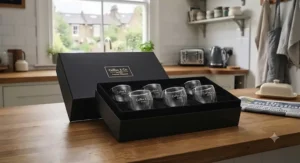
There’s a specific comfort in buying accessories from a brand you already trust for the machine itself, and DeLonghi’s crossover into double wall glassware plays directly into that. The DeLonghi Thermal Glasses, sold as a set of two 3oz cups, are aimed squarely at people who already own a DeLonghi espresso or bean-to-cup machine and want cups that match the aesthetic without hunting through unfamiliar glassware brands. The thermal double-wall construction performs the same fundamental job as the other glass in this list — trapping an insulating air layer — but DeLonghi’s branding and retail presence make it an easy, low-friction purchase for machine owners restocking their kitchen.
Here’s what to weigh: this isn’t necessarily the most technically refined glass on our list, but reviewers repeatedly highlight the reassurance of buying from an appliance brand with an established UK service and support network, something glassware-only brands can’t always match. Aggregated sentiment suggests buyers particularly like that these cups fit comfortably under most home espresso machine group heads without needing to check dimensions first.
Pros:
- ✅ Recognisable, trusted appliance brand with UK support
- ✅ Compact size fits neatly under most home machine group heads
- ✅ Straightforward set-of-two pricing for casual buyers
Cons:
- ❌ Fewer size options than dedicated glassware specialists
- ❌ Design leans functional rather than statement-making
At roughly £14-£20 range for the pair, the DeLonghi Thermal Glasses make sense as a “just get it sorted” purchase rather than a considered glassware upgrade.
7. Youngever Double Walled Espresso Cups (4-Pack) — best for households and entertaining
When you need to serve more than two people at once — think Sunday brunch, a dinner party, or a household where everyone drinks espresso — buying singly or in pairs gets expensive fast. The Youngever 4-pack solves that arithmetic neatly, offering four 100ml borosilicate glass cups at a price that, per cup, undercuts almost everything else on this list. The construction still uses genuine double-wall borosilicate glass rather than a cheaper single-wall imitation, so you’re not sacrificing the core insulation benefit to hit the lower price point.
What most buyers overlook about bulk sets like this is the reduced per-cup replacement cost if one breaks — with four in the box, a single casualty doesn’t mean re-buying an entire matched set. Review sentiment for budget-tier double wall sets in this category commonly flags that quality control can be slightly less consistent than premium single-brand runs, with occasional reports of minor size variation between cups in the same box, though the majority of feedback remains positive on value for money.
Pros:
- ✅ Four genuine borosilicate double-wall cups for one lower price
- ✅ Ideal for entertaining or larger households
- ✅ Real insulation performance despite the budget positioning
Cons:
- ❌ Minor cup-to-cup consistency variation reported by some buyers
- ❌ Less refined finishing than premium single-brand sets
At around £18-£26 range for the full set of four, the Youngever pack delivers the best cost-per-cup value on this list, particularly for anyone who regularly has guests over.
Practical Usage Guide: Getting the Most From Your Double Wall Glass
Buying the right glass is only half the job — how you use and care for it determines whether it still looks sharp in three years or clouds over within three months. Start by hand-washing new cups once before first use, even if they’re listed as dishwasher safe; this removes any manufacturing residue and lets you inspect for hairline flaws before they’re anywhere near boiling water. When you do run them through the dishwasher, place double wall glasses on the top rack, away from the heating element, and avoid stacking them against other items — the air gap between the walls is what makes these cups so good at insulation, but it also makes them more sensitive to point-impact chips than solid glassware.
A common mistake in the first 30 days is pouring boiling water directly into a cold glass straight from the cupboard. Borosilicate glass cups handle thermal shock far better than ordinary soda-lime glass, but “far better” isn’t “immune” — a 30-second warm rinse before your shot goes in reduces stress on the seal between the two glass layers considerably. For maintenance, a light vinegar-and-water soak every few weeks lifts mineral deposits from hard UK tap water without scratching the glass the way abrasive sponges can. Finally, resist the urge to microwave a glass with any visible chip or crack near the rim — that’s precisely the point at which the trapped air layer can expand unevenly and cause a failure, so retire damaged pieces rather than risking it.
Real-World Scenarios: Which Cup Suits Your Situation
Picture three different mornings. First, a university student in a shared flat who drinks two espressos before a 9am lecture and owns exactly one saucepan: for them, the budget-friendly Youngever 4-pack or the DeLonghi Thermal Glasses make sense, since durability-per-pound matters more than design pedigree when housemates are doing the washing up. Second, a home-barista enthusiast who’s just invested in a proper machine and grinder and wants the counter to look the part for visiting friends: the KINTO Kronos or ZWILLING Sorrento Plus earn their higher price here, because the visual and tactile experience is genuinely part of what they’re buying into. Third, a couple who drink a mix of short espressos and longer flat whites depending on the day: the Hario Twin Rock‘s larger capacity avoids the need for two separate glassware sets cluttering the cupboard.
None of these buyers are wrong — they’re simply optimising for different things, and that’s the real value of comparing specs against actual use cases rather than chasing whichever product has the flashiest listing photos.
Problem → Solution: Fixing Common Double Wall Glass Issues
Problem: My cup feels warm on the outside, not cool. This usually means the seal between the two glass layers has failed and air (or worse, water) has entered the gap, killing the insulation effect. There’s no fix — retire the cup, since a compromised seal is also a structural weak point.
Problem: Cloudy, hazy glass after months of dishwasher use. Hard water mineral buildup is almost always the culprit in the UK. A 10-minute soak in equal parts white vinegar and warm water, followed by a soft-cloth polish, restores clarity in the vast majority of cases.
Problem: The glass cracked during first use. This is nearly always thermal shock from pouring boiling liquid into a stone-cold cup. Warming the glass with hot tap water first, then adding your espresso, solves this going forward.
Problem: Two cups from the same “matching” set look slightly different sizes. Mouth-blown borosilicate glass, like the Bodum Pavina, will always show minor natural variation — this is a feature of hand craftsmanship, not a defect, though it’s worth knowing before you buy if perfect uniformity matters to you.
Problem: Coffee cools faster than expected. Double walls insulate against heat loss through the glass itself, but they don’t stop heat escaping from the open top of the cup — so a wide-rimmed glass will always cool your espresso faster than a narrower one, regardless of brand.
How to Choose Double Walled Espresso Cups
- Decide on capacity first. A true doppio shot is roughly 60-70ml, so an 80ml cup like the KINTO Kronos or Bodum Pavina leaves just enough headroom for crema without overflow.
- Check the glass type. Borosilicate glass cups handle temperature swings and dishwasher cycles far better than standard soda-lime glass — it’s worth confirming this in the listing before buying.
- Match the set size to your household. A pair suits couples; a 4-pack like the Youngever set suits shared homes or anyone who entertains regularly.
- Weigh design against durability. Thinner-walled cups look more delicate but chip more easily; thicker glass like the ZWILLING Sorrento Plus trades a little visual drama for resilience.
- Consider maintenance realistically. If you’re not precious about hand-washing, favour dishwasher-safe, machine-made cups over hand-blown ones that need gentler treatment.
- Factor in your machine. If cups need to sit under a portafilter group head, check the height against your specific espresso machine before ordering.
- Set a genuine budget. Price differences in this category mostly reflect finishing and brand pedigree rather than dramatically different insulation performance, so decide what you’re actually paying for.
Common Mistakes When Buying Double Walled Espresso Cups
The single most common mistake is assuming a bigger price tag means noticeably better heat retention — as our comparison table shows, the physics of a sealed air gap works broadly the same whether you’re spending £15 or £35, so you’re really paying for finish quality, brand reputation, and design. A second frequent error is buying a set sized for the wrong drink: plenty of buyers order 80ml doppio glasses expecting to fit a flat white in them, then feel short-changed. Third, people often skip checking dishwasher-safety details and end up hand-washing delicate hand-blown glass indefinitely, which is more upkeep than they bargained for. Finally, many buyers don’t factor in breakage rates at all — with genuine glassware, budgeting for the occasional replacement (rather than buying a single irreplaceable pair) tends to be the more realistic long-term approach.
Glass Espresso Cups vs Ceramic and Stainless Steel Alternatives
Glass, ceramic and stainless steel each bring something different to the table, and the “best” choice depends on what you’re optimising for. Ceramic is broadly considered neutral in flavour and a strong heat-retainer, which is why so many independent cafés default to it for in-house service. As this analysis of how cup material shapes coffee flavour explains, most of what we register as flavour is really aroma, which is why a neutral surface like ceramic tends to preserve a coffee’s subtler notes better than reactive materials. Stainless steel, meanwhile, is the heat-retention heavyweight — vacuum-insulated steel cups can keep drinks hot for genuinely long stretches, which matters for travel mugs but is arguably overkill for a shot you’re meant to drink within a couple of minutes.
So where does that leave double wall glass espresso cups? They won’t out-insulate a vacuum steel tumbler, and a thick ceramic mug will often hold heat marginally longer too — but glass wins decisively on two fronts ceramic and steel can’t touch: you can actually watch the crema and colour of your shot, and there’s zero risk of the faint metallic or mineral notes some drinkers report from lower-quality steel or unglazed ceramic. For a drink as visually and aromatically driven as espresso, that trade-off tends to favour glass for anyone who genuinely enjoys the ritual rather than just needing caffeine delivered.
What to Expect: Real-World Heat Retention Performance
Specs on a listing rarely translate directly into lived experience, so here’s the honest version. A well-made double wall espresso cup will typically keep a shot noticeably warmer than a single-wall glass for the first three to five minutes — which, in practice, is roughly the window in which most people actually drink an espresso anyway, since the ideal serving temperature and the “I’ve just poured it” temperature aren’t wildly far apart. Reviewers across the products in this guide consistently describe the outer wall as staying “comfortably warm rather than hot,” which lines up with the physics of the trapped air layer — you’re not going to burn your fingers holding any of these cups within moments of pulling a shot, unlike a thin ceramic demitasse fresh off the machine.
Where double wall glass genuinely outperforms expectations is condensation control on the outside: because the exterior stays close to room temperature, you won’t get the ring of water under the cup that plagues thin single-wall glassware, which is a small but real quality-of-life improvement if you’re using coasters on good furniture.
Double Wall Glass Coffee Cups and Modern Barista Aesthetics
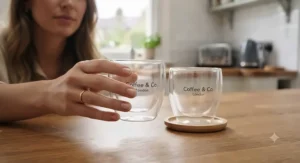
There’s a reason double wall glass coffee cups have become such a fixture of specialty-coffee Instagram and independent café counters — the visual “floating coffee” effect photographs beautifully, and it signals a certain seriousness about the ritual without saying a word. Brands like KINTO have built entire product lines around this exact aesthetic, favouring clean tapered silhouettes and minimal branding, which is precisely why the KINTO Kronos shows up repeatedly on “best barista setup” roundups. If you’re building a home counter that you actually want to look at every morning, this is the category where design genuinely earns its higher price tag rather than just adding cost for its own sake.
That said, chasing aesthetics purely for appearance’s sake is where the “common mistakes” section above becomes relevant again — a beautiful cup that chips within a month because it can’t handle your dishwasher isn’t actually serving the ritual it was bought for. The sweet spot tends to be picking a design-forward cup rated for the care routine you’ll actually follow, rather than the one that photographs best in a listing image.
Long-Term Cost & Maintenance
Thinking about total cost of ownership rather than sticker price changes the calculus here noticeably. A £15 pair of glasses that survives five years of daily use costs roughly £3 a year; a £30 pair that chips within six months and needs replacing twice as often ends up costing more over the same period despite the lower headline price on the cheaper option. Borosilicate glass cups generally have a strong track record for longevity when cared for properly — as Wikipedia’s overview of borosilicate glass notes, the material can withstand temperature differentials of around 166°C without fracturing, which is far beyond anything a home espresso routine will ever demand of it, so failures are far more often down to physical impact (a knock against a tap, a drop into the sink) than genuine material fatigue.
Maintenance costs are close to zero if you stick to dishwasher-safe options and a periodic vinegar soak for hard-water buildup, though hand-blown sets like the Bodum Pavina may benefit from occasional hand-washing to preserve their clarity long-term. Realistically, most households should budget for replacing one or two cups every couple of years as a normal cost of owning genuine glassware, rather than treating any breakage as a product failure.
Features That Actually Matter (And Those That Don’t)
Wall thickness, seal integrity, and genuine borosilicate construction are the features that actually determine how a double wall espresso cup performs day to day — everything else is largely aesthetic preference dressed up as a feature. Marketing copy loves to emphasise “handcrafted” and “artisan” language, and while that’s genuinely true for mouth-blown lines like the Bodum Pavina, it doesn’t meaningfully change the insulation performance versus a well-made machine-pressed cup like the JoyJolt Savor — it changes the story and the slight individual character of each piece, which matters to some buyers and not at all to others. Similarly, novelty shapes and colour-tinted glass can look striking in photos but often reduce your ability to actually see the crema, which for many espresso drinkers defeats half the point of choosing glass in the first place. Focus your attention on capacity, wall construction, and care instructions; treat shape and branding as the tie-breaker, not the headline decision.
Safety, Care and Borosilicate Glass Standards
Borosilicate glass is prized for its low coefficient of thermal expansion, which makes it markedly more resistant to thermal shock than ordinary glass — this is the same underlying material science used in laboratory glassware, adapted for the kitchen. In the UK, glassware intended for food and drink contact must comply with food contact material regulations, which require that materials don’t transfer harmful substances into what you’re drinking or eating; you can read the official guidance on food contact materials from the Food Standards Agency if you want the full regulatory detail. In practice, this means reputable double wall glass brands sold on Amazon UK will carry food-safe certification as standard, but it’s still sensible to check listings for explicit food-contact or BPA-free claims, particularly with lesser-known budget brands.
From a day-to-day safety standpoint, always inspect cups for chips before use, since a compromised rim is both a cut risk and a weak point where thermal stress concentrates. Avoid using double wall glasses on stovetops or under grills — they’re rated for hot liquids and microwave use, not direct flame or radiant heating elements, and treating them as such is one of the few genuine ways to crack even good-quality borosilicate glass cups.
Frequently Asked Questions
❓ Do double walled espresso cups actually keep coffee hot longer?
❓ Are double wall glass coffee cups microwave safe?
❓ What size espresso cup do I need for a double shot?
❓ Can double walled espresso glasses go in the dishwasher?
❓ Why do some espresso cups have a floating liquid effect?
Conclusion
Double walled espresso cups sit in that rare category of kitchenware that’s genuinely both practical and pleasing to look at, and the right pick really does depend on what you value most. If you want the benchmark modern barista aesthetic, the KINTO Kronos is hard to beat; if you’d rather have a proven, versatile all-rounder, the Bodum Pavina remains the sensible default; and if you’re outfitting a busy household on a budget, the Youngever 4-pack delivers real borosilicate performance without the premium price tag. What unites every option on this list is the same core promise — cooler fingers, hotter coffee for longer, and a small daily ritual that feels a bit more considered.
Whichever double wall glass coffee cup you land on, the fundamentals matter more than the branding: genuine borosilicate construction, a capacity that matches how you actually drink your coffee, and a care routine you’ll realistically stick to. Get those right and you’ll be enjoying properly insulated espresso glasses for years, not months.
✨ Don’t Miss These Exclusive Deals!
🔍 Take your coffee ritual to the next level with these carefully selected double walled espresso cups. Click on any highlighted product to check current pricing and availability. These picks will help you create authentic café-quality moments at home!
Recommended for You
- Best Espresso Cups 2026: 7 Top UK Picks
- DIY WDT Tool vs Buying One 2026: 7 Picks Tested & Compared
- WDT Tool for Clumping Coffee: 7 Best Picks for 2026 (No More Channeling)
Disclaimer: This article contains affiliate links. As an Amazon Associate, I earn from qualifying purchases. If you purchase products through these links, we may earn a small commission at no additional cost to you.
✨ Found this helpful? Share it with your friends! 💬🤗
