
In This Article
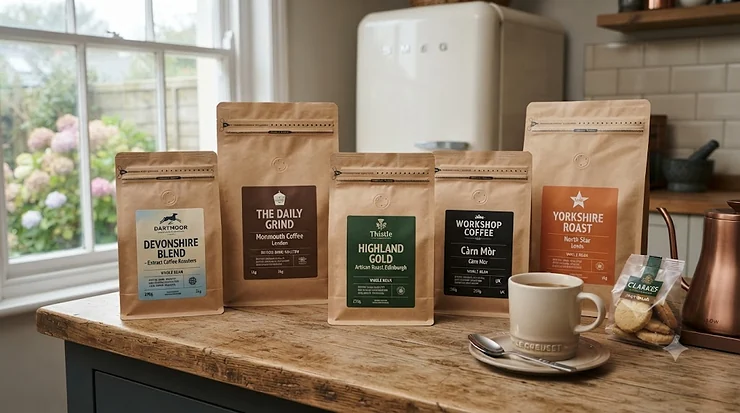
Open a bag of freshly roasted beans and the clock starts ticking. Oxygen, light, heat and damp all gang up on the flavour, and the fold-it-over-and-hope method most of us rely on is about as protective as a tea towel draped over a birthday cake. That is precisely where resealable coffee bags earn their keep.
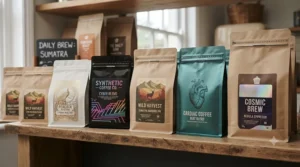
A well-made pouch does three jobs at once. A one-way valve lets the gas that fresh beans give off escape without letting air back in. A zip-seal closure stops the contents drifting into stale territory between brews. And the pouch material itself keeps out light and moisture, which matters because, as Consumer Reports explains in its coffee storage guide, coffee readily soaks up damp and stray smells from its surroundings.
Here’s the thing, though: the market is a jungle. Listings for a resealable coffee pouch range from ten-packs for hobbyists to hundred-packs aimed at roasters, and the spec sheets all read like they were written by the same enthusiastic robot. So this guide does the sorting for you. I’ve compared seven real options sold through amazon.co.uk, translated their specs into what they mean on your worktop, and been upfront wherever I couldn’t verify something, particularly customer reviews, rather than dressing up guesses as facts.
Expect straight talk on sizing, barrier layers, portion storage and running costs, plus a few habits that quietly matter more than any bag you buy. Prices below are indicative ranges only and change often, so always check the current price before you click.
Resealable Coffee Bags at a Glance: Quick Comparison
Before the deep dive, here’s the whole field on one screen. Capacity figures are the seller’s own claims, so treat them as a guide: 8oz is roughly 227g, and how many beans actually fit depends on roast level and bean density.
| Product | Pack Size | Stated Capacity / Format | Look | Best For |
|---|---|---|---|---|
| Pasotim 250g Foil Valve Bags | 100 | 250g, foil-style, valve + zip | Matte black | Households splitting a kilo into portions |
| Rightpak 16 x 23 cm Valve Pouches | 100 | 16 x 23 cm, valve + zip | Black | Bulk buyers who want size choice |
| ZOOFOX 1 lb Foil Coffee Bags | 50 | 1 lb (about 454g), flat bottom | Foil | Big-bag coffee drinkers |
| HUAYANG 60-Pack Zip Coffee Bags | 60 | Not clearly stated in listing title | Black plastic | Budget-minded bulk buyers |
| Handship 8oz Stand-Up Pouches | 10 | 8oz (about 227g), flat bottom | White | Trying the format before committing |
| Crafans Black Zipper Coffee Bags | 10 | Flat-bottom stand-up, side heat seal | Black (frosted clear also listed) | Small batches and gifting |
| Kraft 350g Stand-Up Coffee Pouches | 50 | 170 x 240 x 40 mm, about 350g | Natural kraft, no window | Rustic, shelf-friendly look |
Looking at the comparison above, the two hundred-pack listings, Pasotim 250g Foil Valve Bags and Rightpak 16 x 23 cm Valve Pouches, make the most sense if you’ll genuinely use that many. For anyone dipping a toe in, Handship 8oz Stand-Up Pouches and Crafans Black Zipper Coffee Bags keep commitment low. Anyone drinking a full pound of beans quickly should look at the ZOOFOX 1 lb Foil Coffee Bags first.
💬 Just one click — help others make better buying decisions too!😊
Top 7 Resealable Coffee Bags: Expert Analysis
Every entry below covers standout feature, what the specs mean in practice, an honest read on who it suits, and a value verdict. One transparency note: for most of these listings I couldn’t verify a large, trustworthy body of customer reviews, so instead of inventing sentiment I tell you what is and isn’t confirmed and what to check on the listing itself.
1. Pasotim 250g Foil Valve Bags — best bulk pack for home portioning
The standout is sensible sizing: a 250g foil-style pouch with a valve and zip is the format most specialty roasters sell, so it feels familiar in the hand and slots neatly into a kitchen cupboard.
The listing describes 100 vertical bags with a one-way valve, zip closure and black finish. In practice, the foil-style layer is what gives you a proper light and oxygen barrier compared with plain paper, and the valve means freshly roasted beans can breathe out without ballooning the bag. A 250g load suits one or two drinkers going through roughly a week or two of coffee.
Based on the spec comparison, this is the tidiest fit for anyone who buys a kilo at a time and wants four neat portions. It also works if you home-roast and want to package gifts without looking amateur.
On reviews, I couldn’t verify a large enough set to summarise fairly, so check the rating breakdown and look for comments on zip alignment and valve function specifically.
Pros:
- ✅ Foil-style barrier against light and moisture
- ✅ One-way valve suits freshly roasted beans
- ✅ Familiar 250g portion size
Cons:
- ❌ Hundred bags is overkill for casual users
- ❌ Opaque black means no peeking at the beans
Price: in the high-£10s to low-£20s range for 100 at the time of research, so the per-bag cost is very low. Verdict: excellent value if you’ll actually use the volume.
2. Rightpak 16 x 23 cm Valve Pouches — most flexible sizing from a UK-based seller
Rightpak’s edge is range: the same seller offers many pouch dimensions, so you can size up or down as your habits change.
The listing is for 100 stand-up pouches at 16 x 23 cm with a one-way degassing valve, resealable zip and tear notches. Tear notches are a small thing that saves fiddly scissor work on refills. On the seller’s own marketplace listings, the matte black construction is described as BOPP plus metallised PET plus PE, a layered laminate that is a standard route to a decent light, moisture and odour barrier.
What most buyers overlook is that 16 x 23 cm is a fairly generous pouch, and the label of “coffee bag” hides real variation in how many grams fit. Test with one before you buy a hundred.
I couldn’t verify a robust pool of reviews for this exact listing, so read recent feedback about seam strength and zip grip before committing.
Pros:
- ✅ Multi-layer laminate described by the seller
- ✅ Tear notches make opening easy
- ✅ Wide size range available from the same seller
Cons:
- ❌ Capacity claim depends on bean density
- ❌ Hundred-pack commitment
Price: roughly £20-£35 for 100 depending on size (check current price). Verdict: strong value if the size suits you; its rivals on this list are simpler but less flexible.
3. ZOOFOX 1 lb Foil Coffee Bags — best for pound-a-time drinkers
The headline is capacity: a one-pound flat-bottom pouch swallows a standard large bag of beans in one go.
The listing describes 50 resealable vented bags with a flat bottom and heat-seal foil construction. A flat base means the pouch stands upright and stays open while you scoop, which is a small daily mercy. Foil means a stronger barrier than paper alone.
Here’s what to weigh: 1 lb of beans is a lot for a solo drinker. Beans in a big, half-empty pouch sit with a lot of trapped air, so this size suits households of three or more, or anyone who decants a bulk bag once and drinks through it quickly.
I couldn’t verify meaningful review data, so check whether recent buyers mention zip durability at full load.
Pros:
- ✅ Holds a full pound of beans
- ✅ Flat bottom stands upright when filling
- ✅ Foil construction for light and moisture
Cons:
- ❌ Too large for single-drinker portions
- ❌ Air trapped when only partly full
Price: roughly £10-£25 for 50 (check current price). Verdict: good value for bigger households, poor fit for portion storage.
4. HUAYANG 60-Pack Zip Coffee Bags — cheapest way into a big pack
The hook is the pack count: sixty bags is a comfortable middle ground between the hobbyist ten and the roaster’s hundred.
The listing describes black plastic bags with a valve and resealable zip. The trade-off with any all-plastic black pouch is that the barrier depends entirely on the layers inside, which the listing doesn’t spell out, so I can’t tell you it matches a true foil laminate. That uncertainty is worth remembering if you plan to store beans for weeks rather than days.
On paper this is a pragmatic pick for budget-conscious buyers who portion and use beans quickly. If you intend to keep beans for a month or more, I’d lean towards a listing that states its material clearly.
Reviews: I couldn’t verify a solid set, so check what buyers say about odour, seal quality and how the valve holds up.
Pros:
- ✅ Sixty bags is a flexible quantity
- ✅ Black finish limits light exposure
- ✅ Valve and zip both included
Cons:
- ❌ Material layers not clearly detailed
- ❌ Capacity not obvious from listing title
Price: roughly £10-£20 range (check current price). Verdict: decent budget value, best for short-term storage.
5. Handship 8oz Stand-Up Pouches — best low-commitment starter pack
The standout is the ten-pack: you get the format without buying a small warehouse’s worth.
The listing covers 8oz (about 227g) flat-bottom stand-up pouches with a zipper, in white. Eight ounces is a very sensible household portion, roughly a week of beans for a two-cup-a-day habit, and it is easier to keep fresh than a giant bag opened repeatedly.
Based on the spec comparison, this is a smart trial buy. Test the zip feel, the stand-up stability and how comfortably your usual beans fit, then scale up if it suits. White is easy to label with a marker, which helps with roast dates.
I couldn’t verify a healthy review base, so scan recent comments for zip strength, and check whether this listing includes a valve, since it matters for freshly roasted beans.
Pros:
- ✅ Small pack means low risk
- ✅ 8oz portion is genuinely practical
- ✅ White surface takes labels well
Cons:
- ❌ Higher cost per bag than bulk packs
- ❌ Light colour offers less light protection
Price: usually under £10 for ten (check current price). Verdict: good for testing, poor for long-term economy.
6. Crafans Black Zipper Coffee Bags — best for gifts and small batches
The best trait here is presentation: the black flat-bottom pouch looks clean, and a frosted clear version is also listed.
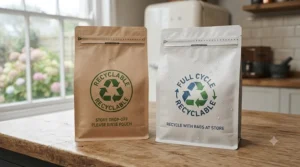
Crafans sells ten-packs of rectangular flat-bottom stand-up zipper pouches with a heat-seal side, and the listings hint at wider uses, including sweets and biscuits. That flexibility is a mixed blessing: it’s a general-purpose pouch as much as a dedicated coffee bag, so confirm the valve on your chosen variant before you assume it degasses.
Analytically, the black version is the right choice for coffee because it blocks light. The frosted clear version is prettier but lets light through, which is exactly what beans dislike, so save it for short-term or gift use.
I couldn’t verify meaningful review data here, so check recent comments on zip quality and valve presence.
Pros:
- ✅ Clean, professional look
- ✅ Black version blocks light
- ✅ Multi-purpose beyond coffee
Cons:
- ❌ Valve not guaranteed on every variant
- ❌ Ten bags run out quickly
Price: usually under £10 for ten (check current price). Verdict: fine for gifting, less efficient for everyday storage.
7. Kraft 350g Stand-Up Coffee Pouches — best rustic look with a valve
The appeal is aesthetic: natural kraft on the shelf looks like a proper roaster’s bag.
The listing describes 50 pouches at 170 x 240 x 40 mm, holding about 350g, with a one-way degassing valve, resealable zip and no window. No window is a genuine plus: light is a freshness enemy, so a solid pouch beats a see-through one. One caution: the listing title is generic and brand-agnostic, so read the description to confirm the lining, because paper on its own is a weaker barrier than foil.
On analysis, the 350g size sits neatly between the 250g and 1 lb formats, which makes it handy if you buy bags in the 340-350g range that many roasters sell.
Reviews: I couldn’t verify a solid dataset, so check for comments on lining and zip performance.
Pros:
- ✅ Solid, windowless construction
- ✅ 350g suits common roaster bag sizes
- ✅ Valve and zip included
Cons:
- ❌ Lining may vary by seller
- ❌ Generic listing title, so verify details
Price: roughly £15-£30 for 50 (check current price). Verdict: attractive and practical, provided the lining checks out.
Top 7 Comparison: Specs, Prices and Fit
| Product | Pack | Approx. Capacity | Price Band | Review Data | Best For |
|---|---|---|---|---|---|
| Pasotim 250g Foil Valve Bags | 100 | 250g | £15-£25 | Not verified | Portioning a kilo |
| Rightpak 16 x 23 cm Valve Pouches | 100 | Varies by fill | £20-£35 | Not verified | Bulk, size choice |
| ZOOFOX 1 lb Foil Coffee Bags | 50 | About 454g | £10-£25 | Not verified | Large households |
| HUAYANG 60-Pack Zip Coffee Bags | 60 | Not stated | £10-£20 | Not verified | Budget bulk |
| Handship 8oz Stand-Up Pouches | 10 | About 227g | Under £10 | Not verified | Trial run |
| Crafans Black Zipper Coffee Bags | 10 | Varies by variant | Under £10 | Not verified | Gifting |
| Kraft 350g Stand-Up Coffee Pouches | 50 | About 350g | £15-£30 | Not verified | Shelf appeal |
Price bands are indicative and prices may vary, so check the current price on each listing. The pattern is clear: the hundred-packs, Pasotim 250g Foil Valve Bags and Rightpak 16 x 23 cm Valve Pouches, deliver the lowest cost per bag, while the ten-packs, Handship 8oz Stand-Up Pouches and Crafans Black Zipper Coffee Bags, cost more per unit but carry far less risk. If barrier quality is your priority, prefer listings that state a foil or laminate layer, as Pasotim 250g Foil Valve Bags and ZOOFOX 1 lb Foil Coffee Bags do.
✨ Don’t Miss These Exclusive Deals!
🔍 Take your coffee storage to the next level with these carefully selected pouches. Click on any highlighted item to check current pricing and availability. These tools will help you create fresher, better-tasting coffee your whole household will love!
What Are Resealable Coffee Bags?
Resealable coffee bags are flexible pouches, usually stand-up, with a zip-seal closure and often a one-way valve, designed to store whole beans or ground coffee. They shield the contents from air, light and moisture, let degassing carbon dioxide escape, and can be opened and closed repeatedly, unlike a fold-over paper bag.
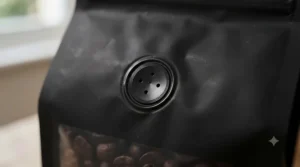
That short definition hides a few important distinctions. A resealable coffee pouch with a valve behaves very differently from a plain zip pouch, and both differ from a rigid canister. The valve matters most in the first days after roasting, when beans release the most gas, and matters far less for beans that are already several weeks old.
The zip is the second working part. It doesn’t create a perfect hermetic seal, but it dramatically improves on a folded top, particularly when you squeeze out the excess air before closing. The third part is the pouch material, which decides how much light, moisture and odour gets through over time.
You’ll also see them called a zip lock coffee storage bag in shop listings, and reusable coffee bags for beans in eco-minded ones. The names are interchangeable in practice; what matters is the valve, the seal and the barrier layers, not the label on the listing.
How to Choose Resealable Coffee Bags
Choosing well comes down to seven checks. Work through them in order and you’ll avoid most disappointments.
- Decide on valve or no valve. A one-way valve lets carbon dioxide out without letting air in, as Plitek’s technical guide to coffee valves explains. It’s essential for bags of freshly roasted beans; less crucial for older beans.
- Match capacity to your habit. Pick a size you’ll empty in one to two weeks, so the pouch is never mostly air.
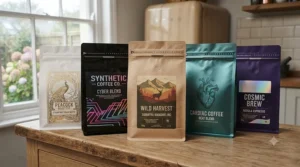
- Prefer an opaque, layered material. Foil-style or laminated black and kraft-with-lining pouches protect better than clear plastic.
- Check the zip type. A pull-tab or press-to-close zip that meets evenly beats a flimsy one that skips.
- Look for a flat bottom. It stands upright, which makes filling and scooping easier.
- Confirm food-contact suitability. Look for a clear statement that the material is food-safe.
- Weigh pack size against use. A hundred-pack is only a bargain if you’ll use them.
Expert reasoning: the most common mistake is optimising for the lowest price per bag and then ignoring the barrier. A few pence saved is a poor trade if the beans go stale a week sooner.
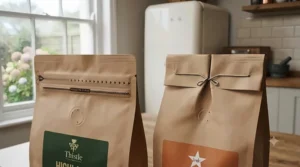
Zip-Seal Closure: What to Look For
A zip-seal closure is the part of the pouch you’ll use most, so it deserves more scrutiny than it usually gets. On paper it’s a simple interlocking track; in practice, quality varies enormously.
How it works in daily use
When the track’s two edges meet cleanly, they form a reasonably tight seal that keeps air movement to a minimum. Squeeze out extra air before pressing along the track and you reduce oxygen contact further. That single habit does more for freshness than upgrading to a slightly fancier pouch.
What separates good from fiddly
A good zip-seal closure aligns easily, holds when the pouch is full and doesn’t pop open when you scoop. A pull-tab style makes opening tidy, and a wide track is usually more forgiving than a narrow one. Grit from ground coffee can also get caught in the track, so wipe it clean now and then.
Zip versus heat seal
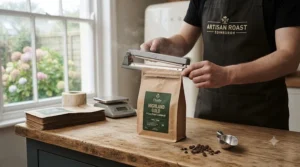
Many listings for these pouches are designed for a heat-sealed top above the zip, which is how roasters close bags before sale. At home, you can simply use the zip, but remember it is only as airtight as its seal. If you package gifts or sell coffee, a heat sealer adds a tamper-evident first closure, then the zip handles everyday reuse.
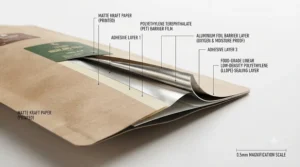
Pouch Material Explained: Foil, Kraft and Plastic
The pouch material is the invisible hero of any coffee bag. Two pouches can look identical on a shelf and behave very differently in a cupboard.
Foil and laminate
Foil-style and metallised laminates offer the strongest barrier against light, oxygen and moisture. Listings from this category often describe layered constructions, such as BOPP plus metallised PET plus PE, which combines a printable outer, a barrier middle and a heat-sealable food-contact inner.
Kraft paper
Kraft looks great, but paper alone is a weaker barrier. Good kraft coffee pouches include a foil or plastic lining, so check the description. A windowless kraft pouch with lining is a solid all-rounder.
Plain plastic
Clear or lightly tinted plastic is fine for short-term storage or gifting but poor for weeks of keeping, because light degrades coffee.
Food-contact rules
In Great Britain, plastic food-contact materials fall under assimilated Regulation 10/2011 on plastic materials and articles alongside the wider framework of Regulation 1935/2004. For you, that translates to a simple habit: buy pouches described as food-safe or food-grade, and be cautious with unlabelled, multi-purpose bags.
Portion Storage: A Practical Setup Guide
Portion storage is the single most practical upgrade a household can make. Rather than opening one big bag repeatedly, you divide your beans into sealed portions and open only one at a time.
Step-by-step setup
- Buy beans in a larger bag when it suits your budget.
- Weigh out portions you’ll use in one to two weeks, such as 227g or 250g.
- Fill each pouch, press out excess air and close the zip-seal closure.
- Label with the roast date using a marker or sticker.
- Keep the pouch you’re using in a cool, dark cupboard away from the oven.
Freezing portions
If you buy in bulk, Consumer Reports suggests small, tightly sealed portions for freezing, with a shelf life of around a month before quality drops. Freeze once, thaw a portion at a time, and never refreeze. Since freezing has trade-offs, I’d reserve it for beans you truly can’t use in time.
First 30 days: common mistakes
- Filling pouches to the brim so the zip strains.
- Leaving pouches near the kettle.
- Forgetting to squeeze out air.
- Decanting freshly roasted beans too early, before the first burst of gas has settled.
Portion storage is where a Pasotim 250g Foil Valve Bags pack or a Handship 8oz Stand-Up Pouches set really earns its keep.
Problems and Fixes: Making Resealable Coffee Bags Work Harder
Even a good pouch can disappoint if the routine around it is off. Here are the most common gripes and what to do about each.
Problem: the bag puffs up like a balloon. Freshly roasted coffee releases gas. A valve solves this, so check the pouch has one and that it isn’t blocked by grounds. A Pasotim 250g Foil Valve Bags or Kraft 350g Stand-Up Coffee Pouches style pouch is designed for this.
Problem: the zip won’t stay shut. Grit in the track is the usual culprit. Wipe the track and re-align it from one end to the other.
Problem: the beans taste flat after a week. Too much air is likely. Choose a smaller pouch, or one better matched to your portion, such as Handship 8oz Stand-Up Pouches.
Problem: the pouch smells of last week’s coffee. Coffee oils cling to the inner lining. Wipe with a dry cloth and let the pouch air out. Coffee is quick to pick up other smells, so keep unrelated food away.
Problem: a clear pouch is fading my beans. Light degrades coffee. Move to a black or opaque option, like Crafans Black Zipper Coffee Bags, and store in a cupboard.
Real-World Scenarios: Who Should Buy What?
Matching product to person is where honest analysis beats a generic ranking. Three profiles cover most buyers.
Scenario 1: The flat-share coffee fan
Four housemates split a 1kg bag every month. Ordinary budget, limited cupboard space, and everyone opens the bag daily. The smart move is portion storage: split into 250g pouches and give each person one. Pasotim 250g Foil Valve Bags are the natural fit, or Handship 8oz Stand-Up Pouches if you want a smaller pack first.
Scenario 2: The home roaster giving gifts
You roast a couple of kilos monthly and give bags to friends. You want them to look neat, hold their freshness for a couple of weeks, and take a label. Crafans Black Zipper Coffee Bags offer a clean look, while Kraft 350g Stand-Up Coffee Pouches bring a roaster’s-shelf vibe.
Scenario 3: The small market-stall seller
You sell weekly at a farmers’ market, want consistent sizing and low per-bag cost, and need the pouch to hold up to handling. A hundred-pack such as Rightpak 16 x 23 cm Valve Pouches or Pasotim 250g Foil Valve Bags gives the best economy. You’d also want a heat sealer and a food-safety check with your local authority.
✨ Ready to sort your coffee storage once and for all?
🔍 Pick the pouch that matches your routine, then click through to check current pricing and availability. Your beans, and your morning cup, will thank you!
Reusable Coffee Bags for Beans vs Canisters and Jars
Reusable coffee bags for beans compete with rigid storage such as glass jars and airtight canisters. Each has genuine strengths, so the honest answer is “it depends on your habits”.
Where canisters win
An opaque, airtight container in ceramic or stainless steel is durable and doesn’t wear out. Vacuum-style canisters that push air out can help preserve flavour, and they look good on a worktop. But they’re bulky, cost more up front, and don’t help with dividing a bulk bag into separate portions.
Where pouches win
A resealable coffee pouch is cheap, light and easy to label. It shines for portioning, gifting and freezing. Pouches also compress as you use the beans, which reduces the air around what’s left, something rigid containers can’t do.
| Storage Method | Light Protection | Gas Release | Portion-Friendly | Best For |
|---|---|---|---|---|
| Original retail bag and clip | Varies | Sometimes valved | Poor | Very short-term use |
| Glass jar | Poor unless kept dark | None | Fair | Small amounts kept in a cupboard |
| Opaque airtight canister | Excellent | Depends on model | Poor | Daily-use beans |
| Resealable coffee bags, such as Pasotim 250g Foil Valve Bags | Good to excellent | Yes, with valve | Excellent | Portioning and gifting |
Reading the table, canisters are the best daily-driver, but pouches are unbeatable for organised portion storage. In my view the strongest setup combines both: portion into pouches, keep the one in use in a dark cupboard. A Handship 8oz Stand-Up Pouches set is an easy way to try that approach.
Long-Term Cost and Value Analysis
Price per bag is only half the story. The real cost is the price of the pouch plus the cost of the coffee you waste when storage fails.
Cost per bag
Hundred-packs like Pasotim 250g Foil Valve Bags work out at well under 30p per pouch on indicative pricing. Fifty-packs such as Kraft 350g Stand-Up Coffee Pouches are more likely to land in the region of 30p-60p per pouch. Ten-packs like Handship 8oz Stand-Up Pouches and Crafans Black Zipper Coffee Bags typically cost noticeably more per unit.
Reuse potential
These are marketed as reusable, but zips and valves wear out. Treat two or three refills as realistic for a home user, more if you clean the track. Heat-sealed commercial packaging is generally meant for single use, with the zip as a convenience.
The real value calculation
If a good pouch saves even a few grams of beans per bag from going stale, the cost is repaid quickly.
| Product | Pack | Indicative Price Band | Value Verdict |
|---|---|---|---|
| Pasotim 250g Foil Valve Bags | 100 | £15-£25 | Best bulk value |
| Rightpak 16 x 23 cm Valve Pouches | 100 | £20-£35 | Strong if sized right |
| ZOOFOX 1 lb Foil Coffee Bags | 50 | £10-£25 | Good for big households |
| HUAYANG 60-Pack Zip Coffee Bags | 60 | £10-£20 | Budget option |
| Handship 8oz Stand-Up Pouches | 10 | Under £10 | Best trial pack |
| Crafans Black Zipper Coffee Bags | 10 | Under £10 | Gifting |
| Kraft 350g Stand-Up Coffee Pouches | 50 | £15-£30 | Good if lining verified |
Prices are indicative and may vary. The takeaway: bulk buys win on cost, but only if you’ll use them; otherwise a small pack is cheaper in practice than a hundred bags gathering dust.
Common Mistakes When Buying Resealable Coffee Bags
A handful of avoidable errors account for most buyer’s remorse.
Buying by price alone. The cheapest pack often has the least clear material description. Barrier quality decides how long the beans stay fresh.
Ignoring the valve. For freshly roasted beans a valve matters. Without one, either the bag swells or you leave it unsealed. For older beans it matters less.
Choosing a see-through pouch for long-term storage. A frosted clear listing such as the clear version of Crafans Black Zipper Coffee Bags looks lovely on a shelf, but light shortens the flavour life of coffee.
Oversizing. A 1 lb pouch holding 200g of beans is mostly air. Match size to how much you drink.
Assuming every pouch is coffee-specific. Some listings are general-purpose pouches for sweets and snacks. That’s fine, but confirm the valve and material if you want them to protect coffee.
Skipping food-contact checks. Look for food-safe wording, especially if you’re selling coffee.
Refrigerating everyday beans. Fridges add moisture and odours. For coffee you’ll use within a few weeks, a cool dark cupboard beats the fridge.
Safety, Regulations and Food-Contact Guidance
If you only ever package coffee for your own kitchen, food-contact rules are mostly background reassurance. If you sell or give away coffee regularly, they matter more.
What the rules say
The Food Standards Agency explains in its food contact materials guidance that materials touching food, including packaging, must meet the general requirements of assimilated Regulation 1935/2004, with specific rules for plastics. In plain English, packaging should be safe for food and shouldn’t transfer harmful substances or change the food’s character.
A practical shopper’s checklist
- Look for wording such as “food grade” or “food safe” on the listing.
- Look for the wine-glass-and-fork symbol on packaging, which signals food-contact suitability.
- Be cautious with pouches sold for crafts or general storage.
- If you sell coffee, ask the supplier for a declaration of compliance and speak to your local authority’s food team about labelling.
A note on honesty
None of the listings researched here was fully documented on this point in the parts I could verify, so read each product description carefully and ask the seller if in doubt.
FAQ
❓ Can I freeze coffee in resealable coffee bags?
❓ Do I need a heat sealer for a resealable coffee pouch?
❓ Are zip lock coffee storage bags truly airtight?
❓ How many times can reusable coffee bags for beans be refilled?
❓ What size pouch should I choose for portion storage?
Conclusion
Freshness isn’t magic, and it isn’t expensive. It’s a simple recipe: protect beans from air, light, moisture and heat, then portion sensibly so you never leave a large bag open for weeks. Resealable coffee bags make that recipe cheap and easy, provided you pick the right pouch.
Based on the spec comparison, Pasotim 250g Foil Valve Bags is the best all-round bulk choice for households that portion a kilo of beans, while Rightpak 16 x 23 cm Valve Pouches suits buyers who want size flexibility. If you drink coffee quickly and buy large bags, ZOOFOX 1 lb Foil Coffee Bags fit the bill. Newcomers should start with Handship 8oz Stand-Up Pouches or Crafans Black Zipper Coffee Bags, and anyone who loves a roaster’s-shelf look should consider Kraft 350g Stand-Up Coffee Pouches, after confirming the lining. HUAYANG 60-Pack Zip Coffee Bags rounds out the list as a budget-minded bulk option.
Whichever you choose, remember the habits that matter most: squeeze out air, keep the pouch in a cool dark place, label roast dates, and buy quantities you’ll actually use. A resealable coffee pouch is a small purchase, but used well, it noticeably improves what lands in your cup.
✨ Ready to keep every brew tasting its best?
🔍 Click on any highlighted product to check current pricing and availability, and give your beans the protection they deserve. Your future self, mid-cup, will be grateful!
Recommended for You
- Affordable Coffee Storage Canister: 7 Best Budget Picks (2026)
- Glass Coffee Jar vs Stainless Steel Canister: 7 Best UK Picks (2026)
- Stainless Steel Coffee Canister: 7 Best UK Picks (2026)
Disclaimer: This article contains affiliate links. As an Amazon Associate, I earn from qualifying purchases. If you purchase products through these links, we may earn a small commission at no additional cost to you.
✨ Found this helpful? Share it with your friends! 💬🤗
